



Published: 21 May 2026
Reading Time: 12 minutes
Reviewer: TBD (Insert Name and Credentials)
Cold Solder Joints: Data-Backed Insights on Trends, Failure Rates, and Prevention
Imagine an assembly line grinding to a halt because a single solder defect caused one bad connection on a smartphone or semiconductor PCB. It’s not just frustrating. It costs time, money, and disrupts entire production schedules. Cold solder joints, while easy to overlook in tiny components, are a massive headache in modern electronics manufacturing.
So, what’s really going on with cold solder joints today? This article explores their causes, economic impact, and, most importantly, how manufacturers in 2026 are using data and better processes to prevent them altogether.
About the Author: TBD
We’ll guide you through what cold solder joints are, what causes them, and how you can spot the signs early on. This isn’t just for small-scale fixes either; we’re tackling real-world, high-scale data-backed solutions that modern manufacturers can implement. Ready to dive in? Let’s get started.
How to Detect Cold Solder Joints: Tools and Techniques
Spotting a cold solder joint early avoids costly repairs later. But how can you reliably find these defects in high-speed production environments? There are a few techniques and tools manufacturers in 2026 are using to quickly and efficiently inspect solder joints.
Manual Examination Methods
For smaller-scale operations or when there’s only a handful of suspect boards, manual inspection is still a go-to. A magnifying glass or microscope can help trained operators ID issues like grainy solder or incomplete connections. You’ll notice these flaws more easily in hand-soldered boards, prototypes, or any setting with less sophisticated process control.
But manual inspections have limits. Human error, time constraints, and fatigue mean this isn’t the best option for long production runs or high-precision assemblies like semiconductors.
Automated Optical Inspection (AOI) Systems
For large-scale manufacturing, an Automated Optical Inspection (AOI) system is indispensable. These systems use cameras and advanced algorithms to scan solder joints for issues like excessive or insufficient solder, uneven wetting, or outright missing connections. AOI is fast and integrates well into most Surface Mount Technology (SMT) lines, making it ideal for catching defects in real-time.
A great example? Manufacturers of smartphones and densely packed circuit boards regularly rely on AOI systems to maintain quality standards. They can inspect thousands of components per hour without slowing down production.
X-Ray Inspection for Hard-to-See Defects
Sometimes, a visual inspection—manual or automated—just isn’t enough. For hidden solder joints in Ball Grid Arrays (BGAs) or QFN packages, X-ray inspection offers a deeper, clearer look. These machines can spot voids, cracks, and other defects that can’t be seen on the surface.
Yes, X-ray systems can be pricey investments, but for industries like semiconductors, automotive, or aerospace, where failure isn’t an option, the long-term savings outweigh the upfront cost. Integrating these into your production line can dramatically reduce hidden defect rates.
Real-Time Solder Joint Monitoring
In 2026, manufacturers don’t have to wait for boards to fail before spotting bad joints. High-speed production lines now include continuous monitoring systems. These systems use thermal profiling, inline AOI, and even machine learning to identify anomalies as the boards move through the line. By catching issues early, manufacturers can reduce waste and improve yield rates.
Expert Tip: Monitoring the soldering environment is just as important as inspecting completed boards. Factors like ambient temperature, humidity, and soldering equipment calibration all impact joint quality. Regular checks for these conditions can stop defects before they happen.
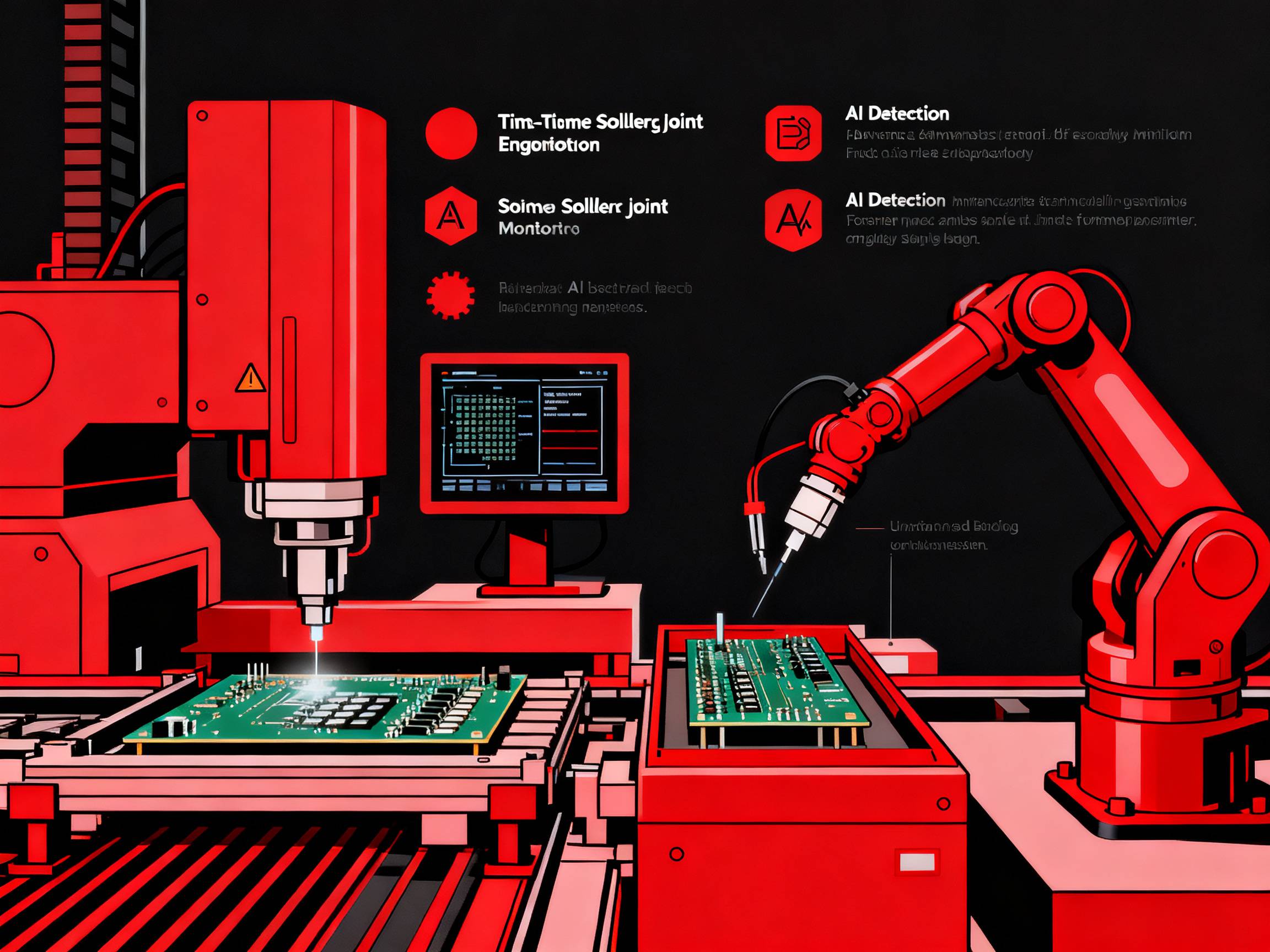
Tools for Your Solder Toolkit
Here are some key tools manufacturers use to detect and verify solder quality:
- Thermal Profilers: Measure and record heat distribution during reflow to ensure even heating.
- Flux Pens and Flux Remover: Identify contamination issues impacting solder flow.
- Digital Microscopes: Provide ultra-clear views of solder joints for manual examination.
- Inline AOI Cameras: Automatically inspect boards at high speed with minimal human assistance.
- X-Ray Machines: Analyze challenging cases, especially for BGA components.
By incorporating the right mix of manual and automated tools, manufacturers can achieve a solid balance between speed, accuracy, and cost-effectiveness.
Prevention Strategies: Solutions for Manufacturers in 2026
Preventing cold solder joints starts with one important question: what can manufacturers do upfront to stop defects in the first place? The good news is that by fine-tuning processes and investing in strategic tools, even large-scale manufacturers can significantly reduce defect rates.
Optimize Heating Profiles in Reflow Ovens
Cold solder joints often result from insufficient heat during the reflow process, so getting this step right is crucial. Modern reflow ovens are equipped with customizable temperature zoning that allows for precise heat control. By dialing in the perfect balance of preheat, soak, and peak temperatures, manufacturers can ensure solder paste fully wets the joint before cooling. Using thermal profilers, you can check for inconsistencies in heat distribution, particularly in dense boards or areas with uneven thermal mass.
Investing in this type of process monitoring eliminates inconsistent solder adhesion caused by improper heating—or simply put, too hot or too cold.
Keep Soldering Environments Clean and Regulated
Let’s talk contamination. Dirt, dust, oil, and oxidation can interfere with solder flow, even if everything else is set up perfectly. Regulated environments (cleanrooms, anyone?) go a long way in keeping processes smooth. But beyond clean air, it’s worth setting up a regular maintenance schedule for your machines to check for calibration issues, flux buildup, or outdated solder paste. A little bit of preventive care can stop cold solder defects before they even have a chance to develop.
Expert Tip: Monitoring the soldering environment is just as important as inspecting completed boards. Factors like ambient temperature, humidity, and soldering equipment calibration all impact joint quality. Regular checks for these conditions can stop defects before they happen.
Invest in High-Precision SMT Equipment
Efficiency and precision go hand-in-hand with the right equipment. Advanced SMT setups, like wave soldering machines or lead-free systems from Shenzhen Chuxin Electronic Equipment Co., Ltd., ensure consistent results with features designed to minimize soldering defects. For example, equipment with real-time monitoring, automated fluxing, and even solder flow adjustments can improve consistency across thousands of components.
And it’s not just about the machinery. Operators need effective training to identify potential issues during setup or rework. Mistakes like incorrect alignment or improper flux applications are more common than you think, and cutting-edge machines paired with human expertise can make a major difference.
Make Inspections Part of the Solution
Here’s the bigger picture: prevention isn’t a one-time process. Manufacturers in 2026 are leaning heavily on inspections and data feedback to catch errors early. Inline Automated Optical Inspection (AOI) systems are a key addition that allows for real-time defect monitoring. Combined with advanced reporting dashboards, manufacturers can study trends over time and understand what adjustments make the biggest impact.
Whether it’s optimizing reflow profiles, enforcing cleanliness standards, or upgrading to smarter machines, every step you take brings you closer to better yield rates and fewer headaches on the production line.
Advancements in Preventing and Repairing Cold Solder Joints in 2026
Preventing and addressing cold solder joints is no longer just about refining the basics of manual inspections or reflow profiles. Modern advancements have introduced smarter, more efficient ways to tackle soldering issues at their core. Let’s explore what’s new in 2026.
AI-Driven Defect Prevention and Repair Systems
Artificial intelligence (AI) is changing the game in solder joint quality control. Many manufacturers now utilize AI systems to monitor production lines in real time. These systems combine machine learning with big data analytics to detect patterns linked to cold solder joint formation. Instead of waiting for physical defects to appear, AI can flag when environmental or equipment conditions hit risky thresholds.
What’s more, AI-guided systems are capable of initiating automatic adjustments. For instance, if the reflow oven’s profile fluctuates beyond optimal ranges, the system recalibrates without human intervention. This level of precision has drastically reduced defect rates in industries like semiconductors and automotive electronics, where reliability standards remain extremely high.
Cutting-Edge Soldering Materials
Traditional soldering materials are effective, but they come with limitations, especially when dealing with heat inconsistencies. In 2026, advanced solder alloys have been designed to improve wetting and reduce sensitivity to temperature swings. Lead-free options, now a must due to regulatory requirements, are being enhanced with additives like copper and silver to achieve stronger joints and better flow characteristics.
Flux technology has also improved. New formulations target faster activation with more robust cleaning properties. These improvements solve common issues linked to contamination and improper wetting, making production lines more efficient from the start.
Smarter Component Design for Better Compatibility
Cold solder joints aren’t always a soldering problem—they can also stem from how well components themselves are designed for assembly. To address this, suppliers are introducing improved component finishes and pad designs that better complement modern solder pastes and reflow processes.
For example, components with enlarged solderable areas and optimized thermal balance are becoming the norm in critical industries like aerospace and telecommunications. This isn’t about reinventing the wheel but fine-tuning compatibility between all parts in the assembly process.
Expert Tip: Practical insights on how manufacturers overcome trends in defect rates: Combine AI defect detection with upgraded solder materials to create a synergy that prevents issues before they escalate.
In 2026, manufacturing is leaning heavily on AI, materials science, and component innovation to tackle cold solder joints. These advancements aren’t just theoretical—they’re actively shaping better production outcomes every day. By staying on top of these trends, manufacturers can boost efficiency and drastically reduce costs associated with defective units.
Failure Rates and Trends: The Data Landscape in 2026
Cold solder joints continue to pose a significant challenge to manufacturers in 2026, particularly in high-volume production environments. But it’s not all doom and gloom. Data insights are helping companies predict and minimize failure rates like never before. Let’s break down what the stats are saying.
What the Numbers Reveal
Recent studies show that equipment setup, reflow profiles, and component contamination remain the leading contributors to cold solder joints. For instance, manufacturers specializing in consumer electronics reported defect rates between 0.5% and 1%, depending on the complexity of the boards being assembled. That may seem low, but if you’re shipping millions of units, those tiny percentages add up to big problems.
Not only does this result in higher scrap rates, but it also means more costly rework. Industries like semiconductor and automotive manufacturing often see indirect costs too—like damage to brand reputation or penalties for failing to meet quality benchmarks.
Upside of Better Monitoring
Manufacturers are relying heavily on real-time defect monitoring systems powered by AI and automation tools. These systems analyze operational data to pinpoint high-risk scenarios before defects form. Predictive analytics allow teams to adjust standards for heat profiles, flux application, or solder paste compatibility based on actionable trends.
Expert Tip: Practical insights on how manufacturers overcome trends in defect rates: Combine AI defect detection with upgraded solder materials to create a synergy that prevents issues before they escalate.
Where Defects Happen Most
- Low-Cost Manufacturing: Budget-friendly factories with legacy systems often struggle to maintain consistent quality.
- Complex Boards: The more densely packed a circuit board is, the harder it becomes to maintain uniform heat distribution.
- Harsh Production Conditions: High humidity or temperature swings create non-ideal soldering environments.
By understanding these trends, manufacturers can invest in better processes and avoid costly downtime. The data doesn’t lie—modern tools and monitoring systems are well worth the investment if you’re looking for scalable reliability in 2026.