



Zveřejněno: 18 May 2026
Čas na čtení: 12 minutes
Reviewer: N/A, N/A
Wave Soldering Temperature Explained: Best Practices, Guidelines, and Profiles
Úvod
You know that moment when your PCB solder joints refuse to cooperate? Yeah, we’ve all been there. Wave soldering can look intimidating, especially when you toss temperature profiles into the mix. But here’s the deal; understanding the basics helps you not only fix those stubborn joints but also prevent defects before they happen. Whether you’re working with traditional solder or lead-free, nailing the temperature profile is a game changer for quality and efficiency.
Jace Liu is an experienced engineer specializing in Surface Mount Technology (SMT) systems and electronic manufacturing processes. With a decade of hands-on experience in wave soldering optimization and a robust background in lead-free assembly standards, Jace combines technical expertise with innovative solutions for high-precision electronics production.
Overview of Wave Soldering Temperature Phases
Wave soldering isn’t just about melting solder and calling it a day. It’s a carefully segmented process with phases that each play a unique role. Here’s a rundown:
Preheat Phase
This is the first step, warming up the PCB to prevent thermal shock and activate the flux. You’re looking at temperatures between 90°C and 120°C. Keep the ramp-up at or below 3°C per second to avoid damaging components.
Fáze namáčení
Think of this as the steady zone before the main act. It ensures flux activation and prepares the PCB surface for soldering. Precise soak times matter here; too long or too short can cause wetting and oxidation issues.
Solder Wave Phase
Here comes the good stuff—the actual wave of molten solder. Temperatures range from 240°C to 270°C, depending on your solder material. Lead-free is typically on the higher side due to its melting point.
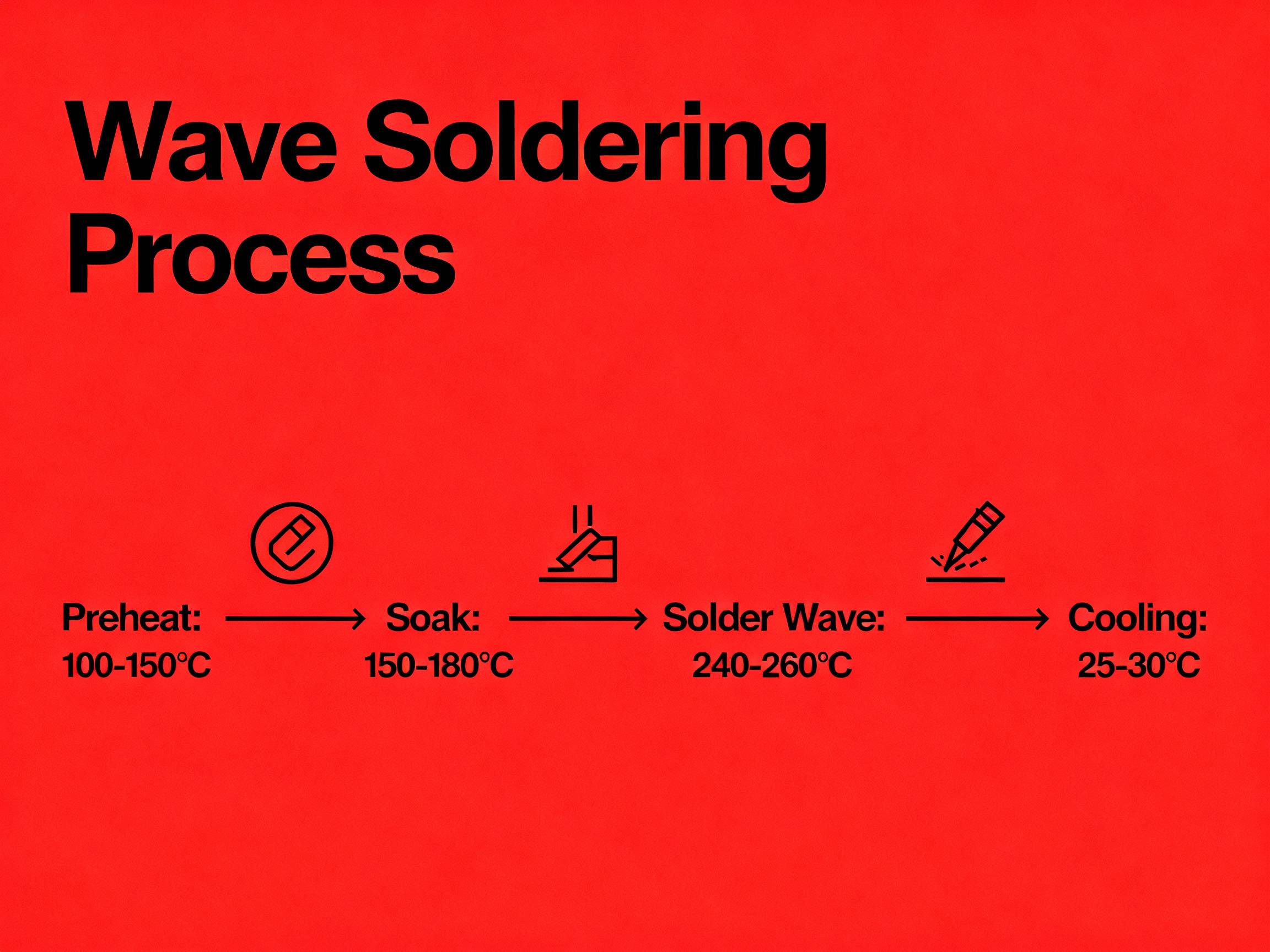
Fáze chlazení
Lastly, controlled cooling solidifies the solder joints, avoiding stress fractures. Cooling rates should stay below 6°C per second for uniform results.
Why PCB Material and Design Matter
Not all PCBs are built the same. The thickness, layer count, and material type affect how heat distributes during soldering. For example, multi-layer boards with thicker copper layers tend to dissipate heat slower, requiring adjustments to the preheat and soak phases.
If you’re using thinner boards, faster ramp-ups can work but watch out for potential warping. Always tailor the temperature profile to your PCB’s design and material to avoid defective joints.
Expert Tip: Achieving uniform temperature distribution in the soldering process starts with accurate preheat adjustments. Use tools like thermal imaging to pinpoint uneven spots!
Comparing Lead-Free and Traditional Solder Temperature Profiles
Lead-free soldering requires a higher temperature profile compared to traditional tin-lead solder. Here’s a quick comparison:
| Profile Stage | Tin-Lead Range | Lead-Free Range |
|———————-|—————-|—————–|
| Preheat Temperature | 90–110°C | 100–120°C |
| Solder Wave | 230–250°C | 240–270°C |
| Cooling Rate | ≤6°C/sec | ≤6°C/sec |

Lead-free options, while better for compliance with regulations like RoHS, come with an increased risk of oxidation and voids. You can mitigate these by closely monitoring profiles and using nitrogen environments in the solder wave phase.
Pro Insight: To reduce oxidation risks during lead-free soldering, consider enhancing flux formulations and integrating soldering systems with controlled atmospheres. Precision matters!—
Understanding the Critical Role of Temperature Profiles in Wave Soldering
Temperature control isn’t just important in wave soldering; it’s the key to avoiding defects. Accurate temperature profiles ensure flux activation, protect components, prevent oxidation, and maintain solder joint integrity. Without getting these profiles right, you risk everything from poor wetting to thermal damage.
So, what makes a good temperature profile? It’s all about balancing each phase precisely—from preheating to cooling. In 2026, the industry has embraced advanced automation tools, inline sensors for real-time monitoring, and digital analytics to keep profiles stable and efficient. These upgrades take guesswork out of the equation, making every solder joint more reliable.
Actionable Tips for Better Profiles
Want better results from your wave soldering process? Try these:
- Upgrade to automated temperature control systems. Brands like Shenzhen Chuxin Electronic Equipment Co., Ltd. offer machines with precise adjustments for every phase.
- Use flux formulations designed for modern soldering temperatures—especially for lead-free processes.
- Monitor temperature stability with thermal cameras or advanced SPC analytics to catch uneven zones.
- Follow industry standards like IPC-7530 to align profiles for compliance and repeatability.
When you upgrade your equipment, focus on solutions tailored to your production volume and assembly needs. Getting high precision doesn’t mean overspending—modern systems pay for themselves by reducing defects and labor costs.
Why Compliance Matters
Staying compliant with standards like IPC-7530 is non-negotiable if you want quality results. These guidelines provide the framework for achieving temperature uniformity, maintaining proper heating and cooling rates, and minimizing risks in lead-free soldering operations. They also help align your production process with environmental regulations, especially for markets focused on global RoHS compliance.
Expert Tip: Identifying defects caused by temperature fluctuations is easier when you use inline monitoring systems. Pay attention to flux activation and solder wetting issues—they’re red flags for inconsistent profiles.