



| Field | Details |
|—|—|
| Published | 01 September 2026 |
| Last Updated | 01 September 2026 |
| Reading Time | 10 minutes |
| Author | [Author name placeholder] |
| Reviewer | [Reviewer name placeholder] |
—> Zveřejněno: 01 September 2026
Čas na čtení: 10 minutes
Reviewer: Simon Scrapes, Founder
Let’s be real here. If you’re running an SMT line and your curing oven is throwing inconsistent temperatures, you’re not just fighting equipment issues. You’re watching defect rates climb, your lead-free compliance hang in the balance, and your operators pull their hair out trying to hit takt times with a system that was probably state-of-the-art about fifteen years ago.
The thing is, there’s no single “best vertical curing oven” that works for everyone. Your application matters enormously. Are you curing conformal coatings on automotive control modules? Running lead-free PCB assembly with BGA and QFN components that demand tight thermal uniformity? Maybe you’re doing semiconductor advanced packaging where parts need nitrogen atmospheres and traceable recipe data. Or perhaps you just need a reliable workhorse for industrial heat treating that won’t eat your maintenance budget alive.
Each of these scenarios calls for a different solution, and that’s exactly what we’re going to dig into today.
Oh, and if you landed here searching for “best vertical curing oven 2024” — that search is showing its age. Buyers in 2026 need to evaluate current specifications, supplier support infrastructure, and automation readiness rather than relying on outdated recommendations. We’ve got you covered either way.
By the end of this guide, you’ll know which oven type fits your production volume, thermal requirements, and integration needs. We’ll break down the top contenders across different use cases, walk through the key specs that actually matter, and give you a practical checklist for making your final decision.
So grab a coffee. Let’s figure this out together.
[Author name placeholder] is [role/credential placeholder] with experience in [SMT equipment, industrial ovens, electronics manufacturing, or process engineering placeholder]. Their work focuses on helping production, procurement, and engineering teams evaluate curing, soldering, and SMT line equipment based on throughput, reliability, process control, and long-term operating cost.## Author Expertise
[Author name placeholder] is [role/credential placeholder] with experience in [SMT equipment, industrial ovens, electronics manufacturing, or process engineering placeholder]. Their work focuses on helping production, procurement, and engineering teams evaluate curing, soldering, and SMT line equipment based on throughput, reliability, process control, and long-term operating cost.
1. Best Overall: Vertical Curing Ovens With Balanced Throughput, Uniformity, and Integration
So what actually makes a vertical curing oven the “best overall” choice for most SMT operations?
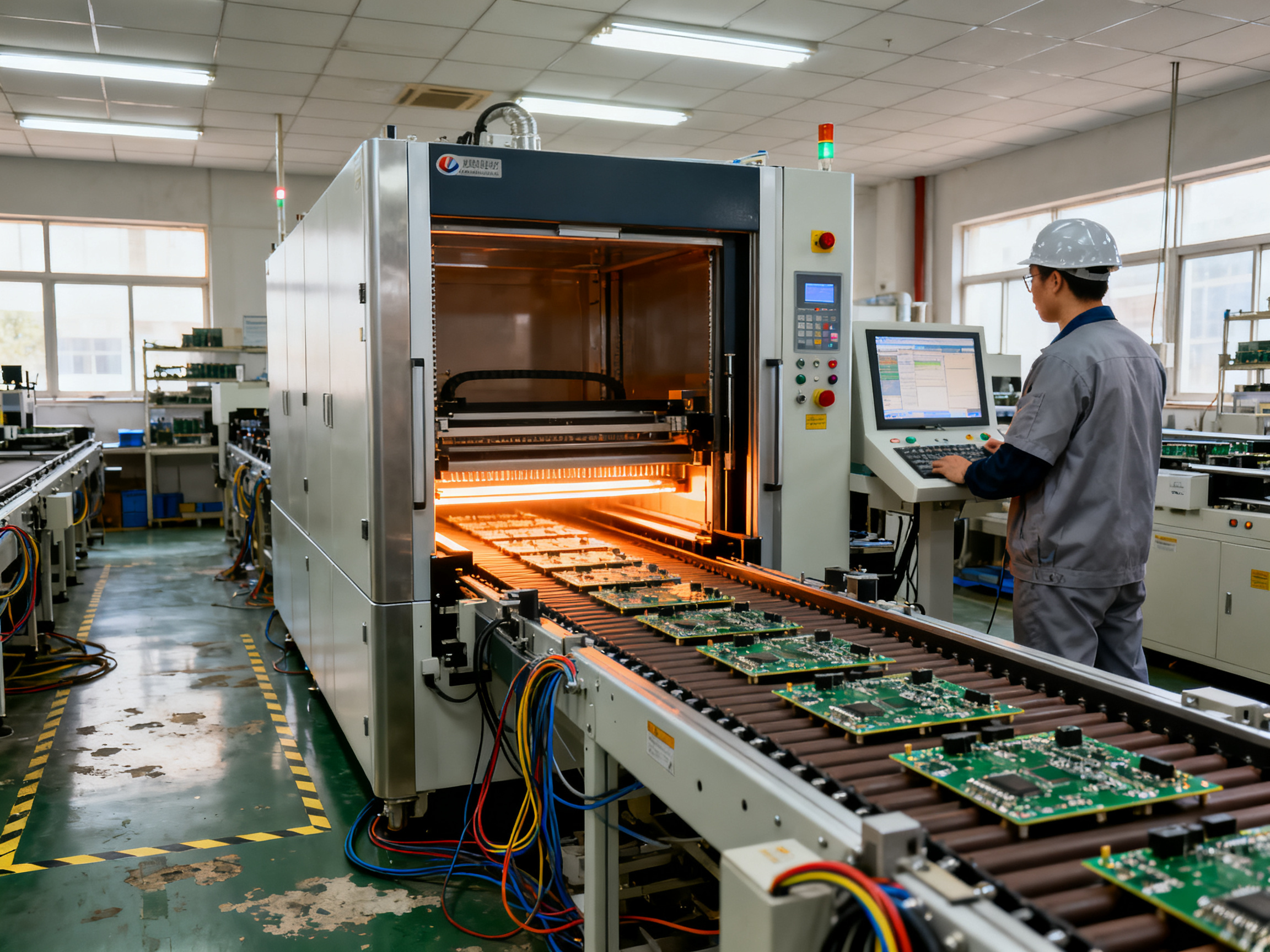
The answer isn’t a single model or brand. It’s a category of ovens that gets the fundamentals right across the board: tight temperature control, stable airflow, enough chamber space to handle your actual board sizes, repeatable cure profiles, and compatibility with standard SMT line protocols like SMEMA or IPC-HERMES signaling.
Look, I know tempting it is to just chase the lowest price on a catalog listing. But when you’re running production shifts and that oven goes down, every hour of downtime costs you more than the savings you made upfront. Large manufacturers who have learned this the hard way prioritize proven uptime, PLC/HMI usability, recipe management features, alarm systems, traceability data, and serviceability over initial purchase price. That’s just smart business.
Here’s what I’d tell any procurement team starting their shortlist: evaluate supplier documentation quality before you even schedule a demo. Ask about their FAT (Factory Acceptance Test) and SAT (Site Acceptance Test) procedures. Check spare parts availability for your expected 5+ year operating horizon. And don’t skip the process support conversation. A supplier who can help you optimize your cure recipe from day one is worth more than one who just drops equipment at your dock and disappears.
The best overall vertical curing oven for your line is the one that balances these factors for your specific production volume and thermal requirements. We’ll break down the top contenders for different use cases next.
| Factor | What to Look For |
|——–|——————|
| Temperature uniformity | ±1.5°C to ±3°C across working zone |
| Control system | PLC/HMI with recipe management and data logging |
| Line integration | SMEMA, IPC-CFX, or MES compatibility |
| Throughput | Match to actual daily board volume and takt time |
| Serviceability | Spare parts availability, remote support, response times |
| Documentation | Full O&M manuals, schematics, FAT/SAT reports |
For a deeper look at what high-volume electronics manufacturers prioritize in 2026, check out this guide on SMT curing oven buyer priorities.## 2. Best for Lead-Free SMT Production: Ovens Built for Stable Process Windows
Lead-free solder doesn’t just change your materials. It changes everything about how you have to think about thermal processing.
Here’s the problem. Lead-free SAC alloys need peak temperatures around 235 to 260 degrees Celsius, with time above liquidus in the 30 to 90 second range. Miss those windows by even a little and you’re looking at incomplete reflow, tombstoning, or components that crack before they ever leave the factory floor. The old batch oven that worked fine for tin-lead? It’s going to struggle with the tighter tolerances that lead-free demands.
For conformal coating and adhesive cure, the stakes are just as high. You need full cure without contamination of solderable areas. That means ovens with repeatable ramp and soak profiles, not just “hot air goes in, board comes out.” Airflow repeatability matters enormously here. One batch with turbulent zones and one with stable convection can mean the difference between a coating that passes IPC-A-610 inspection and one that delaminates in the field.
What production engineers tell me they look for first in 2026? Multi-zone heating with closed-loop PID control. Predictable ramp rates of 1 to 2 degrees per second during preheat. And yes, data logging so you can prove to customers (or auditors) that every board hit the right temperature for the right time.
The payoff for getting this right is real: fewer reworks, less waste, and production lines that actually hit their takt times instead of chasing defect rates.
Expert Tip: When evaluating lead-free capability, ask the supplier for temperature uniformity data tested under loaded conditions, not just empty-chamber specifications. A chamber that performs well empty can have significant hot and cold spots once boards, fixtures, and thermal mass are added.## 3. Best for High-Volume SMT Lines: Inline Vertical Curing Ovens With Multi-Zone Control
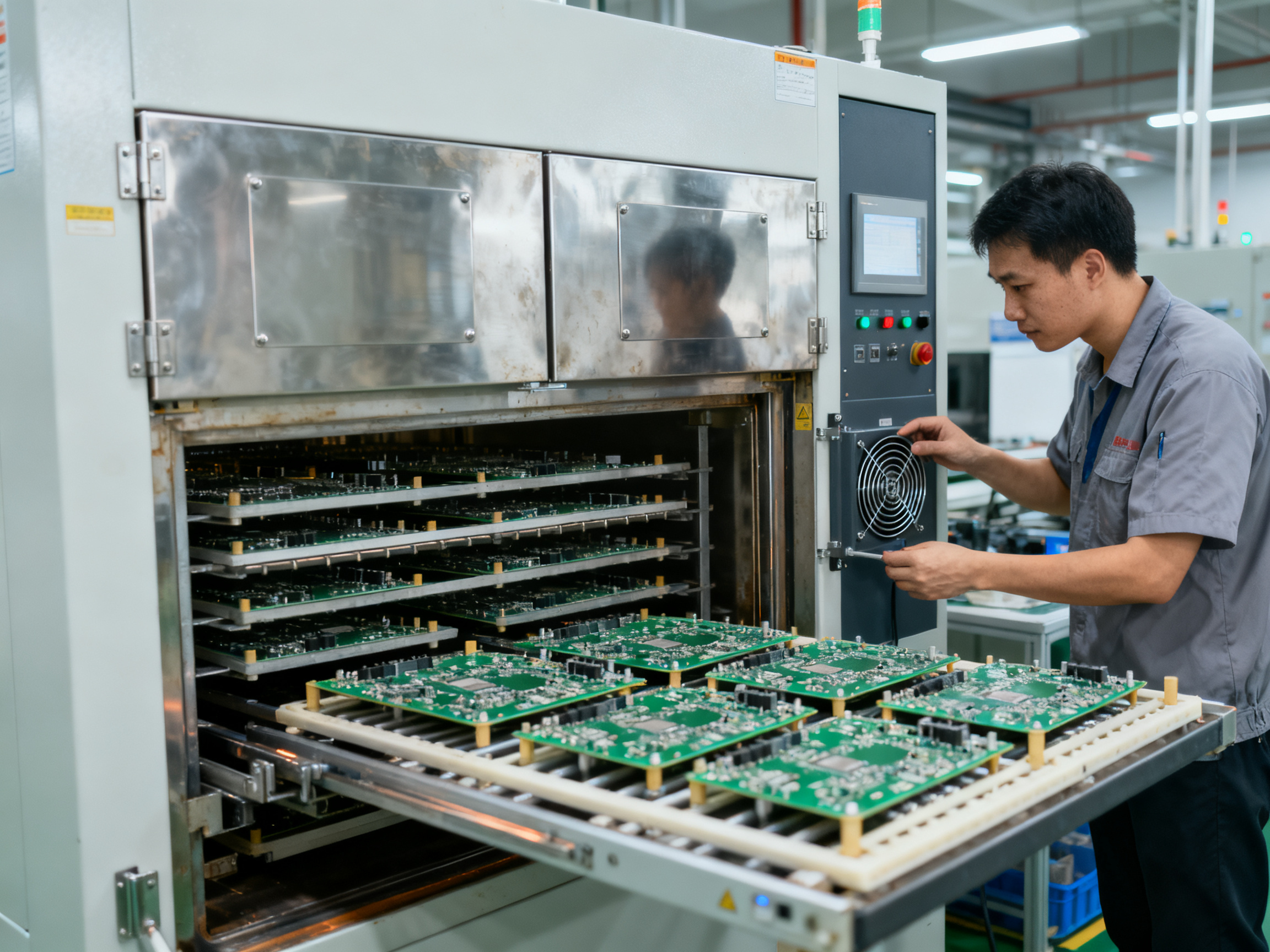
If your SMT line is pushing hundreds of boards per shift, an inline vertical curing oven starts looking really attractive. These systems sit directly in your production flow, moving boards continuously through heated zones on a conveyor. No batch loading, no waiting for chamber doors, no wasted time between cycles.
The real appeal here comes down to three things: floor space efficiency, consistent material handling, and seamless integration with upstream and downstream equipment. A well-designed inline system can often replace two or three batch ovens while taking up less square footage.
Here’s where things get technical though, and I want you to pay attention because this trips up a lot of buyers. Multi-zone heating gives you control over ramp rates and soak times, but the actual throughput depends on a bunch of interconnected factors. Conveyor speed, number of heated zones, board dimensions, carrier fixture design, and your specific cure recipe temperature and duration all work together. Change one variable and you might solve a problem or create three new ones.
We ran into this during a recent evaluation. The supplier advertised 300 boards per hour. Sounds great until you do the math with actual board sizes, the fixtures your operators use, and the 15-minute cure cycle your conformal coating requires. The real number came out to about 180 boards per hour. Big difference when you’re planning your shift schedule.
Throughput Calculation
| Variable | Formula Component |
|———-|——————-|
| Dwell Time | Cure cycle duration (minutes) + loading/unloading pitch (minutes) |
| Boards per Hour | 60 minutes ÷ (dwell time in minutes) |
| Line Speed | Total heated zone length (meters) ÷ dwell time (minutes) |
| Effective Throughput | Boards per hour × utilization factor (0.85-0.95 for changeovers/maintenance) |
Expert Tip: Before signing anything, ask the supplier to walk through a throughput calculation using your actual board dimensions, fixture specs, and cure recipe. A credible vendor will do this without hesitation. If they can’t or won’t, that’s a red flag.
One more thing worth mentioning: maintenance access matters more than manufacturers like to admit. Inline ovens running continuous shifts need regular cleaning, belt tensioning, and zone calibration. If your team can’t access components without shutting down the entire line, you’re looking at unplanned downtime that eats your efficiency gains for breakfast.## 4. Best for Semiconductor and Advanced Packaging Support: Clean, Repeatable, Data-Rich Ovens
When you’re working with advanced chip packaging, the stakes go beyond just curing boards. We’re talking FO-WLP, WL-CSP, Si interposers, RDL processes, and fan-out panel level packaging. These applications need something closer to a cleanroom-grade thermal workstation than a standard batch oven.
Here’s what that actually means in practice. Contamination control matters enormously. Ovens designed for semiconductor work often include HEPA filtration, cleanroom-compatible chamber designs, and Class 100 or ISO Class 5 configurations. If you’re doing polyimide curing or underfill processes, you cannot have particulate contamination settling on your parts mid-cure.
Nitrogen atmosphere support is another big one. Many advanced packaging processes run with single-digit ppm oxygen levels, sometimes under 10 ppm residual O2. That requires proper inert gas flow control, sealed chambers, and oxygen monitoring. Some setups even use vacuum or formic acid environments for specific cure profiles.
But honestly, the feature that separates the real semiconductor-grade ovens from the marketing claims is data richness. We’re talking SECS/GEM compliance, Ethernet CIM integration, complete process-history logging, and remote status monitoring. When a single wafer lot represents thousands of dollars, you need proof that every board hit the right temperature for the right time.
Thing is though, not every semiconductor application needs the same level of cleanliness or documentation. FO-WLP and glass interposer work have different requirements than RDL or Si interposer processes. The buyers who get burned are the ones who buy overkill for their actual needs, or worse, buy a standard curing oven and try to retrofit it into a cleanroom flow.
Semiconductor Support Checklist
| Requirement | What to Verify |
|————-|—————-|
| Cleanliness class | HEPA filtration, ISO Class 5 capability |
| Atmosphere control | Nitrogen flow, O2 monitoring, ppm levels |
| Traceability | SECS/GEM, recipe permissions, batch records |
| Data export | Process logs, alarm history, calibration data |
| Temperature mapping | Loaded conditions, spatial uniformity |
| Maintenance logs | Access schedules, service intervals |
Match the oven to your actual process material, substrate type, and quality documentation burden. Buying more than you need wastes budget. Buying less creates compliance headaches.## 5. Best for Automotive, Military, and Aerospace Electronics: High-Reliability Curing Systems
When failure is not an option, you need more than a reliable oven. You need a system that proves its reliability every single cycle.
Mission-critical electronics in automotive, military, and aerospace applications carry consequences that go way beyond defective units. An ECM module that fails in a vehicle means a recall. A control system that glitches in a military deployment means mission failure. Aerospace electronics that delaminate at altitude means something nobody wants to think about. So yeah, the stakes here are different.
The core of high-reliability curing comes down to process repeatability. Not just “this oven can hit 150 degrees.” I mean proving that every board, every shift, every month across a five-year production run hits the same temperature for the same time with the same result. That means closed-loop PID control with verified calibration. It means thermal profiling under actual loaded conditions. And it means documentation that stands up to customer audits, AS9100 inspections, or IATF 16949 reviews.
For conformal coating and adhesive bonding, failure modes include soft films from insufficient cure, adhesion loss from contamination, blistering from trapped solvent, and environmental mismatches where the coating simply was not validated for actual service conditions. You cannot fix these problems after the board leaves your line.
Supplier qualification matters more here than anywhere else. Ask about calibration records going back at least two years. Get a preventive maintenance schedule in writing before you sign. Understand their process validation support. And check their lifecycle commitment. When your production runs for eight years and the oven supplier has moved on to newer models, where does that leave you?
The buyers who get this right treat the oven as a quality system component, not just capital equipment. That mindset shift separates the factories that ship zero-defect mission-critical assemblies from the ones constantly chasing escapes.## 6. Best for Precision Electronics: Vertical Ovens With Tight Thermal Uniformity
Here’s a mistake I see buyers make all the time. They get so focused on finding an oven that can hit 300 degrees Celsius that they forget something more basic: can that oven hold 150 degrees consistently across your entire board load?
For precision electronics, the answer matters more than the maximum temperature spec. A BGA with 0.5mm ball pitch and a QFN with thermal pads underneath both need even heat distribution. Hot spots cause thermal shock and microcracks. Cold spots leave underfill partially gelled or coating incompletely cured. Either way, you’re looking at field failures that cost way more than the rework.
What actually affects thermal uniformity in real production?
Airflow design is the big one. Forced convection systems with properly sized recirculation fans and well-designed ductwork give you repeatability. The cheap ovens with tiny fans and poor airflow paths might look fine on paper, but load them with fixture carriers and large boards and you’ll see 5 to 8 degree swings across a single load.
Fixture mass matters too. Load configuration changes everything. When you stack heavy aluminum carriers next to empty slots, the thermal mass pulls heat away from components. Sensor placement matters as well. If your thermocouples sit only at the chamber walls, you’ll miss hot and cold zones where your boards actually sit.
And here’s the part nobody talks about enough: calibration drift. An oven that mapped perfectly at installation can drift out of spec as heating elements age and insulation compresses. Regular temperature mapping under loaded conditions catches this before it becomes a quality problem.
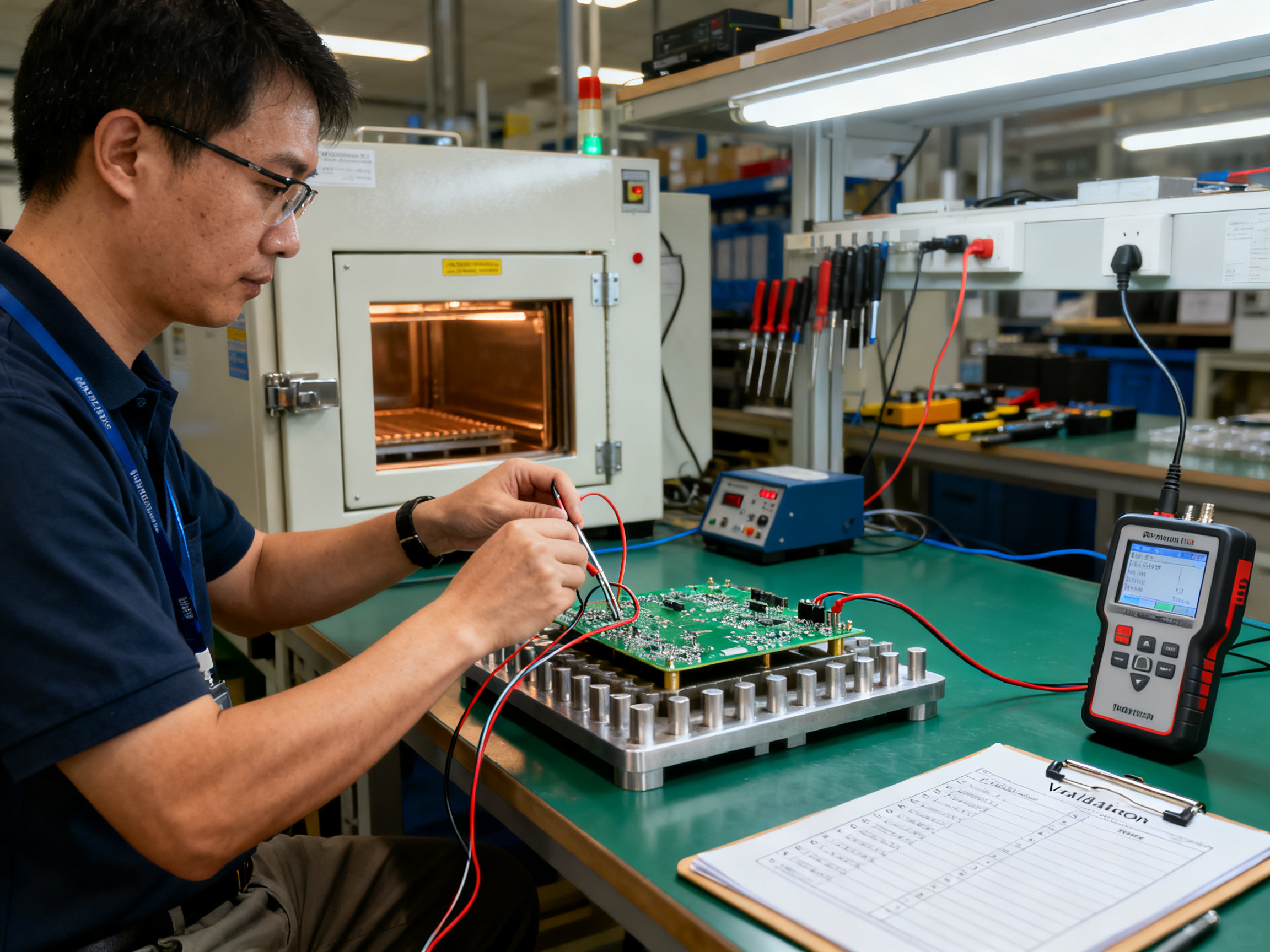
For BGA and QFN reliability, you want ±3°C or tighter across your working zone. Some precision applications call for ±1.5°C. That level of control isn’t about the headline temperature rating. It’s about the whole system working together to keep every board at the same temperature for the same time.
Pro Insight: Temperature uniformity, airflow design, and fixture loading matter more than headline maximum temperature for BGA and QFN reliability. Ask the supplier for loaded temperature mapping data that shows actual zones across your board size and fixture configuration, not just empty chamber specs.
When you get uniformity right, the downstream benefits follow. Coatings cure consistently without thin spots. Adhesive bonds reach full strength without weak zones. And that consistency shows up in your defect rates as lower scrap and rework across your precision electronics line.
| Uniformity Factor | What to Verify |
|——————-|—————-|
| Empty chamber spec | ±1.5°C to ±3°C typical target |
| Loaded chamber test | Map under real production conditions |
| Airflow design | Recirculation fan sizing, duct geometry |
| Sensor placement | Multiple points across work zone |
| Calibration schedule | Annual mapping, drift tracking |
| Fixture impact | Test with actual carriers and thermal mass |
7. Best for Flexible Manufacturing: Programmable Ovens for Mixed Product Lines
If your line is building smartphones in the morning, automotive modules by noon, and aerospace boards in the afternoon, you need something more flexible than a single-recipe oven locked to one profile. Mixed product manufacturing demands ovens that can pivot fast without compromising traceability.
The real win here comes down to recipe management. Modern programmable ovens store dozens (sometimes hundreds) of cure profiles in their control systems. When an operator scans a board or barcode, the system pulls the right temperature ramp, dwell time, and cooldown sequence automatically. No manual entry, no chance of running a 15-minute coating cure on a board that needs 25 minutes.
That barcode-to-recipe workflow I mentioned earlier? It looks something like this: product scan identifies the board type, MES verifies the approved cure profile, parameters download to the oven, cycle runs, and the whole thing logs to your traceability system. If a board fails in the field six months from now, you can pull the exact temperature log from that specific run.
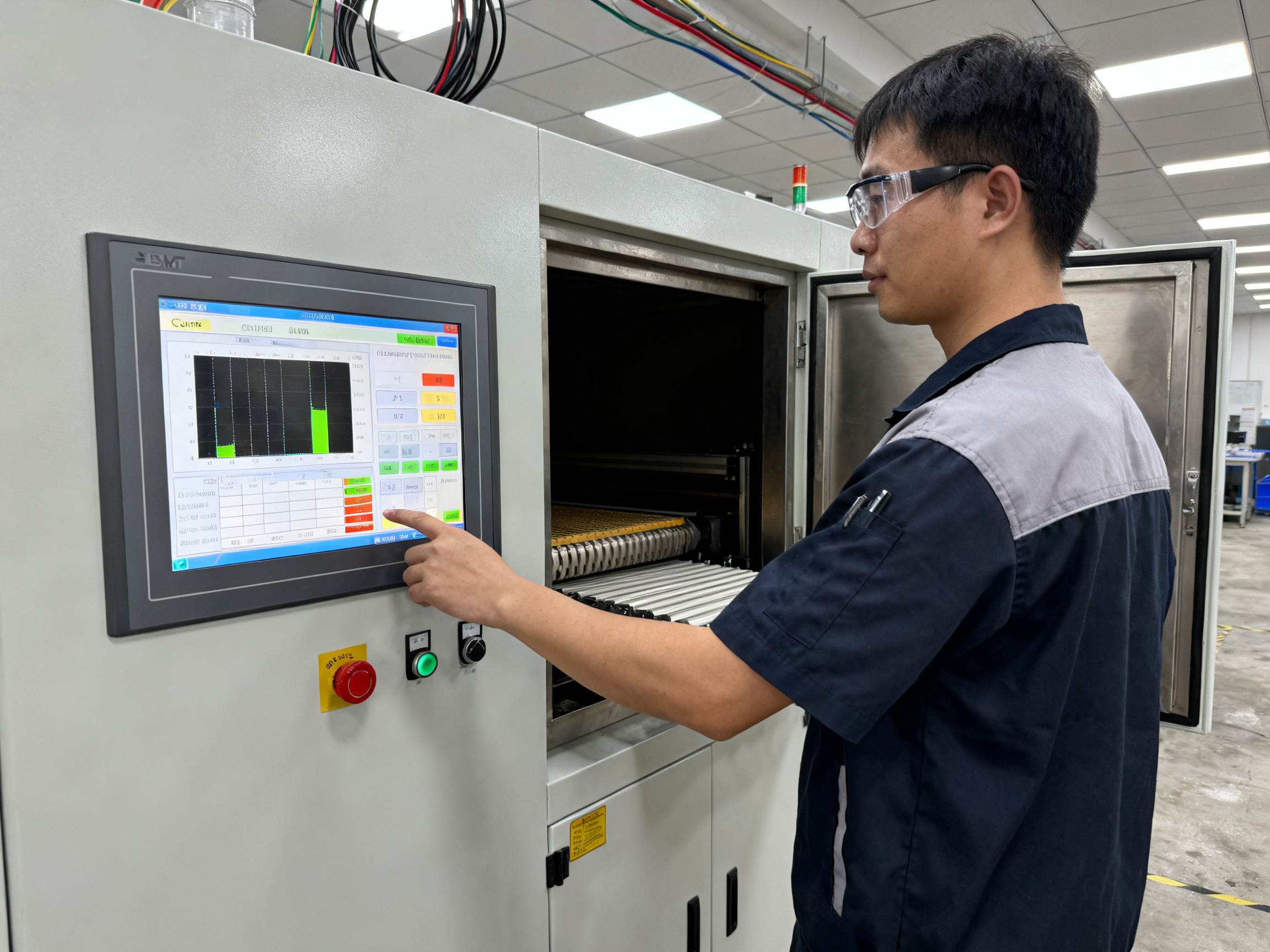
For factories running many SKUs, mistake-proofing matters more than most suppliers want to admit. You want controls that lock out unauthorized changes. You want permissions so only qualified operators can modify recipes. And you want automatic alerts if someone tries to run a profile that doesn’t match the board currently loaded.
The ovens that handle this well have MES integration built in, not bolted on. They speak standard protocols, export process data in formats your quality system can actually use, and keep audit trails without requiring an engineer to pull logs manually every shift.## Introduction
This section introduces the core concept of the article, providing context and motivation for the reader.
Key Points
- Point 1: Explanation of the first major idea.
- Point 2: Details on the second important aspect.
- Point 3: A brief look at the third crucial element.
Závěr
Summarizes the discussed points and hints at future directions.## 9. Best Heat Treating Oven Alternative: When a Vertical Curing Oven Can or Cannot Replace It
Here’s a question that comes up more than you’d think. Can you use a vertical curing oven instead of a heat treating oven? Sometimes yes. Often no. It depends entirely on what you’re actually trying to accomplish.
The short version is this. Curing ovens drive chemical reactions in coatings, adhesives, and composites. Heat treating ovens change the physical properties of metals and glass. Those are fundamentally different goals, and the equipment reflects that.
Vertical curing ovens typically max out around 250 to 500 degrees Celsius. That’s perfect for conformal coatings, adhesive cure, and PCB assembly work. But if you need to anneal steel, normalize forgings, or stress-relieve heavy weldments, you’ll need something with a lot more thermal capability. Heat treating furnaces regularly push past 1000 degrees Celsius with specialized atmosphere control. A curing oven simply cannot reach those temperatures.
Atmosphere matters too. Curing ovens usually run on ambient air or optional nitrogen purge. Heat treating often requires controlled environments like argon, endothermic gas, or even vacuum conditions to prevent oxidation and achieve specific metallurgical results. Without that capability, your heat treating process won’t produce the material properties you need.
The buyers who get burned are the ones who see “industrial oven” in a catalog and assume the labels are interchangeable. They order a curing oven for metallurgical work and end up with undercured parts, damaged fixtures, or worse.
Match the oven to your process chemistry, substrate type, and quality specification. If you’re not sure which category your application falls into, ask the supplier for their recommendation before you buy.
| Factor | Vertical Curing Oven | Heat Treating Oven |
|——–|———————|——————-|
| Temperature range | 50 to 500 degrees C | 100 to 1300+ degrees C |
| Atmosphere | Air or nitrogen purge | Nitrogen, argon, vacuum, endothermic gas |
| Material type | Coatings, adhesives, composites, PCBs | Metals, glass, ceramics |
| Process goal | Polymerization, cross-linking, drying | Hardening, annealing, normalizing, tempering |
| Validation needs | Temperature uniformity, cure profile | Metallurgical properties, hardness testing |
How to Choose the Right Vertical Curing Oven for Your SMT Line
Picking the right vertical curing oven for your SMT line doesn’t have to feel like guessing in the dark. Here’s a practical framework that production heads, procurement managers, and CTOs can use to cut through the noise and make a confident decision.
Step 1: Define Your Application
Start by getting crystal clear on what you’re actually curing. Conformal coating? Adhesive bonding? Lead-free PCB assembly? Each application has specific temperature and time windows that your oven must hit consistently. Map out your board dimensions and product variants too. Your chamber size needs to accommodate your actual board loads, not just the theoretical maximum on a spec sheet.
Step 2: Confirm Cure Profile Requirements
Get the exact temperature, dwell time, and ramp rate specs from your material supplier before evaluating anything. Running a cure profile that doesn’t match your coating or adhesive requirements will cost you in defects and rework. This sounds basic, but I’ve seen factories skip this step and pay for it later.
Step 3: Calculate Throughput Needs
Work backward from your shift targets. How many boards per hour do you need to hit? What’s your takt time? These numbers tell you whether you need an inline system or if batch makes more sense for your volume.
Step 4: Validate Line Integration
Your new oven needs to talk to your existing line. Check compatibility with SMEMA, IPC-CFX, or whatever protocol you’re running. Also verify floor space, ceiling height for exhaust routing, and connectivity to your MES or traceability system.
Step 5: Review Documentation and Lifecycle Support
Ask for the full documentation package upfront. O&M manuals, electrical schematics, calibration certificates, FAT/SAT protocols. Then get service response times in writing. A supplier who disappears after the sale is worse than buying cheaper equipment from someone who actually picks up the phone at 2am when your line goes down.
From Our Experience: Here’s the checklist I actually use during FAT planning. First, confirm temperature uniformity is tested under loaded conditions, not just empty chamber specs. Second, get written calibration certificates for every sensor. Third, verify spare parts availability for at least 5 years. Fourth, get a clear timeline for both FAT and SAT execution. If a vendor can’t provide these basics, walk away. I’ve learned this the hard way more than once.
Step 6: Plan Your Validation Protocol
Before anything ships, lock in your validation process. Sample-board testing with your actual products. Temperature mapping under real production loads. Clear pass/fail criteria for your FAT and SAT. Schedule operator training. Stock your spare parts. Do all of this before the oven arrives so you’re not scrambling to validate while your production schedule bleeds.
| Buyer Checklist | What to Verify |
|—————-|—————-|
| Application fit | Cure profile, temperature, time requirements |
| Chamber size | Matches board dimensions and production volume |
| Throughput | Calculated against actual shift targets and takt time |
| Line integration | Communication protocols, floor space, MES connectivity |
| Documentation | O&M manuals, schematics, calibration certificates |
| Service support | Response times, remote support, spare parts availability |
| Validation plan | FAT/SAT protocol, sample-board testing, temperature mapping |
This framework gives you a repeatable way to evaluate ovens regardless of vendor or brand. The goal is to buy with confidence, not luck.
Comparison Table: Best Vertical Curing Oven Categories in 2026
Before you jump into vendor demos and spec sheets, here’s a quick reference that maps oven categories to real-world use cases. Bookmark this page. You’ll come back to it during vendor calls.
| Category | Best Fit Application | Top Buying Criteria | Watch Out For | Ideal Customer Profile |
|———-|———————-|———————|—————|———————-|
| Balanced General-Purpose | Mixed SMT production, standard conformal coating | Temperature uniformity, recipe management, SMEMA/IPC-CFX ready | Empty-chamber specs that don’t match loaded performance | Mid-volume contract manufacturers, multi-product lines |
| Lead-Free Optimized | SAC alloy PCB assembly, lead-free reflow | Multi-zone heating, precise ramp/soak control, data logging | Single-zone ovens that can’t maintain tight profiles | High-volume consumer electronics, automotive Tier 2 suppliers |
| Inline High-Throughput | Continuous SMT flow, hundreds of boards per shift | Conveyor speed matching, heated zone length, changeover speed | Throughput claims that ignore your actual cure dwell time | Large-scale OEM production lines |
| Semiconductor-Grade | FO-WLP, WL-CSP, Si interposer, RDL processes | HEPA/ISO Class 5 cleanliness, nitrogen atmosphere, SECS/GEM | Cleanroom capabilities that don’t meet your particle count requirements | Advanced packaging fabs, chip integration specialists |
| High-Reliability Certified | Automotive, aerospace, military electronics | IATF 16949/AS9100 alignment, full traceability, process repeatability | Documentation gaps that cause audit failures | Automotive Tier 1, defense contractors, mission-critical assembly |
| Precision Uniformity | BGA, QFN, underfill, sensitive components | ±1.5°C loaded uniformity, calibrated mapping, stable airflow | Temperature drift that goes undetected between calibrations | High-density advanced packaging, reliability-critical applications |
| Flexible Mixed-Model | Frequent product changeovers, many SKUs | Recipe portability, barcode-to-recipe workflow, MES integration | Recipe lockout that slows down legitimate changeovers | Contract manufacturers with diverse customer base |
| Energy-Efficient TCO | High energy costs, legacy ovens, sustainability targets | Heat recovery, VFD fans, standby controls, insulation quality | Energy claims without load-specific testing | Cost-conscious operations, ESG-driven facilities |
| Heat-Treating Crossover | Industrial heat treating, annealing, stress relief | Temperature capability above 500°C, atmosphere control options | Mixing curing ovens with actual heat treating requirements | Metal fabrication shops, industrial heat treating operations |
See what I mean? Nine different categories, nine different sweet spots. The “best” oven for your neighbor’s line might be completely wrong for yours.
That’s the whole point of this guide. Your application, your volume, your thermal requirements, your integration needs. Those are what drive the decision, not whatever happened to rank highest on a search result two years ago.
Use this table as your starting point. Figure out which category fits your situation, then dig into the detailed sections below for buying criteria, common mistakes, and validation checklists specific to that oven type.
Conclusion: The Best Vertical Curing Oven Is the One Proven Against Your Process
Here’s what you should actually take away from all this.
The best vertical curing oven for your SMT line isn’t the one with the longest feature list or the lowest price on a spec sheet. It’s the one that fits your actual production process, delivers consistent thermal uniformity across your real board loads, and keeps running shift after shift without eating your maintenance budget.
In 2026, smart buyers evaluate ovens on seven things: process fit for your specific cure requirements, temperature uniformity under loaded conditions, throughput matched to your shift targets, integration with your existing line protocols, complete documentation for audits, serviceability and support response, and long-term total cost of ownership. Skip any of these and you’ll pay for it later.
My recommendation hierarchy is straightforward. First, validate your cure process requirements with your material supplier. Get those temperature and time specs locked down before you talk to any vendor. Second, confirm your line capacity and floor space constraints. Third, compare automation features, traceability data, and lifecycle support. That’s where the real differences between suppliers show up.
For large manufacturers ready to move forward, here’s your action list: gather your product data and board dimensions, request detailed technical specifications from at least three suppliers, run sample validation with your actual boards and cure profiles, compare FAT criteria side by side, and get production, quality, and procurement involved early. Don’t let this be a procurement-only decision.
Need help cutting through the noise? Talk to our team about a technical evaluation or specification consultation for your SMT line.
Final Decision Checklist
- Confirm cure profile requirements with material supplier
- Calculate required throughput against actual shift targets
- Verify temperature uniformity under loaded conditions
- Review line integration protocols (SMEMA, IPC-CFX)
- Compare documentation packages and calibration records
- Evaluate service response times and spare parts availability
- Run sample validation before final acceptance