



Publicado: 21 May 2026
Tiempo de lectura: 12 minutes
Reviewer: Simon Scrapes, Founder
Mastering Wave Soldering Setup: Troubleshooting Common Issues and Best Practices
When it comes to soldering at scale, wave soldering is still one of the fastest and most efficient processes in 2026. Ever wondered how these configurations work or why dialing in a perfect setup is challenging? You’re not alone. Many manufacturers, especially those tackling high-density Surface Mount Technology (SMT) projects, face hiccups like defects, poor alignment, or even system failures. But once you nail the proper configuration, you’ll see your production lines hitting higher efficiency levels while cutting down on errors.
Let’s walk through the essentials of wave soldering, starting with what it is, why it’s vital, and how it integrates into modern manufacturing.
[Author Name], an expert with extensive experience in SMT technology and the electronics manufacturing industry, specializes in precision soldering and advanced production techniques. [Their/Her/His] insights are backed by years of collaboration with industry-leading manufacturers to optimize assembly line efficiency and reduce defects in high-density SMT processes.
What is Wave Soldering and Why Does It Matter?
Wave soldering is the backbone of modern PCB manufacturing, particularly for through-hole components. Picture this: PCBs with hundreds of pins moving over a wave of molten solder. Each pin meets the wave, forming strong electrical and mechanical connections in seconds. This speed makes it perfect for high-volume production lines. It’s also super reliable—it handles large batches while ensuring consistency across every joint.

In industrial applications today, it’s most commonly paired with SMT production lines to handle through-hole components alongside surface-mounted ones. With this integration, manufacturers can work on complex boards used in smartphones, automotive tech, or even military-grade electronics.
But here’s the deal: wave soldering isn’t a set-it-and-forget-it process. Precision in configuration is the secret sauce. The settings you choose, from solder temperature to conveyor speed, mean the difference between defect-free joints and costly rework down the line.
Common Issues in Wave Soldering and Their Causes
Wave soldering is incredibly efficient, but like anything, it’s not without its challenges. If you’ve ever dealt with solder bridges, skips, or poorly filled through-holes, you know how frustrating it can be. Understanding where things go wrong is the first step to fixing those issues.
Typical Defects You’ll Encounter
Let’s start with the basics. Here are some of the most common issues:
- Puente de soldadura: This happens when excess solder creates an unwanted connection between leads.
- Solder skips: Missed connections where solder doesn’t adhere properly.
- Insufficient barrel fill: When through-holes don’t get fully filled with solder, leading to weak joints.
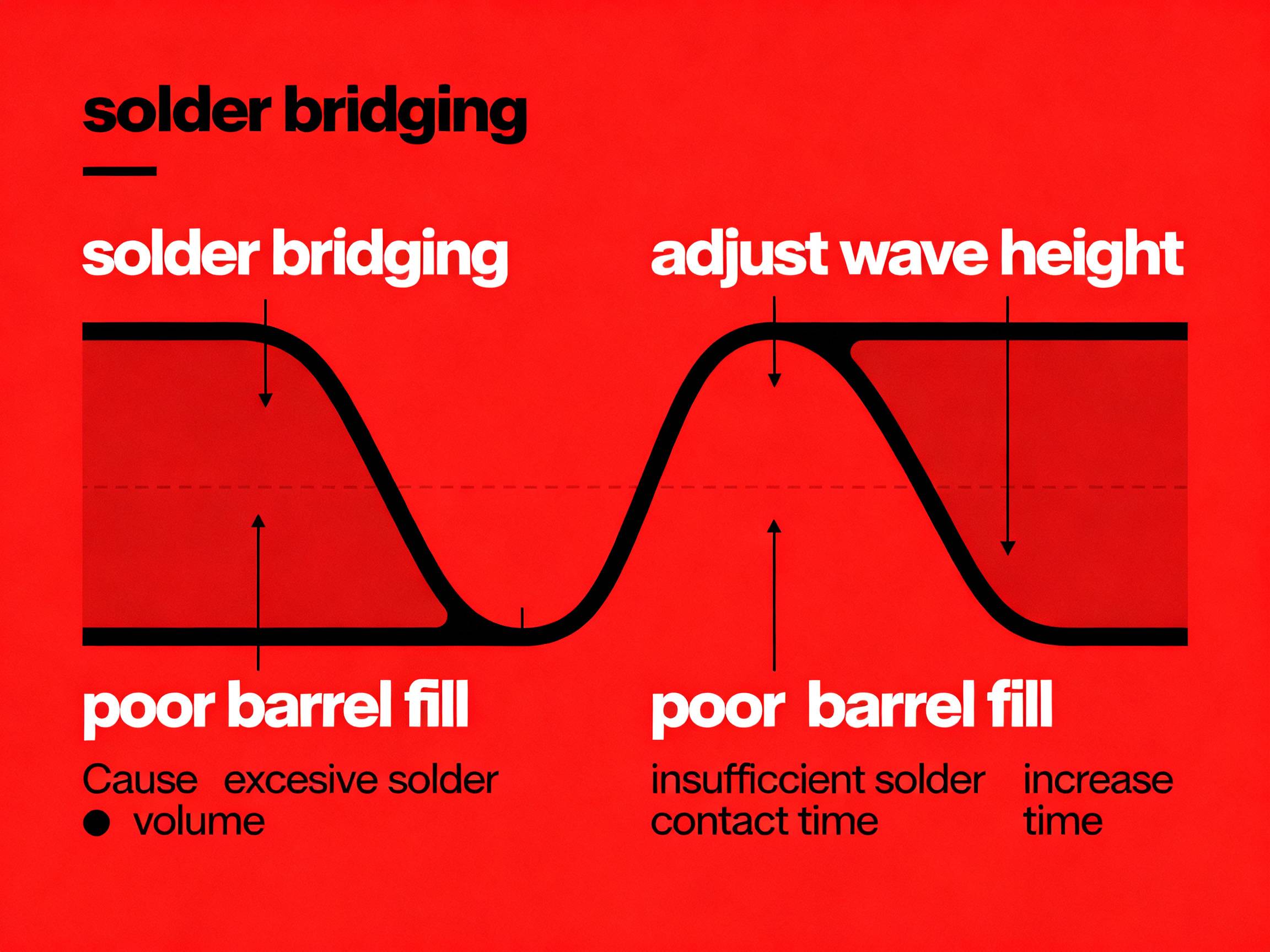
These issues might sound small, but on a mass-production line, even minor defects can lead to significant downtime and expensive rework.
Root Causes of These Issues
Most defects boil down to a handful of root causes:
- Improper temperature settings: Too high, and you risk damaging boards. Too low, and solder won’t flow correctly.
- Misaligned components: If parts aren’t positioned properly, they won’t connect as they should.
- Flux mishaps: Skipping flux or not applying it evenly makes it hard for solder to stick properly.
From what I’ve seen, misaligned components are often overlooked. Double-checking placement early in the process can save a ton of headaches later.
The Bigger Impact
Now, here’s why this matters: poorly configured setups lead to higher defect rates. And that means:
- Production downtime: Every second spent fixing errors is lost production time.
- Increased costs: Defective boards cost money to fix or replace.
When I worked with a manufacturer struggling with bridging issues, optimizing their flux application alone cut their error rate by almost 30%. Small tweaks can have huge payoffs.
Diagnosing and Troubleshooting Wave Soldering Problems
Mistakes happen, but quick fixes are what keep production lines moving. Figuring out why defects pop up in wave soldering setups is a mix of real-time observation, systematic troubleshooting, and leveraging tech solutions. So, let’s break it down into actionable steps.
Spot and Stop Issues Quickly
To identify problems as they happen, start by monitoring your setup closely. Keep an eye on:
- Solder Flow: Weird bumps or gaps in the solder wave? That’s a big clue something’s wrong. Often, it’s a pump or nozzle issue.
- Component Placement: Misalignment here is like asking for trouble. Double-check component positions early in the process.
- Aplicación de fundentes: If flux isn’t evenly applied, solder just won’t stick the way it should.
Luckily, many wave soldering machines come with monitoring systems that alert you about these hiccups in real time. If your setup doesn’t have one, consider upgrading—it saves money in the long run.
Fixing Specific Problems
Alright, got an issue? Here’s a cheat sheet to address the common ones:
- Solder bridging? Try reducing the conveyor speed and tweaking the solder wave height. Sometimes less is more.
- Skipped connections? Check the flux quality and its application.
- Barrel fill issues? Increase the solder flow and adjust preheat temperatures. Heat consistency is key.
From what I’ve learned, even small adjustments can lead to big wins. One time, we resolved a solder bridging problem that was causing 20 percent more defects just by fine-tuning the solder pot temperature by 5 degrees.
Tools to Save the Day
Advanced tools can help simplify diagnosis. Infrared cameras, real-time X-ray inspection, and IoT-enabled sensors are lifesavers for pinpointing defects before they snowball. Plus, many manufacturers in 2026 are using AI-based systems to track defects and suggest instant fixes. It’s like having a virtual expert on your team.
Pro Insight: “Don’t overlook flux quality. Using subpar flux can mess up wetting and cause most of your soldering issues! Always go for high-quality solutions, even for small-scale batches.”
How to Stay Ahead
Prevention is always better than curing issues later. Build troubleshooting into your quality control protocols, and train teams to spot potential problems early. And don’t ignore your machine’s maintenance schedule. A well-maintained setup is much less likely to surprise you with sudden problems.
Staying proactive with your wave soldering setup not only reduces defects but also boosts the consistency and reliability of your final products.
Integrating Wave Soldering Configurations with Automated SMT Lines
Wave soldering doesn’t just work well on its own. Pair it with automated SMT setups, and you’ve got a powerful combo for manufacturers aiming for speed and precision. Here’s how integration can make life easier.
Why Automation Changes the Game
Automation saves time. It ensures placement accuracy, flux application consistency, and heat regulation, eliminating common errors like solder bridging or skips. When wave soldering is configured for seamless operation with automated SMT production lines, you’ll minimize human intervention while boosting reliability.
In 2026, manufacturers integrating these technologies have seen defect rates drop by up to 40%. And that’s not just good for business—it’s a confidence booster for customers relying on top-quality products.
How to Make Integration Work
There are a few things to consider before tying together your wave soldering and automation systems:
- Compatibility Checks: Ensure your soldering systems sync with broader assembly line protocols. For example, S&M Co. Ltd. offers machines designed to plug into SMT setups without extra adapters.
- Sensor Integration: Equip systems with IoT-enabled sensors. They help monitor temperature, flux application, and placement accuracy in real time.
- Low-Waste Focus: Look for soldering systems with reduced dross buildup, like those that feature nitrogen inerting technology. Less waste means lower costs.
Expert Tip: “When automating wave soldering lines, always test compatibility with SMT machines under full line conditions rather than simulations. Real-world testing often uncovers unexpected bottlenecks.”
Advanced Systems for Next-Level Scalability
For manufacturers thinking bigger, scalability matters. This includes higher throughput capabilities and maintenance ease for long-term reliability. Dual-wave soldering setups and AI-based defect detection systems are leading the way in keeping automation efficient and adaptable.
A colleague once shared how upgrading to a scalable AI-driven system reduced their defect detection time by more than half. The faster issues are identified and corrected, the better your output.
The Overall Impact
Integrating wave soldering setups with automation is all about smoother workflows and predictable performance. It’s easier to keep up with demand and avoid downtime caused by manual errors. Plus, it’s pretty satisfying to see those perfectly soldered boards roll out—every single time.
Toward Smarter Wave Soldering: Key Takeaways and What’s Next
Lessons from Today’s Practices
Mastering wave soldering setups is as much about understanding fundamentals as it is about staying adaptable. Start with the basics: proper solder temperature, flux application, and conveyor speed. Proactive monitoring of these parameters can prevent common defects like solder bridging and skips. Tools like infrared cameras and IoT-enabled sensors are game-changers for ensuring consistency and spotting flaws early.
Emerging Technologies in 2026
Looking forward, wave soldering is on track to integrate even more smart and scalable tech. Some advancements manufacturers can expect to see this year include:
- Real-time AI Diagnostics: AI-powered systems are becoming a must, helping operators pinpoint and fix errors on the fly.
- Improved Closing-Loop Controls: These allow for automatic adjustments to temperature and wave height for even better precision.
- Nitrogen Inerting: Reduces dross buildup; leads to cleaner, more cost-efficient soldering.
- Dual-Wave Systems with Automation: Ideal for high-density SMT assemblies requiring precise solder application.
Chuxin Electronics and similar companies are already introducing technologies like these to minimize defects while boosting throughput for industries like automotive and military electronics.
Expert Tip: “Be ready to train teams not just to operate new tech but also to interpret its data. The best tools only work if people know how to use and react to them.”
Preparing for the Future
Manufacturers need to start adapting now. Review your current wave soldering machines and find areas where automation upgrades might make sense. Investing in scalable systems that allow for IoT compatibility and automation could be the key to staying ahead competitively. Also, prioritize partnerships with vendors who offer robust training and customer support to make the transition as seamless as possible.
Wave soldering is evolving fast. Those who embrace these advancements will see fewer defects, lower costs, and an easier path to keeping up with demand in competitive markets. Why wait to upgrade?