



Publicado: 01 September 2026
Última actualización: 01 September 2026
Tiempo de lectura: 12 minutes
Reviewer: [Verified SMT process engineer required]> Publicado: 01 September 2026
Tiempo de lectura: 12 minutes
Reviewer: [Verified SMT process engineer required]
If you run a PCB assembly line, you’ve probably faced this question before: should you use nitrogen reflow or stick with regular air reflow?
Here’s the short answer. Air reflow uses the oxygen in the room, plain and simple. That oxygen can cause oxidation on your pads and component leads during heating. Nitrogen reflow floods the oven with inert gas, pushing most of the oxygen out. Less oxygen means less oxidation, which can mean cleaner joints and fewer defects.
But here’s the thing, nitrogen is not always the better choice. It costs money to pipe in, and not every board needs it. A simpleHASL-finished board with large-pitch parts? Air works just fine. A dense BGA assembly with OSP finish and lead-free solder? Nitrogen might save you a lot of rework.
The real question is not which method is “better.” It is which one fits your board, your paste, your defect history, and your budget. In this guide, we’ll walk through how each process works, what the temperature profiles look like, where each one shines, and how to decide without over-engineering your setup.
Spoiler: the decision often comes down to what you are building, not what everyone else is building.## About the Author
Author Credentials Pending Verification
This article was developed using technical research and industry-standard documentation. Author credentials specific to SMT reflow processes, equipment commissioning, or electronics manufacturing have not yet been supplied for publication. The content draws from IPC standards, equipment manufacturer technical papers, and peer-reviewed process literature. Once verified credentials and documented manufacturing experience are provided, this bio will be updated to reflect relevant expertise in reflow soldering, nitrogen atmosphere control, or SMT production optimization.
How Nitrogen and Air Reflow Ovens Work
Both reflow methods run your boards through the same basic thermal sequence. You start with preheat to drive off solvents and bring everything up to temp gradually. Then a soak stage gives the flux time to activate and equalize heat across different component sizes. After that, you ramp to peak temperature, stay there long enough for the solder to melt and flow (that’s time above liquidus, or TAL), and finally cool everything down in a controlled way so joints solidify without cracking.
Heat transfer happens through forced convection in most modern ovens. Hot air moves across your board and components, and the speed of that airflow affects how evenly your board heats up.
An air reflow oven just circulates the regular atmosphere in your shop. The heating elements warm the air, fans push it through the heating zones, and your board soaks up that heat. Simple, straightforward, and it works fine for a lot of boards.
A nitrogen reflow oven does the same basic job, but it floods the chamber with inert gas. Nitrogen gets piped in, pushing most of the oxygen out. The oven maintains a target oxygen level, usually somewhere between 100 and 1000 ppm depending on your process needs. Some precision work goes lower than 100 ppm, while standard production might sit around 300 to 500 ppm. Oxygen sensors (typically zirconia-based) measure concentration in real time, and closed-loop controls adjust nitrogen flow to hold that target [1].
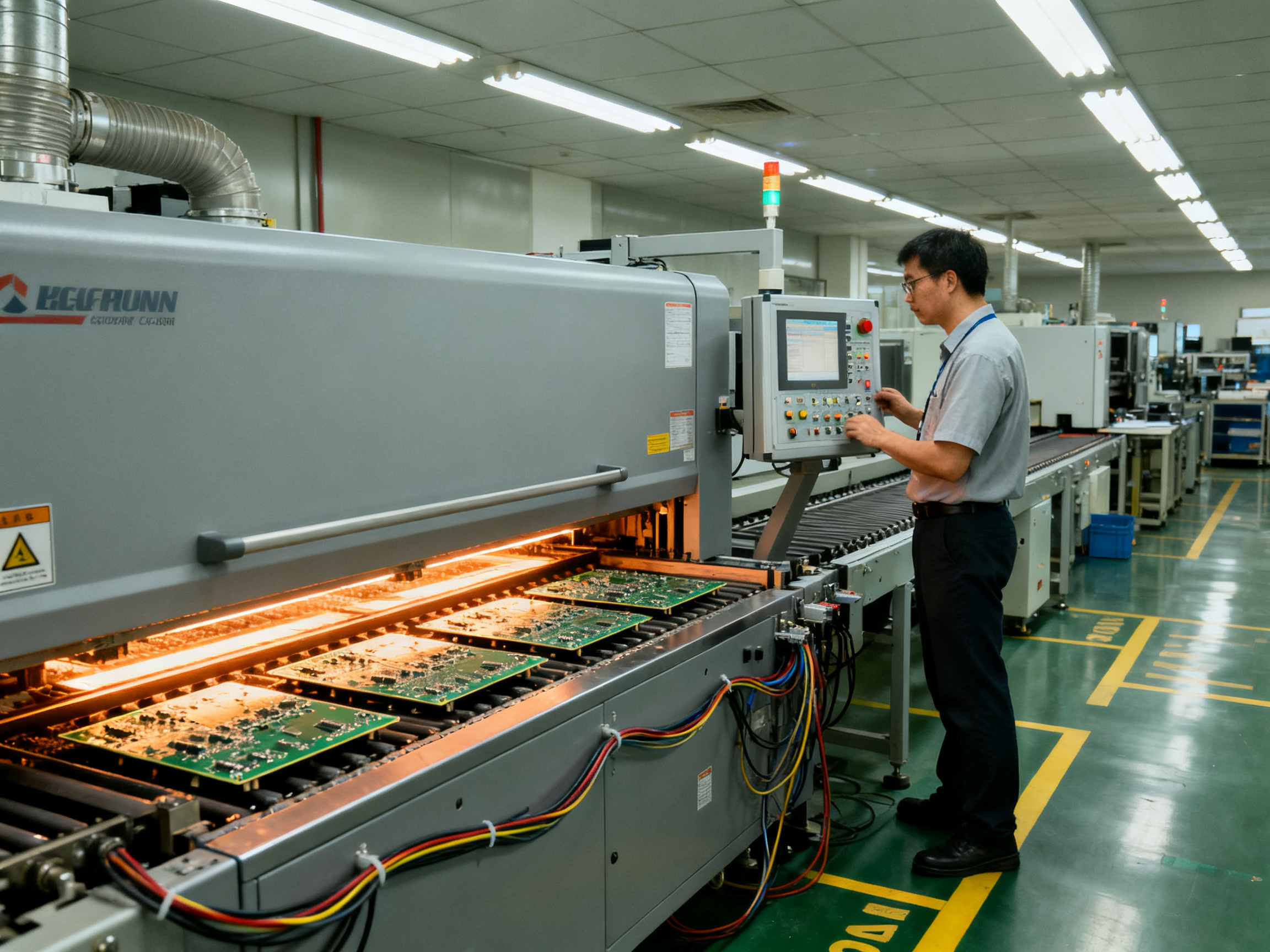
Here is the part that trips people up though. Switching to nitrogen does not fix bad profiling, wrong paste selection, a worn stencil, or poor placement. Nitrogen changes the atmosphere inside the oven, nothing more. You still need a board-specific thermal profile, correct paste for your alloy, proper stencil aperture design, and solid conveyor setup. The atmosphere just affects how much oxidation forms on your pads and component leads during heating, and that influences wetting behavior and joint quality.
| Term | What It Means |
|—|—|
| Time Above Liquidus (TAL) | Seconds the solder stays molten |
| Soak | Pre-peak temperature hold for flux activation |
| Ramp Rate | How fast temperature rises between zones |
| Liquidus | Temperature where solder becomes fully molten |
| Inerting | Replacing oxygen with inert gas |
The炉 atmosphere matters, but it works alongside your thermal profile, not instead of it.## Key Differences Between Nitrogen Reflow and Air Reflow
Now let us get into the specifics. Both methods reflow your boards through the same thermal stages, but the atmosphere inside the oven changes everything about how the solder behaves and what can go wrong.
The biggest difference comes down to oxygen. In air reflow, your pads and component leads sit in an oxygen-rich environment during heating. That oxygen reacts with the metal surfaces, forming oxides that interfere with solder wetting. Nitrogen suppresses that reaction by displacing most of the oxygen, typically down to 100 to 1000 ppm or lower depending on your target [1].
That shift in oxygen changes wetting behavior. Nitrogen generally gives you better, more consistent solder flow, cleaner joint appearance, and fewer oxidation-related defects like non-wetting or head-in-pillow [2]. But here is the catch, nitrogen does not fix everything. If your stencil apertures are wrong, your paste is aged, or your profile is off, you will still get defects, just different ones. Atmosphere only affects oxidation; it does not compensate for bad process design.
| Factor | Air Reflow | Nitrogen Reflow |
|—|—|—|
| Oxygen level | 209,000 ppm (ambient air) | 100 to 1000 ppm typical |
| Wetting quality | Good on forgiving assemblies | Better on oxidation-sensitive parts |
| Equipment complexity | Standard forced-convection oven | Nitrogen system, sensors, controls |
| Utilities | Electricity only | Electricity plus nitrogen supply |
| Operating cost | Lower (no gas cost) | Higher (nitrogen consumption) |
| Maintenance | Basic oven maintenance | Generator filters, sensor calibration |
| Process window | Standard | Often wider due to reduced oxidation |
| Common defects | Oxidation, dull joints, non-wet | Usually paste or profile related |
Defect causes split into two buckets. Oxidation-related defects (poor wetting, head-in-pillow, non-wetting on pads) respond to nitrogen. Printing defects, placement errors, contamination issues, and profile problems do not. Running your board in nitrogen while your paste is wrong will not save you [2].
On the cost side, air reflow wins for simpler boards. HASL finishes, large-pitch parts, and non-critical assemblies rarely need the added expense of nitrogen. But for dense BGAs, QFNs, OSP-finished boards, and lead-free assemblies with tight wetting margins, the defect reduction and yield improvement can justify the operating cost [3].
Manufacturers evaluating a switch should look at their defect history first. If most of your issues trace back to oxidation or wetting, nitrogen probably helps. If your problems are tombstoning, bridging, or voiding tied to paste or placement, nitrogen will not fix them, and you might be chasing the wrong solution.
For line expansions or retrofits, dual-atmosphere ovens let you run both modes on the same equipment, though that adds complexity and cost. Some teams start with air, qualify nitrogen on their most demanding board family, and only switch that product over. Others run nitrogen continuously once they have validated the benefit. There is no single right answer; it depends on your product mix and defect data.
Consejo de experto: Profile the actual assembly and log oxygen concentration; do not infer a valid profile from oven setpoints alone. The only way to know what your atmosphere actually delivers is to measure it during production, not just trust the oven settings.## Temperature Profiles: What Changes and What Does Not
Your thermal profile is your process recipe. It tells the oven exactly how fast to ramp up, how long to soak, how hot to go, and how fast to cool down. For lead-free assemblies running SAC305 paste, the numbers usually land in ranges like these:
| Parameter | Typical Lead-Free Target | Acceptable Range |
|—|—|—|
| Ramp rate | 1.0 to 1.5°C/s | 0.5 to 2.5°C/s |
| Soak (optional) | 140 to 170°C | 20 to 120 seconds |
| Peak temperature | 235 to 245°C | 230 to 260°C |
| Time above liquidus (TAL) | 45 to 60 seconds | 30 to 100 seconds |
| Cooling rate | 2 to 4°C/s | 2 to 6°C/s |
Check your solder paste datasheet first. Those numbers above come from common practice, but your paste maker’s specs and your component limits always take priority over general guidelines.
Now here is the part that matters for the nitrogen versus air decision. The thermal profile itself does not change when you switch atmospheres. You run the same ramp, the same soak, the same peak, the same cool-down. What changes is how the solder behaves during that profile.
Nitrogen may improve wetting at a given setpoint. That cleaner atmosphere means less oxidation on your pads and leads, so the solder flows more readily. Some teams get confused and think this means they can jack up the peak temperature, run a shorter TAL, or push the conveyor faster to save time. That is a bad idea. Your paste datasheet and component limits still rule the process. Nitrogen gives you a wider process window and better joint quality, but it does not excuse overcooking your board or cutting corners on time above liquidus.
How to Profile Your Board the Right Way
You need real thermocouples and profiling software. Attach those thermocouples to your actual board, not just the oven chamber. Here is where most people slip up.
Good thermocouple placement means:
- BGA corners and center (those packages trap heat)
- QFN thermal pads and lead edges
- Large connectors or components with big ground planes
- The board location farthest from the thermocouple entry point
Run the profile with a fully loaded conveyor, just like production. Empty-board profiling can be 10 to 15°C off from what your actual production panels see, especially with thick laminates or heavy copper. Once you have the profile, log it. Compare your air reflow results against your nitrogen results. That is how you tell whether the atmosphere switch actually helped.
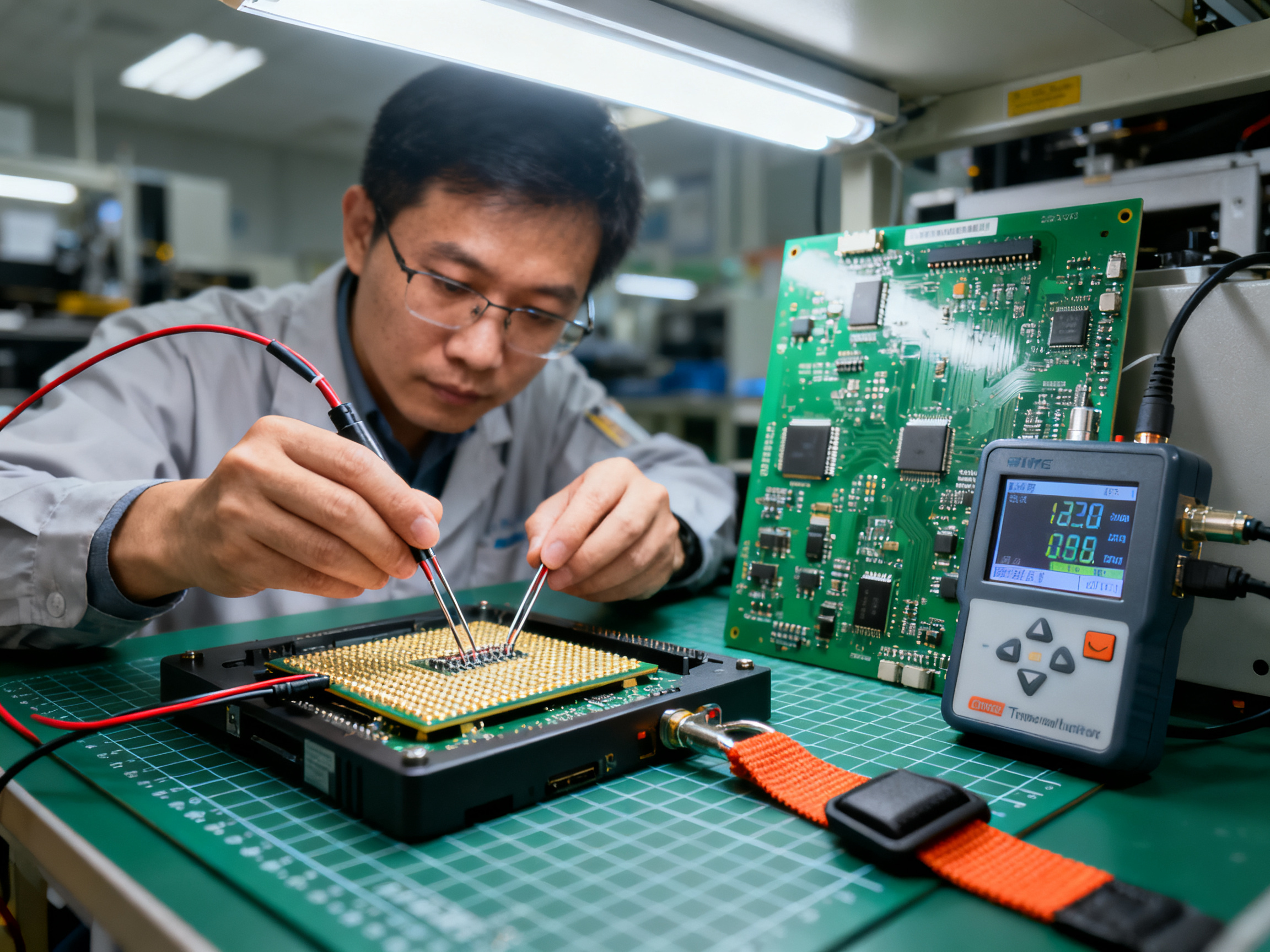
Consejo de experto: Profile the actual assembly and log oxygen concentration; do not infer a valid profile from oven setpoints alone. Thermocouple attachment to high-risk locations, large thermal-mass parts, and temperature-sensitive components will always outperform guessing.
One more thing. Board thickness, copper weight, panelization, and component density all shift your actual measured temperatures. A 2.4mm thick board will run different than a 1.6mm board in the same oven, same profile settings. Profile each significant board family. Do not assume one profile fits all.
The atmosphere matters. The profile matters more. Get the profile right first, then let nitrogen add process margin where it helps.## Pros and Cons of Nitrogen Reflow
Nitrogen reflow has real benefits, but it also comes with real costs. Here is the honest breakdown.
The Upside
Better wetting. With oxygen pushed down to 100 to 1000 ppm, your pads and component leads stay cleaner during heating. That means solder flows more easily and joints look shinier [2].
Fewer oxidation defects. One production study saw defect levels drop from 1250 ppm (in air) to 275 ppm after switching to nitrogen. Non-wetting defects fell by more than 85% [5].
Wider process window. When oxidation is not fighting your paste, you have more margin for profile variation. This matters for dense BGAs, QFNs, and fine-pitch parts where wetting margins are tight.
Cleaner joints. Less oxidation means less flux breaking down under heat, which often means less residue and better cosmetics.
The Downside
Nitrogen costs money. Whether you pipe in bulk gas or run an on-site generator, you are paying every month. Generators also need filter changes, compressor maintenance, and periodic calibration of oxygen sensors.
Equipment complexity. Nitrogen ovens have extra sensors, flow controls, and purge sequences. Leaks can creep in, and purity can drift if you skip maintenance.
It does not fix bad process. If your stencil apertures are wrong, your paste is stale, or your profile is off, nitrogen will not save you. Atmosphere only affects oxidation. Everything else needs its own solution.
| Factor | What You Gain | What You Give Up |
|—|—|—|
| Wetting quality | Consistent, cleaner joints | Extra gas cost per panel |
| Defect rate | Lower oxidation-related defects | Ongoing maintenance burden |
| Process window | Wider margins for demanding parts | Added setup complexity |
| Joint cosmetics | Shinier, less oxidized appearance | Nitrogen system investment |
When It Makes Sense
Go with nitrogen if your defect history points to oxidation, head-in-pillow, or marginal wetting. BGAs with OSP finish, fine-pitch QFNs, and lead-free assemblies with tight thermal margins often justify the cost [3][4].
Fix your paste storage, stencil design, and profiling first if those are shaky. Nitrogen on top of a broken process is just expensive waste.
Pro Insight: Validate the defect mechanism and baseline oxygen level before buying nitrogen capacity. Run a paired air-versus-nitrogen trial on matched panels, log the oxygen ppm during production, and build your Pareto before making any equipment decisions.## When Air Reflow Is the Better Choice
Look, air reflow gets a bad rap sometimes. People hear “nitrogen” and assume it is the premium option, the serious choice for serious manufacturing. That is not always true.
Air reflow works just fine for a lot of assemblies. If your board has HASL or ENIG finish, components with pitch wider than 0.4mm, and your defect history shows mostly printing or placement issues rather than oxidation, you probably do not need nitrogen. Standard lead-free assemblies with stable paste, good surface finishes, and well-controlled profiles often run in air with zero problems. The solder still wets, the joints still form, and the boards pass inspection.
The operational advantages are real. No nitrogen piping, no generator maintenance, no oxygen sensor calibration. Your utility setup is simpler, your operating cost is lower, and your team does not have to monitor another variable. For prototypes, pilot runs, or lower-volume products where the defect risk is already low, air reflow keeps things straightforward.
How to Qualify Air Reflow for Your Board
Before you commit to air for a new product, run a qualification check:
- Inspect solder-joint quality on representative boards. Look for wetting, joint shape, and flux residue.
- Build a defect Pareto from your last 500 panels. If most issues trace to paste, placement, or stencil problems, air probably works.
- Profile your actual assembly with thermocouples. Match your paste datasheet and component limits.
- Test boards with your actual surface finish. OSP and immersion silver need closer attention than HASL or ENIG.
Only switch to nitrogen if air qualification shows meaningful defect gaps. Do not pay for nitrogen you do not need.
Pro Insight: Use matched production panels and defect Pareto data to determine whether nitrogen addresses the root cause. If your defects are printing-related, atmosphere will not help.## When Nitrogen Reflow Is Worth Considering
So when does nitrogen actually make sense? Let me lay out the situations where the extra cost and complexity usually pay off.
First, look at your surface finish. OSP-coated boards are the most atmosphere-sensitive option out there. That organic layer protecting your copper is temporary, and once heat strips it away, you have bare copper sitting in an oxygen-rich oven. Nitrogen keeps that copper clean until the solder flows. Immersion silver falls into the same category, just slightly less sensitive. ENIG and HASL finishes handle air reflow much better because the metal coating actually protects against oxidation during heating.
Next, check your component packages. BGA, QFN, CSP, flip-chip, and anything with pitch below 0.4mm tends to have tighter wetting margins. Dense assemblies with lots of thermal mass also benefit from nitrogen because those boards spend more time above liquidus, giving oxidation more chances to form. Second-side reflow on double-sided assemblies is another scenario where nitrogen helps because the board has already been through thermal stress once.
For lead-free assemblies running SAC305 or similar alloys, the higher peak temperatures (usually 235 to 245°C) mean faster oxide formation. If your board combines lead-free paste with an OSP finish and fine-pitch components, you are looking at the trifecta that really benefits from inert atmosphere.
Reliability requirements matter too. Automotive, aerospace, semiconductor, and military production often have stricter solder-joint quality requirements. In those industries, the defect reduction from nitrogen often justifies the operating cost, especially when you factor in rework time and field failure risk.
Now here is how to evaluate nitrogen properly. Treat it as a process-improvement project, not a magic fix. Start by establishing your air reflow baseline. Log your oxygen concentration during production (you will probably see ambient air levels around 209,000 ppm). Profile your actual boards and build a defect Pareto. Only after you have that baseline should you run matched panels through nitrogen.
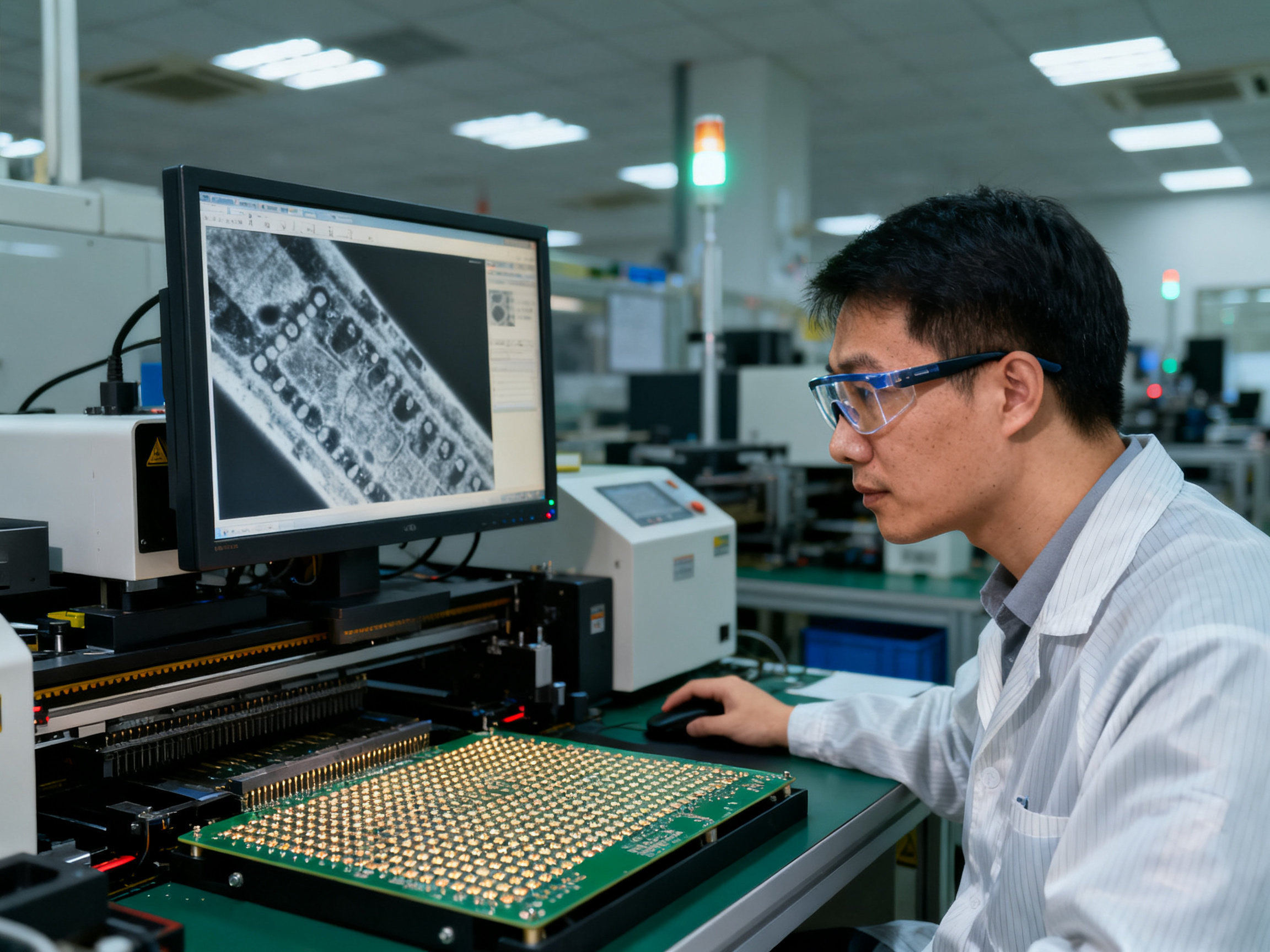
Compare the defect data, check BGA and QFN voiding with X-ray, and calculate your nitrogen consumption based on flow rate and operating hours. Look for repeatability across multiple shifts before you commit to a permanent switch.
Pro Insight: Use matched production panels and defect Pareto data to determine whether nitrogen addresses the root cause. If your defects are printing-related, atmosphere will not help. Run a controlled trial with actual production boards before investing in nitrogen capacity.
The biggest mistake teams make is buying nitrogen equipment hoping it will fix stencil problems, placement issues, or profile errors. It will not. Nitrogen only helps where oxidation is the actual failure mechanism.## How to Select, Qualify, and Operate the Right Reflow Setup
So you have decided which atmosphere fits your board. Now comes the actual work of getting equipment that does what you need, qualifying it properly, and keeping it running right over time.
Procurement Scorecard
When you are comparing reflow ovens, here is what to look at:
| Specification | What to Check |
|—|—|
| Usable width | Conveyor width matches your largest production panel plus clearance |
| Zone count | At least 8 to 10 heated zones; top and bottom control should be independent |
| Cooling capacity | Multiple controlled cooling zones for solid joint formation |
| Atmosphere control | Nitrogen system with oxygen sensor and closed-loop adjustment |
| Profiling access | Thermocouple entry points and software compatibility |
| Conveyor setup | Rail parallelism, height adjustment, belt versus mesh |
| Traceability | Board-level logging of temperature, speed, oxygen, and recipe |
| MES integration | SECS/GEM, CFX, MQTT, REST API, or OPC UA for line connectivity |
| Serviceability | Filter and blower access, alarm logging, cleaning procedures |
| Energy use | Idle power reduction and peak draw management |
Commissioning Checklist
Once your oven arrives, run through these tests before approving:
- Thermal uniformity test with production-like board load
- Loaded versus unloaded profile comparison
- Oxygen stability check during purge, steady state, and peak zones
- Conveyor alignment and parallelism verification
- Recipe lock and recall test
- Alarm and interlock validation
- Traceability data export test
- Leak and purity verification
- Energy recovery and cycle time test
- Service access and preventive maintenance procedure review
Workflow: From Recipe Creation to SPC
Your day-to-day process should flow like this:
- Recipe setup — Build the thermal profile based on paste datasheet and component limits
- Thermocouple placement — Attach to BGA corners, QFN thermal pads, heavy copper areas
- Profile run — Capture actual temperatures on representative boards
- Profile adjustment — Tweak ramp rate, soak, peak, TAL, and cooling as needed
- Oxygen verification — Log actual ppm during nitrogen runs; confirm stability
- Production validation — Run inspection and defect Pareto on first panels
- SPC review — Track CpK on critical profile parameters over time
- Defect Pareto update — Review weekly; trigger investigation if trends shift
Case-Study Framework
When documenting your own trial results, structure it like this:
| Element | What to Include |
|—|—|
| Baseline | Defect rate, FPY, and rework count before the change |
| Intervention | Atmosphere type, oxygen target, profile parameters used |
| Controls | Same paste, same stencil, same board family, same operator |
| Result | Defect rate, FPY, rework count, and nitrogen consumption |
| Limitations | What you did not test, what might differ at scale |
Consejo de experto: Make the atmosphere decision using solder quality, reliability, repeatability, nitrogen cost, and total cost of ownership together. The cheapest option is not always the cheapest over six months of production.## Final Decision: Nitrogen, Air, or a Qualified Combination
Here is the simple decision rule. Choose air reflow when your qualified process meets solder-joint and reliability requirements, and your defect history does not point to oxidation. Choose nitrogen reflow when atmosphere control demonstrably expands your process window, reduces oxidation-related defects, and the math works out over your production volume.
Temperature profiles must be developed for your actual paste, board, components, and oven. The atmosphere is just one variable in that recipe. Get the profile right first, then let nitrogen add margin where it helps.
Your Five-Step Action Checklist
- Define your requirements: surface finish, component packages, reliability class
- Establish a measured baseline: profile your board, log your oxygen, build your defect Pareto
- Run a controlled comparison: matched panels, same paste, same stencil, air versus nitrogen
- Validate reliability: X-ray BGA/QFN voiding, cross-sections, thermal cycling if needed
- Review total cost of ownership: nitrogen cost, rework savings, yield gain, with production, quality, and procurement stakeholders
Consejo de experto: Validate yield and reliability, not just solder appearance. A shinier joint means nothing if your voiding, HIP rate, and field reliability do not improve. Make the atmosphere decision using solder quality, reliability, repeatability, nitrogen cost, and total cost of ownership together.