



פורסם: 06 September 2026
עודכן לאחרונה: 06 September 2026
זמן קריאה: 12 minutes
מבקר: [Reviewer name not provided] ([Reviewer credentials not provided])
—> פורסם: 06 September 2026
זמן קריאה: 12 minutes
מבקר: [Reviewer name not provided] ([Reviewer credentials not provided])
Picking between a nitrogen reflow oven and an air reflow oven sounds simple on paper. You want better solder joints, fewer defects, and a line that does not eat your budget. But when you actually start weighing the numbers, things get messy fast.
Here is what nobody tells you upfront: nitrogen is not automatically better. In one recent production comparison, a fine-pitch connector line saw bridging drop from 1.20% in air to 0.18% in nitrogen, and non-wetting defects fell from 0.85% to 0.12%. Those numbers look great on paper. But if your board mix is forgiving, your paste works fine in air, and your gas bill makes you wince every month, then chasing nitrogen might cost you more than it saves.
That is the tension this article cuts through.
We will look at the real decision factors: your PCB and component mix, solder-paste chemistry, oxygen exposure requirements, throughput targets, nitrogen supply situation, and what each option actually costs over time. We will also cover production-scale ovens and benchtop systems, so you know exactly what you are comparing. What we are not covering: handheld soldering irons, guns, stations, or kits. Those tools have their place, but they run profiles that are nowhere near what a real reflow oven delivers, so mixing them into this comparison would just muddy the water.
By the end, you will have a practical framework for deciding which atmosphere fits your line, your products, and your bottom line.
About the Author
[Author name and credentials to be confirmed.]
This article pulls from current industry standards, manufacturer documentation, and established SMT best practices available as of 2026. When the author’s verified background becomes available, this section will be updated to reflect their specific expertise in reflow soldering, equipment selection, or electronics manufacturing. We believe in transparency, so you always know where the guidance comes from.
Disclosure: This article references SMT equipment manufacturers and suppliers. All recommendations are based on publicly available specifications and industry standards, not paid placement.
How Nitrogen and Air Reflow Ovens Differ
Before we get into the atmosphere debate, let us talk about what actually happens inside these machines. A reflow oven does not just “heat things up.” It runs your board through four distinct stages, and each one matters for the final joint quality.
The four reflow stages:
-
לחמם מראש — The board warms up gradually, usually from room temp to around 150°C. Flux in the solder paste starts to activate and clean the metal surfaces. If you ramp too fast here, you can crack components or get thermal shock. Too slow, and you waste time.
-
להשרות — The board holds at a moderate temperature (often 150-200°C for lead-free). This lets the entire board reach a uniform temperature before hitting the melting point. It also lets flux do its job properly.
-
Reflow — This is where the magic happens. The oven exceeds the solder’s liquidus temperature, and the paste melts and flows onto the pads. Surface tension pulls the components into alignment. Atmosphere matters most here, because oxygen in the air can氧化 (oxidize) the metal surfaces and interfere with wetting.
-
קירור — The board drops below the solidus temperature and the joints solidify. Cool too fast and you stress the board; too slow and you get large, rough grain structures.
Where does nitrogen change things? Mostly during stages 2, 3, and 4. Lower oxygen means less oxidation, which means flux does not have to work as hard, and solder can wet more easily and uniformly.
Air vs. Nitrogen: What Actually Changes
Here is the practical comparison:
| Factor | Air Reflow | Nitrogen/Inert Reflow |
|——–|————|———————-|
| Oxygen level | ~209,000 ppm (ambient air) | 50 to 5,000 ppm depending on target |
| Oxidation | Higher during heat-up and reflow | Significantly reduced |
| Wetting quality | Good for tolerant pastes and geometries | Improved wetting margin, especially for fine-pitch |
| Flux consumption | More flux needed to combat oxidation | Lower flux demand |
| Process window | Narrower for lead-free | Wider, more forgiving |
| Solder joint appearance | May show more residue or dull spots | Typically cleaner, shinier joints |
| Operating cost | Lower (no gas expense) | Higher (nitrogen supply, generators, energy) |
| Voiding | Alloy and profile dependent | Can reduce voiding in some configurations |
| Best for | Standard SMT, cost-sensitive production | Fine-pitch BGA/QFN, lead-free, high-reliability |
Key metrics to understand when comparing ovens
You will see a lot of numbers thrown around. Here is what actually matters:
- Oxygen concentration (ppm) — Parts per million of oxygen in the chamber. Lower is more inert. Most production lines target 500-1,000 ppm for general lead-free work, and tighter (under 500 ppm) for demanding packages.
- Temperature uniformity — How close each zone maintains the set temperature. Look for measurable data, not just claims.
- Zone count — More zones give better control, but only if each one is independently controllable.
- Conveyor width and max board size — Make sure your largest board fits with clearance for the process.
- Profile repeatability — Can the oven run the same profile consistently across shifts and lots? This matters more than raw zone count.
טיפ ממומחה: Atmosphere does not fix a bad profile. If your thermal profiling is wrong, nitrogen will not save your joints. Get the profile dialed in first, then optimize the atmosphere.
One thing we have seen in practice: nitrogen helps most when your paste, your board finish, or your component terminations are borderline on solderability. If everything is fresh and high-quality, air reflow often performs fine.
Glossary of key terms
- Oxygen ppm — Parts per million of oxygen. Ambient air has about 209,000 ppm. Target reflow atmospheres typically run 50-5,000 ppm.
- Liquidus — The temperature at which the solder alloy is fully melted and liquid.
- TAL (Time Above Liquidus) — How long the solder stays above its liquidus temperature. Too long causes damage; too short leaves incomplete joints.
- Flux activity — How aggressively the flux cleans oxides and promotes wetting. More oxygen means flux works harder.
When Nitrogen Reflow Is Worth the Extra Cost
Here is the honest answer most vendors will not give you: nitrogen reflow is not always worth it. The decision comes down to your specific board mix, your defect costs, and whether the extra process margin actually moves the needle on your bottom line.
Applications that usually justify nitrogen
Certain assembly types consistently show measurable gains from inert atmosphere reflow:
- High-reliability aerospace and defense electronics — When failure is not an option, the wetting margin improvement from nitrogen often justifies the added cost per board. Military specs sometimes mandate it.
- Dense BGA and QFN assemblies — Bottom-terminated parts with thermal mass challenges benefit most. Lower oxygen means flux can focus on wetting rather than fighting oxidation, and voiding tends to improve in these packages.
- Fine-pitch components — Down to 0.3mm pitch and below, the process window narrows fast. Nitrogen widens that window enough to matter.
- Difficult-to-wet finishes — Some board finishes and component terminations solder more readily under inert conditions. If your ENIG thickness is inconsistent or your components have older terminations, nitrogen helps compensate.
- Demanding cosmetic standards — Some customers inspect for joint appearance. Nitrogen typically produces shinier, cleaner-looking joints with less residue.
- Tightly controlled lead-free processes — When your paste, profile, and board finish are all near the edge of their acceptable window, inert atmosphere adds a safety margin.
When air reflow works fine
Air is usually sufficient when:
- Your paste is fresh, your surface finishes are robust (good OSP or thick ENIG), and your component mix is conventional
- Your first-pass yield is already above 98-99% and defect costs are low
- You run small batches with high changeover frequency and cannot amortize gas costs across large volumes
- Your thermal profile is well-validated and your process is stable
Honestly, a lot of shops in 2026 are running air reflow on products that would work fine in nitrogen, but their yield is already acceptable. Chasing nitrogen here just adds cost without much return.
טיפ ממומחה: Use measured defect, rework, scrap, nitrogen, and energy data to calculate whether nitrogen’s process benefit pays back for the specific board mix.
The math that actually matters
Rather than debating atmosphere preference, do the calculation. Here is the basic break-even framework:
Annual nitrogen benefit = (defect reduction × cost per defect × annual volume) minus (gas cost + energy delta + maintenance delta + installed cost)
A practical example: Suppose nitrogen cuts your defect rate from 1.20% to 0.18% on a fine-pitch connector line, and each defect costs $15 in rework. If you run 10,000 boards per year, that is a $1,530 annual savings. Now subtract your nitrogen costs (typically $2,000-$8,000 per year depending on supply method and volume). The math only works if defect savings exceed gas costs, or if your defect cost per unit is higher than this example.
The oxygen target matters too. Most lead-free assemblies perform well at 500-1,000 ppm O₂, while fine-pitch or high-reliability work may need sub-500 ppm. Tighter is not automatically better, and targeting 50 ppm when 1,000 ppm would suffice just burns extra gas and money.
The bottom line
Start with air if your process is stable and yield is acceptable. Switch to nitrogen when you have specific problem areas (BGA voiding, fine-pitch wetting, cosmetic defects) that you can measure before and after. Calculate the payback based on your actual defect costs and volumes, not on what a vendor tells you the industry “needs.”
Once you know your atmosphere decision, the next question is which machine actually delivers the performance you need.
Best Machine Configurations for SMT Production
Once you have decided on your atmosphere strategy, the next step is figuring out what actually matters in a production reflow oven. Spoiler: it is not the marketing brochure. It is the stuff underneath.
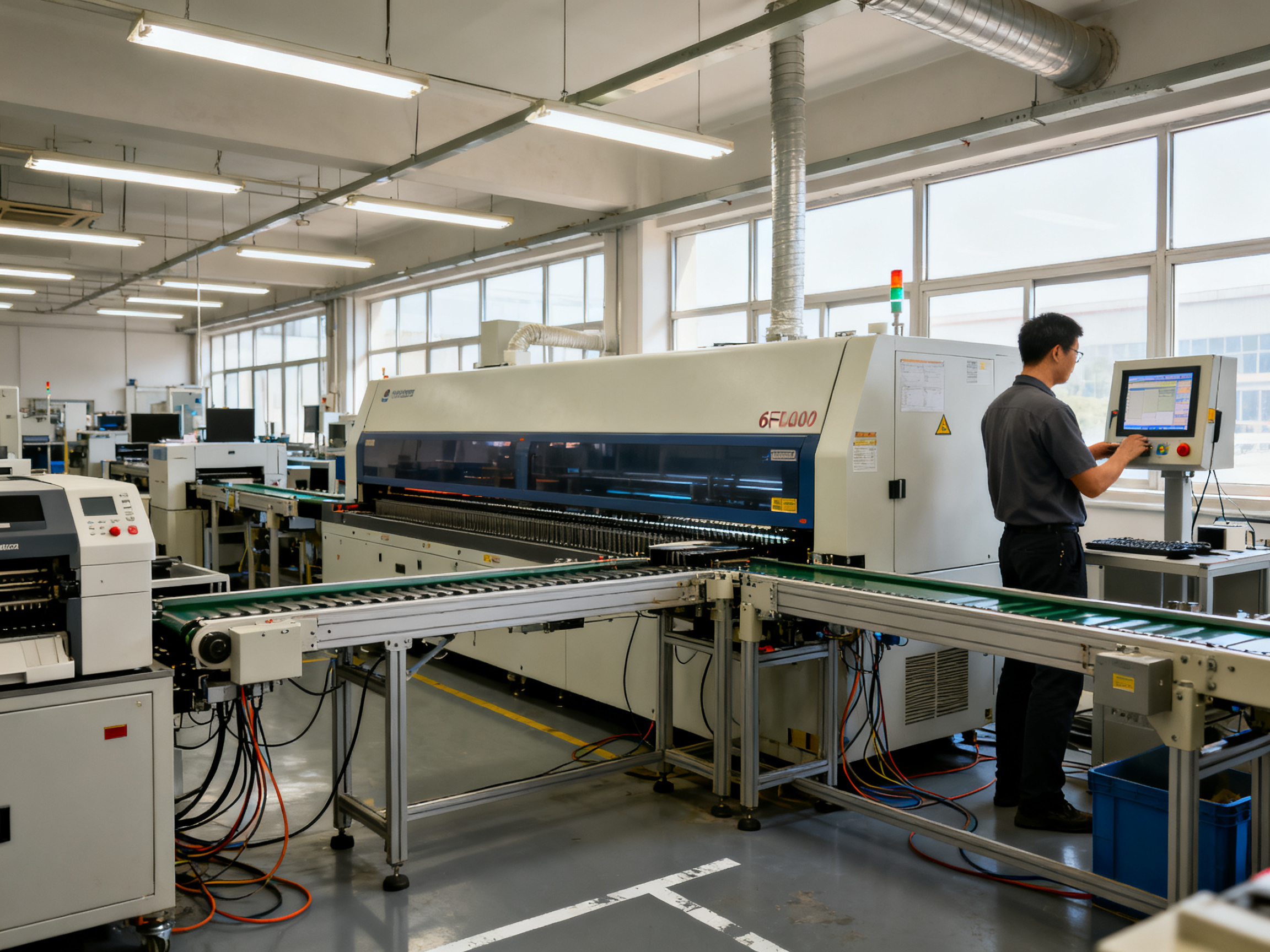
Features that move the needle
When you are comparing production-scale ovens, here is what to look for:
Zone count matters less than you think. What actually matters is whether each zone is independently controllable for temperature, airflow, and fan speed. Eight zones that all do the same thing are not as useful as six zones you can dial in separately. A good production oven lets you set different temperatures and fan speeds across the length of the chamber, which is critical when your board mix includes components with very different thermal mass.
Convection performance ties directly to temperature uniformity. Look for measured data, not just claims. The best ovens publish actual chamber maps showing temperature spread across the board. If a vendor cannot show you this, that is a red flag.
Cooling capacity is often overlooked. Faster cooling zones mean tighter grain structure in your solder joints, which affects long-term reliability. If you are running lead-free alloys, cooling control becomes even more important because the process window is narrower.
Conveyor stability affects placement accuracy and solder joint quality. The belt needs to track consistently and handle your heaviest boards without sagging or vibration. Check the max board weight spec against what you actually run.
For nitrogen systems, look at how the oven seals the chamber and how quickly it recovers oxygen levels after a board pass. A poorly sealed oven burns through nitrogen trying to maintain 500 ppm when it keeps drawing in air.
Profile storage and repeatability are where the rubber meets the road. The oven needs to run the same profile across shifts and lots, not drift over time. Data logging of every run lets you prove this to customers if needed.
Alarms and line communication round out the must-haves. You want real-time alerts for temperature excursions, oxygen deviations, and conveyor issues. For factory integration, check for SMEMA, IPC-HERMES-9852, or IPC-CFX support depending on your setup.
Integration checklist for SMT lines
A reflow oven does not run alone. It needs to talk to the rest of your line:
| Integration Element | What to Verify |
|——————–|—————-|
| Conveyor width | Matches your board size plus clearance |
| Board handoff | SMEMA or Hermes compatibility with upstream/downstream |
| Printers and pick-place | Timing and width alignment |
| AOI and SPI | Board spacing for inspection triggers |
| MES connectivity | Recipe download, production data upload |
| Exhaust and utilities | Power draw, compressed air, nitrogen supply match your site |
Separating claims from proof
Here is the problem: anyone can put numbers on a spec sheet. What you need is proof before you buy.
Demand three things from any vendor:
- A sample profile on your representative board run at your target conditions, with actual thermocouple data
- Calibration records for temperature sensors, oxygen sensors, and belt speed
- Service commitments in writing: response time, spare parts availability, and what the warranty actually covers
If a vendor will not run your board before you sign, that tells you something. Serious suppliers offer this as standard practice.
תובנה מקצועית: A representative-board profile trial and written factory acceptance criteria reveal more than a high zone count or a generic throughput claim.
One more thing. When you are evaluating nitrogen performance, ask for oxygen ppm readings at production speed, not just idle chamber specs. The numbers can be very different once boards are moving through the oven continuously.
For large-scale manufacturers in consumer electronics, semiconductor, and military applications, companies like S&M Co. Ltd. (Shenzhen Chuxin Electronic Equipment) offer lead-free reflow ovens designed for high-density assembly lines with compatibility for standard factory protocols. But the same rule applies regardless of vendor: verify performance on your actual product before committing.
The bottom line is straightforward. Get the specs that matter, demand proof, and never buy a production oven based on a brochure alone.
Benchtop Nitrogen and Air Reflow Ovens: What They Can and Cannot Do
Benchtop reflow ovens fill a specific niche. They are not scaled-down production machines. They are purpose-built tools for specific situations where a full conveyor oven would be overkill or simply does not fit the workflow.
When a benchtop oven makes sense
Prototyping and engineering validation sit at the top of the list. When you are testing a new board spin or checking solderability of a BGA before committing to production, a benchtop unit gets you answers fast without tying up your production line. Engineering teams at companies like Intel and Samsung have used benchtop ovens for board bring-up since the early 2000s, and the use case has not really changed.
Small-batch repair and reworking also work well. If you are doing failure analysis, touching up a few boards, or running a university electronics lab course, benchtop units are practical. The batch sizes are small (usually one to four boards at a time), and the setup is straightforward.
Low-volume production with stable board dimensions is another fit. If your product mix is fixed and you know exactly what you are building, a benchtop oven can handle modest runs without the capital expense of a production line.
What to look for in a benchtop unit
Not all benchtop ovens are created equal. Here is how the options stack up:
| Feature | Air Benchtop | Nitrogen Benchtop |
|———|————-|——————-|
| Max board size | Varies (typically 200-305 mm) | Varies (typically 200-305 mm) |
| Heating uniformity | Moderate; varies widely by model | Moderate; depends on chamber design |
| Ramp/cool control | Programmable; limited zones | Programmable; often tighter control |
| Profile programming | Basic to advanced | Advanced with data logging |
| Thermocouple inputs | 4-6 typically | 4-8 typically |
| Nitrogen connection | N/A | Required (2-8 bar, 500-1200 L/h) |
| Ventilation | Standard exhaust | Separate exhaust recommended |
| Electrical | 240V typical | 240V typical |
| Repeatability | Moderate | Better with inert atmosphere |
Some specific models worth knowing about: The LPKF ProtoFlow S offers nitrogen capability with automatic N2 start/stop and handles boards up to 230 x 305 mm. The HR-11 with nitrogen option supports boards up to 300 x 200 mm with claimed 98-99% N2 purity. The DDM Novastar GF-12HT runs up to 12-inch boards with a nitrogen inerting option.
The honest limits
Benchtop units will not match production conveyor ovens on throughput, thermal mass handling, or automation. If you are running hundreds of boards per shift, a benchtop oven becomes a bottleneck fast. They also lack the traceability features (complete data logging, MES integration, multi-profile management) that production environments often require.
But for what they are, benchtop ovens do the job. Just know what you are buying before you buy it.
How to Compare and Select the Best Reflow Machine
Picking a reflow oven from a spec sheet alone is like buying a car based on paint color. The numbers that actually matter are buried deeper.
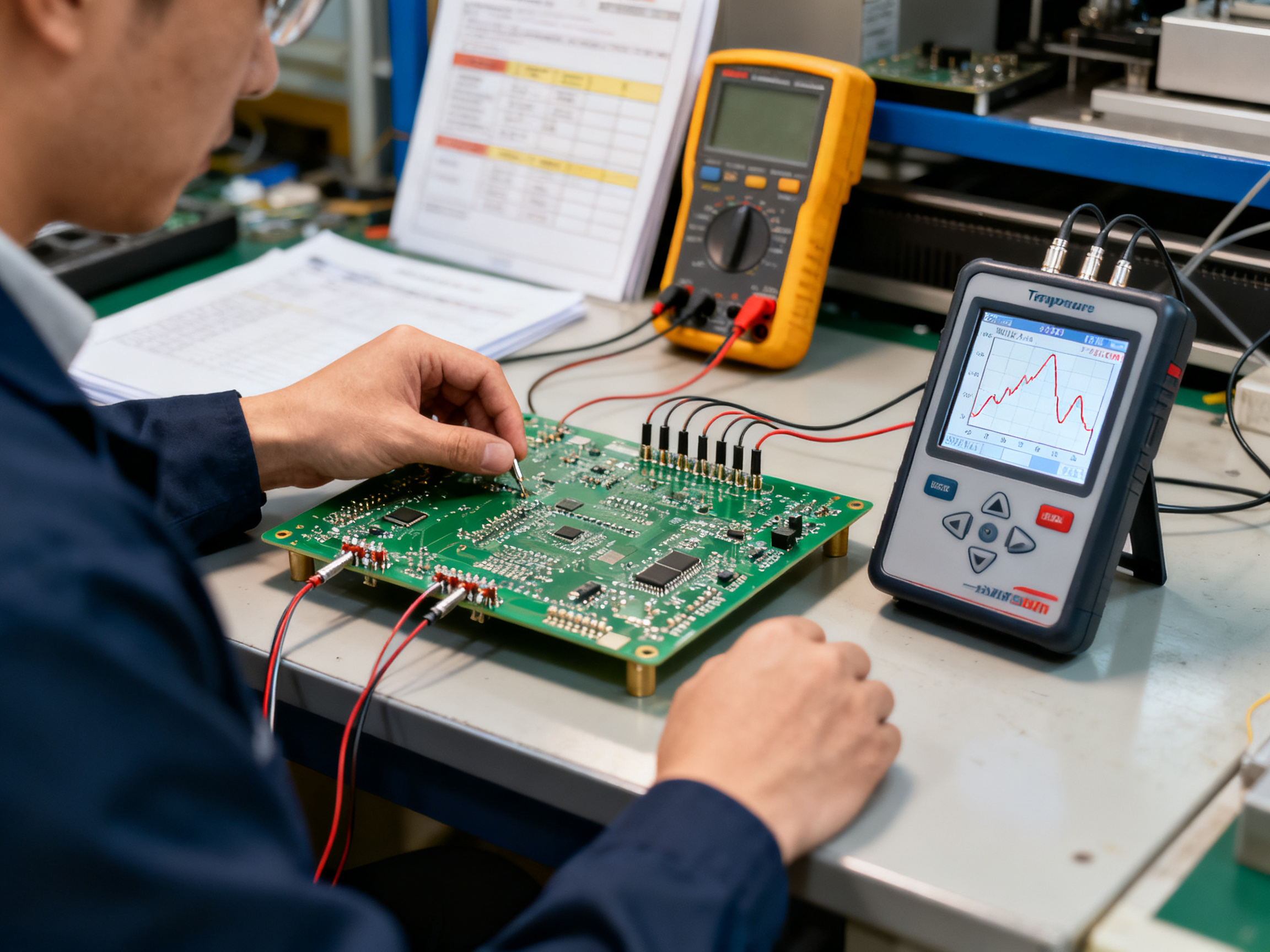
Weighted evaluation method for reflow oven selection
Here is a practical scoring approach that forces you to rank what actually affects your production:
| Evaluation Criterion | Points (100 total) |
|———————|——————-|
| Process capability and repeatability | 20 |
| Representative product mix fit | 15 |
| Throughput and line balance | 10 |
| Thermal uniformity / zone control | 15 |
| Atmosphere control (air or nitrogen) | 10 |
| Energy and gas consumption | 8 |
| Automation, recipe control, data integration | 7 |
| Data traceability and logging | 5 |
| Serviceability / maintenance / uptime | 5 |
| Calibration and metrology support | 3 |
| Safety, alarms, and compliance | 2 |
| Training, documentation, and support | 2 |
| Expansion and upgrade path | 2 |
| Total cost of ownership and commercial terms | 6 |
Rate each vendor against these criteria using your actual production data. The vendor that scores highest where it counts most will serve you better than one with fancy marketing but weak fundamentals.
Practical validation sequence before you commit
Once you narrow down your choices, run a structured validation sequence:
- Define your product mix. Identify the hardest board in your lineup, the one with the most thermal mass, the finest pitch, or the densest BGA.
- Review solder paste requirements. Does your paste spec call for specific atmosphere conditions? Some lead-free alloys perform differently at 500 ppm versus 1,000 ppm oxygen.
- Run thermal profiles on representative boards. Get actual thermocouple data, not just vendor claims.
- Inspect solder joints under magnification or X-ray. Look for voiding, wetting, bridges, and non-wetting.
- Measure defect rates. Run enough boards to get statistically meaningful data.
- Repeat under production-like conditions. Same board handling, same operators, same paste age.
Procurement questions that matter
Ask these before signing anything:
- Who handles installation and what does it cost?
- What factory acceptance testing (FAT) protocol do you use? Can I witness it?
- What operator training comes included, and what does it cost extra?
- Do you offer remote support for troubleshooting?
- What are your spare parts lead times and costs?
- How often do you release software updates and are they included?
- What calibration schedule do you recommend and who pays for it?
- Can the oven scale if my volume grows?
תובנה מקצועית: A representative-board profile trial and written factory acceptance criteria reveal more than a high zone count or a generic throughput claim.
Get the numbers that back up the marketing. Any vendor can claim high performance. Only serious suppliers can prove it.
Process Setup, Quality Control, and Common Buying Mistakes
Now for the part that actually determines whether your reflow oven helps or hurts your production. The machine is only as good as the process around it.
Process control fundamentals
Let me walk through what actually matters in day-to-day SMT production. First, solder paste storage and handling: paste needs to stay refrigerated until use, thawed properly (usually 4-8 hours at room temperature), and used within its shelf life once opened. Skip this and no atmosphere will save your joints.
Stencil design ties directly into SPI (Solder Paste Inspection) results. A well-designed stencil produces consistent paste volume, which SPI catches before reflow. When paste deposits look wrong, you can adjust the aperture rather than troubleshoot atmosphere settings. Thermocouple placement during profiling should match where components actually sit on your board, especially for thermal-heavy parts like BGAs and QFNs.
Profile limits need documentation and adherence. For lead-free solders, typical soak at 150-200°C for 60-120 seconds, peak around 245-260°C, and time above liquidus (TAL) of 60-90 seconds keeps things stable.
After reflow, AOI (Automated Optical Inspection) catches visible defects like bridges, tombs, and insufficient solder. X-ray inspection reveals what AOI cannot: hidden joints in BGAs and QFNs where voiding and incomplete wetting hide beneath the surface.
Ongoing statistical monitoring ties it all together. Track first-pass yield, defect per million (DPM), and profile repeatability over time. This data tells you when the process drifts before defects spike.
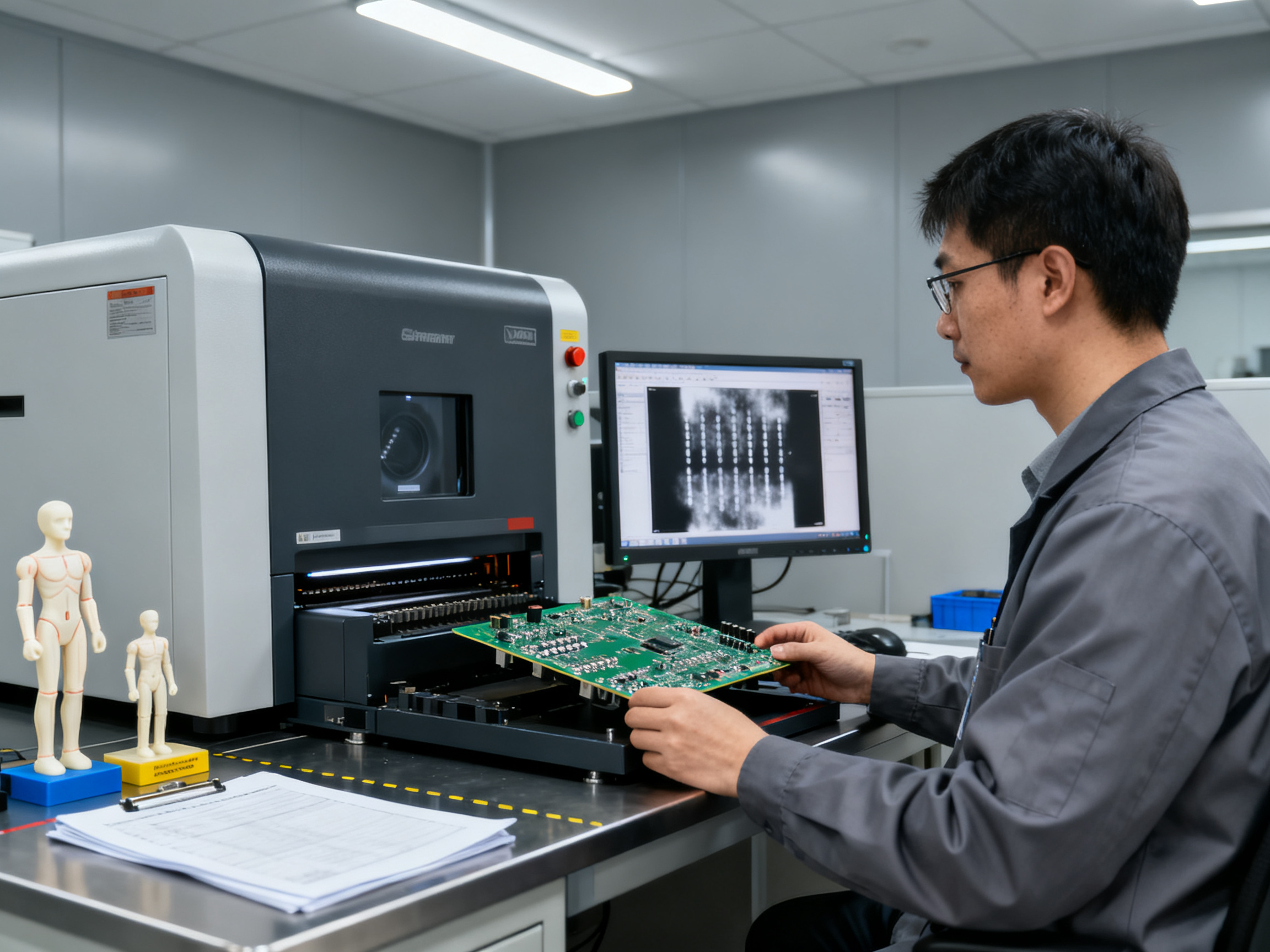
Inspection methods at a glance
| Method | Detects | Best For |
|——–|———|———-|
| Visual/AOI | Bridges, tombstones, insufficient paste | Surface-mount defects |
| X-ray | Voids, hidden solder joints, BGA/QFN quality | Bottom-terminated packages |
| Cross-section | Joint microstructure, grain structure | Failure analysis |
Mistakes that cost money
Choosing by zone count alone is the most common error. Eight zones that all do the same thing are not as useful as six zones you can dial in separately.
Assuming nitrogen automatically fixes defects is the second biggest mistake. Nitrogen only helps when oxidation is the root cause. If your problem is bad paste, poor placement, or a wrong profile, nitrogen just adds cost without solving anything.
Ignoring cooling performance is another trap. Faster cooling zones mean tighter grain structure in your joints. If you skip this, you might get acceptable joints today but face reliability failures down the road.
Failing to test the actual board before buying is shockingly common. Vendor brochures look great. Your board is what matters.
Underestimating gas infrastructure is the last one. Nitrogen systems need supply lines, regulators, safety equipment, and ongoing operating costs. Factor these in upfront or get surprised later.
טיפ ממומחה: Atmosphere does not fix a bad profile. If your thermal profiling is wrong, nitrogen will not save your joints. Get the profile dialed in first, then optimize the atmosphere.
Establishing baseline acceptance criteria
For BGA and QFN assemblies, baseline acceptance criteria should include X-ray voiding below 20-25% per IPC standards, complete wetting on all terminations, and zero bridges or opens.
For lead-free soldering overall, document your profile records, thermocouple calibration dates, and oxygen ppm logs if using nitrogen. Profile repeatability across runs should stay within 2 degrees C at peak.
Defect escalation protocols define when to halt production and trigger root-cause analysis. Write these down before problems happen, not after.
The key insight here: process control and oven selection are not separate decisions. They are the same decision viewed from different angles. Pick the oven that fits your process, then control that process consistently.
Recommended Buying Paths by Production Scenario
Rather than chasing a mythical “best” reflow oven, the smarter move is matching your scenario to what actually works. Here is a practical framework based on what the evidence and manufacturer specs actually show in 2026.
| Production Scenario | Atmosphere Approach | Scale | Minimum Specifications | Validation Required | Cost Considerations |
|——————–|——————–|——-|————————|——————–|———————|
| High-volume automated line | Nitrogen usually essential | 500+ boards/hour | 8+ independently controlled zones, sub-500 ppm O₂, conveyor width matching board envelope, IPC-HERMES-9852 or IPC-CFX support | FAT with representative board at production speed, O₂ logging across multiple shifts | Higher capex, but nitrogen cost amortizes across volume |
| High-reliability assembly | Nitrogen essential | Variable | Low oxygen capability (under 500 ppm), excellent cooling zones, traceability logging, IPC-7095/7093 compatibility | Full thermal profile, voiding validation via X-ray, calibration certificates | Premium pricing justified by defect cost savings |
| Pilot line | Nitrogen beneficial | Low-medium | 6+ zones, oxygen ppm control, good profile repeatability, data logging | Profile validation on representative boards before production commitment | Balance capability with flexibility for changing product mix |
| Prototype lab | Air or nitrogen optional | Very low | Standard benchtop or small conveyor, programmable profiles, thermocouple inputs | One-off profile runs, no continuous validation needed | Lower cost acceptable; nitrogen useful for sensitive packages |
| Budget-constrained upgrade | Start with air, plan for nitrogen | Variable | Reliable conveyor, good thermal control, upgrade path for nitrogen later | Basic profile check, proof of repeatability | Prioritize proven reliability over fancy features
מניסיוננו: We have seen shops waste money buying nitrogen capability they never used, and others stubborn enough to run air when their defect data clearly pointed to nitrogen. The fix is simple: measure first, buy second.
The key is treating these as starting points, not hard rules. Your defect data, board mix, and throughput requirements might push you toward a different answer. That is fine. Just make sure the decision is driven by facts on your line, not vendor pressure or internet rankings.
For large-scale manufacturers in consumer electronics, semiconductor, and military applications, companies like S&M Co. Ltd. (Shenzhen Chuxin Electronic Equipment) offer lead-free reflow ovens designed for high-density assembly lines. But the same principle applies regardless of vendor: verify performance on your actual product before committing your budget.
Final Decision: Match the Atmosphere to the Process
After working through the technical details, the defect data, and the cost models, the decision rule comes down to this: choose nitrogen when oxidation control and process margin materially improve your yield or reliability; choose air when your validated process already delivers the required quality at lower operating complexity.
Implementation sequence
Here is the step-by-step path forward:
- Audit defects first. Look at three months of defect data and identify which failures point to oxidation-related root causes versus printing, placement, or profile issues.
- Characterize your board mix. What percentage involves fine-pitch, BGA, QFN, or other oxidation-sensitive packages?
- Obtain comparable quotations. Get quotes for both air and nitrogen-capable ovens that meet your throughput and board-envelope requirements.
- Run representative profiles. Test your hardest board under both atmospheres and collect actual thermocouple data and defect results.
- Calculate total cost. Factor in gas consumption, energy delta, maintenance, and annualized capital, then compare against measured defect savings.
- Document acceptance criteria. Write down what defect reduction, oxygen ppm, and profile repeatability the oven must deliver before you sign.
מניסיוננו: The evidence base supporting nitrogen for oxidation-sensitive assemblies is consistent across IPC guidance, supplier documentation, and practitioner reports. The key qualifier is “for your specific board mix”: air reflow performs fine for standard SMT products with robust finishes and conventional geometries.
The synthesis is straightforward. Nitrogen reflow usually helps lead-free SMT by lowering oxidation and widening the process window, but it is not automatically better for every board. The evidence points to practical operating targets around 500-1,000 ppm O2 for common lead-free work and tighter control under 500 ppm for demanding packages. Start with your defect data, not vendor claims. If oxidation-related defects dominate your escapes, nitrogen usually pays back. If your process is stable and yield is already above 98-99%, air reflow probably covers your needs.
Decision checklist
Use nitrogen reflow when:
- Oxidation-related defects are your primary escape mode
- Fine-pitch, BGA, QFN, or leadless packages make up a significant portion of your mix
- Your process window is narrow and you need the extra margin
- Reliability requirements (aerospace, automotive, medical) demand it
Stick with air reflow when:
- Your paste, board finishes, and component mix are forgiving
- First-pass yield already exceeds 98-99%
- High changeover frequency makes it hard to amortize gas costs
- Your defect data points to printing, placement, or profile issues rather than oxidation
Final recommendation
Before committing to either path, run a side-by-side comparison on your actual product. Most equipment suppliers will accommodate this if you ask. The cost of a trial run is trivial compared to years of operating the wrong atmosphere. Measure first, decide second, and document your criteria before signing anything.
If you need help structuring that evaluation or want a board-specific profile trial, reach out to a reflow oven specialist who can walk you through the numbers for your actual production mix.