



Közzététel: 21 May 2026
Olvasási idő: 10 minutes
Reviewer: Simon Scrapes, Founder
Wave Soldering Machine Setup Guide: Key Parameters, Configurations, and Mistakes to Avoid
Wave soldering is the lifeblood of modern electronics manufacturing. It might look simple at first—a conveyor passes printed circuit boards (PCBs) over a wave of molten solder, and boom, solid connections. But here’s the thing: optimizing all those wave soldering process parameters can mean the difference between a flawless assembly line and piles of rejected PCBs.
When parameters like conveyor speed or preheat temperature are slightly off, it can lead to soldering defects like bridging or blowholes. And if you’re mass-producing devices like smartphones or defense systems, even tiny inconsistencies pile up fast—costing real money.
So how do you set up your wave soldering machine for success? Let’s break it all down.
Placeholder for author bio detailing specific expertise in SMT manufacturing and soldering technologies.
Introduction: Why Does Your Wave Soldering Setup Matter?
Precision is everything in wave soldering. Think of it like making a perfect cake. If the oven’s too hot or you mix the wrong amount of ingredients, the whole batch is ruined. Same goes for soldering.
When you’re mindful about configuring wave soldering machine parameters, you’re actively improving things like soldering reliability and joints. Plus, you’re cutting down those frustrating problems—like solder bridges or blowholes—that can mess up an entire production line.
Here are some of the key impacts of getting it right:
- Clean, reliable solder joints mean lasting device performance.
- Less solder is wasted, so costs drop.
- You avoid heat damage to sensitive, small components like BGAs or QFNs.
From phone manufacturers to aerospace engineers, optimizing these settings is not just important; it’s necessary to compete in industries demanding top-tier precision and zero defects.

Stay tuned as we dig deeper into key machine parameters, common mistakes, and advanced tips that can transform your setup game in 2026.
Key Machine Parameters: Understanding Their Role and Impact
Getting your wave soldering machine parameters just right is like tuning a musical instrument. Too tight, and something can snap; too loose, and it just sounds off. The same goes for your machinery. Dial them in perfectly, and watch your production efficiencies soar.
Szállító sebesség
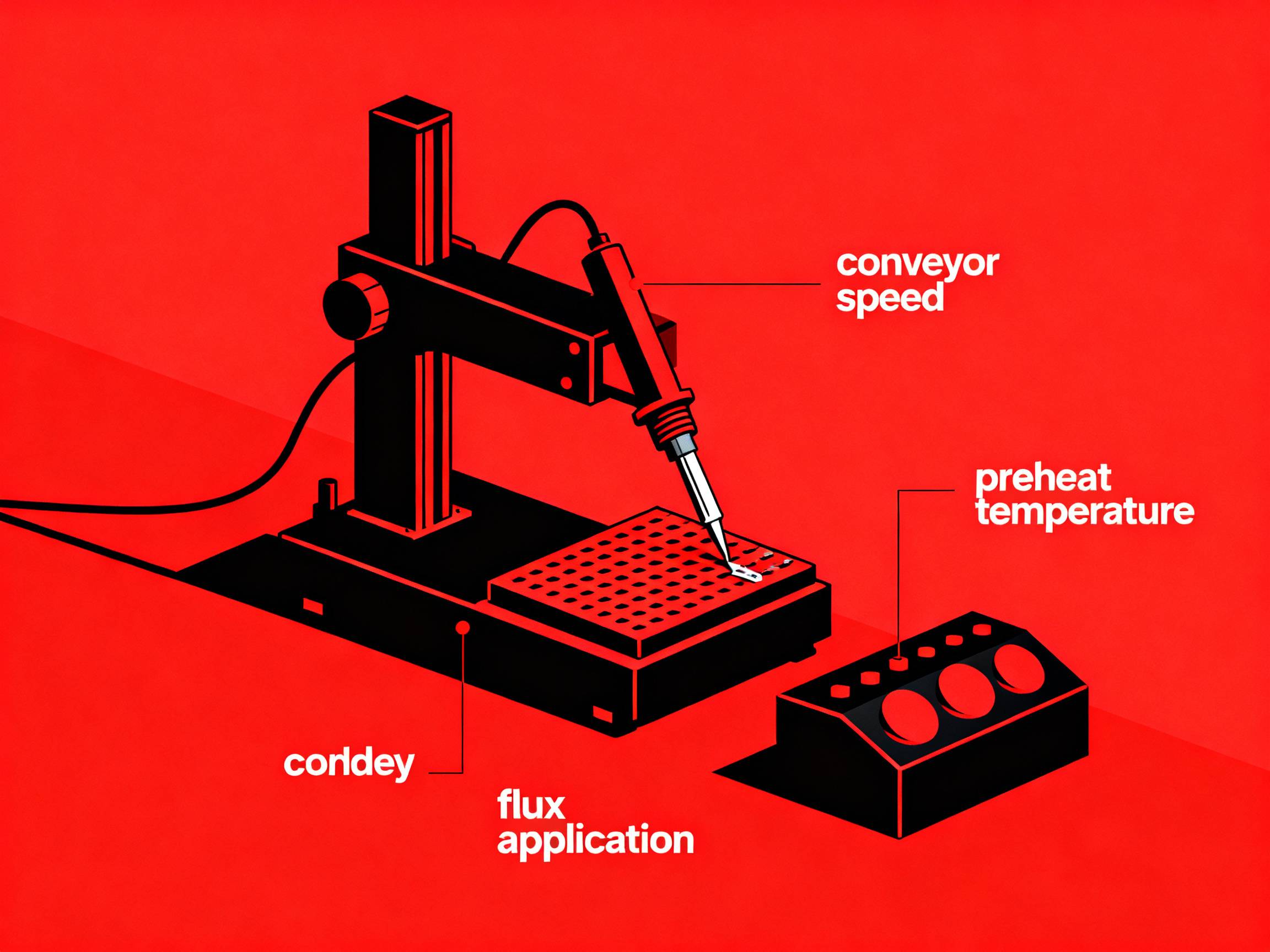
Let’s talk speed first. Adjusting conveyor speed is crucial. It determines how long your PCBs spend under the solder wave. Too fast, and you end up with inadequate solder fills; too slow, and there’s a risk of thermal damage.
A fun fact: many electronics manufacturers, like those making smartphones, aim for an optimal speed that ensures high-quality solder joints without risking component damage. It’s like finding the sweet spot in a game.
Előmelegítési hőmérséklet
Now, on to temperature. Preheat temperature is critical because it preps the PCB for effective soldering. If the temperature is too low, it’s like trying to melt chocolate in a chilly room—it just won’t happen efficiently.
Actually, wait; if you set it just right, solder flows well, and defects diminish. Manufacturers often compare this to baking, where even heat leads to better results.
Expert Tip: Optimizing conveyor speed for minimal defects in SMT production.
Managing these parameters well isn’t just about avoiding defects; it’s about creating reliable connections that last. When it comes to precision, every detail counts!
Common Mistakes in Wave Soldering and How to Avoid Them
Navigating wave soldering without a map can lead to missteps. Everyone makes mistakes. It’s okay, and it’s part of the learning process. But knowing common pitfalls can save time and resources.
Solder Bridges
Solder bridging is a sneaky problem. It can mess with the functionality of your PCBs, leaving you with headaches. The root causes are often linked to incorrect alignment or flux issues.
The biggest culprits? Uneven flux application and inappropriate wave height. To avoid this, always ensure a consistent flux layer and proper equipment calibration.
Cold Joints and Blow Holes
Then, there are cold joints and blow holes. These arise from improper heat distribution or fast conveyor speeds. It’s kind of like a rush job that leaves you wishing you had taken your time.
To avoid these, focus on balanced heat profiles and properly timed processes.
Pro Insight: Identifying root causes of forrasztási áthidalás issues can help you streamline production.
Advanced Tips for Optimizing Wave Soldering Process Efficiency
Now that you’ve got a handle on the basics, let’s dive into some advanced methods to enhance your wave soldering process.
Predictive Maintenance
Predictive maintenance is like your crystal ball. It lets you foresee potential machine issues before they occur. With predictive maintenance, you minimize downtime, cut costs, and keep your production running smooth.
Manufacturers are increasingly relying on cutting-edge technologies to maintain efficiency, using data to predict wear and tear before it disrupts operations.
Automatizálás
Automation is a game-changer in wave soldering. It’s about automating flux application and conveyor adjustments, ensuring each batch is consistent with minimal human intervention.
Why bother with manual adjustments when automation can handle the precision for you?
Expert Tip: Leveraging predictive maintenance technologies in manufacturing enhances long-term efficiency.
These advanced tips will give you the edge in the competitive electronics manufacturing arena. Stay sharp, and always keep an eye on emerging technologies in 2026.
In the world of electronics, precision isn’t just a goal—it’s a necessity. As we’ve seen, setting up your wave soldering machine correctly is key to success. Whether you’re adjusting preheat temperatures or conveyor speeds, the right configurations will save money and boost product reliability.
Expert Conclusion: Don’t forget that optimizing wave soldering starts with understanding your equipment. Take your time with configurations, and test regularly to keep ahead of potential issues. Continuous improvement keeps you competitive and ensures lasting success in electronics manufacturing.