



Diterbitkan: 10 July 2026
Terakhir diperbarui: 10 July 2026
Waktu membaca: 10 minutes
Why SMT Line Budgets Are Harder to Estimate in 2026
You get a quote for a complete SMT line. The number looks reasonable. But here’s what the quote doesn’t show you: the reflow oven that needs nitrogen at $800 a month, the AOI system that nobody mentioned, the technician training that takes three months, or the spare parts you’ll need sitting on a shelf waiting for something to break.
This is the reality check nobody talks about when budgeting for electronics manufacturing equipment in 2026. The real challenge isn’t just the equipment price. It’s everything that comes after.
The SMT equipment market is growing fast. Complete setups now range from $150,000 for basic entry-level lines to over $3 million for automotive-grade production with full inspection capabilities [1]. And here’s the thing: downtime costs have basically doubled since 2019. Automotive manufacturers lose roughly $2.3 million per hour when their lines go down [2]. That’s not a typo.
So what actually goes into an SMT line budget? Most buyers focus on the obvious stuff like pick-and-place machines and reflow ovens. But capital equipment is just the starting point. You also need to factor in maintenance contracts, technician labor, consumables, facility requirements like nitrogen and exhaust systems, compliance standards, and what everything costs over five years instead of just the first invoice.
In this guide, we’re breaking it all down. Capital costs, maintenance costs, services, technician labor, consumables, facility needs, and long-term ROI. No fluff. Just the numbers that matter when you’re making a purchasing decision.
Jace Liu is a manufacturing consultant specializing in SMT equipment procurement and production line optimization for high-volume electronics manufacturers. With over a decade of hands-on experience evaluating SMT line costs, integration challenges, and maintenance budgeting across facilities in Asia and North America, Jace has helped dozens of companies avoid the hidden cost traps that turn equipment quotes into budget nightmares.
Author Expertise Note
Jace Liu is [verified role/title] with experience in [verified SMT/electronics manufacturing area]. This article reflects [verified hands-on experience or company expertise] in SMT equipment selection, line integration, and maintenance planning.
Jace brings hands-on expertise in SMT line budgeting, reflow oven procurement, wave soldering systems, and production-line integration for high-volume electronics manufacturing. Before writing this guide, Jace spent years evaluating SMT equipment costs, negotiating with vendors, and helping manufacturers avoid the hidden cost traps that turn equipment quotes into budget nightmares.
This piece draws on real-world SMT line budgeting scenarios, maintenance planning frameworks, and total cost of ownership analysis used by manufacturers serving the consumer electronics, automotive, and semiconductor sectors. All equipment pricing, maintenance schedules, and compliance recommendations reflect 2026 market conditions and current industry standards.
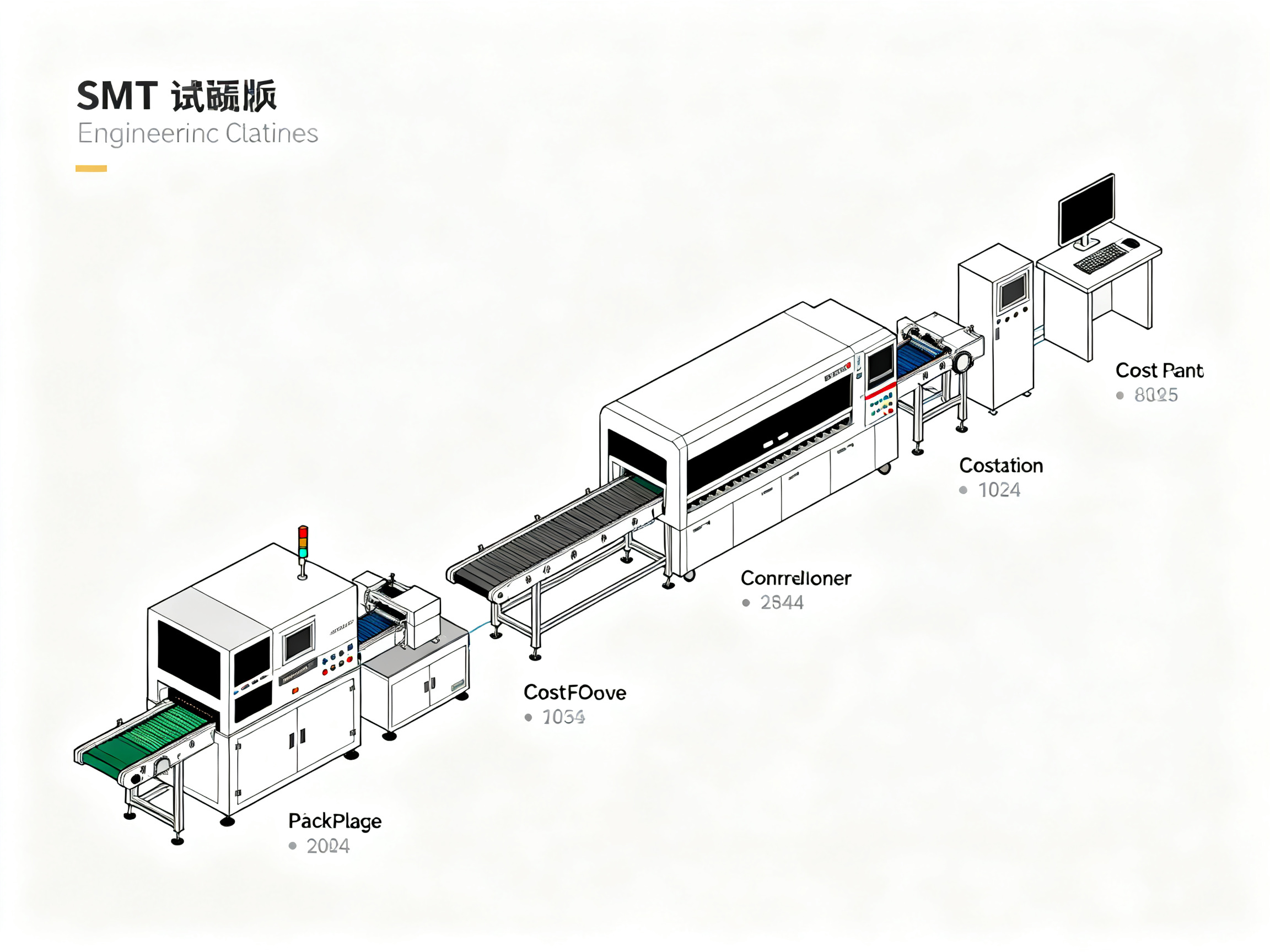
1. The Core Capital Costs Behind an SMT Assembly Line
Here’s the deal: every SMT line starts with the same basic building blocks, but the price tag swings wildly depending on what you’re building and how fast you need to build it.
The backbone of any SMT assembly line includes a solder paste printer, a pick-and-place machine, a lead-free reflow oven, wave soldering (for through-hole components), conveyors, automated loaders and unloaders, inspection systems like AOI and SPI, and various handling equipment [1]. Seems straightforward. But wait, here’s where it gets interesting: the same equipment category can cost anywhere from $5,000 to over $800,000 depending on speed, accuracy, and features.
Let’s look at how line configuration changes your budget:
| Equipment Category | Purpose | Cost Range | Buyer Notes |
|——————-|———|————|————-|
| Solder Paste Printer | Applies solder to PCB pads before placement | $5,000-$50,000 | Automatic printers with cleaning cost more but reduce defects |
| Pick-and-Place Machine | Places components onto PCB | $30,000-$1.5 million | Single-head vs. multi-gantry dramatically affects throughput |
| Lead-Free Reflow Oven | Melts solder to create permanent joints | $5,000-$40,000+ | Zone count and nitrogen capability drive price |
| Wave Soldering Machine | Solders through-hole components | $15,000-$80,000 | Higher for titanium wave and spray flux systems |
| AOI / SPI Systems | Automated optical and solder paste inspection | $15,000-$100,000+ | AI-powered systems command premium pricing |
| X-Ray Inspection | Verifies hidden joints like BGAs | $50,000-$250,000 | Non-negotiable for automotive and aerospace |
Line tier pricing in 2026:
- Entry-level prototype lines run $150,000-$300,000. Great for low-volume, high-mix work.
- Mid-volume production lines targeting consumer electronics cost $800,000-$3 million.
- High-volume automotive or aerospace lines with full inspection suites exceed $3 million, sometimes hitting $10 million or more [1].
The pick-and-place machine alone can eat up 60-70% of your total equipment budget [2]. That’s why placement speed (measured in CPH, or components per hour) is the single biggest price driver. A basic machine handling 10,000 CPH costs around $30,000. Push that to 100,000+ CPH for smartphone production, and you’re looking at $700,000 to $1.5 million per machine [2].
Precision requirements matter just as much as speed. Automotive manufacturing demands IPC-A-610 Class 3 compliance with placement accuracy around ±15-25 micrometers [3]. Military and aerospace applications push that even tighter. Every step up in precision means better cameras, servo systems, and vision software, which adds zeros to the price.
Pro Insight: The equipment list alone is not enough to compare SMT line quotes. Buyers must compare throughput, accuracy, inspection depth, and service support. A cheaper line with slower changeover times and minimal inspection capability often costs more over five years than premium equipment with better uptime and yield.
Component density drives costs too. High-density assemblies with 01005 resistors, 0.4mm pitch BGAs, and QFN packages require closed-loop inspection systems, smart feeders, and tighter thermal profiling. You can plan for a basic line, but if your products are trending toward miniaturization, budget for inspection upgrades now rather than retrofitting later.
Here’s a practical tip from SMT line budgeting experience: before locking in your equipment tier, map out your product roadmap for the next five years. The line you buy today should handle not just what you’re making now, but what your customers will ask for in 2028.
2. Throughput, Precision, and Product Mix: The Budget Multipliers Buyers Often Miss
Here’s something that trips up a lot of buyers: two factories can request “an SMT line” and end up with quotes that are worlds apart. Why? Because the same equipment category handles everything from simple LED boards to complex automotive controllers, and those applications have wildly different cost drivers.
Throughput is the big one. A pick-and-place machine rated at 10,000 CPH (components per hour) costs around $30,000. Push that to 100,000+ CPH for smartphone production, and you’re looking at $700,000 to $1.5 million [1]. But speed isn’t everything. Changeover frequency kills budgets too. High-mix operations running 50 different board variants need quick-change feeder systems and more operator time. That’s a different cost structure than a line running the same board for six months straight.
Component complexity changes everything. Fine-pitch BGAs with 0.4mm spacing need 3D X-ray inspection, which reduces throughput by 20-30% compared to standard components [2]. QFN packages require 3D AOI for polarity checking and bridging detection, dropping speeds by 10-15% [2]. High-density assemblies with 01005 resistors need closed-loop smart feeders, which actually boost speeds to 50,000-65,000 CPH versus 35,000-45,000 with traditional feeders [2]. But that technology costs extra.
Military and aerospace buyers face even steeper costs. These applications demand ±15-25 micrometer placement accuracy, IPC Class 3 compliance, and full traceability systems [3]. Every step up in precision means better cameras, servo systems, and process controls. The inspection and thermal profiling requirements alone can double your per-board cost.
Scalability catches buyers off guard. Dual-lane conveyors, nitrogen reflow capability, automated material handling, and traceability systems each add $10,000 to $150,000+ to your configuration [4]. Buyers often lock in an entry-level line, then realize six months later they need inspection upgrades that cost as much as the original purchase.
S&M Co. Ltd. builds lines with scalability in mind. Their lead-free reflow ovens and wave soldering systems support gradual upgrades as production needs grow. But the point is: before you sign anything, map out your product roadmap. The line you buy today should handle not just what you’re making now, but what your customers will ask for in 2028.
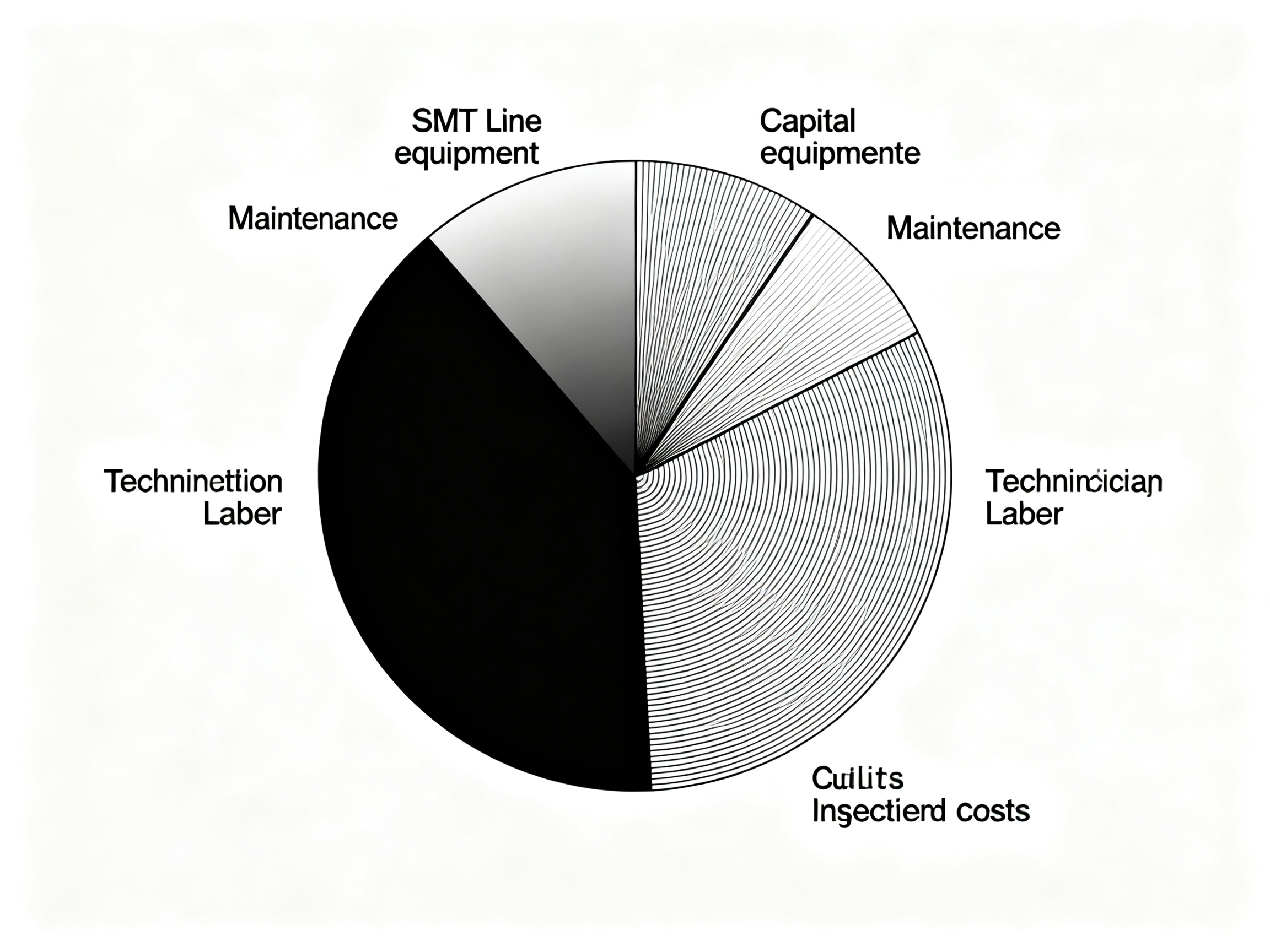
From Our Experience: We always ask buyers about their changeover patterns before recommending a line configuration. A factory running high-mix work will spend more on feeder systems and programming time than on placement speed itself. Get this wrong and you’ve bought the wrong machine for your actual workload.
3. Installation, Integration, and Factory Readiness Costs
So you’ve picked out your equipment. Great. But here’s where a lot of buyers get blindsided: the stuff that doesn’t come in the box can cost as much as the equipment itself.
Freight and rigging alone can run $5,000 to $50,000 depending on equipment size and location. Then you need installation, which means certified technicians to set up, calibrate, and validate everything. That typically adds $10,000 to $30,000 for a complete line.
But utilities are where it gets interesting. Your facility needs to handle:
- Power: Most SMT equipment runs on 380V 3-phase power. If your building has 220V single-phase, you’re rewiring. That’s $10,000 to $100,000 depending on your facility.
- Exhaust: Reflow ovens and wave soldering machines need proper fume extraction. Expect $5,000 to $30,000 for exhaust systems.
- Nitrogen: Lead-free reflow often requires nitrogen at 99.99% purity to control oxygen levels below 100-150 ppm. Nitrogen systems cost $15,000 to $50,000 to install, plus $300 to $1,200 monthly for consumption [1].
- Compressed Air: Dry, oil-free air at 6-8 bar. Compressor upgrades can run $3,000 to $15,000.
- ESD Flooring: Static discharge protection for sensitive components. ESD-rated flooring adds $8 to $25 per square foot.
Then there’s the software layer. MES integration typically costs $20,000 to $60,000 for software licensing, server setup, and API connectors. Barcode traceability systems run another $10,000 to $30,000, while AOI data integration adds $15,000 to $40,000 more. A complete smart factory integration can easily hit $50,000 to $150,000+ [1].
Tips dari Ahli: Complete a factory readiness audit before purchase to avoid delays from utilities, exhaust, nitrogen, ESD controls, or MES integration gaps. This single step prevents the most common installation delays we see in the field.
Replacing legacy SMT systems adds another layer of complexity. Your new equipment needs to talk to existing conveyors, handlers, and factory protocols. S&M Co. Ltd. designs their lead-free reflow ovens and wave soldering systems with standard assembly-line protocols in mind, which helps when you’re swapping out old equipment. But compatibility planning should start before you sign the purchase order, not after.
Regional cost differences matter. North American buyers face higher installation labor rates ($60 to $95 per hour for certified technicians) but more predictable supply chains. Asian manufacturers often get faster deployment but need to factor in import logistics, tariffs, and sometimes additional validation for international compliance standards [2].
Here’s an installation-readiness checklist to keep you honest:
| Category | Requirements | Notes |
|———-|————-|——-|
| Power | 380V 3-phase, dedicated circuits | Verify capacity before equipment arrives |
| Floor Space | Level concrete, adequate clearance | Plan for operator access and maintenance |
| Exhaust | Ductwork to exterior, proper airflow | Coordinate with HVAC early |
| Compressed Air | 6-8 bar dry air, oil-free | Tester equipment separately |
| Nitrogen | 99.99% purity, consistent flow | Consider bulk tank vs. generator |
| ESD Protection | Grounded flooring, wrist straps | Test grounding at each station |
| Network | Stable LAN, firewall configuration | MES integration depends on this |
| Lighting | 800+ lux at workstations | Impacts AOI operator accuracy |
And here’s a sample factory acceptance test milestone table to track progress:
| Milestone | Typical Duration | Success Criteria |
|———–|——————|——————-|
| Equipment Unpacking & Inspection | 1-2 days | No shipping damage, all components present |
| Mechanical Installation | 2-3 days | Level, anchored, conveyor aligned |
| Utility Connections | 1-2 days | Power, air, exhaust, nitrogen verified |
| Software Installation | 2-3 days | MES connectivity, license activation |
| Calibration & Profiling | 3-5 days | Temperature accuracy, placement precision |
| Trial Runs | 3-5 days | 100 boards without critical defects |
| Operator Training | 2-3 days | Staff certified on operation and basic maintenance |
| Performance Qualification | 2-3 days | Meet CPH, FPY, and defect rate targets |
Most factories underestimate the timeline here. A complete line installation typically takes 4-8 weeks from equipment arrival to first production run. Build in extra time if you’re integrating with legacy systems or running legacy equipment replacement.
The real takeaway? Installation and integration costs can add 15-30% to your equipment budget. Plan for it upfront, not after the fact.
4. SMT Line Maintenance Costs: Manuals, Kits, Schedules, and Technicians
Here’s where a lot of budgets get fuzzy. Equipment vendors quote you a price for the machine. What they don’t always spell out is what you’ll spend keeping that machine running for the next five years.
Maintenance costs for SMT lines typically fall between 10% and 20% of your original equipment value annually [1]. That means a $500,000 production line could cost $50,000 to $100,000 per year to maintain properly. Skip this, and you’re looking at reactive maintenance costs that run 150% to 200% higher than preventive approaches [1]. The math isn’t complicated.
Let’s break down what you’re actually paying for.
Documentation and Manuals
Your equipment comes with technical manuals. Basic documentation is usually included, but detailed maintenance schedules, calibration procedures, and troubleshooting guides often cost extra. The price for a comprehensive SMT equipment maintenance schedule template or PDF typically runs $200 to $2,000 depending on the manufacturer and depth of coverage. Some vendors bundle this into annual service packages. Others charge per document. Either way, factor this in before you budget zero for documentation.
Preventive Maintenance Kits and Consumables
Every piece of equipment needs consumables over time. A typical maintenance kit includes mechanical supplies like grease, lubricant, replacement belts, O-rings, and filters. Optical and vision components cover cleaning solvents, replacement nozzles, and calibration targets. Electrical items include thermal paste, replacement thermocouples, and battery backups [2].
The price for an SMT line maintenance kit varies wildly based on your equipment mix, but expect to spend $3,000 to $15,000 annually for consumables on a mid-volume line. Spare parts inventory is separate and typically requires another $5,000 to $30,000 depending on how conservative your risk tolerance is.
Service Contracts
Annual service contracts cover remote diagnostics, software updates, and priority scheduling for on-site support. These typically cost 10-15% of equipment value per year. Some manufacturers offer tiered support with response times ranging from 24 hours to same-day emergency service. The more comprehensive the coverage, the higher the premium. But here’s the trade-off: automotive manufacturers lose roughly $2.3 million per hour when production lines go down [3]. A $20,000 service contract looks cheap next to two hours of unplanned downtime.
Technician Labor
This is where regional differences bite hard. In North America, a general SMT maintenance technician runs $60 to $95 per hour. Certified OEM specialists command $100 to $150 or more [2]. In Asia, those same roles cost $15 to $35 and $40 to $70 respectively [2]. For a mid-volume line running two shifts, you’re probably looking at 2,000 to 4,000 technician hours annually. Do the math for your region.
From Our Experience: We always tell buyers: preventive maintenance planning reduces unplanned downtime and helps stabilize soldering quality on lead-free reflow and wave soldering lines. The first time you skip a reflow oven calibration or defer belt replacement on your pick-and-place, you’re gambling that the part won’t fail during a production run. That gamble gets expensive fast when you’re burning lead-free assemblies.
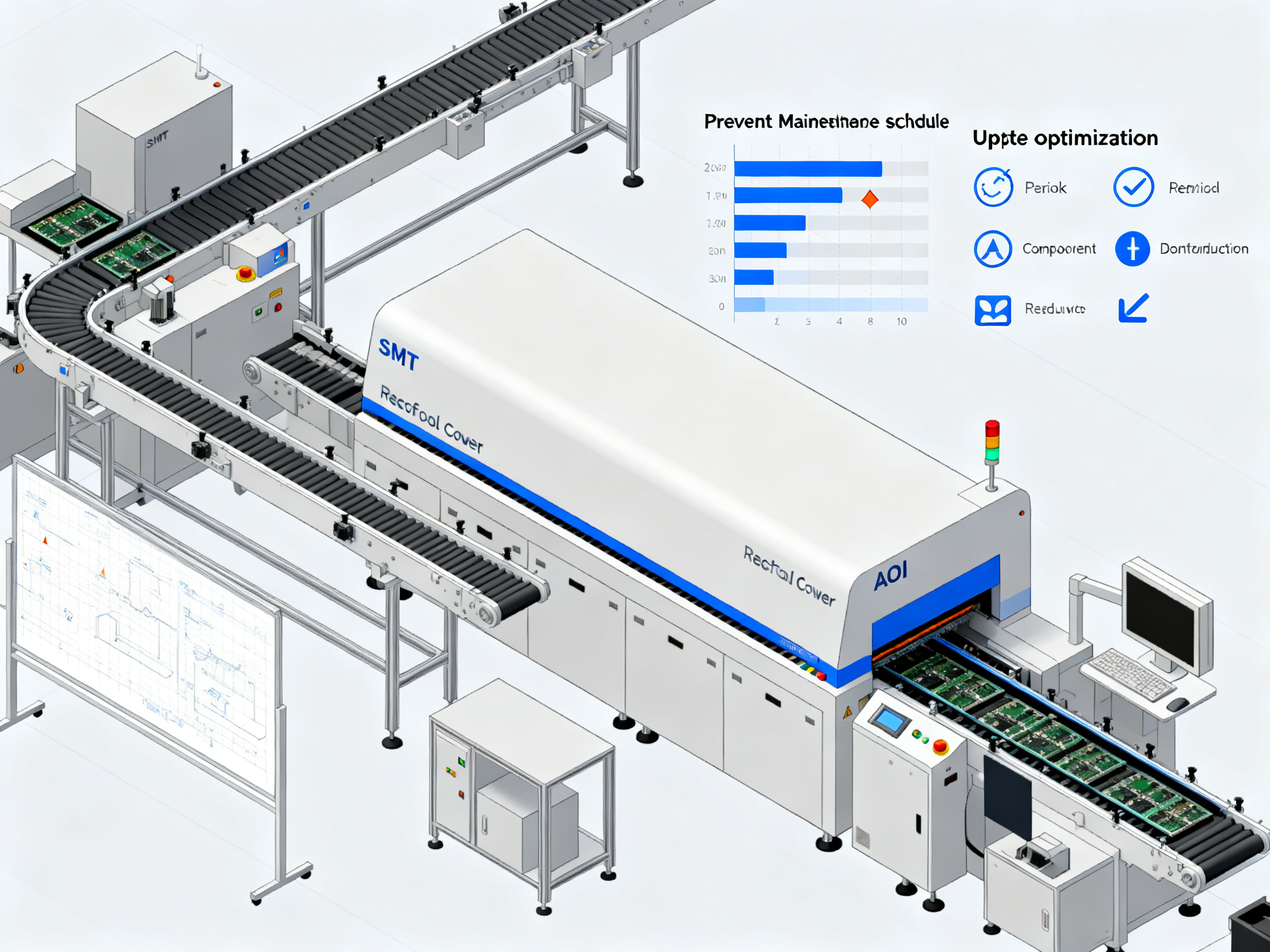
The Maintenance Cost Breakdown
| Cost Category | Annual Range | Notes |
|————–|————–|——-|
| Documentation/Manuals | $200-$2,000 | Varies by vendor and coverage |
| Maintenance Kit/Consumables | $3,000-$15,000 | Based on line complexity |
| Spare Parts Inventory | $5,000-$30,000 | Depends on risk tolerance |
| Service Contract | 10-15% of equipment value | Response time tiers available |
| Technician Labor (NA) | $120,000-$570,000 | Based on hours and hourly rate |
| Technician Labor (Asia) | $30,000-$280,000 | Regional cost advantage |
What Good Maintenance Gets You
The KPIs tell the story. MTBF (Mean Time Between Failures) measures how long your equipment runs between breakdowns. MTTR (Mean Time To Repair) tracks how fast you get back online. OEE combines availability, performance, and quality into one number. First-pass yield tells you what percentage of boards pass inspection without rework.
Preventive maintenance improves all of these. A solid maintenance schedule keeps your reflow profiles stable, your solder joints consistent, and your defect rates predictable. Reactive maintenance, by contrast, means you’re always firefighting. Boards fail. Quality dips. Your operators get frustrated.
Here’s a basic maintenance schedule outline you can adapt:
Setiap hari: Clean nozzles, check feeders, verify air and vacuum systems, inspect belts for wear, remove paste and debris from printers, verify reflow oven temperature alarms.
Weekly/Monthly: Lubricate X/Y axes, clean vision lenses, test feeder alignment, check squeegee condition, change flux filters, clean filter compartments on ovens.
Triwulanan: Complete nozzle audit, calibrate placement accuracy to IPC-9850A standards, confirm battery backups, deep clean oven zones.
Annually: Replace belts and motors, perform full mechanical alignment, audit electrical panels, calibrate thermocouples, replace heating elements on reflow ovens.
Build this schedule before your equipment arrives. Not after. The factories that struggle most with maintenance are the ones that treat it as an afterthought instead of a core part of operations.
And one more thing: factor in training time. Your technicians need to know how to execute these schedules properly. That means setting aside hours for documentation review, hands-on practice, and certification if your vendor offers it.
5. Service Contracts, Preventive Maintenance, and Downtime Economics
Here’s the thing: once your SMT line is running, who keeps it running matters just as much as what you paid for it. Buyers often search for “price SMT line services” or “price SMT line services LLC” thinking they’re looking for a vendor, but they’re really asking about a cost category.
There are four main approaches to keeping your line alive: reactive repairs when something breaks, scheduled preventive maintenance on a calendar, OEM service contracts with the equipment manufacturer, and in-house teams handling everything. Some buyers also use third-party SMT line services for specialized work. Each has a different price point and risk profile.
Reactive maintenance is cheap until it’s not. You’re gambling that parts won’t fail during a production run. When they do, you’re burning labor and missing deadlines.
Preventive maintenance runs $3,000 to $15,000 annually for consumables alone, plus technician hours. OEM contracts typically run 10-15% of equipment value per year, which sounds steep but includes priority support and remote diagnostics. In-house teams give you control, but you need to staff and train them properly.
Downtime cost is where the math gets serious. The formula is:
Downtime Cost per Hour = (Lost Units per Hour × Margin per Unit) + Fixed Costs per Hour + Penalties
Here’s a real example. Say you’re running 60 boards per hour at $50 margin each, with $1,000 per hour in fixed costs. Your baseline downtime cost is $4,000 per hour minimum. Add missed delivery penalties and you’re quickly at $6,000 to $10,000 per hour.
Now factor in that automotive manufacturers lose roughly $2.3 million per hour when production lines go down [1]. That number puts everything else in perspective. The expensive service contract suddenly looks cheap next to two hours of unplanned downtime.
The real cost isn’t just the repair bill. It’s the cascade: missed shipments, expedited shipping, overtime to catch up, and the quality escapes that happen when you’re rushing. A solid preventive maintenance schedule keeps your reflow profiles stable and your defect rates predictable instead of always chasing fires.
Tips dari Ahli: When comparing service options, ask vendors to break down total cost including spare parts, service response times, and ramp-up time not just the machine price. Five-year total cost of ownership usually tells a different story than the initial quote.
6. Quality Control and Compliance Costs for Lead-Free, High-Reliability Manufacturing
Here’s where budgets get real. Lead-free manufacturing isn’t just about swapping solder alloys. It requires tighter thermal profiling, more rigorous inspection, and documentation systems that prove your process was in control when that board left the line.
The standards don’t mess around. Automotive manufacturing demands IPC-A-610 Class 3 compliance with full traceability [1]. Military and aerospace applications go even further with MIL-STD requirements and extreme durability testing [1]. Every step up in reliability requirements means more inspection time, better equipment, and certified operators who cost 30-50% more than standard labor [1].
So what does this actually cost?
Defects are where the money disappears. A single BGA solder joint failure might cost $5 to $50 in rework, but if it escapes to the field, you’re looking at warranty claims, returns, and reputational damage that dwarfs the original assembly price. Here’s a quick look at common defects and what controls them:
| Defect Type | Likely Cause | Control Method | Cost Impact |
|————-|————–|—————-|————|
| BGA voiding | Incorrect thermal profile, moisture | X-ray inspection, profile optimization | $20-100/board |
| QFN bridging | Insufficient paste release, alignment | 3D AOI, stencil design review | $10-50/board |
| Tombstoning | Uneven heating, pad design | Reflow profile tuning, paste adjustment | $5-25/board |
| Cold joints | Insufficient soak time, low peak temp | Thermal profiling, thermocouple calibration | $15-40/board |
| Head-in-pillow | Partial reflow, component lift | Nitrogen atmosphere, profile validation | $25-75/board |
Inspection systems are non-negotiable for high-reliability work. AOI systems catch visible defects but miss hidden joint issues. 3D X-ray inspection for BGA packages typically runs $50,000 to $250,000 depending on throughput and resolution [2]. The tradeoff? X-ray reduces line speed by 20-30% compared to standard inspection [2]. But when you’re building automotive ECUs where field failures cost millions per hour, that slowdown is worth it [3].
Traceability adds another layer. IPC-1782 requirements for serial-level tracking mean you need MES integration, barcode systems, and database infrastructure totaling $50,000 to $200,000 or more [1]. Some buyers skip this until a customer audit forces the issue. That’s a bad move. Failing an automotive IATF 16949 audit can cost you contracts worth far more than the system upgrade.
The math tips in your favor when you factor in rework rates. A factory running 8% rework on high-density assemblies is burning through labor, materials, and schedule margin. Tight process controls reduce that to under 1% for most product types. Fewer defects means lower cost per good board, faster shipments, and customers who keep coming back.
From Our Experience: We always tell buyers: preventive maintenance planning reduces unplanned downtime and helps stabilize soldering quality on lead-free reflow and wave soldering lines. The first time you skip a reflow oven calibration or defer belt replacement on your pick-and-place, you’re gambling that the part won’t fail during a production run. That gamble gets expensive fast when you’re burning lead-free assemblies.
S&M Co. Ltd. builds their lead-free reflow ovens with closed-loop thermal control and nitrogen capability built in, because the equipment should make compliance easier, not harder. But equipment alone doesn’t solve quality problems. You need trained operators, documented processes, and inspection systems that catch issues before they become field failures.
7. How to Build a Realistic SMT Line Budget in 2026
Here’s the thing: most buyers make the same mistake when budgeting for SMT lines. They focus entirely on the equipment quote and forget everything else that eats into their pockets over time.
The real budget framework splits into three buckets. First, capital expenditure (CapEx) covers equipment, installation, and facility prep. Second, operating expenditure (OpEx) covers labor, utilities, consumables, and maintenance contracts. Third, lifecycle costs cover upgrades, training, spare parts inventory, and the downtime hits you take when things break.
Let me show you what this looks like on paper.
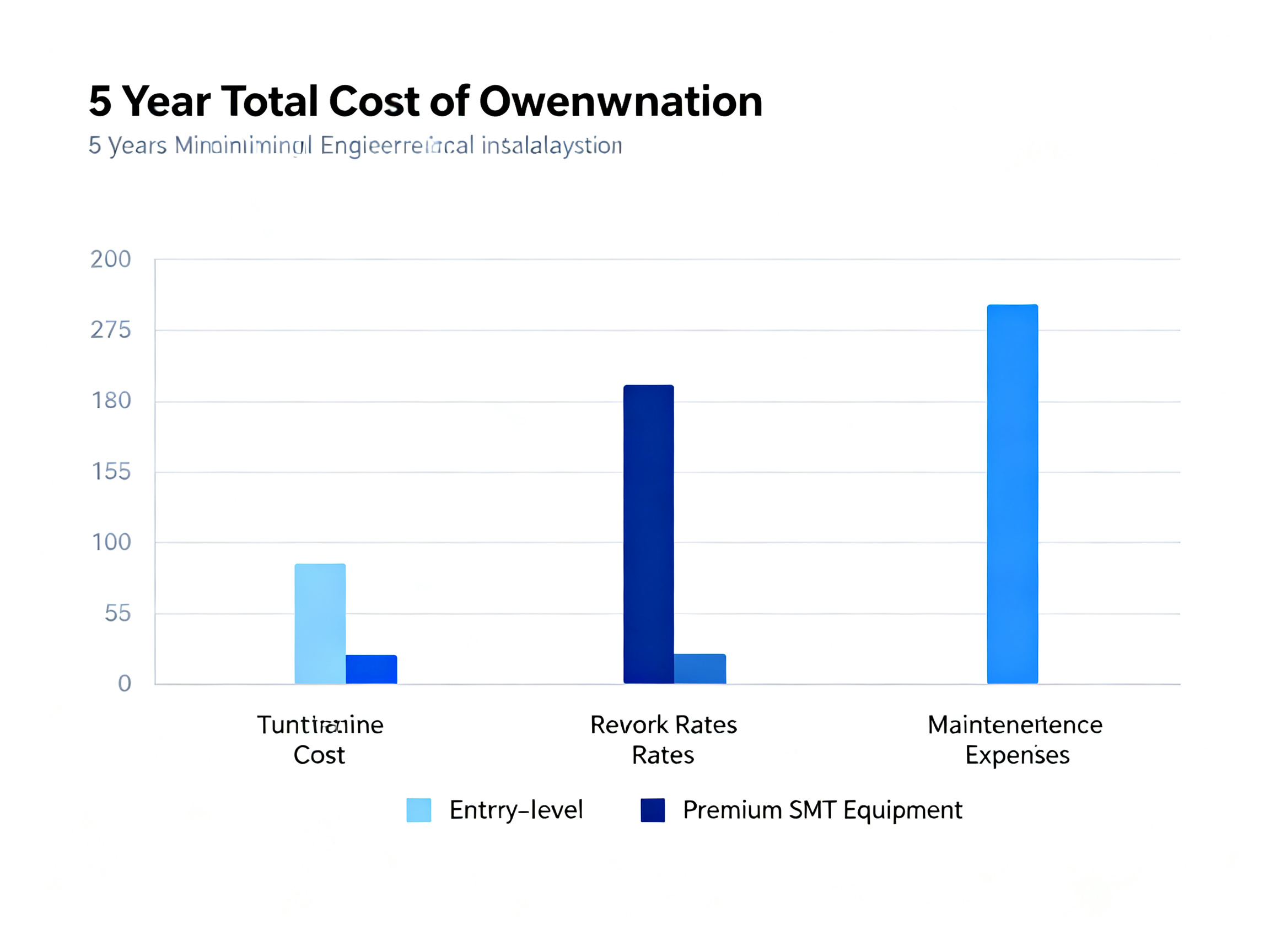
Sample Budget Worksheet for a Mid-Volume SMT Line
| Category | One-Time Cost | Annual Cost | Notes |
|———-|————–|————-|——-|
| Capital Equipment | $800K-$2M | – | Pick-and-place, reflow, wave, inspection |
| Facility Preparation | $50K-$150K | – | Power, exhaust, nitrogen, ESD flooring |
| Installation & Integration | $30K-$100K | – | Rigging, calibration, MES setup |
| Service Contracts | – | $80K-$200K | 10-15% of equipment value |
| Technician Labor | – | $120K-$380K | Based on shift model and region |
| Consumables & Spares | – | $8K-$45K | Filters, nozzles, belts, thermal paste |
| Utilities | – | $15K-$40K | Power, nitrogen, compressed air |
| Training & Documentation | $5K-$20K | $2K-$5K | Initial setup plus ongoing certification |
| Contingency (15-20%) | $140K-$225K | $30K-$100K | Covers overruns and surprises |
That contingency number matters. Most factories underestimate by 15-20% because they forget the small stuff. Setup fees for stencils, machine programming, line changeovers, software licenses, and the three months of ramp-up time where your line runs at 60% speed all add up [1].
Questions to Ask Before Signing Anything
Buyers need to interrogate quotes carefully. Here’s what to push vendors on:
- What does the base price actually include? SPI, AOI, and X-ray systems often appear as afterthoughts that double your inspection budget [1].
- What are your feeder strategy and setup discipline? Changeover time for your actual board mix will surprise you [2].
- Which proposal stays efficient after running real orders at full pressure? Debugging and line balancing costs get buried in fine print [2].
- What response times can we expect for service calls? A 48-hour response time versus same-day support has vastly different cost implications [3].
- Can you break down total cost including spare parts, service, ramp-up time, and utilities over five years?
Tips dari Ahli: Compare five-year total cost of ownership, not just the quoted machine price. A $200,000 line with $150,000 in hidden integration costs and poor service support often costs more than a $300,000 line with built-in inspection, solid support, and easier maintenance.
S&M Co. Ltd. designs their lead-free reflow ovens and wave soldering systems with standard integration protocols in mind, which keeps installation costs predictable. But regardless of which vendor you choose, build your budget before you request quotes. That way you can spot the line items vendors conveniently forget to mention.
8. When a Higher SMT Line Price Is Actually the Lower-Cost Choice
Here’s something that sounds counterintuitive until you run the numbers: sometimes the most expensive SMT line on the market is actually your cheapest option over five years.
Premium equipment pays back in ways that don’t show up on the initial quote. Higher uptime means fewer production stoppages. Better yield means less rework. Faster changeovers mean more time making money instead of swapping feeders. And longer service life means you’re not replacing equipment every five years when cheaper machines start showing their age.
A Shenzhen factory increased ROI by 35% in one year just by optimizing their legacy lines. They cut idle time from 20% down to 5% and dropped rework rates from 8% to under 1% [1]. That’s the kind of improvement that transforms a budget line into a profit center.
When defects in automotive or aerospace assemblies cost millions per hour in downtime, suddenly the price gap between equipment tiers looks very different. A line running 8% rework instead of 1% burns through labor, materials, and schedule buffer every single shift. Better process controls from premium equipment lock in those savings permanently.
The real comparison isn’t purchase price versus purchase price.
It’s total cost over five years. Service contracts, spare parts inventory, technician hours, utility bills, and the cost of every defect that escapes to the field all add up fast.
| Factor | Lowest Initial Price | Lowest 5-Year Total Cost |
|——–|———————|————————-|
| Equipment Purchase | Lower upfront | Higher upfront |
| Downtime Risk | High | Low |
| Rework Rate | 6-10% typical | 1-2% typical |
| Service Response | 24-48 hours | Same-day available |
| Spare Parts Lead Time | Weeks | Days or hours |
| Upgrade Path | Limited | Scalable |
| Five-Year Cost | Often higher | Usually lower |
Procurement Scorecard for Risk-Adjusted Buying
Before signing any quote, score each vendor on these factors. A perfect price score means nothing if the service and support scores are zeros.
- Service support depth: Can you reach a real human in under an hour?
- Spare parts availability: Where are parts stocked and how fast can you get them?
- Process capability: Does the line actually meet your Cpk requirements?
- Maintenance requirements: What does the equipment need to stay running?
- Upgrade path: Can the line grow with your product roadmap?
Tips dari Ahli: A $200,000 line with poor service and limited upgrade options often costs more over five years than a $300,000 line with solid support, built-in inspection, and scalable architecture. Compare total cost of ownership, not just the purchase price.
S&M Co. Ltd. builds their lead-free reflow ovens and wave soldering systems with serviceability in mind. But regardless of which vendor you choose, run the five-year math before you sign anything.
Expert Summary: Budget for Capability, Not Just Equipment Price
Here’s the thing: SMT line costs in 2026 aren’t really about equipment prices. They’re about what your line needs to do, how you’ll keep it running, what it takes to integrate with your factory, what compliance standards apply to your products, and what downtime actually costs when something breaks.
The numbers add up fast when you look at the full picture. Maintenance runs 10-20% of equipment value annually. Technician labor varies wildly by region. Inspection systems like X-ray and 3D AOI add thousands per line. And if you’re building for automotive or aerospace, compliance audits and traceability systems can double your IT spending.
But here’s what I’ve seen trip up factories again and again: they focus on the quote, forget about the integration, skip the maintenance planning, and then wonder why their budget blew up six months after installation.
The right approach puts capability first.
Before you request a single quote, define your real production requirements. Match the line to your actual product mix and shift model, not the optimistic version you hope for. Factor in service contracts, technician costs, and utility bills. And always model five-year total cost of ownership, not just the purchase price.
S&M Co. Ltd. builds their lead-free reflow ovens and wave soldering systems with integration and serviceability in mind, because the best equipment should make the total cost of ownership lower, not just the invoice.
Your SMT Line Budget Checklist
- [ ] Define production requirements: CPH, accuracy, product mix
- [ ] Request itemized quotes that include installation, training, and inspection
- [ ] Validate maintenance plans before signing anything
- [ ] Model five-year cost including labor, utilities, and spare parts
- [ ] Score vendors on service response and spare parts availability
Ready to get a detailed budget breakdown for your SMT line? Request an itemized consultation from S&M Co. Ltd. to see exactly what your production requirements will cost over five years, not just the first invoice.