



Pubblicato: 19 May 2026
Tempo di lettura: 12 minutes
Reviewer: [Reviewer Placeholder], [Credentials Placeholder]
Mastering Nitrogen Reflow Soldering: Comprehensive Guide for SMT and SMD Success
Soldering tiny, intricate components like LEDs, connectors, or BGAs can be tricky. And when you’re working on high-volume Surface Mount Technology (SMT) production lines, the process needs to be fast, precise, and nearly flawless. But here’s something we’ve learned: nitrogen reflow soldering can significantly reduce defects and improve solder quality. If you’re trying to decide whether nitrogen is right for your production lines, this guide dives into the details you need to know.
What You’ll Learn in This Guide
- Why nitrogen is a game-changer for reflow soldering.
- The science behind oxidation reduction and better solder joints.
- Real-world applications in industries like semiconductors and smartphone manufacturing.
Let’s jump in and explore why nitrogen reflow soldering might just be the upgrade your SMT process needs.
From the Author: [Author Information Placeholder: This section will describe the author’s credentials related to SMT processes and nitrogen reflow soldering.]
Why Use Nitrogen in Reflow Soldering?
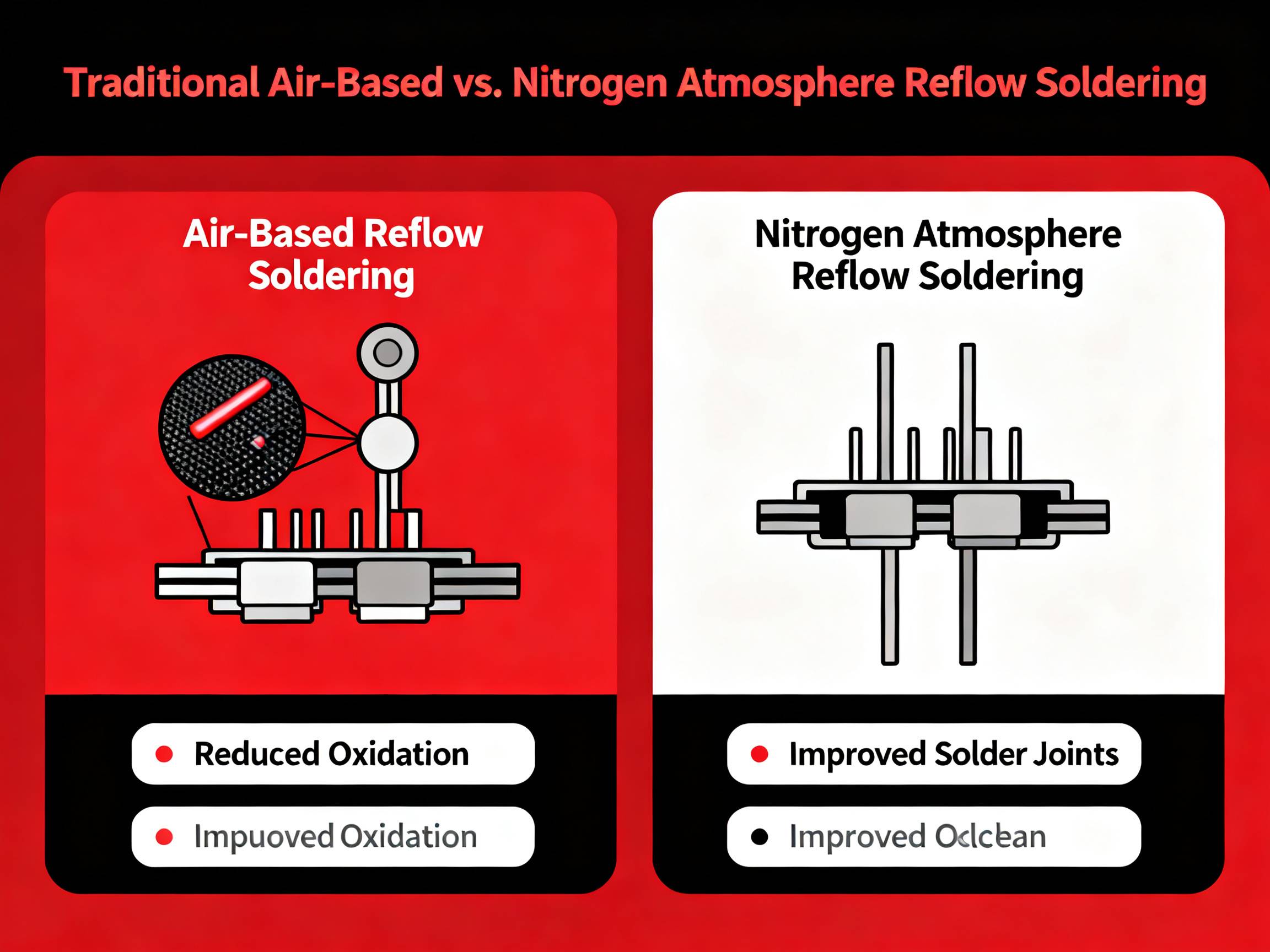
When soldering components in an SMT production line, oxidation is your enemy. Oxidation creates surface impurities that reduce the reliability and performance of solder joints, especially on critical parts like BGAs and LEDs. This is where nitrogen reflow soldering outperforms traditional methods relying on air.
1. Reducing Oxidation
In a nitrogen reflow oven, the atmosphere is controlled by reducing oxygen levels. Less oxygen = fewer oxides on solder joints. Fewer oxides mean your solder bonds are stronger, more conductive, and less likely to fail. High-reliability industries, like aerospace and medical electronics, often require nitrogen to meet their stringent quality demands.
Pro Insight: Nitrogen reflow atmospheres significantly reduce oxidation risks, improving joint performance. If your defect rate is high, there’s a good chance nitrogen can help turn things around.
2. Enhanced Wetting of Solder Joints
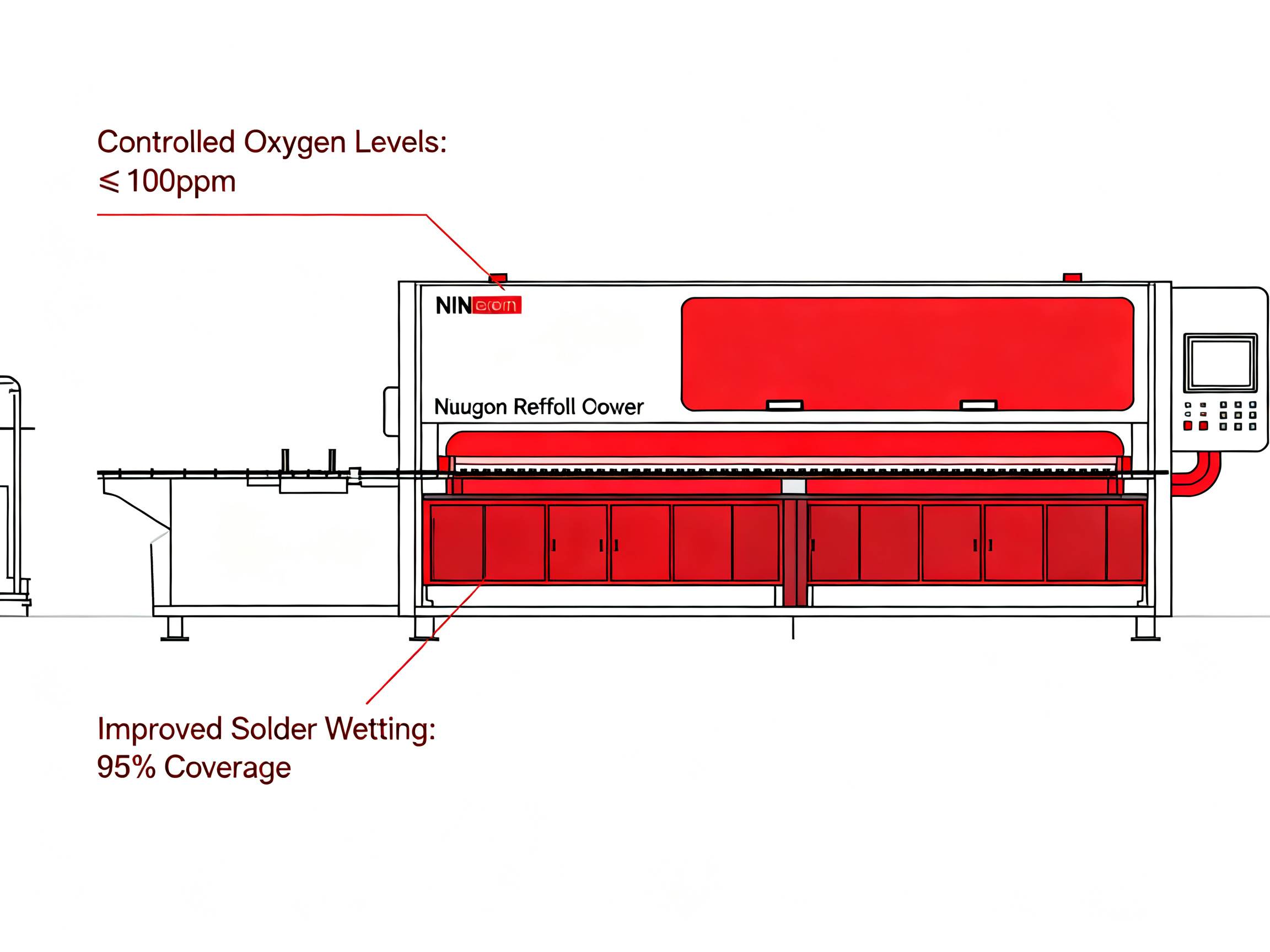
Wetting refers to how well the solder spreads and adheres to component surfaces and pads. With nitrogen, solder flows more easily, even for hard-to-wet surfaces. That’s especially critical for SMD components like LEDs or ICs where strong, even connections are non-negotiable.
Imagine soldering a high-density board for consumer electronics. If solder doesn’t wet evenly, it could weaken connections or leave uncoated surfaces prone to wear and tear. Nitrogen makes wetting more uniform. That means tighter, cleaner connections all around.
3. Improved Durability
Better wetting and less oxidation mean solder joints are simply stronger. Over time, assemblies go through thermal cycling. Weak solder connections can crack, but nitrogen-driven processes create more robust joints that withstand repeated stresses.
A perfect example? Semiconductor manufacturers using nitrogen reflow see fewer failures during thermal cycling tests. For critical applications like CPUs and GPUs, those gains in reliability are massive.
Stay tuned as this guide explains how to measure nitrogen parameters, optimize temperature profiles, and avoid common pitfalls in nitrogen-based reflow processes.
Critical Parameters for Optimal Nitrogen Reflow Soldering
For nitrogen reflow soldering to work its magic, the process itself needs to be fine-tuned. That means keeping an eye on several key parameters. Let’s break down what really matters:
1. Temperature Matters — A Lot
Ever baked a cake where you cranked up the heat to “save time” only to burn it? Soldering works the same way. You need gradual and consistent heat.
- Ramp Rates: A slow, steady ramp-up in temperature minimizes thermal stress on components.
- Peak Temperatures: Maintain a reliable liquidus point (without exceeding it) to ensure solder flows properly.
- Cooling Zones: A controlled cool-down solidifies strong joints without thermal cracks.
2. Nitrogen Purity: Why Less Oxygen is Better
The ideal nitrogen atmosphere contains very little oxygen to prevent oxidation.
- How Pure? Shoot for under 100 parts per million (ppm), which means less impurity in reflow atmospheres.
- Measurement Tools: On-site oxygen analyzers track real-time atmospheric nitrogen quality.
Expert Tip: By meticulously fine-tuning all your instruments to target ppm gas, you reduce invisible manufacturing flaws others tend to overlook.
3. Troubleshooting Defects Specific to Nitrogen Reflow
Soldering defects are pretty common, but some are unique to nitrogen reflow. Knowing what to look for can save you from big headaches later.
- Voids: These are gas pockets trapped in your solder joints. They happen due to improper heating cycles, so make sure your temperature profiles are spot on.
- Misalignment: Misplaced components often trace back to poor pick-and-place setup and calibration. Double-check those settings regularly.
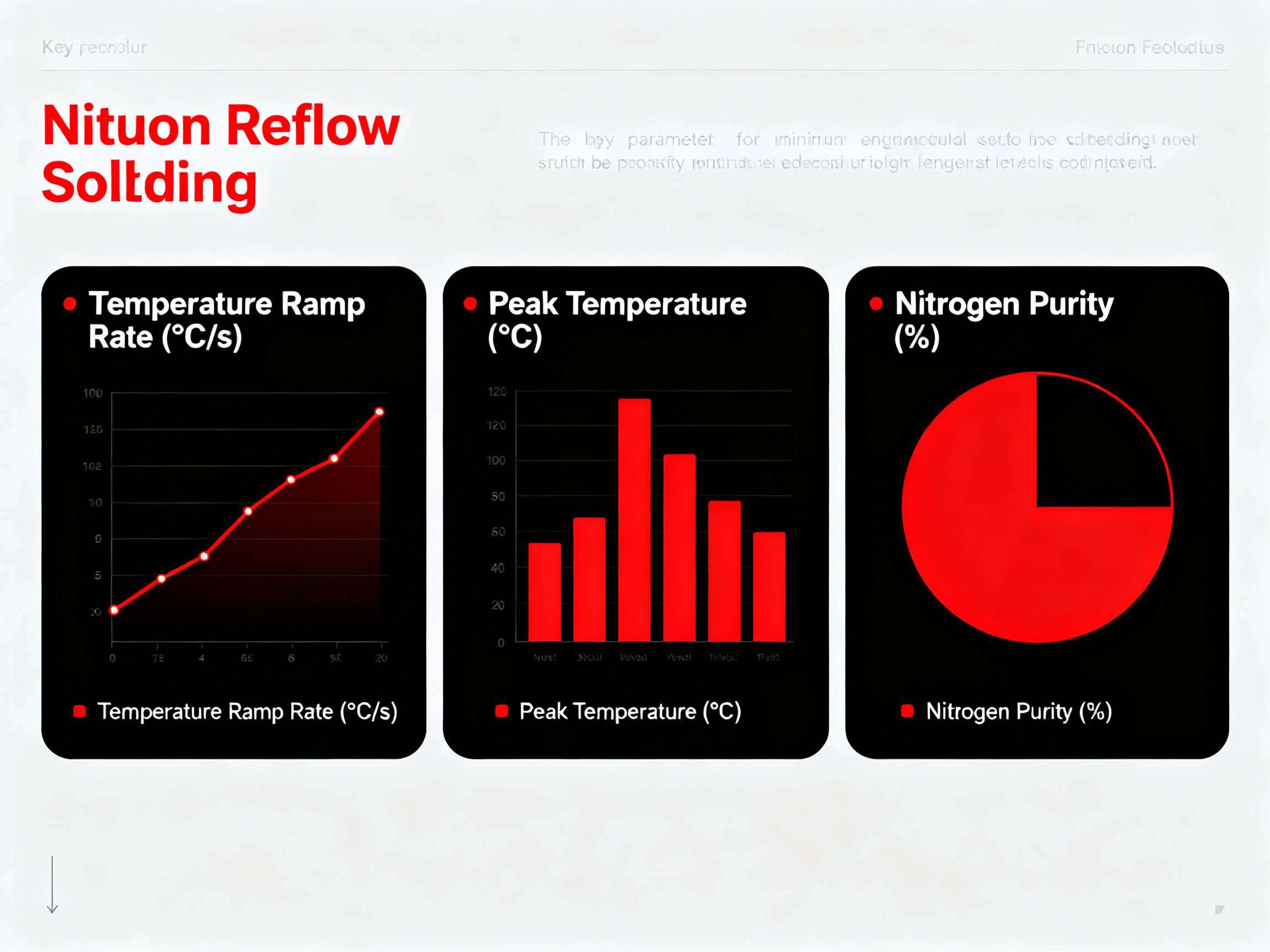
Nitrogen reflow processes give manufacturers unique tools for top-notch soldering, but only if parameters are carefully measured and validated.
Stay tuned for practical examples where nitrogen reflow soldering shines in real-world applications. Next up: learn how industries utilize nitrogen to create efficient and reliable solutions.
Practical Examples of Nitrogen Reflow Soldering Applications
Nitrogen reflow isn’t just for show—it’s a powerhouse in real-world applications. Let’s see how it plays out.
Smartphones and Semiconductor Success Stories
Smartphones, semiconductors, and industries like them are seeing huge benefits. Nitrogen helps perfect the fluidity and connections in these sensitive parts.
These industries often deal with components that require pinpoint accuracy and robust connections. The reliability improvements from nitrogen reflow are stellar.
Turning Challenges Into Opportunities
What happens when challenges become opportunities? Nitrogen reflow does just that by enhancing SMT efficiency and reducing defects.
You’ll see more of these examples as you incorporate nitrogen into your production lines, particularly for high-density components.
Nitrogen reflow soldering continues to evolve as different industries explore its diverse applications. Next, we’ll wrap up with the key takeaways and expert insights.
Punti di forza
- Nitrogen reflow soldering reduces defects and improves reliability in SMT applications.
- Monitoring nitrogen levels and adjusting temperature profiles are essential for minimizing issues.
- Real-world applications prove its effectiveness in industries like semiconductors and consumer electronics.
Expert Conclusion: Adaptations in process control and atmosphere adjustment can significantly boost the reliability of your soldering operations—making nitrogen reflow a necessary tool in high-volume production environments.