



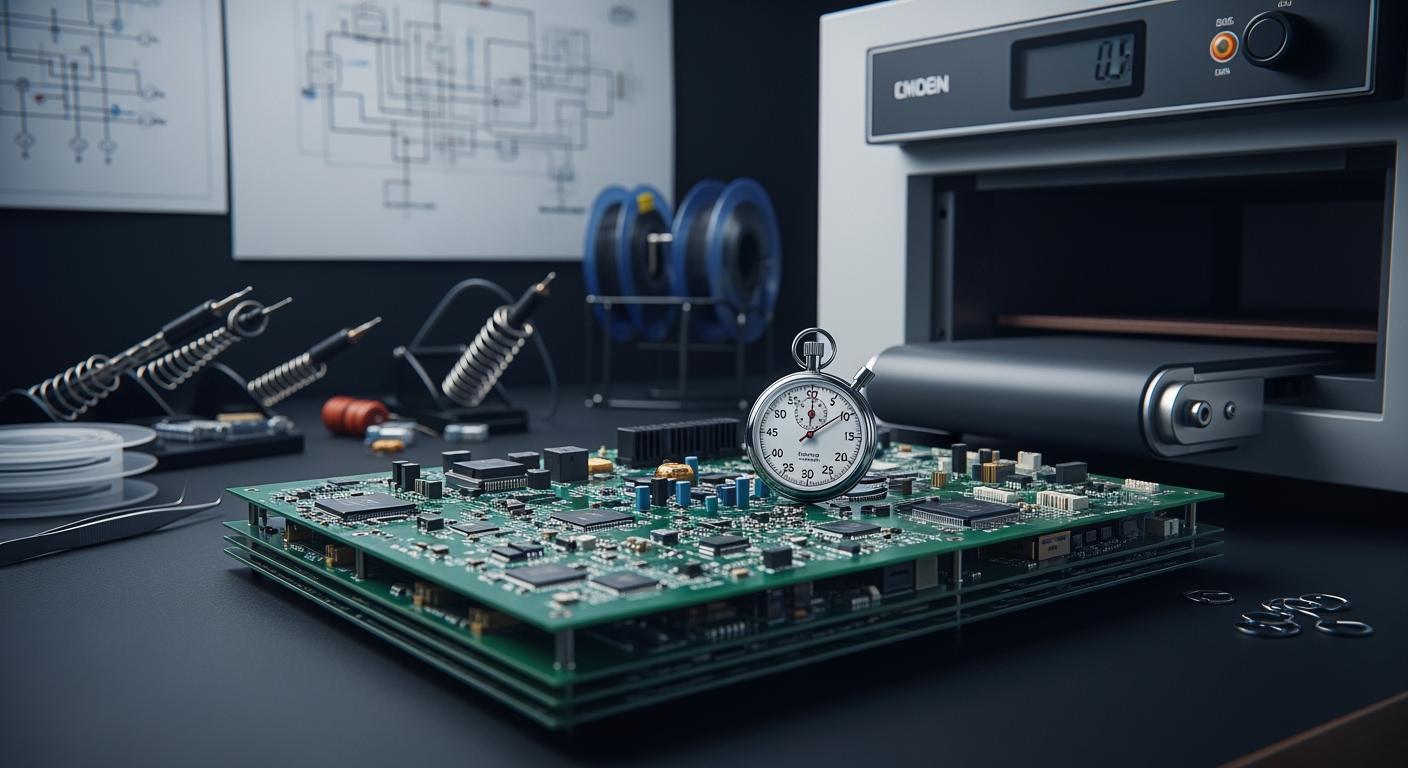
Choosing the right lead-free reflow oven lead time is important. It helps make strong multi-layer pcb assemblies. You need to think about how complex the pcb is. You also need to look at the types of components. The reflow oven technology matters too. Production volume is another thing to consider. Quality standards are important as well. S&M gives advanced solutions. They use features like precise temperature control. They also use smart automation. New technology in reflow ovens helps soldering get better. It makes things faster. It also means less manual work. Here is a quick look at what makes modern reflow ovens special:
昇格タイプ | 説明 |
|---|---|
Lead-free soldering technology | 使用 lead-free alloys like tin-silver-copper makes soldering work better and meets environmental rules. |
Intelligence and automation | Advanced sensors and data analysis in reflow machines help make soldering better and need less manual work. |
High-speed reflow technology | Faster heating and cooling speeds help production go quicker and meet market needs. |
要点
Lead time is the total time a PCB stays in the リフロー炉. This time includes heating, soldering, and cooling steps.
Check how complex your PCB is. More layers mean longer lead time and more chances for mistakes. Pick an oven that can handle these needs.
Use thermal profiling to make sure your oven settings fit your parts and solder paste. This helps stop problems from happening.
Check and adjust your reflow oven often. This keeps the temperature and speed steady. It helps you make better boards.
Always do test runs before making all your boards. This finds problems early and helps you get the best lead time for your assembly.
Understanding Lead-Free Reflow Oven Lead Time
Lead Time in Solder Reflow Oven Processes
You need to understand what lead time means in a reflow oven process. Lead time is the total time it takes for a pcb to move through the reflow oven, from start to finish. This includes the time for heating, soldering, and cooling. You measure and track lead time by using thermal profiling. Profilers check important sections like peak temperature and soak time. These checks help you make sure every pcb gets the right amount of heat. You should use thermocouples on your boards. This lets you see the real temperature your components feel. When you work with lead-free soldering, the process window is much smaller. You must control the temperature very closely to avoid damaging parts. S&M’s reflow oven uses Siemens PLC and PID closed-loop control. This gives you precise temperature management and repeatable results.
Tip: Always perform profiling when you start a new product or batch. This keeps your oven stable and your results consistent.
Impact on Multi-Layer PCB Assembly
Lead time becomes more important as your pcb gets more layers. More layers mean more steps and higher complexity. You must pay attention to how lead time changes with different layer counts:
Layer Count | |
|---|---|
1-2 layers | Shortest lead time |
4-6 layers | Moderate increase in lead time |
8+ layers | Substantial increase in lead time |
Longer lead times can increase the risk of errors. Quality issues may happen if the process takes too long. The complexity of your manufacturing steps grows with each layer. The cost of making a pcb also rises as you add more layers. You need a reflow oven that can handle these demands. S&M’s reflow oven offers advanced features like modular design and real-time monitoring. These help you keep lead time under control and maintain high quality for every pcb.
Key Factors for Choosing Lead-Free Reflow Profile
PCB Layer Count and Complexity
You should check how many layers your pcb has. Boards with more layers need a special heat profile. More layers make it harder for heat to reach every part. The reflow oven must give enough time above liquidus. This helps solder joints stay strong and even. If you build multi-layer pcbs, check the temperature is the same everywhere.
Component Types and Solder Paste Compatibility
You need to match your parts and solder paste to the right profile. Some parts need more heat to work well. Some can break if they get too hot. Lead-free solder needs higher heat than old solder. Check the profile for each part before you start. Make sure the reflow zone fits what you need. This stops problems and keeps soldering good.
S&M Nitrogen Reflow Oven Technology
S&M’s 窒素リフロー炉 works better for lead-free soldering. It uses smart temperature control to keep things steady. You get better results and save time. Nitrogen stops oxidation, helps solder stick, and lowers solder balls. Here are some benefits:
メリット | 説明 |
|---|---|
Keeps solder good by stopping oxidation. | |
Improve welding wetting power | Makes solder flow and stick better. |
Reduce the generation of solder balls | Cuts down on solder balls and bridging for better quality. |
Production Volume and Scheduling
You need to plan your line for the right lead time. Big jobs need ovens that work fast. S&M ovens help you make more boards quickly. You can change the profile for different batch sizes. This keeps things running smooth and stops delays.
Quality and Reliability Standards
You must follow strict rules for reliable products. Lead-free soldering needs careful heat control. If you do not set the heat right, you can hurt the board. Heat and moisture problems cause many pcb failures. Rules like RoHS say you must use lead-free solder. You need to watch the process and check it often to keep quality high.
Step-by-Step Guide to Optimal Lead-Free Reflow Oven Lead Time
Assess PCB Design and Assembly Needs
First, look at your pcb design. Count the layers on your board. Check how big your board is. Notice what parts you use. Some parts need more heat. Others can get damaged by too much heat. Write down which solder paste you use. Think about how many boards you want to make. This helps you plan your process. It also helps you pick the right oven settings. Knowing your design well helps you avoid mistakes. It also helps you make better boards.
Match S&M Reflow Oven Capabilities
Next, match your needs to the S&M oven features. S&M ovens have different profiles you can pick. Ramp-Soak-Spike heats up slowly and then soaks. This profile stops thermal shock and lowers defects. Ramp-to-Spike heats up fast and works for lead-free solder. It fits higher melting points. If your board has many layers or lots of parts, use a custom profile. This lets you control the process better. S&M ovens use Siemens PLC and PID control. This keeps the temperature steady. You get the same results every time. The modular design makes it easy to fix or clean the oven. This helps you work faster.
Profile Type | 説明 | 主なメリット |
|---|---|---|
Ramp-Soak-Spike (RSS) | Slowly heats up, holds steady, then peaks, then cools. | Stops thermal shock and lowers problems like solder bridging and voids. |
Ramp-to-Spike (RTS) | Heats up fast with no soak time. | Faster for lead-free solder and fits higher melting points. |
Custom Profiles | Made for your board’s layers, parts, and solder paste. | Makes solder joints better and cuts down on problems with good control. |
Calculate and Validate Lead Time
Now, figure out the lead time for your oven. Check how fast the conveyor moves. Look at how long the reflow zone is. Use a profiler to see how long your board stays in each zone. Make sure the board gets enough time above the solder’s melting point. Lead-free solder needs higher heat and careful control. Write down the time for preheat, soak, peak, and cool. Compare your numbers to the recommended profile. Change the speed or temperature if you need to. This helps you get good results and keep quality high.
Tip: Always do a test run to check your lead time before making lots of boards. This can save time and stop big mistakes.
Test Runs and Quality Checks
Run a small batch through the oven first. Watch the boards as they go through each zone. Use thermocouples to check if the heat is even. Look for hot or cold spots. Check the solder joints for smoothness and shine. Look for problems like solder balls, bridging, or holes. If you see issues, change the profile or oven settings. Test again until you get good results every time. S&M ovens let you watch the temperature and process live. This helps you keep quality high and work better.
Note: Checking quality often keeps your line running well and helps you meet rules.
If you follow these steps, you can set up your oven for the best lead-free results. You will make boards faster, waste less, and get better performance.
Common Mistakes and Best Practices in Lead-Free Reflow Oven Selection
Typical Errors in Lead Time Choice
People often make mistakes when picking lead time. Many forget to check the real oven temperature. Some skip profiling for each new assembly. Others use the same settings for all boards. Boards can have different layers or parts. Rushing the process can hide problems. Not checking conveyor speed can cause trouble. Ignoring solder paste type is also bad. These mistakes can make weak solder joints. You might see more defects in your boards.
Solutions and Preventive Measures
You can stop these mistakes by doing a few things:
Calibrate and take care of your reflow oven often. Check the temperature, conveyor speed, and airflow to keep things steady.
Pick the right solder paste for your assembly. Make sure it fits your needs and works with your process.
Design your PCB so reflow is easy. Good design helps you get strong solder joints and better boards.
Make a special reflow profile for each assembly. This makes sure every board gets even heating.
Change your settings after you check the profile results. Small changes help you keep quality high.
Check your boards after you make them. Look for problems before making lots of boards.
Tip: Regular checks and small changes help your production and cut waste.
Tips for Efficient Multi-Layer PCB Assembly
You can work better and make good boards by following best practices at each step. The table below shows what to do at every stage:
Stage | 説明 | Optimization Tips |
|---|---|---|
プリヒート・ステージ | Slowly raises temperature to start the flux. | Keep ramp rate steady. Watch that temperature difference stays low. |
ソーク・ステージ | Holds temperature to spread heat across the board. | Change soak time and temperature for heavy or crowded boards. |
リフローステージ | Melts solder paste to make strong joints. | Set peak temperature just above melting. Keep time above liquid short. |
冷却ステージ | Cools solder joints and sets their shape. | Cool at a steady rate to avoid stress and get fine grain structure. |
You should always watch each stage to keep your process steady. S&M reflow ovens help you control every step. This gives you high quality and smooth production.
You can get good results with multi-layer PCB assembly if you follow steps. First, learn what your board needs. Then, pick the S&M reflow oven that fits those needs. Control each part of the process in order. This helps you make better boards and saves time.
Conveyorized multi-zone ovens let you set the heat and timing just right.
You can change how long each board gets heat for stronger solder joints.
アスペクト | 説明 |
|---|---|
Precision in SMT | Tiny parts need careful soldering. |
Systematic Approach | Makes work faster and helps stop errors. |
Pick your oven with care and check your steps often to get the best boards.
よくあるご質問
What is a lead-free reflow oven?
A 鉛フリーリフロー炉 heats your PCB to melt lead-free solder paste. This process connects components to the board. You use it to meet safety and environmental rules.
Why does lead time matter for multi-layer PCBs?
Lead time affects how well your solder joints form. Multi-layer boards need careful timing. If you rush, you risk weak connections. If you go too slow, you may damage parts.
How do you set the right reflow profile?
You check your PCB design, parts, and solder paste. You use a profiler to measure heat. You adjust oven settings until you see smooth, shiny solder joints.
What makes S&M’s nitrogen reflow oven special?
S&M’s nitrogen reflow oven uses smart controls for steady heat. Nitrogen reduces oxidation. You get better solder quality and fewer defects. The oven is easy to use and maintain.
Can you use one profile for all PCBs?
No, you should not use one profile for every board. Each PCB has different needs. You must adjust the profile for layers, parts, and solder paste.