



Opening: Why Nitrogen Reflow Matters in High-Volume SMT
If you’ve ever watched a board come out of a reflow oven with cold joints, bridges, or voiding issues, you know how quickly defects eat into your margins. In high-volume SMT, those small problems multiply fast, especially as component packages get smaller and lead-free alloys push your process window tighter than ever.
The question we’re hearing more often in 2026 is simple: should you be running your oven on air, or is nitrogen reflow worth the extra cost?
What is nitrogen reflow soldering? It’s the practice of flooding your reflow oven with nitrogen gas, pushing out oxygen and creating what engineers call an inert gas reflow environment. Instead of the normal 21% oxygen inside the chamber, you drop it down to under 1,000 parts per million. Some facilities go even lower, targeting under 100 ppm for the toughest assemblies.
The payoff? Reduced oxidation, better wetting, and cleaner joints on boards packed with BGA and QFN components. But there’s a tradeoff. Nitrogen costs money, adds complexity, and isn’t always necessary for every build.
So let’s break it down together. By the end of this guide, you’ll know exactly when nitrogen reflow makes sense, how the process actually works, and what the latest equipment can do for you in 2026.
Published: 01 September 2026
Reading Time: 11 minutes
Reviewer: Simon Scrapes, Founder
Jace Liu is a process engineer specializing in SMT reflow optimization and lead-free assembly with over a decade of hands-on experience in high-volume electronics manufacturing. He has worked extensively with nitrogen reflow systems, thermal profiling, and defect reduction for automotive and consumer electronics clients across Asia and North America.
About the Author
Jace Liu is a process engineer specializing in SMT reflow optimization and lead-free assembly with over a decade of hands-on experience in high-volume electronics manufacturing. He has worked extensively with nitrogen reflow systems, thermal profiling, and defect reduction for automotive and consumer electronics clients across Asia and North America.
What Nitrogen Reflow Soldering Is
Let’s start with the basics. Nitrogen reflow soldering is simply reflow soldering done in a nitrogen-purged oven, where the chamber atmosphere has far less oxygen than normal air. Instead of the typical 21% oxygen you get breathing open air, the system pumps in nitrogen until oxygen levels drop to under 1,000 parts per million. Some facilities push even lower, targeting under 100 ppm for tougher assemblies.
So why does that matter? Here’s the deal. When solder paste melts during heating, the molten solder and metal surfaces on your pads and component leads can oxidize. Think of iron rusting, but on a tiny scale. That oxidation layer acts like a barrier, making it harder for the solder to flow and bond properly. In an inert gas environment with low oxygen, oxidation slows way down. The result is better wetting, cleaner joints, and fewer defects like cold joints or non-wet opens.
Compare that to standard air-based reflow, where your solder faces full atmospheric oxygen throughout the heating cycle. Air reflow works fine for many assemblies, especially with larger pitches and forgiving paste chemistries. But when you stack fine-pitch components like BGAs and QFNs, use oxidation-sensitive finishes, or run lead-free alloys with their tighter process windows, that extra oxygen can drag down your yield.
The concept isn’t complicated. You’re just replacing the air around the board with nitrogen during the critical heating and cooling phases. What changes is what happens at the molecular level on your solder joints.
Quick Glossary
- Inert gas – A gas that does not chemically react with the metals being soldered. Nitrogen is the most common choice in SMT.
- Oxidation – The chemical reaction between oxygen and metal surfaces, forming oxide layers that hinder solder wetting.
- Reflow profile – The precise temperature-versus-time curve the oven follows during the heating and cooling of an assembly.
- ppm (parts per million) – A way to express very low oxygen concentrations. Air contains roughly 209,000 ppm oxygen.
How Nitrogen Reflow Works in a Reflow Oven
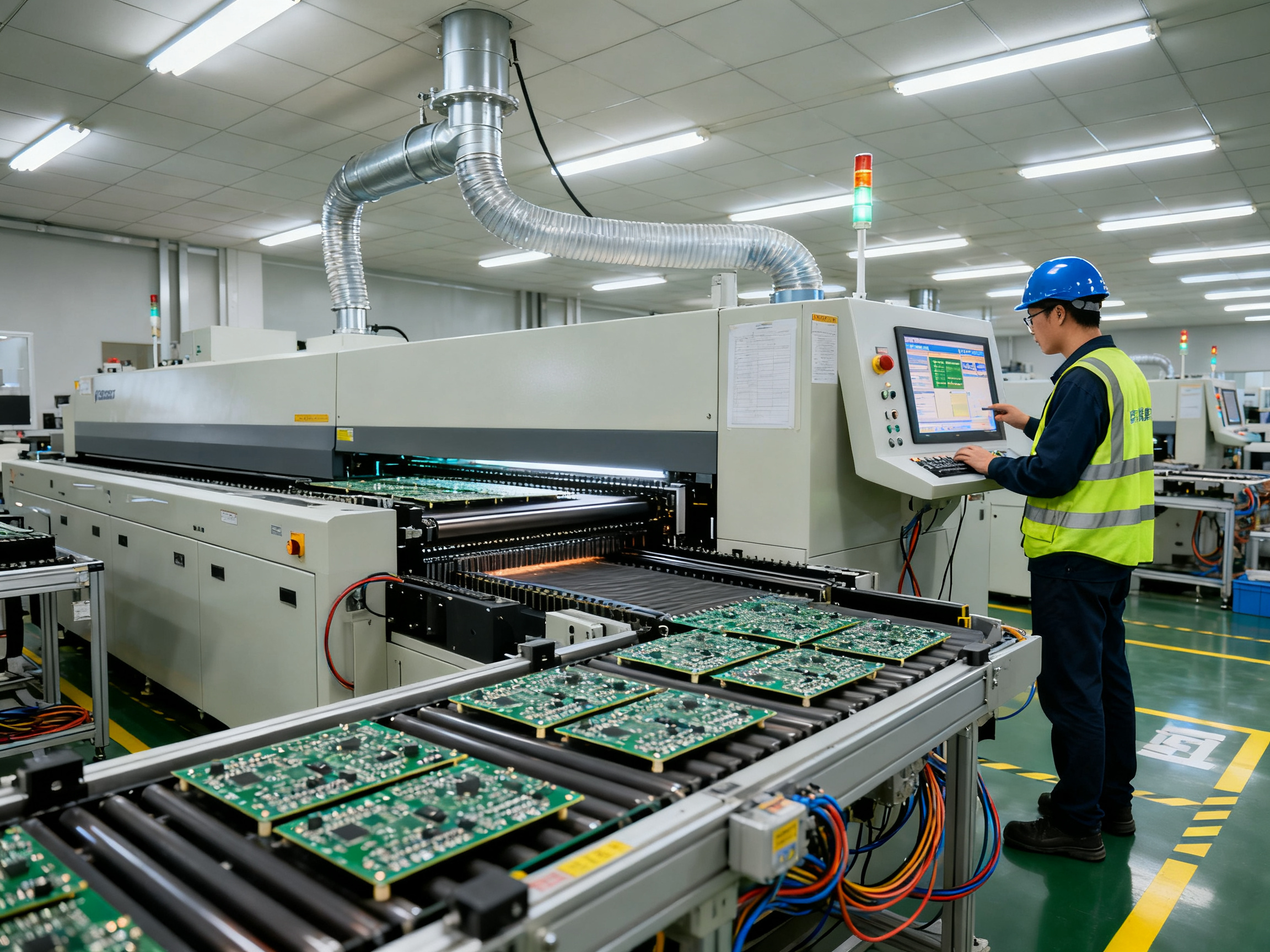
Here’s what happens inside a nitrogen reflow oven during a typical production run. The board enters the preheat zone first, where temperatures climb from room ambient up to around 150°C. The nitrogen atmosphere is already flowing by this point, and oxygen levels inside the chamber should be dropping toward your target ppm. If your system has zone-by-zone oxygen monitoring, you’ll see the real-time reading stabilize once purge flow stabilizes. We usually recommend letting the oven stabilize for 15 to 30 minutes before running production, because a cold start can give misleading oxygen readings.
During preheat, the nitrogen flow rate matters. Too much flow can actually cool the board unevenly; too little and oxygen creeps back in. Most systems recommend somewhere around 2 to 5 liters per minute per meter of belt width.
The Soak Zone Under Nitrogen
The board then moves into the soak zone, spending 60 to 120 seconds in the 150 to 200°C range. This is where flux activates and solvents burn off. Under nitrogen, oxidation is already suppressed, so the flux chemistry works more predictably. The oxygen ppm during soak should be well under 1,000 ppm, with tighter processes targeting under 100 ppm. Oxygen levels above 1,000 ppm during this phase can let oxidation take hold on pads and leads, which creates problems downstream during actual reflow.
Reflow and Cool-Down
Peak temperature hits around 235 to 250°C for lead-free alloys, and this is where nitrogen delivers its biggest payoff. The solder melts and flows, but under low oxygen conditions it wets more freely and with less oxidation getting in the way. Cleaner joints, better fillet formation, and less chance of cold joints or non-wet opens.
Cooling happens at 2 to 4°C per second. Nitrogen helps here too, though the cooling phase is less critical than heating when it comes to oxidation control. Still, keeping the atmosphere controlled throughout the cycle makes the process more repeatable.
How Process Parameters Interact
Here’s something that trips up a lot of shops. Conveyor speed, temperature profile, and board mass all interact with the nitrogen atmosphere. A heavier board with high thermal mass needs a gentler ramp and longer soak, which means the board spends more time in the nitrogen environment. That’s usually fine. But if you’re trying to push line speed on lighter boards, you need to make sure nitrogen flow keeps up with the faster transit time.
Oxygen monitoring needs to happen in real-time during production. One key thing to understand: the oxygen level you set on the controller is not always the oxygen level at the board surface. Leaks, seal wear, and exhaust settings all affect actual ppm, which is why continuous monitoring matters How Nitrogen Reflow Works in a Reflow Oven.
Most facilities targeting high reliability aim for under 1,000 ppm, with under 100 ppm for fine-pitch and BGA-heavy assemblies where wetting margin is tight. Going lower than 100 ppm usually adds cost without proportional benefit for standard builds, so there’s a practical sweet spot to consider.
Benefits for Solder Quality and Defect Reduction
Here’s where nitrogen reflow actually earns its keep. When you cut down oxygen in the chamber, good things start happening at the joint level.
Better Wetting and Solder Flow
Oxidation is the enemy of wetting. When your pads and component leads have less oxygen attacking them during heating, molten solder can flow more freely and actually bond where it’s supposed to. That means cleaner fillet formation, better solder spread, and joints that look the way they should under inspection.
One manufacturer guide claims nitrogen can cut soldering defect rates by 50 to 90 percent for common issues like cold joints, bridging, and solder balling. Now, I’m not saying you’ll hit those numbers every time, but the direction is clear. Less oxygen means less oxidation, which means your paste chemistry doesn’t have to fight against rust just to make a connection.
Void Reduction on BGA and QFN Packages
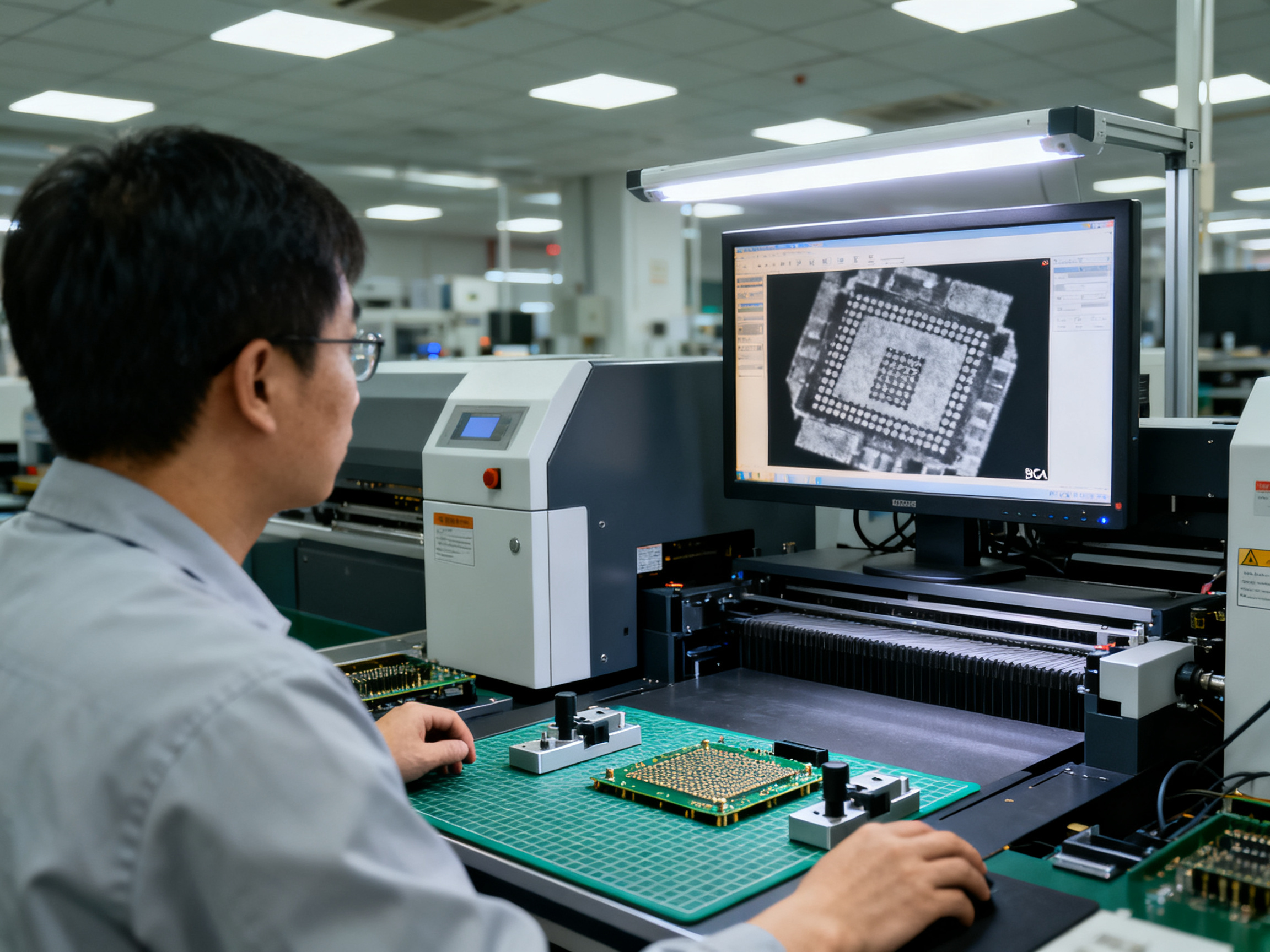
This is where it gets interesting for high-density assemblies. Voids are those tiny air pockets inside solder joints that weaken them over time. With air reflow, void rates often land somewhere around 15 to 25 percent on BGA and QFN components. Under controlled nitrogen, some facilities report dropping that below 5 percent.
Expert Tip: Set realistic oxygen targets for your product tier. For most fine-pitch work, 500 to 1,000 ppm works fine. Going below 100 ppm sounds impressive, but the quality jump usually doesn’t match the extra cost unless you’re running Class 3 automotive or medical assemblies.
Lead-Free Alloys Love Nitrogen
Lead-free solders have tighter process windows than tin-lead did. They need higher peak temperatures and they’re more sensitive to oxidation during that extended time above liquidus. Nitrogen gives you a wider safety margin. The solder wets better, flux has an easier job, and you’re less likely to see the de-wetting or non-wet defects that plague lead-free builds run on plain air.
Where You’ll See the Biggest Gains
If you’re building anything with fine-pitch components, BGAs, QFNs, or oxidation-sensitive surface finishes like OSP, nitrogen reflow usually pays for itself through better first-pass yield. The cleaner joints and lower defect rates mean less rework, fewer customer returns, and happier production managers who aren’t scrambling to explain yield drops.
But here’s the honest truth. If your current air reflow process is already hitting your quality targets, nitrogen might be overkill. The benefits are real, but they’re most visible when you’re fighting wetting problems or running assemblies where oxidation is your main enemy.
When to Use Nitrogen vs Air Reflow
So here’s where things get practical. Not every board needs nitrogen. And spending money on inert gas when air reflow works just fine? That’s just waste.
Go with nitrogen when you have:
Fine-pitch components like BGAs, QFNs, and CSPs with pitches under 0.4mm. These packages have tiny wetting windows where oxidation can kill your yield fast. Boards with OSP or other oxidation-sensitive surface finishes also tend to benefit. And if you’re running lead-free alloys, nitrogen gives you a wider safety margin since those solders need higher temps and tighter control.
High-reliability industries drive a lot of nitrogen adoption too. Automotive safety modules, medical devices, aerospace assemblies, and anything built to IPC Class 3 standards often justify the extra cost because field failures cost way more than a few extra dollars per board.
Stick with air reflow when:
Your components have larger pitches and forgiving process windows. Consumer electronics with moderate reliability needs, prototypes, and low-volume builds often don’t need nitrogen if your current air process hits your quality targets. Cost-sensitive products where first-pass yield is already acceptable probably don’t need the upgrade.
| Factor | Choose Nitrogen | Choose Air Reflow |
|——–|—————-|——————|
| Component density | BGA, QFN, fine-pitch | Standard pitch, larger components |
| Surface finish | OSP, oxidation-sensitive | HASL, ENIG (forgiving) |
| Reliability class | Automotive, medical, aerospace | Consumer, prototyping |
| Process sensitivity | Lead-free, tight windows | Standard tin-lead, wider tolerance |
| Operating cost priority | Quality over cost | Cost-driven, volume-sensitive |
The real answer in 2026? Use air by default, then move to nitrogen only when you can point to a measurable problem or a customer requirement.
Advanced Trends in Nitrogen Reflow Systems
Here’s where things get interesting for 2026. The nitrogen reflow game has changed a lot in the past few years, and if you’re still running a basic fixed-flow nitrogen system, you might be spending more than you need to.
Closed-loop oxygen control is probably the biggest shift we’ve seen. Older systems just pumped nitrogen at a set rate and hoped for the best. Newer reflow ovens in 2026 can actually measure oxygen levels in real time and adjust nitrogen flow automatically to hit your target ppm. So if you need 500 ppm but the oven drifts higher, it adds more nitrogen. If things stabilize, it backs off. This keeps oxygen levels steady without wasting gas How Nitrogen Reflow Works in a Reflow Oven.
Some manufacturers are now putting oxygen sensors in each zone of the oven, not just at the inlet. That means you can see if the preheat zone is pulling in air differently than the reflow zone and actually do something about it.
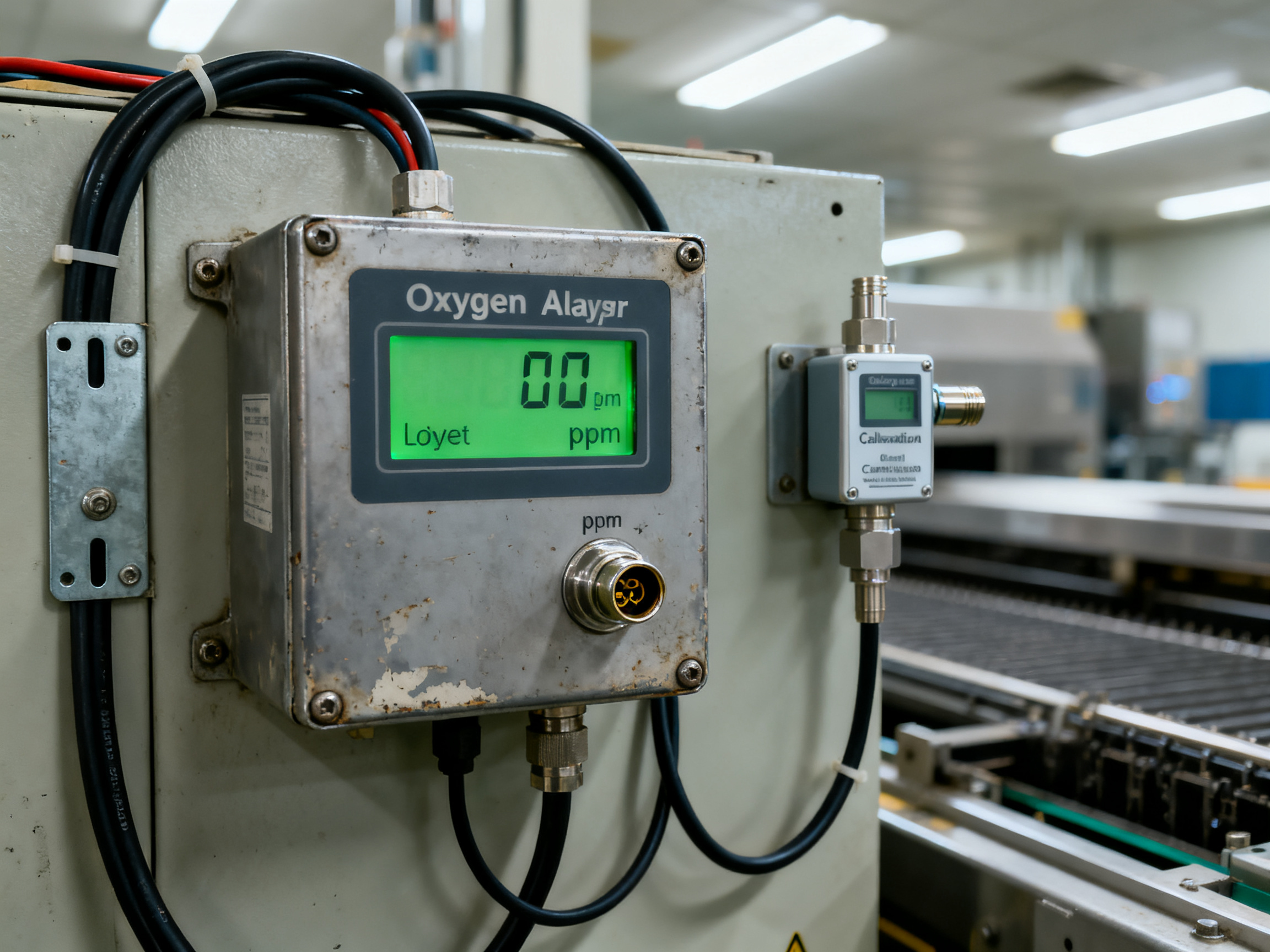
Pro Insight: Closed-loop oxygen monitoring systems can cut nitrogen consumption by 20 to 40 percent compared to fixed-flow setups, because they only use what the process actually needs. If you’re running high volumes and still on constant-flow nitrogen, this alone could pay for the upgrade in under a year.
Industry 4.0 connectivity is another piece of the puzzle. Modern reflow ovens now log oxygen levels, temperature profiles, and production data automatically. You can connect them to your MES system and track every board that passed through against the exact atmosphere conditions it saw. For automotive and medical customers who need full traceability, this is becoming a requirement, not a nice-to-have.
AI-assisted process optimization is starting to show up too. Some vendors now offer software that analyzes thermal profile data across thousands of runs and suggests adjustments to improve wetting or reduce voiding. It won’t replace a good process engineer, but it can catch drift before it becomes a defect problem.
Energy and gas efficiency has become a bigger focus as well. Manufacturers like Kurtz Ersa and Heller have been highlighting reduced nitrogen consumption through smarter thermal chamber design. Sleep modes and idle-period controls cut nitrogen use during lunch breaks and shift changes, which adds up fast on multi-shift lines.
Vacuum-assisted reflow is also gaining traction for power electronics and advanced packaging, where void control is critical. These systems often combine low-pressure reflow with nitrogen or formic acid atmospheres for extra oxidation protection.
Advanced Oven Capability Comparison
| Feature | Basic Nitrogen | Advanced Closed-Loop | Premium Industry 4.0 |
|———|—————|———————|———————-|
| Oxygen control | Fixed flow | Auto-adjusting | Zone-by-zone monitoring |
| Typical O₂ range | 500-1000 ppm | 100-500 ppm | Down to 2 ppm possible |
| Data logging | Manual | Automated, local | Cloud/MES integrated |
| Nitrogen savings | Baseline | 20-40% reduction | Up to 50% reduction |
| Maintenance alerts | None | Sensor-based | Predictive analytics |
| Industry 4.0 ready | No | Partial | Full MES connectivity |
The takeaway? Nitrogen reflow technology has gotten smarter. If you’re evaluating a new oven or thinking about upgrading your current setup, the closed-loop control and connectivity features in 2026 equipment can make the economics of nitrogen much more attractive than they were even three years ago.
Implementation Checklist for SMT Lines
Ready to actually run nitrogen reflow on your line? Here’s what you need in place before you flip the switch.
What you’ll need first:
- A reflow oven with nitrogen capability, or a nitrogen-capable system you’re ready to retrofit
- A reliable nitrogen supply (tank or on-site generator) with enough capacity for your production volume
- Oxygen monitoring sensors that can give you real-time readings, not just a set-and-forget flow meter
- Validated thermal profiles tuned for inert atmosphere, since nitrogen can shift your wetting behavior
Start small with a pilot run. Pick one product family, ideally something with BGAs or QFNs where nitrogen helps most. Run 50 to 100 boards, inspect with AOI and X-ray, and validate results before committing to a full-line rollout. This keeps any surprises contained to a small batch instead of your entire production output.
From Our Experience: We always recommend checking oven seals, conveyor gaps, and door integrity before touching nitrogen flow settings. Old equipment often has leaks that waste gas and make oxygen control impossible. Fix the mechanical issues first, then dial in the atmosphere.
Measure what matters:
| Metric | What to Track |
|——–|————–|
| Oxygen stability | Chamber ppm during production runs |
| Void rate | X-ray inspection on BGA/QFN assemblies |
| AOI defects | First-pass yield per lot |
| Rework cost | Labor and material per board |
| Nitrogen use | Consumption per panel or per hour |
Keep the approved recipe locked in your SOP. Conveyor speed, oxygen setpoint, purge logic, and alarm limits should be documented so operators aren’t tuning by feel on the fly.
Ongoing maintenance:
- Check oxygen sensors monthly for drift
- Inspect seals and gaskets quarterly
- Validate thermal profiles after any major maintenance
That way, nitrogen reflow stays reliable instead of becoming another source of process variation.
Common Problems, Tradeoffs, and Troubleshooting
Here’s the honest truth nobody tells you. Nitrogen reflow isn’t magic. Switching to it won’t automatically fix every solder problem you have. Sometimes it actually introduces new ones.
The biggest tradeoffs? Gas cost is the obvious one. Nitrogen is a recurring expense, and the savings from better yield had better outweigh what you’re spending on the gas itself. But there’s more. Nitrogen can actually make some defects worse if you’re not careful.
Watch out for tombstoning. With better wetting comes faster, more aggressive solder flow. On small chip components like 0603s and 0402s, that can pull one end of the part up off the pad before the other side reflows. We’ve seen shops blame their paste when the real culprit was nitrogen making their profile too aggressive.
Bridging can increase too. If paste volume or spacing is already borderline, better wetting under nitrogen might push solder where it shouldn’t go. The atmosphere doesn’t fix sloppy paste deposition.
Contamination still matters. Flux residue buildup inside the oven, dirty conveyor belts, and worn seals can all degrade heat transfer and cause defects regardless of what gas is flowing. And oxygen sneaking in through leaks will undermine your entire setup.
Quick Troubleshooting Flow
If quality doesn’t improve after switching to nitrogen, work through this sequence:
- Verify actual oxygen ppm – Is the controller reading matching reality? Check the sensor.
- Inspect for leaks – Seals, doors, conveyor gaps. These waste gas and let oxygen in.
- Run a thermal profile – Are you getting the same profile you had on air? Nitrogen changes heat transfer.
- Check paste and printing – Tombstoning and bridging usually start at the printer, not the oven.
- Review board loading – Heavy boards change zone balance and oxygen distribution.
Common Mistakes to Avoid
Watch Out For:
- Chasing ultra-low ppm without adjusting your profile
- Skipping seal maintenance because “nitrogen is flowing”
- Assuming nitrogen fixes paste problems it doesn’t
- Running the same profile you used on air reflow
- Ignoring sensor drift on oxygen analyzers
The fix is usually simpler than you think. Most nitrogen problems we see aren’t atmosphere problems at all. They’re profile problems, contamination problems, or maintenance problems that nitrogen simply made more visible.
Conclusion: Practical Guidance for SMT Decision-Makers
After working through the process, the benefits, and the tradeoffs, here’s the bottom line for 2026.
Go with nitrogen reflow when you have fine-pitch BGAs and QFNs, OSP finishes, lead-free assemblies with tight process windows, or reliability requirements that justify the extra cost. Automotive, medical, and aerospace customers often need it.
Stick with air reflow when your current process hits quality targets, your components have larger pitches, or cost sensitivity outweighs marginal yield improvements. Don’t spend money on nitrogen just because it sounds advanced.
Decision Checklist
| Check This | If Yes, Consider Nitrogen | If No, Air Reflow Likely Works |
|————|—————————|——————————–|
| Fine-pitch BGA, QFN, CSP under 0.4mm pitch? | Yes | Standard pitch, larger components |
| OSP or oxidation-sensitive finish? | Yes | HASL, ENIG finishes |
| Lead-free with tight process window? | Yes | Tin-lead or wide tolerance |
| Automotive, medical, aerospace, Class 3? | Yes | Consumer, prototyping |
| Current air reflow missing quality targets? | Yes | Already hitting yield goals |
Answer yes to two or more of these? Nitrogen reflow probably makes sense for your line.
The best approach in 2026 is to start with air reflow by default and move to nitrogen only when you can point to a real problem or a customer requirement. Measure your oxygen ppm, track your defect rates, and let the data drive the decision.
Bottom line: Nitrogen reflow is a tool, not a status symbol. Use it where it earns its cost through better wetting, lower voiding, and fewer field failures. Everywhere else, save the gas and the money.