



발행일: 28 August 2026
읽는 시간: 12 minutes
검토자: [Reviewer name not provided]
If you have ever wondered how companies build the tiny, intricate circuit boards inside your smartphone, laptop, or car electronics, the answer starts with an SMT assembly machine. SMT stands for Surface Mount Technology, and it is the process that lets manufacturers place hundreds of tiny components onto a PCB (printed circuit board) with speed and precision that manual assembly simply cannot match.
So what is an SMT assembly machine? In plain terms, it is any piece of equipment that handles part of the SMT process: printing solder paste, placing components, soldering them, and checking the results. A complete SMT line strings these machines together to move boards from raw panels to finished assemblies, all without human hands touching every single part.
Here is why this matters in 2026. The electronics industry runs on razor-thin margins and intense competition. Factories need to pump out thousands of boards daily while keeping defects near zero, switching between product variants quickly, and meeting lead-free environmental standards that tighter than ever. One bad batch can cost thousands in scrap and rework. That is the business problem driving every SMT investment decision right now.
In this guide, I will walk you through how an SMT assembly machine works, break down the key types you will encounter, and share practical criteria for choosing the right SMT line for your operation. Whether you are evaluating your first line or trying to optimize an existing one, stick around. There is a lot to cover.
[Author bio placeholder: Author name has experience with SMT line integration, defect reduction strategies, and production-scale electronics manufacturing across multiple industry sectors.]
Industry Snapshot (2026):
| Metric | Impact |
|—|—|
| Labor cost reduction | 55-70% with integrated SMT lines |
| First-pass yield target | Above 98.5% |
| Defect rates | Below 50 DPMO in automated setups |
| Throughput gains | 35-65% higher vs. manual processes |
How an SMT Assembly Machine Works
How an SMT Assembly Machine Works
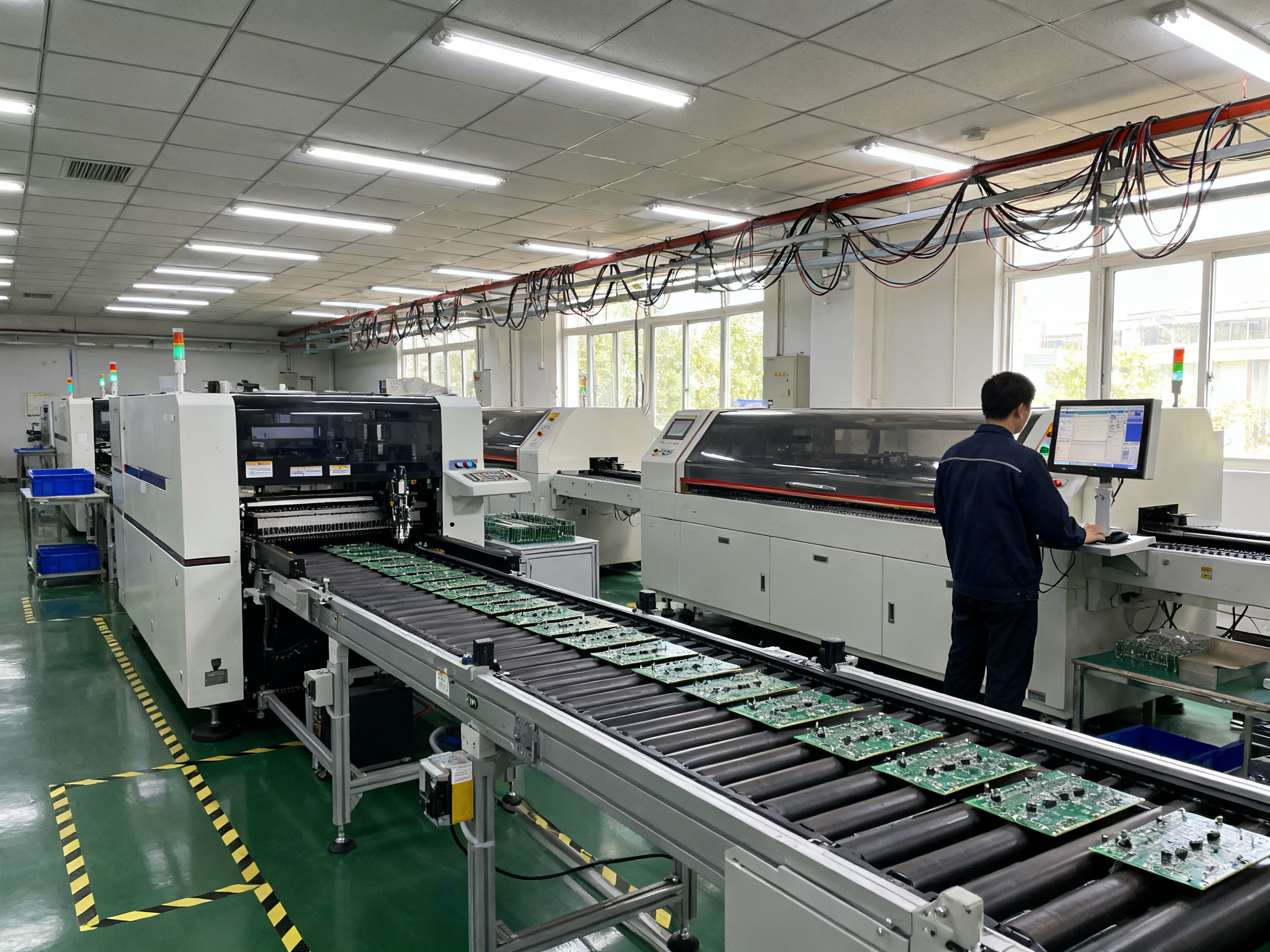
Think of an SMT line like a well-choreographed assembly line at a car factory. Each station does one specific job, passes the work to the next machine, and keeps things moving at a pace the whole line can handle. That is the real secret behind any pcb smt assembly machine setup. It is not about one flashy piece of equipment. It is about how everything works together.
Here is the standard flow you will see in just about every surface mount technology equipment setup in 2026:
The process kicks off with solder paste printing. A stencil printer lays down a precise amount of paste on each pad where a component will sit. Too much paste creates bridges. Too little creates weak joints. SPI (Solder Paste Inspection) machines often sit right after the printer to catch paste problems before they become expensive headaches downstream. We learned this the hard way at one facility I consulted for. They were seeing 3% bridging defects until they added SPI and discovered their stencil was wearing out faster than expected.
Next comes component placement, handled by the pick-and-place machine. This is usually the star of the show in conversations about smt assembly machine specs. Modern machines can place thousands of components per hour with accuracy down to 25 microns. They use cameras and fiducial marks on the board to nail the exact position, rotation, and polarity of each part.
After placement, boards travel through the 리플로우 오븐. This is where the magic happens. The oven heats the assembly following a precise thermal profile: preheat to activate flux, soak to bring everything to temperature evenly, then peak heat above the solder melting point before cooling. For lead-free SMT assembly, peak temperatures typically hit 230 to 260 degrees Celsius. Get this profile wrong and you will see tombstoning, voids, or cold joints.
전문가 팁: Line balance and upstream/downstream synchronization matter more than raw machine speed in high-volume PCB assembly. A pick-and-place running 50,000 CPH means nothing if your printer is the bottleneck or your reflow oven cannot keep up. Always spec the whole smt production line together, not machine by machine.
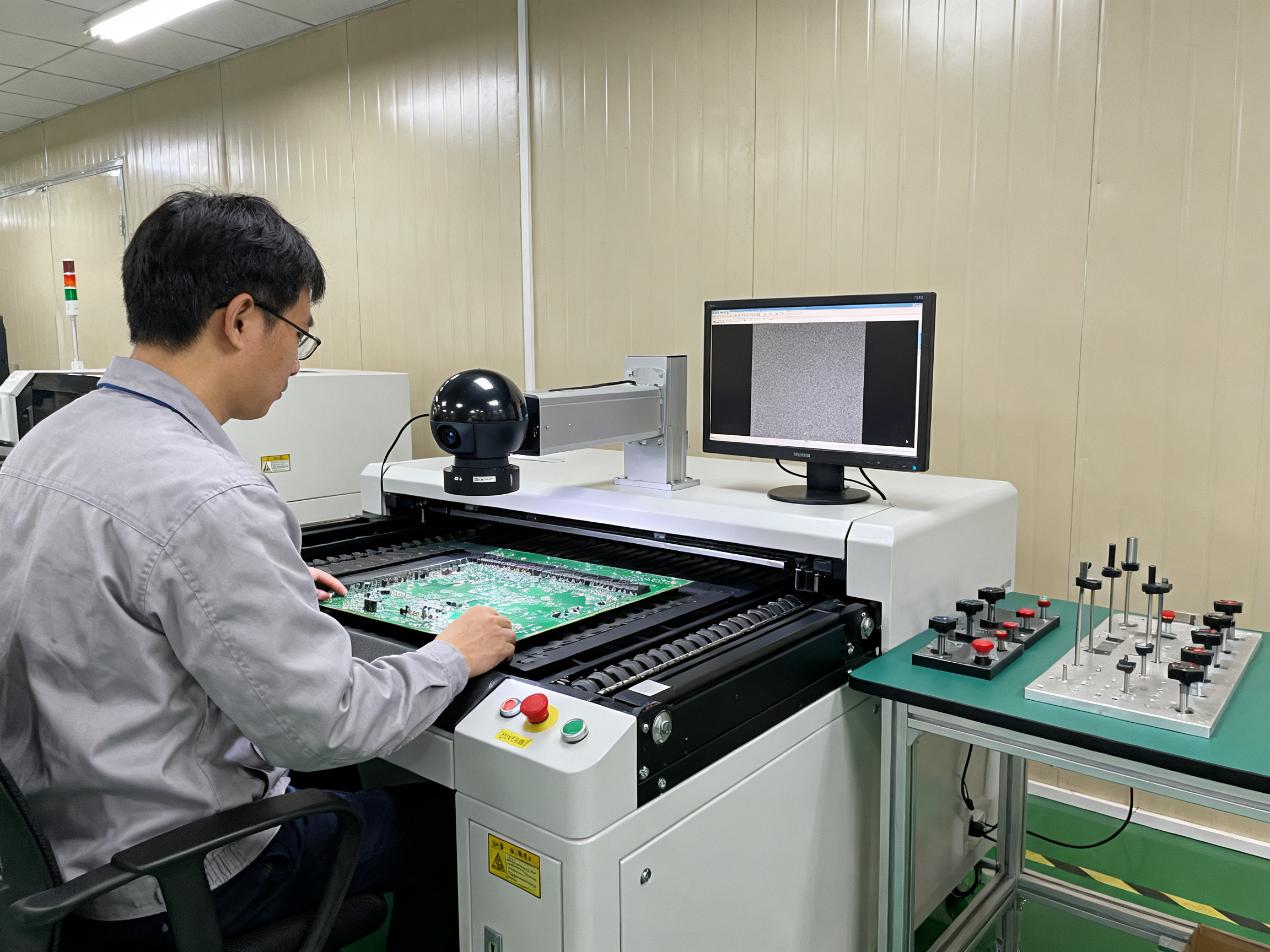
Inspection comes last, usually with AOI (Automated Optical Inspection) for visible defects and X-ray for hidden joints under BGAs and QFNs. Some lines also run electrical testing to verify functionality before shipment.
Humans still touch the line at setup, programming, changeovers, and maintenance. But once the line is running, automation handles the heavy lifting.
| Stage | Main Equipment | Common Failure Modes |
|—|—|—|
| Paste printing | Stencil printer, SPI | Bridging, insufficient paste, stencil wear |
| Component placement | Pick-and-place machine | Misalignment, polarity errors, feeder jams |
| Soldering | Reflow oven | Tombstoning, voids, cold joints |
| Inspection | AOI, X-ray | False calls, missed defects, programming gaps |
That table covers the basics. Next, let us dig into the specific types of equipment you will encounter when shopping for an smt machine for pcb assembly.
Key Types of SMT Assembly Machines and What Each One Does
Now that you understand how a surface mount technology equipment line flows together, let us break down each machine type so you know exactly what you are buying when someone throws around terms like “smt machine for pcb assembly” or “pcb smt assembly machine.”
Stencil Printers
These are the first stop in any smt production line. A stencil printer pushes solder paste through a metal stencil onto the PCB pads. Think of it like spreading frosting on a cake with a template. The precision here sets the stage for everything downstream. If the paste is uneven, you will see bridging or cold joints later. Most modern printers include auto-cleaning and vision alignment to keep settings tight across thousands of boards.
Pick-and-Place Machines
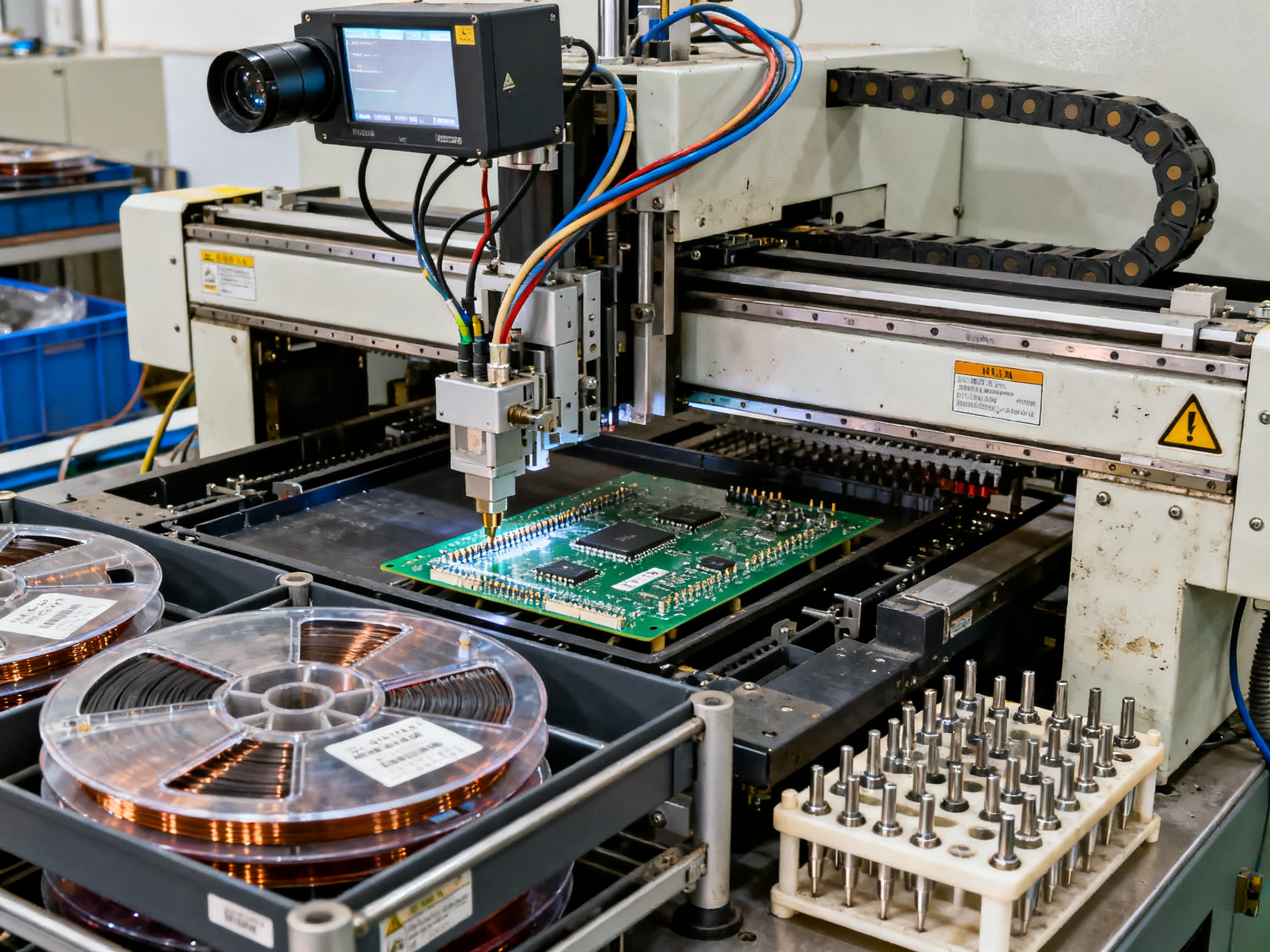
This is usually what people mean when they talk about an smt assembly machine. Pick-and-place machines grab surface-mount components from feeders and place them onto the paste-covered board. Speed and accuracy matter here. Modern machines handle rates from 20,000 to over 100,000 components per hour, with placement accuracy down to 25 microns. They support everything from massive BGAs down to tiny 01005 resistors.
리플로우 오븐
Once components are placed, the board heads into a reflow oven. The oven follows a thermal profile that melts the solder paste without cooking the board or the components. For lead-free SMT assembly, peak temperatures typically run 230 to 260 degrees Celsius. Nitrogen atmosphere ovens help reduce oxidation and improve joint quality for sensitive components.
Wave Soldering Machines
Not every board is pure SMT. Mixed-technology boards often have through-hole parts that need wave soldering. The board passes over a wave of molten solder that wicks up through the holes. This process sits at the end of lines handling hybrid assemblies.
Inspection Systems
AOI (Automated Optical Inspection) cameras catch visible defects like missing parts, misalignment, and solder bridges. SPI (Solder Paste Inspection) checks paste deposition before placement. X-ray inspection looks at hidden joints under BGAs and QFNs where optical inspection cannot reach.
Conveyors and Handling Equipment
Conveyors, loaders, and unloaders move boards between stations. They keep the line synchronized and can buffer boards during changeovers or bottlenecks.
| Machine Type | Function | Best For | Line Position |
|—|—|—|—|
| Stencil printer | Applies solder paste | All SMT boards | Start |
| Pick-and-place | Places components | All SMT boards | After printing |
| Reflow oven | Melts solder to form joints | SMT components | After placement |
| Wave soldering | Solders through-hole joints | Hybrid boards | End of line |
| AOI / SPI / X-ray | Inspects quality | All boards | Various checkpoints |
| Conveyors | Moves boards between stations | All lines | Throughout |
프로 인사이트: When to choose reflow, wave soldering, selective soldering, or pick-and-place as part of one line rather than treating them as isolated machines. Here is the thing: a pick-and-place machine running at 80,000 CPH does not matter if your reflow oven cannot keep up, or if your conveyor system creates bottlenecks between stations. The real skill is matching machine capabilities to your product mix. For high-volume, low-mix production, you want fast, dedicated machines. For high-mix, low-volume work, you want flexibility, quick changeover, and broad component support.
So what does this mean for your buying decision? A basic line needs a printer, pick-and-place, reflow oven, and basic conveyors. Add SPI and AOI for quality control, X-ray if you work with BGAs or QFNs, and wave or selective soldering if you have through-hole parts. The more demanding your quality requirements or product variety, the more inspection and flexibility gear you need to add.
How to Judge Machine Speed, Accuracy, and Line Compatibility
Here is the part where most buyers get tripped up. They see a pick-and-place machine rated at 80,000 CPH and start dreaming about throughput. But placement speed alone tells you maybe 40% of the story. The other 60% hides in accuracy specs, repeatability ratings, feeder capacity, and changeover time.
So how do you actually judge what matters? Let me break it down.
Specs That Actually Matter
Accuracy vs. Speed: A machine placing 50,000 components per hour with 25-micron accuracy beats a 80,000 CPH machine drifting 50 microns every 200 boards. Accuracy keeps defects low. Speed just makes bad joints faster.
Repeatability Under Production Conditions: Lab specs mean almost nothing. Ask about real-world performance across shifts, after 8 hours of running, with dusty components and slightly worn nozzles. You want ±25-35 micrometers under actual production load.
Feeder Capacity: How many components can the machine hold at once? For mixed production, you need 140+ feeder positions minimum. Running 01005s next to BGAs? You will need flexible feeder carts and quick-swap capability.
전환 시간: If you are switching products every 2 hours, 45 minutes of changeover time kills your effective throughput. Ask about recipe switching, feeder swaps, and nozzle changes.
From Our Experience: We once evaluated a machine with impressive headline speed. But the feeder swap took 35 minutes and the nozzle changer was manual. For our product mix, we would have lost 4 hours daily to changeovers alone. The slower machine was the better choice.
Compatibility Checklist
Before signing anything, verify these integration points:
- Does the machine speak SMEMA or PLC protocols your conveyors understand?
- Can it connect to your MES or ERP system for production tracking?
- Does the conveyor width match your actual board sizes?
- Are fixture requirements compatible with your existing setup?
Sample KPI Table for SMT Line Evaluation
| Metric | Target Range | Why It Matters |
|—|—|—|
| First-pass yield | Above 98.5% | Lower FPY means expensive rework |
| Changeover time | Under 20 minutes | Affects effective daily throughput |
| Downtime | Below 5% | Unplanned stops kill OEE |
| Placement accuracy | ±25-35 μm | Keeps defects low at speed |
| DPMO (defects per million) | Below 50 | Industry benchmark for automated lines |
Lead-Free and High-Density Considerations
If you are running lead-free SMT assembly, your reflow oven needs tight thermal profile control. Look for 8-12 heating zones, stable ramp rates around 1-1.5°C per second, and peak temperature capability of 230-260°C.
For BGA and QFN packages, placement accuracy becomes critical because those hidden joints cannot be inspected optically. You need X-ray capability downstream and machines that can handle fine-pitch components without alignment drift.
The real question is not which machine has the best spec sheet. It is which machine performs best when everything in your line is running together under real production conditions.
How to Choose the Right SMT Line for Your Product Mix
Here is the thing. Buying an SMT line is not like buying a car where you pick the fastest model and call it a day. The “best” line depends entirely on what you build, how much you build, and what happens if something goes wrong.
The Decision Framework
Start with four questions before you look at any machine specs:
- What is your annual production volume?
- What board sizes and component densities are you working with?
- How sensitive are your end products to defects?
- Do you need long-term expansion flexibility?
Your answers shape everything. A consumer electronics manufacturer pumping out 500,000 units monthly of the same board needs speed and consistency above all else. An aerospace shop handling 500 units of 12-layer boards with BGAs needs inspection depth and traceability above all else.
| Product Type | Volume | Defect Sensitivity | Recommended Line Setup |
|—|—|—|—|
| Consumer electronics | High | Moderate | Fast pick-and-place, inline SPI/AOI, quick reflow profile |
| Automotive | Medium-high | High | Robust equipment, full inspection coverage, MES traceability |
| Semiconductors | Variable | Very high | Precision placement, X-ray inspection, tight thermal control |
| Military/aerospace | Low-medium | Critical | Class 3 controls, complete documentation trail, full inspection |
For lead-free SMT assembly, your reflow oven needs tight thermal profile control, usually 8-12 zones, and nitrogen atmosphere capability for sensitive joints. BGA and QFN packages demand X-ray inspection because those hidden joints cannot be verified optically.
Quick Buyer Checklist
Before signing anything:
- Can the line handle your worst-case board size and heaviest component package?
- What is the real changeover time between product variants?
- Are feeder carts quick-swap or manual load?
- Does the equipment speak SMEMA or your existing PLC protocol?
- What does full warranty cover, and how fast can a technician arrive on site?
- Can you get spare parts locally or are you waiting weeks for overseas shipment?
- Is software licensing perpetual or annual subscription?
Chuxin reflow ovens and complete SMT production lines work well for manufacturers balancing lead-free compliance with multi-product flexibility. The real win comes from matching your line to your actual product mix rather than chasing the highest CPH rating on paper.
Common Mistakes to Avoid When Buying or Running an SMT Assembly Machine
Here is the thing. A lot of buyers get so focused on the excitement of new equipment that they miss the problems hiding in plain sight. I have seen companies spend millions on a flagship pick-and-place machine, then wonder why their line still underperforms. The equipment itself is rarely the problem. It is the blind spots around it that bite you.
Buying Mistakes That Cost More Than the Machine
Overbuying on speed. A machine rated at 80,000 CPH sounds incredible until you factor in your actual changeover time. If you are swapping products every few hours and each changeover takes 45 minutes, that blazing speed disappears into idle time. Speed only matters when your changeovers are fast and the rest of the line keeps pace. I keep seeing buyers chase headline CPH numbers without asking the hard question: what does this machine actually deliver under my production pattern?
Treating the line like separate boxes. The printer, placer, reflow oven, and conveyors all need to work as one system. A world-class pick-and-place does not help if your printer is the bottleneck or your conveyor system cannot handle your board sizes. Always spec the full smt production line together.
Skipping inspection planning. If you work with BGAs, QFNs, or any high-density package, you need X-ray inspection. Optical AOI cannot see hidden joints, and those defects can slip through to your customer. In 2026, SPI and AOI are baseline requirements for any quality-focused line, not optional add-ons.
Running Mistakes That Kill Performance
Ignoring hidden costs. The sticker price is just the start. Spare parts availability, support response times, and software licensing fees add up fast. When your line goes down at 2am on a Friday, waiting a week for overseas spare parts is not acceptable. Ask vendors about local stock, response SLAs, and whether software licenses are perpetual or annual subscriptions.
Skipping operator training. New equipment without proper training creates new failure modes. Operators who do not understand changeover procedures, feeder setup, or basic troubleshooting will cost you more in defects and downtime than the training would have taken.
| Common Mistake | Real Consequence | Practical Fix |
|—|—|—|
| Buying for peak speed | Changeovers eat your throughput gains | Model real production scenarios, not ideal conditions |
| No inspection budget | Hidden defects escape to customers | Add SPI, AOI, and X-ray upfront, not later |
| Ignoring spare parts | Weeks of downtime waiting for overseas shipments | Verify local stock and fast-ship options before buying |
| Skipping training | More defects, slower changeovers, early wear | Budget 2-3 weeks of hands-on training for all operators |
| Treating machines as separate purchases | Line bottlenecks and underutilized equipment | Spec the full pcb smt assembly machine line as one system |
From Our Experience: One shop I worked with bought a top-tier smt assembly machine with impressive specs. But they never budgeted for feeder carts, spare nozzle sets, or operator training. Six months in, they were still limping along with 40% of rated throughput because changeovers were painful and operators were afraid to touch settings. The machine was not the problem. The preparation was.
The lesson here is simple. Buy the line that fits your actual production mix, budget for the whole system including inspection and support, and invest in your people. That is how you turn equipment purchases into real manufacturing gains.
Conclusion: The Practical Way to Evaluate an SMT Assembly Machine Before You Buy
Let me give you the framework one more time, because it is the difference between a smart purchase and an expensive mistake.
Process fit comes first. Does the line handle your board sizes, component packages, and lead-free requirements? Next, look at technical performance: placement accuracy, repeatability under real conditions, and thermal profile control for reflow. Then check integration: can it talk to your conveyors, MES, and existing equipment? After that, evaluate support: local spare parts, response time, and training availability. Finally, think about scalability: will the line grow with your product mix or become a bottleneck in 2 years?
Here is the honest truth. The best SMT line is not the fastest one or the cheapest one. It is the one that fits your boards, your volume, and your defect tolerance. A pick-and-place rated at 80,000 CPH means nothing if your changeovers eat half your day or your inspection gaps let defects slip through to customers.
Before signing anything, run a factory acceptance test with your actual boards. Pilot runs under real production conditions will reveal bottlenecks that spec sheets hide. Chuxin reflow ovens and complete SMT production lines offer this kind of validation upfront, which is exactly what you want from a vendor in 2026.
Final SMT Line Selection Checklist
| Criteria | What to Verify |
|—|—|
| Process fit | Board size range, component packages, lead-free support |
| Technical performance | Placement accuracy, repeatability, thermal profile control |
| Integration | SMEMA/PLC compatibility, MES/ERP connectivity, conveyor width |
| Support | Local spares, response time, training coverage |
| Scalability | Feeder capacity, changeover speed, product mix flexibility |
| Inspection coverage | SPI, AOI, X-ray for your specific defect risks |
| Total cost of ownership | Sticker price plus training, spares, software, and utilities |
| Validation | FAT protocol, pilot run with real boards, sign-off criteria |