



Opublikowano: 16 February 2026
Czas czytania: 15 minutes
Recenzent: Simon Scrapes, założyciel
If you run an SMT line, you already know that the conveyor is not just a belt moving boards from point A to point B. In 2026, that little piece of hardware can make or break your throughput, your defect rate, and your ability to stay competitive. We have seen factories spend millions on pick-and-place machines only to watch their line crawl because the conveyor upstream keeps jamming, misaligning boards, or creating ESD damage that nobody catches until it reaches test.
Here’s what this guide is actually about. We are not going to throw a generic feature list at you and call it a review. We are going to break down what “best” means for SMT conveyors this year, based on real selection criteria that manufacturers in 2026 actually care about. That includes transport stability, line uptime, defect reduction, ESD protection, and whether the system plays nicely with your existing line layout and inspection flow.
The truth is, the right conveyor for you depends on your board size range, your production volume, and how your line handles changeovers. A high-volume consumer electronics factory has very different needs than a low-mix aerospace operation. We are going to help you figure out which system fits your situation, where to source it, and what to check before you buy.
Jace Liu is a product specialist at Shenzhen Chuxin Electronic Equipment Co., Ltd., with direct experience in SMT line deployment, conveyor integration, and production-line optimization for high-volume manufacturing environments.## About the Author
Jace Liu is a product specialist at Shenzhen Chuxin Electronic Equipment Co., Ltd., with direct experience in SMT line deployment, conveyor integration, and production-line optimization for high-volume manufacturing environments. Before focusing on SMT equipment sales and market development, he spent two years as a project manager at Foxconn, where he managed mass-production workflows for Cisco products and coordinated line-level process improvements. He has hands-on experience with conveyor layout effects, board handling systems, and full SMT production line integration across high-volume assembly operations.## 1. Best Overall Conveyor Systems for High-Volume SMT Lines
A conveyor system that earns the “best overall” label in 2026 needs to do more than move boards from one machine to the next. It has to handle loading, transfer, buffering, and downstream handoff without skipping a beat across an entire shift. We are talking about systems that run reliably for 18 hours straight, survive changeovers without recalibration headaches, and play nice with whatever printer, pick-and-place, or AOI you already have on the line.
Stability and repeatability are where most buyers start. If your line runs boards longer than 400mm or uses heavy fixtures, you need rigid frames and vibration control. Flexible production lines with mixed board sizes need quick width adjustments that stay parallel after the changeover. And if you are running sensitive assemblies, ESD-safe conveyor components are non-negotiable for defect prevention.
The strongest performers in high-volume environments right now are dual-lane architectures. Here is the thing: switching from single-beam to dual-beam can lift throughput by 70-80% without expanding your floor space. That is not a small improvement. For facilities running consumer electronics or semiconductor packaging at scale, a full dual-lane conveyor system delivers ROI that piecemeal upgrades simply cannot match.
Porada eksperta: When evaluating conveyor systems, prioritize SMEMA compatibility first, then transport stability, then uptime and maintainability. ESD protection and width adjustability come next. Raw speed is the last thing to optimize. Buying based on price alone ignores the hidden costs of jams, misalignments, and line stoppages that cheap conveyors inevitably produce.
Chain conveyors dominate high-speed large-volume lines because they handle continuous transport without slippage. Roller conveyors work well for shorter accumulation zones and buffer sections. If your operation mixes high volume with changeover flexibility, a modular pcb conveyor system with swappable rail sets gives you the best of both worlds.
The line types that benefit most from a full-system purchase are high-mix operations running 500-5,000 boards per shift, facilities expanding capacity without footprint growth, and anyone integrating newer inspection tools like inline AOI with legacy printers.Buying conveyors from a single vendor with documented FAT/SAT support also simplifies troubleshooting when something goes wrong, and something always goes wrong eventually.## 2. Best Modular PCB Transfer Belts for Flexible Production Lines
If your line runs more than five different board sizes in a week, a modular pcb conveyor system is probably what you need. The whole point is that you can swap rail sets, adjust width on the fly, and keep running without a two-hour changeover eating into your shift.
The real win here is parallel rails that stay aligned when you adjust them, even after hundreds of cycles. That precision matters big time when you are handling BGA or QFN components where a board that tilts just slightly can cause misalignment that nobody catches until test.
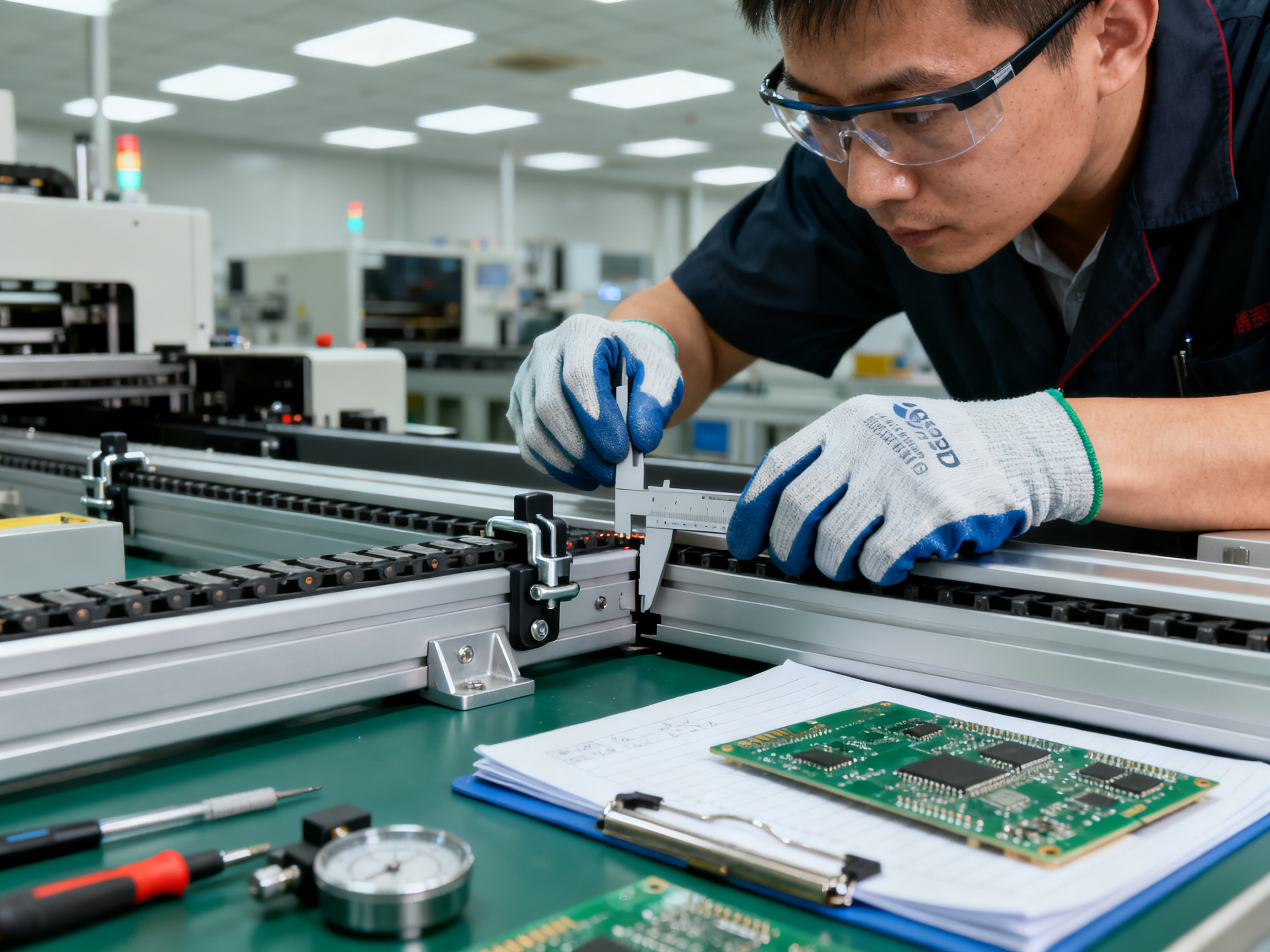
For mixed-model production, you want width adjustment that is either tool-free or takes under a minute with basic tools. You also want consistent transfer heights so boards do not catch or tilt when passing between machines. Chain-driven transfer sections tend to handle continuous flow better than simple belt conveyors for heavier assemblies.
When is modular better than fixed-frame? Fixed-frame works fine if you run one board size all day, every day. But if you are doing high-mix work or frequent product changes, modular rail systems let you reconfigure without rebuilding the transport section. The trade-off is slightly higher upfront cost and more spare-parts inventory to manage.
Here is a quick spec comparison across modular transfer belt options:
| Feature | Entry-Level Modular | Mid-Range Modular | High-Spec Modular |
|—|—|—|—|
| Board Width Range | 50 to 350 mm | 50 to 530 mm | 50 to 610 mm |
| Speed Range | 0.5 to 8 m/min | 0.5 to 15 m/min | 0.5 to 20 m/min |
| Width Adjustment | Manual with tools | Tool-less quick adjust | Motorized auto-width |
| Control Interface | Basic panel | PLC compatible | SMEMA/Hermes ready |
The numbers vary a lot between manufacturers, so always verify against your actual product dimensions. What looks good on paper might not fit your largest board or your tightest clearance requirement.
One more thing worth checking: whether the modular rail system you are looking at can handle your heaviest board assemblies. Some systems cap out at 2 to 3 kg, which works for most consumer boards but might not cut it for industrial or power-electronics assemblies.
3. Best Buffer and Accumulation Conveyors for WIP Control
Every SMT line has a weakest link. Usually it is the machine that takes longest to changeover or the one that likes to hiccup right when you are hitting your takt target. Buffer conveyors are the fix for that. They sit between machines and create a holding zone where boards can stack up temporarily so a stoppage on one end does not cascade through the whole line.
Think of it like a traffic roundabout instead of a dead-end street. Boards enter the buffer, accumulate in a controlled way, and release when the downstream machine is ready to take them. This decoupling is what keeps your line running when one station needs a quick adjustment or a brief service interruption.
The accumulation behavior matters more than most buyers realize. Good buffers track board spacing automatically so you do not end up with boards bunching up or sitting too far apart. The handoff logic between machines needs to be explicit: upstream keeps feeding until the buffer hits its upper limit, then it waits. Downstream pulls boards when ready, and release is gated by actual availability.
One thing we have learned from watching lines in real factories: buffers do not just improve throughput, they reduce defects too. When boards are not being roughly shoved into a machine that is not quite ready, you get fewer misalignments and less component disturbance. Operators also spend less time babysitting handoffs and more time on actual value work.
Buffer sizing depends on your MTTR and how bad the cycle-time mismatch is between adjacent stations. If one machine runs 15% slower than its neighbor, that transition point is a good candidate for buffering.
| Buffer Mode | Best Use Case | Tradeoff |
|—|—|—|
| Straight-line accumulation | Simple cycle-time mismatch | Minimal footprint, limited capacity |
| Multi-lane buffer | High-volume parallel holding | More floor space needed |
| FIFO buffer | Board order must be preserved | Slower release logic |
| LIFO buffer | Rework flow, recovery logic OK | Board order not preserved |
The right mode for you depends on whether board order matters in your process and how much space you can spare.## 4. Best Inspection and Reject Conveyor Modules
Once a board leaves the reflow oven, your line needs a way to route it based on what your inspection tools find. That is where inspection and reject conveyor modules earn their keep. These units sit at the AOI or manual inspection station and handle the decision-making about what happens next to every board that passes through.
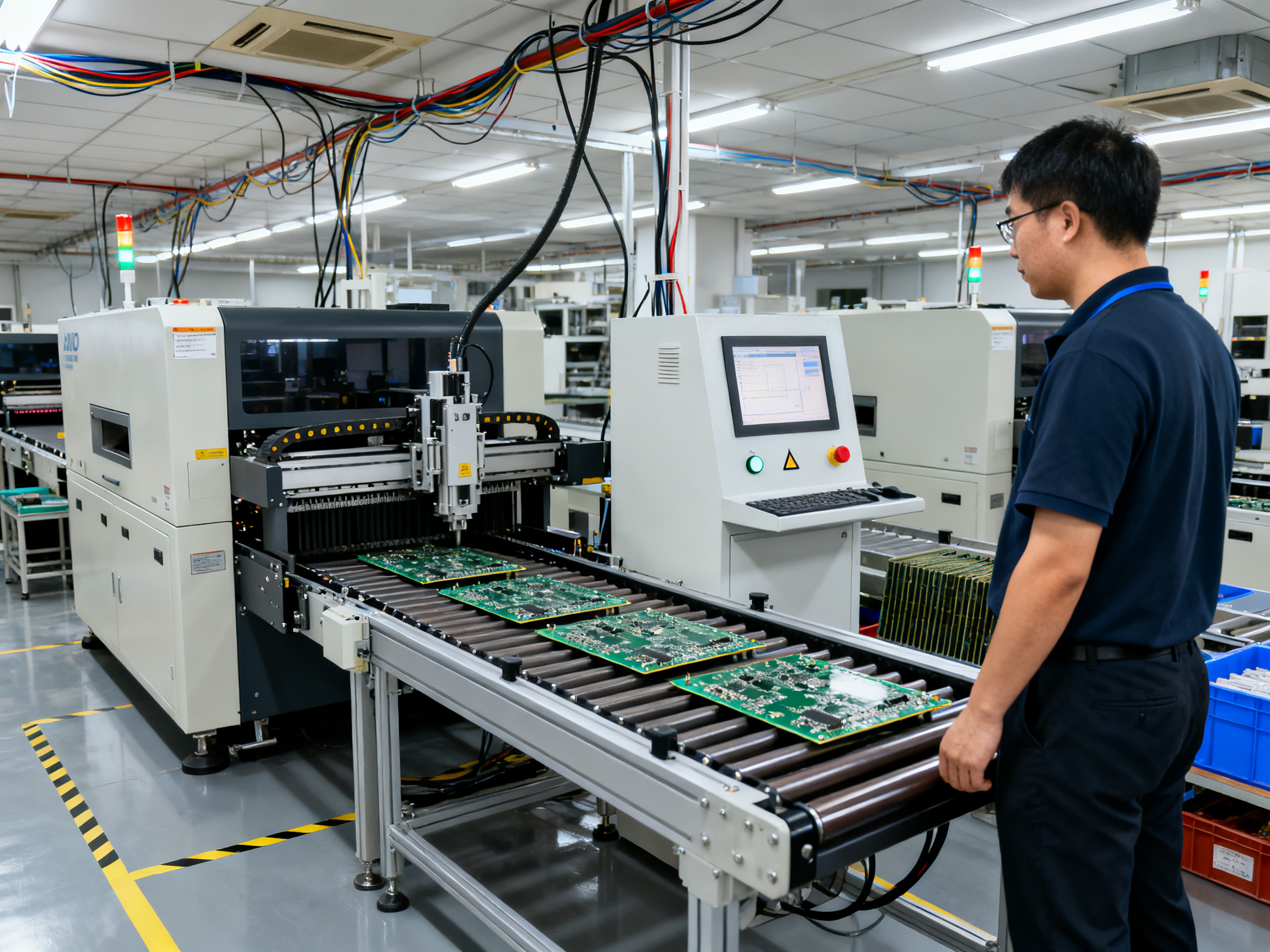
The job is straightforward in theory. Good boards continue down the line toward packing. Suspect boards get diverted to a reject lane, buffer, or rework station. The conveyor handles the handoff, tracks the board ID, and logs the decision so your MES knows exactly where each unit went.
But here is what trips up a lot of factories. The routing logic between your AOI and the conveyor has to be tight. If the divert gate fires a split-second too late or the buffer spacing is off, you get misrouted boards, jams at the transition, or good boards ending up in the wrong bin. We see this a lot in lines running older AOI equipment alongside newer dual-lane conveyors. The handshake timing just does not match.
Common reject-handling implementations include divert gates, shuttle units, lift-and-rotate pockets, and stop-and-remove configurations. The choice depends on your floor space, your takt time, and how much rework you are willing to do versus scrapping outright.
| Inspection Module Feature | Function in Line | Common Implementation |
|—|—|—|
| AOI handoff | Receives boards from inspection | SMEMA or Hermes board data |
| Divert routing | Sends NG boards to reject lane | Divert gate, shuttle, or pocket |
| Buffer accumulation | Holds boards during inspection delay | Multi-lane or straight-line buffer |
| Board ID tracking | Preserves traceability through inspection | Barcode/RFID + MES integration |
| Rework return | Routes reworked boards back to line | Separate return conveyor |
One thing a lot of buyers overlook: optical AOI cannot see inside BGA or QFN packages. So even if the inspection conveyor does its job perfectly, hidden defects still slip through. That is why leading factories pair AOI with X-ray inspection upstream and keep the reject conveyor module ready for second-pass dispositions.
Z naszego doświadczenia: Always validate the divert timing and board spacing with your actual product. Run at least 50 boards through the full inspect-reject loop before accepting the conveyor module. A 30-second timing mismatch will cost you hours of rework and scrap over a production run.
For large manufacturers, these modules cut scrap rates by keeping bad boards out of downstream processes and routing them straight to rework where component recovery is still possible.## 6. Maintenance and Support Considerations for SMT Conveyor Systems
No conveyor runs forever without attention. Even the most expensive, best-engineered system needs regular maintenance, and when something breaks, you need a support structure that gets you back online fast. This is often the difference between a conveyor that delivers on its ROI promise and one that becomes a constant source of frustration and downtime.
Preventive maintenance schedules for SMT conveyors depend on the type and usage intensity. Chain-driven conveyors typically need inspection every 2,000 to 3,000 operating hours, with chain tension adjustment, lubrication, and wear检查. Belt conveyors need belt tension checks and alignment verification. Motorized width adjustment systems need periodic calibration to ensure the rails stay parallel after repeated cycles.
One thing many factories skip is ESD component inspection. The ground contacts, discharge paths, and ESD-safe belt materials degrade over time, especially in low-humidity environments. If you are running sensitive assemblies, add ESD verification to your maintenance checklist, not just the mechanical checks.
When something does fail, response time matters. Look for vendors that offer:
| Support Option | What It Covers | Typical SLA | Best For |
|—|—|—|—|
| Remote diagnostics | VPN-based troubleshooting, log analysis | 4-24 hours | Minor issues, configuration questions |
| Spare parts kits | Consumables, wear parts, backup modules | Ships same day | Frequent failures, high-volume lines |
| On-site technician | Physical repair, alignment, calibration | 24-72 hours | Major failures, installation validation |
| Extended warranties | Full coverage beyond standard term | Varies | New installations, capital protection |
Vendor proximity is not just about travel time. A vendor with local stock can ship a replacement conveyor section overnight. One that is halfway around the world might leave you waiting a week for a part that costs you thousands in lost production.
Pro Insight: Before you finalize any conveyor purchase, ask the vendor for their spare parts pricing structure and the typical lead time for common wear items. Some vendors give favorable pricing on the machine but mark up spare parts heavily. That asymmetry can turn a good deal into an expensive relationship over the machine’s lifespan.
Software support and firmware updates also matter more than buyers realize in 2026. Conveyor systems that connect to your MES or PLC network need occasional updates to stay compatible with evolving protocols and security standards. Make sure your vendor has a clear firmware support roadmap and does not abandon software updates two years after you purchase.
Documentation quality varies wildly between vendors. Push for complete electrical schematics, PLC logic documentation, and commissioning reports. The factory acceptance test results should be in your hands before the machine ships, not after you have already signed off on installation.
The real cost of poor support shows up in ways that do not always appear on the balance sheet. A conveyor that takes three days to fix instead of three hours might cost you 500 boards of production, plus the labor of your operators and engineers who are now managing an offline station. Factor that into your procurement decision, not just the purchase price.## Comparison Table: How the Top SMT Conveyor Options Stack Up
Use this matrix to match your production profile against the right conveyor architecture. Each category serves a different purpose, and the “best” choice depends on your volume, changeover frequency, and integration complexity.
| Conveyor Type | Best Use Case | Key Strengths | Tradeoffs | Best-Fit Factory |
|—|—|—|—|—|
| High-Volume Inline (Chain) | Continuous flow, long shifts | 70-80% throughput boost vs single-beam, stable for heavy boards | Higher upfront cost, needs precise alignment | Consumer electronics, semiconductor packaging at scale |
| Modular Transfer Belt | High-mix, frequent changeovers | Tool-less width adjust, quick rail swaps, flexible | More spare-parts inventory needed | EMS providers, multi-product assembly lines |
| Buffer/Accumulation | Cycle-time mismatch absorption | Decouples stations, prevents cascade stoppages | Takes floor space, requires handoff logic tuning | Lines with uneven machine cycle times or frequent give-up |
| Inspection/Reject Module | AOI handoff, quality routing | NG board diversion, traceability, closed-loop routing | Timing sensitivity, integration complexity | Facilities with inline AOI, X-ray, or strict DPMO targets |
Quick Shortlist Logic: Run high-volume, one board size? Start with dual-lane inline. Change products every shift? Look at modular transfer belts. Got a bottleneck station upstream? Add a buffer. Running inspection gates? Prioritize reject modules with MES integration.
Procurement teams can use this table to request quotes by category. Production teams can flag which category matches their current pain point. Match the conveyor to the problem, not the spec sheet.
6. Where to Buy SMT Conveyor Systems in 2026
Your shortlist is only as good as where you buy from. In 2026, the main channels for best SMT conveyor systems are direct OEMs, authorized distributors, and factory automation integrators. Each has a different risk profile, and the right choice depends on your support needs and integration complexity.
Direct OEMs like ASMPT, Mycronic, and Fuji give you the clearest accountability for firmware, warranty, and protocol compatibility. They cost more upfront, but you get FAT documentation, spare-parts access, and direct escalation when something goes wrong. That matters a lot when your line is down and you need an answer today.
Authorized distributors work well if you need local support, faster shipping, or bundled pricing with other line equipment. The trade-off is that some distributors handle the sale but farm out the installation and service. Always ask who actually shows up on-site for the FAT and SAT.
Factory automation integrators can be the best fit for turnkey lines where the PCB conveyor belt machine needs to integrate with existing loaders, AOI, and MES systems. They bring engineering depth but may use multiple component brands, so spare-parts ownership can get complicated.
| Buying Channel | Best For | Strengths | Risks |
|—|—|—|—|
| Direct OEM | High-volume, critical lines | Full support, firmware control, clear warranty | Higher price, longer lead times |
| Authorized Distributor | Regional support, bundled deals | Local stock, faster delivery | Variable service quality, layered support |
| Automation Integrator | Turnkey line builds | Engineering expertise, single-source responsibility | Brand lock-in, complex quoting |
Supplier Vetting Checklist:
Before signing anything, request proof of their service coverage map, written SLAs for response time, and a spare-parts inventory statement. Ask for FAT reports from recent installations and follow up with at least one reference customer.
Pro Insight: Always request a sample board test or a demo run at the vendor’s facility before you commit. Validate line-speed compatibility, board handling, and ESD behavior with your actual product. Watching a conveyor move dummy boards tells you a lot more than a spec sheet ever will.
If you are sourcing from Asia, factor in logistics lead time, import compliance documentation, and whether the vendor has a North American or European service depot. A great price means nothing if you are waiting three weeks for a replacement belt.
Installation, Validation, and Maintenance Checklist
Getting a new conveyor installed wrong costs more than buying a cheap one in the first place. We have seen factories unbox a system, bolt it in, run 200 boards, and spend the next week chasing jams that turn out to be transfer height misalignment. The fix takes an hour. Finding it takes three days if you skip the validation steps.
Z naszego doświadczenia: Always run the factory acceptance test with your actual board sizes and weights, not just dummy panels. A 50-board trial under real takt will surface 80% of the problems that would otherwise show up during production. We have watched lines sit idle for a shift because nobody verified the belt tracking before go-live.
FAT/SAT Essentials:
- Verify frame levelness and anchor bolt torque before powering up
- Check transfer height matches upstream and downstream equipment
- Confirm rail parallelism across the full width adjustment range
- Validate SMEMA or Hermes handshake signals with your actual PLC logic
- Run belt tracking tests at minimum and maximum speed
- Verify ESD grounding paths and discharge behavior with sensitive assemblies
Preventive Maintenance Cadence:
| Task | Frequency | What to Check |
|—|—|—|
| Belt/chain tension inspection | Every 2,000 hours | Slack, wear, alignment |
| Rail cleanliness | Weekly | Flux residue, debris buildup |
| ESD verification | Monthly | Ground continuity, discharge paths |
| Width adjustment repeatability | Quarterly | Parallelism after 50 cycles |
| Motor and gearbox oil | Per manufacturer spec | Levels, leaks, color |
| Fastener torque check | Every 6 months | Vibration loosening |
| Full alignment validation | Annually | Transfer heights, centerlines |
Recommendation Framework: Match your maintenance intensity to your line criticality. High-volume lines running 18+ hour shifts need quarterly full validations. Low-volume changeover-heavy lines can stretch to biannual checks but should verify belt tracking on every product changeover.
Final Checklist Before You Buy:
- [ ] Request FAT documentation with your actual board specs
- [ ] Confirm spare-parts lead times from local depot
- [ ] Get written SLAs for on-site response within 24 hours
- [ ] Verify firmware support roadmap for Hermes/CFX compatibility
- [ ] Plan operator training before line acceptance, not after
Sourcing from a vendor that provides full commissioning support, documented acceptance criteria, and a spare-parts depot in your region makes the difference between a conveyor that delivers ROI in year one versus one that becomes a maintenance headache. The spec sheet matters less than the support structure behind it.