



Published: 19 May 2026
Reading Time: 12 minutes
Reviewer: [Placeholder for reviewer name], [Placeholder for reviewer credentials: Relevant qualifications in SMT equipment or industrial processes.]
Industrial Ovens for Electronics Manufacturing: Types, Uses, and Maintenance Guide
Electronics manufacturers know the struggle of balancing precision and efficiency. And when it comes to Surface Mount Technology (SMT), industrial ovens play a huge role in getting the job done right. These ovens don’t just heat stuff up. They’re the backbone of processes like reflow soldering and curing, which are all about quality and reliability.
So why does precision heating matter so much? For one, it keeps solder joints strong and components performing well. This is a must for industries like consumer electronics, semiconductors, and even military tech. Let’s explore how these ovens work, the features you need to know about, and how to keep them running smoothly.
Author Bio:
[Placeholder for author bio: Include name and expertise in SMT manufacturing or industrial electronics.]
How Industrial Ovens Work
Industrial ovens operate using three key mechanisms: conduction, convection, and radiation. These ovens don’t just rely on one basic setting, either. Many are designed with programmable profiles that let engineers fine-tune temperature settings for specific tasks. The result? Precise heating that protects delicate components like printed circuit boards (PCBs).
For example, a consumer electronics manufacturer might use a reflow oven to heat solder paste just enough to form solid, reliable connections. Precision is critical here. Too much heat? Parts get damaged. Too little? The solder fails, leading to defects.
Expert Tip: Customizing programmable settings can help streamline production, especially for lead-free manufacturing processes where tighter temperature control is crucial.
Modern ovens are also packed with tech. You’ve got programmable logic controllers (PLCs) that simplify operations, IoT features for monitoring, and predictive maintenance alerts that reduce downtime. Plus, features like zone-based heat management ensure every inch of your PCB gets the perfect heat treatment.

Need a reliable option for SMT reflow soldering? Shenzhen Chuxin Electronic Equipment Co. offers advanced solutions, including lead-free reflow ovens designed to handle even the most demanding applications. Their systems help ensure consistency and quality across high-volume assembly lines.
Types of Industrial Ovens for Electronics Manufacturing
Industrial ovens come in several types, each suited for specific tasks:
-
Fornos de Refluxo: Ideal for soldering components to PCBs in SMT processes. They offer zoned temperature controls and are great for both traditional and lead-free soldering.
-
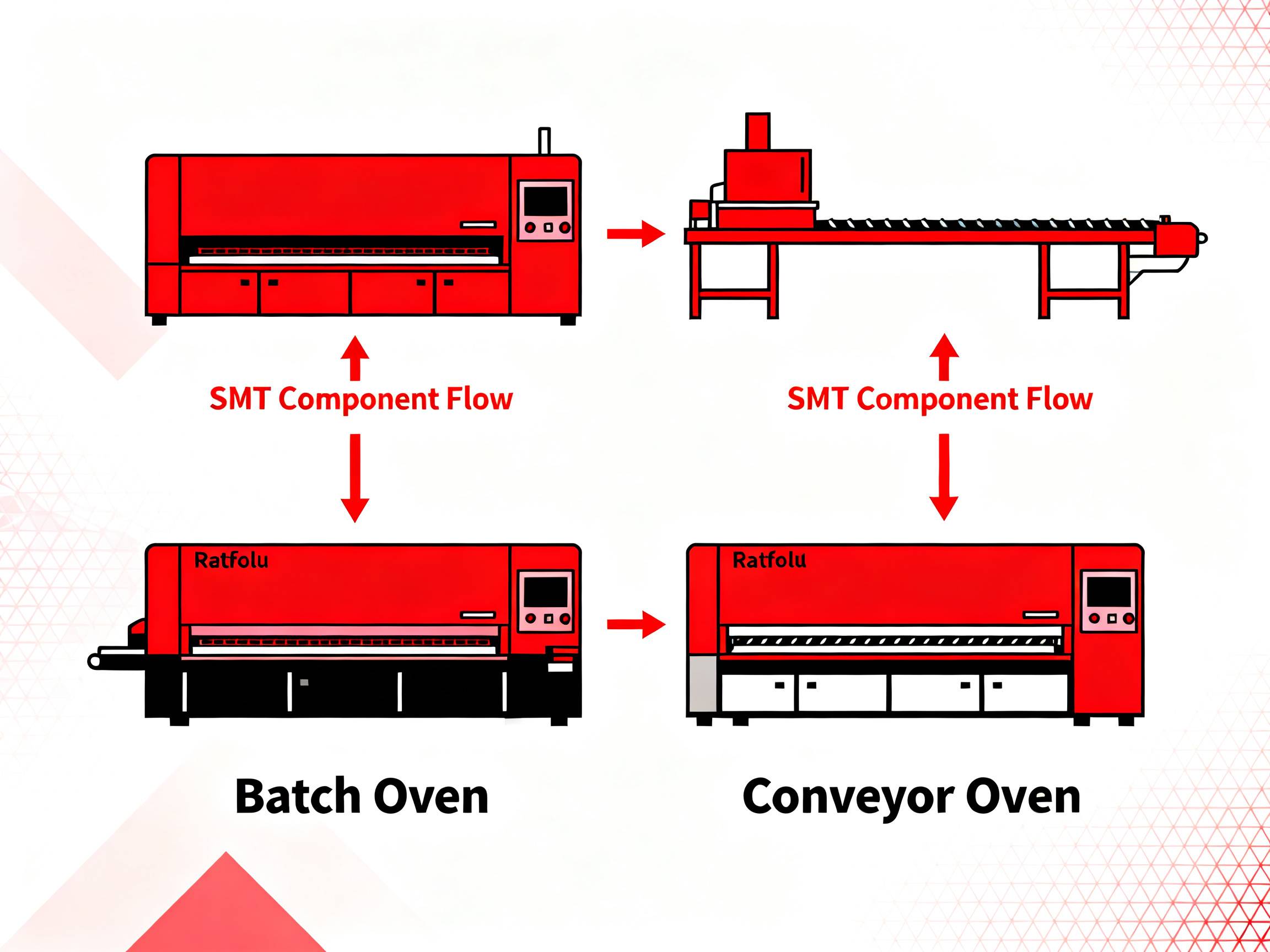
Fornos para lotes: These ovens are used for curing, drying, or laminating tasks, often in smaller production settings.
-
Conveyor Ovens: Best for high-throughput operations, they run continuously and handle large volumes in industries like automotive or military electronics.
-
Fornos de cura: Designed for applying protective coatings or adhesives to electronic parts, ensuring durability during use.
You might see these ovens in action at a factory producing smartphones or semiconductors. Each oven type serves a very specific need. Using the wrong one could lead to defects, wasted time, and higher costs.
How to Use an Industrial Oven Effectively
Let’s face it: using an industrial oven isn’t just about flipping a switch. It takes proper technique, especially in high-precision fields like SMT manufacturing. Here’s what you need to know:
-
Load Components Correctly: Uneven loading can cause parts to heat unevenly. Always distribute weight evenly inside the oven for consistent results.
-
Set the Right Profile: Each project requires specific heating profiles. For instance, soldering lead-free parts? You’ll need higher temperatures than traditional processes.
-
Monitor Temperature Zones: Modern ovens have separate zones for better control. Pay attention to these settings to avoid defects.
Pro Insight: Loading techniques matter. Proper spacing and orientation of parts can prevent cold spots and ensure optimal heating.
We’ve learned this firsthand: Regularly reviewing our heating profiles improved outputs significantly and minimized issues like tombstoning. Trust us, it’s worth the effort.
Next Steps
Keeping your industrial ovens working at their best is a team effort. Up next, we’ll cover cleaning and maintenance tips that can save you from costly repairs and unexpected downtime. Because in manufacturing, downtime isn’t just inconvenient—it’s expensive.
Cleaning and Maintenance of Industrial Ovens
Industrial ovens are a big investment, so keeping them in top condition is a must. Regular maintenance not only stretches their lifespan but also helps avoid unexpected downtime and equipment failure. Here are some practical cleaning and maintenance strategies you can start implementing today:
Step-by-Step Maintenance Guide
-
Daily Cleaning: Don’t let debris or dirt pile up inside the oven. A soft brush or vacuum works well for removing particles that can cause uneven heating.
-
Inspect Heating Elements: Check heating elements regularly since wear and tear can impact heat efficiency over time. Replace faulty ones immediately to avoid temperature inconsistencies.
-
Keep Airflow Unblocked: For ovens that use circulation fans, ensure vents and inlets are free from blockage. Otherwise, airflow suffers, impacting the uniformity of heat distribution.
-
Calibrate Sensors: Improperly calibrated temperature sensors result in unreliable heating. Use calibration tools or hire a professional service if temperatures seem off.
-
Check Door Seals: Loose seals can let heat escape and force the oven to overwork. Replace damaged or worn seals promptly to maintain efficiency.
Expert Tip: Key maintenance practices like routine inspections, prompt repairs, and keeping the machine clean can significantly reduce unexpected downtime.
Best Practices for Efficient Cleaning
Use cleaning supplies and techniques that are recommended by your oven’s manufacturer. Abrasive tools or harsh chemicals can damage interiors, so opt for non-abrasive sprays or detergents. If your oven sees heavy use, consider scheduling more frequent deep cleans to keep residue, oils, or moisture buildup at bay.
Keeping sensors and heating zones properly maintained is something we’ve seen make massive differences in quality outputs and lower defect rates.
Shenzhen Chuxin Electronic Equipment Co. recommends following maintenance and cleaning schedules to get the best results out of their products. Their lead-free reflow ovens, for instance, are designed for easy maintenance, making them a user-friendly choice for high-volume manufacturers.
When you keep your industrial oven clean and well-maintained, you’re not just prolonging its life—you’re ensuring consistent quality in every project. No one likes interruptions. Following these steps will help you save headaches (and money) in the long run!