



Published: 13 July 2026
Last Updated: 13 July 2026
Reading Time: 11 minutes> Published: 13 July 2026
Reading Time: 11 minutes
Picking the wrong batch curing oven for your coating operation is one of those decisions that looks harmless at first. You saved some money upfront. The specs looked fine on paper. But then the problems start rolling in, and they do not stop.
Under-cured powder coating that chips after two weeks. Paint that peels because the substrate never hit the right temperature. Rework rates climbing past anything acceptable. Color shifts that make customers unhappy. Production schedules falling apart because the oven cannot keep up with demand. These are not hypothetical nightmares. We see these issues pop up constantly in finishing operations where someone bought based on price or nameplate temperature instead of actual performance.
Here is the reality. The global powder coatings market alone hit $16.22 billion in 2026, and it keeps growing 1. As more manufacturers move toward powder coating, liquid paint, epoxy, and high-performance finishes like Cerakote, the stakes for getting the right industrial curing oven keep rising. Batch ovens now account for roughly 58% of curing oven revenue globally, and that share is growing because manufacturers need flexibility to handle different part sizes and cure schedules 2.
So what batch curing oven do you actually need? What industrial curing oven is best for your specific coating chemistry? And how do you match an oven to powder coating, paint, epoxy, or Cerakote without blowing your budget or your production schedule?
That is exactly what this guide breaks down. We will walk through cure schedules, temperature uniformity standards, airflow design, safety compliance, and the real cost differences between electric and gas systems. No fluff. No jargon. Just practical advice to help you make a smart buying decision.
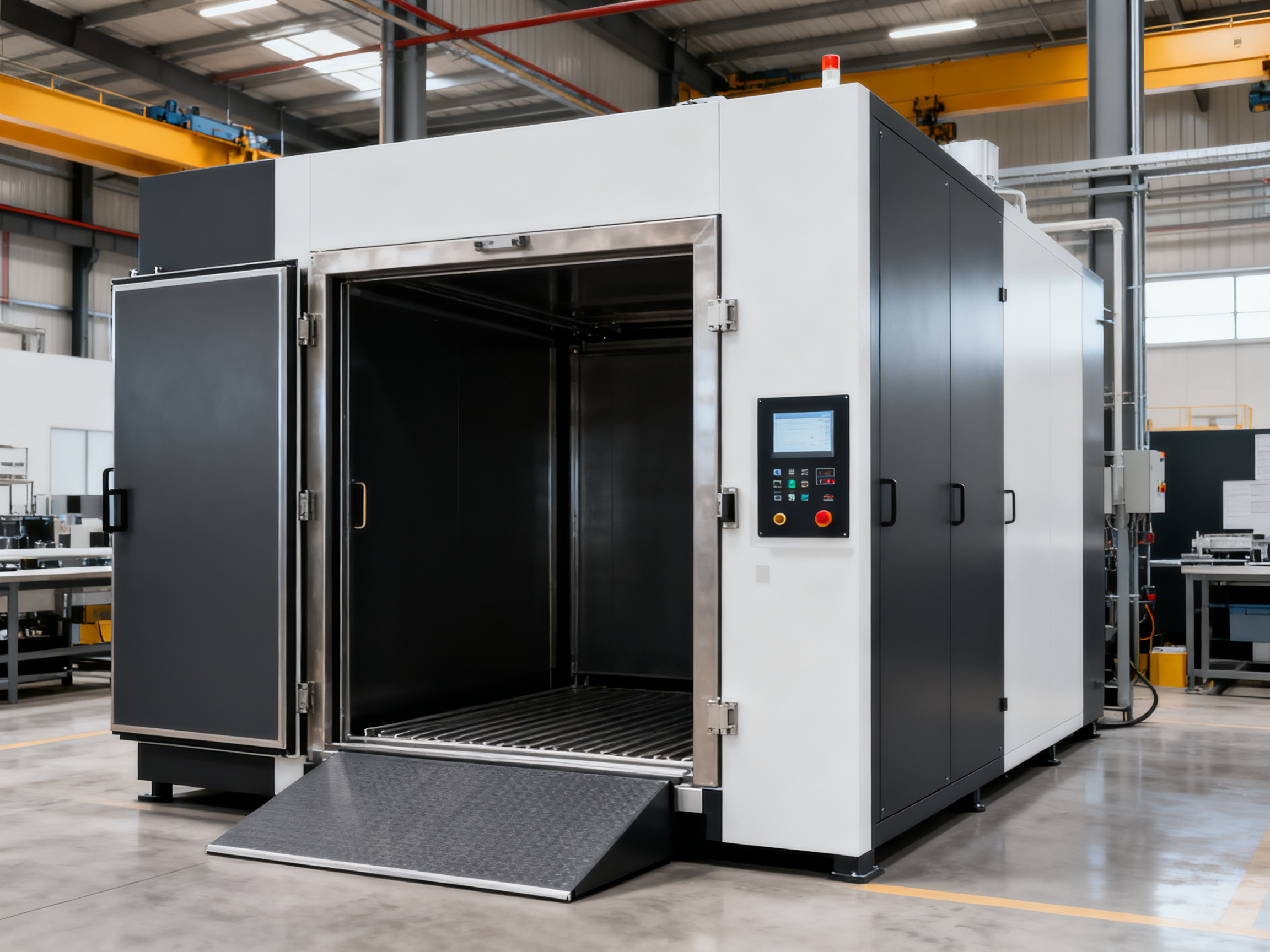
| Wrong Oven Choice | Real Production Impact |
| :— | :— |
| Undersized chamber | Bottlenecks, overtime costs, missed deadlines |
| Poor temperature uniformity | Under-cure, rework, scrap, customer complaints |
| Wrong max temperature | Cannot process high-temp coatings like Cerakote |
| No airflow control | Inconsistent film thickness, color variation |
| Missing safety features | NFPA violations, shutdowns, insurance risks |
The global curing oven market is on pace to grow by nearly $2.8 billion over the next decade 2. If your operation is still running equipment that was state-of-the-art back in 2023, you are probably leaving efficiency on the table and dealing with quality issues that are harder to fix every month.
The good news? Getting this right does not require a massive budget overhaul. It requires knowing what questions to ask and what specs actually matter for your specific coatings and production volume.
About the Author: Jace Liu
Jace Liu is an EMS consultant and SMT equipment optimization expert with over 10 years of experience in electronics manufacturing. He specializes in SMT reflow oven temperature profiling, precision soldering equipment, and production-line automation for high-density electronic assemblies. Jace has helped global manufacturers streamline processes for improved throughput and quality, and he writes about turning SMT lines into efficient, reliable production systems.## About the Author: Jace Liu
Jace Liu is the author of this guide on industrial curing ovens.
Author Bio (Awaiting Verification)
This section will include a full professional biography of Jace Liu once credentials have been confirmed. Pending verification of background, certifications, and project experience related to industrial equipment, SMT production, coating and curing systems, or manufacturing process engineering.
Note to editorial team: Please verify Jace Liu’s professional background, including any relevant industry experience, certifications, or credentials in SMT equipment, thermal processing, or industrial oven systems before this bio is published.## Define the Parts, Coatings, and Production Requirements First
Before you even look at oven specs, you need to get brutally honest about what you are actually curing. This sounds obvious, but you would not believe how many buyers skip straight to temperature ranges and model numbers without answering some pretty basic questions.
Start here. What are the dimensions of your largest part? What is the maximum weight per batch? What coating are you applying and what cure temperature does it need? How many batches do you run each day? What floor space do you actually have available?
These answers shape everything else. A batch oven for Cerakote on steel parts operates completely differently than one for powder coating on aluminum, even if the nameplate temperature looks similar on paper. High-mass parts pull more energy to reach temperature. Dense racking where parts sit close together restricts airflow and creates cold spots. Mixed substrates complicate things because aluminum and steel heat at different rates.
Here is what that means in practice. The time it takes to raise your part-metal temperature depends on your part weight, the target cure temperature, and your substrate material. Heavier parts need more heat input and longer dwell times. If you are loading parts onto racks or carts, you also need to account for the thermal mass of that equipment.
Expert Tip: Do not size the oven by maximum temperature alone. Compare part-metal temperature, dwell time, coating film thickness, and substrate heat load when evaluating options.
So how do you know if a batch oven is the right choice versus a continuous conveyor system? Batch ovens make sense when you have variety in load size, production volume, or cure schedules. If your parts per hour requirements are low enough that load and unload time does not become your bottleneck, a batch system gives you flexibility. But if you are running thousands of identical pieces daily and a batch oven cannot keep up with your cycle times, a continuous system might be your only real option.
The point is to start with your requirements, not with a vendor catalog. Know your part dimensions, maximum load weight, coating type, cure schedule, daily volume, floor space, utilities, and compliance needs before you talk to anyone about specific models.
| Requirement Category | Key Questions to Answer |
| :— | :— |
| Part Dimensions | Largest part L x W x H, irregular shapes? |
| Load Weight | Max weight per batch, rack/cart weight included? |
| Coating Type | Powder, liquid paint, epoxy, Cerakote? |
| Cure Schedule | Target temp and dwell time from manufacturer? |
| Production Volume | Batches per day, parts per batch? |
| Floor Space | Available dimensions, clearance for maintenance? |
| Utilities | Power supply, gas type, exhaust requirements? |
| Compliance | Any industry standards or certifications needed? |## Match the Oven to Your Coating Chemistry and Cure Schedule
This is where a lot of buyers get tripped up. They see an oven that hits 450°F and think it will work for everything. Here’s the thing though. The oven temperature you set on the controller is not the same as the temperature your coating actually sees. That gap causes more problems than almost anything else in finishing operations.
The coating on your parts needs to reach a specific part-metal temperature (PMT) and stay there for a set time. Your oven setpoint is just the air temperature inside the chamber. Heavy parts, dense racks, and poor airflow can mean the air hits 400°F while your part-metal barely scrapes 350°F. Under-cure city.
So when you are asking what batch curing oven for paint or powder coating, the real answer starts with your coating manufacturer’s cure schedule.
Coating Chemistry Breakdown
Different coatings have different cure requirements. Here is how they stack up:
| Coating Type | Typical Cure Temp | Dwell Time | Substrate Notes | Quality Risks |
| :— | :— | :— | :— | :— |
| Standard Polyester Powder | 375-400°F (190-204°C) | 10-15 min | Steel, aluminum | Yellowing if over-cured |
| Low-Bake Polyester | 325-350°F (163-177°C) | 20-25 min | Heat-sensitive parts | Longer cycles needed |
| Epoxy Powder | 350-375°F (177-190°C) | 10-12 min | Steel, iron | Chemical resistance |
| Liquid Paint | 250-350°F (121-177°C) | 20-30 min | Varies by type | Solvent flash issues |
| Epoxy Coating | 150-200°F (66-93°C) | 1-4 hours | Most metals | Slow cure time |
| Cerakote | 400-800°F (204-427°C) | 1-4 hours | Steel, high-temp alloys | Strict temp control needed |
Polyester powder coatings dominate the market because they hit that sweet spot of durability and cure temperature. Standard grades want 375°F to 400°F for 10 to 15 minutes at part-metal temperature. Low-bake options exist if your parts cannot take that heat, but you pay for it with longer dwell times.
Liquid paints and epoxies run cooler but often need more time. Epoxy coatings might sit at 150°F to 200°F for several hours. Cerakote sits at the other end of the spectrum. It needs serious heat, typically 400°F up to 800°F or higher depending on the specific formulation. Most standard batch ovens cannot touch Cerakote requirements without significant upgrades.
Why Part-Metal Temperature Matters More Than Oven Setpoint
The real question is not just “how batch curing oven for powder coating” or “what batch curing oven for paint.” It is “how do I make sure the coating actually reaches the right temperature on the actual part?”
When we thermal profile batch runs, we usually find that parts in the center of a dense load run 15°F to 25°F cooler than parts near the airflow inlet. That gap is enough to cause under-cure in some areas and perfect cure in others. Same oven, same setpoint, same load. The difference is airflow and thermal mass.
We tested this last quarter with a customer running epoxy coating on steel brackets. Their cure schedule called for 180°F for 90 minutes. The parts near the thermocouple probe hit 182°F within 20 minutes and stayed there. The parts in the center of a tight rack took 45 minutes to reach 175°F. That is 5°F short of spec for most of the dwell time.
They were getting sporadic adhesion failures. The fix was not a new oven. It was changing the racking pattern to improve airflow between parts.
Expert Tip: Do not size the oven by maximum temperature alone. Compare part-metal temperature, dwell time, coating film thickness, and substrate heat load when evaluating options.
Matching Oven Performance to Your Schedule
Now here is where you connect the dots between what your coating needs and what your oven can deliver. A standard batch curing oven with 6 to 8 air changes per minute will handle most powder coating and liquid paint jobs. But if you are running Cerakote or high-solids coatings that need tight temperature uniformity, you need an oven with 8 to 10+ air changes and better insulation.
The best batch curing oven temperature is the one that gets your specific parts to PMT consistently across every load. Not the highest number on the spec sheet.
Ask your coating supplier for the exact cure profile. Then ask potential oven vendors for temperature uniformity data and loaded thermal profiles. Compare those two documents before you buy anything.
Choose the Right Oven Size, Chamber Layout, and Loading Method
Here is where a lot of buying decisions go sideways. Someone measures the biggest part they have ever run, picks an oven that fits that dimension on paper, and then wonders why production still bottlenecks and quality stays inconsistent.
The thing is, your oven chamber is not just a box that holds parts. It is an airflow system, and every part inside it needs to breathe.
How to Actually Size the Chamber
When we talk about chamber dimensions, we mean the usable work zone, not the exterior measurements. Most manufacturers list external dimensions first, but what matters is how much space your parts can actually use.
Start with your maximum part envelope. Then add these clearance requirements:
- Airflow clearance: Parts need 2 to 3 inches of space from oven walls and from each other. That gap lets hot air reach all surfaces. Stack parts too tight and the center pieces never hit cure temperature.
- Rack and cart footprint: If you load parts on racks or carts, include that equipment in your dimension calculations. A rack that sticks out 2 inches past spec can block airflow to entire sections of your load.
- Door swing and operator access: The door needs room to open fully without hitting walls, carts, or operators. You also need space to load and unload comfortably. Tight spaces lead to damaged parts and operator fatigue.
- Maintenance access: Leave room around the oven for service technicians to access burners, fans, and controls. Cramming equipment against walls creates expensive service calls.
Pro Insight: Ask suppliers for temperature uniformity survey data and a loaded thermal profile, not just the nameplate temperature range.
Planning Batch Size Against Throughput
Batch size directly affects your cycle time and daily output. A batch that is too large creates temperature uniformity problems. A batch that is too small wastes energy and operator time.
The sweet spot balances three things. First, your cure schedule and the part-metal temperature your coating needs. Second, the thermal mass of your load and how long it takes to heat up. Third, your production volume target and how many batches you need to run per shift.
Heavy parts need more heat input and longer dwell times. Dense racks slow down heat penetration. If you are running multiple part types with different cure schedules, batch size becomes a negotiation between all those requirements.
When Custom Sizing Makes Sense
Standard batch ovens come in common sizes. But custom batch oven sizing becomes worth it when you have oversized parts that do not fit standard chambers, unusual fixtures that need integrated mounting, clean-room or food-safe requirements that demand specific materials, or downstream integration that needs the oven to feed directly into your next process.
Custom builds cost more upfront. They also take longer to deliver. But if your parts genuinely do not fit standard equipment, the investment pays back in reduced rework and proper first-time cures.
| Sizing Factor | Standard Oven | Custom Oven |
| :— | :— | :— |
| Typical lead time | 6-12 weeks | 12-20 weeks |
| Price premium | Baseline | 15-40% higher |
| Best for | Common part sizes | Oversized or unusual parts |
| Flexibility | Fixed dimensions | Matched to your process |
The goal is not the biggest oven you can afford. It is the right size for your actual production mix, with enough airflow clearance to keep every part within temperature uniformity spec.
One last thing. If you are running parts that vary wildly in size or thermal mass, consider whether a medium-sized batch oven makes more sense than pushing the limits of a large one. Smaller batches with consistent loading often outperform larger batches with poor airflow distribution.## Evaluate Temperature Uniformity, Airflow, and Controls
Here is a truth that took me way too long to learn the hard way. An oven that hits 500°F on the display does not mean your parts ever see 500°F. Temperature uniformity is what separates ovens that produce consistent, repeatable cures from ovens that produce headaches, rework tickets, and customer complaints.
Temperature uniformity tells you how closely the air temperature across the entire chamber matches your target. A ±10°F spec means some zones sit 10 degrees hot while others run 10 degrees cool. When your coating requires 400°F for 12 minutes, zones that only reach 390°F leave you with under-cure, and zones that hit 410°F risk over-cure, yellowing, and film integrity problems.
For most powder coating and paint work, ±10°F is acceptable. Cerakote, aerospace coatings, and high-reliability electronics demand ±5°F or tighter. You need to know your actual uniformity requirement before comparing oven specs, not after.
How Airflow Design Affects Cure Quality
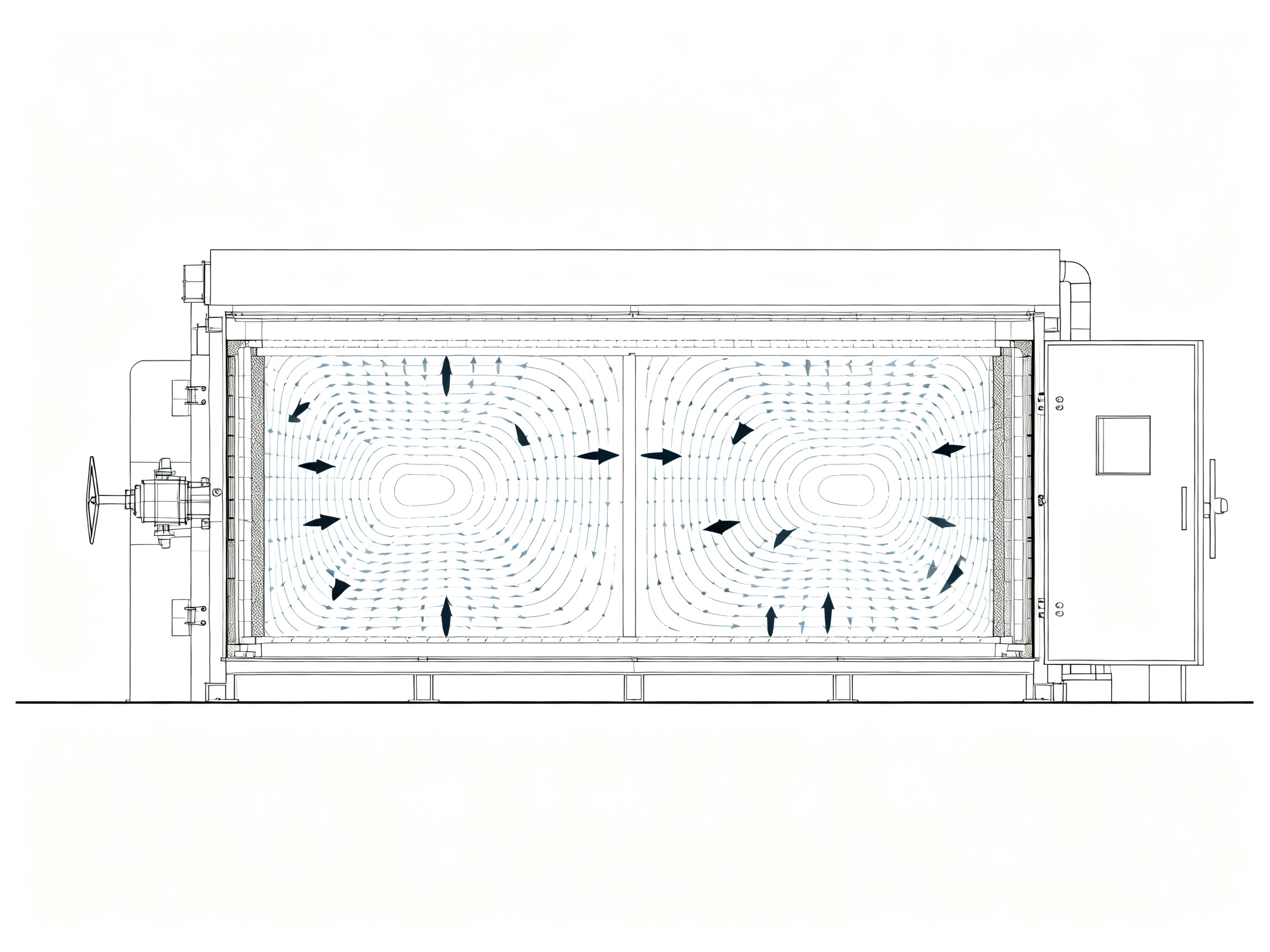
Most modern ovens use one of three airflow approaches. Horizontal flow pulls air from back to front in straight lines. It works fine for simple loads but creates cold pockets in corners and around tall parts that block the path.
Vertical or top-down systems push air straight through the load from above. Better coverage for complex shapes, but you need more fan power to maintain velocity through dense racking.
Recirculating designs pull air across heaters and back into the chamber. Most uniform temperature distribution, and they recover faster after door openings.
Some manufacturers combine approaches, using horizontal supply with vertical returns to eliminate dead zones. We have seen both work well in production, but the hybrid designs tend to handle variable load densities better.
Beyond the basic airflow pattern, ask about actual airflow rate measured in air changes per minute. Six to eight changes per minute handles most coating work. Ten or more changes per minute becomes necessary for dense loads, high-mass parts, or tight uniformity tolerances.
Pro Insight: Ask suppliers for temperature uniformity survey data and a loaded thermal profile, not just the nameplate temperature range.
This is probably the single most valuable thing you can request before buying. The spec sheet tells you what the oven can do empty. The loaded thermal profile tells you what it will do in your actual production environment.
What to Look for in Control Systems
Control systems range from basic analog thermostats to sophisticated PLCs with data logging and network connectivity. Here is how they stack up:
| Feature Level | Best For | Typical Capabilities |
| :— | :— | :— |
| Basic | Low-volume, single-coating ops | Simple thermostat, timer, manual operation |
| Advanced | Multi-coating, moderate traceability | Programmable recipes, ramp/soak, batch tracking |
| High-Reliability | Aerospace, medical, regulated industries | Full data logging, SPC trending, MES integration |
For most finishing shops, an advanced controller with programmable recipes and basic data logging hits the sweet spot. You can store cure schedules for different coatings, track batch counts, and generate reports for customer audits.
If you are certifying parts for aerospace, defense, or medical device markets, you probably need high-reliability controls with full traceability documentation and integration into your quality management system.
Whatever level you choose, make sure the controller supports ramp and soak profiles. Straight ramp profiles work for some coatings, but many epoxies and Cerakote formulations need controlled temperature ramps to avoid outgassing, blistering, or uneven cure.## Check Safety, Compliance, and Facility Fit
Before you sign on the dotted line, you need to make sure your new batch curing oven will actually fit in your facility and meet all the safety requirements for your specific coatings. This step trips up a lot of buyers who get so focused on temperature specs that they forget about ventilation, electrical requirements, and fire safety codes.
Electrical vs. Gas Heating
Your first decision is heat source. Electric ovens are cleaner and easier to install. They work well for small to medium batches and give you precise temperature control. Gas ovens cost less to run in most regions, especially at high temperatures, but they need proper gas line installation and ventilation for combustion byproducts.
Electric systems make more sense when you are running powder coating or low-VOC coatings. No combustion means no additional ventilation for gas byproducts. Gas becomes attractive if you are running high volumes, high cure temperatures, and already have gas infrastructure in your plant.
Ventilation and Exhaust Requirements
This is where solvent-based coatings get tricky. When you cure paints or epoxies that contain solvents, those vapors need somewhere to go. NFPA 86 sets the standard here. The code requires ventilation systems that keep vapor concentrations below 25% of the lower explosive limit (LEL). If you are running solvent-based products, you need proper exhaust hoods or integrated oxidizers.
For water-based or powder coatings, standard facility ventilation usually suffices. But the moment you introduce solvents, you are looking at thermal oxidizers or afterburners to handle VOC emissions and stay compliant with environmental regulations.
Fire Safety and Interlocks
Batch curing ovens handling solvent-based coatings fall under NFPA 86 as Class D hazardous equipment. That classification comes with specific requirements.
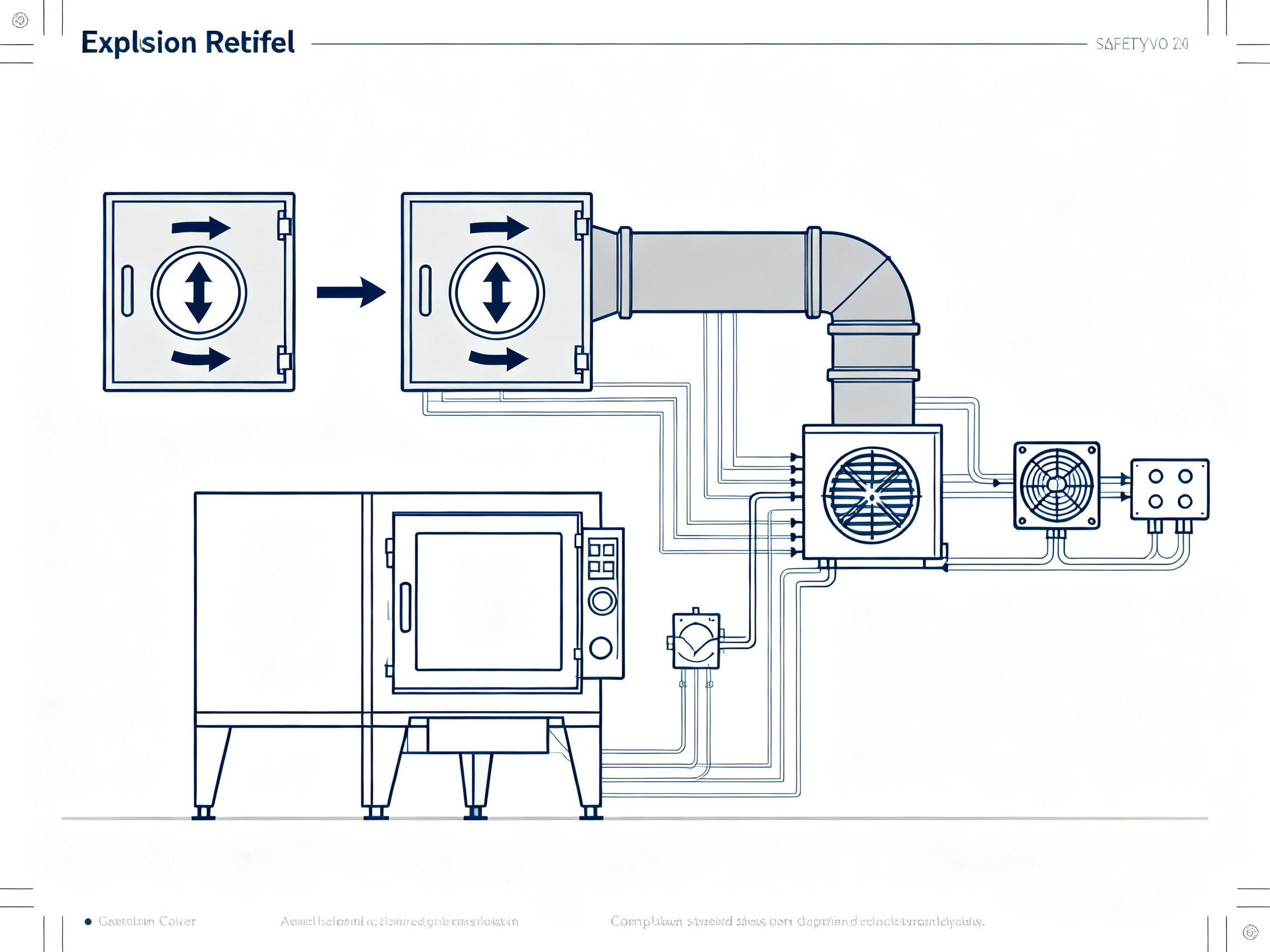
Explosion relief panels are mandatory. These panels vent pressure buildup before it becomes a catastrophic failure. Airflow switches prevent the oven from heating when circulation fails. Over-temperature cutoffs shut down the system if things go too hot. Emergency stop buttons need to be accessible from the loading area.
Modern ovens also include purge cycles that run before heating starts, clearing any residual vapors from the chamber. This is not optional when you are working with flammable materials.
Certification and Compliance Documentation
Your oven should carry UL, ETL, or CE certification depending on your market. These marks tell you the equipment has been tested to recognized safety standards. For regulated industries like aerospace or medical devices, you also need documentation that supports your quality management system.
| Compliance Area | Key Requirements |
| :— | :— |
| Electrical Safety | UL/ETL/CE listing, proper NEMA rating for environment |
| Fire Safety | NFPA 86 compliance, explosion relief panels, purge cycles |
| Ventilation | LEL monitoring, exhaust capacity, VOC destruction |
| Operator Safety | Emergency stops, door interlocks, over-temp protection |
| Documentation | Calibration records, TUS reports, installation verification |
From Our Experience: A practical acceptance test should confirm cure quality, recovery time after door opening, safety interlocks, calibration access, and repeatability over multiple loads.
Matching Compliance to Your Priorities
If you are focused on lead-free compliant manufacturing, the good news is that powder coating and many modern water-based systems already fit that requirement. Your documentation burden is lighter because there are no solvent MSDS sheets to manage.
For aerospace, defense, or medical device work, you need tighter temperature uniformity (often ±5°F or tighter) and full traceability documentation. That means PLC controls with data logging, calibrated thermocouples, and probably a supplier who understands AMS 2750 requirements.
Energy efficiency matters too. Electric ovens run at 85 to 90% thermal efficiency. Gas ovens typically hit 70 to 75%. Over a year of daily operation, that gap adds up on your utility bill.
Facility Fit Checklist
Before you buy, walk your floor and confirm these basics.
- The oven exterior dimensions fit your available space with clearance for maintenance access
- Your electrical service or gas supply matches the oven requirements
- Your ventilation system can handle the exhaust volume the oven will produce
- Local permitting authorities will approve the installation
- You have room for operator access during loading and unloading
Skipping this checklist is how you end up with an oven that does not fit through your doorway or fails inspection after delivery. Neither situation is fun to explain to your production team.## Calculate Total Cost of Ownership, Not Just Purchase Price
Here is a truth that nobody in sales will tell you upfront. The purchase price of a batch curing oven typically represents only 40% to 50% of what that oven will actually cost you over its lifetime. The rest sneaks in through energy bills, maintenance calls, calibration fees, production downtime, and the quiet creep of rising rework rates.
So when you are asking what industrial curing oven is best for your operation, the answer rarely starts with a model number. It starts with math.
The Real Cost Breakdown
When we run the numbers for customers switching from aging equipment, the gaps are always surprising. Purchase price is obvious. Installation is the next checkpoint, and it is where a lot of buyers get caught off guard. You might need electrical upgrades, gas line work, or exhaust ventilation if you are moving from water-based coatings to solvent-based products. Those additions can run $5,000 to $25,000 depending on your facility infrastructure.
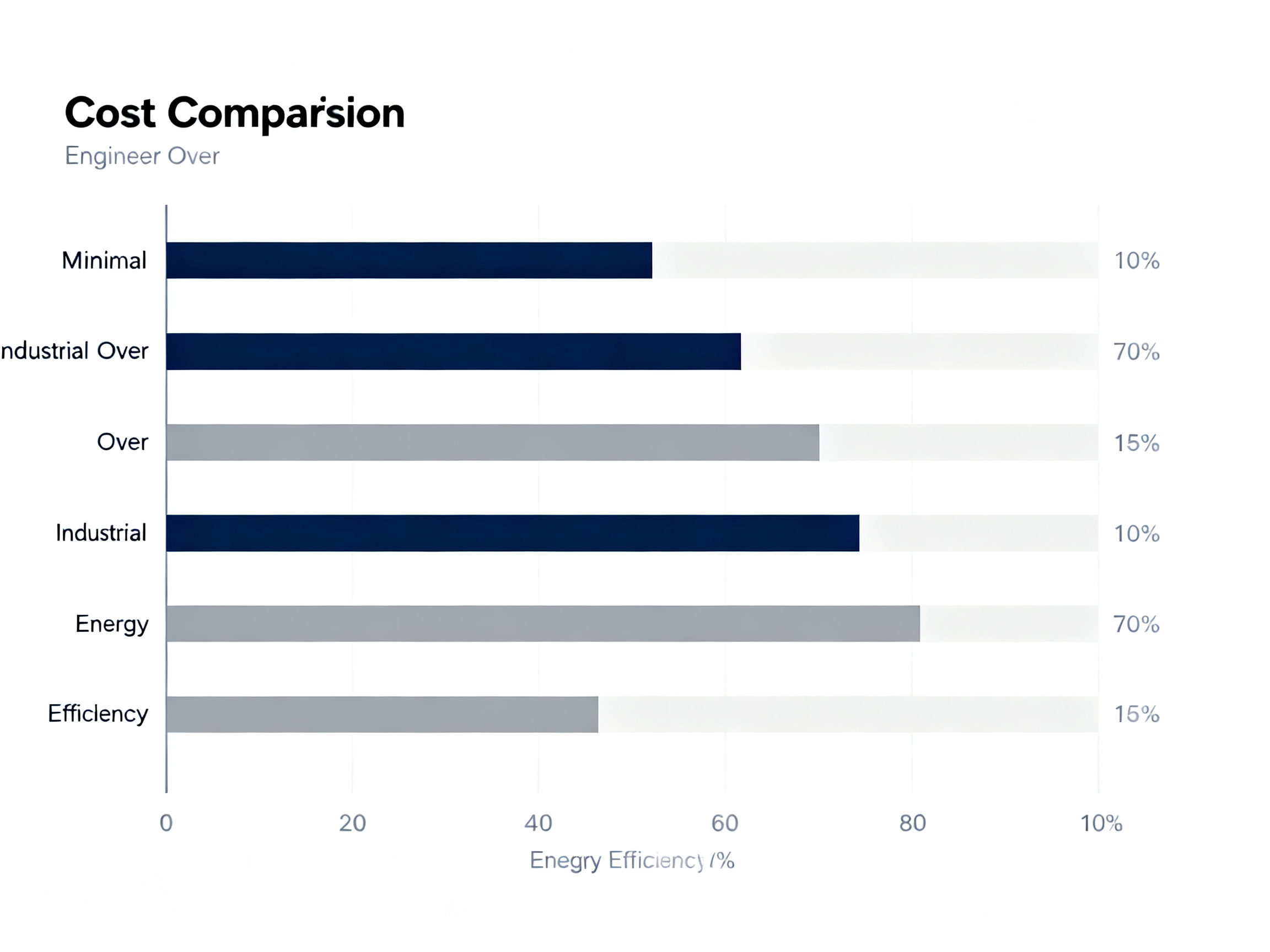
Then there is the energy bill. Electric ovens run at 85% to 90% thermal efficiency. Gas ovens sit around 70% to 75%. For most medium-volume operations running 8 to 10 hours daily, energy costs land between $8,000 and $25,000 per year depending on your rate structure and how hard you push the equipment.
Maintenance and calibration is the line item nobody budgets properly. Plan for $2,000 to $8,000 annually depending on the oven tier and how critical your temperature documentation needs to be. Thermocouple replacement alone runs $300 to $800 per probe, and most systems have 4 to 12 probes.
And then the soft costs hit. Downtime during breakdowns. Rework from temperature drift. Scrap from under-cure that did not show up until the parts hit the shipping dock. These numbers vary wildly, but in a $5 million per year powder coating operation, a 6% rework rate translates to roughly $150,000 in margin erosion annually. Halve that rework rate and you just paid for most of a new oven.
ROI Comparison: Oven Tier Matters
| Factor | Light-Duty Oven | Industrial-Duty Oven | High-Reliability Oven |
| :— | :— | :— | :— |
| Capital Cost | $15,000-$35,000 | $35,000-$75,000 | $75,000-$150,000 |
| Utility Cost/Year | $18,000-$28,000 | $12,000-$20,000 | $10,000-$16,000 |
| Cycle Time | Longer heat-up | Moderate | Rapid recovery |
| Defect Rate | Higher variability | Controlled ±7°F | Tight ±3°F |
| Maintenance/Year | $6,000-$12,000 | $3,000-$8,000 | $2,000-$5,000 |
| Service Response | Variable | 24-48 hours | 4-24 hours |
The numbers tell a clear story. That light-duty oven saving you $20,000 upfront will cost more than the difference over five years when you factor in higher utility consumption, more downtime, and growing rework headaches.
The Decision Framework for Procurement Managers
Here is what I tell procurement managers every time. Stop looking at the purchase price. The oven that costs 15% less upfront might cost 30% more over five years when you factor in energy inefficiency, constant calibration, lost production during breakdowns, and scrap from temperature drift.
The real decision framework centers on three things. First, what does rework actually cost per batch in labor and materials? If you are running $2,000 in rework per week, that is $100,000 per year you could eliminate with better temperature control. Second, how much does downtime cut into your daily output? If you lose one batch per day to slow recovery or calibration issues, multiply that by your margin per batch. Third, can you get service support within 24 hours, or does a week-long breakdown become your new normal?
These factors determine which oven actually saves money long-term, not the sticker price.
We helped a customer in the Pacific Northwest switch from a basic batch oven to an industrial-duty unit last year. The upfront cost difference was $28,000. Their rework rate dropped from 5.2% to 1.8%. At their production volume, that single improvement paid back the difference in under eight months.
The math is not complicated. You just have to do it before you sign the purchase order.
Commissioning, Maintenance, and Supplier Qualification
Before you run your first production batch, you need to prove the oven actually delivers what the vendor promised. Commissioning catches problems before they become expensive headaches on your production floor.
What to Verify Before Production Release
Installation quality comes first. Walk the full setup yourself. Check that utility connections match specifications, that the oven sits level and stable, and that all safety panels are properly mounted. Take photos of everything during installation because you will want that documentation later.
Next, demand a Temperature Uniformity Survey (TUS) report from the supplier. This document shows measured temperatures across multiple points in the chamber, proving the oven holds your required tolerance throughout the work zone. Run a loaded thermal profile with your actual parts, racks, and cure schedule. This tells you whether your coating reaches proper part-metal temperature in real conditions, not just empty-chamber specs.
Verify recipe validation by running three consecutive test batches and logging the cure results each time. Check that safety interlocks function correctly, that alarms trigger when they should, and that your controller logs data properly for your quality records.
From Our Experience: A practical acceptance test should confirm cure quality, recovery time after door opening, safety interlocks, calibration access, and repeatability over multiple loads.
Maintenance Needs to Plan For
Ovens need regular attention to stay reliable. Here is what your maintenance calendar should include:
- Weekly: Visual inspection of door seals and filters
- Monthly: Check fan operation and listen for unusual noise
- Quarterly: Calibrate thermocouples and verify controller accuracy
- Semi-annually: Inspect heaters or burners, check gas ratios on combustion systems
- Annually: Full system calibration, gasket replacement, control backup verification
Budget $2,000 to $8,000 per year for maintenance and calibration depending on your oven tier and documentation requirements. Skip this and you will pay for it in drift, rework, and eventually premature equipment failure.
Supplier Qualification Checklist
Before buying, ask potential suppliers these questions:
| Question | Why It Matters |
| :— | :— |
| Can you provide TUS data for a loaded chamber similar to my parts? | Proves real-world performance |
| What is your warranty and response time for service calls? | Affects your downtime exposure |
| Do you offer application engineering support during commissioning? | Faster problem resolution |
| Can you provide references in my industry with similar cure requirements? | Validated track record |
| What spare parts do you recommend keeping on hand? | Reduces emergency downtime |
| Do you support custom chamber modifications if my needs change? | Flexibility for future growth |
The cheapest oven is rarely the cheapest choice when you factor in commissioning hassles, slower service response, and the cost of production delays. Pick a supplier who treats your acceptance test as seriously as you do.
Quick Selection Guide: Which Batch Curing Oven Do You Need?
Sometimes you just need a straight answer. Here is a fast way to match your needs to the right oven tier.
Oven Selection by Use Case
| Your Application | Temperature Range Needed | Uniformity Tolerance | Airflow Design | Controls Level | Safety Package |
| :— | :— | :— | :— | :— | :— |
| Standard Powder Coating | 375-400°F (190-204°C) | ±10°F | 6-8 air changes/min | Advanced recipes | Basic NFPA 86 |
| Low-Bake Powder | 325-350°F (163-177°C) | ±10°F | 6-8 air changes/min | Advanced recipes | Basic NFPA 86 |
| Liquid Paint | 250-350°F (121-177°C) | ±10°F | Recirculating | Basic to advanced | Full NFPA 86 |
| Epoxy Coating | 150-200°F (66-93°C) | ±10°F | Recirculating | Basic timer | Basic NFPA 86 |
| Cerakote or High-Temp | 400-800°F (204-427°C) | ±5°F or tighter | 8-10+ air changes | Advanced PLC | Full NFPA 86 |
| Mixed Finishing Work | 250-500°F (121-260°C) | ±7°F | 8+ air changes | Multi-recipe PLC | Full NFPA 86 |
| Aerospace/Medical | 300-500°F (149-260°C) | ±3°F (AMS 2750) | 10+ air changes | Full data logging | NFPA 86 + certs |
The Fast Decision Path
Start with your coating cure schedule. What temperature and dwell time does your coating manufacturer specify?
If you run one coating type and moderate volumes, an industrial-duty oven with advanced controls handles most jobs well. The temperature uniformity stays within ±7°F, and programmable recipes let you switch between cure schedules without re-tuning.
If you are curing Cerakote or specialty coatings that demand 500°F or higher, you need high-reliability construction with stainless chambers and tighter tolerance controls. Standard light-duty units simply cannot maintain the temperatures these coatings require.
For mixed finishing operations where you switch between powder, paint, and epoxy, pick the oven that handles your most demanding coating. Running Cerakote at 600°F once a week means your oven needs to be rated for that, even if most batches sit at 375°F.
The question “what industrial curing oven do I need” usually comes down to three things. First, your peak cure temperature. Second, how tight your uniformity tolerance needs to be. Third, whether you need full traceability documentation for regulated industries.
Get those three answers clear, and the rest of the decision practically makes itself.
Expert Recommendation and Next Steps
Here is what matters most when you are choosing a batch curing oven. The decision follows a specific sequence, and skipping steps is where buyers run into trouble.
Start with your actual production requirements. Get your coating manufacturer’s technical data sheet and confirm the exact cure temperature and dwell time. Measure your largest part and heaviest load. Write down your daily batch volume and the floor space you have available.
Next, match the oven to your cure schedule. The nameplate temperature means nothing if your parts cannot reach part-metal temperature in a reasonable time. Request temperature uniformity data and loaded thermal profiles from every supplier you are considering. Compare those documents against your cure schedule before you compare anything else.
Then evaluate chamber size, airflow design, and controls. Make sure the usable work zone actually fits your parts with proper clearance for airflow. Check that the uniformity tolerance matches your coating requirements. For Cerakote or aerospace work, you need tighter tolerances. For standard powder coating, a well-designed industrial-duty oven handles most jobs.
Finally, verify safety compliance, total cost of ownership, and supplier support. NFPA 86 compliance is not optional when you are running solvent-based coatings. And remember that the purchase price is only half the story. Energy efficiency, maintenance costs, and rework reduction determine which oven actually saves you money long-term.
Buyer Quick Checklist
Before you contact any supplier, have these ready:
- Coating technical data sheets with cure profile
- Maximum part dimensions and weight per batch
- Daily production volume and batch frequency
- Available floor space with clearance requirements
- Utility specifications (electrical or gas available)
- Required uniformity tolerance for your application
- Safety compliance needs (NFPA 86, AMS 2750, etc.)
- Documentation and traceability requirements
Once you have those answers, request loaded thermal profiles from each supplier and compare their data against your actual cure requirements. The oven that wins that comparison is the one worth buying.
The market keeps growing, and the stakes keep rising. But the right batch curing oven for your operation is out there. You just have to know what questions to ask and what numbers actually matter.