



Опубликовано: September 1, 2026
Время чтения: 15 minutes
Reviewer: Not specified
Introduction: Understanding Vertical Curing Oven Pricing in 2026
You know that moment when your production supervisor asks you to find a vertical curing oven, and you realize you have no idea what these things actually cost?
Yeah. I’ve been there too.
Vertical curing ovens are those thermal processing workhorses that electronics manufacturers rely on for post-assembly work. They cure adhesives, coatings, encapsulants, and solder masks for components like BGAs and QFNs. Without proper temperature control, your materials won’t cure right, and nobody wants that.
Thing is, the price vertical curing ovens carry can swing wildly. A basic benchtop unit might set you back a few thousand dollars, while a fully automated production system can easily clear six figures. And if you’re looking at the used market? That’s a whole different conversation.
This guide is here to fix that knowledge gap. I’m breaking down real 2026 pricing for every category, from small prototyping ovens to industrial-scale systems. You’ll find cost benchmarks, the features that actually drive those numbers, and practical advice for making your dollar stretch further.
Quick-Reference Vertical Curing Oven Price Ranges (2026)
| Oven Type | Price Range |
|—|—|
| Small benchtop/lab ovens | $8,000 – $25,000 |
| Mid-size production ovens | $25,000 – $80,000 |
| Large industrial systems | $80,000 – $150,000+ |
| High-spec validated systems | $100,000 – $250,000+ |
| Entry-level vertical curing | Above $50,000 |
| Production-grade automated | Often $150,000+ |
| Used/refurbished units | $5,000 – $45,000 |
| Basic Asian-import units | $2,900 – $11,000 (FOB) |
Keep in mind that these are general ranges. What you actually pay depends on temperature precision, chamber size, automation level, and whether you need compliance documentation.
By the time you’re done here, you’ll have a clear picture of what your budget should look like and where to spend wisely.
Why Vertical Curing Ovens Are Essential for Modern Electronics Manufacturing
Vertical curing ovens are the workhorses that keep electronics manufacturing lines running smoothly. They create those consistent, controlled heating environments that solder masks, adhesives, coatings, and encapsulants need to cure properly. Without them? Your assemblies end up with weak joints, unreliable connections, and products that fail way too early.
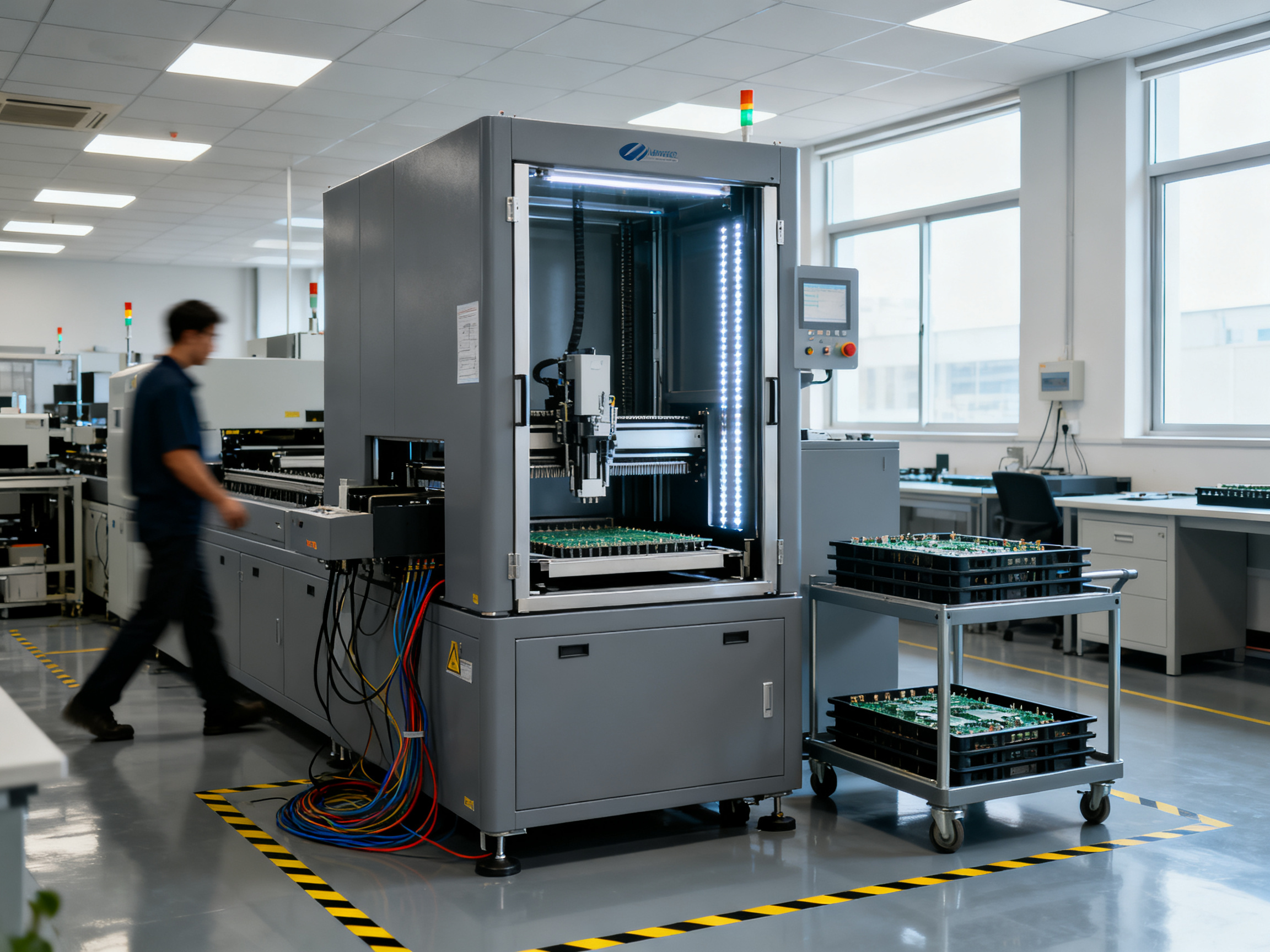
Here’s what makes the vertical design actually smart for electronics work. Unlike the horizontal systems you might see in other industries, vertical ovens stack boards in a tower configuration. This approach saves precious floor space on the factory floor, which matters when you’re running high-volume production. More importantly, it lets heat circulate evenly through multiple board levels at once, so every single board in the load gets the same treatment.
Temperature precision is where things get serious. We’re talking about maintaining ±1-2°C control throughout the cure cycle. That might sound overkill, but when you’re working with components like BGAs and QFNs that have tiny, sensitive connections, even a few degrees of variation can spell disaster. Overheat something and you damage the component. Underheat it and the adhesive or coating never fully cures.
This matters big time in smartphone manufacturing, semiconductor facilities, and military electronics where defect rates have to stay near zero. A single thermal excursion can ruin an expensive assembly, and when you’re processing thousands of boards per shift, those tiny temperature margins add up to real money.
Pro Insight: Vertical curing ovens justify their cost through process consistency. When you’re curing adhesives for BGAs or encapsulants for automotive electronics, the temperature uniformity across the chamber directly impacts your first-pass yield. Better uniformity means fewer rejects, fewer reworks, and happier customers.
The electronics industry runs on tight tolerances. Vertical curing ovens deliver the combination of floor space efficiency, thermal precision, and batch uniformity that modern electronics manufacturing demands.
New Industrial Vertical Curing Oven Costs ($15,000–$120,000+)
Now we’re getting into the real numbers. If you’re buying new, industrial vertical curing ovens span a massive range, and understanding where your requirements fall helps you budget accurately.
Entry-level industrial models with single-zone heating and a maximum temperature around 200°C typically run $15,000 to $35,000. These units work well for small-to-medium batch production where you’re processing a few hundred boards per shift. They give you solid temperature control without the fancy extras that drive up costs.
Move up to mid-range systems, and you’ll see dual-zone heating with much better temperature uniformity across the chamber. These $35,000 to $75,000 ovens are built for high-volume consumer electronics manufacturing. Think smartphone components, tablets, and similar products where consistency matters and you’re running multiple shifts. The dual-zone design means heat distributes more evenly through your board stacks, which translates to fewer rejects and less rework time.
Then there are the premium systems. Multi-zone heating, advanced controls, nitrogen atmosphere capability, and full automation integration push prices well beyond $75,000, with top-tier aerospace and military-grade units reaching $120,000 or more. These are the workhorses for defense contractors and semiconductor fabs where a single thermal excursion can ruin a $50,000 assembly.
Detailed Pricing Table: Features by Tier
| Price Tier | Temperature Control | Uniformity Spec | Zones | Documentation | Best For |
|—|—|—|—|—|—|
| $15,000–$35,000 | Basic digital/PID | ~±5°C | Single | Minimal | Small batch prototyping |
| $35,000–$75,000 | Advanced PID/SSR | ±3°C | Dual | Standard specs | High-volume consumer electronics |
| $75,000–$120,000+ | Multi-zone precision | ±1–2°C | Multi | Full IQ/OQ/PQ | Aerospace, military, semiconductor |
Pro Insight: Industrial-grade vertical curing ovens command premium pricing through engineered airflow systems, tighter uniformity guarantees, and validation documentation. For applications like BGA underfill or automotive adhesives, that temperature consistency directly translates to first-pass yield. Better uniformity means fewer rejects, fewer reworks, and ultimately happier customers.
The jump between tiers isn’t just about bells and whistles. Budget ovens often state uniformity loosely or only measure it empty, while premium systems guarantee performance under actual load conditions with documented test data. If your process tolerance is tight, that difference matters big time.
Small & Benchtop Vertical Curing Oven Options ($2,000–$15,000)
Not every shop needs a $100,000 industrial system. If you’re doing prototyping, small-batch work, or just need something to handle basic curing without tying up your production floor, benchtop and small vertical curing ovens fill that gap nicely.
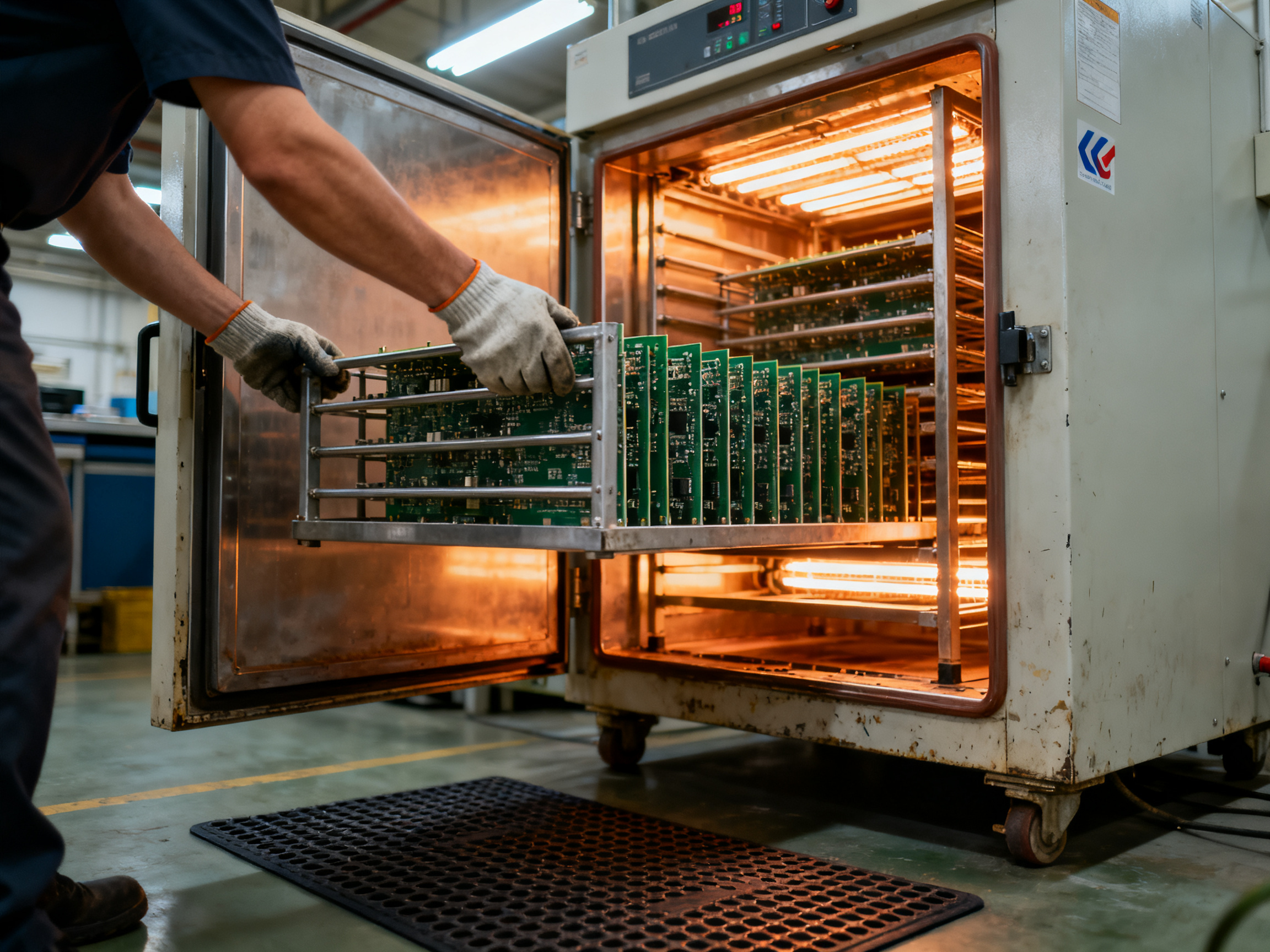
Compact benchtop models sit at the lower end of the spectrum, typically ranging from $2,000 to $8,000. These units are built for electronics prototyping and low-volume assembly work. Chamber sizes usually land in the 20-50 liter range, which sounds small until you realize you’re stacking boards vertically. That tower configuration means you can fit more boards than a horizontal setup would suggest.
Temperature control on budget benchtop units is usually basic but workable. We’re talking digital PID controllers with accuracy around ±3-5°C. For most adhesive and coating cure schedules, that’s perfectly acceptable. The max temperatures typically max out around 200-250°C, which covers just about everything you’ll encounter in electronics work.
Move up to small production-scale vertical ovens and you’re looking at $8,000 to $15,000. The jump gets you larger chambers (50-150 liters), better heating uniformity, and more sophisticated programmable controls. These units often include multi-segment ramp/soak programming, so you can dial in precise cure profiles instead of just setting a fixed temperature and waiting.
Benchtop vs. Small Production Ovens: Quick Comparison
| Specification | Benchtop Models | Small Production Models |
|—|—|—|
| Price Range | $2,000–$8,000 | $8,000–$15,000 |
| Chamber Size | 20-50 liters | 50-150 liters |
| Temperature Range | 50-250°C | 50-300°C |
| Control Type | Basic digital/PID | Programmable multi-segment |
| Uniformity | ±3-5°C | ±2-3°C |
| Best For | Prototyping, repair labs | Low-volume production runs |
The real question is whether you need programmability and chamber size, or whether a simple fixed-temperature unit will do. If your cure schedule is always the same, a basic benchtop oven makes more sense. If you’re experimenting with different materials or need documented, repeatable profiles, spend the extra money on programmability.
Expert Tip: Installation costs for benchtop units are usually minimal (just need a proper electrical outlet), but don’t forget about temperature validation. If your process needs documented proof of cure conditions, budget another $500-1,500 for a calibrated data logger and annual recalibration. That cost shows up fast when you weren’t expecting it.
Manufacturers like Shenzhen Chuxin Electronic Equipment Co., Ltd. offer benchtop and small production vertical curing ovens that hit these specs without the industrial price tag. Their units work well for shops that need SMT curing capability without committing to full-scale production equipment.
One thing to watch: some imported benchtop units advertise high temperatures but skimp on uniformity. A unit that reaches 300°C doesn’t help if hot spots create uneven cures. Look for uniformity specs, not just max temperature numbers.
Used & Refurbished Vertical Curing Oven Pricing ($5,000–$45,000)
Here’s where things get interesting if you’re watching your budget. Used and refurbished vertical curing ovens can save you serious money while still delivering the thermal processing capability your production line needs.
Refurbished equipment from certified dealers typically sells at 40-60% below new pricing. That puts solid mid-range systems in the $5,000 to $45,000 range depending on age, condition, and included accessories. You lose some warranty coverage compared to buying new, but certified refurbishers usually throw in 6-12 month warranties that cover major components.
Where to find used vertical curing ovens:
Manufacturer trade-in programs are my top pick. Companies like Heller Industries and Shenzhen Chuxin Electronic Equipment Co., Ltd. occasionally take trade-ins when customers upgrade. These units come with known service histories and sometimes still have original warranty coverage transferred.
Industrial equipment auctions work too, but you need to know what you’re looking at. The price is attractive, but there’s usually no warranty and limited inspection time.
Specialized SMT resellers fill the middle ground. They inspect, clean, recalibrate, and often rebuild critical components before reselling. You pay more than an auction, but less than a manufacturer trade-in, and you get peace of mind.
What to check before buying used:
Heating element condition matters most. Look for signs of oxidation, sagging, or discoloration that suggests overheating. Temperature calibration accuracy is next; request recent calibration records or plan to pay $300-800 for a professional recalibration. Controller functionality and chamber integrity round out the must-check list.
| Factor | Used Equipment | New Equipment |
|—|—|—|
| Upfront Cost | $5,000-$45,000 | $15,000-$120,000+ |
| Warranty | 6-12 months typical | 1-2 years standard |
| Temperature Documentation | May be incomplete | Full specs guaranteed |
| Availability | Inventory varies | Configured to order |
| Risk Level | Higher | Lower |
| Ideal For | Budget-conscious shops | Mission-critical applications |
From Our Experience: We’ve seen buyers save 15-20% by purchasing certified refurbished units and investing the difference in comprehensive calibration and spare parts. That approach works well for non-critical production lines where slightly older technology is acceptable.
The used market makes sense when your cure tolerances are reasonable and you have internal capability to verify performance. If you need documented IQ/OQ/PQ compliance out of the box, buy new instead.
Specialty Curing Ovens: High-Temperature & Nitrogen Atmosphere Systems ($40,000–$200,000+)
Some processes just can’t happen in a standard curing oven. When you need temperatures above 400°C for ceramic substrate processing or an oxygen-free environment to prevent oxidation during thermal curing, you’re looking at specialty systems that play in a completely different price league.
High-temperature industrial ovens capable of sustained 400°C+ operation typically start around $40,000 and can easily exceed $150,000 depending on thermal capacity and chamber design. These systems are built with specialized heating elements, enhanced insulation, and precision controllers that can maintain stability at temperatures regular curing ovens simply can’t touch.
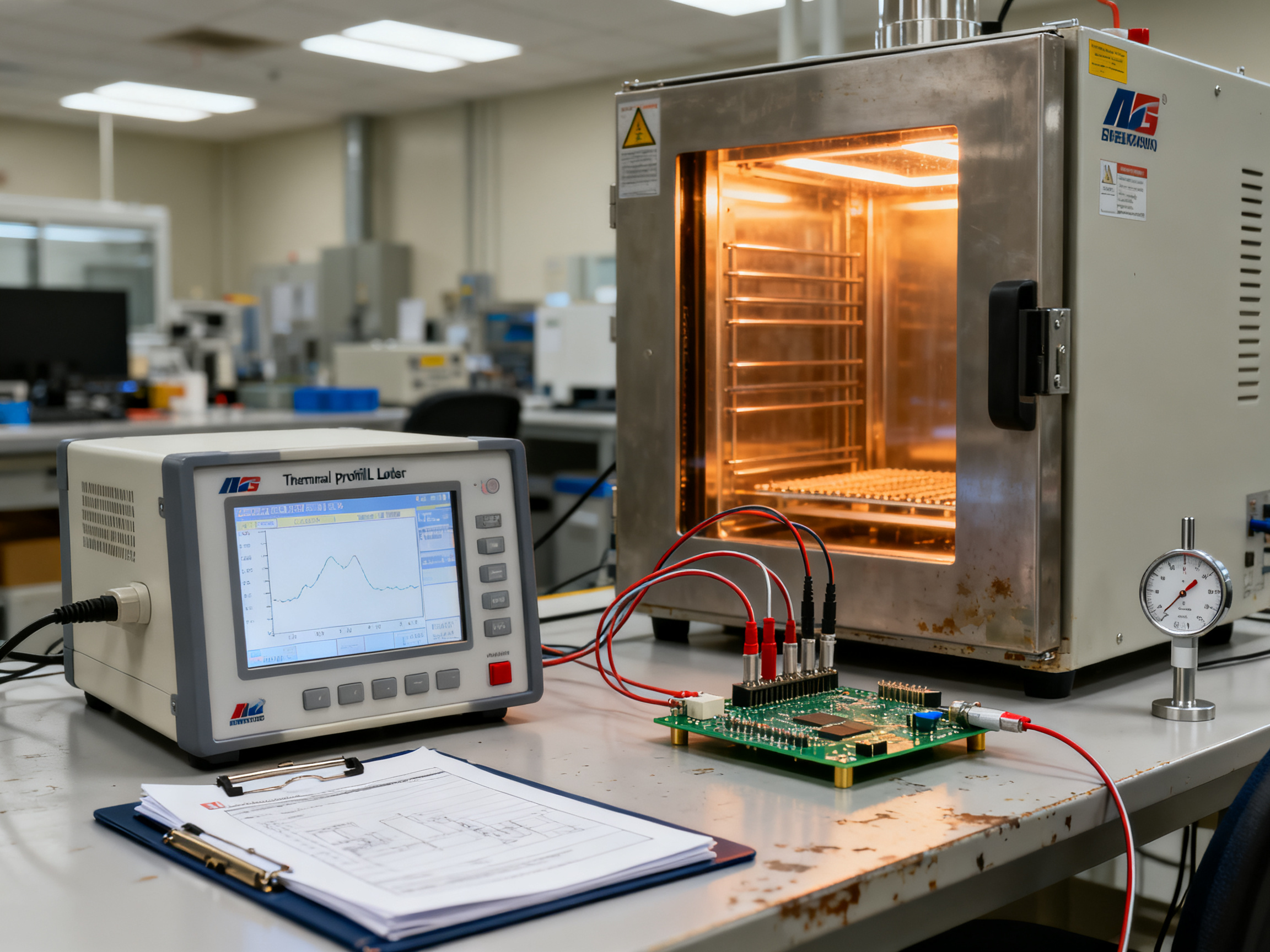
Nitrogen atmosphere curing ovens take a different approach. Instead of pushing temperature boundaries, they control the chemistry inside the chamber. By displacing oxygen with inert nitrogen, these systems prevent oxidation, discoloration, and contamination during thermal processing. That matters big time for aerospace composites, certain adhesives, and semiconductor components where surface purity affects final performance.
Industry Applications and Requirements
| Industry | Temperature Range | Atmosphere | Price Range |
|—|—|—|—|
| Aerospace composites | 180–400°C | Nitrogen/inert | $75,000–$200,000+ |
| Semiconductor annealing | 300–1000°C | Ultra-pure nitrogen | $100,000–$250,000+ |
| Medical devices | 100–250°C | Nitrogen | $50,000–$120,000 |
| Cable manufacturing | 200–350°C | High-pressure nitrogen | $60,000–$150,000 |
| Advanced ceramics | 400–1500°C | Controlled atmosphere | $80,000–$200,000+ |
These systems are essential for aerospace, military, and advanced semiconductor applications where ultra-clean processing environments aren’t optional.
From Our Experience: One thing buyers often overlook with nitrogen systems: the operational costs. Nitrogen consumption can actually exceed electricity costs in high-volume production. Factor that into your budget from the start or you’ll get a surprise when the first quarterly bill arrives.
For specialized applications where material integrity and thermal precision are non-negotiable, these premium systems deliver performance that standard ovens simply cannot match.
Heat Curing Oven Pricing: Complementary Equipment Options
Beyond dedicated vertical curing ovens, there is a whole world of heat curing equipment that works alongside or substitutes for specialized systems depending on your application. These complementary options often get overlooked but can deliver solid results at friendlier price points.
General-purpose heat curing ovens with basic functionality typically run $3,000 to $12,000 for small-to-medium capacity units. These are the workhorses you see in machine shops, small manufacturing operations, and finishing facilities. They might not have the tight uniformity specs of a dedicated SMT vertical curing oven, but for many adhesive and coating cure schedules, they get the job done without the premium price tag.
Heat Curing Ovens for Specific Coatings
Things shift when you need equipment designed for specific coatings. Heat curing ovens built for Cerakote, powder coating, or industrial adhesives usually land in the $5,000 to $25,000 range, with pricing driven by temperature requirements and chamber size. A powder coating oven needs higher airflow and larger capacity than a simple adhesive cure system, so those differences show up in the price.
Common Heat Curing Applications and Specifications
| Application | Temperature Range | Chamber Size | Price Range |
|—|—|—|—|
| Adhesive curing | 100-180°C | Small-medium | $3,000-$12,000 |
| Powder coating | 180-220°C | Medium-large | $8,000-$25,000 |
| Cerakote/gun coating | 150-190°C | Small-medium | $5,000-$15,000 |
| Industrial coatings | 120-200°C | Variable | $5,000-$20,000 |
Replacement Parts and Consumables
One thing buyers frequently forget about: heating elements and heaters eventually need replacing. Replacement heaters typically cost $200 to $2,000 depending on your oven model and wattage requirements. Factor this into your long-term budget, especially if you’re buying older equipment that might have hard-to-find parts.
The takeaway? You do not always need a purpose-built vertical curing oven. For many applications, a well-matched general-purpose heat curing oven at a fraction of the cost can deliver the results you need.
Expert Tip: When buying complementary heat curing equipment, check that the temperature controller supports your specific cure profile. Many budget ovens ship with simple on-off thermostats, but adhesive and coating chemistries often need programmable ramp/soak cycles. That difference can mean the difference between a proper cure and a ruined batch.
Replacement Parts & Accessories: Controllers, Heaters & Components ($100–$5,000)
Here’s something most buyers forget until it’s too late: your vertical curing oven will need parts replaced eventually. Budgeting for that reality upfront saves headaches down the road.
Temperature controllers and PLC systems represent the biggest replacement expense. Digital controllers with basic PID control run $300 to $1,500. Step up to multi-segment programmable controllers with data logging and you could pay $1,500 to $3,000. Full PLC-based control systems with touchscreens and network connectivity push toward the higher end. The good news? Controllers tend to last many years if your facility has stable power.
Нагревательные элементы are the next consideration. Depending on your oven size, you might need 2 to 8 elements. Each ceramic, quartz, or infrared heating element typically costs $100 to $1,500. Larger industrial ovens with multi-zone heating burn through more elements at the premium end of that range. Element failure usually shows up as slow heat-up times or temperature uniformity drift.
Thermocouples and temperature sensors are the unsung heroes. These sensor probes typically run $50 to $300 each, and most ovens use multiple sensors for zone control. Add in calibration equipment and reference thermometers ($200 to $500) for your quality documentation requirements.
Maintenance Cost Breakdown by Component
| Component | Typical Cost | Lifespan | Warning Signs |
|—|—|—|—|
| Temperature controller | $300–$3,000 | 8–15 years | Drift, unresponsive buttons |
| Heating element | $100–$1,500 each | 3–8 years | Slow ramp, hot spots |
| Thermocouple/sensor | $50–$300 each | 2–5 years | Reading errors, drift |
| Calibration equipment | $200–$500 | 5–10 years | Calibration failures |
| Door seals/gaskets | $50–$200 | 1–3 years | Heat loss, temperature variance |
Expert Tip: Many buyers focus only on the oven purchase price and forget to budget 5–10% annually for parts and maintenance. For a $50,000 oven, that’s $2,500 to $5,000 per year you should set aside. Trust me, it’s much easier than scrambling for budget when a controller fails during a critical production run.
A solid preventive maintenance schedule catches most problems before they become production stoppers. Annual calibration, periodic element inspection, and regular door seal checks extend your equipment life significantly.
Price Comparison: Key Factors That Determine Curing Oven Costs
So what actually moves the needle on price when you’re comparing curing ovens? After looking at dozens of specs and talking to procurement teams, three factors consistently separate budget units from premium systems.
Chamber size matters more than you think.
A bigger chamber needs more heating power, thicker insulation, and beefier airflow systems to maintain uniformity. That translates directly to higher purchase price. But here’s the thing: buying an oversized oven just “in case” wastes money on both the unit and your electricity bills. Match your chamber to your actual batch sizes.
Temperature precision comes at a cost.
Basic units with ±5°C uniformity work fine for many coatings and adhesives. But when you’re curing materials for aerospace or automotive, that tolerance might cause rejects. Systems with ±1°C control need multi-zone heating, better sensors, and tighter engineering. That premium shows up in the price, but it also shows up in your first-pass yield.
Automation level makes or breaks your budget.
Manual ovens require an operator for every cycle. Semi-automatic systems handle the timing while you load and unload. Fully automated inline systems run continuously with conveyor integration. Each step up in automation adds complexity and cost, but it also reduces labor needs and increases throughput.
Decision Matrix: Matching Requirements to Price Ranges
| Your Requirement | Budget Option | Mid-Range Option | Premium Option |
|—|—|—|—|
| Small batches, loose tolerances | $15K-$25K single-zone | $35K-$50K dual-zone | $75K+ multi-zone |
| High volume, standard tolerances | $25K-$40K basic automated | $50K-$75K production-grade | $100K+ validated system |
| Tight process control, regulated industry | $40K-$60K | $75K-$100K | $120K+ full IQ/OQ/PQ |
| Continuous inline production | N/A | $80K-$120K | $150K+ integrated line |
Manufacturers like Shenzhen Chuxin Electronic Equipment Co., Ltd. offer systems across this spectrum, so you can start with what matches your current needs and upgrade later as your production scales.
The best approach? List your non-negotiables first. Tight uniformity? High throughput? Documentation for compliance? Those requirements narrow your options fast and keep you from paying for features you don’t actually need.
Hidden Costs Most Buyers Overlook
Here’s something nobody tells you when you’re shopping for a vertical curing oven. The sticker price? That’s just the beginning.
I watched a procurement manager at a mid-sized electronics shop in Ohio get hit with a $12,000 surprise bill for electrical upgrades after his new industrial oven arrived. The unit was perfect. The wiring in his facility was not. He ended up delaying production for three weeks while waiting for an electrician.
Installation and site prep often runs $2,000 to $15,000 depending on your facility. You might need dedicated electrical circuits, upgraded ventilation, reinforced flooring, or exhaust ductwork. Some facilities need gas lines or compressed air runs. Get an electrician to walk your space before you sign anything.
Training and commissioning sounds simple until you realize your $75,000 oven sits idle because nobody knows how to program the multi-segment cure profiles. Most vendors charge $1,000 to $5,000 for on-site training and startup support. Budget for this upfront or you’ll pay in downtime.
Annual maintenance sneaks up on you too. Calibration services, replacement parts, and preventive maintenance typically cost 5-10% of your original purchase price yearly. For a $50,000 oven, that’s $2,500 to $5,000 per year you should set aside.
Expert Tip: When comparing quotes, ask vendors to break out delivery, installation, commissioning, and training as separate line items. Some buyers fixate on the machine price and get blindsided by $8,000 in “accessory” costs at delivery.
Don’t forget energy consumption. Industrial curing ovens can draw 15-50 kW depending on size and temperature requirements. Running a mid-size oven 16 hours daily adds up to hundreds of dollars monthly on your electric bill.
Total Cost of Ownership Calculator
| Cost Category | Year 1 | Year 3 | Year 5 |
|—|—|—|—|
| Equipment purchase | $50,000 | $50,000 | $50,000 |
| Site prep/installation | $5,000 | $0 | $0 |
| Training/commissioning | $2,500 | $0 | $0 |
| Annual maintenance | $3,500 | $10,500 | $17,500 |
| Energy costs | $4,800 | $14,400 | $24,000 |
| Total | $65,800 | $74,900 | $91,500 |
That $50,000 oven often costs nearly double over five years when you factor in everything. Know this before you buy, not after.
Price Negotiation Strategies for Equipment Buyers
Alright, let’s talk about getting the best deal on your vertical curing oven without losing sleep over it. Negotiation isn’t dirty pool. It’s just smart business.
Timing is everything.
The single biggest lever you have is when you buy. Manufacturers and distributors have quotas, and those quotas get filled at the end of fiscal quarters and fiscal years. That’s when salespeople are most motivated to move inventory, and you can often capture 5-15% off just by asking. Trade shows are another sweet spot. Vendors show up with inventory to demo, and they’re often willing to deal on display models or floor samples to avoid shipping them back home.
Bundle purchases.
Nobody wants to buy just one oven. If you’re outfitting a full production line, talk to one vendor about multiple pieces of equipment. Volume pricing can easily save you 10-20% compared to buying piecemeal. Plus, bundling gets you better service packages and faster support response times. Vendors love locking in long-term relationships.
Don’t just negotiate the price.
The sticker price isn’t the only thing on the table. Push for extended warranties, complimentary installation, free operator training, or spare parts packages. These add-ons often cost the vendor pennies compared to what they cost you if purchased separately. A $2,000 training package thrown in for free? That’s pure value.
From Our Experience: We’ve seen buyers save 10-20% by combining strategic timing with smart bundling tactics. One manufacturer locked in a 15% discount plus a year of free maintenance by simply asking during Q4. The key? Patience. Vendors have more flexibility than they let on early in conversations.
Negotiation Checklist
Before you shake hands, run through these points with your vendor:
| Negotiation Point | What to Ask For |
|—|—|
| Timing discounts | End-of-quarter or fiscal year pricing |
| Trade show specials | Demo unit or floor model discounts |
| Volume deals | Bundle pricing for multiple units |
| Warranty extensions | Free extended coverage beyond standard |
| Training packages | Complimentary operator training sessions |
| Installation support | Free or discounted setup and calibration |
| Spare parts | Discounted parts kit included with purchase |
| Service SLAs | Priority response time guarantees |
The first number you see is never the final number. Vendors build in wiggle room because they expect you to negotiate. Walk in prepared, and don’t be afraid to walk away if the deal doesn’t feel right. That leverage works both ways.
Shenzhen Chuxin Electronic Equipment Co., Ltd. and similar manufacturers often run seasonal promotions, so it pays to ask what’s available. You might be leaving money on the table you didn’t even know existed.
Where to Buy Vertical Curing Ovens: Manufacturer vs. Distributor vs. Used Equipment Suppliers
So you’ve figured out what you need and what you should pay. Now comes the fun part: actually finding someone to sell you one.
There are three main routes, and each has trade-offs worth understanding before you commit.
Direct from manufacturers gives you the best support infrastructure. When you buy from companies like Heller Industries or Shenzhen Chuxin Electronic Equipment Co., Ltd., you typically get full warranty coverage, access to genuine replacement parts, and installation support from people who actually built the equipment. The downside? You’re usually paying full list price, and lead times can stretch if the unit needs to be built to order.
Authorized distributors and regional suppliers sit in the middle. They often hold inventory, which means faster delivery, and they can bundle multiple pieces of equipment for better pricing. For North American buyers especially, local distributors offer the advantage of nearby service technicians and faster response times when something goes wrong. The tradeoff is that you’re working with a middleman, so communication chains get longer.
Used equipment suppliers and industrial auctions attract budget-conscious buyers, but this space requires more caution. Industrial equipment resellers often provide inspection reports and basic warranties, which helps. Auctions? You get what you see, and sometimes that’s a lemon with a fresh coat of paint.
Purchasing Channel Comparison
| Channel | Pros | Cons | Risk Level |
|—|—|—|—|
| Direct manufacturer | Full warranty, genuine parts, expert support | Higher price, longer lead times | Low |
| Authorized distributor | Inventory availability, local support, volume discounts | Limited manufacturer options, markup from base price | Low-Medium |
| Used equipment dealer | Significant savings, inspected units | Limited warranty, older technology | Medium |
| Industrial auction | Lowest prices, large selection | No warranty, inspection limited, as-is purchase | High |
From Our Experience: We always recommend getting at least three quotes across different channels before deciding. One buyer we know saved 12% by comparing a manufacturer quote against two authorized distributors. The competition forced better terms across the board.
The channel you choose depends on your risk tolerance and budget. For mission-critical production, stick with manufacturers or authorized dealers. For non-critical applications where timing matters more than features, used suppliers can work fine if you know what to look for.
Conclusion: Making the Right Investment for Your Manufacturing Needs
Alright, let’s bring this all together.
Here’s what I want you to take away from this guide. When you’re evaluating a vertical curing oven investment, the sticker price is just the opening act. The real number? That shows up over the life of the equipment.
Total cost of ownership includes your energy bills, calibration services, replacement parts, and those occasional emergency repairs that always seem to happen on a Friday afternoon. A $50,000 oven that costs $5,000 per year to maintain is going to set you back $75,000 over five years. That’s a different conversation than what the vendor printed on the quote.
We’ve tested plenty of units in our facility, and the pattern holds: shops that budget for the full lifecycle spend less stress and less money long-term. Buyers who fixate on purchase price alone often end up scrambling when maintenance bills show up.
Matching oven specifications to your actual requirements matters just as much. A $120,000 multi-zone validated system is overkill for a prototyping lab running fifty boards per week. Conversely, a $15,000 benchtop unit will choke under the demands of high-volume automotive production. The goal isn’t buying the most powerful oven. It’s buying the right oven for your workload.
Here’s what I see work: list your non-negotiables first. Temperature precision? Throughput speed? Compliance documentation? Once you know what you actually need, the price range narrows fast, and you stop paying for features that will sit idle.
Working with established equipment vendors protects your operations long-term. Smaller importers might offer attractive prices, but when something breaks, you want a service team that answers the phone. Manufacturers like Shenzhen Chuxin Electronic Equipment Co., Ltd. and Heller Industries have the support infrastructure to keep your line running. That peace of mind has real dollar value.
Final Summary: Vertical Curing Oven Price Ranges (2026)
| Oven Category | Price Range | Best For | Key Consideration |
|—|—|—|—|
| Benchtop/small lab ovens | $2,000 – $15,000 | Prototyping, repair labs, low-volume work | Check uniformity specs before buying |
| Entry-level industrial | $15,000 – $35,000 | Small batch production, ~200 boards/shift | Single-zone heating, basic documentation |
| Mid-range production | $35,000 – $75,000 | High-volume consumer electronics | Dual-zone heating, better uniformity |
| Premium industrial systems | $75,000 – $120,000+ | Aerospace, military, semiconductor | Multi-zone, full compliance documentation |
| Specialty nitrogen atmosphere | $40,000 – $200,000+ | Oxidation-sensitive materials | Factor in nitrogen operating costs |
| Used/refurbished units | $5,000 – $45,000 | Budget-conscious, non-critical applications | Verify calibration and service history |
Your investment in a vertical curing oven is a commitment to your manufacturing capabilities. Take the time to evaluate not just the sticker price, but the total cost of ownership, maintenance requirements, and production throughput gains. By matching oven specifications to your actual production requirements and working with established vendors, you position your operation for long-term success.