


Утапање у калај је начин повезивања електронских делова. То се ради тако што их уроните у растопљени калај. Апарат за лемљење вам омогућава одлично контролисање топлоте и времена. Ако пажљиво пратите загревање, спојеви постају јачи. Табела испод показује како ствари као што су брзина убрзања и време задржавања променити колико су зглобови јаки. Нове машине као што су С&М’Селективне машине за таласно лемљење вам помажу да добијете стабилне резултате.
Параметар | Утицај на поузданост |
|---|---|
Рамп стопа | Велики ефекат |
Време боравка | Средњи ефекат |
Температура | Средњи ефекат |
Корисни век трајања | Побољшава се уз добру контролу |
Кључне поруке
Пажљиво пратите температуру током потопног лемљења. Одржите праву температуру да бисте добили чврсте лемне спојеве и избегли проблеме.
Користите термичко профилисање да бисте проверили промене температуре током лемљења. Ово помаже у одржавању квалитета и спречава настанак хладних лемних спојева.
Пратите добре кораке за лемљење, као што су провера делова пре коришћења и правилна употреба флукса. Ове акције чине лемљење бољим и смањују грешке.
Користи S&M селективне машине за таласно лемљење за бољу контролу и проверу. Ове машине помажу да се добију исти резултати и смање грешке.
Често одржавајте своју опрему за лемљење. Чистите и проверавајте подешавања машине како бисте одржали стабилност и учинили спојеве јачим.
Рад машине за лемљење у умочавању
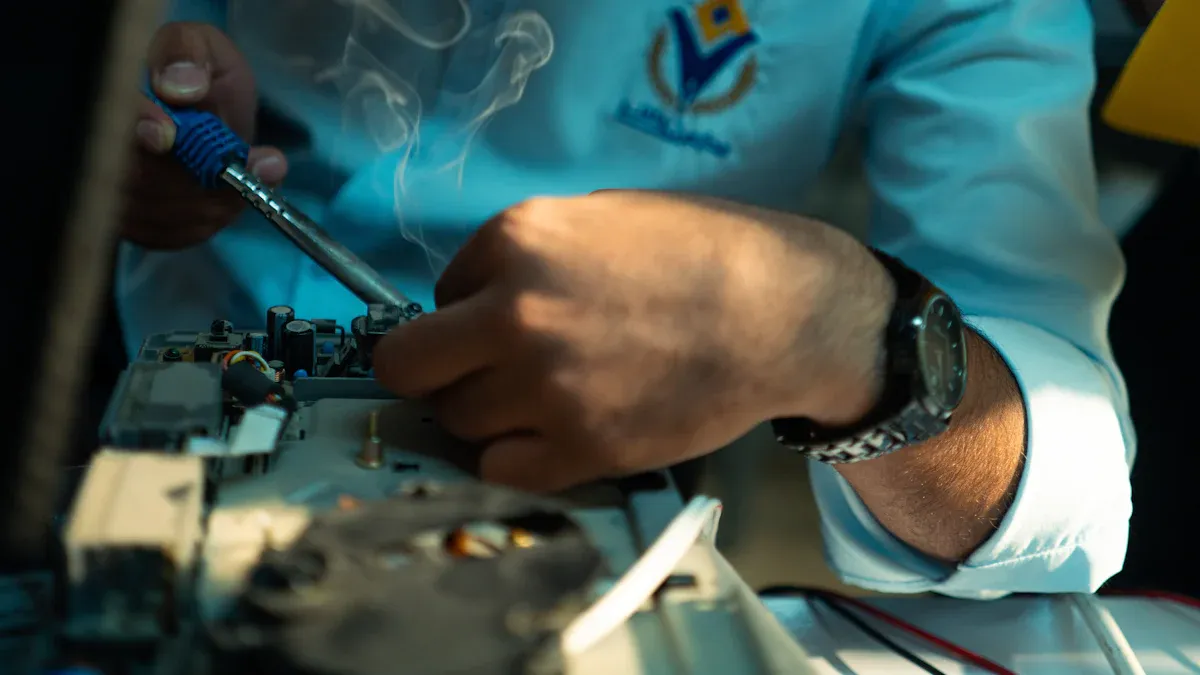
Основни кораци процеса умакања
Прво припремите своје делове и штампану плочу. Пајалица вам помаже да сваки корак обавите исправно. Ево једноставног редоследа који треба да пратите:
Компонентно седење: Ставите све делове на исправна места на штампаној плочи.
Лемљење: Уроните плочу у растопљени калај уз помоћ машине. Морате пажљиво пратити топлоту и време.
Након лемљења: исеците ноге на исту висину и очистите вишак флукса.
Можете добити боље резултате ако прво проверите прву плочу, сортирате своје делове и уверите се да све одговара вашим упутствима.
Кључне компоненте и функције
Машина за лемљење има много важних делова који помажу да процес утапања добро функционише. Сваки део утиче на кретање лемила и чврстоћу спојева. Ево табеле која приказује најважније делове и њихова најбоља подешавања:
Компонента | Ниво важности | Оптимално подешавање |
|---|---|---|
Температура предгревања | Високо | 170°C |
Телесна температура | Високо | 250°C |
Процес хлађења | Високо | Контролисан |
Прегревање припрема штампану плочу за лемљење. Права температура помаже лему да се глатко креће. Правилно хлађење спречава ломљење спојева.
Карактеристике S&M селективне таласасте заваривања
Селективна машина за таласно лемљење компаније S&M користи нову технологију за утапање. Она користи млазнице или мале таласе да би поставила калај само тамо где желите. Ово спречава оштећење осетљивих делова и значи да вам није потребно маскирање.
Машине за селективно лемљење користе пажљиву контролу да би боље управљале топлотом. Добијате мање грешака и чвршће спојеве.
То Серија SM-LⅡ soldering machine is special because it gives you exact control, automation, and smart checks. You can pick your own solder paths and see feedback right away. This helps you work with many kinds of PCBs and keep your soldering steady.
Temperature control and thermal profiling
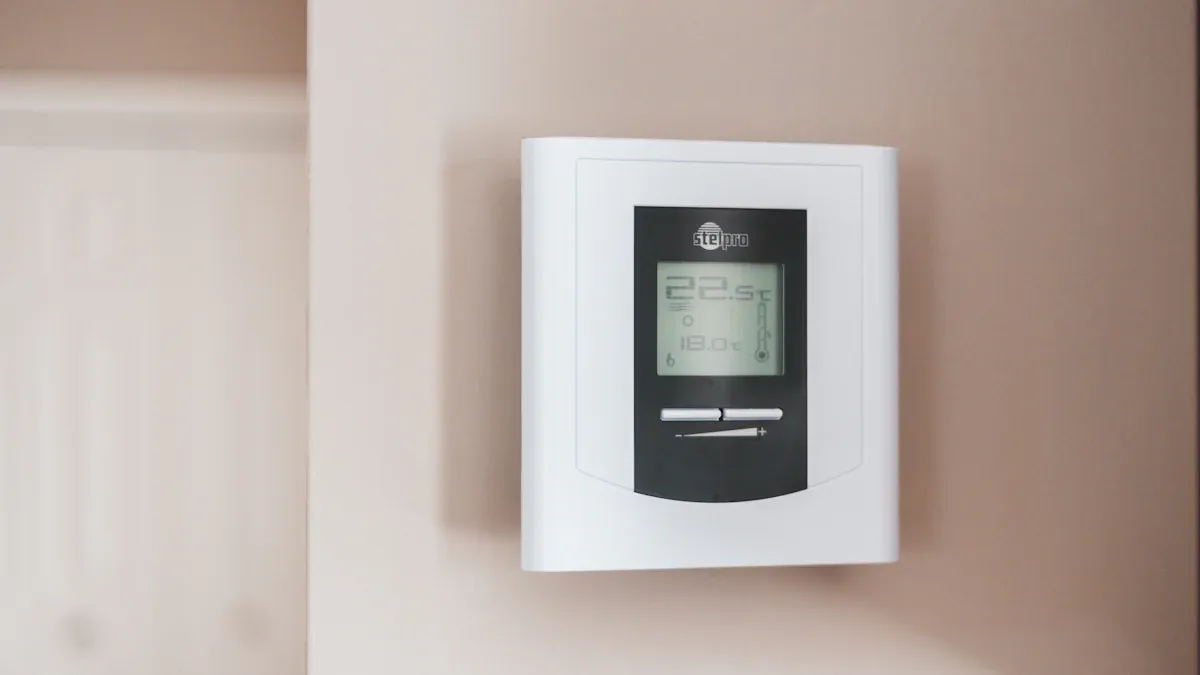
Importance of temperature in soldering
When you use a dip soldering machine, you must watch the temperature closely. Temperature changes how the solder moves and how strong the joints are. If the temperature is too low, the solder will not melt right. If it is too high, the PCB or parts can get hurt. Controlling temperature well helps you stop problems and keeps your work safe.
You need to check the temperature at every step. Preheating gets the board ready for solder. The right heat during soldering helps the solder stick to the metal pads. Cooling at the right temperature keeps the joints strong. Temperature profiling lets you see these changes and make sure each step works.
How thermal profiling affects solder quality
Thermal profiling means you measure and control temperature at different times. You use it to make sure the solder melts and cools when it should. If you do not follow the right thermal profile, you can get problems. Look at the table below to see how temperature mistakes cause soldering problems:
Soldering Defect | Cause of Defect |
|---|---|
Тоубстoнинг | Caused by an imbalance in wetting forces due to significant temperature differential (ΔT) during reflow. |
Хладни лемнени спојеви | Result from insufficient heat, either due to low peak temperature or inadequate Time Above Liquidus (TAL). |
Overheated Assemblies | Indicated by charred sections of the PCB or damaged components due to excessive heat exposure. |
You can stop these problems if you use good thermal profiling. You need to adjust ramp-up, soak, and cool-down steps. This helps you stop thermal stress and keeps solder joints strong.
Making careful thermal profiles helps stop big temperature changes on the PCB.
Adjusting ramp-up, soak, and cool-down steps can help stop thermal stress and tombstoning.
When you use temperature profiling, you can see how the heat changes during soldering. You can change settings to keep the solder quality good. You can also use a thermal profiling system to save and check temperature data. This helps you find problems early and fix them before they get worse.
Tip: Always check your temperature profile before starting a new batch. This helps you keep solder joints strong and avoid problems.
S&M intelligent monitoring system
S&M’s selective wave soldering machines give you smart tools for temperature control and thermal profiling. The SM-LⅡ Series uses an intelligent monitoring system that checks temperature, solder flow, and other important things. You get updates right away, so you can change settings fast.
The intelligent monitoring system saves the temperature at every step. You get alerts if the temperature goes out of the safe range. You can use the automatic recipe tool to save your best temperature profiles. This makes it easy to do the same good work again and keep solder quality high.
You can trust S&M’s thermal profiling system to keep your process steady. The system helps you stop problems by keeping the temperature even. You get strong solder joints and make fewer mistakes. You can count on the machine to help you meet high standards in places like aerospace, cars, and medical devices.
Note: S&M’s intelligent monitoring system helps you keep temperature control easy and good. You spend less time fixing problems and more time making good products.
Solder quality and defect prevention
Relationship between thermal profile and joint reliability
You need to watch the thermal profile during soldering. The thermal profile shows how heat changes over time. If you control the heat well, you get strong solder joints. Each joint needs the right amount of heat for the right dwell time. If you rush the process, the solder may not flow well. If you wait too long, you can damage the joint or the board.
A good thermal profile helps you avoid weak solder joints. You want the solder to melt and cover the joint fully. The right dwell time lets the solder stick to the metal pads and leads. If you keep the temperature steady, you get better quality. You also stop problems like cold solder joints and cracks.
You can use S&M selective wave soldering machines to set the best thermal profile. These machines let you control the heat and dwell time for each joint. You can save your settings and use them again. This helps you keep the solder joint quality high every time.
Tip: Always check your thermal profile before you start. This helps you get strong solder joints and better quality.
Common soldering defects in the dipping process
You may see some defects if you do not control the soldering process. Here are some common problems:
Cold solder joints: These happen when the solder does not melt enough. You get weak joints that break easily.
Tombstoning: This defect shows up when one end of a part lifts off the pad. It happens if the heat is not even.
Bridging: Solder connects two joints that should stay apart. This can cause short circuits.
Voids: Air bubbles or gaps inside the solder joint. These make the joint weak.
Overheated joints: Too much heat can burn the board or the joint. You lose quality and may damage the part.
You can stop these defects by watching the dwell time and temperature. If you use the right settings, you get better solder joints. S&M selective wave soldering machines help you avoid these problems. The machines let you set the dwell time and heat for each joint. You get alerts if something goes wrong.
Best practices with S&M selective wave soldering
You can follow best practices to improve solder quality and prevent defects. S&M selective wave soldering machines give you tools to help with this. Here is a table with some best practices and what they mean:
Опис | |
|---|---|
Incoming Inspection | Check parts before soldering. Use dip testing for parts that look dirty or oxidized. |
Thermal Relief | Add thermal relief to big copper areas. This helps the solder flow and cover the joint. |
Flux Optimization | Use a Fluxometer to check how much flux you use. Good flux helps the solder stick to the joint. |
Moisture Control | Seal boards and bake them if you wait more than 72 hours after heating. |
Lead Length Specification | Make sure leads are long enough for heat transfer but not too long. |
Connector Orientation | Turn big connectors so they face the wave. This stops bridging. |
Tool Utilization | Use tools like Fluxometer and Waverider to check for good solder flow and joint quality. |
You can also use these tips:
Preheat slowly to stop thermal shock. Try a ramp rate of 2-3°C per second.
Hold parts in place with glue or good insertion before soldering.
Use enough flux to help the solder wet the pads and leads.
Set the solder wave angle to 7-10 degrees. This helps the solder cover the joint without hurting the part.
If you follow these steps, you get better solder joints and higher quality. S&M selective wave soldering machines let you save your settings. You can use the automatic recipe function to keep your process the same every time. The intelligent monitoring system checks the dwell time, temperature, and solder flow. You get alerts if something changes. This helps you keep the solder joint quality high.
Note: Good machine settings and careful thermal profiling help you stop defects. You get strong solder joints and better quality in every batch.
Practical tips for optimal dipping process
Adjusting soldering machine parameters
You can get better dipping results by changing machine settings. First, check the temperature at every step. If the temperature is too low, the solder might not melt right. This can make weak joints or cause skips. If the temperature is too high, the flux can burn. You might see solder balls form. Always keep parts safe by using the right temperature. Changing the thermal profile helps you stop damage and keeps joints strong. Controlling temperature gives you more ways to improve your process. When the temperature stays steady, you get better soldering. You also make more good boards because you make fewer mistakes.
Set the preheat and solder bath temperatures with care.
Watch for changes in how the solder moves and looks.
Use the recipe tool to save your best settings for each job.
Maintenance for consistent temperature control
Regular maintenance helps your dipping process stay steady. Clean and check your soldering machine often. This stops problems and keeps the temperature even. Check the preheat and solder bath temperatures. Keep the preheat at 160–170°C and the solder bath at 245–265°C. This helps the solder move well and makes strong joints. Let the board cool slowly after dipping to lower stress on the joints.
Maintenance Routine | Details |
|---|---|
Temperature Control | Preheat at 160–170°C; solder bath at 245–265°C for strong joints |
Одржавање опреме | Clean and check machines often |
Soldering Temperature Profiles | Preheat starts the flux; solder bath helps flow; slow cooling lowers stress |
Training operators is important too. Trained workers know how to use the machine and fix problems. Training helps you learn new things and makes soldering better.
Monitoring with S&M systems
You can use S&M’s smart monitoring systems to make dipping easier. Real-time monitoring helps you find problems early and fix them. Automated testing stops problems before they happen. Lean Six Sigma ideas help you waste less and make better boards. Smart labor management helps you fix problems fast.
Method/Technology | Contribution to Process Optimization and Defect Reduction |
|---|---|
Real-time Monitoring Systems | Find problems early and keep improving |
Automated Testing | Stops problems by catching them early |
Lean Six Sigma Principles | Wastes less and makes quality better |
Supply Chain Management | Uses materials well and lowers defects |
Smart Labor Management | Fixes problems faster |
S&M’s recipe tools help you keep the best soldering conditions. The machine controls temperature and other things. This stops solder from pulling away and keeps the process steady. Smart monitoring also lowers the cost to keep machines working. Predictive maintenance and real-time checks mean less downtime and longer part life. You get fewer problems, less waste, and lower costs.
Tip: Use S&M’s recipe and monitoring tools to keep your dipping process steady and working well. This helps you get good soldering and strong joints every time.
You can get good solder joints if you know how dip soldering machines work. You also need to control the temperature and thermal profile. S&M’s selective wave soldering machines help you be exact and reliable. This helps you make fewer mistakes and meet rules in the industry.
Some important things for success are:
Use good materials
Set the right process steps
Check and adjust your equipment often
Teach workers how to use the machines
Look at each joint closely
If you use smart machines and follow good steps, you make more boards and spend less money. S&M’s smart systems help you make strong boards with no mistakes every time.
Често постављана питања
What is thermal profiling in dip soldering?
Thermal profiling means you watch how the temperature changes. You do this during the dip soldering process. This helps you control the heat better. It also makes pcb assembly quality higher. If you use good profiling, you stop defects. You also keep solder joints strong.
How does thermal management affect pcb assembly?
Thermal management means you control how heat moves. This protects the parts on the board. Good thermal management keeps solder reflow even. It also stops parts from getting too hot. You get better results if you follow the right ramp-soak-spike or ramp-to-spike profile.
Why do you need to monitor soldering temperatures?
You check the temperature to make sure soldering works right. If you miss the right heat, joints can be weak. Watching the temperature helps you keep the thermal profile steady. This stops problems in pcb assembly.
What are the benefits of using S&M selective wave soldering machines?
These machines give you exact thermal control. They also have smart tools for profiling. The machines help you set the best steps for pcb assembly. You can save your favorite recipes. You also use intelligent monitoring to keep solder reflow the same.
How do you improve solder quality with thermal profiling practices?
You use thermal profiling to set the best process for each job. You change the heat and timing to fit your pcb assembly. This helps you stop defects. You also get strong solder joints every time.