
Yayınlandı: 17 September 2026
Okuma süresi: 18 minutes
If someone told you wave soldering was a dying technology, you might want to check the numbers first. The global wave solder equipment market is projected to reach USD 3.1 billion by 2034, up from USD 1.8 billion in 2025. That’s steady growth, not decline. So what’s going on here?
Thing is, wave soldering machines aren’t going anywhere. They’re actually getting more important, especially as 2026 brings stricter environmental rules and higher quality demands. The EU’s updated RoHS exemption timelines mean manufacturers have to move faster toward lead-free processes. SAC305 and SAC405 solders now run at temperatures 30 to 40 degrees Celsius higher than old tin-lead blends. That changes everything about how you set up and run your equipment.
About 72% of electronics manufacturers still use wave soldering for most of their through-hole assemblies. If you’re making industrial controls, automotive electronics, power supplies, or telecom equipment, you probably still need this process. It handles mixed-technology boards better than most alternatives, and for high-volume production, the economics are hard to beat.
This guide walks you through everything you need to know. We’ll look at how wave soldering actually works, break down the different machine types, and dig into real pricing factors. Plus, I’ll share a structured approach to equipment selection that works whether you’re buying your first solder wave machine or upgrading a full production line.
By the time you’re done, you’ll know exactly what questions to ask vendors, what specs actually matter, and where hidden costs tend to show up.
Jace Liu is a product specialist at S&M Co. Ltd. (Shenzhen Chuxin Electronic Equipment Co., Ltd.), focusing on SMT production line solutions including wave soldering systems for high-volume electronics manufacturing. With hands-on experience supporting manufacturers in the consumer electronics and semiconductor sectors, Jace provides practical insights into equipment selection and process optimization for production environments.
About the Author
Jace Liu works as a product specialist at S&M Co. Ltd., also known as Shenzhen Chuxin Electronic Equipment Co., Ltd. His work centers on SMT production line solutions, with a strong focus on wave soldering systems built for high-volume electronics manufacturing.
Jace has spent years helping manufacturers in consumer electronics and semiconductor sectors get the most from their soldering equipment. He writes from real experience, not just product specs. His goal is to cut through the marketing noise and give production teams the practical guidance they actually need to make better equipment decisions and run more efficient lines.
What Is Wave Soldering? Understanding the Fundamentals
At its simplest, wave soldering works like this: molten solder gets pumped upward to form a controlled wave, and your PCB rides across the top on a conveyor. Component leads dip through the wave as the board passes, and that’s when the solder bonds to the metal. One pass, lots of joints. The process handles multiple connections at once, which is why it’s so efficient for high-volume through-hole production.
The actual machine houses four distinct zones that run in sequence. First, the board gets a coating of flux applied either spray or foam style. Flux cleans oxides off the metal surfaces and preps them for soldering. Next comes preheating, which does two jobs: it activates the flux chemistry and brings the board up to temperature gradually, so you don’t crack ceramic components with thermal shock.
Then the board hits the solder wave itself. The wave height, shape, and contact time all determine how well the solder fills through-holes and wets the component leads. After that, the board moves into a cooling zone where the solder solidifies and the joints set up properly.
Pro Insight: Why oscillation patterns and solder flow dynamics matter more than tank temperature for achieving consistent joint quality.
Here’s something most vendors won’t tell you straight up. The actual solder temperature in the pot matters less than most people think. What matters more is how the wave moves, its shape, and the contact dynamics. A well-tuned lambda wave with proper oscillation will give you better hole fill and fewer bridges than cranking the temperature up. Too much heat causes other problems like copper dissolution and excessive dross formation.
Modern wave soldering systems also include process monitoring features. Real-time temperature tracking, conveyor speed control, and solder level sensing all feed into keeping each board consistent with the last one. This matters especially now that lead-free alloys require tighter process windows than the old tin-lead solders did.
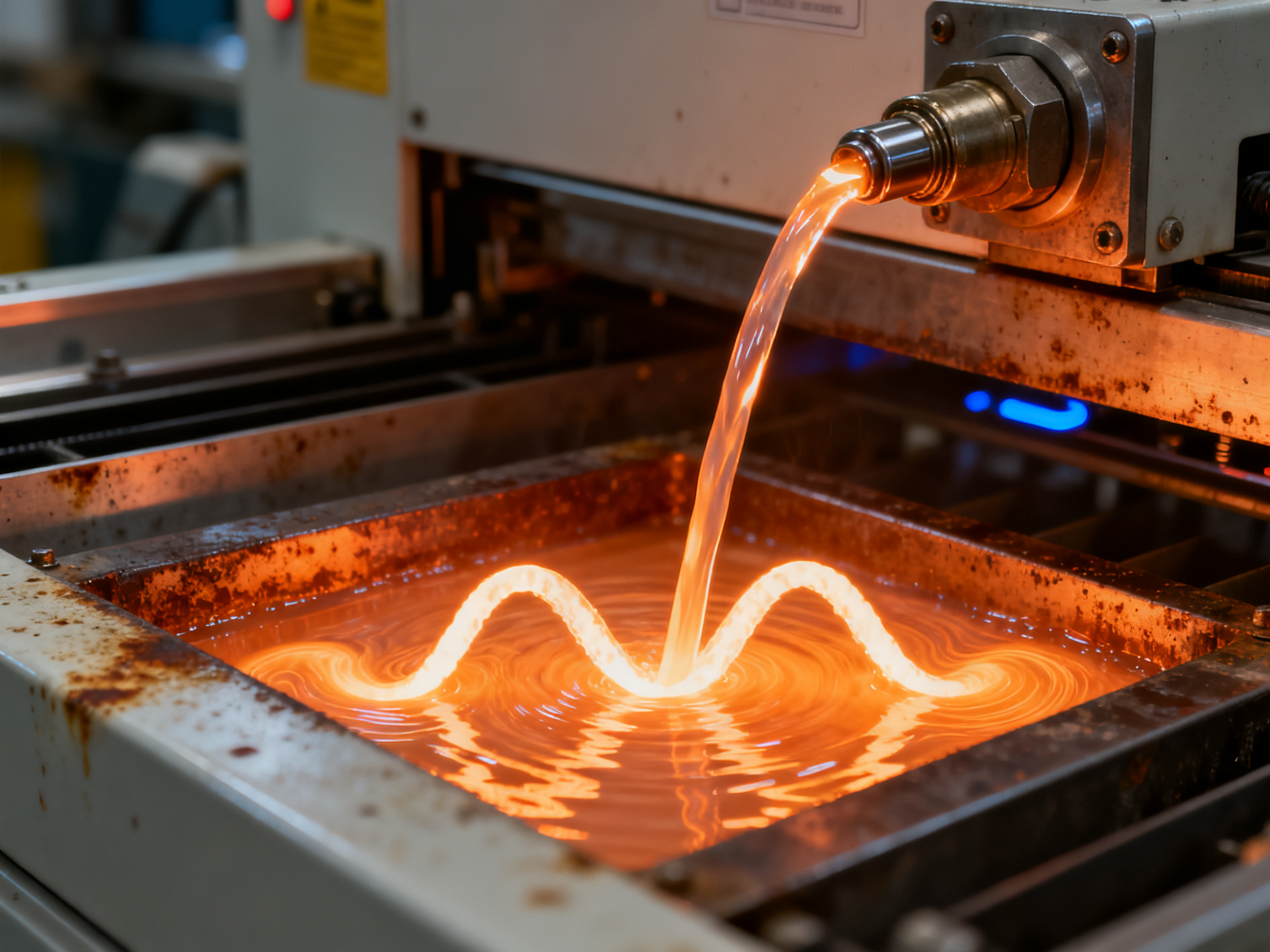
If you’re working with consumer electronics or semiconductor components, you probably already know that mixed-technology boards add another layer of complexity. Components near the wave path can get disturbed or bridged if the setup isn’t dialed in right. We’ve seen production lines waste hours chasing bridging issues that came down to wave height being set a millimeter too high.
How Wave Soldering Works: The Core Process
The magic happens in the solder pot. A pump pushes molten solder upward through a precision-shaped nozzle, and it forms a controlled wave at the surface. This wave is the workhorse of the whole operation.
Two main wave patterns show up in practice. Laminar flow gives you a smooth, even wave front that works best for surface-mount components where you want minimal solder contact. Turbulent flow, which is what most through-hole work needs, creates a more energetic wave that actually pushes into holes and gets good penetration on leads. Most production machines let you tune which mode you’re running, and some newer systems can switch between them on the fly.
The conveyor system is where operators spend a lot of their setup time. Your PCB rides across the wave on a moving belt, and you’re adjusting three things basically: speed, angle, and height. Slower conveyor speeds mean longer contact time with the solder, which helps with thick boards or heavy copper layers that need more heat input. Tilt angle affects how the board enters the wave and how cleanly it exits, and getting this wrong is a fast way to get icicles or bridging defects.
Wave height adjustment is probably the most tactile parameter to work with. Set it too high and you’ll flood components that shouldn’t get soldered. Set it too low and you get cold joints and incomplete hole fill. Most modern machines have motorized height adjustment with digital readouts, but I’ve seen older systems where operators literally feel for the right height by watching the solder splash.
Pro Insight: Why oscillation patterns and solder flow dynamics matter more than tank temperature for achieving consistent joint quality.
Here’s the thing that took me way too long to learn. Everyone talks about solder pot temperature, and yes, it matters. But oscillation patterns and flow dynamics underneath the surface are where the real quality wins happen. A well-tuned lambda wave with proper oscillation will give you better hole fill and fewer bridges than cranking the temperature up by 5 degrees. Too much heat causes other problems anyway, like copper dissolution and dross formation that nobody wants to deal with.
Process variables for lead-free work in 2026 typically run solder temperatures between 255 and 265 degrees Celsius. Contact time at the wave usually lands around 2 to 4 seconds depending on board thickness. Wave height gets dialed in based on component clearance and what your board layout looks like. These aren’t fixed numbers, they’re starting points that get tuned for your specific product.
The whole system needs to work as an integrated process. Flux application, preheat profile, solder temperature, wave characteristics, and cooling all connect. Change one parameter and you’ll probably need to adjust two others to keep quality steady. That’s why setups that look simple on paper often need a few rounds of trial boards before they really sing.
Wave Soldering Machine Types and Configurations
Not every wave soldering machine looks the same or does the same job. Picking the right type comes down to what you’re building, how many boards you need to push through, and what components are sitting on those boards. Here’s the breakdown.
Mini Wave Soldering Machines
Think of mini or desktop wave soldering machines as the entry point. These compact systems fit into smaller production spaces and work well for prototyping, small-batch runs, or shops that mainly do repair and rework.
Most benchtop models handle boards around 200 to 300 millimeters wide. Throughput usually lands somewhere between 10 and 100 boards per hour depending on the model and how you’re running it. The solder pots are smaller, which means less molten metal sitting around, but it also means faster warm-up times and lower energy draw when you’re not running high volume.
These machines make sense for low-volume work where setting up a full production line would be overkill. NPI teams and repair centers often gravitate toward mini wave solder stations because they can dial in processes quickly without tying up big equipment. The trade-off is that you’re working with tighter constraints on board size and you’re not getting the automation features that come with larger systems.
Full-Size Wave Soldering Systems
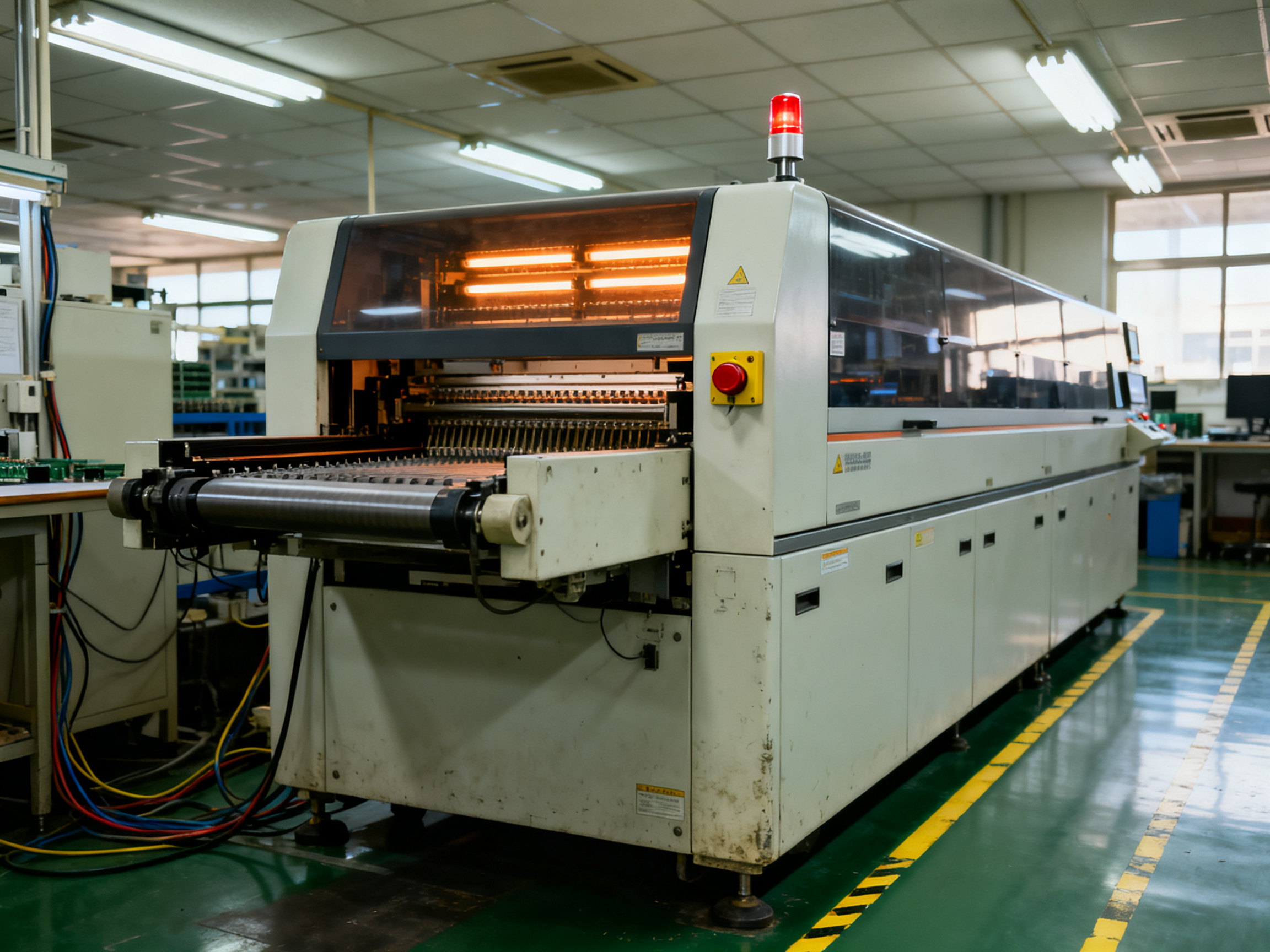
When production volume picks up, full-size wave soldering systems take over. These floor-standing machines handle boards up to 24 inches wide with solder pots that hold significantly more material. That bigger pot means more thermal mass and more consistent temperature across long production runs.
Throughput jumps to hundreds of boards per hour on the high end. You’ve got motorized height adjustment, programmable profiles, real-time monitoring, and often full in-line integration with conveyors and loading systems. For high-volume through-hole production in automotive, industrial controls, or power supply manufacturing, these systems are the workhorses.
Full-size machines also tend to have better process control features. Multiple preheat zones, dual-wave capability, and nitrogen atmosphere options become standard rather than add-ons. The solder pot materials get more serious too, with titanium becoming the norm for lead-free work rather than the exception.
Uzman Tavsiyesi: The critical difference between single-wave and dual-wave systems for different component tolerances
Here’s where things get practical. Single-wave machines use one turbulent wave and they work fine for straightforward through-hole boards with simple layouts. You point them at boards with mostly uniform components and the process hums along. Dual-wave systems add a second, smoother wave after the turbulent one, and this matters for double-sided assemblies or denser boards where bridging and hole fill become concerns. The second wave helps reflow solder that the first wave pushed through and gives it a cleaner exit path. Most production environments running complex boards end up wanting dual-wave capability.
Selective Soldering Machines
Selective soldering machines take a different approach entirely. Instead of running the whole board across a wave, these systems target specific areas. They solder individual pins or groups of pads without touching nearby components.
This matters a lot for mixed-technology boards where some areas have heat-sensitive components sitting right next to through-hole connections. You can’t run those boards through a full wave without risking damage to the delicate parts. Selective systems solve that problem by being precise about where the solder goes.
These machines use a nozzle or mini-wave that only covers the exact area being soldered. Programming takes longer than standard wave setup, but the quality and flexibility advantages are real. Complex boards with fine-pitch components, BGAs, or flexible circuits often end up on selective systems for at least some portion of their soldering.
| Machine Type | Board Capacity | Typical Throughput | Best Application |
|————-|—————-|——————-|——————|
| Mini/Benchtop | 200-300mm | 10-100 boards/hr | Prototyping, repair, small batches |
| Full-Size/Floor | Up to 600mm | 200-600 boards/hr | High-volume through-hole production |
| Selective | Varies by fixture | 100-500 points/hr | Complex mixed-technology boards |
Most manufacturers we work with at Shenzhen Chuxin Electronic Equipment Co., Ltd. start with a clear question: what does our actual production look like? If you’re running thousands of identical boards per shift, full-size dual-wave makes sense. If you’re doing smaller batches with more variety, a selective system or a flexible mini wave solder station might serve you better. Sometimes the right answer is having more than one type in the same facility.
The equipment market in 2026 reflects this diversity. Wave solder equipment is projected to grow from USD 1.8 billion in 2025 toward USD 3.1 billion by 2034, and a lot of that growth is coming from systems that handle more complex, mixed-technology boards. The days of one-size-fits-all wave soldering are fading.
Wave Soldering Applications Across Industries
So where is all this wave soldering actually happening? Let me break it down by industry, because the use cases are pretty different depending on what you’re building.
Consumer Electronics Manufacturing
This is one of the biggest users of wave soldering. Most consumer electronics still need through-hole connections for things like power supplies, large connectors, and bigger components that surface-mount just can’t handle.
When I talk to teams at consumer electronics factories, they usually tell me the same thing. They’ve got mixed boards that need both surface-mount and through-hole work. The through-hole parts go through the wave solder station, and the SMT parts get handled separately in reflow ovens. That hybrid approach keeps showing up everywhere.
Consumer electronics also push a lot of volume. A factory making power adapters or phone charging modules might run thousands of boards through the wave every shift. That changes what kind of equipment they need. High throughput, consistent quality, and minimal downtime matter more than fine-tune flexibility.
The market data backs this up. The wave solder equipment market is projected to grow from USD 1.8 billion in 2025 toward USD 3.1 billion by 2034 Market Growth Reports, and consumer electronics production is a big part of that demand.
Automotive Electronics
Automotive is interesting because quality requirements are sky high, but the volumes are still there to make wave soldering economical.
Control modules, sensors, LED lighting assemblies, and various under-hood electronics all use through-hole connections that need to survive harsh conditions. Vibration, temperature swings, moisture. These joints can’t fail.
The automotive industry also brings standards like IATF 16949 into play, which means documentation, traceability, and process control that goes way beyond what consumer electronics factories might worry about PCBCart. Every solder parameter gets locked down and monitored.
Dual-wave systems tend to show up more in automotive production because those boards often have mixed component configurations and higher density than simple industrial boards. The extra wave helps get consistent hole fill on components with varying lead sizes.
Industrial Controls and Power Electronics
Here’s where wave soldering really shines in 2026. Industrial control systems, power supplies, motor drives, and heavy electrical equipment all need rock-solid through-hole connections, and they often need them at high volume.
These applications typically have less dense boards than consumer or automotive products. Fewer tiny components, more big connectors and terminals. That makes them ideal for single-wave setups running at higher speeds.
Cost efficiency drives a lot of these buying decisions. A factory churning out industrial power supplies doesn’t need the fanciest selective soldering machine on the market. They need a reliable wave solder station that can push through hundreds of boards per hour without drama.
From what I’ve seen, this is where mini wave soldering machines and benchtop units sometimes make sense too. Smaller industrial manufacturers or job shops doing short runs of power electronics might use a compact desktop wave soldering machine for flexibility rather than tying up floor space on a massive production line system.
The common thread across all these industries? Nobody’s throwing out their wave solder equipment. They’re upgrading to handle lead-free alloys, adding process monitoring, and integrating with smarter factory systems. But the core process stays the same, and so does the fundamental value: fast, reliable through-hole connections at a price point that makes sense for volume production.
If you’re trying to figure out which application category fits your situation, it usually comes down to three questions. How complex are your boards? What’s your daily volume? And what quality standards do your customers require? Answer those, and the equipment type usually becomes pretty obvious.
Wave Soldering Machine Pricing: Investment Tiers Explained
Let’s talk money. Wave soldering machine pricing in 2026 spans a wide range, and understanding where your budget fits matters more than chasing the most expensive system on the market.
Entry-Level: $8,000 to $25,000
Mini wave soldering machines and benchtop units land in this range. These systems work well for small-batch production, prototyping, and repair operations. You’re looking at boards around 200 to 300 millimeters wide, with throughput somewhere between 10 and 100 boards per hour depending on the model.
The trade-off is capacity. Smaller solder pots mean less thermal mass, faster warm-up, and lower energy draw when idle. But you also get tighter constraints on board size and fewer automation features. For NPI teams, job shops, or manufacturers with variable through-hole needs, these units make sense. Shenzhen Chuxin Electronic Equipment Co., Ltd. offers compact wave solder stations that fit these requirements without tying up floor space on massive production systems.
Mid-Range: $25,000 to $75,000
This is where production wave soldering systems live. You get motorized height adjustment, programmable profiles, real-time monitoring, and in-line conveyor integration. Throughput jumps to 200 to 600 boards per hour on the high end, and board capacity extends up to 24 inches.
Dual-wave capability becomes standard rather than an upgrade. Multiple preheat zones and nitrogen atmosphere options show up more often. For medium-volume through-hole production in industrial controls, power supplies, or commercial electronics, this tier hits the sweet spot between capability and cost.
High-End: $75,000 to $120,000+
Full automation, large-format boards, and advanced process control define this tier. These systems handle the demands of high-volume automotive, aerospace, and semiconductor manufacturing where downtime costs thousands per hour.
You’re paying for throughput, consistency, and support infrastructure. But here’s the thing, the sticker price is only part of the conversation.
Deneyimlerimize Göre: Hidden costs beyond the machine price tag that impact total cost of ownership
Every manufacturer we work with gets surprised by something. Lead-free processing adds nitrogen consumption, higher energy draw, and accelerated solder pot wear. Titanium pots cost more upfront but last significantly longer than stainless steel in lead-free service, so that upfront investment often pays back over time. Dross handling, flux consumption, and scheduled maintenance all factor in too.
Support contracts vary widely. Some cover only parts; others include on-site response and preventive visits. Make sure you’re comparing total cost of ownership, not just acquisition price.
| Pricing Tier | Price Range | Typical Throughput | Best For |
|————-|————-|——————-|———-|
| Mini/Benchtop | $8,000-$25,000 | 10-100 boards/hr | Prototyping, small batches, repair |
| Mid-Range Production | $25,000-$75,000 | 200-400 boards/hr | Medium-volume industrial, commercial |
| High-End Automated | $75,000-$120,000+ | 400-600+ boards/hr | High-volume automotive, aerospace |
ROI timelines depend heavily on your utilization. A high-volume 24/5 operation supporting a busy production line might see payback in 9 to 14 months. Smaller manufacturers with lower throughput could look at 3 years or more before the numbers turn positive.
The real question isn’t what you can afford to spend. It’s what your production actually needs. Match the investment tier to your volume, complexity, and quality requirements, and the ROI takes care of itself.
Maintenance Best Practices for Wave Soldering Equipment
Keeping your wave soldering machine running well isn’t optional if you want consistent quality and reasonable operating costs. The difference between a well-maintained machine and a neglected one shows up in defect rates, unplanned downtime, and equipment寿命.
Daily Maintenance Tasks
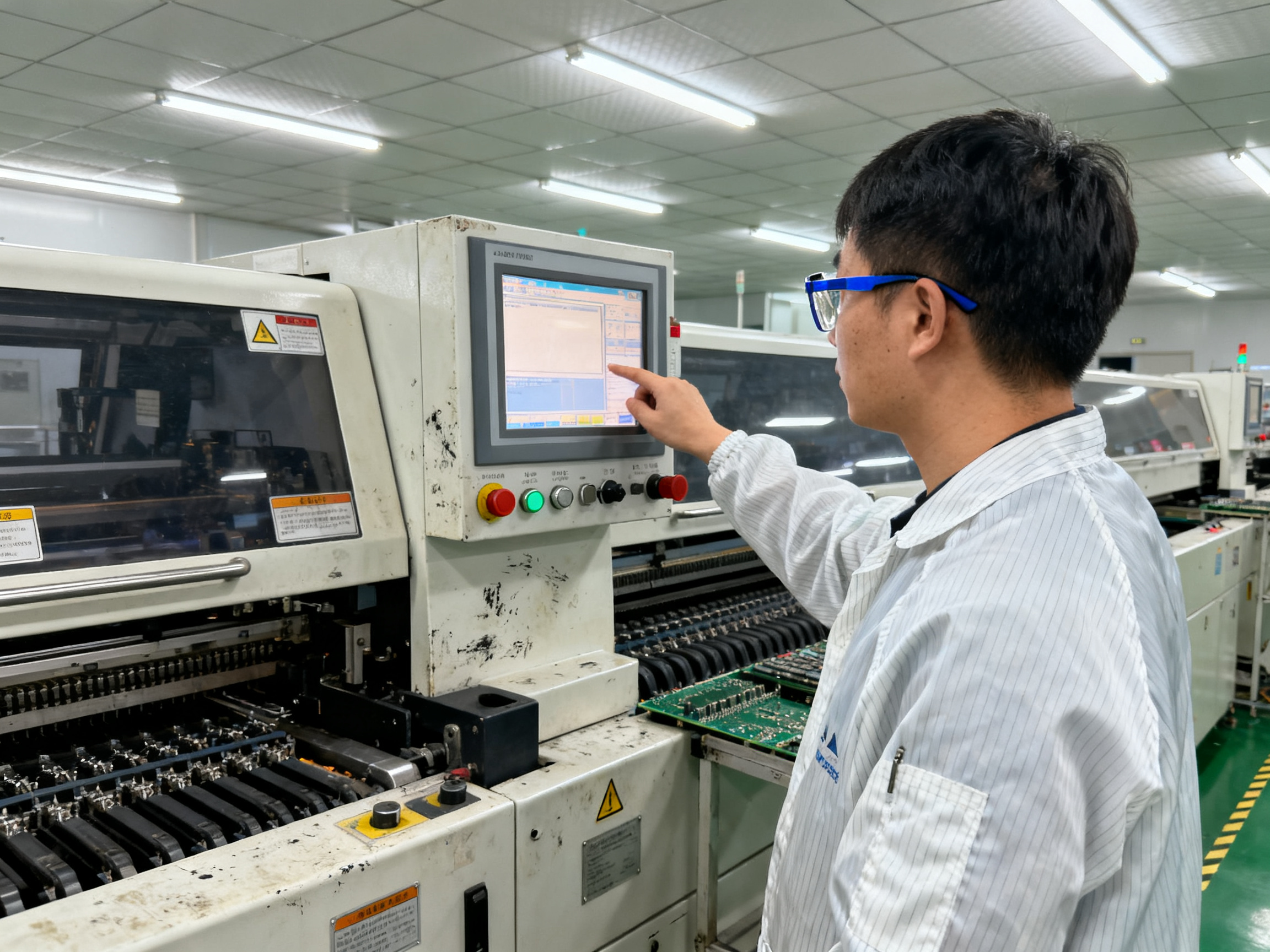
Every operator should start each shift with a few quick checks. Look at the solder surface for excessive dross accumulation. Skim the dross off before it builds up too thick because it interferes with heat transfer and introduces contaminants into your joints. Check the flux spray pattern if your machine uses foam fluxing, and verify that no nozzles are clogged.
Conveyor belt tension matters more than most people realize. A loose belt skips during production, which means boards don’t travel at consistent speed through the wave. That directly impacts contact time and joint quality. Check the belt condition for wear spots or damage that could cause board handling problems.
Weekly Maintenance Tasks
Once a week, spend more time on the solder pot itself. Drain a portion of the solder and check for bottom sludge accumulation. This material comes from flux residues, contaminants, and copper dissolution over time. If you let it build up, it causes unpredictable temperature readings and affects wave characteristics. Clean the pot according to manufacturer specs and replenish with fresh solder as needed.
Inspect all heating elements for signs of corrosion or scaling, especially in lead-free operation where temperatures run higher. Check thermocouple connections and verify calibration against a reference pyrometer at least monthly.
Quarterly and Annual Service
Plan for more thorough service intervals throughout the year. Replace worn conveyor components, service the pump assembly, and inspect electrical connections. The solder pot itself will need replacement eventually, and tracking its condition helps you budget for that expense rather than getting surprised.
Keep detailed maintenance logs. These records help you spot trends, prove to auditors that you’re maintaining equipment properly, and give you data to share with service technicians when problems do arise.
Questions to Ask Your Wave Solder Equipment Vendor
Before you finalize any purchase, make sure you’ve had honest conversations with your vendor about these points.
What’s included in the base price versus what costs extra?
Fixturing, programming support, installation, and training sometimes hide in quotes as add-ons rather than being clearly itemized upfront. Get a complete picture of what you’re actually paying before you compare vendors.
What does your support contract actually cover?
Parts only differs dramatically from parts, labor, and preventive maintenance visits. Ask about response time guarantees and whether they have local service technicians or if everything routes through a distant call center.
Can you connect me with existing customers running similar applications?
References tell you more than any sales pitch ever will. Ask to speak with manufacturers running similar board types and volumes to yours.
What’s the typical lead time from order to installation?
Some equipment takes 12 to 16 weeks to deliver and install. Others stock popular models and can ship within weeks. Factor this into your production planning.
How do you handle software updates and process recipe libraries?
Modern machines run increasingly complex software, and vendors vary widely in how they handle updates, bug fixes, and new feature rollouts. Ask specifically whether recipe libraries for common board types are included.
Conclusion: Making Your Wave Solder Investment Work
Wave soldering remains one of the most cost-effective ways to handle through-hole connections in high-volume electronics production. The technology has matured significantly, and today’s equipment offers process control capabilities that would have seemed impossible a decade ago.
Whether you’re buying your first wave solder machine or upgrading from older equipment, the fundamentals haven’t changed. Match your machine to your actual production needs. Prioritize process control features that let you prove your process is working. Plan for the total cost of ownership rather than just the sticker price. And do the ROI math for your specific situation before you commit.
The market continues growing because manufacturers keep finding ways to get value from wave soldering. Smart equipment selection and proper process setup put you in position to capture that value in your own production environment.
If you have specific questions about wave solder equipment selection for your application, our team at Shenzhen Chuxin Electronic Equipment Co., Ltd. is available to discuss your requirements and help you find the right system for your production needs.
4 Critical Technical Specifications to Evaluate Before Purchase
Before you sign anything, dig into the specs. The numbers on a quotation sheet tell you a lot about what a wave solder station can actually do in your factory. Here are the four areas that matter most.
Solder Pot Capacity and Alloy Compatibility
The solder pot is where everything happens, so start there. Look at heating power, pot capacity in kilograms, and what alloys the system can handle.
For lead-free work in 2026, you’ll want a pot that runs comfortably at 260 to 270 degrees Celsius without struggling. SAC305 and SAC405 both need that higher temperature range compared to old tin-lead blends. Check whether the heating elements can maintain stable temperature during long production runs, especially when you’re pushing high throughput.
Pot capacity matters for thermal mass. Bigger pots stay more consistent but cost more to heat and more to fill with solder. A mini wave soldering machine might hold 30 to 50 kg of solder, while a full production system could hold 150 kg or more. The right size depends on your batch sizes and how long you’re running each shift.
Also verify alloy compatibility. Titanium pots last longer with lead-free solders than stainless steel, but they cost more upfront. If you’re still running some tin-lead work, make sure the machine can handle both without cross-contamination issues.
Preheat Zone Configuration
The preheat section does quiet a bit of work before your board even touches solder. It activates the flux, brings components up to temperature gradually, and prevents thermal shock that cracks ceramic parts.
Most mid-range machines offer 2 to 4 preheat zones. More zones give you finer control over the temperature ramp, which helps with mixed-technology boards that have heat-sensitive components next to heavy thermal loads.
Heating method varies too. Infrared zones heat components directly, while hot air provides more even temperature across the board surface. Some systems combine both approaches. For complex boards with varied component heights, that hybrid setup usually performs better.
Temperature range capabilities matter for lead-free processing. You’ll want preheat zones that can push board surface temperature to 100 to 130 degrees Celsius before wave contact, depending on your alloy and board thickness.
Conveyor System Specifications
Your board rides the conveyor across the solder wave, so these specs directly affect quality.
Speed range determines how fast you can run and directly ties to your throughput targets. Most production systems offer 0.5 to 2.0 meters per minute, with the ability to fine-tune within that range. Slower speeds mean longer contact time, which helps with thick boards or heavy copper layers.
Width capacity needs to match your largest board with room for fixturing if needed. Standard full-size machines handle 300 to 600 millimeters. A desktop wave soldering machine might max out around 250 millimeters, which works for smaller boards but limits what you can run.
Angle adjustment range affects how cleanly boards enter and exit the wave. Most systems offer 3 to 7 degrees of tilt. Getting this wrong causes icicles, bridging, or poor hole fill. Look for machines with precise, repeatable angle settings rather than rough adjustments.
| Specification | Entry-Level | Mid-Range | High-End |
|————–|————-|———–|———-|
| Solder pot capacity | 30-60 kg | 80-150 kg | 150+ kg |
| Preheat zones | 1-2 zones | 2-4 zones | 4-6 zones |
| Conveyor speed | 0.5-1.5 m/min | 0.5-2.0 m/min | 0.3-2.5 m/min |
| Board width | up to 250mm | up to 400mm | up to 600mm |
Load capacity matters more than most buyers expect. Heavy boards with large heat sinks need a conveyor that won’t flex or sag during processing. Check the weight rating and consider whether your products fit comfortably within it.
When you’re evaluating options, match these specifications against your actual production requirements rather than chasing the highest numbers. A selective soldering machine with tight process control might serve you better than a massive industrial soldering system if your boards are complex and your volumes are moderate.
Uzman Tavsiyesi: The critical difference between single-wave and dual-wave systems for different component tolerances
Here’s where things get practical. Single-wave machines use one turbulent wave and they work fine for straightforward through-hole boards with simple layouts. You point them at boards with mostly uniform components and the process hums along. Dual-wave systems add a second, smoother wave after the turbulent one, and this matters for double-sided assemblies or denser boards where bridging and hole fill become concerns. The second wave helps reflow solder that the first wave pushed through and gives it a cleaner exit path. Most production environments running complex boards end up wanting dual-wave capability.
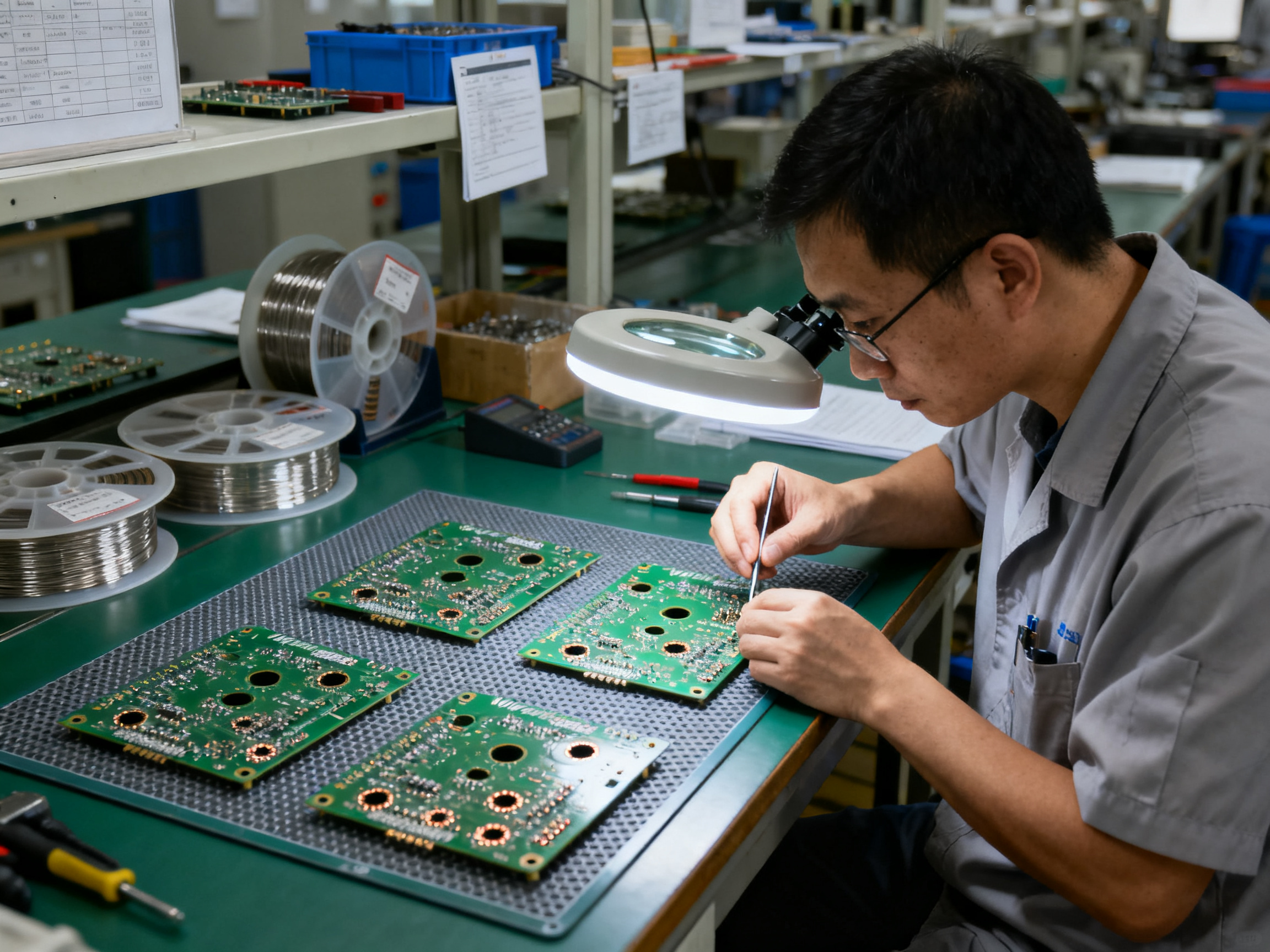
Ask your vendor for sample boards from your product mix during demos. Run them through the machine and check hole fill, bridge rate, and icicle formation. Those test results tell you more than any spec sheet ever will.
Expert Recommendations for Selecting the Right Wave Soldering Equipment
After working with manufacturers across consumer electronics, automotive, and industrial sectors, here’s what actually matters when you’re narrowing down your choices.
First, match the machine to your actual production. A mini wave soldering machine makes sense for prototyping and small batches. You don’t need a full industrial soldering system if you’re running under 100 boards per shift. Overbuying happens more than you’d think, and those extra features often sit unused while you’re paying for the power draw and maintenance anyway.
Second, prioritize process control. In 2026 with lead-free requirements getting stricter, you need parameters you can track and repeat. Look for real-time temperature monitoring, conveyor speed control, and solder level sensing. These features cost more upfront but they reduce defect rates and make debugging easier when something does go wrong.
Third, look at total cost of ownership. The sticker price is just the beginning. Lead-free wave solder operation means higher energy bills, more nitrogen consumption, and faster solder pot wear. A titanium pot costs more to start but lasts significantly longer than stainless steel in lead-free service.
| Production Scenario | Recommended Machine | Key Consideration |
|——————–|——————–|——————–|
| Low volume, prototyping | Mini/Benchtop | Flexibility over throughput |
| Medium volume, industrial | Mid-Range Dual-Wave | Process consistency |
| High volume, automotive | High-End Automated | Speed and traceability |
The real question isn’t which machine has the best specs. It’s which one actually fits your production without a lot of extra capacity you’re never going to use. Ask vendors for sample boards from your product mix during demos. Run them through the machine and check hole fill, bridge rate, and icicle formation. Those test results tell you more than any spec sheet ever will.
Frequently Asked Questions About Wave Soldering Machines
What percentage of manufacturers still use wave soldering in 2026?
About 72% of electronics manufacturers still use wave soldering for most through-hole assemblies. The market is projected to grow from USD 1.8 billion in 2025 to USD 3.1 billion by 2034, so it’s definitely not going anywhere. Automotive, industrial controls, and power electronics drive most of this demand.
What’s the biggest RoHS change affecting wave soldering in 2026?
The EU’s updated exemption timelines mean manufacturers must move faster toward lead-free processes. Standard consumer electronics have no general exemption for ordinary leaded solder, so lead-free is now the default path. SAC305 and SAC405 solders run at temperatures 30 to 40 degrees Celsius higher than old tin-lead blends.
What temperature do I need for lead-free wave soldering?
For SAC305, set your solder pot to 255 to 265 degrees Celsius. Contact time at the wave usually lands around 2 to 4 seconds depending on board thickness. Preheat zones should bring your board surface to about 100 to 130 degrees Celsius before wave contact.
Single wave or dual wave: which do I need?
Go single-wave for simple through-hole boards with uniform components. Choose dual-wave when you’re running complex boards with mixed configurations or double-sided assemblies. The second wave helps get better hole fill and reduces bridging.
How long until I see ROI on a wave solder machine?
High-volume operations running 24/5 might see payback in 9 to 14 months. Smaller shops with lower throughput could look at 3 years or more. It all depends on your utilization and what manual processes you’re replacing.
What’s the best solder pot material for lead-free work?
Titanium lasts the longest. It’s impervious to tin scavenging and holds up way better than stainless steel in lead-free service. If you’re on a budget, coated stainless steel works, but plan on replacing it sooner.
What defects should I watch for most?
Bridging, icicles, and cold joints top the list. Bridging comes from wave height being too high. Icicles happen with poor drainage or wrong conveyor angle. Cold joints mean insufficient heat or dwell time. Get those three parameters right and you’ll cut most of your defects.