


You can make products last longer by watching SMT process parameters like reflow temperature profile, pre-heating, and even heating. Careful control makes things less random and helps them work better. Top companies keep their machines in good shape, use trained workers, and follow strict steps to make things better. S&M gives new SMT solutions and advanced machines to help you make steady and strong products. You will see useful steps to make every part of your SMT process better.
Những điểm chính
Watch the solder paste amount to make strong joints and stop problems. The right amount of paste helps make better products.
Place parts in the correct spot for good accuracy. Even small mistakes can cause big problems like parts not lining up or standing up.
Set the reflow profile right to make solder joints strong and lower problems. Heating and cooling must be done well for good quality.
Make stencils with care to help put on solder paste better. Use smaller openings and check stencils often to make the product better.
Keep the work area steady with the same temperature and humidity. This helps make sure SMT assembly works well every time.
Key SMT Process Parameters
Solder Paste Volume
It is important to watch solder paste volume when printing. This helps you get good assembly quality. Solder paste printing causes most defects in smt assembly. If you use too little paste, joints will be weak. If you use too much, it can cause bridging or misalignment. Studies show balanced solder paste volume makes solder joints stronger. It also helps them last longer. Solder paste inspection lets you find problems early. It helps keep solder paste quality the same for every pcb assembly.
Placement Accuracy
Placement accuracy matters a lot for smt assembly quality. You need to put each part right on its pad. Even small mistakes can cause misalignment or tombstoning. For rectangular chips, keep errors less than half the pad width. For fine-pitch parts, align within 0.05mm. Accurate placement lowers defects. It makes your products more reliable.
Component Type | Recommended Tolerance |
|---|---|
Rectangular Chip | Errors ≤ 50% of pad width |
Fine-Pitch Components | Align within ±0.05mm |
General Components | ±0.05 mm position, ±1 degree rotation |
Reflow Profile
You need to set the reflow profile just right. This helps you get good smt assembly quality. A balanced profile makes solder joints stronger. It also lowers defects like cold solder joints and cracks from heat. Good heating and cooling help form strong intermetallic compounds. Controlling the reflow process can cut defect rates by up to 70%.
Makes solder joints stronger
Lowers defects from bad heating and cooling
Stencil Design
Stencil design changes how solder paste prints and affects smt assembly quality. Use apertures that are 10-20% smaller than the pad. This stops bridging. Trapezoidal apertures help with fine-pitch parts. Laser-cut stencils give better accuracy. Add fiducial marks for alignment. Set squeegee parameters for even paste application. Check stencils often to improve first-pass yield and avoid problems during setup.
Component Handling
Handle parts carefully to keep smt assembly quality high. Misalignment, not enough solder, and tombstoning happen from poor handling or bad machine calibration. Set up feeders the right way. Calibrate machines to stop placement mistakes. Good handling stops defects and helps with quality management in surface mount technology.
Process Environment
Control your process environment to keep smt assembly quality steady. Keep temperature between 20-25°C. Keep humidity between 30%-60%. High vacuum degree removes bubbles and voids in solder joints. Use clean pcb boards and pins to stop contamination. Stable conditions help with reliable printing and assembly.
SMT Process Steps and Reliability
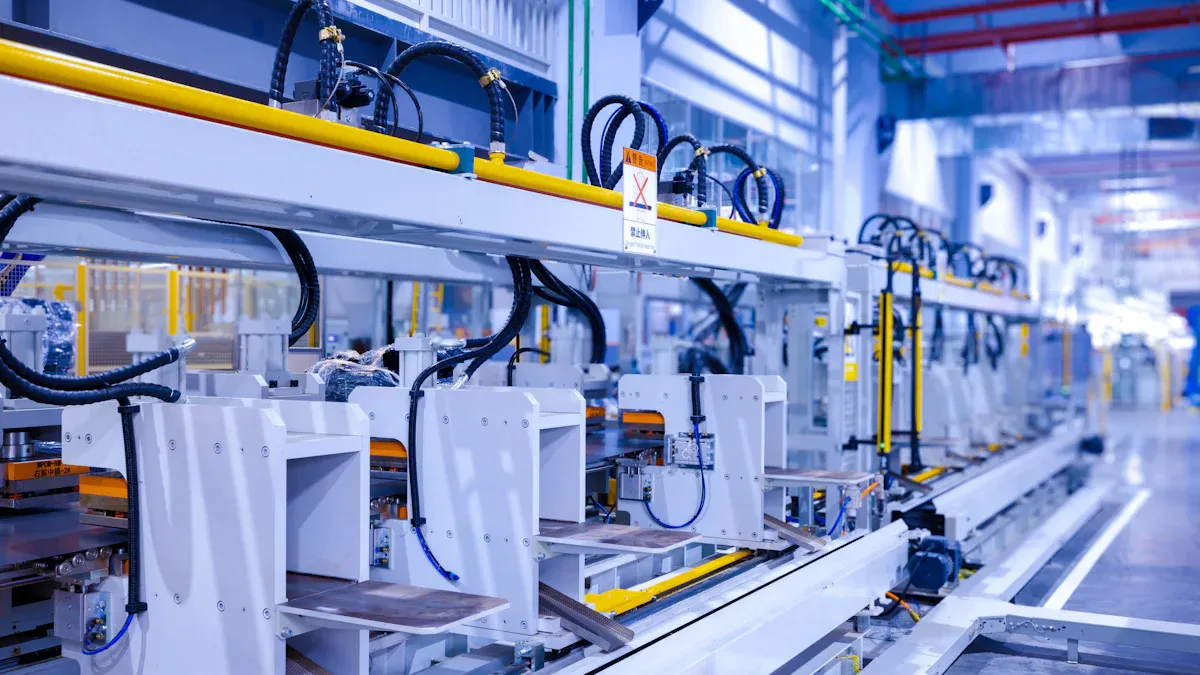
You should know each step in the smt process. This helps you make products work better and last longer. Every part of smt assembly, like solder paste printing and inspection, changes how good the final product is. You can control settings and use new machines to make things better and stop mistakes.
Solder Paste Printing
Solder paste printing is the first step you do by hand in smt assembly. You put solder paste on the pads of the pcb assembly with a stencil. How well you print here matters for the rest of the job. If you use the wrong squeegee pressure or a bad stencil, you can get problems in solder paste printing. These problems include not enough solder, too much solder, or parts not lined up right. These issues make joints weak, cause solder to connect where it shouldn’t, or make open circuits.
Defect Type | Causes | How to Improve Quality |
|---|---|---|
Insufficient Solder Paste | Low squeegee pressure, small stencil apertures | Change pressure, check stencil design |
Excessive Solder Paste | High squeegee pressure, large apertures | Adjust pressure, fix stencil |
Uneven Solder Distribution | Stencil not lined up, surface problems | Line up stencil, clean surfaces |
Solder Bridging | Too much paste, small openings | Control paste amount, change stencil |
Misalignment | Bad stencil position, bent PCB | Line up stencil, check PCB shape |
S&M’s solder paste printers help keep solder paste quality high. These machines let you control pressure, speed, and how things line up. They also watch for problems as you work, so you can fix things fast and keep printing the same way each time. Good solder paste printing means less fixing later and stronger products.
Component Placement
Component placement is the next big step in smt assembly. You must put each part on the solder paste very carefully. Small mistakes in placing parts can cause problems in placement, like tombstoning, solder connecting where it shouldn’t, or parts in the wrong spot. Studies show that 38% of tombstoning comes from placing parts off by more than ±0.1 mm. If you push too hard, you can move solder paste off the pads. If parts are turned or moved sideways, you can get bad solder joints.
S&M’s new placement machines use lasers to help you place parts within ±25 µm.
Strong nozzles and careful movement help keep pressure and angles right.
Good placement means fewer problems and better quality in smt assembly.
Always check your machines and feeders. This keeps placement correct and stops expensive mistakes.
Soldering and Reflow
Soldering, especially reflow, connects parts to the board. You need the right temperature to make strong joints. If you heat unevenly or use the wrong settings, you can get problems in soldering, like tombstoning, solder connecting where it shouldn’t, not enough solder sticking, holes in joints, solder balls, or parts moving.
Defect Type | Causes | Impact on Reliability |
|---|---|---|
Tombstoning | Uneven heating | Open circuits, lost function |
Solder Bridging | Too much paste, pads too close | Short circuits, more fixing needed |
Insufficient Wetting | Dirty pads, bad flux | Weak joints, may break |
Voiding | Gas bubbles, bad handling | Weaker joints, heat problems |
Solder Balling | Paste splatter, wet air | Shorts, looks bad |
Component Shift | Shaking, uneven paste | Bad quality, more fixing |
S&M’s reflow ovens let you control heating and cooling exactly. You can set special settings for different jobs. This helps you stop common problems and makes sure every joint is strong. Good soldering means your products work well and last longer.
Inspection and Feedback
Inspection and feedback are the last steps in the smt process. You need to check every product for problems before it leaves. S&M’s AOI and SPI systems help you find mistakes fast. These tools do more than just spot problems—they help you make the process better and stop future issues.
AOI and SPI find problems early and save money on repairs.
Automated checks help you watch the process and lower mistakes.
SPI helps you control solder paste printing, which is important for strong products.
Feedback from these systems lets you fix things before they hurt quality.
Use inspection results to change your process. This keeps your smt assembly line working well and makes sure every product is good.
Tip: Use a checklist for every smt assembly step. This helps you find mistakes early and keep quality high.
By controlling settings at every step—printing, placing, soldering, and checking—you can make strong, high-quality products. S&M’s machines give you what you need to control the process and stop mistakes.
S&M Equipment for SMT Process Control
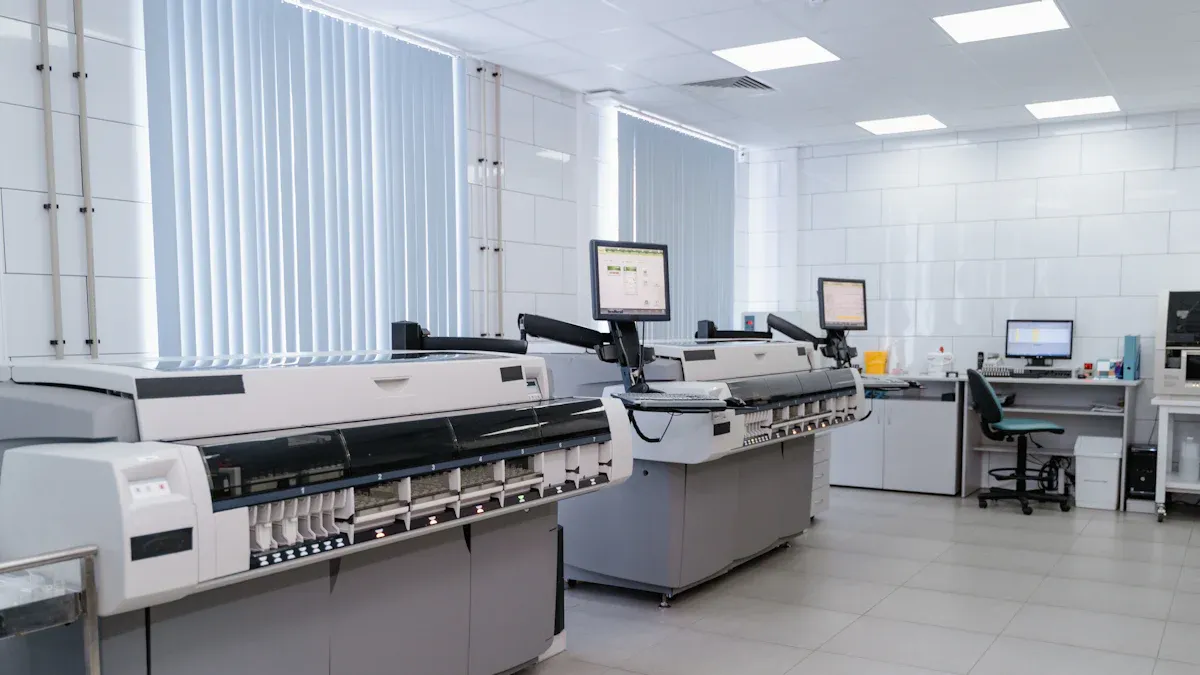
Reflow Ovens and Soldering Machines
You can make smt assembly better with S&M’s reflow ovens and soldering machines. These machines help you control the temperature at every step. This keeps things steady and helps you get good quality. You will see fewer mistakes in your pcb assembly. The table below shows how these features help you get strong and reliable products.
Tính năng | Mô tả |
|---|---|
Advanced Temperature Control | Keeps zone temperature stable to +/- 1°C for precise smt process control. |
Data Logging Capabilities | Lets you track ECD CPK & SPC data for better quality management. |
Energy Management Software | Saves up to 20% energy during smt assembly. |
Programmable Cooling | Cools at rates over 3ºC/sec for strong solder joints. |
Revolutionary Flux Management | Collects flux for easy removal, reducing downtime and improving quality. |
These machines help you keep solder paste quality high. They also make sure every assembly meets your standards.
Conveyors and Handling Solutions
S&M’s conveyors and handling systems keep your parts safe during smt assembly. Gentle handling is important for fragile boards. This helps you keep quality high. These systems stop damage and help your assembly line work well.
Gentle handling keeps fragile boards safe and quality high.
Adjustable pressure fits different parts and stops defects.
Anti-static parts protect sensitive electronics from static.
12-gauge steel rails cover the belt to stop pinching.
Infeed-end backpieces keep molded parts in place during assembly.
You can count on these systems to help manage quality and lower problems in your smt process.
Process Monitoring Tools
You need good process monitoring tools to keep your smt assembly steady. S&M gives you automated systems to watch every step and help you improve quality. These tools give you real-time data so you can fix problems fast.
Automated reflow systems track SPC charts and balance lines.
Real-time thermal monitoring gives you data all the time.
Automated systems lower human mistakes and help quality.
Data logging tracks temperature and humidity for better smt process.
Manufacturing Execution Systems (MES) combine data for better management and traceability.
Real-time monitoring helps you stop wasting products with defects.
Good data collection lets you find errors fast and change settings for better assembly.
Tip: Use process monitoring tools to find problems early and keep your smt assembly line making good products.
Improving SMT Reliability
Parameter Standardization
Bạn có thể make smt assembly better by setting clear rules for each step. Use laser-cut stainless steel stencils that are 0.1 to 0.15 mm thick. This helps you put solder paste on pads the right way. Set your AOI system to warn you if solder joint volume changes more than 20% from the goal. This helps you find problems before they hurt reliability. Make printing and reflow settings the same for every assembly. Write down process rules for your machines and parts. Check and change these settings often. Keep checking and measuring to find mistakes early. These steps help keep your soldering strong and your products reliable.
Operator Training
You need skilled workers to keep smt assembly good. Teach your team how to use SPC methods. Show them how to use control charts and check process ability. These tools help them spot defects early and keep things running well. Use Attribute Agreement Analysis to see how well workers find defects. This lowers mistakes and keeps judging fair. Train your team often because smt technology changes quickly. If you get new workers, train them right away. These steps help your team do every part of the smt process well.
Tip: Have training every month to teach new assembly skills and best ways to work.
Continuous Improvement
You can make products more reliable by always trying to improve. Watch process numbers like yield, defect rate, and cycle time. Use Lean manufacturing to cut waste and make work smoother. Buy automation and machine learning tools to help you decide faster and lower human mistakes. Use Root Cause Analysis when you find a problem. This helps you fix the real cause, not just the signs. Try Six Sigma methods like DMAIC to define, measure, study, improve, and control your process. Ask your team to share ideas and have regular quality meetings.
Here is a checklist to help you keep smt process reliable:
Step | Key Actions |
|---|---|
Component Selection | Pick right sizes, check tolerances |
Solder Paste Printing | Fix stencil, control room, clean surfaces |
Component Placement | Set up machines, use vision checks |
Reflow Soldering | Watch oven heat, care for equipment |
Cleaning & Coating | Choose ways, set parameters, cure parts |
Quality Control & Inspection | Use AOI, X-ray, and test in circuit |
Note: Use this checklist every time you assemble to keep quality high and lower defects.
You can make your smt assembly strong and reliable by following these steps. Focus on clear rules, good training, and always improving to make high-quality products every time.
You can make products work better by watching SMT process parameters. The table below explains why area ratio, transfer efficiency, and deposit consistency are important.
Đơn vị đo lường | Mô tả | Importance for Reliability |
|---|---|---|
Area Ratio (AR) | Stencil aperture opening area to side wall area | AR above 0.66 helps stencil printing work well |
Transfer Efficiency | Solder paste deposit volume over aperture volume | Low AR makes transfer efficiency worse |
Consistency of Deposits | Uniform solder paste deposits across pads | Stops problems like tombstoning |
You get better products when you use best practices. SMT helps make things easier and lets parts move better in clinics. Experts say you should use SMT with other ways for stronger results. Use S&M’s tools and a checklist to keep your process working well.
Câu hỏi thường gặp
What is the most important SMT process parameter for reliability?
You need to watch solder paste volume closely. This affects how strong the joints are and how many defects you get. If you control this well, you can stop many common problems in SMT assembly.
How does temperature control in reflow ovens affect product quality?
Keeping the right temperature helps make strong solder joints. If the temperature is wrong, joints can be weak or have defects. S&M’s reflow ovens keep heating steady and accurate.
Why should you use automated inspection systems?
Automated inspection systems like AOI and SPI help you spot defects early. You can fix problems before customers get the products. These systems also help you make your process better over time.
How often should you train your SMT operators?
You should train your operators once a month. Training often keeps their skills good and helps them learn new things. Well-trained workers make fewer mistakes and help products last longer.