



Julkaistu: 10 July 2026
Lukuaika: 10 minutes
Introduction: Finding Reliable PCB Soldering Near You in 2026
Your medical device stops working mid-surgery. A critical component fails in a power supply on the factory floor. Your startup’s prototype needs assembly by Friday. Or maybe you’re a procurement manager vetting suppliers for next year’s production run. Whatever brought you here, you typed “pcb soldering near me” and now you’re staring at a list of options, wondering which one won’t turn your $2,000 board into scrap.
Here’s what nobody tells you: the closest shop isn’t always the right one. For high-density electronics, the difference between a solid joint and a latent failure comes down to process control, inspection methods, and the equipment sitting on that workbench.
In 2026, lead-free soldering standards, miniaturized BGA and QFN components, and automotive/aerospace reliability requirements mean you can’t just pick whoever is closest. This guide walks through what actually matters when choosing a circuit board repair service, from vetting capabilities to understanding soldering prices to knowing when you need a local rework shop versus a full SMT production line. By the end, you’ll have a practical checklist for finding the right soldering partner without wasting time or money.By Jace Liu. [Author bio not provided in the source inputs. This section will be updated once the biographical details for Jace Liu are supplied. Based on the article topic, the bio should highlight relevant expertise in SMT equipment, PCB assembly, lead-free soldering processes, reflow ovens, wave soldering systems, or electronics manufacturing quality control. Jace Liu appears to focus on helping readers understand circuit board repair services and soldering equipment evaluation.]
What “PCB Soldering Near Me” Really Means in 2026
Let’s be real. When you search “circuit board soldering near me,” you’re probably picturing a guy in a garage fixing your broken laptop. And yeah, that exists. But the soldering world in 2026 is way bigger than that single image.
The searches for PCB repair services break down into a few distinct categories. You’ve got your hand soldering work, where a technician uses a iron to tack down components one by one. Then there’s SMT rework, which handles surface-mount parts like resistors and capacitors. Through-hole repair covers older-style boards with legs poking through holes. Connector replacement is exactly what it sounds like. Prototype assembly gets your new design built fast. BGA reballing is the specialized work of removing a chip, cleaning it up, and putting fresh solder balls underneath. And full circuit board repair means diagnosing what’s broken and fixing multiple issues on one board.
Here’s something most people don’t think about. Sometimes the closest shop isn’t the right shop. If your board needs X-ray inspection to verify BGA joints, lead-free process control that meets RoHS standards, or equipment that costs more than most cars, you might want to look at regional providers who ship. That “near me” search might need to expand to “within shipping distance.”
The other thing to separate is consumer repair from industrial needs. Fixing your kid’s gaming controller? Local shop, probably fine. Working on automotive electronics, medical devices, aerospace equipment, or semiconductor manufacturing? You need industrial-grade capabilities and documentation that proves the work meets standards.
| Service Type | Typical Use Case | Skill Level Needed | Risk Without Right Equipment |
| :— | :— | :— | :— |
| Hand Soldering | Discrete components, touch-up work | Basic to intermediate | Medium |
| SMT Rework | Capacitors, resistors, small ICs | Intermediate to advanced | Medium-High |
| Through-Hole Repair | Vintage boards, power electronics | Intermediate | Low-Medium |
| Connector Replacement | USB ports, battery connectors | Basic | Low |
| Prototype Assembly | New product development | Advanced | High |
| BGA Reballing | Graphics chips, processors, complex ICs | Specialized | Very High |
| Full Board Repair | Multiple failures, diagnostic work | Expert | High |
So before you pick whoever shows up first in your search, ask yourself what kind of work your board actually needs.
When Local Repair Makes Sense vs. Industrial SMT Production
Not every soldering job needs a factory floor.
Local repair shops make sense when you’re dealing with diagnostics, one-off failures, prototypes, connector damage, lifted pads, small component replacement, or low-volume rework where the technician’s skill matters more than equipment automation. If your board has one bad joint, your gaming console needs a new port, or you need to test a prototype design quickly, a skilled local rework technician with a good soldering iron can often deliver faster and cheaper than sending it to a production facility.
Industrial SMT production kicks in when you need repeatability, throughput, traceability, high-density assembly, or integration with standard production line protocols. We’re talking reflow ovens, selective soldering systems, wave soldering machines, or complete SMT production lines. This is where you go when a single bad batch could cost you a contract, or when your design needs to work perfectly across thousands of units.
| Decision Factor | Choose Local Repair | Choose Specialist Lab | Outsource Assembly | Invest in SMT Equipment |
| :— | :— | :— | :— | :— |
| Volume | 1 to 50 units | 50 to 500 units | 500+ units | 1,000+ units |
| Complexity | Simple components | BGA, QFN, mixed tech | High-density SMT | Complex multi-layer |
| Turnaround | Same day to 1 week | 1 to 2 weeks | 3 to 6 weeks | Immediate (in-house) |
| Budget | Under $500 | $500 to $5,000 | Variable per unit | $100k to $500k+ |
| Traceability | Basic documentation | Full documentation | Certificate of Compliance | Full traceability + control |
Here’s the real transition point most people miss. Once you’re regularly doing more than 500 to 1,000 boards per order, or your quality requirements include automotive or medical standards, it starts making sense to evaluate your own SMT equipment investment. That means looking at lead-free reflow ovens, automatic soldering equipment, or even complete production lines. Below that threshold, specialist rework labs and contract manufacturers usually offer better economics without the capital outlay.
Pro Insight: When a prototype or repair job belongs with a local rework technician versus when production-volume work requires reflow ovens, wave soldering systems, selective soldering, or a complete SMT line comes down to one question: Is this job about skill or scale? Local technicians bring judgment and flexibility that production lines simply cannot offer. A production line needs volume and repeatability to justify its setup time and overhead. Send your one-off diagnostic to a skilled local shop. Send your 5,000-unit order to a production facility.
The other thing to consider is risk tolerance. Industrial facilities follow documented processes that meet IPC standards. Local shops vary widely. If the board going into your medical device or automotive application fails, that difference in process control matters enormously. For critical applications, always go industrial.
How to Vet a PCB Soldering or Circuit Board Repair Provider
You’ve narrowed it down to three shops. They all say they can handle your board. But how do you actually know what you’re getting?
Here’s the uncomfortable truth: anyone with a soldering iron can claim they do circuit board repair. The difference between a shop that follows IPC standards and one that winging it comes down to questions you ask before you hand over a $2,000 board.
What to Ask Before You Commit
Start with the basics. What IPC class do they work to? IPC-A-610 has three tiers. Class 1 is general electronics. Class 2 covers dedicated service products. Class 3 is for anything that could kill someone if it fails, like medical devices or automotive safety systems. If your board goes into a pacemaker or an airbag controller, you need Class 3, no exceptions.
Then drill into specifics. Ask about their ESD controls. Proper shops follow standards like ANSI/ESD S20.20. That means wrist straps, static-safe workstations, and humidity control between 30% and 70% RH. If they look confused when you mention ESD, keep shopping.
Component expertise matters too. Are they comfortable with BGA packages? QFN chips? These aren’t your grandfather’s through-hole parts. High-density assemblies require thermal profiling, preheating, and often X-ray inspection to verify joints underneath the chip. A shop that only owns a basic soldering iron probably shouldn’t touch your smartphone board or graphics card.
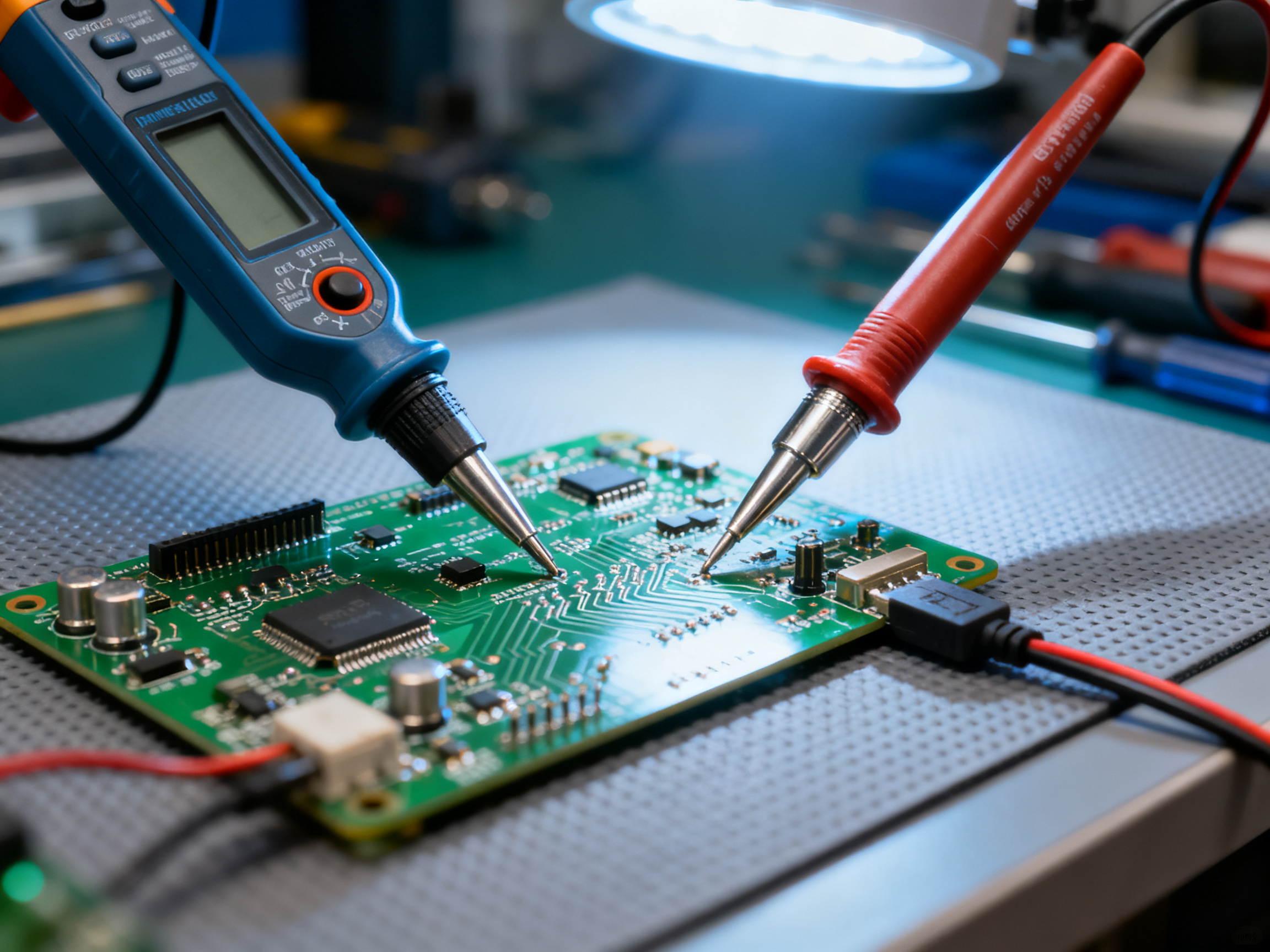
Finally, ask about documentation. Will they provide inspection reports? Before-and-after microscope images? Test procedures? Warranty terms? Proof separates professional shops from hobbyists with good intentions.
The Buyer Checklist
Here are 10 questions to ask any potential soldering partner:
- What IPC class do your technicians hold? (IPC-A-610 certification, specifically)
- Do you follow ESD control standards like ANSI/ESD S20.20?
- What equipment do you use for BGA and QFN rework?
- Do you have X-ray inspection capability for hidden solder joints?
- Can you provide thermal profiling documentation for lead-free processes?
- Do you perform ionic contamination testing after rework?
- What cleaning methods do you use after soldering?
- Will I receive inspection reports and before-and-after photos?
- Do you offer any warranty on rework and repaired boards?
- What’s your experience with my specific component type or application?
Expert Tip: Before handing over expensive, safety-critical, or regulated boards, ask for proof of IPC certification and ESD compliance. Request sample inspection images. A confident shop with real capabilities will have documentation ready. A sketchy operation will stall or deflect.
Don’t Choose on Price Alone
I know budget matters. But picking the cheapest quote on a critical board is like hiring the lowest-bid contractor for your house foundation. The upfront savings won’t matter when you need to explain why your batch failed in the field.
For boards going into regulated industries, always prioritize documented process control over proximity or savings.
Finding and Evaluating Local PCB Soldering Services in 2026
You’ve done your research on pricing. You know what questions to ask. Now comes the practical part: actually finding shops that can handle your work.
Where to Look for Circuit Board Repair Services
The search for “pcb soldering near me” usually starts online, but don’t stop there. Here’s where to actually find capable shops:
Online directories and reviews work for initial research. Google Maps reviews, industry-specific directories like IPC’s member directory, and electronics hobbyist forums can point you toward shops with track records. Look for reviews that mention specific types of work, not just generic praise.
Industry connections often yield better results than random searches. Ask your component suppliers if they work with any rework shops. Reach out to other companies in your supply chain. Referrals within the electronics industry mean someone already trusted that shop with their own work.
Trade shows and conferences let you meet technicians face-to-face. IPC events, productronica, and regional electronics manufacturing shows often have rework specialists exhibiting. You can see their equipment, ask questions on the spot, and get a feel for their capabilities.
Local maker spaces and hackerspaces sometimes have members who do professional-level soldering work on the side. This isn’t for critical applications, but for prototypes or non-critical repairs, you might find skilled individuals at reasonable rates.
Red Flags to Watch For
Not every shop that appears in search results actually knows what they’re doing. Watch for these warning signs:
No mention of IPC standards. Professional shops know what IPC-A-610 is. If their website or conversations never reference it, they may not follow industry quality standards.
Vague equipment descriptions. “We have professional soldering equipment” means nothing. Look for specifics: what reflow systems, what inspection equipment, what rework stations.
No documentation offers. Professional shops expect to provide inspection reports and process documentation. If they seem resistant to the idea of documenting their work, that’s a red flag.
Pricing that’s too low. If a BGA rework quote comes in significantly below market rates, something’s off. Either the shop lacks proper equipment and is cutting corners, or they don’t understand what the job actually requires.
No warranty or return policy. Reputable shops stand behind their work. Vague or absent warranty terms suggest they’re not confident in their own quality.
Building a Relationship with Your Soldering Partner
Once you find a shop that does good work, treat it like any other strategic supplier relationship. Don’t just call them when you’re in a crisis. Get on their radar early.
Send test boards first. Before your critical board needs repair, send something lower-stakes to evaluate their actual work quality. Inspect it thoroughly when it comes back.
Communicate clearly. Provide datasheets, photos of the issue, your IPC class requirements, and any special handling instructions. The more context you give, the better the outcome.
Pay reasonable rates promptly. Shops that do quality work have sustainable pricing. Don’t nickel-and-dime them on legitimate quotes, and don’t expect rush service without rush pricing.
Provide feedback. If a repair works, let them know. If something comes back with issues, document it clearly and give them a chance to make it right. Good shops want to improve, but they need information to do that.
A reliable soldering partner becomes invaluable. When your prototype needs assembly by Friday, when your production line goes down, when you need to verify a BGA rework before it goes into a medical device, you’ll want someone you already trust.
Practical Takeaway: Spend time finding the right shop before you desperately need one. The 30 minutes you invest in vetting providers now will save you hours of panic later when something breaks at the worst possible time.
Equipment Signals: What Professional PCB Soldering Shops Should Use
Here’s a simple test. Next time you’re vetting a soldering shop, ask to see their workbench. Not the pretty parts. The actual workstation where the real work happens.
What you see tells you everything.
The Basics That Separate Real Shops from Hobbyists
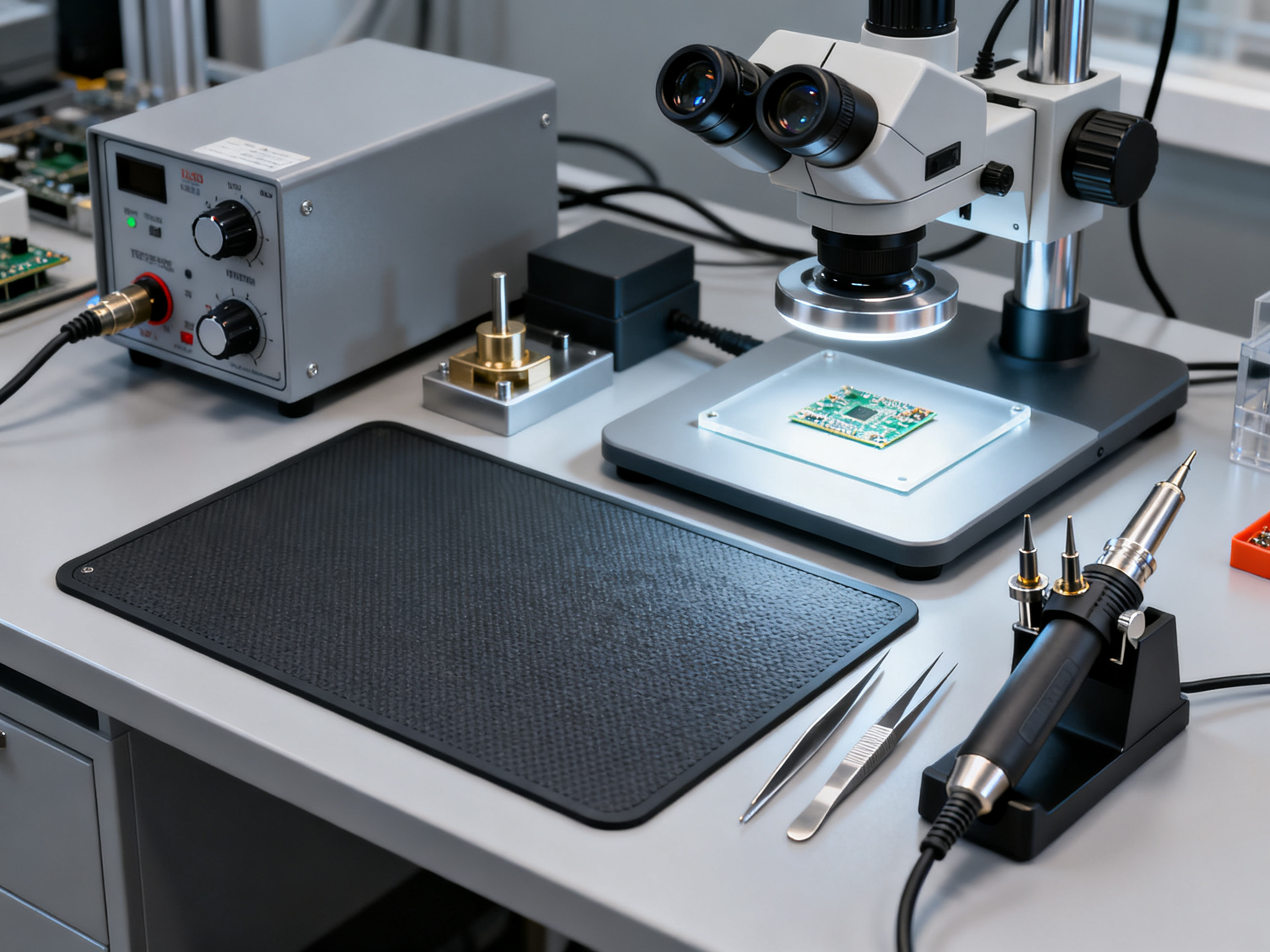
Professional circuit board repair starts with the right foundation. Temperature-controlled soldering stations with digital readout and fast heat recovery form the backbone. We’re talking stations that can hold temperature within a few degrees, because lead-free solder needs higher temperatures than the old stuff, and inconsistency creates cold joints.
A decent preheater matters more than most people realize. It heats the whole board slowly so that when you apply focused heat to one spot, you don’t crack the board or damage traces. Hot-air rework tools let technicians reflow components without cooking everything around them. Microscopes or high-power digital microscopes catch problems your eyes will miss. Fume extraction keeps technicians healthy and keeps flux residue from contaminating boards. ESD-safe workstations protect sensitive components from static discharge.
Cleaning matters too. Ionic residue from flux causes dendritic growth and corrosion down the line. Professional shops use ultrasonic cleaners or appropriate solvents. These aren’t optional extras. They’re the cost of doing work that lasts.
When You Need Advanced Capabilities
BGA chips, QFN packages, and multilayer boards change the equation entirely. Here’s where equipment gets serious.
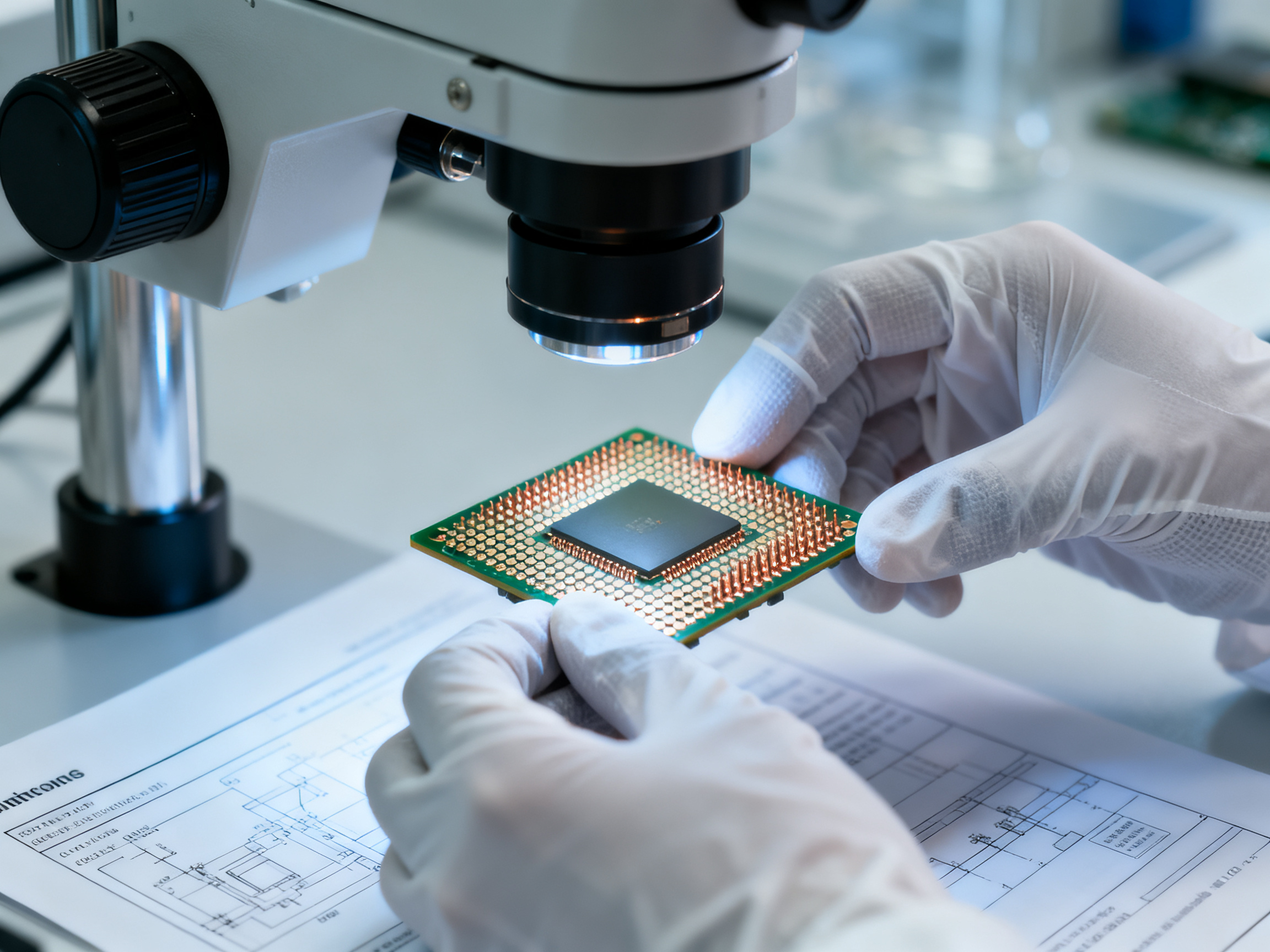
BGA rework stations with optical alignment systems, programmable thermal profiles, and vacuum pickup become essential rather than nice-to-have. X-ray inspection is the only way to verify solder joints underneath BGA chips. Automated Optical Inspection (AOI) systems catch defects at scale. Thermal profiling equipment documents that your lead-free process hit the right temperatures.
For production work, lead-free reflow ovens with multi-zone temperature control ensure consistent results across high-density assemblies. Wave soldering and selective soldering equipment handles through-hole components on mixed-technology boards.
| Capability Level | Essential Equipment | Best For |
| :— | :— | :— |
| Basic Repair | Soldering iron, hot-air gun, multimeter, basic microscope | Simple through-hole, connector replacement |
| Professional Repair | Temperature-controlled station, preheater, stereo microscope, ESD bench, ultrasonic cleaner | SMT rework, BGA rework, prototype assembly |
| Advanced Rework | BGA rework station with optical alignment, X-ray inspection, thermal profiler, AOI | Complex BGA/QFN, medical/automotive boards |
| Production SMT | Reflow oven, wave/selective soldering, full AOI, X-ray, in-circuit testing | Volume production, high-reliability applications |
From Our Experience: Equipment quality directly impacts consistency. We’ve seen shops with basic hot-air guns struggle to repeat results on identical repairs. The difference between a shop that can do BGA rework once versus one that can do it consistently comes down to thermal profiling, preheat control, and inspection. When evaluating soldering equipment or automatic soldering equipment for internal production, prioritize equipment that reduces operator dependency. The best soldering machine sale in the world won’t help if the results depend entirely on operator skill rather than process control.
What This Means for Your Search
When you walk into a shop or request a quote, ask specific questions about equipment. A shop confident in its capabilities will have no problem discussing their reflow profiles, inspection methods, and ESD controls. Vague answers about “professional equipment” should raise flags.
For those evaluating a soldering machine sale for internal production, the same logic applies. Focus on equipment that controls variables, not just equipment that looks impressive on the showroom floor.
Red Flags That a Circuit Board Soldering Service Is Too Risky
Let’s talk about the warning signs that tell you to walk away from a soldering shop before they touch your board. Some shops will take your money and hand back a board that looks fine but fails in three months. Here’s what to watch for.
Red Flags Checklist
Watch out for these signals that a shop might be more trouble than it’s worth:
- No ESD controls in sight. If technicians aren’t wearing wrist straps or working on static-safe benches, your board could already be damaged before they finish soldering.
- No microscope inspection offered. Professional repair requires magnified verification. If a shop says they don’t need one, that’s a problem.
- Vague pricing. A shop that can’t give you specifics about what’s included probably doesn’t have a clear process.
- No process documentation. They should be able to explain how they work and what standards they follow.
- No experience with your component type. BGA chips and QFN packages need specialized skills. Sending these to a shop that only does through-hole work is risky.
- Excessive heat application. A shop that blasts heat without preheating or thermal profiling can crack your board or lift pads.
- No warranty or testing plan. Reputable shops stand behind their work. No warranty means no accountability.
| Red Flag | Potential Consequence |
| :— | :— |
| No ESD controls | Latent component damage, premature failure |
| No microscope inspection | Missed solder bridges, cold joints, debris |
| Vague pricing | Unexpected costs, scope creep, corner-cutting |
| No documentation | No traceability, no accountability |
| Wrong component expertise | Damaged BGA/QFN chips, lifted pads |
| Excessive heat | Pad lifting, board delamination, cracked traces |
| No warranty | You pay twice when the repair fails |
Why Risky Repair Creates Problems Later
Here’s what nobody tells you. A bad repair often passes a quick visual check. Your board goes back into service, works fine for weeks or months, and then fails at the worst possible moment. That’s a latent failure.
Common latent failures from sloppy repair include cold joints that crack under vibration, solder bridges that create shorts when the board heats up, flux residue that causes corrosion over time, and pad lifting from too much heat. These problems cost way more to fix later than paying for quality work upfront.
For boards going into medical devices, automotive systems, or aerospace equipment, don’t take chances with marginal shops. These applications need documented processes, proper inspection, and often formal reliability testing after repair. A general repair shop probably can’t deliver that level of assurance.
Bottom line: if something feels off during your vetting process, trust your gut. The cheapest quote on a critical board is rarely the actual cheapest option.
How Manufacturers Should Decide Between Service, Outsourcing, and Buying Equipment
Making the call between hiring a soldering service, outsourcing to a contract manufacturer, or buying your own equipment comes down to a handful of factors. Volume sits at the top of the list. Board complexity matters too. And then there’s defect rate tolerance, quality targets, labor availability, compliance requirements, and how the new process integrates with your existing production line.
Here’s a practical way to think about it. If you’re running less than 500 boards per order and quality requirements are standard, outsourcing usually wins. You avoid the capital outlay, you get flexibility, and you tap into shops that already have the equipment and know-how.
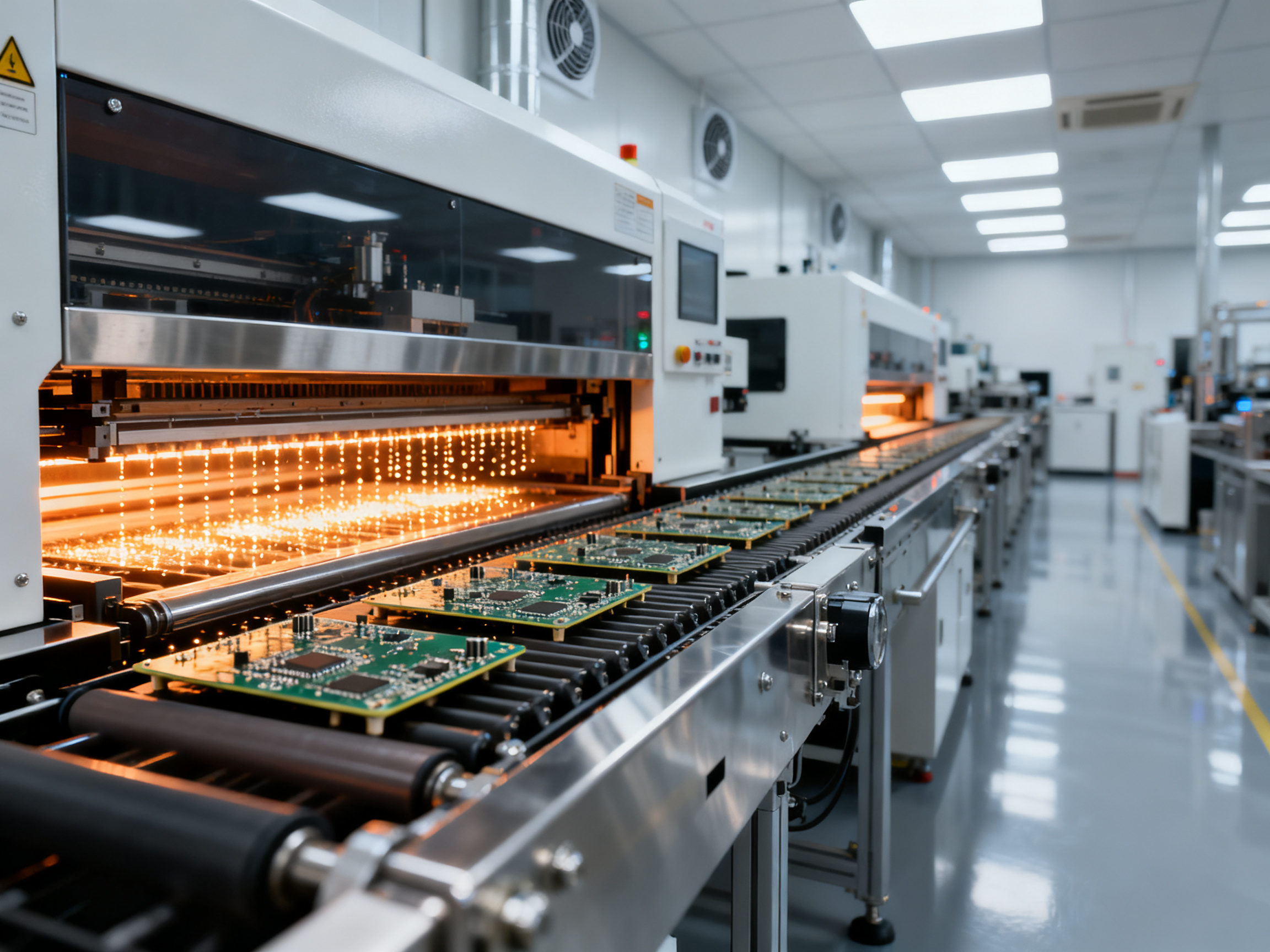
But once your orders climb past that threshold, or your quality bar hits automotive or medical standards, the math changes fast. Buying your own SMT line means you control the process, you own the traceability, and you eliminate markup from a third party. The upfront cost stings. Lead-free reflow ovens, wave soldering machines, and a complete SMT production line can easily run $100,000 to $500,000 or more. But when you’re churning through thousands of boards monthly, the payback period on that investment shrinks considerably.
For manufacturers evaluating equipment in 2026, S&M Co. Ltd. offers lead-free reflow ovens and wave soldering systems designed for high-density assemblies with minimal defects. Their equipment works with standard assembly line protocols, which helps if you’re retrofitting an existing floor rather than building from scratch.
The real question to ask yourself is this: Are you buying equipment to solve a capacity problem, or are you buying it to solve a quality and control problem? If it’s just capacity, outsourcing probably makes more sense. If you need process control, traceability documentation, and the ability to iterate quickly on prototypes or high-mix production runs, owning your equipment changes what you can promise customers.
| Factor | Outsourcing | Buying Equipment |
| :— | :— | :— |
| Upfront Cost | Low | $100k to $500k+ |
| Per-Unit Cost | Higher markup | Lower at scale |
| Defect Control | Dependent on vendor | Full control |
| Compliance Documentation | Requires contract terms | In-house ownership |
| Scalability | Limited by vendor capacity | Scales with your investment |
| Lead Time | 3 to 6 weeks typical | Immediate after setup |
For 2026 manufacturers chasing automotive and aerospace contracts, that compliance documentation piece often tips the scales toward owning your line. Buyers in those sectors want to audit your process, and having your own reflow ovens and soldering equipment makes that audit straightforward rather than awkward.
Decision Checklist: Choosing the Right PCB Soldering Partner
Let’s cut to the chase. You need a decision framework that actually works, whether you’re a maker trying to fix one board or a procurement manager vetting suppliers for next year.
For Individuals and Prototype Teams
- Define your board type. Single-layer, multilayer, or high-density BGA/QFN?
- Identify the failure or need. One component? Multiple issues? New prototype assembly?
- Search locally first, then expand. Check Google Maps, IPC directories, and local maker spaces.
- Verify three things. IPC-A-610 capability, ESD controls, and inspection methods.
- Request a quote with specifics. Share photos, component datasheets, and your IPC class requirement.
- Ask for sample images. A professional shop will happily show you before-and-after microscope shots.
- Start with a low-stakes pilot. Send a less critical board first to test their actual work quality.
For Industrial and Procurement Teams
- Define acceptance criteria upfront. This includes IPC class, inspection methods, functional test requirements, cosmetic standards, and turnaround time.
- Shortlist certified vendors. Look for ISO 9001, AS9100D, or documented IPC certification.
- Conduct floor audits. Visit shops to observe ESD protocols, equipment, and operator training firsthand.
- Request First Article Inspection reports. This validates that vendors can meet your specifications.
- Negotiate documentation terms. Specify what process records, inspection reports, and traceability data you need.
- Run a pilot production run. Validate quality and logistics before committing to volume orders.
From Our Experience: I learned this the hard way when I sent a board out without specifying inspection requirements. The quote came back missing scope for X-ray verification. When I added that detail, the price jumped, but more importantly, I realized the first shop couldn’t do it anyway. Documenting acceptance criteria before asking for quotes would have saved me two days of back-and-forth.
Your Acceptance Criteria Checklist
Before you contact any shop, lock down these basics:
- Required IPC class (1, 2, or 3)
- Inspection method (visual only, AOI, X-ray for BGAs)
- Functional test requirement (yes or no)
- Cosmetic standards (zero defects, minor acceptable defects)
- Turnaround time (standard, rush, same-day)
- Documentation needed (photos, inspection reports, certificates)
- Warranty terms
Getting these straight before you send a single email means faster quotes, fewer surprises, and better outcomes.
Conclusion: Choose Capability Before Convenience
Here’s what this guide comes down to. The best PCB soldering provider isn’t the one closest to your building. It’s the one with the right process controls, the right equipment, and the documentation to prove their work meets your standards.
Your next steps depend on your situation.
If you’re an individual or prototype team looking for local repair: identify your board type and failure mode first, verify IPC-A-610 capability, and request before-and-after photos before approving any work.
If you’re a manufacturer evaluating automated SMT equipment: S&M Co. Ltd. offers lead-free reflow ovens, wave soldering systems, and complete SMT production lines designed for high-density assemblies in semiconductor, military, and consumer electronics applications. Focus on equipment that reduces operator dependency and delivers documented process control.
If you’re in a regulated industry: IPC Class 3 isn’t optional for medical devices, automotive safety systems, or aerospace equipment. Auditing a shop’s ESD controls and inspection methods protects your products and your liability.
The bottom line? Ask potential partners for proof. Inspection photos. Thermal profiles. IPC certification. A shop that can’t show you their process probably doesn’t have one worth seeing.
Capability beats convenience every time. Get the combination right, and you reduce defects, protect your reputation, and keep your products running when they need to.