



Gepubliceerd: 19 May 2026
Leestijd: 12 minutes
Reviewer: Simon Scrapes, Founder
Mastering Reflow Soldering Profiles: An Ultimate Guide
When it comes to achieving perfect solder joints in Surface Mount Technology (SMT), having the right reflow soldering profile is everything. Picture this: you’re producing high-density electronics like smartphones or military systems, then all of a sudden, defects start showing up. Tiny solder bridges. Cracks. Maybe even fried components. That’s where the magic of a proper reflow soldering profile steps in to save the day. It’s not just heat; it’s precision, strategy, and timing all baked into one smooth process.
So, why does this matter? Without an optimal temperature profile, we’re talking costly failures—from weak joints to damaged components. And with industries like consumer electronics and aerospace requiring reliable, high-density assemblies, you can’t afford to cut corners on your soldering process. Trust me, I’ve been there, watching teams troubleshoot for hours when just a few tweaks to the thermal profile could’ve saved the entire batch.
Ready to dive into the nitty-gritty of how reflow soldering profiles work and why they’re essential? Let’s explore.
[Author Name] is an expert in Surface Mount Technology (SMT) processes with extensive experience advising manufacturers on soldering techniques and system integration. Their expertise in optimizing reflow soldering profiles for industries like consumer electronics and aerospace ensures reliable outcomes for high-density assemblies.
Overview of Reflow Soldering Profiles
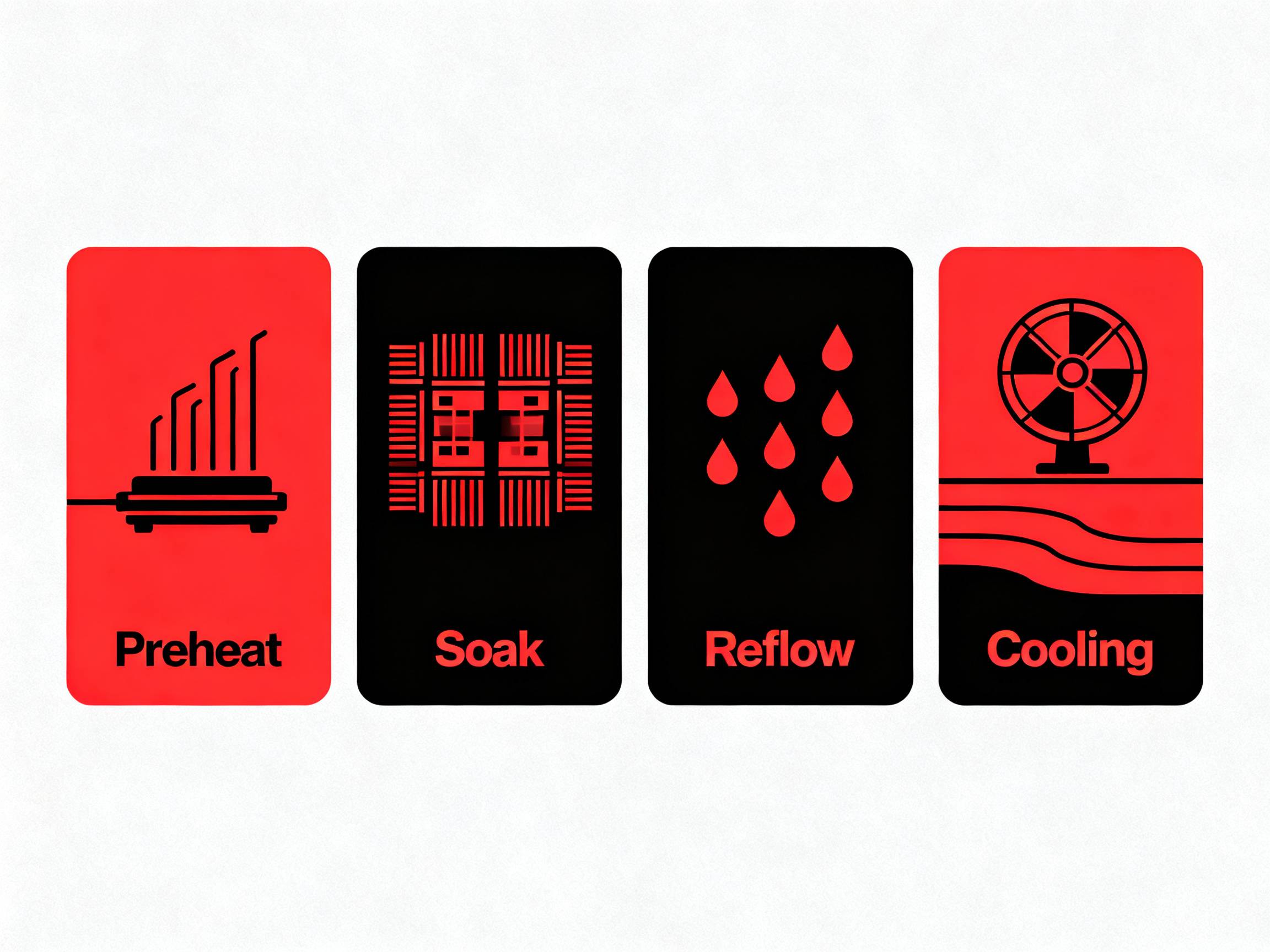
A reflow soldering profile is more than just a temperature curve plotted on a graph. It’s the blueprint you follow to make sure solder joints are formed exactly as they should be, while keeping your components safe. Each phase of the process—preheating, soaking, reflow, and cooling—is dialed in to a specific temperature range and duration. Skip even one step or get it wrong, and you risk turning your assembly into junk.
Waarom het belangrijk is
Here’s the big thing: reflow soldering isn’t just for sticking components to a PCB. It keeps parts functional, maintains dimensional stability, and reduces defects. And that’s a pretty tall order for something so routine in manufacturing.
The profile ensures:
- Good solder wetting and joint quality: Proper heating activates the flux, letting solder flow into every crevice.
- Component safety and durability: Avoid overheating that could fry sensitive parts.
- Defect minimization: No more cracked joints from fast cooling or voids from uneven heating.
From smartphones to aerospace electronics, a good reflow soldering profile keeps production lines humming and final products flawless.
Key Challenges
Now, let’s talk about what happens when you don’t get the profile right.
- Defects Galore: Think solder bridges, tombstoning, or even parts falling off completely.
- Thermal Shock: If the ramp-up or cool-down in the oven is too aggressive, some components can fracture under the stress.
- Wasted Production Time: Every defective PCB needs review, rework, or replacement—which throws off your timelines and costs lots of money.
And that’s just scratching the surface. When production scales move into thousands or millions of units, even a 1% failure rate becomes a headache.
Configuring Preheat and Soak Zones
The first two steps in any thermal profile are preheating and soaking. This part is like the warm-up for your PCBs—they need to be eased into the soldering process to prevent thermal shock and start the flux activation.
Preheat phase starts slow and steady, gradually raising the board’s temperature from its starting point. Too quick? Components might crack. Too slow? The line doesn’t run efficiently. Most preheat settings land somewhere between 2°C and 4°C per second for reliable results.
Then comes the soak zone, which evens out the board’s temperature and keeps the flux active. This step makes sure heat is distributed evenly so that every component reaches the same baseline before hitting the reflow temperature.
Expert Tip: Control thermal gradients during ramp-up by monitoring your oven’s zone settings. Reducing sudden spikes helps you avoid uneven heating across the assembly.
My Hands-On Experience
At one point, I was working with a team assembling high-density PCBs for a smartphone manufacturer. We kept running into tombstoning on small 0402 components. Guess what? The soak zone wasn’t long enough, causing irregular solder paste melting. Extending it by just 10 seconds solved the problem and saved thousands of units from the scrap pile.
Troubleshooting Incomplete Joints and Tombstoning
Let’s face it, troubleshooting solder defects can feel like looking for a needle in a haystack. But it doesn’t have to be a guessing game if you know what to look for.
Identifying Common Defects
- Incomplete Joints: Often caused by insufficient preheat time or soak duration. You’ll notice weak, brittle joints that may crack under stress.
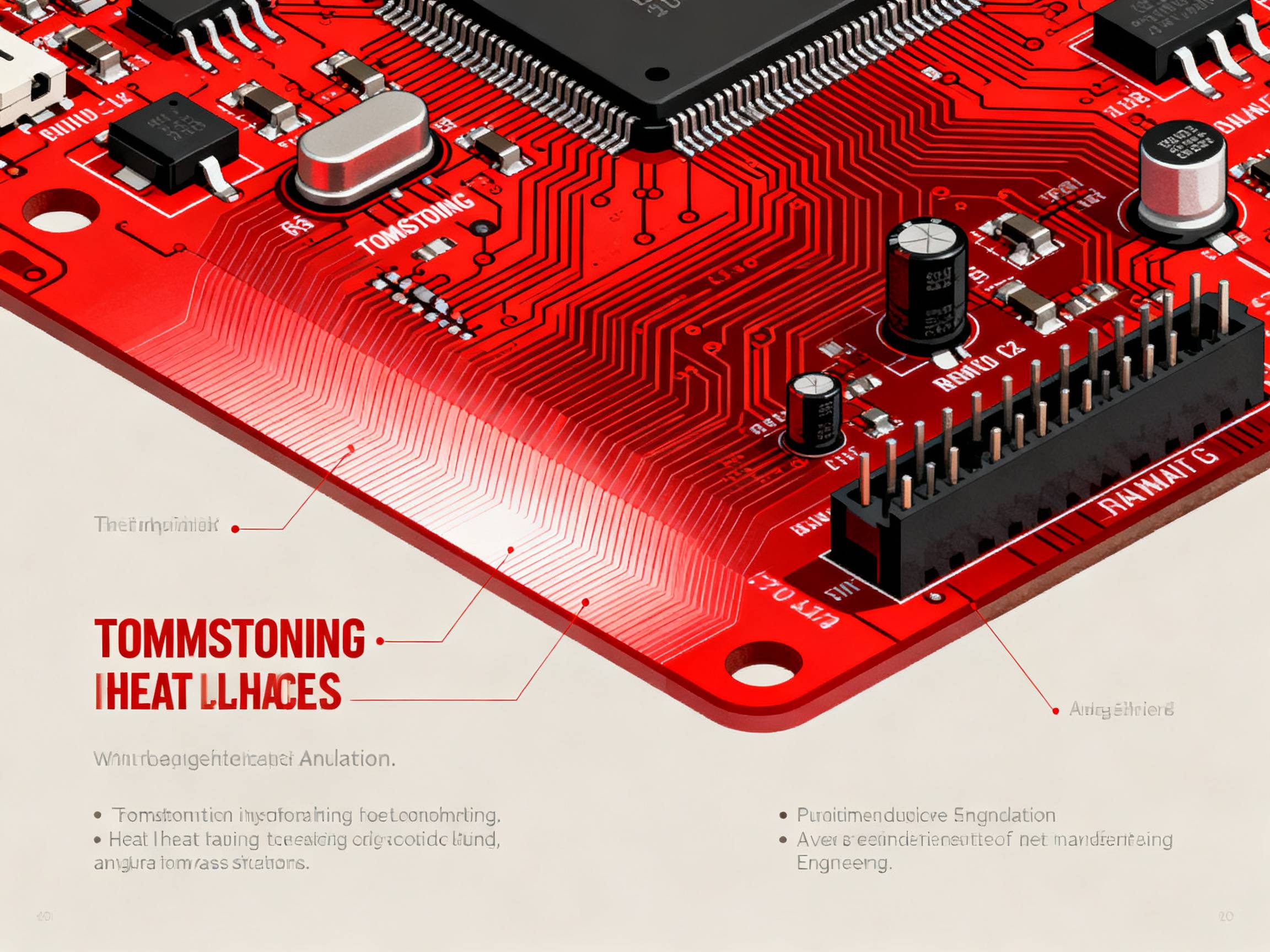
- Tombstoning: This happens when one side of a component heats unevenly, pulling it upright and away from the PCB.
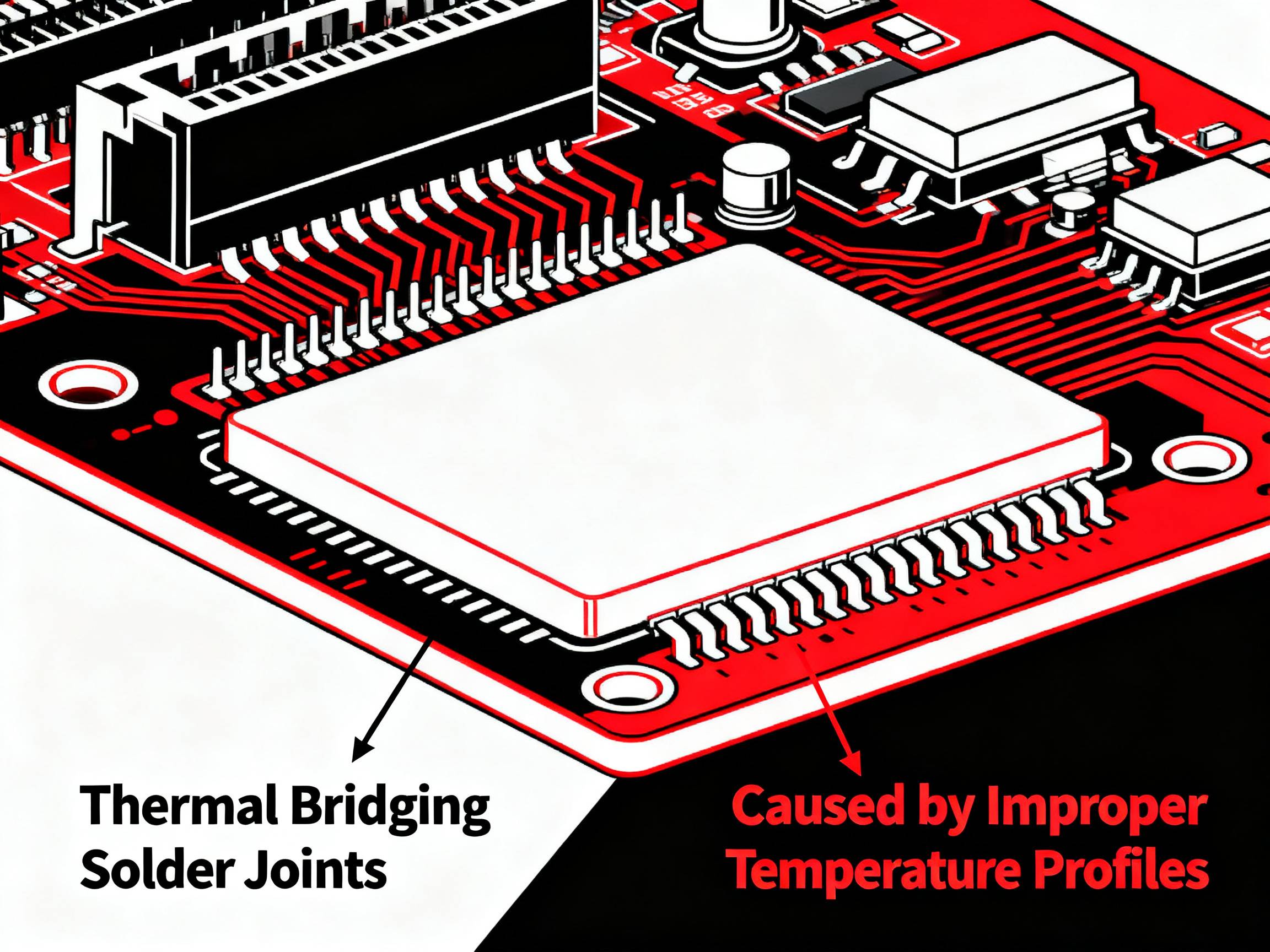
- Thermal Bridging: Too much heat during reflow can cause solder to bridge between pads, creating shorts.
Solutions That Work
- For incomplete joints, extend the soak time or adjust the preheat gradient to achieve better flux activation.
- Tombstoning usually calls for tweaking the oven’s zone temperatures or duration, especially for higher-density boards with smaller components.
- When dealing with thermal bridging, check the cooling zone settings to make sure the solder solidifies in a controlled way without spreading.
My Take
Back in 2024, I worked on a project where uneven heating caused 30% of the boards in a batch to tombstone. We spent hours tweaking individual profiles, but the big fix came from balancing the preheat and soak zones. And trust me, spotting the issue early saved that batch from complete failure.
S&M Co. Ltd. offers reflow ovens with advanced zone control systems; these make balancing heat distribution so much easier. Their systems even allow for automated adjustments on scaling production lines, ideal for high-volume manufacturers handling complex assemblies.
Optimizing the Cooling Zone
The final step in reflow soldering often gets overlooked: cooling. Let me tell you why it’s just as important as heating.
When solder cools too quickly, residual stress builds up in the joints. This can lead to cracking, deformation, or even component displacement. On the flip side, too slow a cool-down risks solder spreading improperly.
What’s the Fix?
- Gradual cooling: Aim for a steady rate of decrease to avoid shocking the solder or components.
- Controlled environment: Use ovens with precision cooling systems to regulate airflow and temperature transition.
- Assembly-specific profiles: Different PCBs need tailored cooling rates based on their size, density, and components.
Pro Insight: Reducing thermal stress during cooling prevents hairline cracks and improves long-term reliability. Use system-integrated sensors for automated stress monitoring on high-density assemblies.
Systems like those from S&M Co. Ltd. include programmable cooling zones, letting you dial in the exact rate for each type of PCB assembly. This isn’t just a quality boost; it’s a money-saver when scaling production lines.
Achievement in soldering reliability is only one proper profile away. Designing thermal profiles tailored to your assembly type isn’t just about understanding PCB dynamics; it’s about improving efficiency, saving costs, and delivering products people depend on.