



Objavljeno: 07 May 2026
Vrijeme čitanja: 8 minutes
Reviewer: Placeholder for Reviewer, SMT Industry Specialist
Reflow Ovens for PCB Assembly: What They Are and Why They Matter
Printed circuit boards (PCBs) are the backbone of almost every modern electronic device. If you’ve ever wondered how components like resistors or microprocessors attach so perfectly to these boards, you’ll want to learn about reflow ovens. These machines are the unsung heroes of electronics manufacturing, turning tiny, delicate parts into powerful, functional products.
Let’s take a look at how reflow ovens work, why they’re important, and what makes them a must-have for industries like consumer electronics, semiconductors, and even aerospace.
Jace Liu is a seasoned expert in Surface Mount Technology (SMT) equipment with extensive experience in the development of high-precision soldering systems. Having collaborated with leading manufacturers in consumer electronics and semiconductors, they bring first-hand insights into the role of reflow ovens in optimizing production workflows for high-volume environments like Shenzhen Chuxin.
How Does a Reflow Oven Work?
A reflow oven is a key player in the world of PCB assembly. Imagine the proces taloženja lemom like baking cookies—only instead of cookies, we’re talking about tiny electronic components on PCBs. Here’s a step-by-step breakdown.
1. Preheat Stage
First, the oven warms up the entire PCB. This helps evaporate solvents in the solder paste. It’s like preheating your oven before you start baking your favorite cookies.
2. Soak Stage
Next, the temperature is held steady to activate the flux in the solder paste. This ensures that all components heat evenly, reducing stress on parts. Think of it like letting a stew simmer so all the flavors blend perfectly.
3. Reflow Stage
Now, the heat cranks up. The solder paste melts and forms a connection between the components and the PCB. This is where the magic happens, just like when your cookies transform from dough to golden perfection.
4. Cooling Stage
Finally, the oven cools down to solidify the solder joints. This step is crucial for making sure everything stays in place, much like letting cookies cool to set before serving.
Pro Insight: Mastering thermal profiling is crucial for high-quality soldering. By using precise thermal profiles, manufacturers can significantly reduce defects like tombstoning and bridging. These profiles ensure every part of the PCB gets the right amount of heat at the right time. Read more
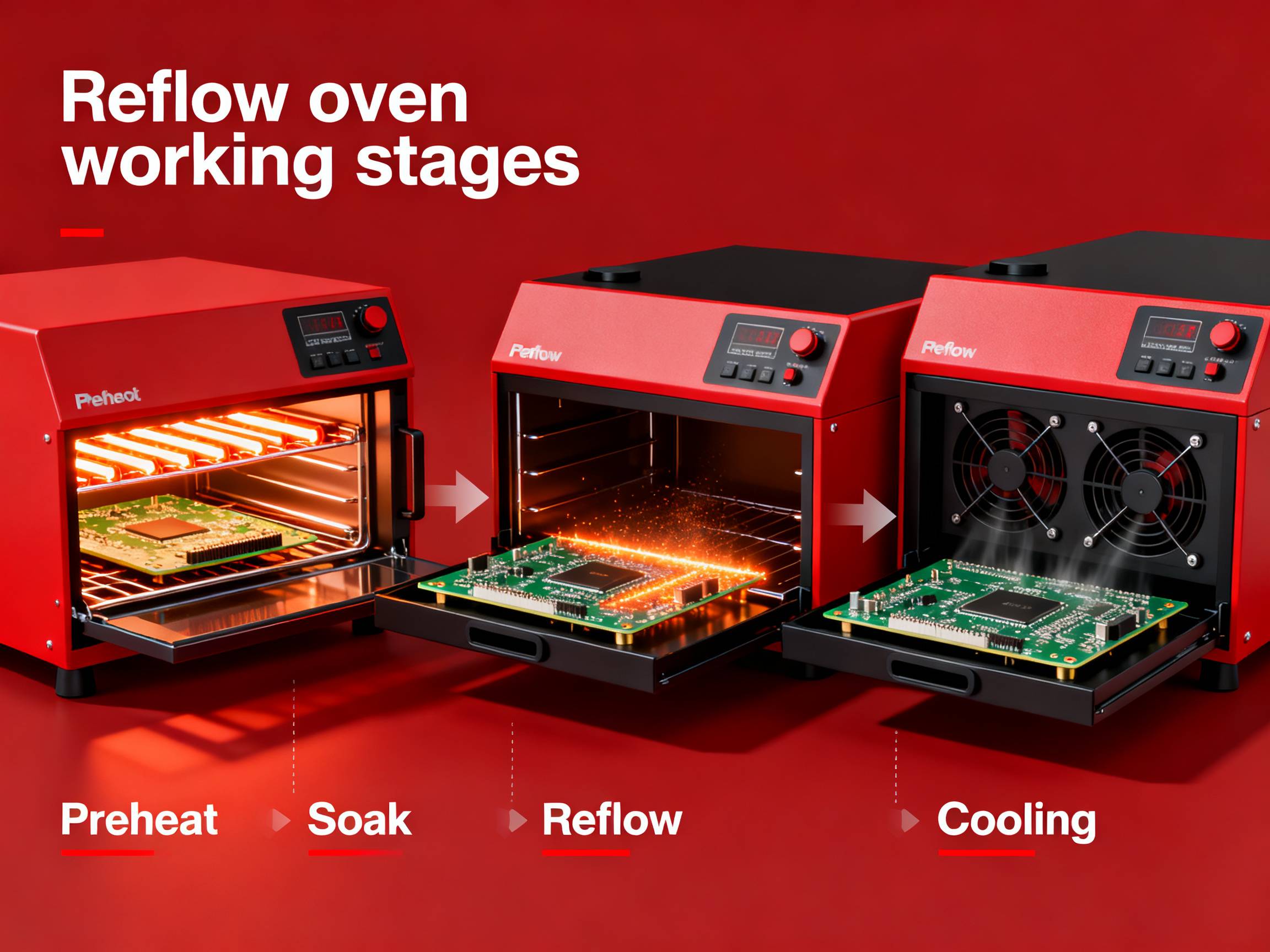
So there you have it. A reflow oven works in stages to make sure everything is heated just right. It’s like following a recipe; each step counts to get the perfect outcome.
Common Challenges and Maintenance Tips for Reflow Ovens
Reflow ovens are essential in Surface Mount Technology (SMT) production, but like any complex piece of equipment, they come with their own set of challenges. Knowing what can go wrong and the best ways to keep your oven in tip-top shape can save you downtime and repair costs. Let’s take a closer look.
Common Issues with Reflow Ovens
Every SMT line operator has run into at least one of these headaches:
- Uneven solder joints: This can happen when thermal profiles aren’t optimized correctly. If certain areas of the PCB get too much or too little heat, soldering defects pop up.
- Overheating components: Applying too high a temperature can damage sensitive components, leaving them unusable.
- Conveyor malfunctions: A conveyor issue can disrupt the smooth flow of PCBs through the oven, causing delays and uneven processing.

Keeping these problems in check isn’t easy, but the right approach can make a big difference.
Preventive Maintenance for Long-Term Performance
Preventive maintenance isn’t just helpful—it’s necessary. Here’s what to focus on:
- Cleaning the Oven Regularly: Solder paste release can cause buildups on oven rails and chambers. Cleaning these areas keeps airflow consistent and prevents contamination.
- Inspecting the Conveyor Belt: Check for wear and tear on the conveyor system to avoid sudden breakdowns. Even a slight issue with the belt can compromise your PCB quality.
- Calibrating Sensors: Temperature sensors can drift over time. Regular calibration ensures accurate thermal profiling.
Expert Tip: Matching your maintenance routine to production volume can help prevent bottlenecks before they happen. If you’re running larger batches, more frequent checks might be required.
Best Practices for Maintaining Peak Performance
Boost your reflow oven’s reliability with these tips:
- Train Your Team: Operators should know what signs of wear to look for so they can catch problems early.
- Schedule Regular Checkups: A maintenance calendar keeps things on track without interruptions to production.
- Use Compatible Materials: Always ensure that solder paste and components align with your oven specifications. This reduces the chances of buildup, overheating, or bridging.
We’ve seen firsthand how a well-maintained reflow oven can transform production lines. I once worked with a manufacturer who faced frequent conveyor breakdowns. After implementing a weekly cleaning schedule and upgrading their thermal profiling approach, they cut defects significantly and saved hours of production time. Simple changes like these can save you big in the long run.
Reflow ovens, when cared for properly, are the backbone of high-quality PCB assembly. Regular maintenance not only lowers costs but keeps production consistent, making sure every device starts with a solid foundation.
Choosing the Best Reflow Oven for PCB Assembly
Picking the perfect reflow oven can feel a bit overwhelming, especially with so many options on the market. But here’s the good news: when you know what to look for, the decision gets a lot easier. Let’s dive into what matters most when selecting a reflow oven for your specific manufacturing needs.
Key Factors to Consider
-
Size and Throughput: One of the first things to consider is your production volume. If you’re manufacturing high volumes of PCBs, you’ll need a large-scale oven with faster throughput to ensure you meet demand efficiently. On the other hand, smaller operations can save costs with compact models.
-
Heating Technology: Ovens typically use either convection or infrared heating. Convection ovens are more common as they provide uniform heating, which is crucial for avoiding defects. Infrared models might save energy, but they can heat unevenly, so think carefully about what best fits your needs.
-
Thermal Profiling Capabilities: An advanced reflow oven should allow for precise thermal profiling. This ensures that all components on the PCB are heated and cooled correctly—making the process smoother and more reliable.
-
Lead-Free Compatibility: Since environmental regulations like RoHS require lead-free soldering, it’s critical to confirm that your oven can handle these types of solders without adding undue strain to production.
-
Budget and Energy Efficiency: Don’t overlook operating costs. Some ovens now come with eco-friendly designs that reduce power consumption, cutting energy bills without sacrificing performance.
Expert Tip: When narrowing your choices, match your oven’s features to your specific product type. For example, double-sided PCB designs often require more precise control than single-sided ones.
Why Align Equipment with Your Manufacturing Goals?
The right reflow oven can be a game-changer for your entire SMT line. Imagine this: you’ve picked a system that syncs flawlessly with your production needs and existing technology. Not only does it minimize defects, but it also improves efficiency across the board, from assembly to delivery.
One time, I saw this play out while helping a medium-size manufacturer transition to lead-free soldering. They chose an oven optimized for RoHS compliance and their batch size. The result? A significant drop in defect rates and a boost in production speed. An oven that truly aligns with your goals offers benefits beyond just quality; it optimizes your entire workflow.
Making Your Final Decision
When in doubt, consult the experts—manufacturers like Shenzhen Chuxin specialize in high-precision reflow ovens tailored to industries like consumer electronics and aerospace. Their solutions are built to handle complex, high-density PCBs while meeting lead-free and environmental regulations. Investing in high-quality equipment now can save you headaches (and expenses) down the line.
So take your time, do the research, and weigh your options carefully. Choosing the best reflow oven for PCB assembly might seem like a big task, but with these tips, you’re on the right path toward smoother and more efficient production lines.