
Published: 08 July 2026
Last Updated: 08 July 2026
Reading Time: 9 minutes
Reviewer:
Introduction: Why Industrial Ovens Matter in Modern Electronics Manufacturing
Picture this: your production line is humming along, 500 PCBs an hour rolling through assembly. Then someone notices some BGAs aren’t soldered right. The joints look dull. Some components lifted slightly off the board. That’s when you realize your thermal process might be the culprit.
So what is an industrial oven? Put simply, it’s a manufacturing-grade heated chamber or conveyorized system that applies controlled temperature, airflow, and dwell time to products. These aren’t kitchen appliances. They’re heavy-duty thermal processors built for continuous operation in demanding production environments.
Industrial oven: A manufacturing-grade heated chamber or conveyorized system that applies controlled temperature, airflow, and dwell time to products.
For electronics manufacturers in 2026, these systems are non-negotiable. The lead-free solder market alone is projected to hit $6.74 billion this year, climbing to over $10 billion by 2034, driven by environmental regulations like RoHS and the miniaturization of everything from smartphones to automotive electronics.
And here’s the thing: batch ovens and continuous conveyor ovens handle thermal processing very differently. The wrong choice can tank your defect rate and eat into margins fast. So let’s break down how they actually work, what each one is best at, and how to pick the right one for your SMT line. By the end, you’ll know exactly what to look for.
Author: Jace Liu. Jace has spent years covering thermal processing equipment and SMT manufacturing technology, helping production managers cut through the marketing noise and find equipment that actually works for their specific needs.
Author Credentials and Technical Review Note
About the Author
Jace Liu is credited as the author for this article. However, no verified professional credentials or hands-on SMT equipment experience have been provided for confirmation. Readers should treat this article as general industry information rather than expertise-backed technical guidance.
Transparency Note
All technical recommendations in this article, including thermal profiling parameters, oven selection criteria, and process specifications, should be validated against your solder paste manufacturer’s data sheets, component moisture sensitivity requirements, and applicable safety standards such as NFPA 86 before implementation in production environments.
What Is an Industrial Oven Called, and What Does It Look Like?
You might hear these machines called a few different names. Process oven, curing oven, drying oven, baking oven, batch oven, conveyor oven, reflow oven, or thermal processing oven. They all fall under the same family of equipment. The name usually just tells you what job the oven does most often.
So what does an industrial oven look like? Picture a large insulated metal box or tunnel. Inside, you’ll find heating elements, fans that push hot air around, exhaust vents to let fumes escape, thermocouples that measure temperature, a control panel to set your settings, and safety systems to shut things down if something goes wrong. The whole thing is built to take a beating. Heavy-duty construction, thick walls, seals that keep the heat in.
Electronics-specific ovens work a bit differently though. An SMT reflow oven is designed for printed circuit boards. Instead of one big chamber, it has multiple heating zones arranged in a line. A conveyor belt moves PCBs through each zone at a set speed. This gives engineers precise control over the temperature profile the board experiences during soldering.
Here’s a quick reference for the different names you might encounter:
| Common Name | Typical Use |
|————-|————–|
| Batch Oven | Processes one load at a time |
| Conveyor Oven | Continuous processing with belt transport |
| Reflow Oven | Soldering PCBs in SMT assembly |
| Curing Oven | Hardening coatings and adhesives |
| Drying Oven | Removing moisture from components |
| Process Oven | General term for thermal processing |
Batch ovens sit still and process one load at a time. Conveyor ovens move products through on a belt. Reflow ovens are the ones you’ll see in SMT lines, moving circuit boards through temperature zones for soldering.
The main difference comes down to whether you need continuous processing or batch processing. High-volume PCB assembly almost always uses conveyor systems because they keep up with production demands without slowing down.
Pro Insight: If you’re handling prototype runs, R&D work, or repairs, a batch oven gives you the flexibility to process different products without reconfiguring a production line. But for steady high-volume SMT output, a conveyor reflow oven becomes essential for keeping defects low and throughput high.
Ready to understand how these machines actually apply heat to your products? Let’s look inside at the thermal process next.
How Industrial Ovens Work in Electronics Manufacturing
So how does an industrial oven actually work? At the most basic level, these machines move heat into your products using one or more methods: convection (hot air moving around), radiation (heat waves), conduction (direct contact with hot surfaces), or some mix of all three. The key is that they don’t just blast heat randomly. They maintain precise temperature, control airflow patterns, manage humidity and exhaust venting, and track dwell time (how long your product stays inside).
For SMT reflow ovens, the process gets more specific. Picture a PCB sliding through on a conveyor belt. It enters the first zone and the board starts warming up slowly. This preheat stage activates the flux in the solder paste without shocking the components. Then comes the soak stage, where temperatures hold steady long enough for the entire board to reach uniform heat. Next, the reflow zone applies peak heat that melts the solder. Finally, a controlled cooling zone brings everything down at a safe rate so joints solidify properly.
Here’s how the SMT reflow process typically flows:
| Stage | Purpose | Temperature Range |
|——-|———|——————-|
| Preheat | Gradual warming, flux activation | 140–180°C |
| Soak | Thermal homogenization | 180–200°C |
| Reflow | Solder melting | 240–260°C peak |
| Cooling | Controlled solidification | Down to ~100°C |
I’ve worked with teams running lead-free SAC305 profiles (liquidus at 217°C) who learned the hard way that ramp rate matters big time. Too fast and you get tombstoning where components lift off the pads. Too slow and you burn the board. Most manufacturers target around 1 to 3 degrees Celsius per second for the ramp-up.
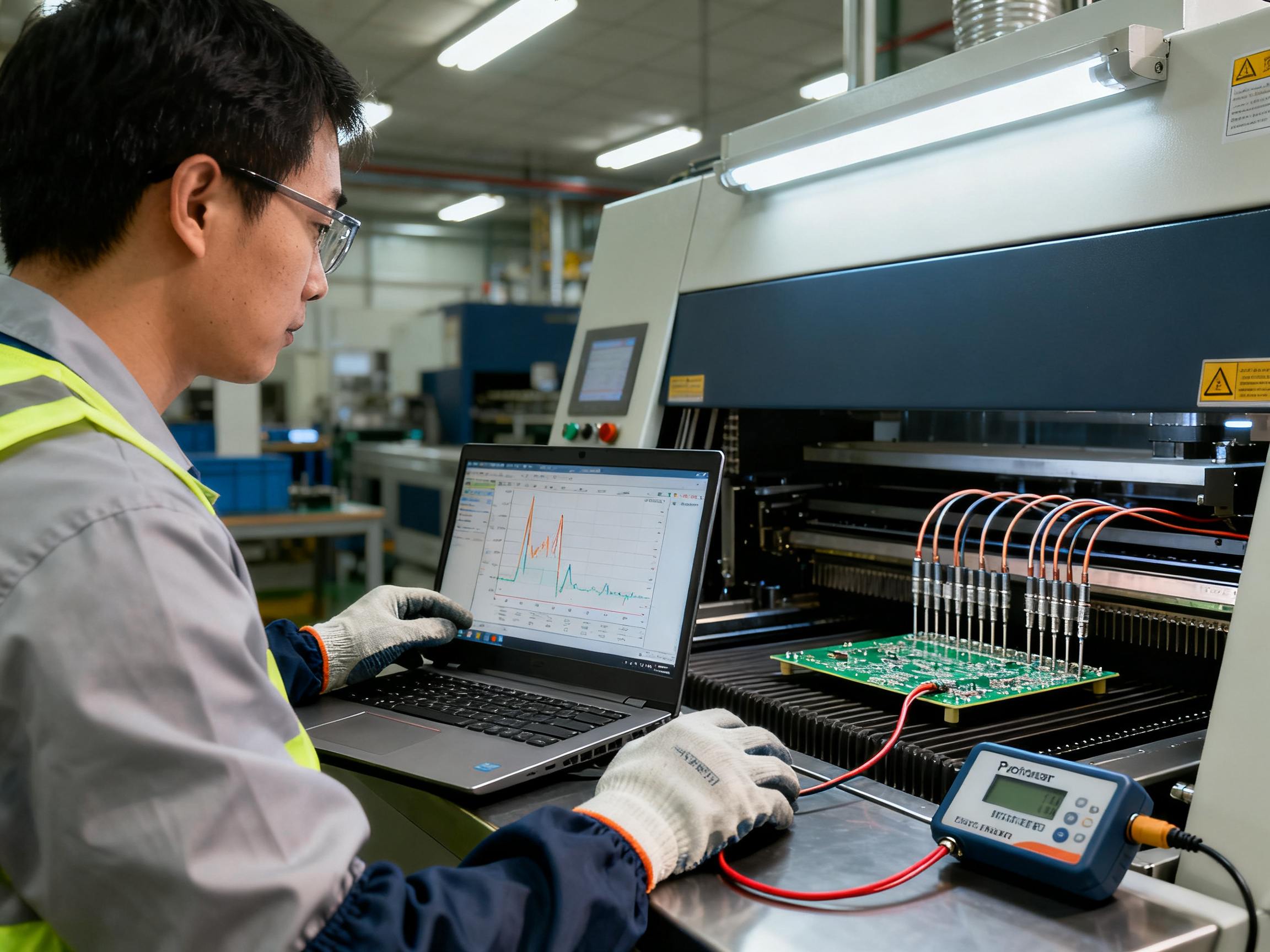
Expert Tip: Always validate your oven recipe with actual thermal profiling using thermocouples on real boards. Setpoint temperature means nothing if your thermal uniformity is off or your airflow patterns create hot spots. Relying only on what the controller says is a fast track to defects.
Modern conveyor reflow ovens in 2026 typically pack 8 to 12 independently controlled heating zones with PID closed-loop systems tracking real temperatures. Many offer nitrogen atmosphere options to reduce oxidation during soldering, plus data logging so you can prove your process stayed in spec during production.
Bottom line: the oven is only as good as its thermal profile. The machine does the work, but the recipe drives quality.
What Are Industrial Ovens Used For in Electronics Manufacturing?
Industrial ovens show up everywhere in electronics production. The biggest use is SMT reflow soldering, where these machines solder components like BGAs, QFNs, and fine-pitch connectors onto PCBs. This covers everything from smartphone motherboards to automotive engine control units (ECUs) to radar modules for military aircraft. Lead-free soldering has become the standard in 2026 because of RoHS and REACH regulations, and that’s pushed manufacturers toward ovens that can hit higher peak temperatures (typically 240 to 260 degrees Celsius for SAC305 alloys) without creating defects.
But soldering is just the start. Ovens also handle component drying when moisture-sensitive packages like BGAs have been sitting on the shelf too long. Follow the IPC/JEDEC J-STD-033 guidelines for baking schedules or you risk the popcorn effect during reflow. Conformal coatings, adhesives, and encapsulants all need curing cycles too. And for aerospace or automotive work, you might run boards through stress-relief bake cycles or burn-in testing to catch early failures before products ship.
Here’s how different use cases map to oven types and the things that can go wrong:
| Use Case | Oven Type | Typical Product | Key Control | Quality Risk |
|———-|———–|—————–|————-|————–|
| Lead-free reflow soldering | Conveyor reflow oven | Smartphone PCBs | Peak temp, TAL, ramp rate | Cold joints, voids, tombstoning |
| Component drying | Batch oven | BGA/QFN packages | Temp, humidity, time | Popcorn effect, delamination |
| Conformal coating cure | Curing oven | Automotive ECUs | Cure temp, duration | Soft coating, adhesion failure |
| Adhesive/encapsulant cure | Process oven | Military modules | Ramp profile, soak time | Weak bond, partial cure |
| Stress relief/burn-in | Batch or conveyor | Aerospace assemblies | Extended temp exposure | Residual stress, field failures |
The business payoff is straightforward. Get your thermal process right and soldering defects drop, rework costs fall, and your production line actually keeps up with demand. Get it wrong and you’re scraping assemblies and eating into margins. For manufacturers working in consumer electronics, semiconductors, or defense contracts, the oven isn’t just equipment. It’s often the difference between hitting quality targets and hemorrhaging money on scrap.
So how do you know which oven type actually fits your operation? Let’s break down batch versus continuous systems next.
Batch Industrial Ovens: Uses, Advantages, and Limitations
A batch industrial oven is exactly what it sounds like. You load products in, run a thermal cycle, wait for it to finish, then unload everything. The oven sits still while it works. No conveyor belt. No continuous flow. Just a heated chamber doing its job on one batch at a time.
This setup works really well for certain jobs. R&D teams love them because you can run experimental profiles without disrupting a production line. Prototyping shops use them for small-lot runs where setting up a conveyor oven doesn’t make sense. Repair operations need them for reworking individual boards. And component baking? That’s almost always a batch oven job. When a BGA has been sitting on a shelf too long and absorbed moisture, you follow IPC/JEDEC J-STD-033 baking schedules, and a batch oven gives you the precise temperature and humidity control that process demands.
We helped a contract manufacturer in Shenzhen last year who was doing aerospace work. Their assemblies needed stress-relief bake cycles that ran 8 to 12 hours. Running that through a high-speed conveyor oven would have been ridiculous. A batch oven handled it perfectly, and they could stagger loads throughout the day.
Here’s the flip side though. If you’re pushing thousands of PCBs per hour through a smartphone production line, batch ovens become a bottleneck fast. You lose time loading and unloading. Manual handling increases the chance of operator error. And you can’t easily integrate them into fully automated SMT lines without adding expensive robotic loading systems.
Pros and Cons of Batch Industrial Ovens
| Pros | Cons |
|——|——|
| Flexible for varied product sizes and recipes | Lower throughput than conveyor systems |
| Lower capital investment | More manual handling and labor |
| Easy profile changes between runs | Cycle-time bottlenecks in high-volume lines |
| Ideal for R&D and prototyping | Harder to integrate with automated lines |
| Good for long-duration processes | Heat loss during each load/unload cycle |
| Precise control for component baking | Operator-dependent repeatability |
Pro Insight: If you’re handling prototype runs, R&D work, or repairs, a batch oven gives you the flexibility to process different products without reconfiguring a production line. But for steady high-volume SMT output, a conveyor reflow oven becomes essential for keeping defects low and throughput high.
So batch ovens fill an important niche. They’re not the right choice for every operation, but when flexibility matters more than speed, they’re hard to beat.
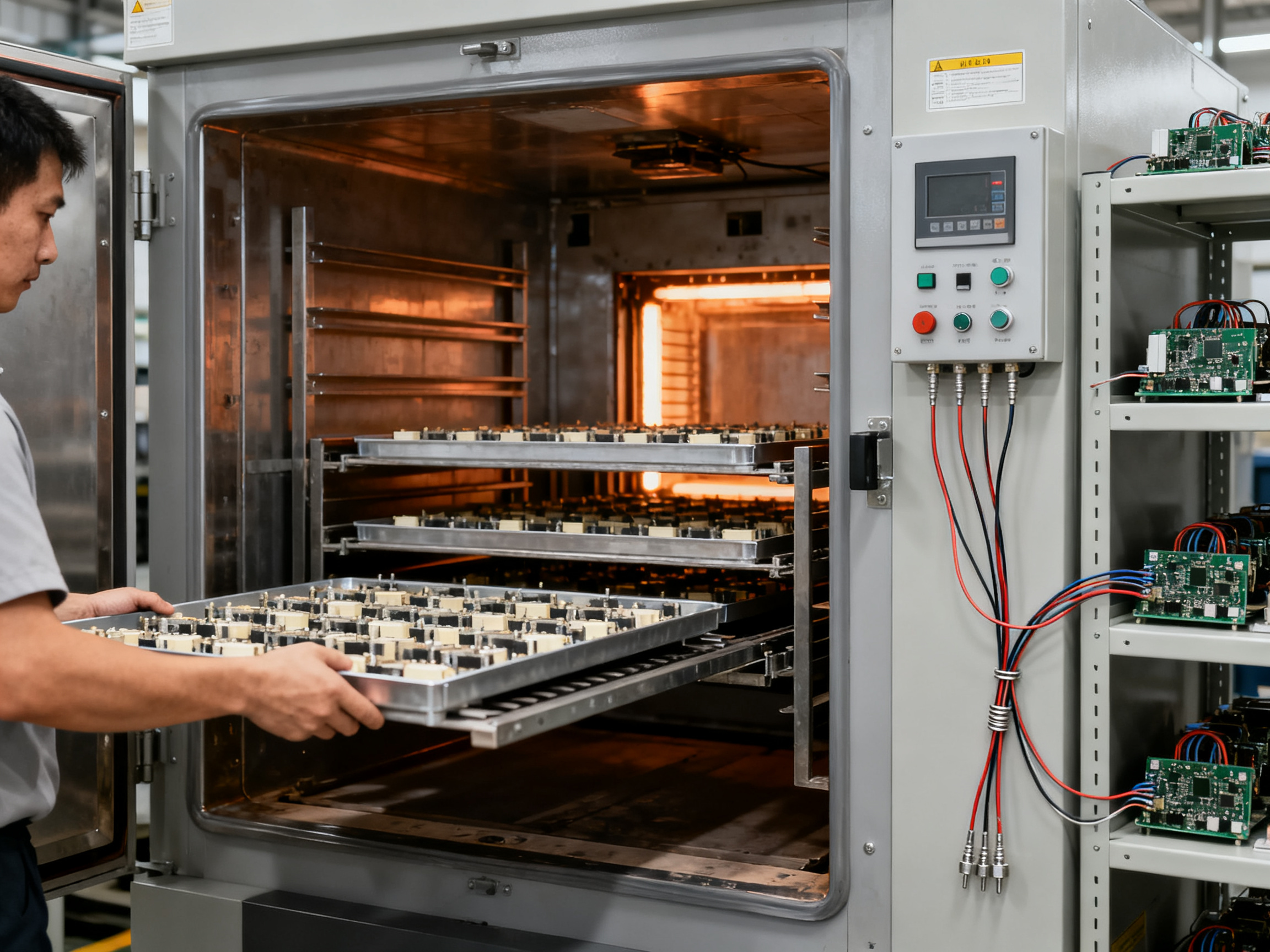
Continuous conveyor ovens change the equation entirely for high-volume manufacturers. Let’s look at how they work and where they excel.
Continuous Industrial Ovens: Conveyor, Tunnel, and Reflow Systems
Now flip the script. Instead of loading one batch and waiting, continuous industrial ovens move products through heated zones on a conveyor, mesh belt, chain, or carrier. The process never stops. Load products at one end, collect finished goods at the other, and keep the line running.
This is exactly how high-volume SMT reflow soldering works in 2026. A conveyor reflow oven pulls PCBs through multiple temperature zones in sequence: preheat, soak, reflow peak, and controlled cooling. Boards enter one side and exit the other with soldered joints already solidified and verified. At scale, this is the only way to stay competitive.
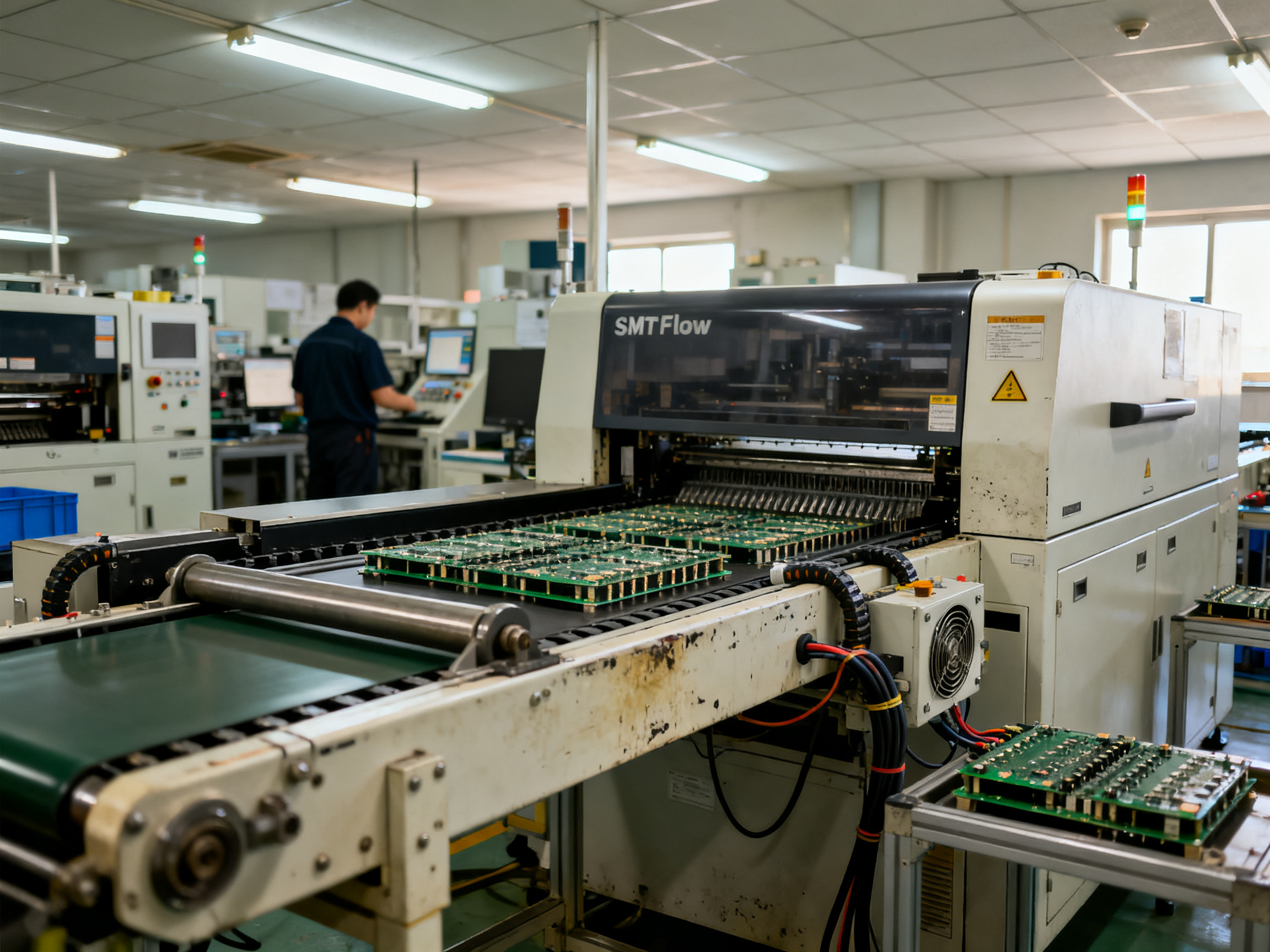
The advantages stack up fast for manufacturers pushing serious volume. Dwell time stays consistent because belt speed never changes. Thermal profiles repeat exactly the same way for every single board. Automation slots right in with pick-and-place machines, AOI systems, and downstream conveyors. Manual handling drops to near zero, which means fewer operator errors and cleaner output. And because the oven runs continuously, energy costs spread across way more units than a batch process ever could.
Modern conveyor reflow ovens for lead-free production typically pack 8 to 12 independently controlled heating zones. You get upper and lower zone control, dedicated cooling sections, adjustable conveyor speed, and options for nitrogen atmosphere to cut oxidation during soldering. Some systems include flux filtration, exhaust management, and data logging for full traceability. (That’s a big deal when your customer is an automotive company asking for process records.)
Here’s how a typical multi-zone reflow oven breaks down:
| Zone Type | Function | Temperature Range |
|———–|———-|——————-|
| Preheat zones | Gradual ramp, flux activation | 140–180°C |
| Soak zones | Thermal homogenization | 180–200°C |
| Reflow zone | Solder melting | 240–260°C peak |
| Cooling zones | Controlled solidification | Down to ~100°C |
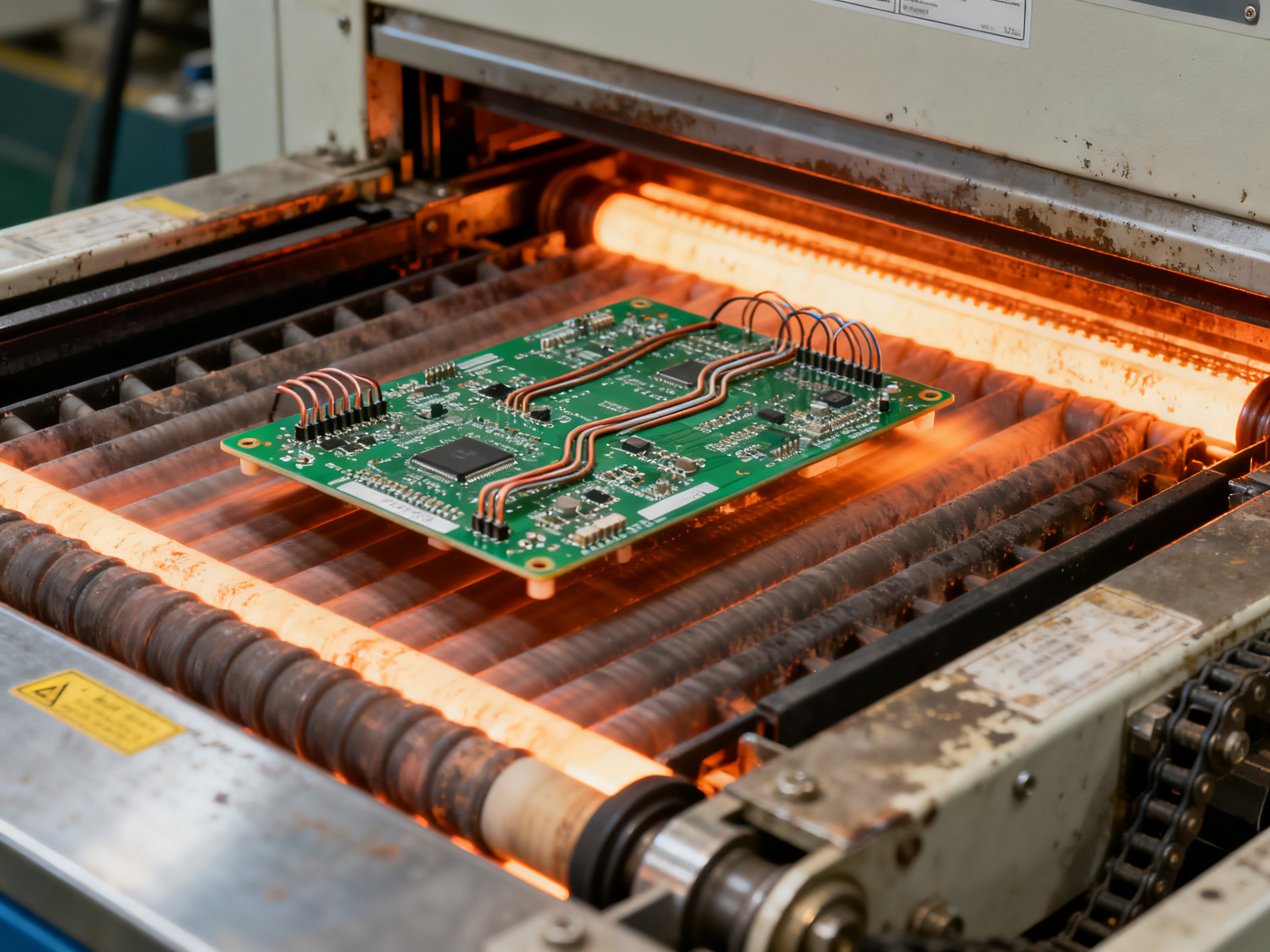
Pro Insight: For steady high-volume SMT output, a conveyor reflow oven becomes essential for keeping defects low and throughput high. The upfront cost is higher than a batch oven, but when you’re running 24/7 production, the ROI usually justifies itself within the first year.
Side note on line integration: In 2026, conveyor reflow ovens typically integrate with SMT printers, pick-and-place machines, and AOI stations using standard protocols. Most manufacturers size the oven’s conveyor width and process length around their PCB dimensions and thermal mass requirements.
So continuous ovens win on speed and repeatability. But they do require upfront investment and careful profiling to handle your specific board designs. Next, let’s look at how to actually pick between batch and continuous for your operation.
Batch vs. Continuous Industrial Ovens: Key Differences
So you’re trying to figure out whether a batch oven or a continuous conveyor oven makes more sense for your operation. The honest answer? It depends almost entirely on your production volume, product variety, and how much you value automation versus flexibility.
Let’s break it down side by side across the factors that actually matter in electronics manufacturing.
| Feature | Batch Oven | Continuous Conveyor Oven | Best Fit |
|———|————|—————————|———-|
| Throughput | Lower, limited by cycle time | High, continuous processing | High-volume lines |
| Flexibility | High, easy profile changes | Lower, requires more setup | R&D and prototyping |
| Automation | Manual or robotic loading | Fully integrated with SMT lines | Automated production |
| Floor Space | Smaller footprint | Longer, tunnel-style layout | Space-dependent |
| Process Consistency | Good with proper profiling | Excellent, belt speed controlled | High-density assemblies |
| Labor Needs | Higher, manual handling | Lower, minimal intervention | Cost-sensitive operations |
| Energy Efficiency | Heat loss per cycle | Efficient at high throughput | High-volume runs |
| Maintenance | Simpler, fewer moving parts | More complex, belt/zone maintenance | Varies by operation |
| Capital Cost | Lower upfront investment | Higher initial cost | Budget-dependent |
| Total Cost of Ownership | Higher labor costs long-term | Better ROI at scale | Production-driven |
Here’s a real scenario that might help. A contract manufacturer handling prototype runs for five different clients per week needs flexibility above all else. Batch ovens let them switch profiles, run different board sizes, and handle small quantities without wasting time on setup. That’s where batch makes sense.
But take a smartphone PCB line pushing 60,000 units per day. Running that through a batch oven would be chaos. You’d spend more time loading and unloading than actually soldering. A continuous conveyor reflow oven with 10 heating zones handles that volume seamlessly, keeps defects low, and pays for itself within the first year through labor savings and reduced rework.
Pro Insight: If your production mix changes week to week or you’re still in prototyping mode, a batch oven gives you the agility to adapt. But if you’re running the same high-volume product 24/7, a conveyor system eliminates bottlenecks and delivers the consistency your quality team demands.
The quality angle matters too. Continuous ovens generally provide tighter process repeatability because conveyor speed stays constant, zone temperatures hold steady, and there’s no operator variability between cycles. For high-density assemblies with BGAs and fine-pitch components, that consistency translates directly into lower defect rates.
Batch ovens can absolutely produce quality output, but they require more attention. Each operator might set up slightly differently. Loading density changes thermal mass. Temperature uniformity across a full chamber load can vary more than in a properly profiled conveyor system.
Bottom line: choose batch for flexibility and varied work. Choose continuous for speed, repeatability, and scale. Most large electronics manufacturers run both types in different parts of their facility for exactly this reason.
Key Oven Specifications Electronics Manufacturers Should Evaluate
Picking an industrial oven means wading through spec sheets that go on forever. Temperature range, zone counts, conveyor dimensions. It gets old fast. So let’s cut through the noise and talk about what actually matters when you’re evaluating equipment for your SMT line.
Must-Have Technical Specifications
Start with the basics that directly affect solder quality. You need a temperature range that handles lead-free peaks (240 to 260 degrees Celsius for SAC305). Temperature uniformity across the working chamber or zones matters more than raw maximum temperature. Heating-zone count determines how finely you can control the thermal profile. Conveyor width and process length have to fit your PCB sizes. And don’t sleep on cooling rate. Too slow and joints oxidize. Too fast and you get thermal shock.
For oxygen control, nitrogen atmosphere capability reduces oxidation during reflow. This is almost mandatory for high-reliability products like automotive or aerospace. Exhaust capacity handles flux fumes without building up hazardous vapor levels.
Quality, Compliance, and Traceability
Lead-free compatibility isn’t optional anymore. Your oven has to hit the temperatures lead-free solders demand, consistently. Data logging proves your process stayed in spec during production runs. Alarm systems catch deviations before they create defective boards. Process traceability matters especially if your customers are in automotive or defense. Safety certifications like NFPA 86 compliance protect your facility and workers.
Maintainability and Support
Operator interface matters more than most engineers admit. Complicated controls lead to operator errors that kill your defect rate. Recipe management systems let you save and recall thermal profiles without starting from scratch every time. Preventive maintenance accessibility affects uptime. Spare parts availability from your supplier keeps the line running when something breaks. After-sales support quality varies wildly between manufacturers, so talk to other customers before signing anything.
Here’s a buyer’s checklist to keep you organized:
| Category | Must-Have | Good to Have | Depends on Application |
|———-|———–|————–|————————|
| Temperature | 240-260°C range | Extended range options | Specialized alloys |
| Uniformity | ±5°C across chamber | ±2°C with zone control | High-reliability products |
| Zones | 8 minimum for lead-free | 10-12 with dedicated cooling | Complex thermal mass boards |
| Conveyor | Fits your PCB sizes | Adjustable width | High-mix production |
| Atmosphere | Air-cooled standard | Nitrogen capability | Automotive, aerospace |
| Data | Basic logging | Full traceability integration | Defense contracts |
| Safety | NFPA 86 compliance | Remote monitoring | High-volume 24/7 lines |
| Support | Spare parts access | On-site service contracts | Critical uptime needs |
And here’s a quick reference on how conveyor width and line speed affect throughput. A wider conveyor lets you run multiple boards side by side. Faster belt speed increases units per hour but shortens dwell time, which can create defects if your zones aren’t set up for it.
From Our Experience: Build your selection checklist around production volume first. Ask yourself: How many boards per hour do I need? What’s my PCB complexity? Do I need lead-free capability? Can this oven integrate with my existing line equipment? How much will energy consumption cost at my production volume? And critically, what does after-sales support look like when something breaks at 2am before a big shipment?
Up next: we’ll wrap up with a practical framework for choosing between batch and continuous ovens based on your specific production goals.
Common Industrial Oven Problems and Defects in SMT Production
Even the best industrial oven will create defects if the thermal profile doesn’t match your board and solder paste. That’s just the reality of SMT reflow soldering. So let’s look at what actually goes wrong and how to fix it fast.
Solder bridging happens when molten solder flows where it shouldn’t, connecting two adjacent pads. Usually this comes from too much paste, incorrect stencil design, or a thermal profile that spreads the solder beyond its intended footprint. Uneven airflow in your oven can also push paste around during reflow.
Tombstoning is when a component lifts off one pad and stands up on the other, kind of like a tombstone. This typically traces back to a ramp rate that’s too fast or a thermal gradient across the board that heats one pad before the other. Voiding (air bubbles in solder joints) often means your soak time was too short for the flux to outgas properly. Poor wetting looks like dull, grainy joints instead of shiny, smooth ones. That’s usually a peak temperature problem, either too low to fully melt the solder or insufficient time above liquidus.
Cold joints are a classic. They look dull and grainy, and they crack under stress because the solder never fully melted. Too low peak temperature or not enough time above liquidus will do this every time. Component skew and misalignment often point to uneven heating or convection issues in specific zones. Delamination and warpage in your board? Usually the cooling rate is too aggressive or the preheat ramp shocked the board.
Here’s a quick troubleshooting guide to help you narrow down what’s happening:
| Defect | Possible Oven Cause | Corrective Action |
|——–|——————-|——————|
| Solder bridging | Uneven airflow, excess ramp rate | Check zone balance, reduce ramp rate |
| Tombstoning | Fast ramp, thermal gradient | Slow ramp to 1-3°C/s, verify zone uniformity |
| Voiding | Inadequate soak, trapped moisture | Extend soak time, pre-bake hygroscopic parts |
| Poor wetting | Low peak temp, short TAL | Increase peak to 240-245°C, extend time above liquidus |
| Cold joints | Insufficient heat input | Verify thermocouple accuracy, check zone heaters |
| Component skew | Uneven zone heating | Map airflow patterns, recalibrate zones |
| Delamination/warpage | Too-fast cooling or heating | Slow cooling rate, check preheat ramp |
| Discoloration | Overheating, contamination | Reduce peak temp, check for foreign materials |
| Coating failures | Incorrect cure profile | Validate cure temp and time per coating specs |
The fix is usually profiling your oven with actual thermocouples on real boards. Setpoint temperature at the controller means nothing if your zones are out of balance or your thermocouples drifted out of calibration. Most quality issues we see trace back to skipping this step.
Prevention comes down to a few habits: run profiler validation monthly, check your exhaust and conveyor alignment quarterly, keep your zone temperature records for traceability, and make sure operators are following the same setup procedure every single time. Coordinate with your solder paste manufacturer on their recommended profile and verify it matches your board thermal mass. When in doubt, slow down the ramp and extend the soak. It’s better to run a little slower than to scrap a batch.
How to Choose the Right Industrial Oven for Your SMT Production Line
Picking the right oven feels overwhelming until you break it down. Here’s a practical decision framework that works for most electronics manufacturers in 2026.
Step 1: Define your production volume and goals
Ask yourself. How many boards per hour do you actually need? What PCB sizes and thermal mass are you working with? Are you running lead-free solder? (Chances are you are, given RoHS requirements.) What’s your acceptable defect rate? And maybe most important, where do you see your business in five years?
Step 2: Match oven type to your production reality
High-volume, standardized products usually point toward continuous conveyor reflow ovens. Low-to-medium volume, mixed products, or R&D work typically favor batch ovens. Many operations run both types in different areas of their facility, and that’s perfectly fine.
Step 3: Build your cross-functional evaluation team
Don’t let one person make this call alone. Pull in production managers who understand throughput, process engineers who can validate thermal profiles, quality teams who care about defect rates and traceability, procurement who can negotiate terms, and maintenance who will keep things running when something breaks at 3am before a big shipment.
Step 4: Evaluate suppliers seriously
Look beyond the spec sheet. Ask about engineering support during installation, customization options for your specific board designs, training for your operators, spare parts availability in your region, and whether they can run process testing with your actual boards before you commit.
From Our Experience: Build your selection checklist around production volume first. Ask yourself: How many boards per hour do I need? What’s my PCB complexity? Do I need lead-free capability? Can this oven integrate with my existing line equipment? How much will energy consumption cost at my production volume? And critically, what does after-sales support look like when something breaks at 2am before a big shipment?
Here’s a quick selection checklist to keep you organized:
| Decision Factor | What to Evaluate |
|—————-|——————|
| Throughput | Boards per hour, shift schedules |
| PCB Size | Max dimensions, thermal mass |
| Solder Type | Leaded vs lead-free peak temps |
| Quality Target | Acceptable defect rate |
| Automation Level | Manual load vs full integration |
| Floor Space | Available footprint |
| Budget | Capex and expected ROI timeline |
| Support | Spare parts, service response time |
| Scalability | Can it grow with your business? |
The oven that wins is the one that fits your specific situation, not the one with the fanciest brochure.
FAQ: Quick Answers About Industrial Ovens
What is an industrial oven?
An industrial oven is a manufacturing-grade heated chamber or conveyorized system designed to apply controlled temperature, airflow, and dwell time to products during production. Unlike standard ovens, these machines are built for heavy-duty continuous operation in demanding electronics manufacturing environments. They handle processes like solder reflow, component drying, coating cure, and heat treatment. [2]
What is an industrial oven called?
These machines go by many names depending on their function. Common terms include process oven, batch oven, conveyor oven, reflow oven, curing oven, drying oven, and thermal processing oven. The name typically describes the primary application rather than a different type of equipment. [2]
What does an industrial oven look like?
Picture a large insulated metal box or tunnel. Inside you will find heating elements, circulation fans, exhaust vents, thermocouples for temperature measurement, a control panel, and safety systems. Electronics-specific reflow ovens feature multiple heating zones arranged in sequence with a conveyor belt that moves PCBs through each zone at controlled speed. [2]
How does an industrial oven work?
These ovens move heat into products using convection (hot air circulation), radiation (heat waves), or conduction (direct contact), or a combination of all three. The key is precise control over temperature, airflow patterns, humidity levels, and dwell time. Modern SMT reflow ovens use 8 to 12 independently controlled heating zones with PID closed-loop systems that track real temperatures throughout the thermal profile. [2]
What are the two main types?
Batch ovens process one load at a time and offer flexibility for varied products and profiles. Continuous conveyor ovens move products through heated zones on a belt, enabling high-volume production without stopping. High-volume PCB assembly almost always uses conveyor systems because they maintain consistent thermal profiles and keep up with production demands. [7]
Conclusion: Match the Oven Type to the Process, Not Just the Temperature Range
Industrial ovens are controlled thermal processing systems that handle soldering, curing, drying, baking, and related processes across electronics manufacturing. The machine you choose has to fit your actual production reality, not just look good on paper.
Here’s the bottom line on the batch versus continuous decision. Choose batch ovens when you need flexibility, handle smaller runs, or work with varied product mixes. Choose continuous conveyor or reflow systems when you need repeatable, high-volume SMT manufacturing that keeps defects low and throughput high.
Most established electronics manufacturers in 2026 run both types in different areas of their facility for exactly this reason. The key is matching the tool to the job.
Before you select or upgrade any industrial oven, audit your current production volume, defect data, product mix, and compliance needs. Those numbers drive everything else.
Need help selecting a lead-free reflow oven or SMT production line? Prepare your PCB size, throughput target, solder paste type, and defect goals before consultation. Our team can walk you through options that match your specific production requirements.
Expert Recommendation Framework
When choosing between oven types, evaluate four factors together: throughput requirements, product complexity, defect tolerance, and compliance needs. Batch systems excel for flexibility and varied work; continuous systems deliver consistency and scale. Align your choice with your production goals, not just equipment specifications.