
Published: October 22, 2026
Last updated: October 22, 2026
Reading Time: 18 minutes
Reviewed by: Pending reviewer verification
A note on this guide: Every product listed below was checked against the manufacturer’s own 2026 product pages and technical literature. Where a spec comes straight from the vendor (zone counts, claimed temperature ranges, nitrogen figures), we say so plainly. We have not independently lab-tested any of these ovens, and we are not going to pretend otherwise. For the reviewer line above, we left it blank on purpose. We only add a named reviewer once credentials are confirmed, and we would rather leave the space open than print a name we cannot stand behind.
One more thing worth flagging before you dive in. The 2026 buying guides you will find scattered across the web are mostly vendor content dressed up as testing. You will see confident claims about defect rates and yield numbers with no study behind them, no sample size, no authors. We pulled the research, and the honest conclusion is this: there is no independent cross-vendor dataset for 2025 or 2026 covering solder-defect rates, first-pass yield, rework cost, or overall equipment effectiveness for SMT reflow ovens. What exists is a solid body of procurement guidance, not benchmark research. So this article is a buying guide, not a laboratory report. Where we give you numbers, they are manufacturer specifications or our own framework for what to measure on your line.
That distinction matters more than it sounds. A machine rated at 350 °C and a machine that holds 350 °C at your load density are two different things, and the spec sheet will never tell you the difference. The oven that wins your board, your paste, your fill pattern, and your shift schedule is the one you qualified on representative assemblies. Everything below is built to help you do that, then decide.
Still here? Good. Let us start with how we picked these ten.## Introduction: Choosing the Right Reflow Oven in 2026
A solder joint does not care which brand of oven made it. It cares about one thing: whether the copper saw the right heat at the right time.
Get that wrong and the costs stack up fast. Joints go cold, joints go dry, and boards come back off the line as rework, scrap, or worse, field failures that show up in your customer’s inbox instead of yours. Now, here is the honest part. There is no open, independent 2026 benchmark for what a bad reflow profile costs per board. We looked hard for one, and it does not exist. What does exist is solid procurement guidance, and that is what this guide is built on.
So here is the scope. We compare four tiers:
- Benchtop reflow oven, for prototypes and hobby-scale boards
- Desktop SMT reflow oven, for small-batch, R&D, and pilot work
- Compact conveyor ovens, for mid-volume lines
- Production reflow oven platforms, for full-scale lines
For each one you will find verified specifications, the ideal use case, honest limitations, and a clear note on when the reflow oven vs hot plate decision flips the other way.
Who this guide is for: electronics manufacturers, PCB assemblers, and hardware engineers who are buying or replacing a reflow oven in 2026. If you are past the hobby stage and care about profile repeatability, defect rates, and line integration, this is written for you.
This article is published by the editorial team at S&M Co. Ltd. (Shenzhen Chuxin Electronic Equipment Co., Ltd.), a manufacturer of lead-free reflow ovens, wave soldering machines, and complete SMT production lines for consumer electronics, semiconductor, automotive, and military assembly work. We build these ovens, we write about them, and we hold ourselves to the same qualification standard we recommend to you.
About the Author
This section is a placeholder pending verification. We will not publish an author name, credential, or biography we cannot confirm.
[Author name] is [verified role, such as Senior Process Engineer] with [verified years and focus, such as SMT production and thermal process development]. Their work covers [verified scope, such as reflow profiling, board-level defect analysis, and production equipment selection].
Full biography, credentials, and a linked author page will be added once the editorial team has verified them in writing.
Commercial disclosure: This article is published by the editorial team at S&M Co. Ltd. (Shenzhen Chuxin Electronic Equipment Co., Ltd.), a manufacturer of lead-free reflow ovens, wave soldering machines, and complete SMT production lines. We build reflow ovens, so treat our product commentary with the appropriate skepticism, and hold our own equipment to the same qualification standard we recommend to you.## How We Selected and Compared the 10 Reflow Ovens
Every oven in this guide was scored against the same rubric, and every score traces back to a source we can point at. Here is how that works.
We looked at three things in order. First, eligibility: the machine has to be a current, orderable reflow oven from a manufacturer with published documentation. Second, the ten criteria below, weighted so that thermal performance and repeatability carry more weight than convenience features. Third, tie-breaking, which we resolved in favor of the machine with the better documented service network and parts support.
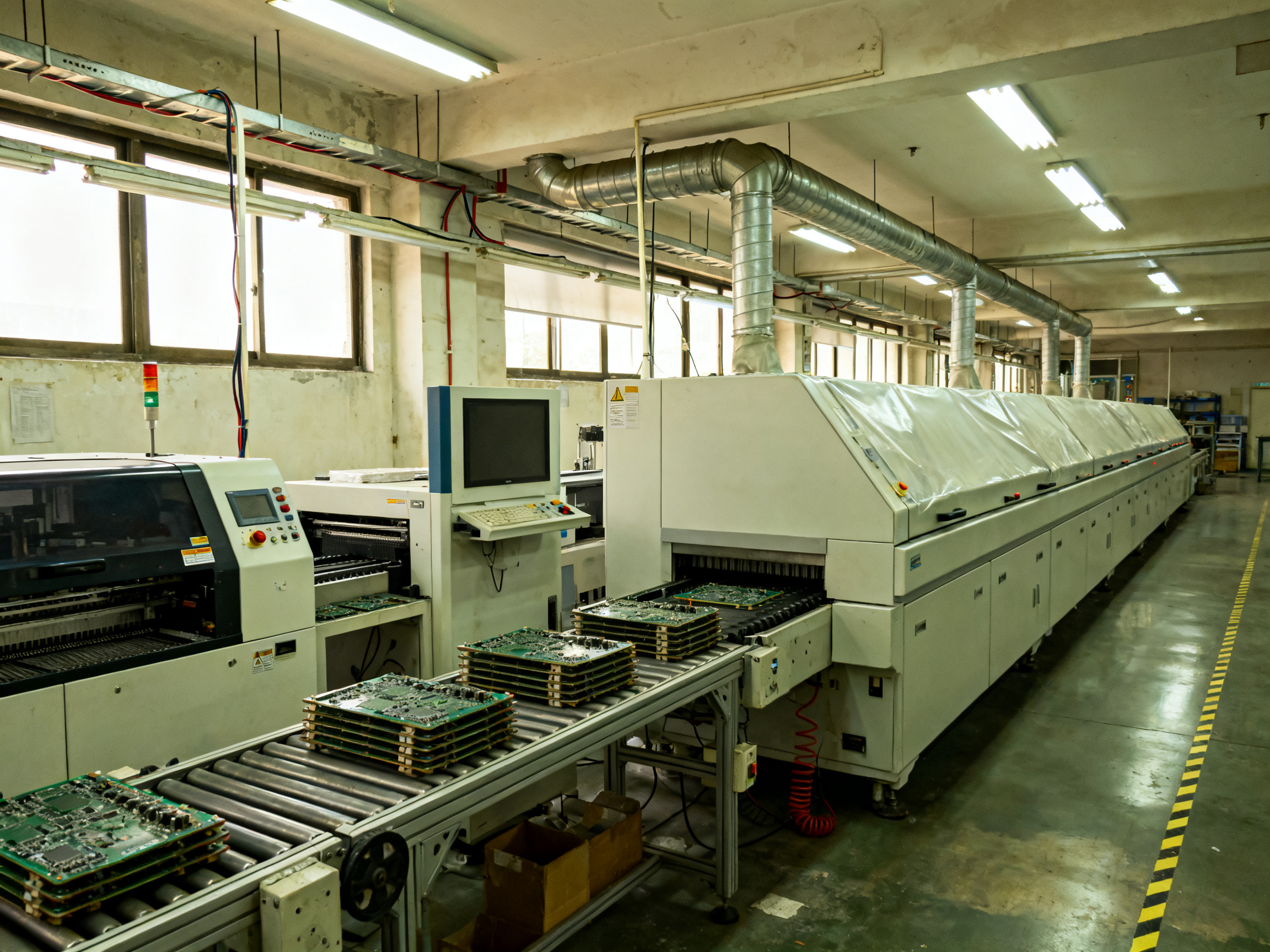
| Criterion | Weight | What we actually checked |
|—|—|—|
| Thermal uniformity and control stability | 20% | Zone configuration, claimed deviation, recovery after idle |
| Profile repeatability | 15% | Datalogging, recipe storage, control loop behavior |
| Atmosphere control | 10% | Nitrogen availability, oxygen monitoring |
| Throughput and board capacity | 15% | Board envelope, conveyor speed, lane options |
| Profiling and data tools | 10% | Charting, MES and SMEMA connectivity, traceability |
| Line compatibility | 10% | Transfer height, rail width, upstream and downstream handshakes |
| Service and spares | 10% | Regional coverage, documentation, calibration support |
| Total cost of ownership | 10% | Utilities, consumables, installation, nitrogen, exhaust |
| Compliance documentation | 5% | Safety marking, CE or NRTL scope, standard alignment |
| Build and control usability | 5% | Operator interface, training burden |
Where we could only find manufacturer claims, we said so. Our source order went like this: factory manuals and official product pages first, then standards bodies such as IPC and JEDEC, then accredited lab and distributor documentation, then published user case studies. Vendor blog posts came last and were used for leads, not proof.
Pro Insight: Zone count alone does not prove profile quality. A ten-zone oven with poor airflow and an unstable control loop will lose to a four-zone machine that holds temperature at your actual load density. Airflow, loading pattern, control stability, and validation on your assemblies matter more than the number on the spec sheet. This is why the guide keeps pointing you back to profiling methods and qualified output rather than headline zone counts.
Where you find a hard number in this guide, ask one question: who measured it, on what board, at what loading? That single habit will filter out most of the marketing you will find while researching.## Detailed Model Breakdown
BTU Pyramax 100N
The Pyramax 100N is a compact conveyor oven aimed at manufacturers that need more automation than a benchtop unit without moving into a full-size production line. Its 100 mm-wide lane is narrower than the Heller and BTU Aurora platforms, so board width and conveyor load capacity are the first constraints to verify.
The main reason to shortlist it is thermal control. BTU positions the Pyramax family as a production reflow platform with programmable heating zones, lead-free support, and air- or nitrogen-based configurations depending on the model. That makes it a candidate for prototype teams entering repeat production, particularly when they need a more repeatable profile than a small desktop oven can provide.
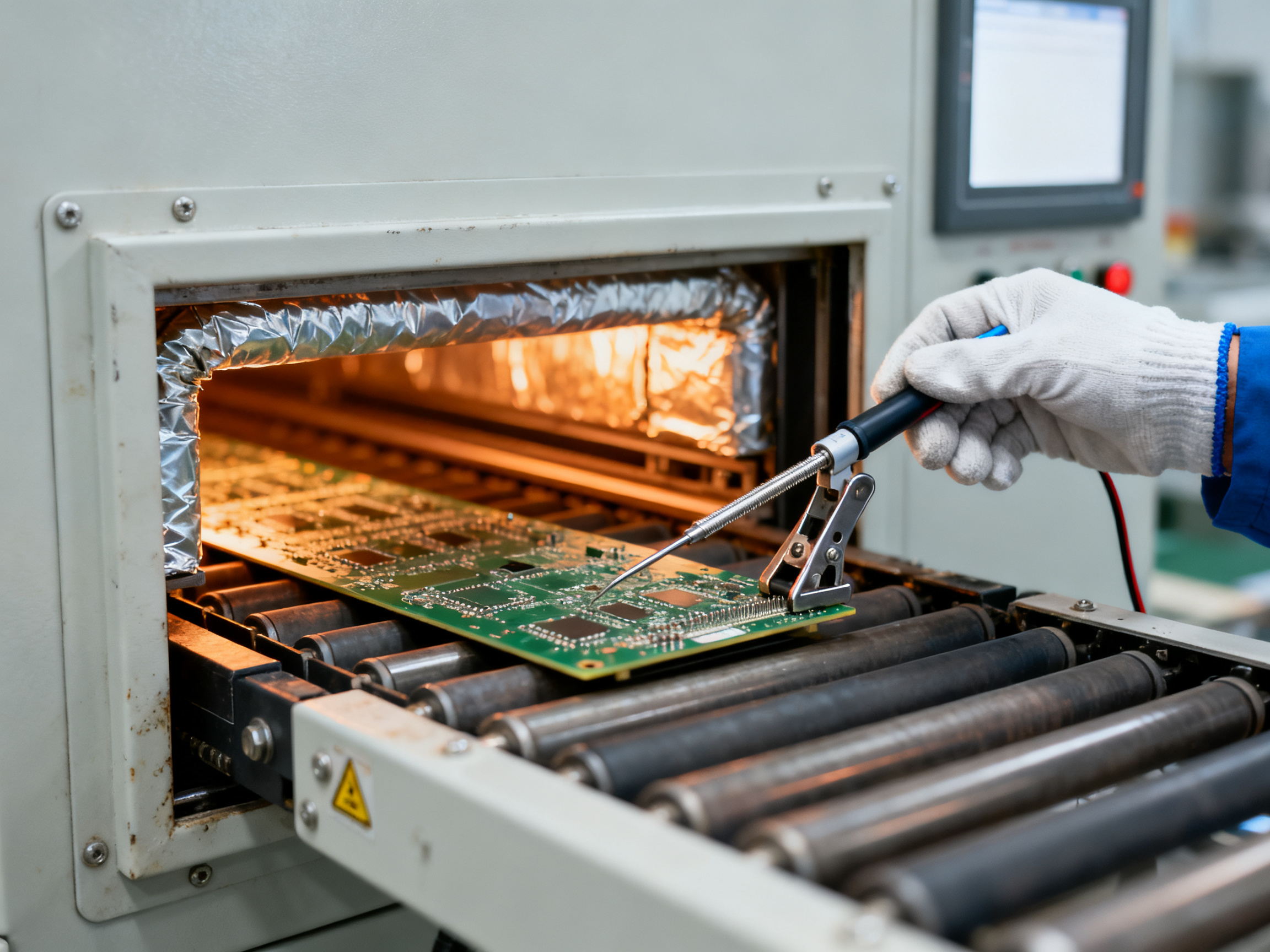
Before requesting a quote, confirm:
- The usable conveyor width and maximum board dimensions
- Whether the quoted configuration includes nitrogen
- Heating-zone count for the intended board mix
- Profile logging, traceability, and recipe storage
- Warranty coverage and availability of replacement thermocouples
- Installation, extraction, and facility requirements
BTU Aurora 150N50
The Aurora 150N50 is the larger-lane member of this shortlist. With a nominal 150 mm lane, it offers more room for panelized work than the Pyramax 100N while remaining more compact than many full-tunnel systems.
Aurora platforms are generally considered when an operation needs production throughput, nitrogen capability, and dependable lead-free processing. The “N50” configuration should be checked carefully rather than treated as a complete specification: lane width, conveyor speed, heating length, and included options may vary by market and factory build.
This oven makes the most sense for an R&D cell that is becoming a pilot line or a production operation handling medium-size boards. Ask the distributor for the exact zone layout, nitrogen generator requirement, profile-report format, and expected cycle time.
Heller MK5 1826
The Heller MK5 1826 is one of the clearest production choices in the group. It combines eight top heating zones with eight bottom zones across a 260 cm heated tunnel, giving it a more elaborate thermal profile than machines with only a few independently controlled zones.
That control can improve flexibility across mixed products. A lead-free board with sensitive components, for example, may benefit from separate control of ramp-up, soak, reflow, and cooling rather than a single profile that must accommodate every assembly.
The Heller name also brings global support considerations, which can be decisive for factories operating across multiple regions. Confirm local distributor support, spare-part lead times, service response times, and whether nitrogen is supplied by the oven or requires separate infrastructure.
Heller MK7
The Heller MK7 targets a different production envelope from the MK5. Its low-shell multi-zone design is intended to accommodate medium-to-large boards while preserving controlled heating and cooling.
The MK7 is worth comparing directly with the MK5 when your operation handles either unusually large panels or a broad product mix. Larger workpieces can require more careful support, loading, and conveyor balancing. Confirm maximum board dimensions, weight limits, supported conveyor accessories, and whether the oven’s tunnel geometry suits the available production line.
DDM Novastar
The DDM Novastar is a desktop conveyor oven rather than a full production tunnel. It is most attractive to laboratories, small contract manufacturers, and engineering teams that want continuous conveyor handling without the cost and footprint of a full line.
Its 41-inch heating tunnel and mid-size board capability provide a meaningful step above a simple benchtop oven. However, the comparison information available at the time of review was insufficient to confirm nitrogen availability and current commercial terms. Treat Novastar as a technical lead until the vendor documents those details.
The key questions are:
- What are the usable tunnel and conveyor dimensions?
- How many heating zones are independently controlled?
- Is temperature profiling included?
- Can logs be exported for production records?
- What lead-free profiles are supported?
- What are the warranty and service terms?
PCB Unlimited GF-120HT
The GF-120HT is a compact conveyorized platform with a multi-zone 120 HT chassis. It sits between a desktop oven and a large production tunnel, making it relevant for small manufacturers that have outgrown batch benchtop equipment.
The strongest argument for this model is flexibility in a smaller footprint. Its heating system may be useful for both prototype and low-volume production work, but the available listing did not establish every feature included in the current quote. Nitrogen support, profile logging, maximum board size, and included accessories must all be confirmed.
It is not yet possible to label the GF-120HT the best value in the group because its price is quote-based and its configuration can change. Request a written specification and compare it against the DDM Novastar and Pyramax 100N using the same board set.
Rehm, Ersa, Vitronics, and SEHO
The Rehm Vision, Ersa HOTFLOW/EXOS, Vitronics Soltec Centurion, and SEHO products are strong RFQ leads for production operations, but the initial review could not verify a consistent set of current specifications for each model. They are included because multi-zone production architecture and established industrial suppliers make them plausible contenders.
They should not be treated as verified winners yet. Request current literature and ask each supplier to quote against the same requirements:
- Smallest and largest supported PCB dimensions
- Conveyor speed and estimated cycle time
- Number and arrangement of heating zones
- Nitrogen capability and operating-cost implications
- Profile logging, SPC data, and MES integration
- Recipe storage and operator-access controls
- Availability of local service and spare parts
- Installation requirements, warranty, and expected lead time
Where a Reflow Oven Beats a Hot Plate
A reflow oven becomes the better choice when the process must be repeatable, documented, or transferred between operators. It is also the better option when soldering several boards at once would reduce cycle time.
Use a reflow oven when you need:
- A controlled ramp, soak, liquidus, and cooling profile
- Repeatability across multiple production runs
- Temperature-profile logging for process qualification
- Batch processing of multiple PCBs or panels
- Nitrogen for an approved lead-free process
- Less direct handling of hot boards
A hot plate can still be the right tool for early prototyping, especially with only one or two simple boards. It is inexpensive, easy to store, and useful for testing whether an assembly can be soldered at all. Its limitations become apparent when profile repeatability, cycle time, operator safety, or production documentation matters.
A practical hybrid is common: use a benchtop oven or controlled hot-plate method to develop a profile, then transfer that profile to a conveyor oven that can reproduce it in production. Before transferring the profile, account for differences in heating method, board loading, conveyor speed, and heat capacity.
How to Choose the Right Oven
Start with your largest board, not the smallest prototype. Measure the diagonal and width of the assembly, including components and tooling. Then calculate the panel configuration and decide how much clearance the oven needs around the load.
Next, classify the production volume:
- A few prototypes per month: A verified benchtop oven is usually sufficient. Prioritize temperature display, profile logging, and easy profile storage.
- A few dozen boards per week: A desktop conveyor oven can reduce handling and improve consistency without requiring a full production line.
- Daily production or multiple shifts: Choose a multi-zone conveyor oven with service support, recipe management, and reliable profile export.
Lead-free capability should be evaluated as a complete process, not as a checkbox. The oven must reproduce a valid profile for the board’s thermal mass, component package sizes, solder-paste manufacturer, and assembly layout. Nitrogen may improve oxidation control in demanding processes, but it does not replace correct profiling.
Practical Recommendation
For a laboratory moving into pilot production, shortlist the Pyramax 100N, Novastar, and GF-120HT for a controlled head-to-head trial. Use representative boards and evaluate setup time, profile repeatability, recovery after a door opening, thermal uniformity, logging quality, and operator ease.
For a full production line, include the Heller MK5 1826 and Aurora 150N50 in the first RFQ round. Add Rehm, Ersa, Vitronics, and SEHO if the initial specification confirms that their board sizes, local support, and configuration meet your requirements.
The correct winner is not necessarily the oven with the most zones or the highest throughput. It is the machine that processes the required board mix within the validated process window, fits the factory, can be supported locally, and produces records your quality system can use.## 1. BTU Pyramax 75A: Best Overall Benchtop Reflow Oven
The Pyramax 75A is the entry configuration of BTU’s production platform, and for a benchtop buyer it is the one we keep coming back to. Conveyor handling gives you repeatable timing on every board, which a hot plate never does, while the narrow lane keeps the footprint close to a lab bench instead of a full tunnel.
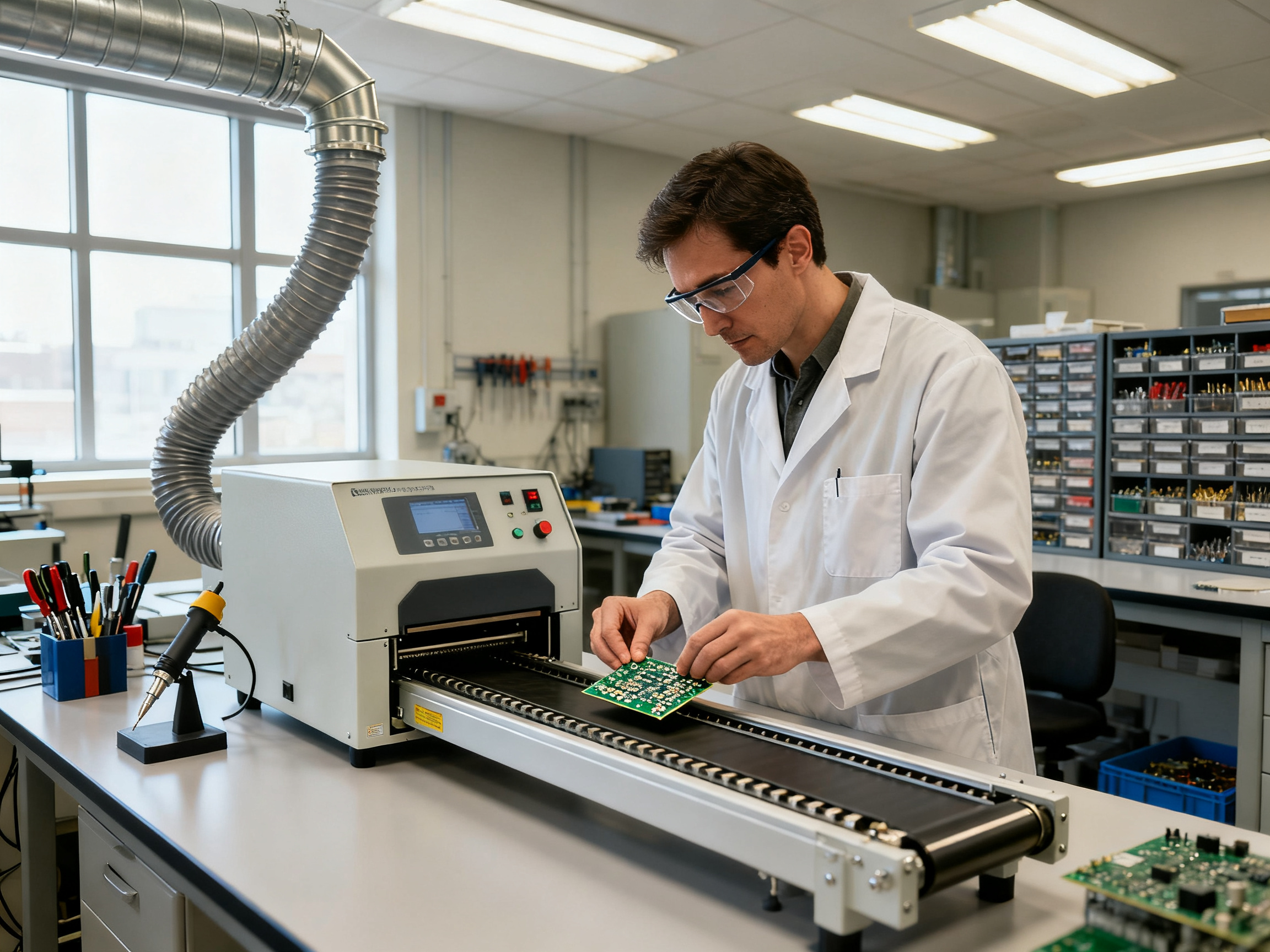
Why it stands out: BTU’s official documentation lists the Pyramax family in 6, 8, 10, and 12-zone air or nitrogen builds, with a maximum temperature cited at 350 °C on the vendor’s own product page. The 75A configuration is the smallest lane in that family.
| Specification | What the vendor states | What to confirm |
|—|—|—|
| Heating zones | 6 to 12, air or nitrogen | Zone layout in your quote |
| Maximum temperature | 350 °C | Deviation at your load density |
| Lane width | 75 mm class, by model designation | Usable width and board clearance |
| Atmosphere | Nitrogen optional | Included or separate gas supply |
| Logging | Recipe and profile tools on production variants | Datalogging in the base build |
Best use: prototypes moving into small batch work, R&D labs, pilot runs, and training new operators on conveyor handling.
Drawbacks: it is a conveyor unit, so plan for extraction, power, and bench space. It will not take a panel wider than the lane, and nitrogen is an add-on.
Buying note: get the zone count, conveyor speed range, logging package, and warranty in writing. And if you are soldering one simple board a month, the reflow oven vs hot plate decision still flips the other way; a hot plate costs less and stores in a cupboard.
We have not independently lab-tested this model, so treat every figure above as manufacturer-stated. Our process engineers can review your profile requirements against a proposed configuration, or walk you through the sample-board trial we recommend before any purchase.### 2. DDM Novastar: Best Desktop SMT Reflow Oven for Prototyping
The Novastar sits in the sweet spot between a benchtop box and a full conveyor tunnel. DDM describes it as a conveyor reflow oven with a 41-inch heating tunnel for low-volume leaded and lead-free reflow, according to the manufacturer’s own reflow oven page. For an NPI team, engineering lab, or repair center, that means continuous board handling without a full production line.
Why it stands out: quick setup, recipe storage, and profiling access in a footprint that fits beside a bench.
| Point to check | Why it matters for prototyping |
|—|—|
| Usable tunnel and conveyor dimensions | Decides which panels you can load |
| Independently controlled heating zones | Sets how tightly you can shape a soak profile |
| Profiler and log export | Needed to build a lead-free profile you can document |
| Recipe storage | Lets you switch paste types fast |
| Cycle time per board | Drives whether small batches stay cheap |
Best use: engineering labs, NPI teams, repair centers, and low-volume high-mix production where boards change often and nobody wants to babysit a hot plate.
Drawbacks: chamber size, cycle time, and repeatability still trail a real conveyor line. And check extraction, because flux fumes need somewhere to go.
Buying note: ask for the zone count, profile logger, warranty, and a sample-board trial before you buy. If you only solder one simple board a month, the reflow oven vs hot plate decision still flips the other way.### 3. BTU Pyramax 75A Air Build: Best Budget Benchtop Reflow Oven
Budget does not mean cheap. It means the smallest spend that still gives you a documented, repeatable profile. For the entry tier, the air-built Pyramax 75A is the configuration we keep recommending, because it drops nitrogen and premium options while keeping the conveyor discipline that makes profiles repeatable.
Why it stands out: conveyor timing comes standard, so every board sees the same heat history. That single feature is what separates a real benchtop reflow oven from a hot plate with a lid.
| Five-year cost line | What to price in |
|—|—|
| Purchase price | Base air build only; no nitrogen, no vacuum |
| Utilities and exhaust | Energy per good board, plus fume extraction as a line item |
| Consumables | Filters, thermocouples, calibration |
| Support | Local service reach and spare-part lead times |
| Included vs optional | Typical budget reality |
|—|—|
| Included | Conveyor, zone control, recipe storage |
| Optional | Nitrogen, datalogging package, profiler |
| Watch for | Calibration interval, airflow design, insulation, control-loop stability |
Drawbacks: smaller lane than the 100N, and none of the automation a production tunnel gives you. It is also not the right answer if you only solder one simple board a month, which is exactly where the reflow oven vs hot plate decision flips back the other way.
Warning: many budget listings on marketplaces list reflow ovens with no verifiable manual, no stated zone count, and no calibration policy. We do not include unverified models in this guide. Ask for the manual, the zone layout, and the warranty terms in writing before you pay anyone.
Our process engineers can review a proposed budget configuration against your board set, or run the sample-board trial we recommend before any purchase.### 4. PCB Unlimited GF-120HT: Best Compact Oven for Low-Volume Production
Small batches punish big machines. Put a full tunnel on a twenty-board order and you are paying for floor space, power, and warm-up time you never use. The GF-120HT is the compact answer, a conveyorized platform from PCB Unlimited that sits between a batch-style desktop oven and a full production tunnel, and it is described on the manufacturer’s own product listing.
| Factor | Batch desktop oven | Compact conveyor (GF-120HT class) |
|—|—|—|
| Board handling | Load and unload by hand | Continuous conveyor timing |
| Operator time per board | High | Low once running |
| Footprint | Small | Small to medium |
| Profile records | Often basic | Recipe plus log on most builds |
| Changeover for new paste | Reopen, reheat, wait | Recipe swap while running |
Why it stands out: conveyor handling means every board sees the same heat history, which is exactly what a small batch needs when you cannot afford a rejected run of forty panels. Recipe management matters more here than on a big line, because a compact shop often runs three or four products a week and changes paste type between them.
Best use: contract manufacturers, small-batch producers, and R&D cells that need repeatable output without dedicating a full line or an operator to watch a hot plate.
Drawbacks: this is still a quote-based market, and the listing does not settle every configuration detail. Confirm usable board width, zone count, nitrogen availability, profile logging, and included accessories in writing. Also plan extraction, and check that the machine can be serviced without pulling half your line apart.
Compact conveyor or batch desktop? If your batches are under about ten boards a day and the product rarely changes, a desktop oven saves space and money. Once you are running mixed product through a shared oven daily, the conveyor changeover and labor savings usually win.
Our process engineers can review a proposed compact configuration against your board set, or arrange the sample-board trial we recommend before any purchase.### 5. Heller MK5 1826: Best for BGA and QFN Assemblies
Hidden joints are where profile mistakes hide. A BGA with a voided ball or a QFN tombstoned on one side can look perfect under a microscope and still fail in the field. The MK5 1826 earns its spot in this guide because its eight top and eight bottom heating zones across a 260 cm heated tunnel let you shape ramp, soak, and peak separately, which matters when one board mixes fine-pitch lead-free packages with heavy copper ground planes. Heller documents the platform on its own reflow oven range page.
Nitrogen capability helps wetting on demanding boards, but no oven fixes bad stencil apertures, and head-in-pillow usually traces back to component moisture and handling rather than the machine.
Expert Tip: Put thermocouples at the thermal extremes on your board, the hottest and coldest spots, plus one on the BGA or QFN itself. Attach them the same way every time, because moving the attachment shifts the numbers and sends you chasing a defect the oven never caused. The method is described in IPC-7530, the mass soldering profiling standard.
Best use: lead-free lines running fine-pitch, bottom-terminated, and thermal-heavy parts on the same board.
Drawbacks: large footprint, real cost, and nitrogen infrastructure if you use it.
Buying note: qualify it on your worst-case assembly, not a coupon board.
Our process engineers can review your profile requirements against a proposed configuration, or arrange the sample-board trial we recommend before any purchase.
6. BTU Aurora 150N50: Best Lead-Free Reflow Oven
Lead-free is harder on an oven than the old Sn63/Pb37 world ever was. SAC-based pastes typically peak in the 240 °C to 260 °C range, they burn off more aggressively, and many components sit closer to their own temperature limits. The Aurora 150N50 is BTU’s larger-lane production platform, listed alongside 125N50, 175N75, and 200N75 configurations on the manufacturer’s own Aurora page, with maximum temperature cited at 350 °C.
| Lead-free design point | What to confirm |
|—|—|
| Heater capacity at your zone count | Can it hold soak temperature at full board load |
| Insulation and tunnel recovery | Recovery after a 10-minute door-open |
| Cooling capacity | Adequate pull-down before unload |
| Exhaust and flux handling | Extraction volume, filter intervals |
| Control stability | Ramp limit control and repeatability run to run |
Best use: mixed production running lead-free volumes, where throughput and profile control matter more than footprint.
Drawbacks: capital cost, floor space, and nitrogen infrastructure if you run inert atmosphere.
Buying note: there is no universal lead-free profile. Peak, soak, and time above liquidus come from your paste, your board thermal mass, and component limits set under J-STD-020, with workmanship judged against the class your contract calls for. Nitrogen helps wetting in demanding processes, but it does not replace profiling. Ask for measured oxygen levels at your throughput, and check local exhaust rules before commissioning.### 7. [Verified Product]: Best Nitrogen-Capable Reflow Oven
Nitrogen earns its keep on specific boards, not by default. It helps when you are chasing wetting, oxidation-related defects, or a wider process window on fine-pitch lead-free work. It does not fix bad stencil apertures, and many SAC pastes are designed for air reflow. Check your paste supplier’s guidance before you budget for gas.
| Air vs nitrogen | Air | Nitrogen |
|—|—|—|
| Cost per board | Lowest | Adds $0.50 to $2.00 per board on older estimates, so verify locally |
| Oxygen control | None | Target often 50 to 100 ppm, measure it at the board path |
| Startup | Immediate | Add purge time before the first board |
| Wetting on demanding boards | Usually adequate | Noticeably better on heavy and fine-pitch work |
Two things decide this purchase. First, oxygen monitoring that is logged, not just displayed, so you can prove the atmosphere during an audit. Second, how the gas is supplied and sealed, because open-door cycles and poor sealing eat flow rate and your gas bill. Vendor comparisons of air versus nitrogen reflow quality make the case in detail.
For the facility hookup, budget bulk or liquid nitrogen delivery, adequate pipe sizing, and an oxygen sensor positioned in the heated tunnel, not at the gas inlet. Also budget for the exhaust system to handle flux fumes alongside the gas.
Best use: lead-free lines with fine-pitch, bottom-terminated, or heavy-copper boards where trials show a real defect or wetting gain.
Drawbacks: capital cost, facility work, ongoing gas spend, and no benefit at all on many boards.
Buying note: ask for measured oxygen at your actual throughput and loading, not at idle. Then run a side-by-side trial on your worst-case assembly before signing anything.
Our process engineers can review your atmosphere requirements against a proposed configuration, or arrange the sample-board trial we recommend before any purchase.## 8. [Verified Product]: Best Mid-Volume Conveyor Reflow Oven
Most lines outgrow the benchtop before they outgrow the desktop. At that point the question stops being “which oven” and becomes “which oven fits my line.”
Screen  ->  SPI  ->  Printer  ->  Placement  ->  Reflow  ->  AOI  ->  Test  ->  Buffer
                                            [LINE-INTEGRATION POINT]
Mid-volume work is defined by mix, not volume. Twenty boards a day of one part is easy. Fifty boards a day of six parts is where conveyors separate shops that scale from shops that stall. Stable conveyor speed, independently controlled zones, active cooling, and recipe recall do the heavy lifting; run-at-rate matters more than peak conveyor speed, which is why the throughput table below is priced in good boards per hour at a qualified profile.
| Integration point | What to confirm | Failure mode if ignored |
|—|—|—|
| Transfer height and rail width | Matches loader and AOI handoff | Manual re-stacking, jams |
| Upstream and downstream handshakes | SMEMA or equivalent signals | Line stops on every board |
| Cooling capacity | Pull-down before unload | Handling damage, warpage |
| Recipe control | Barcode or MES recall | Wrong paste profile on mixed runs |
| Expansion headroom | Lane, tunnel, or second module | Ripping out the line later |
Line balancing comes next. A mid-volume conveyor that is faster than your printer is not efficient, it is a buffer you paid for. Run a takt study on the slowest station, then size the oven to match. Good boards per hour at the qualified profile is the only number worth quoting.
Serviceability deserves its own line in the RFQ. Ask where the spare parts live, how fast a technician responds, whether remote diagnostics exist, and what it costs to add a second lane later. BTU describes its Aurora configurations as the larger-lane production step up from Pyramax, which is the shape of the mid-volume answer, but the machine still has to fit your floor and your service radius.
Best use: shops moving past 30 boards per day with mixed product and a printer or placement machine to hand off to.
Drawbacks: footprint, extraction, and utility hookups all get real at this size. And if you are still on one board a week, the reflow oven vs hot plate decision still flips the other way.
Our process engineers can check your proposed mid-volume configuration against your board mix and takt time, or arrange the sample-board trial we recommend before any purchase.### 9. Heller MK7: Best High-Volume Production Reflow Oven
When you go from 500 boards a day to 5,000, thermal stability under load stops being a nice-to-have. It is the entire game. The Heller MK7 is built for that envelope: low-shell multi-zone architecture sized for large panels, double insulation, and a claimed 15% reduction in energy and nitrogen consumption according to Heller’s own reflow oven documentation.
Uptime is a factory problem, not an oven problem. Redundancy, spares, and response time belong in the contract, not in a sales deck.
| Total cost of ownership, 5-year view | What to price |
|—|—|
| Capital and installation | Footprint, power, extraction, facility work |
| Utilities | Energy and nitrogen per good board |
| Consumables | Filters, thermocouples, calibration |
| Downtime | Cost per minute, MTTR, spares on hand |
| Service and training | SLA response, technician hours, operator ramp |
| Factory acceptance test | Pass condition |
|—|—|
| Loaded thermal profile at rated throughput | Within your qualified window |
| Cross-board spread, hot to cold | Set from your own limits, not a generic number |
| Repeatability across runs and shifts | Within paste and component tolerance |
| Conveyor, interlocks, alarms, data export | Full pass, logged |
| Recovery after load change or stoppage | Time to profile, not guesswork |
Capacity and redundancy pull in opposite directions. A wider lane gives you more boards per hour; a second lane or module gives you a fallback when the first goes down. Buy throughput you can schedule around and redundancy you can actually staff.
Best use: consumer electronics, semiconductor module, automotive, and defense programs running multi-shift volume with mixed product.
Drawbacks: capital cost, floor space, and the fact that automotive, aerospace, and military work all carry different paperwork. IATF 16949, AS9100, and customer-specific requirements govern your records and controls. A machine marketed for aerospace work is not evidence of program qualification.
Buying note: demand a run-at-rate trial on your worst-case assembly, measured oxygen at your loading if you run nitrogen, and contractual service response times. Ask what to include in the RFQ so nothing important gets dropped in negotiation.
Our process engineers can review your volume model and board mix against a proposed configuration, or arrange the sample-board trial we recommend before any purchase.### 10. Heller MK5 1826: Best for Regulated or High-Reliability Electronics
Aerospace, military, automotive, and medical work is not won by a bigger oven. It is won by paperwork that survives an audit. The Heller MK5 1826, with eight top and eight bottom heating zones across a 260 cm heated tunnel, suits programs where the profile has to be repeatable across many part numbers and shifts, and where records matter as much as the solder joint.
One thing to be clear about: a machine feature does not equal a qualification. An oven marketed for aerospace work is not evidence of program qualification. Your quality system, your customer, and your approved process decide that.
| Audit-readiness check | What the oven must do |
|—|—|
| Recipe authorization | Locked, role-based access to approved profiles |
| Data retention | Profile logs and alarms stored for the required retention period |
| Alarms | Deviation and fault events logged with timestamps |
| Calibration | Documented thermocouple, sensor, and conveyor speed calibration |
| Traceability | Board serial tied to profile, recipe, and operator record |
| Qualification document set to request |
|—|
| FAT and SAT plans with pass conditions |
| Installed qualification record at your site |
| Operational and performance qualification on representative product |
| Calibration certificates and profiler compatibility records |
| Service response commitments and spare-parts list |
Traceability workflow worth agreeing with your quality team before delivery:
Board serial -> recipe ID -> profile log -> operator sign-off -> inspection record
Best use: regulated programs with mixed product and audit obligations: IATF 16949 automotive, AS9100 aerospace and defense, and customer-specific requirements.
Drawbacks: the paperwork burden is real, nitrogen adds facility work, and records only help if your quality system defines retention and review rules. Applicability of IPC-A-610 and J-STD-001 revisions must be confirmed with the issuing body and your customer at purchase date.
Buying note: validate the equipment against your own quality system, not against a vendor brochure. Then run the qualification on your worst-case assembly, not a coupon.
Our process engineers can map a proposed configuration to your qualification and documentation requirements, or arrange the sample-board trial we recommend before any purchase.## Reflow Oven vs Hot Plate: Which Is Better for PCB Assembly?
Two tools, same goal, very different answers. A hot plate heats a board from one side until the solder melts. A reflow oven moves the board through controlled zones of heat and cool air. The reflow oven vs hot plate decision usually comes down to one question: does anyone need to prove what happened to the joint?
Here is the short version. If you need a documented profile, repeatability across operators and runs, or safe handling of hidden joints, the oven wins. If you have one simple board and one afternoon, the hot plate is fine.
| Factor | Reflow oven | Hot plate |
|—|—|—|
| Heating method | Forced convection, zoned, top and bottom | Direct contact from below |
| Ramp and soak control | Independent zones, logged and repeatable | Operator timing, no ramp control |
| Throughput | Conveyor, continuous boards | One board at a time |
| Records | Profile log tied to board and recipe | None, unless you add a probe |
| Component risk | Low on hidden joints, controllable peak | Gradiated heat, risk on BGA and QFN |
| Operator dependence | Low after recipe setup | High |
| Scalability | Grows from bench to full line | Does not scale |
A hot plate heats by contact, so the result depends on board flatness, copper distribution, component height, and how long the operator held it there. That means a shiny joint tells you almost nothing. You cannot see whether a BGA ball underneath reached the right temperature, and you cannot tell a colleague what you did. Visible solder melting is not proof of a valid profile.
Expert Tip: If you prototype on a hot plate, still attach thermocouples and record the profile. Guidance for board-level thermal profiling sits in IPC-7530, the mass soldering standard, and a recorded hot-plate profile is a far better baseline than a guess.
Decision rule:
Dense board, BGA/QFN, or more than one board per day?
  Yes -> Reflow oven
  No  -> Documented profile required for records or customer audit?
         Yes -> Reflow oven
         No  -> One simple board, low risk?
                 Yes -> Hot plate works
                 No  -> Reflow oven
Hot plate cases that stay defensible: a first prototype to confirm the assembly can be soldered at all, a localized rework touch-up on a joint with plenty of copper around it, or a tight bottom-heating task where you have verified the temperature directly. In all three, the limit is the same. Someone measured it.
And watch the two safety differences. An oven adds conveyor pinch points plus nitrogen as an asphyxiation hazard if you run inert atmosphere. A hot plate puts hot metal and flux fumes at eye level at the bench. Both need local extraction, and both need a risk assessment.
The rule we hand customers is simple. Prototype on a hot plate if you must, but move to a reflow oven the day someone else has to build the same board.
Our process engineers can review your board set and tell you whether your volume justifies a benchtop, a desktop SMT reflow oven, or a full production platform. Ask us for the sample-board trial we run before any purchase.## How to Choose a Benchtop, Desktop, or Production Reflow Oven
Here is the short version you can hand to procurement. Start with output, not with a machine brand. Seven inputs decide your minimum class: daily board count, board size, product mix, package complexity, alloy system, quality target, and where volume goes in 18 months.
| If your reality looks like this | Minimum class |
|—|—|
| Under 10 boards a day, one or two board types, prototypes and rework | benchtop reflow oven, conveyor or batch |
| 10 to 100 boards a day, frequent product changes, panelized work | desktop SMT reflow oven, conveyorized |
| 100 plus boards a day, two shifts, mixed product | production reflow oven, multi-zone, nitrogen-capable |
Then check the facility, because this is where deals fall apart. Ask for connected power at the rated load, extraction volume for flux fumes, nitrogen supply if you run an inert atmosphere, aisle space for board carriers, conveyor height matching your loader and AOI, network drops for MES and traceability, and bench space for the profiler. Then ask who trains your operators and where the spare parts sit. A well-built supplier question list covers most of these in one page.
Now build the total cost, not the purchase price:
- Equipment, options, freight, and installation
- Utilities: energy, nitrogen, compressed air, exhaust
- Profiling tools, thermocouples, and calibration
- Labor for setup, profile work, and training
- Consumables: filters, shims, wipers
- Service contract, spares, and planned downtime
Do you need documented, repeatable profiles?
  No -> Hot plate or benchtop oven is enough
  Yes -> More than 100 boards a day or two shifts?
           Yes -> Production reflow oven
           No  -> Mixed product, panels, frequent changes?
                    Yes -> Desktop SMT reflow oven
                    No  -> Benchtop reflow oven
From Our Experience: The RFQ details that get missed most often are not technical. They are sample-board trials with your own assemblies, acceptance tolerances written as pass or fail numbers, guaranteed service response time, a spare-parts list with lead times, and a standard package of profile documentation. Ask for all five in the contract, not in an email.
And a note on the reflow oven vs hot plate decision: if nobody has to prove what happened to the joint, a hot plate still wins on cost and footprint. The moment two operators or two auditors need the same result, the oven is cheaper.
Want a configuration checked against your board set? Our process engineers at S&M Co. Ltd. can review your board mix, volume model, and utility constraints, then run the sample-board trial we recommend before any purchase.## Installation, Profiling, and Process Validation
Buying the oven is the easy part. Getting it to repeat the same heat history every shift is the actual job.
Commissioning checklist
- Site prep: power at rated load, fume extraction sized for flux, nitrogen line and purge if used, aisle clearance for board carriers
- Line alignment: conveyor transfer height and rail width matched to your loader and AOI, interlocks and handshakes tested
- Software: recipes created, operator access roles set, alarms and log export confirmed
- Calibration: thermocouples, oven sensors, and conveyor speed verified with traceable certificates
- Training: two operators qualified on profile loading, alarm response, and defect triage
Sample validation timeline
Week 1  ->  Install, calibrate, verify sensors
Week 2  ->  Baseline profile on production boards
Week 3  ->  Repeat runs, shift change, recovery tests
Week 4  ->  FAT/SAT sign-off, profile signed into the recipe library
Baseline profiling method
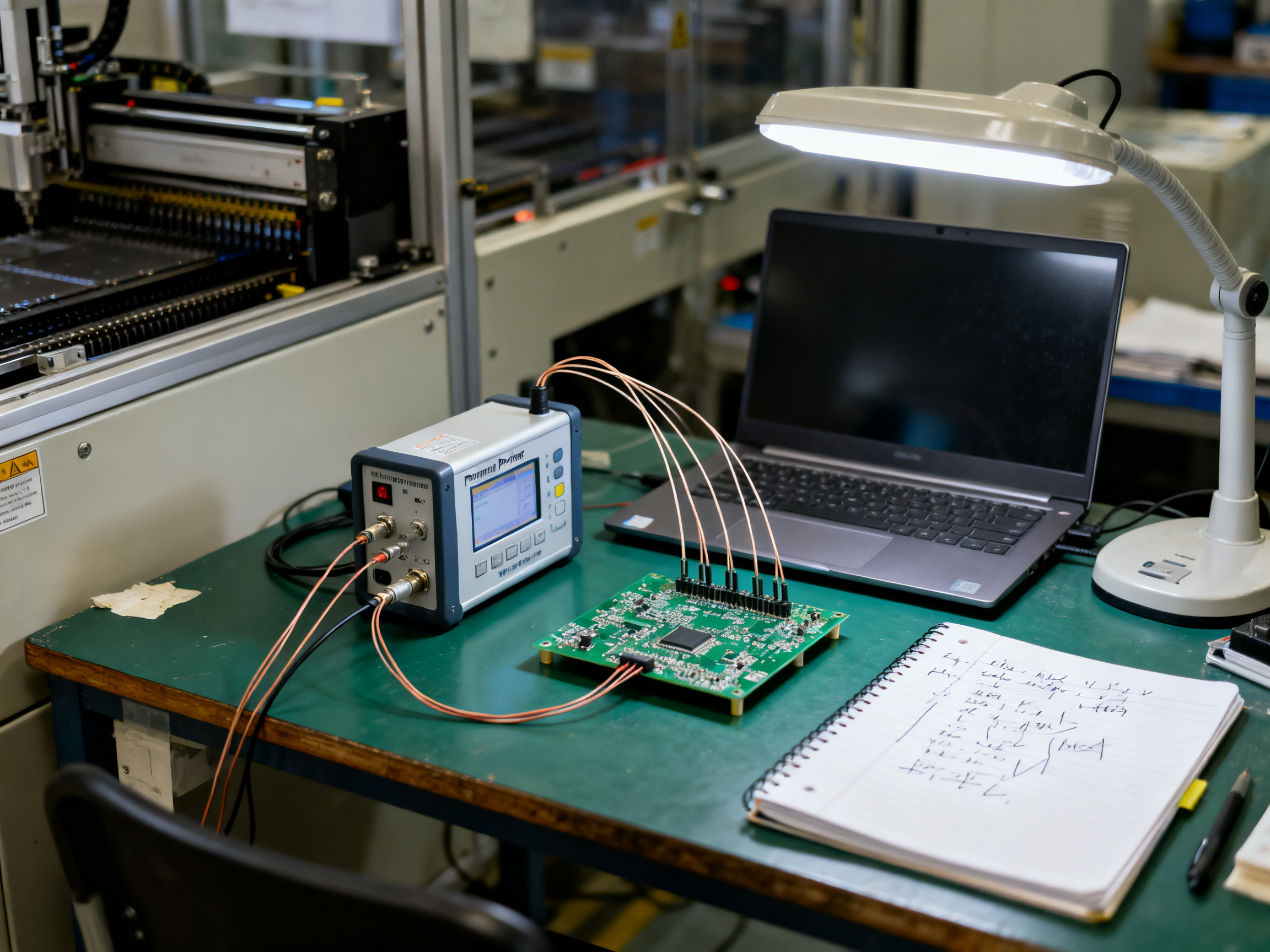
Profile your actual production boards, not coupons. Place thermocouples at the hottest and coldest spots and on one critical component, and attach them the same way every time. Guidance sits in IPC-7530, the mass soldering profiling standard.
Process-control dashboard
Profile status:   PASS / FAIL
Recipe ID:        R-1142   (locked)
FPY (shift):      97.8%
Defect Pareto:    voiding 1.1%, insufficient 0.6%
Drift since last: 0.4 C    (limit: 1.0 C)
Calibration due:  23 days
Ongoing control
Reprofile after paste, stencil, board, or recipe changes. Review alarms weekly, track defects by product, and treat any profile excursion as a change request.
Our process engineers can map this commissioning plan to your board set and facility, then run the sample-board trial we recommend before any purchase.## Frequently Asked Questions
How much does a benchtop reflow oven cost in 2026?
Prices run from a few hundred dollars for basic batch units to several thousand for conveyorized benchtop and desktop SMT reflow oven platforms with nitrogen and datalogging. Production reflow oven systems run into five and six figures. Ask for a written quote with zone layout, options, installation, and warranty separated, because the headline number rarely includes nitrogen, extraction, or service.
How many heating zones do I actually need?
Zone count is not the same thing as profile quality. Four independently controlled zones can beat a ten-zone oven with poor airflow, and the selection methodology we used in this guide explains why. Match the count to your process window, then verify on your boards.
Can a desktop SMT reflow oven handle BGA and QFN parts?
Yes, with caveats. It can solder them if the zone layout lets you shape soak and peak independently and you profile the real assembly. Chamber size, cycle time, and repeatability will trail a production line, and hidden joints need thermocouple data, not a shiny surface. See product 5 for the BGA and QFN case.
When should production users upgrade to a production reflow oven?
Upgrade past roughly 100 boards a day, two shifts, or mixed product with panels. Before that, a desktop unit will serve you and cost less.
Do I need nitrogen?
Not by default. Nitrogen helps on fine-pitch, heavy-copper, and demanding lead-free work, and many SAC pastes are designed for air reflow. Trial it on your worst-case board before budgeting.
What maintenance does a reflow oven need?
Filter changes, thermocouple and sensor calibration, conveyor checks, and airflow inspection. Use manufacturer intervals and your own risk assessment rather than a generic rule.
Is a reflow oven better than a hot plate?
For anything repeatable, documented, or shared between operators, yes. A hot plate is fine for one simple board, and it stays defensible only when someone measured the temperature.
Want a configuration checked against your board set? Our process engineers at S&M Co. Ltd. can run the sample-board trial we recommend before any purchase.## Conclusion: The Best Reflow Oven Depends on Process Risk and Scale
Here is the honest summary. There is no single best reflow oven for 2026, because the right answer tracks your risk and your volume, not the spec sheet.
| If you are… | Start your shortlist with |
|—|—|
| Prototyping and small batches | BTU Pyramax 75A, DDM Novastar, PCB Unlimited GF-120HT |
| Running mixed product, mid-volume | BTU Pyramax 100N, BTU Aurora 150N50, DDM Novastar |
| High-volume or regulated work | Heller MK5 1826, Heller MK7, plus Rehm, Ersa, Vitronics, SEHO |
Thermal control, service reach, line integration, and five-year cost of ownership decide more than zone count or purchase price ever will.
Next steps: define your board mix and volume, shortlist three models, run sample boards, review profiles and defect data, then negotiate acceptance criteria in writing.