
Published: October 26, 2026
Last updated: October 26, 2026
Reading Time: 13 minutes
Reviewed by: [Reviewer name, credentials] (placeholder pending a qualified technical reviewer)
Author: [Author name, role/credentials] (placeholder pending a verified author bio)
A note on pricing data: Prices in this guide come from public marketplace listings, supplier catalogues and manufacturer product pages that were visible in October 2026. Those figures are seller-reported asking prices, not audited sale prices, and most listings leave out freight, duties, rigging, installation, exhaust and electrical work, nitrogen infrastructure, vacuum equipment, profiling, commissioning, training, spares, software and warranty. Treat every number here as a screening range for budgeting and shortlisting, then replace it with a configured, like-for-like quotation before you commit budget. Where a figure could not be verified against a real transaction or a matched configuration, we say so in the text.
What Each Oven Type Costs
1. Benchtop and Desktop Nitrogen Ovens
Benchtop nitrogen ovens are typically the simplest way to add convection reflow to a small assembly line, prototyping lab, or repair bench. In 2026, advertised prices generally begin around $3,600 and rise to approximately $4,500 for common marketplace configurations.
At this price level, buyers should expect a compact oven with a short heating and cooling section, forced-air circulation, basic zone control, and nitrogen-assisted soldering. These machines can handle small to medium boards, but throughput is limited. Loading and unloading is usually manual, and changeovers take longer than on an inline system.
A representative desktop configuration may include:
- A preheating zone followed by 6 to 8 heating and cooling zones
- Temperature profiles stored in onboard memory
- Nitrogen flow control and oxygen monitoring
- A small work tray or conveyor
- Software for profile creation and process logging
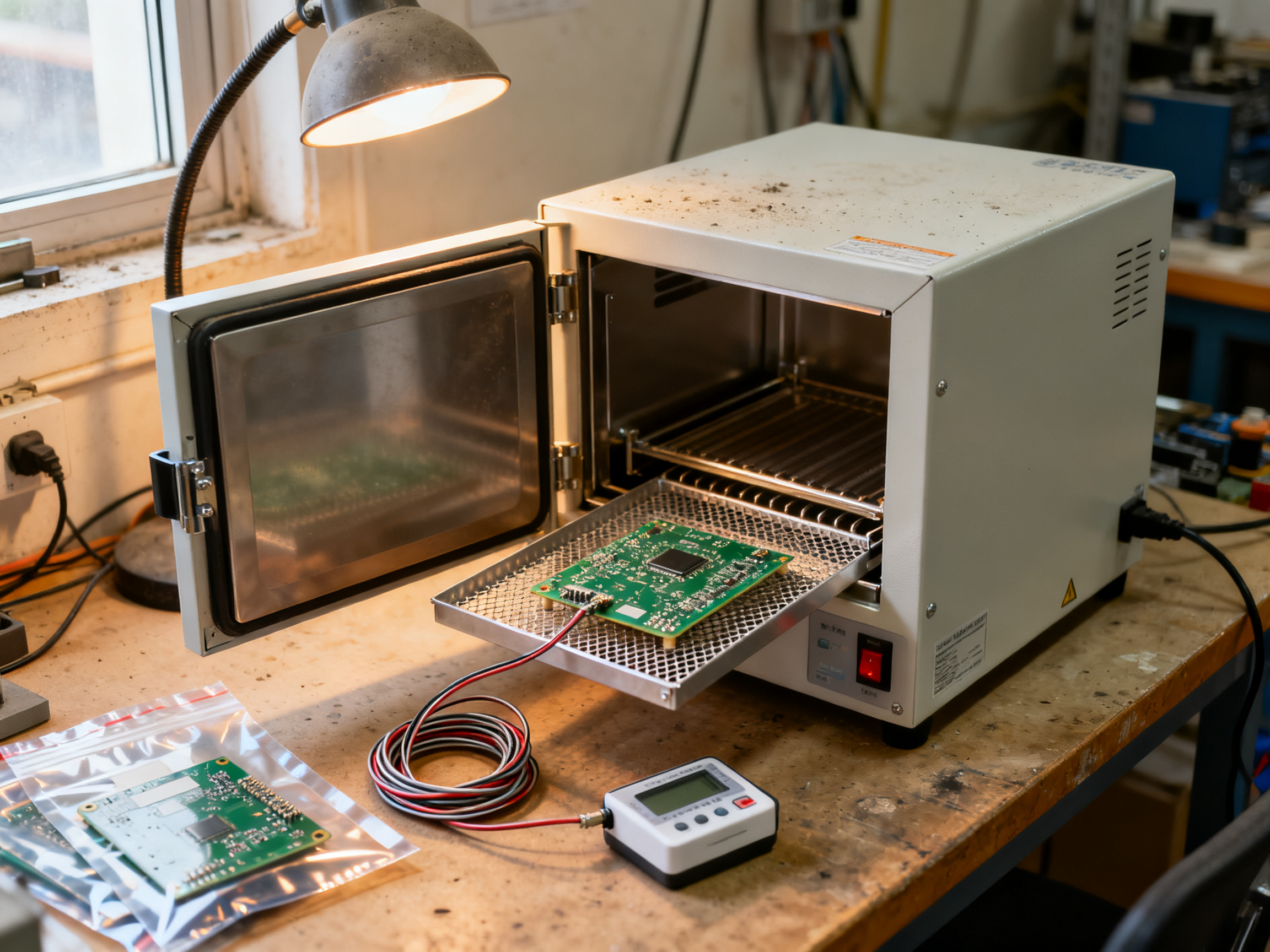
The key limitation is capacity rather than sophistication. A desktop oven can be perfectly effective for prototype builds and short runs, but it becomes the bottleneck when operators must move trays in and out faster than the oven can process them. Extended conveyor versions can command higher prices, often moving the equipment into the compact inline category.
2. Compact Inline Ovens
Compact inline systems bridge the gap between a benchtop machine and a production conveyor. Public listings show prices of roughly $2,000 to $6,900, although unusually low listings may represent older equipment, partially configured systems, deposit prices, or equipment requiring refurbishment.
A buyer’s actual budget can vary widely within this category. Inexpensive units may be used, have fewer zones, lack nitrogen, or require separate accessories. Better-equipped compact systems may include a tunnel conveyor, multiple heating zones, cooling fans, profile storage, and automatic loading controls.
The total number of zones does not tell the whole story. Buyers should compare heating-zone length, conveyor speed limits, heater capacity, temperature stability, usable process-window width, and cooling performance. A longer oven with the same zone count may cost more because it provides more process time and a larger thermal work area.
Compact inline ovens are best suited to moderate production volumes, job shops, and lines that need continuous handling without the footprint or cost of a high-volume system. Expect manual or semi-automatic loading unless the quoted package includes an automated loader.
3. Mid-Tier Inline Nitrogen Ovens
Most buyers comparing established production systems will find their primary market in the $8,800 to $30,000 range. The broad range reflects meaningful differences in tunnel length, conveyor construction, nitrogen capability, controls, monitoring, and supplier service.
A mid-tier inline oven commonly provides:
- 6 to 10 heating and cooling zones
- Forced-air convection with independent zone control
- Nitrogen atmosphere control
- Conveyorized transport and selectable operating speeds
- Recipe storage and downloadable temperature profiles
- Embedded monitoring or integration with line-level software
- Improved insulation, process sensors, and fault diagnostics
The lower end of this category can suit smaller automated lines and controlled manufacturing environments. Toward the upper end, buyers may receive longer process tunnels, higher conveyor loads, better repeatability, stronger documentation, and more capable software. They may also receive factory installation, calibration, on-site training, and a more comprehensive warranty.
Price alone should not determine selection. A quoted $15,000 oven that needs a new $4,000 electrical service and $3,000 exhaust installation may be less economical than a $20,000 machine already supported by the site’s utilities.
4. High-Volume Conveyor Systems
High-volume ovens are designed for continuous production, longer boards, palletized loads, or applications where labor savings justify a larger capital investment. Published supplier guidance places many 12-zone-and-up systems in the $30,000 to $100,000-plus range.
These systems can include:
- Twelve or more heating, soaking, and cooling zones
- High-speed or heavy-duty conveyors
- Automatic board or panel handling
- Programmable conveyor acceleration and deceleration
- Closed-loop control and extensive process logging
- Nitrogen regulation across multiple process zones
- Line integration with barcode readers, printers, inspection systems, or factory MES software
The larger price reflects more than the steel cabinet. High-volume equipment may include faster heaters, more precise sensors, better insulation, stronger conveyors, larger work areas, advanced controls, and engineering support required for automated operation.
Because every board may pass through without a manual operator, reliability becomes especially important. Confirm the stated conveyor load, process-window width, heater redundancy, service access, and support response time. Also verify whether the quoted machine includes loading equipment or only the reflow tunnel.
5. Vacuum-Capable Reflow Systems
Vacuum-capable systems occupy a separate market because they can lower the boiling point of liquid flux, enabling more effective solder removal and helping reduce voids in demanding applications. Published prices range from approximately $15,000 to more than $230,000, but those figures are not directly comparable.
Some listed machines are vacuum reflow ovens. Others are conventional ovens with optional vacuum modules, package- or tray-handling conveyors, specialized cooling, or laboratory features. The wide range also reflects different chamber sizes, vacuum levels, heating methods, automation, and support packages.
Vacuum capability should be justified by the product mix. It may be valuable for high-reliability power electronics, power modules, LED assemblies, automotive electronics, or other applications with tight void requirements. For conventional through-hole or low-complexity board assemblies, paying a large vacuum premium may not produce a proportional process benefit.
When comparing vacuum-capable proposals, ask the supplier to document:
- Rated vacuum pressure and pump configuration
- Pump duty cycle and recovery time
- Board dimensions, loads, and orientation supported
- Interaction between vacuum, heating, and cooling
- Flux compatibility and recommended process profiles
- Whether the pump and chamber are included in the quoted price
Vacuum systems can have significant infrastructure and operating requirements. Confirm floor loading, noise, heat rejection, maintenance access, consumables, pump service intervals, and whether a separate utility connection is required.
6. Used and Refurbished Equipment
Used ovens can provide substantial savings, with aggregated listings spanning approximately $3,500 to $90,000-plus. At the low end, buyers will usually find older compact systems or equipment that is being sold as-is. Higher-priced used systems may be recent, low-hour models from a larger manufacturer, complete with service records, updated controls, and available warranties.
Used equipment is not automatically inexpensive once it is operational. Common additional costs include:
- Heater and thermocouple replacement
- Conveyor belt or chain repair
- Fan and motor replacement
- Control-system or touchscreen upgrades
- Nitrogen-flow and exhaust repairs
- Calibration and profile requalification
- Cleaning, inspection, and recertification
A used oven should be evaluated against the same technical checklist as a new machine. Ask for heater resistance readings, temperature-stability data, profile logs, maintenance records, conveyor load ratings, operating hours, and evidence of calibration. Obtain an independent technician’s inspection whenever practical.
A refurbisher’s warranty can reduce risk, but its scope matters. Confirm whether it covers parts only or also labor, travel, controls, heaters, and the vacuum pump if present. A long warranty on an unsupported machine may offer limited practical protection.
The Features That Actually Move the Price
Heating Capacity and Number of Zones
More zones generally provide finer process control, but the useful metric is the time and temperature range available to the board. Buyers should request zone-by-zone airflow, heater wattage, chamber dimensions, and maximum conveyor speed. A machine with many small zones may still deliver a narrow process window if airflow or heating capacity is limited.
Nitrogen Integration
Nitrogen systems vary considerably. Basic systems regulate flow into the chamber, while more capable systems measure oxygen concentration, automatically compensate for leakage, and maintain separate atmospheres in selected zones. Confirm whether nitrogen generation, piping, flow meters, sensors, and gas consumption are included.
Conveyor Design
Conveyor price depends on width, load capacity, speed range, board support, chain or belt type, heating compatibility, and automation. Manual-adjust boards are inexpensive; powered rollers, accumulators, carriers, and edge handling can add substantially to the total.
Software and Traceability
Temperature-profile editing is common on mid-range machines. More advanced systems add recipe management, barcode-based profile selection, automatic logging, MES integration, remote diagnostics, and user-access controls. Determine whether software licenses are perpetual, whether cloud services are required, and what happens to historical data if the controller is replaced.
Automation and Integration
Automatic loading, unloading, board detection, conveyors between printing and inspection, barcode scanning, and rejection systems can add significant cost. These features may reduce labor or improve traceability, but they also add mechanical complexity and single points of failure. Value automation according to actual production volume rather than projected future volume.
Build Quality and Support
Industrial ovens are used continuously, often for multiple shifts. Warranty terms, local service availability, replacement-part lead times, and remote support can therefore be more valuable than minor differences in published specifications. Confirm whether commissioning is included and whether the supplier can perform repairs at the installation site.
Operating Costs Buyers Often Miss
The purchase price is only one part of the lifecycle cost. The following expenses should be modeled over five to ten years:
| Cost category | What to include |
|—|—|
| Electricity | Heating elements, pumps, fans, conveyors, controls, and compressed-air equipment |
| Nitrogen | Consumed gas, generator capacity, piping, pressure regulation, and leak reduction |
| Preventive maintenance | Heaters, thermocouples, fans, belts, chains, bearings, filters, sensors, and fluid or seal maintenance |
| Profiles and process support | Engineering time, validation, troubleshooting, and scrap-reduction programs |
| Software and connectivity | Licenses, servers, integration work, cybersecurity, and technical support |
| Facility work | Electrical service, exhaust, ventilation, floor loading, noise control, and utility access |
| Downtime | Lost production, expedited service, expedited freight, and operator overtime |
| Spare parts | Critical heaters, sensors, boards, motors, belts, and recommended tool kits |
Electricity
A nitrogen oven does not eliminate the energy used to heat the boards; it improves the atmosphere around them. Power consumption depends on chamber size, heater capacity, duty cycle, set-point temperatures, conveyor utilization, and local electricity prices. Obtain expected connected load and a realistic duty-cycle estimate from the supplier. Do not rely only on a maximum electrical rating when building the operating budget.
Nitrogen
Nitrogen consumption varies with chamber volume, leakage, operating temperature, purge frequency, and open-door events. A small benchtop unit may use bottled or generated nitrogen, while a production tunnel may require a bulk supply, dedicated generator, or manifolded system. Confirm whether a lease, delivery, or minimum-use charge applies.
Exhaust and Ventilation
Reflow ovens release heat and process by-products into the work area. Local exhaust requirements depend on the product profile, flux type, oven configuration, and applicable regulations. Include exhaust ducting, fans, balancing, make-up air, and rooftop or wall penetrations in the installation budget. A supplier should be able to provide heat and exhaust data, even if final design belongs to a qualified ventilation engineer.
Maintenance and Consumables
Heaters, thermocouples, conveyor parts, and filters wear with use. Keep critical spares on site, but avoid treating every optional component as a required inventory. A service agreement can make budgeting more predictable; compare its cost with the supplier’s historical response performance and your internal maintenance capability.
Downtime and Yield
The economic value of an oven includes the production it protects. A lower-cost machine with frequent profile failures, inconsistent repeatability, or slow manual handling may cost more through downtime and scrap. Compare expected good output, not simply cycles per hour.
Installed Cost: What a Headline Price Usually Excludes
A supplier quote should separate the machine from the project around it. Request a line-item proposal covering at least:
- Oven and standard configuration
- Optional heating, cooling, nitrogen, vacuum, or conveyor features
- Shipping, insurance, import duties, and delivery
- Rigging, unpacking, and placement
- Electrical service and cable or conduit work
- Exhaust and ventilation work
- Nitrogen supply and required piping
- Compressed air, process water, vacuum, or other utilities
- Installation, calibration, and commissioning
- Operator and maintenance training
- Profiles for the buyer’s actual assemblies
- Spare parts and warranty terms
- Taxes and any service contract
For a US buyer, a $25,000 oven might become a $42,000 installed project after freight, rigging, electrical work, exhaust, startup, and training. That is not necessarily excessive. It means the project must be judged on total installed cost and expected operating performance.
To compare quotations fairly, ask every supplier to use the same scope template. Specify the board dimensions, component and solder-paste characteristics, production volume, process-temperature range, conveyor load, available utilities, required automation, installation country, and target operating date. If those inputs are absent, prices cannot be compared reliably.
A Practical Quote-Comparison Method
Step 1: Define the Process Requirement
Start with the assembly rather than with a preferred zone count. Record:
- Smallest and largest board dimensions
- Board weight and conveyor load
- Components, packages, and thermal mass
- Solder paste, no-clean, or water-soluble flux requirements
- Required process window and profile validation criteria
- Daily volume, shift pattern, and expected growth
- Automation and traceability requirements
- Nitrogen or vacuum justification
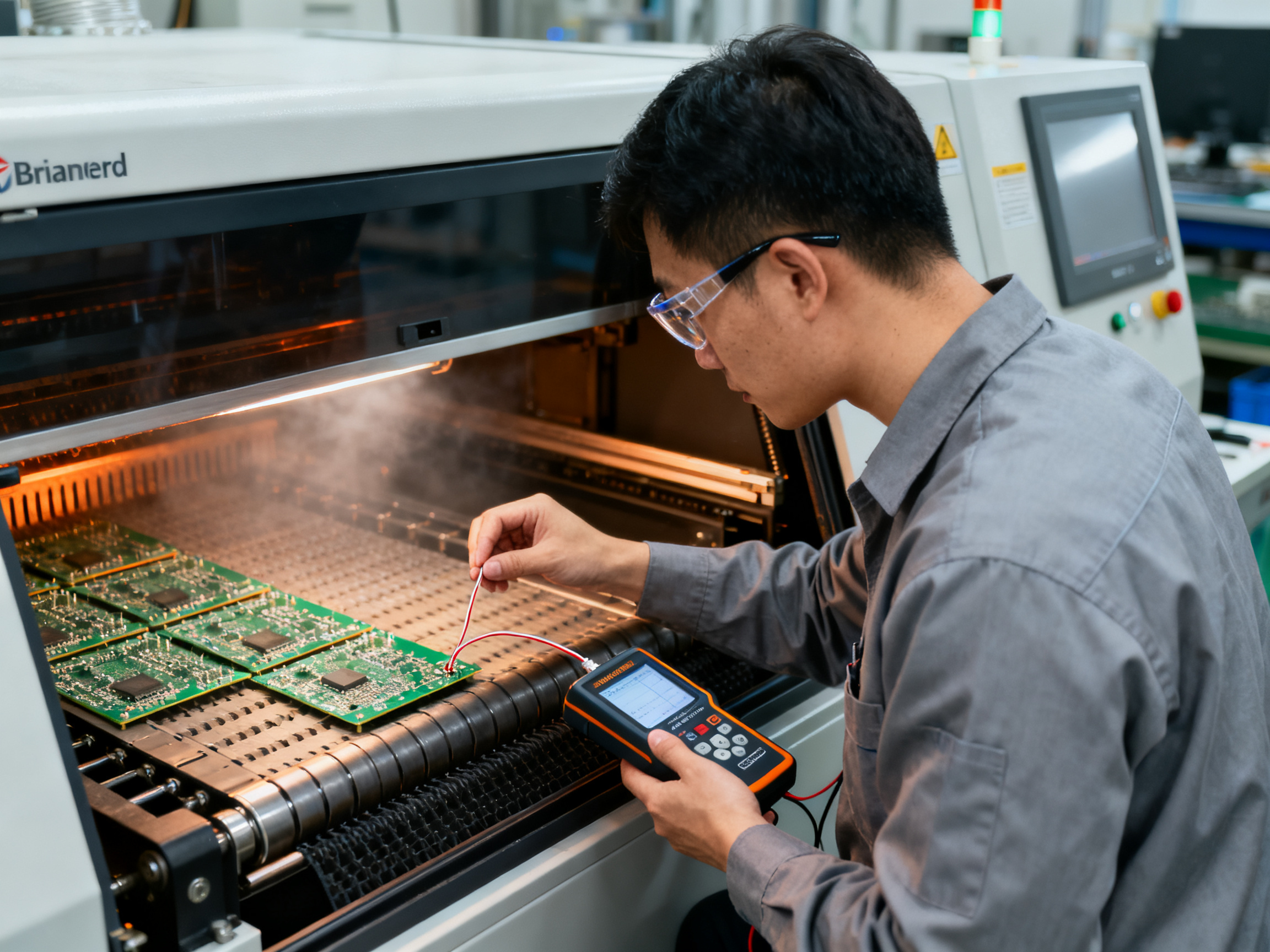
If process engineers are available, include them before requesting prices. An oven selected primarily by sticker price may require lower reflow temperatures, longer soak times, or more aggressive cooling than the proposed system can economically provide.
Step 2: Normalize the Configuration
Create a spreadsheet with one column for each supplier and rows for every relevant component. Distinguish standard, optional, and excluded items. Record the exact chamber dimensions, usable conveyor area, zone count, temperature range, heater type, conveyor speed, nitrogen controls, software features, automation, and warranty.
Avoid comparing a base machine with a fully configured system. A quote showing only the oven, delivery, and installation is not equivalent to one including nitrogen regulation, profile validation, an automatic loader, or a comprehensive warranty.
Step 3: Add the Full Project Cost
For each quotation, calculate:
Total installed cost = equipment + options + freight + taxes and duties + rigging + utilities and facility work + commissioning + training + initial spares + service contract
Keep one-time and recurring costs separate. For recurring costs, estimate annual electricity, nitrogen, maintenance, consumables, software, and downtime based on expected utilization.
Step 4: Compare Lifecycle Cost
A useful simplified calculation is:
Five-year total cost = installed cost + five years of energy and gas + five years of maintenance and spares + service fees + expected downtime and scrap costs
This calculation will not predict every failure, but it prevents a high acquisition price from looking artificially attractive—or a better-equipped machine from looking unnecessarily expensive.
Step 5: Validate Performance
Before the final award, ask for a factory or site demonstration using a profile representative of the buyer’s product. Evaluate ramp-up and soak stability, repeatability, cooling uniformity, conveyor loading, changeover time, profile transfer, alarm handling, data export, operator access, and serviceability.
Contract language should tie acceptance to measurable requirements. Depending on the application, these may include profile repeatability, temperature stability, throughput, defect performance, documentation, and successful training. Payment milestones tied to successful delivery, installation, and acceptance can protect both parties.
Step 6: Check Service and Parts
Ask how service is delivered, where technicians are based, what the response target is, and which parts are stocked locally. Confirm access to heaters, thermocouples, control boards, motors, sensors, and software support. If one plant produces critical products, establish what the contingency plan is when a controller or heater fails.
Questions to Ask Every Supplier
Use the same short list with every bidder:
- Is this the complete oven price, or does the listed price require options?
- How many usable heating, soaking, and cooling zones are included?
- What are the chamber dimensions, temperature range, and temperature stability?
- What conveyor width, load, speed range, and board formats are supported?
- Is nitrogen included, and is oxygen monitoring standard or optional?
- What electrical supply, compressed air, exhaust, cooling water, and other utilities are required?
- What are the connected load and typical energy consumption?
- Which factory calibration, profile development, installation, and training are included?
- What is the warranty for parts, labor, heaters, controls, and the conveyor?
- Where is service provided, and what are the typical response times?
- Are critical spare parts included or recommended?
- Are software licenses, profile storage, and data exports perpetual?
- What delivery lead time and payment schedule apply?
- Can the complete package be demonstrated on representative work?
- Which items are excluded from the quoted price?
Red Flags to Watch For
A quote that is dramatically lower than the others is not necessarily a bargain. Review whether the seller has omitted essential elements such as:
- A functioning conveyor or the intended production capacity
- Nitrogen regulation or process monitoring
- Required electrical capacity
- Factory calibration and profile validation
- Freight, rigging, installation, or import costs
- Warranty coverage or legitimate service support
On the used market, be cautious when the seller cannot provide operating hours, maintenance records, temperature profiles, or access for inspection. Confirm that the serial number is legitimate and that replacement parts or controller support remain available.
Also beware of quoted ranges presented as budgets. A broad range such as $8,800 to $30,000 may combine different zone counts, nitrogen packages, automation levels, and project scopes. It is useful for initial screening but not for purchase approval. Request a configuration-specific quotation tied to a documented specification.
Bottom Line: The 2026 Budget Range
For early planning in the US, use these broad benchmarks:
- Benchtop nitrogen oven: approximately $3,600 to $4,500
- Compact inline oven: approximately $2,000 to $6,900
- Mid-tier inline nitrogen oven: approximately $8,800 to $30,000
- High-volume conveyor oven: approximately $30,000 to $100,000 or more
- Vacuum-capable system: approximately $15,000 to $230,000 or more
- Used or refurbished oven: approximately $3,500 to $90,000 or more
These are indicative advertised-price ranges rather than audited transaction prices. They should help establish a first budget, not replace a supplier quotation. The most defensible purchase decision is based on the installed cost, the oven’s fit with the actual product process, five-year operating cost, and the availability of service and spare parts.
The safest buying strategy is straightforward: define the process, specify the site conditions, require configuration-level quotations, add every excluded project cost, and compare lifecycle economics. When two otherwise comparable quotes differ by only a few thousand dollars, warranty, service coverage, process repeatability, and compatibility with future production volumes may matter more than the smallest headline price.
Author bio and expert callouts to be inserted in their planned sections.
About the Author
[Author name] is a [role/credentials] with experience in [SMT equipment, electronics manufacturing, procurement, or process engineering].
[Verified experience sentence] covering hands-on work with reflow soldering, production-line planning, equipment selection, or manufacturing cost analysis.
This bio is a placeholder pending verification of the author’s name, title, and hands-on background. It will be updated with confirmed credentials before publication. Have questions about the research behind this guide? Reach out to [Author name] at [email or contact link].
Every number in this guide is treated as a starting point, not a verdict. That includes the author line. Naming a real reviewer, a specific employer, or a certification that we cannot confirm would add polish, but it would also add risk for anyone who actually relies on this guide to budget a production line. So we left the fields open on purpose.
If you can confirm author details or spot a listing that looks off, send a note and we will update the article with the change and the date it was made.
SMT Reflow Oven Price Ranges by Oven Type
Here is the short version: reflow oven prices in 2026 span from roughly $2,000 for a stripped-down compact unit to well over $200,000 for a large vacuum-capable system, and almost nothing in between is directly comparable until you configure it. The numbers below are advertised asking prices pulled from public marketplace listings and supplier catalogues visible in October 2026, not audited sale prices. Treat them as screening ranges, then replace them with like-for-like quotes.
| Oven type | Indicative 2026 price | Typical zones | Throughput profile | Best fit | Main limitation | Likely add-ons |
|—|—|—|—|—|—|—|
| Benchtop / desktop nitrogen | $3,600 to $4,500 | 6 to 8 heating and cooling | Manual tray handling, low output | Prototyping, labs, repair benches, short runs | Capacity, slow changeovers | Nitrogen generation, extended conveyor, profiler |
| Compact inline | $2,000 to $6,900 | 6 to 10 | Continuous conveyor, low to moderate rate | Job shops, mixed-volume assembly, pilot lines | Narrow process window, manual loading | Oxygen monitoring, auto loader, better cooling |
| Mid-tier inline nitrogen | $8,800 to $30,000 | 6 to 10 | Moderate continuous rate, repeatable | Consumer electronics, contract manufacturing, automotive electronics | Floor space and utility work | Auto load/unload, MES links, barcode recipe selection |
| High-volume conveyor | $30,000 to $100,000+ | 12 and up | Continuous, multi-lane capable | Smartphones, semiconductors, high-mix production | Capital and facility requirements | Line integration, inspection, printer handling, spares package |
| Vacuum-capable | $15,000 to $230,000+ | Varies widely | Vacuum cycle added to normal reflow | Power modules, LED, high-reliability and defense work | Cost per board unless void control is required | Pump service, chamber loading, cooling, validation |
| Used or refurbished | $3,500 to $90,000+ | Varies | Depends on condition | Budget-constrained lines, spare capacity machines | Unknown wear, limited warranty | Heaters, thermocouples, control boards, recalibration |
Public marketplace listings show a wide spread for basic configurations, with compact models advertised from about $2,000 and desktop nitrogen units clustered near $3,600 to $4,500, while generic 8 to 12 zone machines run between roughly $3,000 and $12,000 (marketplace reflow oven listings). At the top of the market, one vacuum-labelled system was listed at about $230,000, but listings filed under that label describe very different equipment classes, so treat that number as an outlier rather than a category average. A reconditioned example, a Dima SMRO-0252 at $4,950, shows how far apart used asking prices can sit, and why you cannot calculate a discount percentage without a matched new quote (Caladan Semiconductor listing).
Expert Tip: Before you treat any advertised price as comparable, write down your thermal process window (peak temperature, soak time, ramp and cooling limits) and your real production load (board sizes, daily volume, shift pattern). Two ovens with the same zone count can sit $8,000 apart in price, and the cheaper one may not have the airflow, heater capacity, or process time your product actually needs. Supplier price guides such as this global SMT reflow oven price overview are useful for orientation, but they are written by sellers, not auditors.
Choosing by application matters more than choosing by price band. A benchtop unit is genuinely fine for a prototype lab where an engineer reflows a dozen boards a week, and it is a poor fit for a line running consumer electronics across two shifts. Mixed-volume job shops usually land in the compact inline range, since they need continuous handling without a large footprint. Smartphones and semiconductor packaging push buyers into high-volume conveyor systems, where every board can pass through without an operator touching it, which makes uptime the real product. Automotive, aerospace, and military work sits somewhere else entirely, with traceability, documented profile records, and customer-specific qualification requirements usually outweighing the sticker price. Lead-free reflow oven cost conversations get sharper here too, since lead-free thermal profiles are more aggressive and leave less margin for a marginal machine.
And a low purchase price does not equal a low reflow oven cost per board. A $4,000 desktop oven that bottlenecks at 40 boards an hour, needs a nitrogen bottle refilled twice a day, and holds a process window your assembly cannot live inside will cost more per good board than a $22,000 tunnel that runs unattended and holds profile repeatability shift after shift. Compare cost per good board, not cost per machine.
If you are shortlisting now, tell suppliers your board dimensions, volume, and utility limits up front, and ask for a configured quotation with freight, installation, and commissioning broken out. That single step eliminates most of the price confusion in the table above.
The Features That Change Reflow Oven Cost
Zone count gets all the attention during a price comparison, and it is the weakest proxy for capability. A 10-zone oven with thin airflow and small heaters can hold a narrower process window than a 6-zone machine with real thermal mass. Here is how the features that actually move the price line up, and what each one buys you on the line.
| Feature | Price impact | Operational benefit | Best fit | Ask the supplier |
|—|—|—|—|—|
| Heating and cooling zones, heated length | High | Wider process window, more soak time, tighter repeatability | Mixed products, lead-free work | Usable heated length in mm, heater wattage per zone, zone airflow |
| Conveyor width and lane count | Medium to high | More boards per pass, dual-lane flexibility for two recipes | High-mix lines, contract manufacturing | Max board size, load rating, lanes and how they share the tunnel |
| Nitrogen and oxygen control | Medium | Less oxidation, cleaner solder joints, better wetting | Fine-pitch, high-reliability assemblies | Is generation, piping, sensors and gas included, or just a flow meter |
| Vacuum module | Very high | Lowers flux boiling point, voids below 1% on many applications | Power modules, LED, automotive | Pump type, rated pressure, recovery time, chamber size, pump in price |
| Cooling capability | Medium | Faster changeovers, less thermal damage on large packages | Lead-free, heavy boards, quick takt | Cooling airflow, sink or fan count, cold-side uniformity |
| Flux management | Medium | Less residue, fewer cleaning cycles, safer exhaust | No-clean and water-soluble flux | Flux trap, exhaust volume, any formic-acid processing |
| Profiling software and traceability | Low to medium | Recipe governance, barcode selection, MES reporting | Automotive, medical, defense | License model, data export, what happens to history if the controller is replaced |
| Automation and line interfaces | High to very high | Less manual handling, no operator touch per board | Two-shift and unattended lines | Auto load/unload, Hermes and CFX compatibility, printer and inspection integration |
| Build quality, service, warranty | Medium | Less downtime, longer life, easier support | Any production site | Response time, local parts stock, warranty on parts and labor |
Two of these deserve a closer look. Nitrogen integration is where quotes hide the most, because a simple flow valve and a closed-loop system with oxygen measurement, leak compensation and zoned atmosphere control are priced completely differently. Ask whether nitrogen generation, piping, sensors and the air consumption are inside the price. The same question applies to vacuum. Heller’s own vacuum reflow documentation describes a vacuum chamber in the reflow zone with controlled pump-down steps and reports voiding under 1% for many applications, but that is a manufacturer claim for a specific machine, so validate it on your own assembly rather than inheriting the number (Heller vacuum reflow oven datasheet).
Automation and interfaces are the second area where buyers overbuy or underbuy. A fully automated load and unload system plus barcode recipe selection makes sense on a two-shift line with predictable volume. On a job shop with frequent changeovers, it can sit idle while you pay for it. And if your plant already runs standard line protocols, machine-to-machine communication has to be specified by revision rather than by marketing phrase. IPC publishes IPC-HERMES-9852 for SMT machine communication and IPC-2591 CFX for factory-level exchange, and each has its own version history. Ask which revision the control package supports, then test it live.
Flux handling deserves a mention too, because it is easy to ignore and expensive to retrofit. BTU describes dedicated flux management features and oxygen control down to low parts-per-million levels in peak zones on some models, which points to the real question: can the oven handle your flux type and residue load without manual cleaning between shifts (BTU reflow oven product information).
Now the buyer’s side of the ledger. Separate what the process demands from what the vendor enjoys selling. Heating capacity, effective heated length, cooling, and a usable process window are essential. Oxygen monitoring, dual lane, vacuum, advanced traceability, and full automation are options that need a business case. Buyers who skip this distinction end up either under-specifying, then paying for a retrofit and requalification, or buying capability they will never switch on.
One practical step: put the process requirement, not the feature list, on the first page of your RFQ. Paste widths, board sizes, component temperature limits, paste and alloy data, daily volume, and shift pattern, then ask each supplier to state which of those features are required and which are optional. The answers will separate the real proposals from the padded ones.
Expert Tip: Write the process window down before you ask for prices. List board dimensions, component mix, solder paste and alloy, target throughput, peak and soak limits, atmosphere requirement, traceability needs, and the defect level you will not accept. Two ovens that look identical on a spec sheet can behave very differently once loaded with real production boards. Ask every supplier to profile a sample board from your own assembly, or to run a documented process-capability demonstration, and treat the result as part of the acceptance test. IPC lists IPC-7530B as guidance for temperature profiling in reflow and wave processes, so you have a standard reference to point at.
Beyond Purchase Price: Total Cost of Ownership
The sticker price is the easiest number in this entire guide to find. It is also the least useful one. A reflow oven is a machine that lives on your floor for a decade, drinks electricity every hour it is switched on, eats nitrogen, wears out heaters and thermocouples, and sits between your paste printer and your AOI. When you model the whole thing properly, a $4,000 difference in purchase price can disappear in eighteen months of operating cost.
So let’s build the model. Two tables, four formulas, and one worksheet you can copy into a spreadsheet.
The Five-to-Ten-Year Framework
Think of ownership in three buckets. Upfront costs land once. Recurring costs land every year for as long as you run the machine. And then there are the costs nobody quotes, which show up as scrap, overtime, and missed shipments.
Here is the worksheet. Use the “your estimate” column to fill in real numbers from your site.
| Cost category | Upfront or recurring | Unit assumption | Annual cost (your estimate) | 5-year cost | Where the number comes from |
|—|—|—|—|—|—|
| Oven and options | Upfront | Configured quotation | n/a | from quote | Supplier quotation, itemized |
| Freight, duties, rigging | Upfront | Per shipment | n/a | from quote | Carrier quote plus customs broker |
| Electrical and exhaust work | Upfront | Fixed price | n/a | from quote | Electrical contractor, ventilation engineer |
| Nitrogen infrastructure | Upfront | Piping, manifold, generator | n/a | from quote | Gas supplier or generator vendor |
| Installation, commissioning, training | Upfront | Fixed price | n/a | from quote | Supplier scope sheet |
| Electricity | Recurring | kWh per year × tariff + demand charges | | | Metered data or supplier duty-cycle estimate |
| Nitrogen | Recurring | Nm³ per year × delivered price | | | Flow log times operating hours |
| Preventive maintenance | Recurring | Service visits + parts | | | OEM schedule, hourly rates |
| Spare parts and consumables | Recurring | Heaters, thermocouples, belts, filters | | | BOM from supplier |
| Calibration and profiles | Recurring | Profiler checks, engineering hours | | | Internal rate |
| Software and connectivity | Recurring | Licenses, servers, integration | | | Contract terms |
| Labor and operator time | Recurring | Hours × burden rate | | | Finance |
| Downtime | Recurring | Failures × MTTR × cost per hour | | | Reliability log, finance |
| Scrap and rework | Recurring | Defect rate × cost per board | | | Quality data |
| Facility and floor space | Recurring | Square meters, noise, ventilation | | | Facilities |
| Residual or resale value | Offset | Less resale minus disposal | | | Dealer or scrap value |
| Total | | | | | |
Two rules for filling this in. First, never use peak nameplate power. Get the measured average across warm-up, idle, and production, because an oven idling at full temperature between batches burns money that produces nothing. One manufacturer, for example, separates a peak rating of 86 kW from a much lower average draw on its nitrogen conveyor model, and that gap is the whole story for a plant running 16 hours a day with lulls between shifts (Flason product data). Vendor figures are a starting point, not a promise. Measure on site.
Second, keep nitrogen honest. Consumption scales with chamber volume, leakage, temperature, purge cycles, and how often somebody opens the door. Some nitrogen manufacturers advertise control features that cut gas use substantially, but you should verify that on your own recipe and leak conditions rather than inherit the claim (Heller small-footprint system).
Pro Insight: The line item that usually flips a purchasing decision is not electricity. It is scrap and rework. A marginal oven that runs a sloppy profile on a fine-pitch assembly can add half a percent to defect rate, and at 20,000 boards a month that is 100 boards a month that must be diagnosed, reworked or thrown away. Half a percent of quality cost often exceeds the entire annual maintenance budget of the cheaper machine.
Four Numbers That Make the Comparison Real
Cost per good board. This is the one your operations manager will care about most.
Cost per good board = Annualized TCO ÷ good boards produced per year
Annualized TCO means the installed cost spread over your expected service life, plus the annual recurring costs. Good boards means boards that passed final inspection, not boards that went in. If machine A costs $10,000 more but produces 30% more good boards, it is the cheaper machine per unit of output. That comparison is where a mid-tier inline oven beats a benchtop unit in a real production setting, and it is why a desktop oven can look absurd on paper at $3,600 yet lose badly on cost per good board when it bottlenecks at 40 boards an hour.
Cost per operating hour. Spread annual recurring cost across hours the oven is actually producing, not hours it is powered and idle. Two ovens with identical energy draw can differ sharply here because one sits idle between jobs and the other runs continuous takt. This number is also the cleanest way to compare a new machine against a used one, since used equipment’s real cost usually shows up in longer cycle times and more manual handling.
Payback period.
Payback period (years) = Net investment ÷ annual cost savings versus the baseline
Where net investment is the installed cost difference, and the baseline is the machine you would buy otherwise. Use the cost per good board difference for a realistic savings figure. If the alternative is no oven at all (outsourced reflow, or hand soldering plus a hot-air rework station), build a separate comparison and include the logistics and transit cost of shipping boards out and back. That outsourcing model wins surprisingly often for low volumes, so it deserves an honest line in your model.
Downtime exposure. Model it as frequency multiplied by time to repair multiplied by cost per hour of disruption.
Expected annual downtime cost = Failures per year × MTTR (hours) × cost per hour
Cost per hour is not just the contribution margin you lose. Add direct labor sitting idle, expedited freight for parts, and recovery costs for boards that fail in-line. We could not find an independently documented hidden-cost failure case in the research for this guide, so treat this as a reasoning framework rather than a reported anecdote. Build it from your own downtime history, because that history is the most trustworthy number you have.
What Actually Changes the Total
Four variables do most of the work, and they are worth watching during evaluation.
Energy efficiency. A well-insulated oven with better heaters may draw less at the same set point, but the more important factor is idle control. What happens when the oven is powered but not producing? Ask specifically about idle energy management, and ask for before-and-after measured data rather than a feature list.
Uptime. Heater redundancy, serviceable access to fans and control boards, and local parts stock all translate directly into avoided downtime. A machine whose controller replacement takes six weeks to source is a different asset from one with a spare on the shelf, no matter what the discount was.
Maintenance access. If a technician needs to strip the entire cabinet to reach a fan motor, your downtime per service event grows. Ask how long a routine heater change takes on that specific machine. Honestly, the best question is whether the supplier will let you watch one, or provide a service video showing the access route.
Defect reduction. This is the quality payoff and the hardest to quantify before purchase. It also gets easier to defend when you require a demonstration on representative loaded boards, with a defined acceptance criteria and a profiler report, rather than accepting a generic performance claim.
Where the Money Sometimes Is Not
Two line items surprise people. First, floor space and facility work. A high-volume conveyor oven needs an exhaust path, an electrical service that may need upgrading, and space that eats into production floor. Second, residual value. A well-supported used oven from a major manufacturer with service records holds value better than a niche unit with an unsupported controller. Set a residual assumption in your model, even a rough one, because ignoring it quietly flatters new equipment.
Then there is the question of the second oven. It is defensible when the reflow oven is a single point of failure on a critical line, when two products need genuinely different profiles and changeovers are eating your takt, or when you need a backup for maintenance windows. But a second machine carries its own underutilization, its own floor space, and its own utility draw. Compare the annualized cost of that second oven against the expected avoided disruption cost. Sometimes the answer is clear and cheap. Sometimes it is a $30,000 mistake made in the name of safety.
Expert Tip: Ask every supplier to complete the recurring-cost rows of your worksheet, in writing, using your own board sizes, shift pattern, and local utility tariffs. A supplier who will fill in annual energy and nitrogen figures for your specific process is telling you something about how they will support the machine afterward. A supplier who returns a brochure and a price is telling you something else.
Ready to put this model to work? The next section walks through how to normalize supplier quotations so that every line item lands in the same row, then how to test the winners on real boards before you sign anything.
How Production Requirements Affect the Right Budget
Your oven spec is a consequence of your production plan, not a preference. Line speed, board size, product mix, changeover frequency, and uptime targets all point at a specific oven class. Start there and the budget tier follows.
Decision Tree: Which Oven Class Fits?
- Under 200 boards a day, one or two products, engineer or technician loading trays? → Benchtop or desktop nitrogen oven, $3,600 to $4,500.
- Mixed volumes, frequent job changes, continuous handling needed? → Compact inline oven, $2,000 to $6,900.
- Repeatable daily output, one or two shifts, nitrogen and documented profiles required? → Mid-tier inline nitrogen oven, $8,800 to $30,000.
- Continuous multi-shift line, unattended board handling, long boards or panels? → High-volume conveyor system, $30,000 and up.
- Void control is the product requirement, not a preference? → Vacuum-capable system, $15,000 to $230,000+.
- Budget constrained, spare capacity or a second line? → Used or refurbished, $3,500 to $90,000+ with an inspection attached.
Industry pushes the answer further in specific directions. High-volume consumer electronics and semiconductor packaging reward dual-lane capacity and conveyor reliability. Automotive work adds traceability and documented profile records. Aerospace and military work adds qualification and documentation overhead that outweighs the machine price. BTU’s own oven selection guidance makes the same point, noting that real capacity depends on belt speed, board length, spacing, and thermal load rather than on a catalog figure.
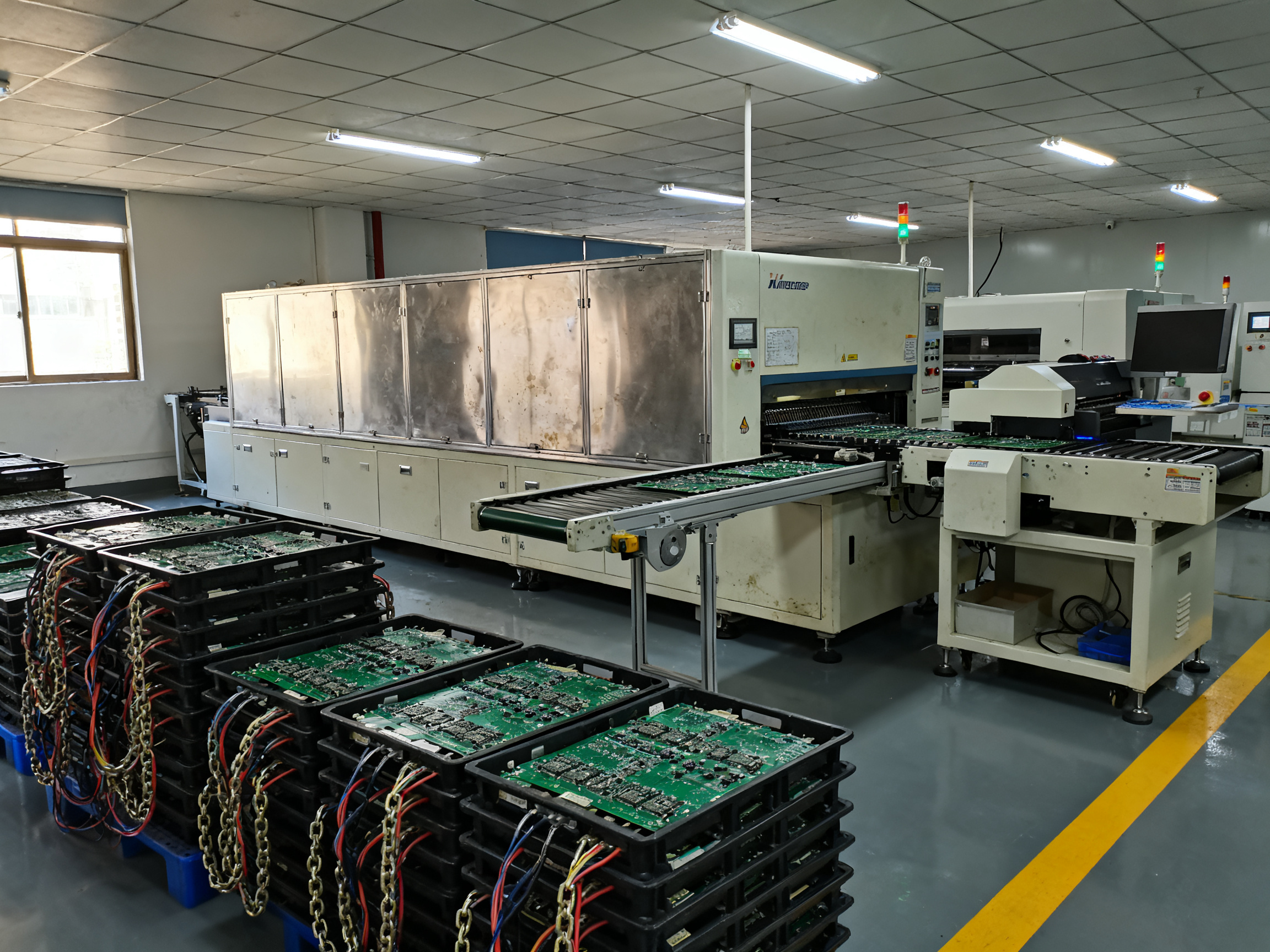
A Throughput Example (Hypothetical Inputs)
Take a mid-sized consumer electronics line. Assume boards of 250 mm with a 50 mm gap, so pitch p = 300 mm. Target takt T = 30 seconds per board.
Required speed = p ÷ T = 300 mm ÷ 30 s = 600 mm/min
Now the thermal limit. If the oven has 3,600 mm of effective heated length and the profile needs 240 seconds of residence, then:
Maximum speed = L ÷ t = 3,600 mm ÷ 240 s = 900 mm/min
Since 600 mm/min sits below the 900 mm/min ceiling, one lane works. Add a second lane and theoretical output doubles, provided the printer and inspection equipment upstream can feed it.
Where the numbers do not line up, you have found your real budget driver. If required speed exceeded 900 mm/min, you would need more heated length, a shorter pitch, dual lanes, or a second oven. That decision, not the sticker price, sets the budget.
When a Bigger Budget Earns It
Pay more when the oven is the line constraint, when changeovers eat your takt, when dual-lane processing removes a shift of labor, or when a second machine removes a single point of failure. Also pay more when full SMT line integration saves more downstream than it costs upfront. Skip the premium when a feature sits switched off most of the day.
Compute the capacity you actually need, then match it to the tier. The right oven is the cheapest one that clears your throughput and quality requirements without starving for floor space, power, or service access.
New vs. Used vs. Refurbished Reflow Ovens
Used ovens look like a bargain until you price what a machine with tired heaters and a 15-year-old controller really costs you. Here is the honest comparison.
| Factor | New | Used | Refurbished |
|—|—|—|—|
| Acquisition price | Highest | Lowest, but hard to predict | Mid-range, tied to rebuild scope |
| Warranty | Full, typically 12 to 24 months | Often none or seller-only | Partial, parts and labor vary |
| Lead time | Weeks to months | Days | Weeks to months |
| Remaining service life | Full 10 years plus | Unknown, ask for operating hours | Partially renewed |
| Software and controls | Current, supported | Possible obsolescence | Mixed, depends on rebuild |
| Spare parts | Full support | Usually available for major brands | Depends on model origin |
| Integration risk | Low | Medium to high | Medium |
| Best for | New lines, automotive and medical work | Spares, pilot lines, budget-limited shops | Shops wanting near-new quality at mid price |
The used market in 2026 spans everything from a $4,950 reconditioned Dima convection oven to used Heller listings that run into the tens of thousands, so a single discount percentage would be fiction. Listings rarely share condition, warranty, or configuration, which is exactly why an aggregator’s wide ranges make a useful shortlist but a useless valuation (used reflow oven listings).
Used-Equipment Due Diligence Checklist
Before signing, walk the machine with an independent technician and check:
- Heaters and SSR modules: resistance readings per zone, signs of scorching or cold spots
- Blowers and airflow: blade condition, motor noise, blocked or fouled vents, fan belt wear
- Conveyor and rails: chain or belt tension, guide rail straightness, speed accuracy, tracking
- Cooling: fan output, cold-side temperature uniformity across the work area
- Oxygen monitoring: sensor age, calibration record, analyzer drift
- Flux management: residue buildup, filter condition, corrosion on internal surfaces
- Thermocouples and profiler: calibration certificates, connector condition
- Controls and software: PLC, HMI, PC and drive age, whether the vendor still supports the platform
- Records: serial number, ownership history, maintenance logs, operating hours, fault history
- Vacuum pump, if fitted: oil condition, leak-down test, recovery time
Define “refurbished” in the contract itself, listing the parts replaced and the tests performed. A machine with no service records should be priced as unknown condition, not as a discount.
Where the False Savings Hide
Used equipment undercuts on purchase price and then claws it back through three routes. First, downtime. A failed heater or a dead controller means weeks of wait time unless parts are on the shelf. Second, retrofit work. Nitrogen regulation, a new exhaust path, or a control upgrade on a ten-year-old machine routinely costs more than the quote for a used unit. Third, unsupported controls. If the controller is obsolete, you are running a custom support contract for the rest of the machine’s life.
Pro Insight: Price the used machine against a new quote for the same configuration, then add the worst realistic case for refurbishment, retrofit, and one unplanned failure. If the used option still wins on a five-year view, it is a real saving. If it only wins on the sticker, you bought a project.
A good rule of thumb: use equipment for spare capacity, pilot lines, and non-critical products. Keep new or factory-refurbished machines for anything that carries customer qualification, since traceability and repeatability are hard to retrofit later.
How to Compare Supplier Quotes on an Equal Basis
Two quotations for the same oven can differ by 30 percent and both be completely honest. One includes freight, rigging, electrical work, commissioning, and training. The other is a machine price with a note that says “installation and site work excluded.” The gap is not a pricing trick. It is a scope difference, and until you normalize the scope you are not comparing anything at all.
The fastest way to lose a week of procurement time is to send suppliers an open brief and then try to reconcile the answers afterward. Instead, fix the scope before the first price arrives. Send the same one-page specification to every bidder, and require every answer in the same structure. Here is what that specification needs to contain:
- Board drawings, minimum and maximum dimensions, and board weight
- Component mix, package types, and thermal mass
- Solder paste or alloy, and the paste supplier’s recommended profile window
- Daily volume, shift pattern, and product mix forecast
- Throughput target in boards per hour, plus takt time
- Atmosphere requirement, including nitrogen flow and oxygen target if specified
- Peak temperature limits, ramp rates, soak time, and cooling targets
- Traceability requirement, from basic profile logging up to MES integration
- Line interface requirement, with the exact standard revision if it matters
- Site conditions: voltage, phase, compressed air, exhaust route, floor loading, available footprint
- Installation country, city, and target operating date
State the requirement for a factory acceptance test with representative loaded boards, and a site acceptance test after utilities and line integration are complete. Procurement guidance on SMT equipment buying notes that normalizing technical scope and acceptance terms is where most purchase errors get caught (SMT reflow oven purchasing guidance).
Normalize Every Quotation Line by Line
Ask each supplier to fill in this table, in writing, using the same rows you give them. Anything left blank is an exclusion, and exclusions become your installation budget.
| Quote line | Supplier A | Supplier B | Supplier C |
|—|—|—|—|
| Model and configuration revision | | | |
| Usable heated length, zone count | | | |
| Conveyor width, lanes, load rating | | | |
| Nitrogen package, sensors, piping | | | |
| Vacuum module and pump | | | |
| Cooling configuration | | | |
| Software, profiler, license model | | | |
| Automation and line interfaces | | | |
| Freight, insurance, duties | | | |
| Incoterm and named place | | | |
| Rigging and placement | | | |
| Electrical service work | | | |
| Exhaust and ventilation | | | |
| Installation, calibration, commissioning | | | |
| Operator and maintenance training | | | |
| Profile development on your boards | | | |
| Spare parts kit | | | |
| Warranty, parts and labor | | | |
| Service response target and local parts stock | | | |
| Lead time and payment milestones | | | |
| Installed total | | | |
Two details catch people out more often than the rest. Warranty rows often say “12 months parts” with labor excluded, or “24 months parts and labor, freight and travel on the buyer.” Those are very different promises on a machine that sits in the middle of your line. And software license rows often hide a renewal, a per-machine fee, or a cloud dependency that expires when the controller is replaced. Ask directly whether licenses are perpetual and whether historical profile data survives a controller swap.
Also check the delivery terms rather than just the price. An Incoterm that shifts customs clearance, duties, and risk onto your company is not the same commercial offer as delivered, installed, and accepted at your plant. Ask for the named place and the named place’s location, since an Incoterm only means something when the place and the version are specified.
Score the Supplier, Not Just the Machine
Price is one line in the decision. Supplier risk deserves its own weight, because an oven with no local technicians and a nine-week parts lead time is a different asset from an identical oven with a service depot in your region.
Here is a weighted scorecard you can adapt. Weights shift with your situation, but keep the total at 100 and make sure every buyer in the room agrees on the weights before the quotes arrive.
| Criterion | Weight | What you are scoring |
|—|—|—|
| Process performance and repeatability | 25% | Demonstrated on representative loaded boards, not a catalogue claim |
| Total cost of ownership | 20% | Installed cost plus five years of energy, gas, service, and downtime exposure |
| Supplier capability and risk | 20% | Service coverage, parts stocking, platform longevity, references |
| Integration and throughput fit | 15% | Line balance, interfaces, footprint, automation suitability |
| Delivery and schedule confidence | 10% | Lead time, commissioning slot, realistic acceptance timeline |
| Commercial terms | 10% | Payment milestones, warranty scope, exclusions, price validity |
For the supplier capability row, ask questions that produce checkable answers. How many technicians cover your region. Where the spare parts are physically stocked, and which of them are on the critical path for a down machine. How long the controller platform is expected to be supported, and what happens to your profile data if the platform is retired. Then ask for two references running comparable boards at comparable volume, and actually call them.
From Our Experience: In quote reviews, the items that most often distort a comparison are not obvious omissions, they are buried ones. A nitrogen system quoted as “optional” without flow, sensors, or piping. Commissioning that excludes profile development on your actual assemblies. A warranty written as parts-only. Spare parts that appear nowhere in the total until a heater fails. Write down the exclusions column before you open the other quotes, because reading your own list first is the only way you will actually notice what is missing from theirs.
What to Ask in the RFQ That You Will Usually Forget
- Which quoted items are standard, which are optional, and which are excluded entirely
- Guaranteed versus nominal values for conveyor speed, temperature range, and temperature stability
- Which software and interface standard revisions are supported, and whether a live interface test is included
- Whether profile development on your own assemblies is included, and how many profiles
- Factory acceptance test scope, and whether it uses your boards or the supplier’s
- Site acceptance test criteria, and what happens if the machine misses them
- Lead time for the machine, for the commissioning engineer, and for a spare part
- Price validity period, and what triggers a price change
Then put the acceptance test in the contract. Tie payment milestones to delivery, installation, and successful acceptance. Define acceptance in measurable terms, such as profile repeatability across repeated runs on representative loaded boards, conveyor speed accuracy, oxygen readings under production load, and documented training completion. If a machine misses the agreed criteria, you want the remedy written down while both sides are still being reasonable about it.
One last warning. Do not let a discounted quote win on price and then fail the scorecard on process performance, because you cannot inspect a process window before delivery. If the acceptance criteria are vague, the discount is not a discount. It is a transfer of risk from the supplier to your quality team, and it usually arrives as a scrap problem three months later.
Want to run the numbers on a specific shortlist? Send us your two or three quotations and we will map them onto the normalization table above so you can see exactly where the scope gaps sit.
Author bio and expert callouts to be inserted in their planned sections.
Before You Sign: Build a Risk-Adjusted Total Cost
A low purchase price is only useful if the equipment can be installed, supported, and operated without creating a larger cost elsewhere. Compare quotations using a total-cost-of-ownership model rather than a simple price comparison.
1. Normalize the scope
Ask each supplier to price the same complete package. Confirm whether the quotation includes:
- The oven, conveyor, controls, software, and required fixtures
- Electrical work, ventilation, exhaust, compressed air, and facility modifications
- Installation, commissioning, training, and on-site support
- Spare parts, accessories, shipping, taxes, and customs
- The warranty terms and any supplier-specific startup charges
A quotation that excludes installation or commissioning should not be compared directly with one that includes them.
2. Verify support and spare-parts coverage
Before signing, contact the manufacturer and request the nearest authorized service provider. Ask for expected response times, parts availability, remote-support capabilities, and an estimate of the typical lead time for common replacement parts. If the equipment depends on a niche controller or a single supplier, document that dependency and price the operational risk.
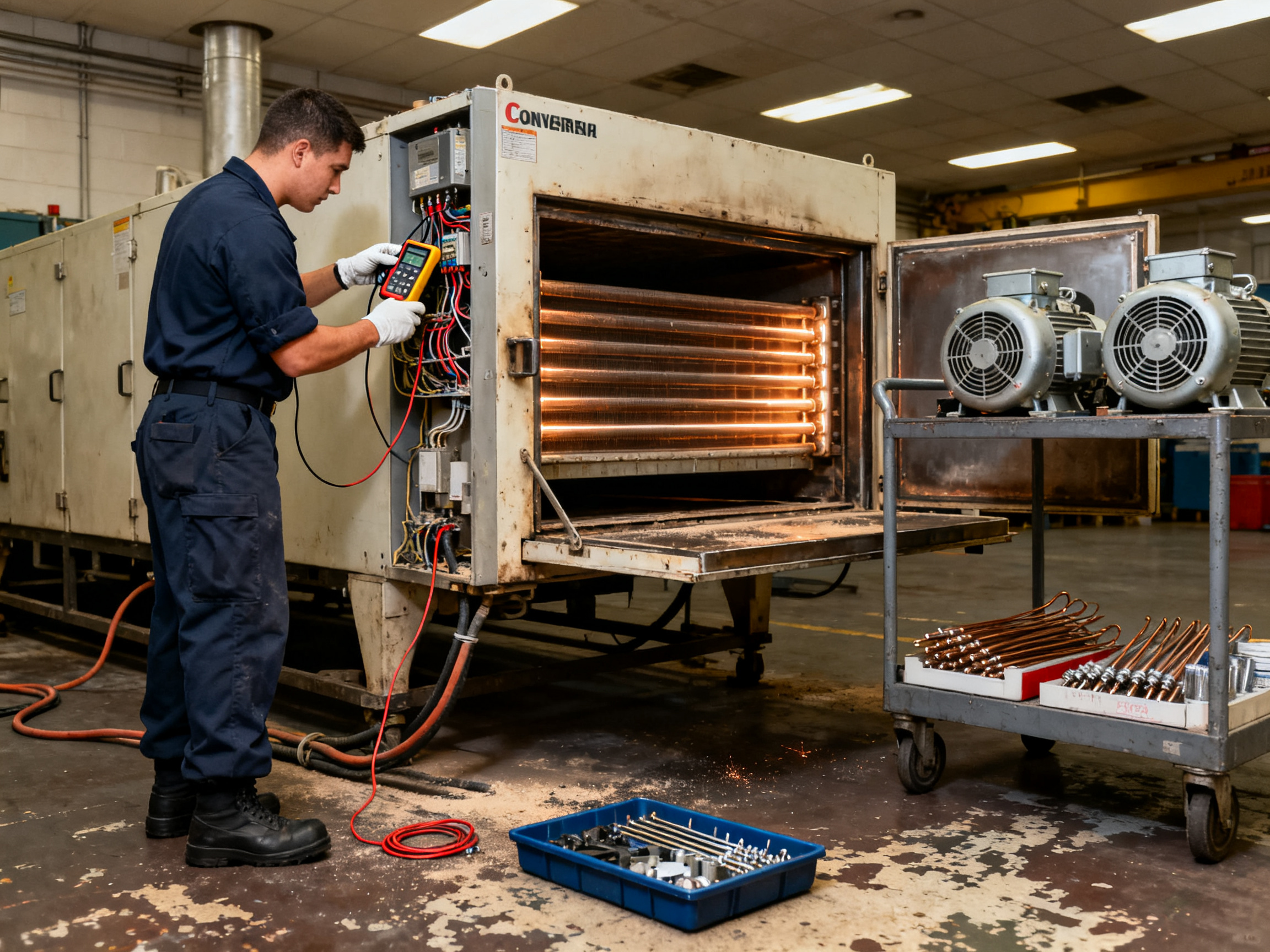
3. Define performance criteria
The contract should specify measurable acceptance conditions, including:
- Required heating and cooling rates
- Temperature uniformity and repeatability across the board profile
- Acceptable process capability or defect-rate thresholds
- Profile-report formats and data-retention requirements
- Test methods, test duration, and who witnesses final acceptance
- Remedies for failed acceptance, including rework, return, or replacement
Without objective acceptance criteria, there is no reliable basis for rejecting a system that does not meet production expectations.
4. Test references and escalation options
Speak with manufacturers running comparable products at comparable volumes. Ask what broke, what changed after installation, how quickly support responded, and whether the supplier met its promised performance. Where possible, request a reference customer willing to discuss long-term reliability rather than only the initial purchase.
5. Price the risks explicitly
Add potential downtime, defect rework, engineering changes, delayed line launches, and integration work to the quotation. Even if these figures are estimates, making them visible prevents them from disappearing into the final budget.
The lowest quotation is not automatically the lowest-cost option. The stronger choice is the supplier that provides complete scope, measurable acceptance criteria, credible support, and a risk-adjusted price the production team can defend.
Sample Budget Scenarios for Different Manufacturers
Earlier sections gave you screening ranges. This section turns three of them into working budgets so you can see where the money actually sits. These are planning models, not quotations, and every number below is a stated assumption you can swap for your own quote.
Three Worked Budgets
| Budget category | A: Compact mixed-volume line | B: High-volume consumer electronics | C: Automotive, aerospace and military |
|—|—|—|—|
| Base oven | Compact inline, 6 to 8 zones, $6,000 | High-volume conveyor, 12+ zones, $65,000 | Vacuum-capable tunnel, $95,000 |
| Options | Oxygen monitoring, profiler, extended conveyor, $2,500 | Dual lane, nitrogen regulation, barcode recipes, MES link, $22,000 | Vacuum pump package, closed-loop nitrogen, full traceability, $18,000 |
| Implementation | Rigging, electrical service, exhaust, commissioning, $7,000 | Line integration, electrical upgrade, exhaust and ventilation, $18,000 | Facility work, floor loading, utilities, validation, $22,000 |
| Five-year operating cost | Energy, gas, maintenance, spares, $9,500 | Energy, gas, maintenance, spares, service, $38,000 | Energy, gas, maintenance, validation, service, $40,000 |
| Five-year total | $25,000 | $143,000 | $175,000 |
| Capacity served | 150 to 400 boards a day | 20,000+ boards a day, two shifts | 2,000 boards a day, mixed high-reliability builds |
The base equipment figures line up with the published 2026 ranges you saw earlier, where mid-tier inline ovens sit roughly at $8,800 to $30,000 and high-volume systems run from $30,000 to $100,000 or more (supplier price guide).
Where the Money Goes
Each block below represents roughly $10,000, split by category.
A  Compact      █▏█▏████                       ≈ $25,000
B  High volume  ██████▌██▏█▏██▊████▊            ≈ $143,000
C  Reliability  █████████▌█▊██▏████             ≈ $175,000

   [base oven] [options] [implementation] [five-year operating]
The pattern matters more than the totals. In scenario A, implementation and operating cost together are worth more than the oven. In scenario B, options nearly double the machine price. In scenario C, the vacuum package and the paperwork around it are the project.
Assumptions Behind These Numbers
- Equipment prices are seller-reported asking prices from public listings visible in October 2026, not audited sale prices.
- Installation allowances assume a US site with existing plant power and a short exhaust route. A greenfield site adds far more.
- Energy and nitrogen figures assume two-shift utilization at scenario B and one shift plus validation windows at scenario C.
- Vacuum and traceability capability in scenario C is priced as required, not optional. Drop it and the total falls by roughly $30,000.
- No financing cost, no tax, and no residual resale value are included. Add resale as a credit and scenario B improves slightly.
- Used equipment would cut scenario B to roughly $95,000 over five years, but with unsupported controls risk and no warranty coverage on labor.
Replace one assumption at a time with real supplier numbers and watch which line moves most. Usually it is not the one you expected.
Buyer Checklist: Information to Prepare Before Requesting a Quote
Most slow RFQs are slow because the buyer was not ready. You end up asking three suppliers for the same missing data twice, then comparing answers to a question you never clearly asked. Thirty minutes with this checklist before you send the first request saves a month of back-and-forth.
| Category | What to gather before you ask for a price |
|—|—|
| Product data | Smallest and largest board dimensions, panel weight and thickness, component mix and package types, solder paste or alloy, paste supplier’s recommended profile window, peak temperature limits, target defect or void level, required customer or regulatory standards |
| Production data | Daily volume, takt time, shifts per day, utilization, product mix and changeover frequency, seasonal peaks, expected growth over three years |
| Facility data | Voltage and phase, compressed air, exhaust route and length, available floor space and floor loading, noise limits, ambient conditions, ventilation and make-up air |
| Integration data | Upstream printer and downstream inspection model, conveyor height and interface, line balance, MES or traceability requirements, machine-to-machine protocol and revision |
| Service and support | Number of boards you run per shift, acceptable downtime, local technician coverage, spare parts stocking, response time expectation, remote support availability |
| Commercial | Delivery destination, Incoterms, installation and training expectations, warranty scope, spares package, commissioning date, acceptance criteria, budget ceiling and approval timeline |
Two tips from people who do this weekly. First, attach drawings rather than typing numbers, because a board described as “roughly 250 mm” becomes a heated-length dispute later. Second, state your budget ceiling honestly if you have one; suppliers can often meet it with a different zone and conveyor configuration instead of an expensive vacuum package nobody needed.
And if your product mix is still in flux, say so and ask for a machine with growth headroom rather than one sized for today’s volume. Adding heated length later usually costs more than specifying it up front.
Want help turning this checklist into a matching quotation for your specific line? Send us your board data and site constraints, and we will map the responses onto a like-for-like comparison table.
Conclusion: Set the Budget Around Process Risk, Not Price Alone
Oven type and base price only tell you where to start. What actually determines whether a reflow oven was the right purchase is process capability, line integration, uptime, defect reduction, and how fast someone answers the phone when a heater fails. A $3,600 desktop unit can be perfect for a prototype lab and a disaster on a two-shift line, and a $95,000 vacuum tunnel can be pure waste on a simple through-hole assembly.
Here is the five-step plan we would follow, in order:
- Document the requirement. Board drawings, component mix, paste and alloy, volume, shift pattern, atmosphere needs, and acceptance criteria. Nothing goes out to suppliers without it.
- Collect comparable configured quotes. One scope template, one row structure, all exclusions listed in writing.
- Run sample-board trials. Profile your actual assemblies, not the supplier’s demo boards.
- Calculate five-year total cost. Installed cost plus energy, gas, maintenance, spares, downtime, and scrap, divided by good boards per year.
- Negotiate measurable acceptance. Tie payment milestones to delivery, installation, and a written pass or fail test.
From Our Experience: This callout stays uncredited until our expert identity and hands-on experience are confirmed. The wording will be updated with a documented first-hand example once that verification is complete.
One final decision rule. If two quotes land within a few thousand dollars of each other, buy the one with better warranty terms, local service coverage, and profile repeatability. If one quote is far below the rest, assume it is missing something until the exclusions list proves otherwise.
Need help running the numbers? Send us your shortlist and site constraints, and we will map them onto a like-for-like comparison table.