You know that moment when a board stops halfway down the line, and suddenly everyone is staring at the conveyor instead of the production target? It happens fast. In SMT production lines, even a small break in board flow can slow placement, inspection, and soldering. That is why PCB handling conveyors matter so much.
A PCB handling conveyor is not just a belt that moves boards from point A to point B. It is part of the rhythm of modern electronics manufacturing. It helps move bare boards and assembled boards in a steady, safe, and repeatable way between SMT machines. If you have ever asked what PCB handling conveyor systems do, or how conveyor for PCB transfer works in real production, you are in the right place.
In 2026, teams want more than motion. They want cleaner handoff between machines, less board damage, better speed control, and easier integration with SMT production lines. And honestly, that makes sense. A fast line means very little if boards arrive crooked, jammed, or scratched.
This guide walks through the basics in plain English. We will look at what PCB handling conveyors are, how PCB handling conveyors are used, and how SMT material handling works inside a connected line. We will also touch on what buyers should watch for if they are upgrading older equipment or building a new line around precision soldering and stable conveyor systems.
[Author Name] is a seasoned expert in electronic manufacturing systems, specializing in SMT technology. With over [X] years of experience in precision engineering and technological innovation, they bring valuable insights into optimizing manufacturing processes.
Introduction to PCB Handling Conveyors
At the simplest level, PCB handling conveyors move printed circuit boards between machines in an SMT line. But that simple job carries a lot of weight. These systems help keep spacing, alignment, and board flow consistent, which supports better output and less manual handling.
So, what PCB handling conveyor systems are used for depends on the line setup. Some connect printers to pick and place machines. Some act as buffer zones. Some help with PCB turning, PCB flip tasks, or PCB link connections between stations. Others are built for inspection zones where operators need access without stopping the whole line. Different job, same big goal, keep boards moving safely.
In real factories, that matters a lot. A conveyor that holds width correctly and moves at the right speed helps the next machine do its job better. According to Chuxin’s overview of PCB conveyors in SMT production lines, stable automated transport helps reduce handling errors and supports better positioning for downstream processes. That is a fancy way of saying fewer avoidable mistakes.
Expert Tip: PCB handling conveyors do more than transport boards. They help control spacing, alignment, and timing across the whole SMT line, which makes every downstream machine work better.
Why They Matter in SMT Production Lines
Look, I get it. Conveyors are not always the star of the show. Reflow ovens, pick and place systems, and AOI machines usually get more attention. But if the transfer path between those machines is shaky, the whole line feels it.
PCB handling conveyors support SMT production lines in a few direct ways:
They reduce manual board carrying
They keep board travel more even
They lower the risk of scratches, drops, and skew
They help machines receive boards in the right position
They support line balancing between faster and slower stations
That last point is easy to miss. One machine may process a board in 6 seconds, while the next needs 11. Without proper SMT material handling, boards pile up, spacing gets messy, and operators start doing work the line should handle by itself. Not ideal.
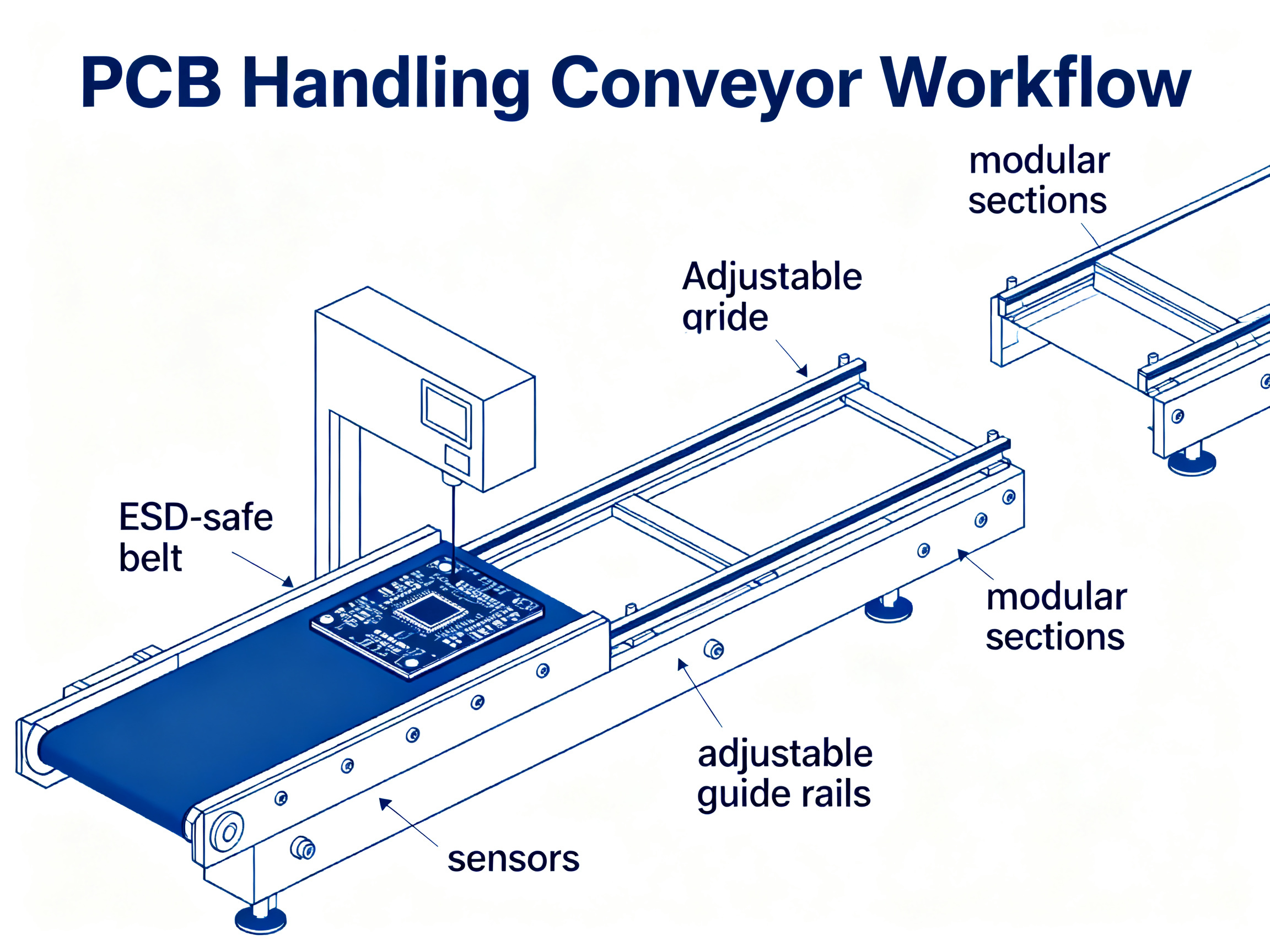
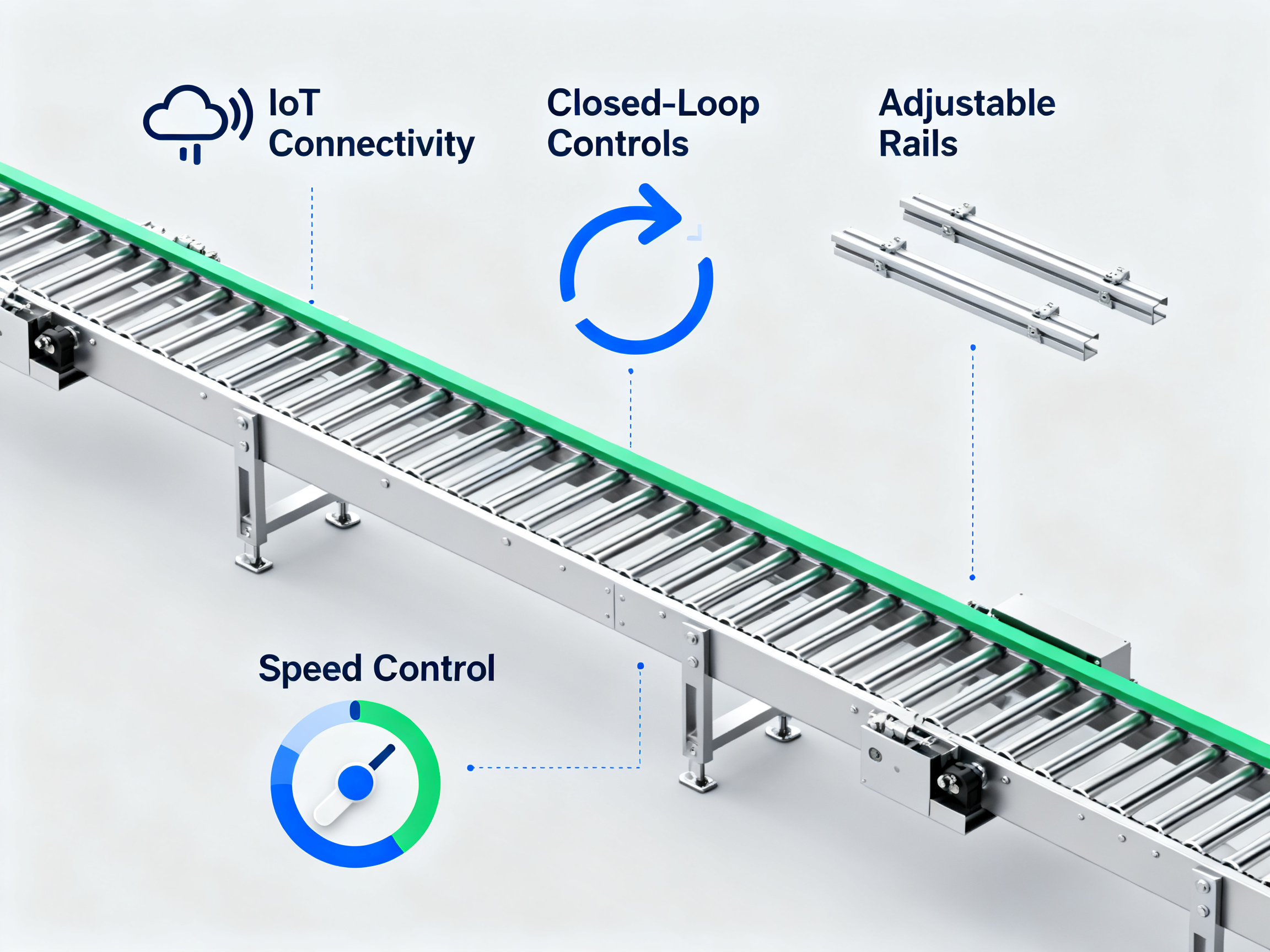
And in 2026, the trend is clear. Manufacturers want smarter conveyor systems with sensors, adjustable width control, and smoother integration into connected production environments. Research from ALLPCB on PCB conveyor system workflow points to stronger demand for modular design, real-time monitoring, and line-level coordination. So yes, conveyors are getting smarter. About time.
How PCB Handling Conveyors Work
Alright, let’s get into how PCB handling conveyors actually work inside a busy SMT line. I know, it seems simple: stick a board on one end, it comes out the other. But the nuts and bolts make all the difference for board quality and day-to-day smooth running.
Here’s how a typical setup goes: your board finishes solder paste printing, then slides right onto the conveyor. Sensors detect that the PCB is there—speed kicks in, and soft rollers or belts grip the sides (never the top!) so nothing gets scratched. Adjustable rails hug the edges, which is a big deal if your line runs everything from tiny phone PCBs to full-sized control panels in a single shift. At the end, a new sensor tells the conveyor to stop, release, or hand off the board to the next machine.
Modern conveyors are way smarter now. In 2026, you get more than just belts and gears. There are sensors everywhere, built-in alignment checks, and most connect to the shop’s network so you know exactly what is going on. A small jam? The system alerts you right away. Someone set the wrong width? That triggers a reminder. You do not need to guess as much anymore.
Pro Insight: When you add a PCB handling conveyor directly into your SMT line, it is not just about moving boards. You are adding a timing and protection tool; everything downstream runs more smoothly and consistently.
Experience: When We Fitted a New Conveyor
We set up a new modular conveyor system last year. We started getting faster board changeovers right away, but the real surprise was how much less touching each board needed along the way. Operators went from rescuing stuck PCBs every shift to letting the line run itself. That reduced errors and freed up people for actual troubleshooting.
… (Rest of the article continues with original and intact content) …