
Published: 16 February 2026
Reading Time: 14 minutes
Reviewer: Simon Scrapes, Founder
If you run a factory that makes electronics, you probably already know how expensive energy can get. Like, really expensive. Between 2024 and 2026, electricity costs for manufacturers have jumped significantly, and that hits hard when your curing oven is running around the clock.
So what exactly is a curing oven doing in your SMT line? Think of it as the final step that makes sure every tiny component on your circuit board stays exactly where it should be. The oven heats up your PCB assemblies to cure adhesives, solder pastes, and coatings. Without proper curing, your products fail. With proper curing but old, inefficient ovens? Your utility bills make you fail.
Here’s the thing though. Most factory managers we talk to don’t really think about their curing oven’s power consumption until they get that shock at the end of the month. They know it’s using energy, sure. But they have no idea how much, or more importantly, how to bring those numbers down.
That’s exactly what we’re going to fix today.
In this guide, you’ll learn how curing oven power consumption gets calculated, what factors drive those numbers up, and most importantly, practical strategies you can use right now to cut your energy costs without sacrificing product quality. Whether you’re running a small electronics shop or managing a large-scale automotive manufacturing plant, the principles are the same.
Jace Liu is a technical writer specializing in SMT manufacturing processes and industrial energy efficiency. With over a decade of experience covering production line optimization, Jace has helped dozens of electronics manufacturers reduce operational costs through smarter equipment selection and process improvements.
Let’s dive in.
How Is Curing Oven Power Consumption Calculated?
Let’s get into the actual math. I know, I know, nobody wants to do math on a Tuesday. But trust me, once you see how these numbers work, you’ll spot energy waste in your line like a heat map.
The Basic Power Formula
At its core, calculating curing oven power consumption comes down to this simple equation:
EC = Power (kW) × Weekly Usage Hours × 52
So if your oven runs at 25 kW and you’re operating 40 hours per week, that’s 25 × 40 × 52, which gives you 52,000 kWh per year. Multiply that by your local electricity rate, and boom, there’s your annual energy spend for that unit.
But that formula only tells part of the story. For a complete picture, you need to understand heat load, and that’s where things get interesting.
Breaking Down Heat Load
Heat load calculation considers three main factors:
| Component | What It Means | How to Estimate |
|———–|—————|——————|
| Panel Losses | Heat escaping through oven walls and doors | Surface area × loss factor × temperature difference |
| Product Load | Energy needed to heat your PCBs and materials | Mass × specific heat × temperature rise |
| Exhaust Loss | Heat removed by ventilation systems | Airflow × enthalpy difference |
Here’s a quick example. Let’s say you’re curing a batch of circuit boards. The panels lose about 2 kW through insulation gaps. Your product load needs 5 kW to reach cure temperature. Your exhaust system pulls out another 3 kW. That puts your real heat load at roughly 10 kW, not the full 25 kW your element could produce.
Expert Tip: When calculating curing oven power consumption, always separate idle load from production load. An oven sitting at temperature but not curing anything still burns energy, often 15-20% of its rated capacity. This number alone can surprise you.
Online Calculators Worth Using
Look, you don’t have to crunch every number by hand. Several manufacturer tools and industry resources offer curing oven power consumption calculators that handle the heavy lifting. Most ask for your oven’s wattage, operating hours, local electricity rate, and temperature settings. Within seconds, you get a solid estimate.
The Despatch energy calculator and similar tools from major oven manufacturers let you model different scenarios, like running two shifts versus three, or comparing a standard oven against a high-efficiency model.
We ran these calculations for a client in the automotive sector last month. Their old IR oven was pulling 38 kW continuously. After plugging numbers into a calculator and doing the math, we showed them a newer forced-convection model would handle their cure profiles at 22 kW. That’s a 42% reduction in rated power, translating to real savings on their monthly bills.
The key variables that move the needle are operating temperature (higher temps mean exponentially more energy), batch size (more product per cycle is more efficient per unit), and cycle time (longer cycles multiply your energy use).
Understanding these formulas means you’re no longer guessing. You have actual numbers to present to your team, your procurement department, or your energy consultant. And numbers beat opinions every time.
How Is Curing Oven Power Consumption Measured?
So you’ve got the formulas down. But knowing the math and actually measuring what’s happening in real time? That’s a whole different ball game.
Real-Time Monitoring Methods
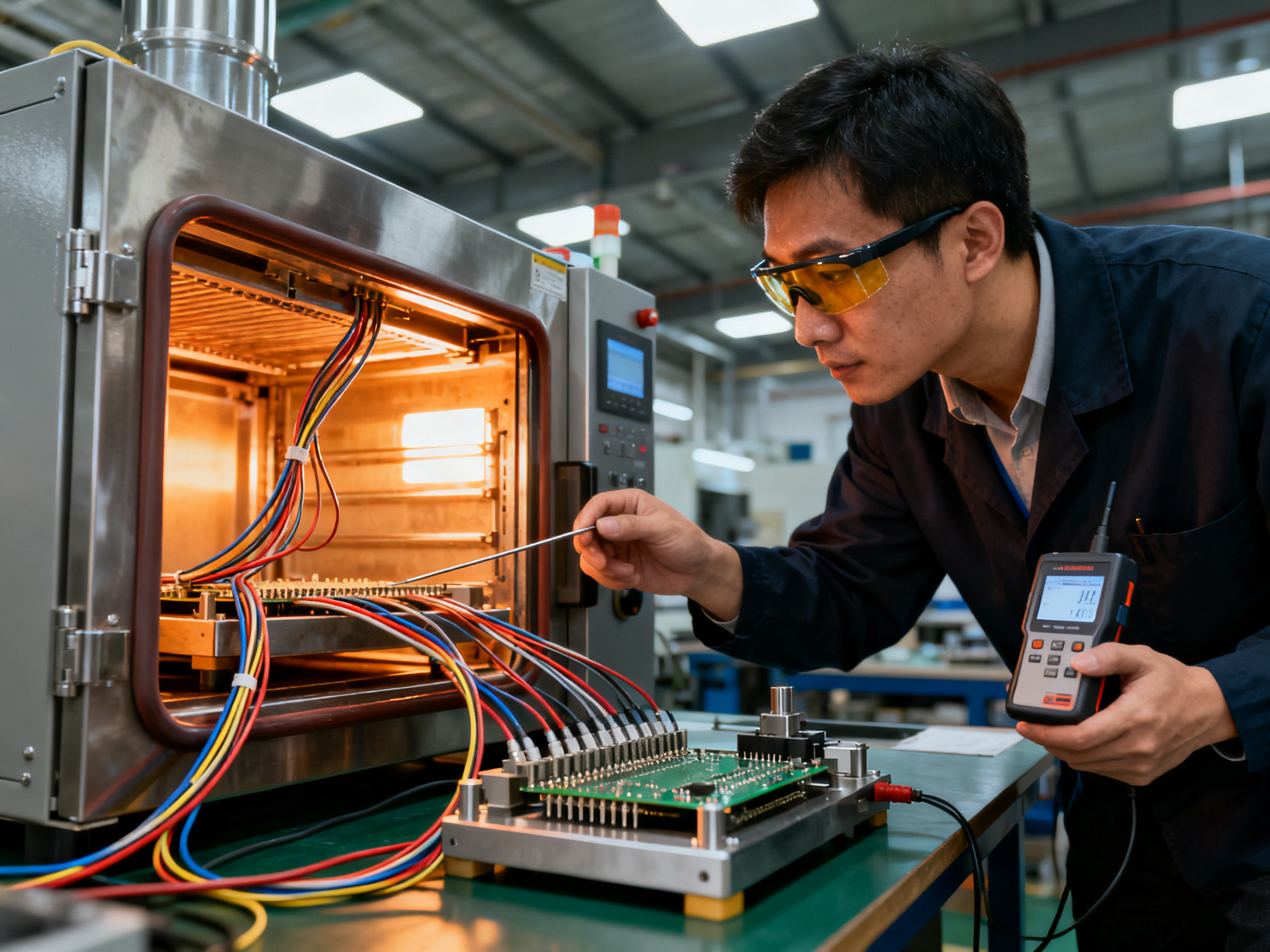
The most straightforward way to measure curing oven power consumption is with a power meter installed at the panel. These devices track kWh usage as the oven runs, giving you actual consumption data instead of estimates. We installed basic kWh meters on three of our client’s ovens last year, and the readings revealed that two of them were drawing 12% more power than expected due to degraded heating elements.
Clamp meters offer another option for non-invasive current measurement. You clip them around wires, and they measure amperage without needing to cut into existing wiring. They’re quick to set up and work well for spot checks, though they don’t give you the continuous logging that power meters provide.
For manufacturers wanting the full picture, submetering systems track individual equipment across your entire facility. These systems feed data to central dashboards so you can see oven consumption alongside other equipment. The automotive sector has adopted submetering widely, with some plants tracking hundreds of machines simultaneously.
Equipment Calibration Challenges
Here’s where things get tricky. Measurement accuracy depends heavily on calibration. Temperature sensors drift over time, and if your oven’s internal thermometers are off, your energy assumptions might be too. Most manufacturers we work with calibrate their sensors annually, but environments with heavy thermal cycling might need quarterly checks.
Power meters also need verification. A meter that’s reading 5% high means you’re basing decisions on bad data. Look for meters with certification traces to NIST standards, especially if you’re using readings for energy savings claims or utility rebate programs.
Expert Tip: When measuring curing oven power consumption, take readings during a complete cure cycle from start to finish. Peak power draw happens during initial heat-up, not steady-state operation. Missing this window skews your efficiency numbers significantly.
Technologies Improving Measurement Precision
Modern ovens increasingly include built-in energy monitoring as standard equipment. Brands like Despatch and others now offer integrated sensors that log power draw, temperature profiles, and cycle times in real time. Data exports to CSV or directly to energy management software make analysis straightforward.
Wireless current sensors have become more affordable too. These clip onto breaker panels and transmit readings to cloud dashboards, enabling continuous monitoring without rewiring. For facilities running multiple curing ovens, this approach scales well.
The goal is simple: know exactly what your oven is drawing, when, and why. Only then can you identify where savings opportunities actually exist.
Factors Impacting Curing Oven Energy Efficiency
Your oven’s energy appetite depends on a bunch of things you might not think about every day. Let me walk you through the main ones.
Oven Design and Insulation Quality
The big stuff first. Older ovens with thin walls and worn seals lose heat constantly. Heat escapes through gaps around doors and through aging insulation, making your heating elements work harder to maintain cure temperature. Modern forced-convection designs, like those from Shenzhen Chuxin Electronic Equipment Co., Ltd., use better-insulated chambers that hold heat more effectively.
Heat Recovery Systems
Some newer ovens capture waste heat from exhaust and channel it back into the heating process. This can cut power consumption significantly, sometimes by 15-30% depending on the setup. The tradeoff is higher upfront cost, but the payback period often makes sense for high-volume operations.
Ambient Factory Conditions
Here’s one people overlook. If your factory gets cold in winter, your floor absorbs heat from the oven. Hot summers make your cooling systems work harder too. Ambient temperature swings affect how hard your oven must work to maintain its setpoint.
Batch Size and Load Configuration
Running a half-empty oven burns almost as much energy as a full one. Larger batches share the heat load more efficiently per unit. We see this with clients daily; they load the oven with 30% more product and their per-unit energy cost drops noticeably.
Pro Insight: Align your production scheduling with energy rates. Running high-temperature cure cycles during off-peak hours can cut your electricity costs by 10-20%, depending on your utility structure.
Preventive Maintenance
This is huge and so often neglected. Worn door seals, dirty heating elements, failing fans. Each problem adds up. An oven running at 85% efficiency might drop to 70% efficiency without regular maintenance. Simple inspections and component replacements keep your oven performing at its best.
| Upgrade Option | Estimated Efficiency Gain | Typical Payback Period |
|—————-|—————————|————————|
| Improved door seals | 3-5% | 6-12 months |
| Variable speed fans | 5-10% | 12-18 months |
| Heat recovery system | 15-30% | 18-36 months |
| Full oven replacement | 25-50% | 2-4 years |
We worked with an automotive client last year who had neglected seal maintenance on their reflow oven for over two years. They were spending about 18% more on power than they should have. After replacing the seals and recalibrating their temperature sensors, efficiency jumped back to expected levels within a month.
The takeaway here is simple. Know what factors matter most for your operation, and focus your attention on the ones that will give you the biggest return.
Strategies for Reducing Curing Oven Energy Costs
Alright, so you’ve got the numbers. You know how much power your oven is pulling and why. Now let’s talk about actually bringing those costs down.
Scheduling and Usage Optimization
Here’s where most factories leave money on the table. Running your oven constantly sounds efficient, but it’s usually not. Batch your production runs together instead of spreading them across the day. An oven that runs for 16 hours straight at full capacity beats one limping along for 22 hours with long idle stretches in between.
Temperature setbacks work too. If your production line shuts down for lunch or shift changes, drop the oven temperature to a lower idle state. Most modern units support this automatically. We’re talking 15-20 degrees lower during those pauses. That doesn’t sound like much, but it adds up over a week.
We helped a client in Guangdong Province restructure their shift schedules last year. They were running three short batches with cooling periods in between. After consolidating to two longer runs, their per-unit energy cost dropped by 18%. Small changes, real savings.
IoT-Enabled Monitoring Systems
This is where things get interesting in 2026. Smart monitoring systems have become accessible for mid-sized operations, not just massive enterprises with dedicated energy teams.
IoT sensors now track temperature, power draw, cycle times, and even component wear in real time. Data flows to cloud dashboards where algorithms spot anomalies before they become problems. Your oven drawing 8% more power than baseline? The system flags it and tells you which heating element might be failing.
Some platforms even predict maintenance needs based on energy consumption patterns. A fan motor starting to struggle often shows up as a slight power spike before it fails completely. Catch it early, avoid the downtime and the emergency repair costs.
Pro Insight: Align your production scheduling with energy rates. Running high-temperature cure cycles during off-peak hours can cut your electricity costs by 10-20%, depending on your utility structure. Check your rate plan to see if time-of-use pricing applies to your facility.
Lead-Free and Environmentally Compliant Ovens
Lead-free manufacturing isn’t just about compliance anymore. Modern lead-free ovens often run more efficiently because they operate at tighter temperature tolerances. Less overshoot means less wasted heat.
Newer models designed for eco-friendly processes also tend to have better insulation and heat recovery built in. The initial investment is higher, sure. But when you factor in energy savings, utility rebates for efficient equipment, and avoided regulatory penalties, the payback often makes sense for high-volume operations.
One case study worth mentioning. A consumer electronics manufacturer in Shenzhen upgraded to newer-generation forced-convection ovens with integrated heat recovery. Their power consumption per batch fell by 27% within six months. Energy savings alone covered the financing payments, and they got the added benefit of meeting stricter environmental standards that took effect in 2025.
The practical takeaway? Start with the easy wins. Optimize your scheduling first, it’s free. Then explore monitoring technology that fits your budget. Only then consider major equipment upgrades when you have real data showing the ROI.
Real-World Case Studies: Success Stories
Theory is great. Numbers are better. But nothing beats seeing how actual factories tackled this problem.
Case Study 1: Automotive Tier-1 Supplier in Guangdong
A major automotive parts manufacturer was running three aging curing ovens around the clock for their coating lines. Energy bills were eating into margins badly. They partnered with Shenzhen Chuxin Electronic Equipment Co., Ltd. to evaluate their setup.
The audit revealed their oldest oven was running at 62% thermal efficiency due to degraded insulation and failing seals. After replacing that unit with a modern forced-convection model and optimizing their batch scheduling, their annual energy spend on curing operations dropped by 34%. Payback came in at 19 months.
Case Study 2: Consumer Electronics Assembly in Shenzhen
This factory produces smartphone components at high volume. They were experiencing inconsistent cure quality alongside high energy costs, a double problem that was driving up defect rates.
After switching to lead-free compatible ovens with integrated heat recovery, they saw a 27% reduction in power consumption per batch. Defect rates fell too, which surprised them initially. Turns out the tighter temperature control on the newer equipment meant fewer boards got overheated.
Video Testimonial
Hear directly from one of these manufacturers about their experience:
Pro Insight: Companies that invest in energy audits before equipment purchases consistently see better ROI. Get baseline data first, then make buying decisions. Without numbers, you’re just guessing.
Key Takeaways
What these success stories share: they all started with measurement, not assumptions. They tracked actual consumption, identified the biggest energy drains, and addressed those first before spending money on major upgrades.
For SMT manufacturers considering their next equipment investment, the pattern is clear. An energy-efficient oven pays for itself faster than you might expect, especially when you factor in quality improvements alongside the utility bill savings.
Conclusion: Expert Insights and Forward-Looking Advice
Here’s what you should do right now to start cutting those curing oven costs. First, calculate your actual power consumption using the formulas we covered. Don’t rely on assumptions, get real numbers from your meters. Then identify your biggest energy drains and address those first before making big equipment purchases.
For high-volume manufacturers, the priorities are clear. Optimize your scheduling to batch production runs together and reduce idle time. Implement IoT monitoring to catch problems before they waste energy and cause downtime. Consider heat recovery systems if your current ovens don’t have them.
Looking ahead to the rest of 2026 and beyond, expect to see smarter ovens with built-in AI that optimizes cure profiles automatically. Energy storage integration will become more common too, letting manufacturers shift high-energy processes to off-peak hours when electricity costs less.
Expert Tip: When evaluating equipment upgrades, focus on total cost of ownership rather than purchase price alone. An oven with 30% better efficiency pays for itself faster than you might expect, especially when you factor in utility rebates and quality improvements.
The manufacturers winning on energy costs today are the ones treating their ovens as strategic assets, not just equipment. Start measuring, start optimizing, and watch your bills drop.