
Top PCB Loader and Unloader Manufacturers for SMT Production
Published: 3 November 2026
Reading Time: 14 minutes
Reviewer: S&M Co. Ltd. Applications Engineering Team
You know that sinking feeling when the printer is running fine, the SPI is happy, and yet the line keeps starving? Board handling is usually the culprit. A printer can lay 8,000 components an hour, a placement machine can place 45,000, and then a tired operator has to hand-feed trays because the unloader jammed on a warped board. The reflow oven ends up waiting on a person. Nobody budgets for that hour, but it shows up in your cycle time, your OEE report, and your defect rate.
Here is the part that surprises most buyers. A loader or unloader looks like the least important machine on the line, because it does not solder or place anything. But in a high-mix line with frequent changeovers, loading and unloading eats a large share of your available production seconds. Get the machine pair wrong and your reflow oven sits cold, paying for gas and labor while producing nothing.
So who actually builds these well? The market splits into three very different groups, and picking the wrong group wastes budget fast.
Line integrators build the whole flow. Print, SPI, placement, reflow, AOI, depaneling, and the loaders and unloaders that feed them. The advantage is one throat to choke. Transfer heights, conveyor widths, and rail datums get tuned as one system instead of negotiated between four vendors who each blame the other.
Standalone board handling specialists focus on magazine and tray loading. They are usually the deepest experts on magazine indexing, board extraction, and small-format flexibility because that is all they do. If you already own a stable printer and placement platform, a standalone unit is often the smarter money.
Benchtop and mini systems serve prototype, R&D, and low-volume work. This is where the mini PCB loader lives, and where most buying guides give you surprisingly thin information.
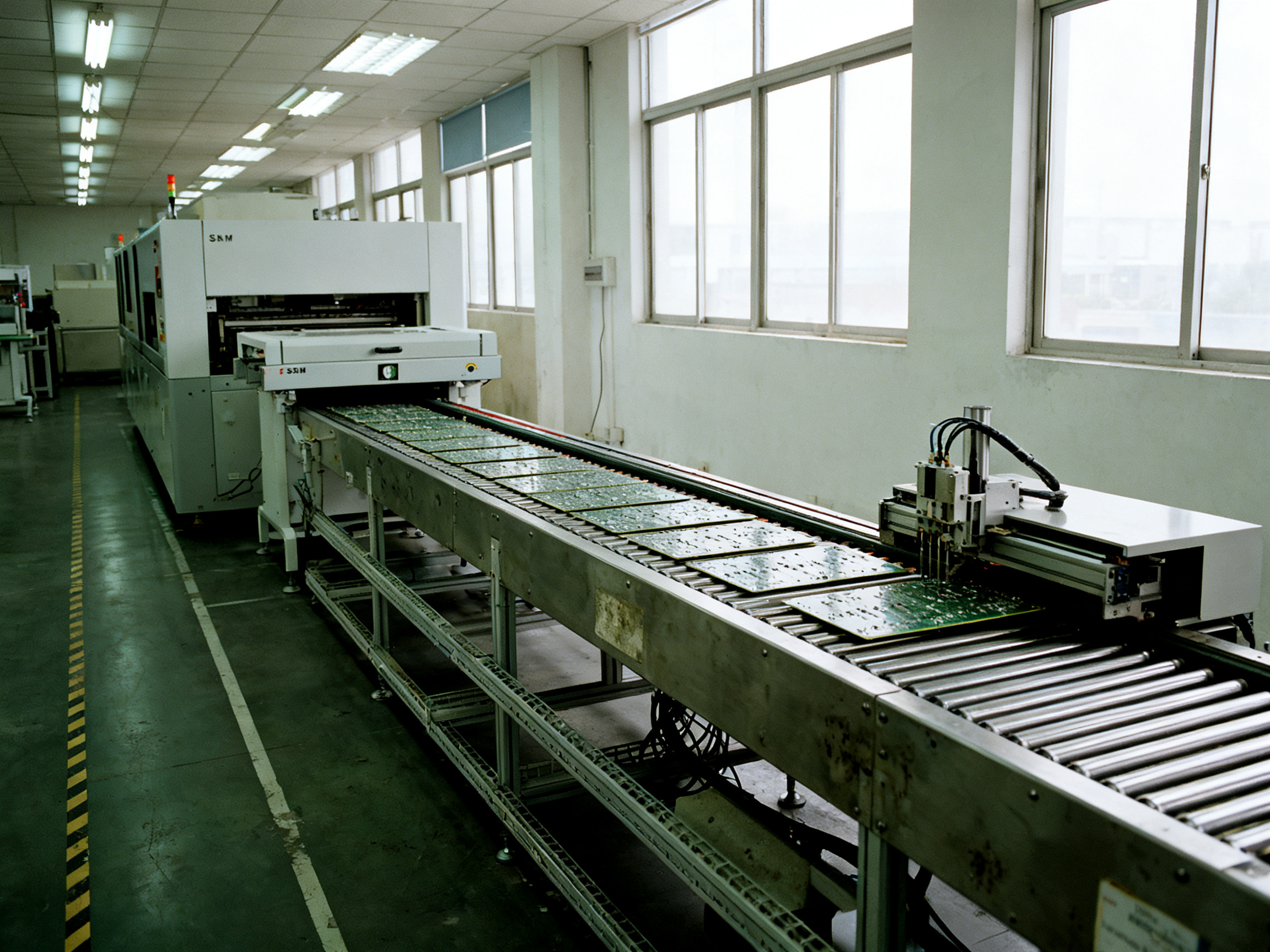
Here is how the choice actually gets made. Three questions do most of the work.
First, what is your board envelope? Not “standard PCB sizes.” Write down your smallest and largest board, your thinnest and thickest, your heaviest, and the worst warped one you actually run. Components hanging below the board edge matter too. A machine that handles your 300 mm x 200 mm panel will not help you if it catches a 2 mm board with a tall connector on the bottom side.
Second, what changes over a shift? If you run one product all week, a simple tray loader works fine. If you swap between three builds every morning, you want magazine loading with quick tool-free changeover. Magazine handling is where the cycle time hides, so ask how long a magazine exchange takes and how the machine behaves when a magazine is half full.
Third, how does it talk to the line? This is where 2026 changes the answer. New lines should specify IPC-HERMES-9852, which carries board identity, barcode data, product dimensions, board thickness, conveyor speed, and equipment identification over TCP/IP and XML. It replaces the older IPC-SMEMA-9851 board transfer interface, and IPC now publishes it as the official standard IPC-HERMES-9852 standard listing. The field list, including board ID, barcode, product type, dimensions and thickness, is confirmed in the official table of contents.
But do not accept “Hermes ready” on a sales sheet. Two machines can both claim Hermes and still disagree on the revision, the message subset, and reconnect behavior. Ask which revision is implemented, then ask for a protocol test on your own data fields. And if part of your line is older SMEMA gear, keep IPC-SMEMA-9851 for those interfaces, with a wiring diagram and a signal-level spec, not a handshake.
One more standard worth flagging, because it keeps getting skipped: the Hermes Standard Initiative explains why machine-to-machine communication moved away from the older interface, and it is now recognized directly by IPC. If your production data is weak because nobody can trace which board went through which machine, the loader is often where that data starts.
So how do you compare the manufacturers below? The short answer: judge them on mechanical compatibility and lifecycle cost, not on the fastest cycle time printed in a brochure. A unit that demos 1.8 seconds per board but needs an operator to clear a jam every 400 boards is slower than a 2.4-second machine that runs a whole shift hands-off.
Written by the S&M Co. Ltd. (Shenzhen Chuxin Electronic Equipment Co., Ltd.) applications engineering team. We build lead-free reflow ovens, wave soldering machines, and complete SMT production lines, and we work daily with production, procurement, and process engineers on board handling and soldering flows for high-density assemblies. On our lines, loader and unloader selection is treated as a throughput and defect-rate decision rather than a commodity purchase. Every manufacturer in this guide is assessed against SMT line compatibility, precision soldering requirements, and total cost of ownership.## How to Choose the Right PCB Loader and Unloader for Your Line
You can pick a great printer and still starve your reflow oven. Board handling is where the mismatch shows up first.
So let’s get practical about sizing. Every loader decision starts with one calculation, and it is boring, which is exactly why people skip it.
Step 1: Match the handler to your actual line speed
Take your required output in boards per hour. Divide it by the number of production hours you actually run per day, and you get boards per hour that must flow. Now compare that against the upstream machine, not the downstream one. A placement head that can place 45,000 components an hour is irrelevant if it can only present 900 finished boards an hour.
The loader has to keep pace with the slowest star in the chain, usually the printer. Typical dedicated tray loaders land somewhere around 1.5 to 2.5 seconds per board, and magazine handlers often run slower per board because of indexing and extraction. Neither number means much in isolation.
What matters is the sustained rate, including changeover. Ask for a run figure that includes operator magazine exchanges, empty magazine detection, and recovery after a jam.
Pro Insight: When you size a loader against a reflow oven, do the math on both ends. An oven set to 90 seconds per board with a 4-lane conveyor needs about 16 boards a minute of feed. If your loader tops out at 7 boards a minute, you have paid for capacity you will never use, and you have built a bottleneck at the front of the line.
There is a simple rule we use in line-sizing workshops: required average cycle time must be lower than available line time divided by required boards, with 15 percent headroom for changeover and minor stops. If the math does not close with headroom, the machine is undersized no matter what the brochure says.
Step 2: Pick the right feed style
This is where “what PCB loader do I need” usually gets answered too generically, so here is the honest split.
Full tray loading suits lines running one or two products with minimal changeover. The operator stacks trays, the machine indexes a tray slot, the board slides onto the conveyor. It is cheap, it is simple, and it works. It also means a human is present at the end of every run, because trays are not refilled by magic.
Magazine loading is the answer for high-mix, high-changeover work. A magazine holds 20 to 50 boards in slots, and a good handler extracts one board at a time without an operator in the loop. This is where cycle time really hides, so ask two specific questions: how long does a magazine exchange take with one operator, and what does the machine do with a half-empty magazine or a misloaded board. Half-full magazines are the normal condition in a mixed run, not the edge case.
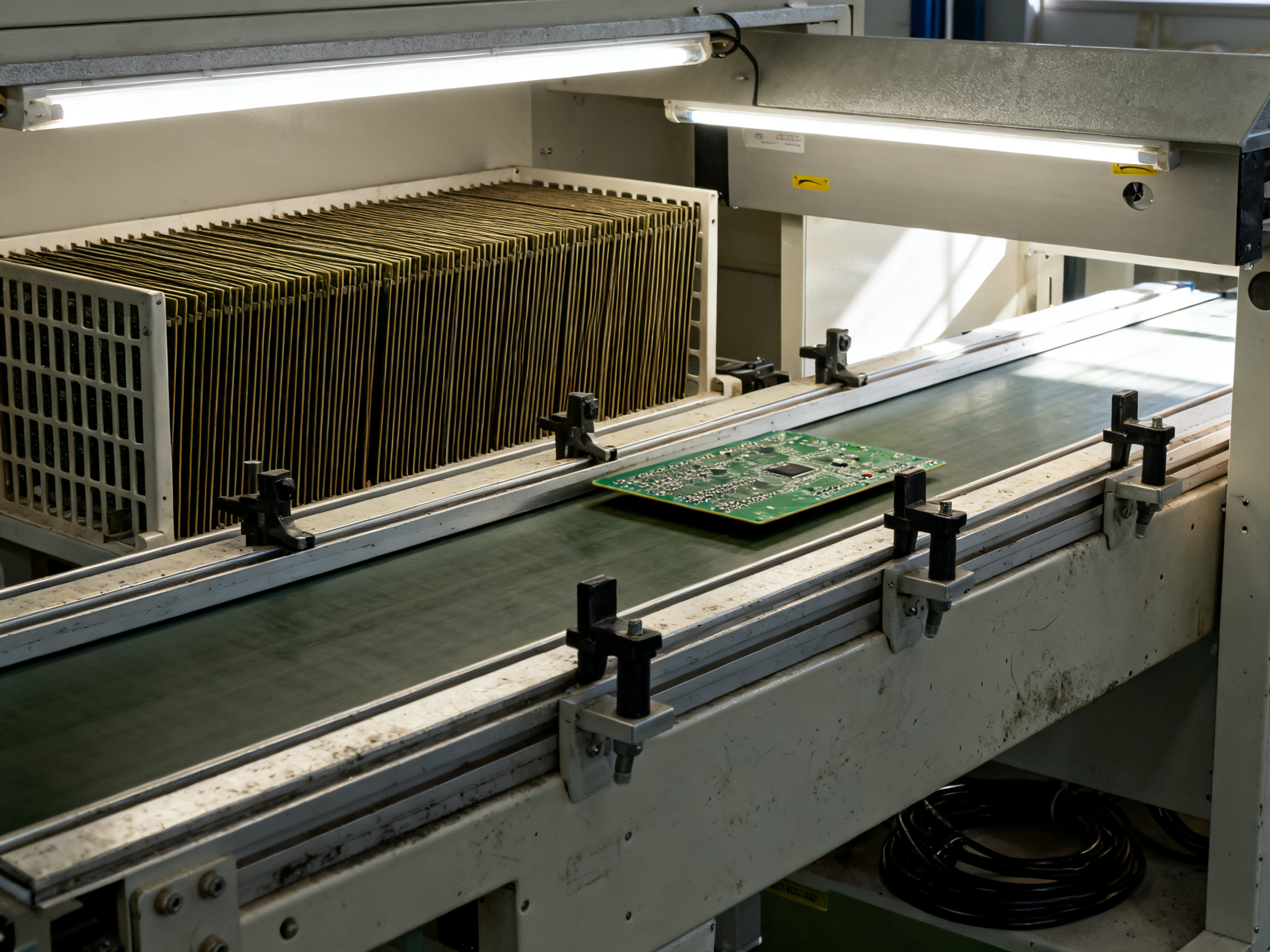
Conveyor or belt loading suits lines where boards flow continuously from a previous operation, for example when the loader sits downstream of a depanelizer or a selective solderer. Here you are buying a control point rather than a feeder, so the specification changes. Maximum board length, minimum board gap, and stop-and-go versus continuous motion become the questions that matter.
Most lines end up with a mixed setup: magazine loading at the front for the printer, tray loading or conveyor at the back for AOI. That is normal and works well, as long as both sides were designed together rather than bolted on later.
Step 3: Size the mini option honestly
For prototype rooms, R&D labs, and low-volume builds, the mini PCB loader is genuinely the right answer. These benchtop units handle the small, short-run work where a full magazine handler would sit idle 90 percent of the week.
Here is the sweet spot we have seen work: roughly 150 mm to 350 mm boards, single boards rather than panels, and cycle times around 4 to 6 seconds. Below that board size range, you are fine. Above it, you need rails, supports, and a proper magazine system.
The hidden cost is growth. A mini unit that handles your prototype boards today will not handle a 400 mm panel or a board heavier than 2 kg tomorrow, and the fix is a full machine, not an upgrade kit. Buy a mini loader for prototypes and buy it knowing it might be the pilot cell machine rather than the production machine.
Step 4: Demand these specs in writing
Any supplier worth talking to will hand over a mechanical drawing if you ask. These are the numbers we want on that drawing before a quote is signed.
| Specification | Why it matters |
|—|—|
| Board size range, min and max | Sets whether the machine fits your actual product mix |
| Board thickness range and edge tolerance | Thin and warped boards catch; thick ones need different rails |
| Slot width and magazine pitch | Locking this in early prevents carrier incompatibility later |
| Maximum payload per board or panel | Overload claims are common and rarely tested |
| Transfer height tolerance band | A nominal figure hides the mm that cause edge catching |
| Conveyor width adjustment range | Determines fit with your printer and reflow oven |
| Board direction, left-to-right or right-to-left | Affects the whole line layout and operator flow |
| Supported IPC-HERMES-9852 revision | Two “Hermes ready” machines can behave differently |
On communications, the current IPC standard is IPC-HERMES-9852, and the published Hermes specification sets out the TCP/IP and XML message structure along with board identity, barcode, product data, dimensions, and thickness fields. Ask for the revision number in the quote, not just the word “Hermes.”
Expert Tip: The three specs buyers most often skip are transfer height tolerance, magazine slot pitch, and payload. All three are cheap to specify now and expensive to fix after the machine lands, because the fix means new rails, new carriers, or new line geometry.
Step 5: Make acceptance a payment milestone
Do not let the machine leave the factory on a photo and a start-up video. Tie final payment to a witnessed test on your own production boards, including the smallest, largest, thinnest, and most awkward board you actually run.
Watch the jam recovery. Watch what happens after an emergency stop and after the network drops. Count operator interventions over a sustained run. A unit that needs someone to clear a fault every 400 boards is a slower machine than the one with a 2.4 second cycle that runs a full shift hands-off.
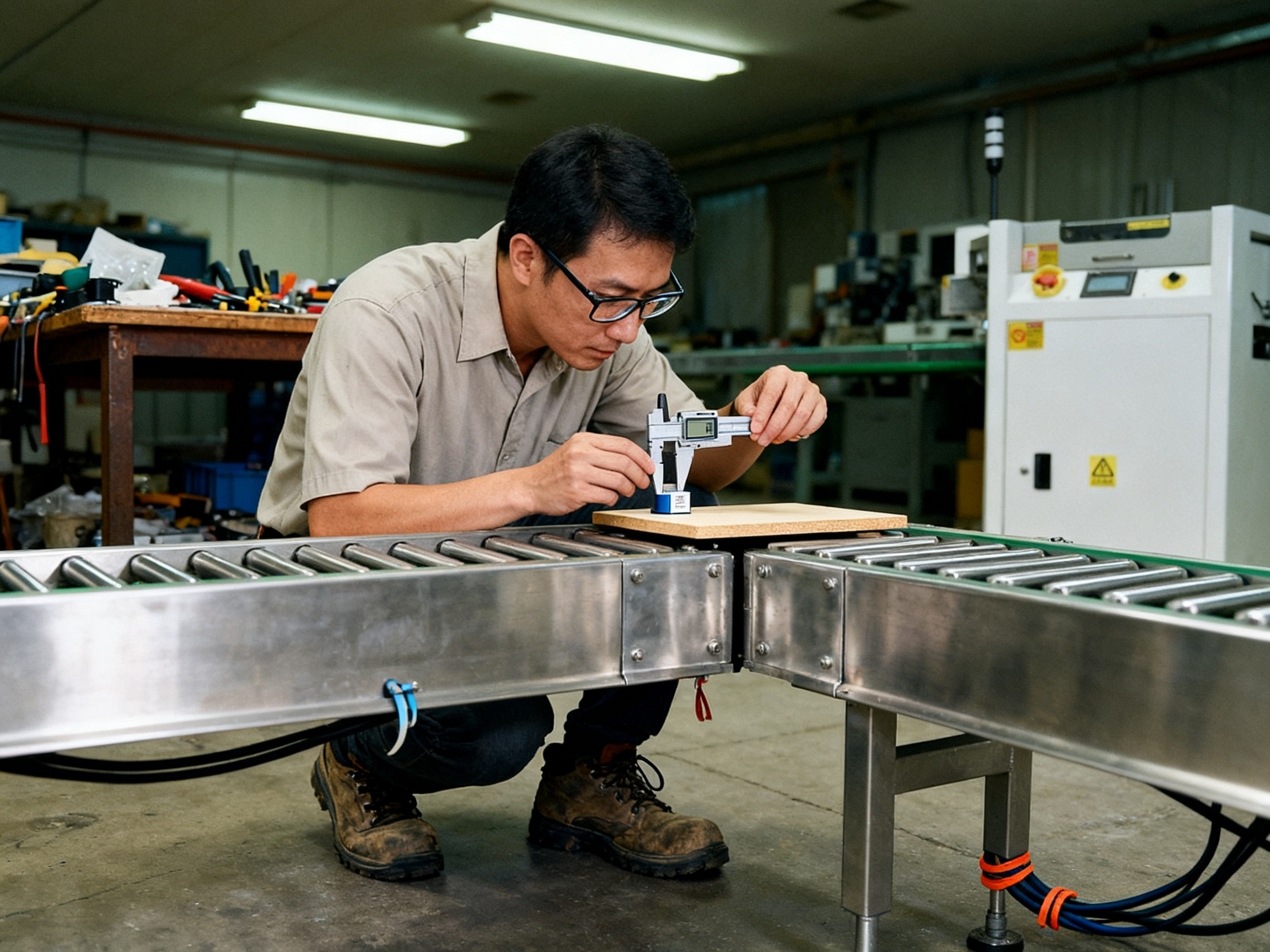
And for the price conversation, remember what you are buying. A pcb loader price on a quote usually covers the machine body only. The real total includes magazine loading hardware, tray loading, conveyor, spares, installation, and integration work with the printer and reflow oven. When you compare the best PCB loaders and best SMT loaders, compare the landed numbers. If you are also planning an smt production line for sale or a full line purchase, ask for the whole line cost as one number, because integration is where the money hides.
If you want a second opinion on a specific line layout, send us your board sizes, hourly output target, and changeover count. We will tell you honestly whether you need a magazine handler, a tray loader, or a mini unit, and sometimes the answer is that you do not need to buy anything at all yet.## Top 10 PCB Loader and Unloader Manufacturers
When buyers ask for the best pcb loader manufacturers, they usually send the same shortlist to every vendor and compare price sheets. That is how people end up with a machine that cannot hold their conveyor height. We built this list differently. Each name below was assessed against the same criteria we use internally: SMT line compatibility, magazine and carrier geometry, traceability support, service reach, and total cost of ownership over a normal service life.
Two notes before the list. First, no single vendor wins every category. Second, the ranking reflects breadth and integration capability, so if you only need a benchtop unit, jump to number 4 and save yourself some scrolling.
#1 S&M Co. Ltd. (Shenzhen Chuxin Electronic Equipment), Full SMT Line Integration
S&M builds the whole flow: reflow ovens, wave soldering machines, complete SMT production lines, plus the loaders and unloaders that feed them. For a buyer setting up a new line, this is the main reason to talk to them first. Transfer heights, conveyor widths, and rail datums get tuned as one system instead of negotiated across four vendors, each of the four pointing at the other.
Their loaders come as standalone magazine or tray units and as inline modules tied to the reflow oven. Buyers running high-density boards with a lot of BGA and QFN work tend to value the soldering-side coordination most, because board handling that pushes a panel into an oven at the wrong angle creates defects long before anyone checks the profile.
Service reach covers the main Asian manufacturing corridors, with spare-part support and commissioning on site. Traceability is handled through IPC-HERMES-9852 messaging into the line control layer rather than through a parallel data collection box.
Pro Insight: We bias buyers toward a line integrator when the reflow profile and board handling must be tuned as one, because a conveyor that transfers well into a free-flow oven can still be the wrong height for the printer feeding it. But when you already own a stable printer and placement platform with fixed conveyor geometry, a standalone machine is often the smarter purchase. Ask for both quotes and compare the integration line items before you decide.
#2 ASMPT, Magazine Handling and Hermes-Capable Standardization
ASMPT is the benchmark for magazine loading at scale. Their loader and unloader products sit at the top end of the price pcb handling equipment range, and the reason is mechanical consistency plus the communications layer, which has been a strength for years.
Standalone and inline configurations both exist, so you can put an ASMPT magazine handler at the front of a line and a tray unit at the AOI end. For buyers asking what smt loader do i need for a mixed-product plant with frequent changeovers, the magazine indexer and the automatic magazine exchange behavior are the two features worth a factory visit.
The service network is wide, which matters a lot in North America and Europe where a failed sensor should not mean a container crossing an ocean. MES and traceability integration is mature here, with board identity and product data flowing cleanly into line management software.
#3 Fuji Corporation, Ecosystem Consistency With Japanese Line Support
Fuji’s SMT platform, including placement and the associated board handling options, is built around a single control philosophy. Buyers who already run Fuji placement equipment usually get the smoothest result by matching the loader and unloader to that same platform, since the transfer and data conventions were designed together.
The build quality leans toward heavy-duty service life, which reflects the automotive and industrial customer base. If your production mix includes automotive tier-one work, the mechanical margin on a Fuji-supplied loader is worth looking at closely.
Inline configurations are the core offer, with standalone units available. Service coverage is strongest in Japan and Southeast Asia, and expanding across Europe. MES integration depends more on the specific line software package you buy, so ask for the traceability data fields in writing.
#4 Mini PCB Loader and Benchtop Options for Prototype and Low-Volume Lines
This is the category most buying guides treat as an afterthought, and it is where a lot of R&D budget quietly disappears. Benchtop and mini units from several of the manufacturers above, plus specialist bench builders, cover prototype rooms, engineering labs, and low-volume short runs.
The realistic envelope is boards roughly 150 mm to 350 mm, single boards rather than panels, cycle times around 4 to 6 seconds, and a magazine capacity of maybe 10 to 20 boards. Those numbers sound modest until you realize a benchtop unit can cover the entire output of a prototype cell for a fraction of a production machine’s price.
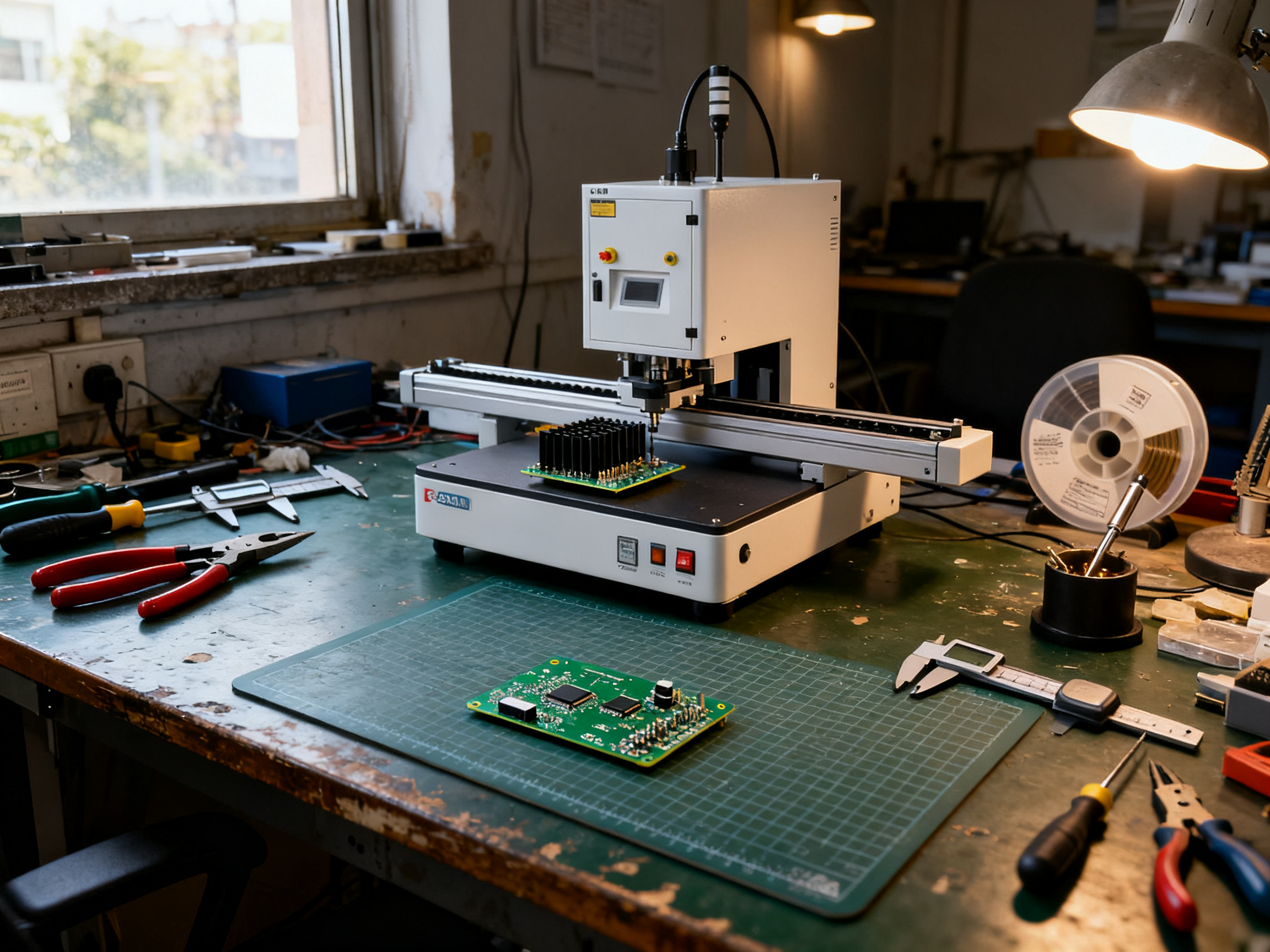
Expert Tip: The mini pcb loader sweet spot is capacity, board size limits, and the hidden cost of growing out of a benchtop unit. Our workshop rule of thumb is that once your panel reaches 400 mm or a board passes 2 kg, a benchtop machine is finished, and there is no upgrade path, only a full replacement. Buy it as the pilot cell machine and price it that way.
Service for benchtop units is simpler than for full machines, and MES integration usually means a USB or serial data link rather than a full Hermes implementation. That is fine for a lab. It is not fine if you plan to grow.
#5 Mycronic, High-End Board Handling and Traceability Focus
Mycronic builds for customers who care about process control and data. Their board handling and automation offering fits the high-mix, high-traceability environments common in medical, automotive electronics, and advanced packaging work.
Standalone units with strong barcode and product-data handling are the norm, and integration with line management systems is handled well. Build quality is high, with attention to ESD-safe materials and magazine contact surfaces. Service coverage is solid in Europe, particularly in the Nordic and Central European electronics clusters, and it has grown in North America.
If what pcb unloader is best for you means the machine that produces clean traceability records for medical devices, this is a category to shortlist.
#6 Panasonic Industry (Panasonic Connect), High-Mix Automated Lines
Panasonic’s SMT offering is aimed at high-mix automated lines, and the loader and unloader options reflect that. Emphasis sits on magazine handling, tool-free changeover, and integration with a broader automation cell rather than a single machine.
Inline and standalone builds are both available. Japanese and Southeast Asian service coverage is strong, with growing support in North America. MES and traceability integration tends to be MES-focused, meaning board data lands in the factory system rather than only on the machine screen.
A lot of Panasonic install base sits in consumer electronics and automotive. Buyers with existing Panasonic placement lines should expect the smoothest mechanical and data fit.
#7 Yamaha Robotics, Flexible Board Handling Configurations
Yamaha’s SMT footprint is large, and its loader and unloader options cover both magazine and tray styles with a focus on compact footprint and fast changeover. That makes them worth a look when floor space is tight or a line has to flex between product families.
Build quality is good and the motion components are proven in high-volume applications. Service coverage extends across Japan, China, Southeast Asia, and Europe.
The traceability story is decent but leans on the line management layer rather than the loader itself, so check the specific board data fields you need during evaluation.
#8 Hanwha Precision Machinery, Volume-Production Magazine Handling
Hanwha supplies loaders and unloaders aimed at volume production, with strong magazine handling and a large installed base across Asian consumer electronics and display supply chains. Their build is workhorse oriented, with good resistance to the dust and handling that comes with long production campaigns.
Standalone magazine units are the core product, and inline versions pair well with Hanwha placement platforms. Service reach is strong where the volume is, in Asia, and it has extended into North America and Europe through regional offices.
Pricing usually sits below the European premium tier for comparable magazine capability, which matters when you are pricing smt line price for a new plant.
#9 Kurtz Ersa, Soldering-Centric Board Handling
Kurtz Ersa comes from soldering, so its board handling is designed around protecting sensitive assemblies through reflow, wave, and selective soldering steps. That shows up in gentler handling, careful board support, and magazine and tray compatibility with wide board envelopes.
Standalone units and inline integration with soldering equipment are both available. Service is well established in Europe, with growing coverage elsewhere.
The MES and traceability story is the weakest of this group, so if you need deep data integration, budget for a third-party line-control layer or pick a different partner. What you get instead is a machine that treats a populated board properly.
#10 SEI and Specialist Asian Board Handling Suppliers
The last slot goes to a group of specialist Asian suppliers that build focused magazine and tray handling systems, often as cost-effective standalone machines. The value here is straightforward: a benchtop or mid-size magazine loader at a price that makes sense for a secondary line or a feeder position.
Build quality varies more in this group, which is why we would ask harder questions. Get the mechanical drawing, get the magazine pitch in writing, and insist on the witnessed acceptance test we described earlier. Service networks are usually regional rather than global, so confirm where the nearest spare parts actually sit.
The upside is speed. A well-chosen unit from this group can deliver good cycle times and reliable magazine indexing without the premium of a global brand, which is often the right call for a line that is not the core of your plant.
Quick Comparison
| Manufacturer | Strongest Category | Typical Configuration | Best For |
|—|—|—|—|
| S&M Co. Ltd. | Full line integration | Standalone plus inline | New lines, mixed production |
| ASMPT | Magazine handling and data | Inline or standalone | High-mix plants needing traceability |
| Fuji | Platform-consistent handling | Inline | Automotive and industrial work |
| Mini and benchtop builders | Prototype and lab | Benchtop | R&D, pilot cells, low volume |
| Mycronic | Traceability and control | Standalone | Medical and automotive electronics |
| Panasonic | High-mix flexibility | Inline or standalone | Space-constrained automated cells |
| Yamaha | Compact footprint | Inline or standalone | Flexible multi-product lines |
| Hanwha | Volume magazine handling | Standalone | Consumer electronics at scale |
| Kurtz Ersa | Board protection | Standalone plus inline | Soldering-heavy flows |
| Specialist Asian suppliers | Cost-effective handling | Standalone | Secondary lines and feeders |
One last practical note. Whatever the brand, ask every supplier for a smt loader and unloader supplier quote that breaks out the machine, magazine loading hardware, tray loading, conveyor, spares, installation, and integration as separate lines. Then ask for the price smt production line setup as a single landed number. The gap between those two documents is where margin hides, and it is the same gap for every manufacturer on this list.
If you want a second opinion, send us your board sizes, hourly output target, and daily changeover count. We will tell you honestly whether you need a magazine handler, a tray loader, or a benchtop unit, and sometimes the honest answer is that you do not need to buy anything yet.## PCB Loader and Unloader Price Guide
Let’s talk money. Price is the reason most people start shopping for a pcb loader or unloader, and the reason most people end up disappointed.
A pcb loader price on a website tells you very little. What you see is the machine body, the motors, and the controller. What you actually need is the line: magazine hardware or tray handling, conveyor sections, installation, and the integration work that gets the thing to actually talk to your printer and your reflow oven. Two machines with identical headline prices can differ by 40 percent in landed cost.
What the ranges actually look like in 2026
We quote enough of these to have a rough sense of where the market sits, and rough is the honest word. Prices move with steel, servo motor supply, and how much custom work a buyer asks for.
| Tier | Typical pcb loader price | What you get |
|—|—|—|
| Benchtop and mini units | roughly $3,000 to $12,000 | Single board handling, small magazines, USB or serial data, no Hermes |
| Entry-level standalone tray or magazine | roughly $18,000 to $40,000 | Standard board envelope, basic PLC, magazine indexing, optional barcode |
| Mid-range standalone with Hermes | roughly $40,000 to $85,000 | Faster indexing, full IPC-HERMES-9852, robust magazine handling, MES-ready |
| Inline modules and integrated pairs | roughly $60,000 to $150,000 | Tuned transfer height and rail datum, automatic magazine exchange, full data exchange |
| European and Japanese premium tier | $90,000 and up | Heavy-duty mechanics, wide envelope, deep service networks, advanced traceability |
Now the honest caveat. Cycle time claims are how vendors move you up a tier, so compare like for like. A mid-range machine running a sustained, hands-off shift will beat a premium machine that needs an operator nearby. Ask for the sustained figure, not the demo figure.
What drives the quote
Five things push a pcb handling system quote up or down, and most buyers only think about the first one.
Capacity and board envelope. This is the big one. If your boards run to 400 mm x 300 mm, or over 2 kg, or carry tall bottom-side components, you are buying heavier rails, bigger motors, and sensors placed differently. Most quotes jump when the board envelope grows, and the surprise comes from the fact that the magazine pitch, the rail spacing, and the transfer mechanism all change together.
Feeders and magazines. Manual magazine loading with one operator swapping racks is the cheapest option. Automatic magazine exchange with multiple magazine positions and a lift column is not. If your line runs three builds a morning, auto exchange usually pays for itself within 18 months in labor alone. If it runs one product a week, it is wasted money.
Tray handling. Dual tray stations, tray-to-tray transfer, and stacker or de-stacker functions add real cost because they need a second motion axis and a second set of guides. Worth it for AOI ends and automated inspection workflows. Not worth it if one person is standing there anyway.
Software and data. Here is where the money sneaks up. A machine with a bare PLC and an RS-232 barcode reader sits at the entry tier. A machine with a Hermes implementation, XML message handling, board identity tracking, MES connectivity, and remote diagnostics sits much higher. The current reference for that data layer is the Hermes specification, which defines the TCP/IP and XML message structure along with board identity, barcode, product, dimension, and thickness fields. If traceability matters to you, that software work is worth paying for. If it does not, you are buying features you will never open.
Integration and installation. Site preparation, power and compressed air, conveyor fabrication, wiring, commissioning, training, and the engineering time to set transfer height correctly. This is where a $50,000 machine becomes a $70,000 purchase, and where two suppliers can quote the same machine at prices more than $15,000 apart.
From Our Experience: We structure every quote as six separate line items: machine body, magazine loading hardware, tray loading, conveyor, spares, and installation with integration. The three that surprise buyers most are the spares kit, the conveyor fabrication, and the integration engineering hours. All three show up as near zero in a competitor quote and then reappear as a change order two months later. Ask for the breakout before you compare anything.
Standalone unloader versus an integrated line
This is the comparison that decides real budgets, so let’s make it concrete.
A standalone unloader for the AOI end typically runs $22,000 to $65,000 depending on tier and data features. It drops boards into trays or magazines so an operator can cart them off to the next cell. You own the AOI, you own the conveyor, and you own the headache of matching transfer heights.
An integrated configuration, where the unloader is designed as part of the line with automatic buffer handling and machine-to-machine data exchange, is more expensive up front. It also removes an operator from the end of every run.
The math usually looks like this. A standalone unloader plus a manual operator at roughly $22 per hour fully loaded means around $490 per shift in labor, or close to $12,700 a month at 26 days. Over three years, that is about $455,000 in labor against the machine. If an integrated setup carries a $30,000 premium and removes one manual unload station, it pays back in roughly seven months of avoided labor, before you count the scrap reduction from boards no longer getting dragged across a static conveyor.
The catch: this only works if you actually remove the station. Most plants buy the integrated machine and keep the operator because there is always something else to do. So do the labor math honestly, on your actual staffing plan.
smt line price when you are buying the whole line
If you are starting from bare floor space, the pcb loader price stops being the interesting number. Now you are pricing an smt production line, and the smt line price is mostly an integration question.
A mid-range SMT production line for sale as a complete package, printer, SPI, placement, reflow, AOI, and loaders, typically lands somewhere in the $180,000 to $400,000 range depending on placement machine class and how much is automatic. Higher-spec lines with fine pitch placement and 100 percent inline inspection run well past that.
The cost of an smt production line for sale listing does not tell you what the landing cost will be. Installation, facility work, spares, operator and process training, first article qualification, and the engineering time to get the reflow profile right for your actual boards all sit outside that sticker number. So when you compare an smt production line for sale against building the same capability piece by piece, compare the landed totals, because the gap between the two documents is where your margin lives.
The quote checklist
Before you sign anything, ask for five things in writing: the full line-item breakout, the sustained throughput figure including changeover, the IPC-HERMES-9852 revision with the message fields you need, the mechanical drawing with transfer height as a tolerance band, and a payment milestone tied to a witnessed test on your own boards.
And if you want a number rather than a catalog, send us your board sizes, hourly output target, and daily changeover count. We will tell you honestly whether a mini pcb loader, a standalone magazine handler, or a tray loader makes sense for you, and sometimes the right answer is that you do not need to buy anything yet.## Buying an SMT Production Line vs. Adding Board Handling Automation
Here is the question that actually decides budgets, and it is usually framed wrong. People ask “should I buy a new SMT production line?” when they mean “my loader and unloader are the problem.” Those are very different purchases with very different risks. Let’s walk through when each one makes sense.
Greenfield: buy the whole line
If you are staring at empty floor space, the board handling decision mostly disappears on its own. A greenfield smt production line setup buys you the printer, SPI, placement, reflow, AOI, and the loaders and unloaders as one engineered system. Transfer heights, conveyor widths, and rail datums get set once, by one party, during commissioning. Nobody is on site with a tape measure trying to make a free-standing machine match a reflow oven that was already bolted down.
This is also the only time you get real choice about the data layer before anything is installed. Specify IPC-HERMES-9852 in the purchase order, with the revision number written into the contract, and every machine on the line speaks the same language from day one. That matters more than most buyers realize at signing time, and it is nearly impossible to retrofit cleanly later.
The cost reality: a complete line with printer, SPI, placement, reflow, AOI, and handling automation typically lands somewhere around $180,000 to $400,000 depending on placement machine class and how much inline inspection you specify. Fine pitch work with 100 percent inspection runs well past that.
But here is the part that trips people up. The number on the listing for an smt production line for sale is not what you spend. Installation, facility work, spares, operator and process training, first article qualification, and the engineering hours needed to get a real reflow profile for your actual boards all sit outside that sticker. When you compare buying a complete line against building the same capability piece by piece, compare landed totals. The gap between the two documents is where your margin hides.
Existing line: add handling automation first
Now flip it. If you already have a printer, a placement machine, and a reflow oven that produce acceptable boards, replacing the whole line to fix a board handling problem is like changing the engine because the door hinge squeaks.
Adding board handling automation to a stable line is almost always the smarter money, and it is a smaller risk because you keep the machines that are already working. You are buying one or two pieces: a magazine handler at the front, a tray loader or conveyor unloader at the AOI end.
The case gets stronger the more stable your existing line is. If your reflow profile is already qualified and your transfer geometry is fixed and documented, then a standalone smt loader and unloader supplier can quote against known dimensions. You are not negotiating a system redesign, you are replacing a box. That is a weeks-long project, not a quarters-long one.
Where it gets complicated is when the existing line is older and depends on the legacy interface. Then you need to keep IPC-SMEMA-9851 for those interfaces, with a wiring diagram and a signal-level spec, not a handshake, while new modules talk Hermes. That is manageable, but it needs to be in the scope of whoever is doing the work. If a supplier tells you “SMEMA compatible” without a pinout and a signal-level document, keep walking.
Do the ROI math on labor, not on machine speed
Let’s put numbers on the add-on case, because this is where the payback argument actually lives.
A standalone unloader at the AOI end typically runs $22,000 to $65,000 depending on tier and data features. If a person stands at the end of every run to pull boards into trays and cart them off, that person costs roughly $22 per hour fully loaded. Across an 8-hour shift, that is about $490 per day, or close to $12,700 a month at 26 working days.
Over three years, that is roughly $455,000 in manual handling labor. Now compare it to the capital cost of automating the same unload station. Even a $30,000 integrated unloader with automatic buffer handling and machine-to-machine data exchange pays back in about seven months of avoided labor. And that calculation leaves scrap on the table entirely, because boards no longer get dragged across a static conveyor or handled twice by a person who is already rushing to the next task.
The critical caveat, and I will not skip it: this payback only happens if you actually remove the station. Most plants buy the automated unloader and keep the operator because there is always something else to do. So run the labor math against your actual staffing plan, not an idealized one.
From Our Experience: When we quote an add-on to an existing line, the three items that surprise buyers are conveyor fabrication, integration engineering hours, and the spares kit. They show up as near zero in a competitor quote and then reappear as a change order two months later. Ask for the line-item breakout before you compare anything.
A side-by-side comparison
| Factor | Full SMT line purchase | Add board handling automation |
|—|—|—|
| Best fit | Greenfield builds, line refresh at end of life | Stable existing lines with handling bottlenecks |
| Capital outlay | Roughly $180,000 to $400,000+ | $22,000 to $150,000 depending on scope |
| Project length | Months, including installation and qualification | Weeks, often two to eight |
| Risk | Replaces everything, including the parts that worked | Isolates the change, keeps working machines |
| Throughput gain | Full line balance from scratch | Fixes the starving segment only |
| Data layer | Hermes specified cleanly at purchase | Mixed Hermes and SMEMA on older lines |
| Operator impact | Full retraining across the line | Local training on one station |
| Payback path | Throughput and yield across all stations | Labor savings at one end, usually under a year |
Which one should you pick?
Ask yourself one question: is the rest of my line performing to spec?
If the answer is yes, and the only visible symptom is that the reflow oven waits on board handling, add the automation. You will get a faster payback, a smaller project, and a much smaller chance of breaking something that was working fine.
If the answer is no, and the printer is marginal, the placement machine is past its support window, and changeover takes three hours, then the loader was never your real problem. Build the line.
Either way, hold the same standard on the quote. Ask for a full line-item breakout, the sustained throughput figure including changeover, the Hermes revision with the message fields you need, the mechanical drawing with transfer height shown as a tolerance band, and payment tied to a witnessed test on your own boards, including your smallest, largest, thinnest, and most awkward board.
And if you want a number rather than a catalog, send us your board sizes, hourly output target, and daily changeover count. We will tell you honestly whether you need a full line, a standalone magazine handler, a tray loader, or a mini pcb loader, and sometimes the right answer is that you do not need to buy anything yet.## Frequently Asked Questions
These are the questions that land in our inbox most weeks. Straight answers below.
What pcb loader do I need for a small batch, high-mix line?
Short answer: a magazine loader with automatic magazine exchange, not a tray loader.
Here is why. Small batch and high mix means you are changing products constantly, and every changeover is where the manual hours hide. A tray loader needs a person at the end of every run, refilling stacks. A magazine handler lets one operator push a fresh magazine in and walk away. With three builds a morning, automatic magazine exchange usually pays for itself inside 18 months on labor alone.
The spec to ask for: 20 to 50 boards per magazine, tool-free changeover, and a machine that behaves sanely with a half-full magazine, because that is the normal condition in a mixed run, not the edge case. Cycle time matters less than you would think here. What matters is the changeover time, measured with one operator doing the work.
And keep the board envelope realistic. If your boards run 150 mm to 350 mm with single boards rather than panels, you are in the mini pcb loader range. If a 400 mm panel or a 2 kg board shows up next quarter, buy production hardware now and save yourself the replacement.
What pcb unloader do I need, and what pcb unloader is best for conveyor-based reflow?
For a conveyor-based reflow line, the unloader is a control point, not a feeder. That changes the specification completely.
When boards flow continuously out of a conveyor, you are buying the ability to stop, buffer, index, and release. The questions that matter are maximum board length, minimum board gap, and whether the machine handles stop-and-go motion or requires continuous flow. A unit built to drop boards into magazines will fight you if the line runs in controlled stop-and-go, because every stop means a half-extracted board hanging over a rail.
So what pcb unloader is best here? Usually one of three things. First, a tray-to-tray transfer station when boards come off the line in standard trays and need to go to AOI or manual inspection. Second, a buffer-equipped unloader that absorbs the reflow oven’s natural cycle variation, which is useful when the oven is your bottleneck. Third, a full magazine unloader for high-mix plants where the back end feeds another cell directly.
Watch the transfer height band, and insist on a tolerance band rather than a nominal number. A few millimeters of mismatch between the oven conveyor and the unloader causes edge catching and skewed boards. That is a defect you will see three stations later, and nobody will trace it back.
Can one loader and unloader pair handle multiple board sizes and tray types?
Yes, within limits, but you have to define those limits in the contract.
The realistic answer for most lines is yes for board sizes, no for board formats. A machine with adjustable rails handles a 50 mm board and a 300 mm panel as long as both sit inside the stated envelope and the rail adjustment is repeatable. The adjustments themselves are where problems come from, because each rail position is a chance for a mismatch.
Tray types are messier. JEDEC trays, KingPak-style trays, and custom carriers have different pitch, depth, and support geometry. If your unloader has a tray-to-tray transfer, it may need a fixture change, or it may need a second tray station. Ask for the supported tray list in writing, with dimensions, and ask what happens with a non-standard tray. “Trays” on a spec sheet is not an answer.
The other half of this question is the carrier and magazine. Specify slot pitch, slot count, and rail profile, because “standard magazine” is not a precise term. The Hermes specification can carry product length, width, and thickness fields, so the machine knows what board it is handling. It still needs the mechanical capability to move it.
What maintenance and spare parts should you budget for?
Plan for roughly 3 to 6 percent of the purchase price per year on consumables and preventive maintenance, plus a spares kit on day one.
In practice that covers conveyor belts and roller replacements, magazine rails and wear strips, sensors, pneumatic fittings, and the actuators that move magazines and clamps. Sensors fail more often than motors, and they fail on a schedule that depends more on dust and humidity in your plant than on hours run. A line in a humid climate will chew through photoelectric sensors faster than a clean-room line running the same shifts.
Here is the part buyers get caught on. Get a starter spares list at quotation, with part numbers and lead times, not a vague promise. Then ask what the recommended PM interval is and what happens if you miss it. Belts that are left worn will take boards with them.
Two more line items worth budgeting. First, ESD verification after any belt, magazine, or guide replacement, because wear parts are exactly where ground paths get disturbed. Second, service response. A failed sensor should not mean a container crossing an ocean, and asking where the nearest spare parts actually sit is a fair question for any supplier, including the ones with the nicest brochures.
On the data side, make sure the machine logs fault and recovery history somewhere you can read it. The IPC-HERMES-9852 field list covers board ID, barcode, product type, dimensions, and thickness, and the fact that Hermes is now published directly by IPC means you can point to a standard in the contract rather than a vendor’s marketing sheet. Ask for the revision number and the exact message fields you need, then ask for a protocol test on your own data before you sign.
Pro Insight: If a supplier cannot give you a starter spares list with part numbers and lead times, they have not sized the machine for your environment yet. Spare-parts availability is a total cost of ownership item, and it belongs in the quote, not in a conversation three months after delivery.
One last thing worth repeating from earlier in this guide. If you send us your board sizes, hourly output target, and daily changeover count, we will tell you honestly whether a magazine handler, a tray loader, or a mini unit fits your line, and sometimes the right answer is that you do not need to buy anything yet.
Expert Conclusion: The loader and unloader pair is a throughput and defect-rate decision, not a commodity purchase, and the proof is in what happens between the printer and the reflow oven. Use IPC-HERMES-9852 on new lines, keep IPC-SMEMA-9851 only where legacy equipment demands it with a verified pinout, define the board envelope and magazine geometry contractually, demand sustained throughput instead of demo cycle times, and tie final payment to a witnessed acceptance test on your own boards. Total cost of ownership over the service life, including labor, spares, downtime, and integration, is the number that decides the purchase. Buy from a supplier who will draw you a mechanical tolerance band and show you a jam recovery before they ask for the balance.# Conclusion and Supplier Recommendation
So, where does that leave you? The short answer is that “best pcb loaders” and “best smt loaders” are not one machine, they are a set of matches, and the best combination depends almost entirely on what your line looks like right now.
If you are starting from empty floor space, look at the line integrators first. S&M Co. Ltd. sits at the top of our list for exactly that reason: transfer heights, conveyor widths, and rail datums get set once by one party, which removes the finger-pointing that eats commissioning weeks. Just keep the same rule you would apply to any integrator, ask for the mechanical interface drawing before you sign, not after.
If you already own a working printer, placement platform, and reflow oven, and the symptom is a reflow oven that keeps waiting, do not replace the line. Buy a standalone magazine handler at the front and a tray or conveyor unloader at the AOI end. That is what pcb loader manufacturers like ASMPT, Mycronic, or Panasonic are strongest at, and in most cases it is the fastest payback path you will find, usually under a year on labor alone.
If you run prototypes or low-volume short runs, the mini pcb loader is not a compromise. It is the correct purchase. Just price it as the pilot cell machine, and remember the ceiling: past 400 mm panels or 2 kg boards, there is no upgrade path.
Here is how we would match each use case to a shortlist.
| Your situation | Start your shortlist with | Typical spend |
|—|—|—|
| Greenfield line, empty floor space | Line integrators such as S&M Co. Ltd. | $180,000 to $400,000+ for a full line |
| Stable existing line, handling bottleneck | ASMPT, Mycronic, Panasonic, Hanwha | $22,000 to $65,000 per unloader |
| High-mix, frequent changeover | ASMPT, Hanwha, Panasonic | $40,000 to $85,000 with Hermes |
| Automotive and industrial, heavy duty | Fuji, Hanwha | $60,000 to $150,000 inline |
| Soldering-heavy flows, board protection | Kurtz Ersa, S&M inline modules | Tier dependent |
| Prototype, R&D, pilot cells | Mini and benchtop builders | $3,000 to $12,000 |
| Secondary line or feeder position | Specialist Asian suppliers | Entry standalone tier |
Now, the next steps, and these matter more than anything else on this page.
Request quotes from at least three shortlisted suppliers, in writing. Every quote should carry the same six line items: machine body, magazine loading hardware, tray loading, conveyor, spares, and installation with integration. If a supplier will not break it out that way, treat it as a warning sign rather than a negotiating opening. The pcb loader price on the headline is never the number that matters.
Ask to see a demo unit running your actual product. Not a video, not a brochure cycle time. Your smallest board, your largest board, your thinnest board, and the one that warps every time it comes out of the reflow oven. Watch the jam recovery. Watch what happens when the network drops. Count how many times a person has to touch the machine during a run, because that number is your real cycle time.
Ask for a factory audit or a site visit. The gap between the best pcb loaders and the worst ones is often mechanical, and it shows up in how the rails are welded. Service reach matters too, so ask where the nearest spare parts actually sit, in physical distance, not in a distributor network diagram.
Put IPC-HERMES-9852 in the purchase order. Ask for the revision number and the exact message fields you need. The IPC-HERMES-9852 field list covers board ID, barcode, product type, dimensions, and thickness, and since Hermes is now published directly by IPC, you can point to a standard instead of a vendor’s marketing sheet. Keep IPC-SMEMA-9851 only where legacy equipment forces it, with a verified pinout.
Tie final payment to a witnessed acceptance test. No exceptions, no partial sign-off. This single clause has saved more money than any negotiation tactic we know.
If you want a number rather than a catalog, send us your board sizes, hourly output target, and daily changeover count. We will tell you honestly whether you need a magazine handler, a tray loader, a mini pcb loader, or nothing at all yet. Sometimes the right answer really is that you do not need to buy anything, and that is still a useful answer.