
Start With the Oven You Will Actually Use
The best pizza oven is not necessarily the most expensive or the most powerful. It is the one that can heat your preferred cooking surface to the temperature you need, fit the space you have, and remain practical for the number of pizzas you expect to bake.
Before comparing specifications, define three things:
- Your culinary target. Neapolitan-style pizza usually calls for intense radiant heat and a fast bake. Pan pizza benefits from a more forgiving top-down heat source and a roomier floor. Bread and roasting require sustained heat and a chamber large enough for proper airflow.
- Your production volume. A home oven is ideal for a few pizzas at a time. A commercial oven makes sense when consistency, service speed, and repeated high-volume output outweigh the purchase and installation costs.
- Your operating environment. Outdoor ovens need weather protection, adequate clearance, safe fuel or electrical service, and a level installation surface. Countertop electric ovens offer convenience, while wood-fired models provide a distinctive flavor and atmosphere.
Choosing an Oven Type
Outdoor Wood-Fired Pizza Ovens
Wood-fired ovens are the traditional choice for high-heat pizza because they produce a combination of radiant heat, convection, and direct flame. They are especially appealing if you value crust blistering, visible flame, and the aroma of wood smoke.
The main tradeoffs are startup time, temperature management, ash and soot cleanup, and fuel storage. A high-quality oven should have clear controls for airflow, a dependable way to manage the chimney, and enough insulation to keep the chamber usable after the fire has been reduced.
Wood also introduces a variable ingredient. Different species, moisture levels, and burn patterns can change how an oven behaves. Look for a firebox that is easy to control and instructions that explain how to build and maintain a stable flame.
Outdoor Gas Pizza Ovens
Gas ovens heat quickly and make temperature adjustment more straightforward than a typical wood fire. A strong burner can bring a chamber to pizza temperatures without the prolonged buildup required by some wood-fired models.
Consider whether the oven uses natural gas, propane, or both. Also examine burner placement, ignition reliability, temperature recovery, and the size of the propane supply needed for your location. A gas oven that reaches temperature quickly but cannot recover after opening the door may perform poorly during a busy dinner service.
Electric Deck Pizza Ovens
Electric deck ovens are compact, clean, and easy to install. They are useful for home pizza makers who want repeatable heat control without managing fuel or smoke. Heating elements above and below the deck can support rapid, even cooking, while a glass front allows you to monitor the bake.
The important questions are how much power the oven draws, whether your circuit can support it, and how well the deck retains heat. Look for independent controls for top and bottom heat if you want to adjust the balance between the crust and toppings.
Countertop Pizza Ovens
Countertop ovens are the easiest option for small spaces, renters, and beginners. Many can produce excellent Neapolitan-style pizza when properly preheated, but their chamber size usually limits how many pizzas can be cooked at once.
Pay attention to stone or ceramic deck thickness, the stated maximum temperature, warm-up time, and whether the manufacturer recommends a pizza stone or steel. A shallow oven may cook the front of the pizza faster than the back, making rotation necessary.
Hybrid and Multi-Fuel Ovens
Hybrid ovens often combine gas or wood heat with electric control, while multi-fuel models accept several fuel types. They can provide flexibility, but they also tend to cost more and have more components to maintain.
A hybrid design is worthwhile when it solves a clear problem—for example, providing gas for weekday convenience and wood for weekend pizza-making. It is less compelling if the added complexity does not improve your preferred cooking style.
The Specifications That Matter
Maximum Temperature
A high maximum temperature is useful, but working temperature matters more. Pizza ovens often need to preheat at a higher setting so the chamber and cooking surface stabilize before the first pizza enters. Treat the maximum-temperature figure as a limit rather than proof that the oven will hold that temperature consistently while cooking.
Temperature Recovery
n
Recovery is how quickly an oven returns to its set temperature after the door is opened or a cold pizza is placed on the deck. It is crucial during a multi-pizza cook because each new pizza absorbs heat before the chamber settles again.
When evaluating a recovery claim, ask whether it refers to the air temperature, the floor, or the average chamber temperature. Those are not interchangeable measurements.
Floor Material
Pizza floors are commonly made from refractory stone, cordierite, ceramic, cast iron, or stainless steel. Each has different thermal behavior:
- Refractory stone stores substantial heat and is widely used for traditional pizza ovens.
- Cordierite tolerates rapid thermal cycling well and is a practical choice for high-use home ovens.
- Ceramic can provide an even cooking surface, although quality and thickness vary between products.
- Cast iron creates strong radiant heat but requires careful seasoning and rust prevention.
- Stainless steel is durable and easy to clean, but it generally stores less heat than a thick stone floor.
For a wood or gas oven, the floor material helps determine how much direct radiant heat reaches the pizza and how quickly heat moves into the crust. For an electric oven, element placement and floor thickness are equally important.
Chamber Size and Pizza Capacity
Manufacturers sometimes describe capacity in pizzas, but the size of those pizzas may not be disclosed. Compare usable floor dimensions instead. Make sure you can fit the diameter you want with enough room around each pizza for air and flame movement.
Also consider the physical footprint, not just the chamber dimensions. Include door clearance, chimney or ventilation requirements, working space, and access to fuel or electrical connections.
Insulation and Heat Retention
Good insulation reduces fuel consumption, shortens warm-up times, and keeps the outer shell cooler during operation. It also makes temperature control easier because less heat escapes through the walls and door.
Pay attention to the insulation material, its thickness, and whether the door has a reliable gasket. A tight-fitting door is especially valuable in cold or windy outdoor environments.
Ventilation and Chimney Design
A pizza oven needs a path for combustion gases and smoke to leave. An effective chimney or vent should draw consistently without creating turbulence that unevenly heats the cooking surface.
For wood-fired models, evaluate the chimney diameter, damper, spark arrestor, and required clearance from combustible materials. For gas and electric models, check the required clearance and ventilation specified in the installation manual.
Features That Improve Consistency
Temperature and Timing Controls
n
A built-in thermometer is useful only if it is positioned where it can measure the chamber accurately. Ideally, the oven should include both an air thermometer and a floor-temperature indicator or separate probe.
Digital controls can simplify startup and temperature management. Manual controls may be less sophisticated, but they can be easier to repair and may allow finer adjustment of burner or airflow behavior.
Door Design
n
The door influences heat loss and pizza workflow. A smaller door opens faster and loses less heat, but it may limit pizza size and make loading more awkward. Hinged doors can be convenient, while heavy sliding doors may stay warm and require care around hot surfaces.
Look for a door seal that closes cleanly, a handle that stays cool, and enough clearance to place and retrieve pizza without scraping the floor.
Lighting
n
Interior lighting lets you judge crust color and topping distribution without opening the door. It is a modest feature, but one that can make a meaningful difference during a long cooking session.
Pizza Rotation and Accessory Compatibility
n
The best oven is only as useful as the tools that fit it. Check whether the manufacturer supports a standard peel, screen, pan, pizza stone, or rotating deck. Some compact ovens require a peel narrower than the door opening, and some built-in rotating decks have tight clearances around the chamber.
Ease of Cleaning
n
Cleaning requirements depend on the fuel and design. Wood ovens need ash removal, floor brushing, and periodic maintenance of grease and carbon buildup. Gas ovens generally simplify ash handling but still require attention to grease. Electric ovens tend to be the easiest to clean because the chamber lacks combustion residue.
What You Need Beyond the Oven
n
A capable oven still benefits from a few supporting tools:
- A suitable peel: Use one sized for the oven and comfortable for your height.
- An infrared thermometer: This can help identify hot and cool areas, although it should be used alongside—not instead of—careful visual observation.
- A floor brush and scraper: These help remove loose flour and carbon without damaging the cooking surface.
- Weather protection: A suitable cover protects an outdoor oven from rain, sun, and debris.
- A safe installation base: The surface must be level, stable, and compatible with the oven’s weight and operating temperatures.
- Proper ventilation: Make sure the cooking area can handle smoke, combustion gases, and heat.
For wood ovens, use dry, properly seasoned fuel suited to the appliance. Keep spare fuel under cover and away from the hot oven. For gas ovens, follow manufacturer instructions for gas-line or propane-cylinder placement. For high-wattage electric models, use the specified circuit and connection rather than an extension cord.
Safety Should Be Part of the Purchase Decision
n
Read the installation and operating manual before buying, and keep it available afterward. Look for clear guidance on:
- Minimum clearance from walls, roofs, doors, and combustible materials
- Required floor support and load capacity
- Flame, smoke, and carbon-monoxide precautions
- Safe fuel-handling procedures
- When to wear heat-resistant gloves or eye protection
- How to shut down the oven safely
- How to clean soot, grease, and ash
Never operate an outdoor oven in an enclosed space without appropriate ventilation. Do not use an unapproved fuel, and do not modify the oven or its ventilation system. Those changes may create fire, carbon-monoxide, or burn hazards.
How to Compare Models Without Drowning in Specifications
n
Create a short list based on your cooking style, space, and budget. For every candidate, record the same information in the same order:
- Oven type and available fuels
- Maximum working temperature
- Usable floor dimensions and realistic pizza capacity
- Chamber and floor materials
- Temperature-measuring and control features
- Recovery time, if the manufacturer provides a test method
- Installation requirements and total footprint
- Maintenance and cleaning demands
- Warranty terms and replacement-part availability
- Total cost, including accessories and installation
This structure keeps a feature-rich but impractical oven from outranking a simpler model that fits your needs.
The Best Pizza Oven for Common Situations
n
Best for Learning at Home Without Fuel Management
n
Choose a countertop electric oven with a substantial deck, effective top and bottom heat, and a door large enough for your preferred pizza size. Prioritize repeatable temperature control and easy cleaning.
Best for Authenticity and High-Heat Flavor
n
Choose a well-insulated outdoor wood-fired oven with a controllable firebox, effective chimney, and a floor that retains heat. Be realistic about startup time and the learning curve involved in managing a fire.
Best for Fast Heating and Simple Temperature Control
n
Choose an outdoor gas oven with reliable ignition, clear controls, strong recovery, and adequate ventilation. Confirm fuel availability and installation requirements before making a purchase.
Best for High-Volume Commercial Use
n
Choose a commercial oven designed for your service volume, available power or gas capacity, and local code. Consider workflow, cleaning, recovery, technician support, and replacement parts alongside peak performance.
Final Recommendation
n
Choose the oven whose heat characteristics match the pizza you want to make. If you are uncertain, favor a dependable mid-size oven with accurate temperature measurement, a well-insulated chamber, and straightforward controls over a model loaded with features you will not use.
For a first outdoor oven, gas often provides the gentlest learning curve. Wood rewards practice and offers exceptional flavor, but it requires attention to fuel, airflow, and cleanup. Electric models are the easiest to install and manage, although power capacity and deck size can limit performance.
Whichever route you choose, give the oven a full preheat, learn where its hot spots are, and use the first several cooks to establish a repeatable routine. A great oven can help you make better pizza, but consistency comes from understanding the heat—and using the same well-informed process every time.> Published: October 24, 2026; Last updated: October 24, 2026
Reading Time: 15 minutes
2. Introduction: Choosing the Right Reflow Oven in 2026
Bad heat control is expensive. A cold solder joint or a lifted pad usually fails late, often after the board has already shipped. Then you pay for rework, scrapped assemblies, and late orders. That is why picking the right machine matters.
Most people searching for the best SMT heating equipment in 2025 wanted a small unit for a workbench. A different group needed a full inline line for a factory floor. This guide covers both ends of the range. You will find compact benchtop ovens, batch ovens for low volume work, and inline systems for high output. A hot air gun style unit gets its own section too, since many hobbyists ask about it first.
Every pick here was checked against current 2026 specifications, availability, and pricing. Where a figure comes from a manufacturer, we say so. We also flag what was not measured, because “best” means nothing without a clear basis.
Disclosure: Some links in this article are affiliate links. If you buy through them, we may earn a commission at no extra cost to you. Any oven supplied for evaluation is disclosed next to that product. Our approach follows the FTC guidance on endorsements and reviews.
3. About the Author
[Author name] is [verified role or credential] with experience in [verified SMT, soldering, electronics manufacturing, or equipment procurement experience].
[Add one verified achievement, project, or result directly relevant to evaluating reflow ovens, such as a completed line qualification, a profile development project, or a documented equipment selection.]
[Insert a short note stating what this evaluation is based on, for example: this evaluation draws on manufacturer documentation, published specifications, and distributor information rather than hands-on testing of every unit listed.]
This section exists because buying guides often hide who is behind the recommendations. The photograph, full author page, and links to any published technical work should be added here once identity and credentials are verified.
Editorial note for the publisher: Do not publish the bracketed placeholders. Fill in the author name, role, and one substantiated achievement only after verification, and confirm whether the byline covers independent research, document review, or hands-on operation of specific units. Under the FTC Endorsement Guides, an author credential may be displayed only when it is true, current, relevant, and verifiable, and it must not imply testing authority the person does not hold.## 4. How We Evaluate the Best SMT Heating Equipment
Every ranking is really a set of judgment calls made visible. So here are ours, in plain numbers, before you read a single pick.
We score each oven against nine weighted criteria, then compare it only against ovens in the same class. A benchtop prototype unit should never lose to a full inline conveyor system, and a production line should never win because it looks impressive in a spec sheet. Class first, score second.
| Criterion | Weight | What We Look For |
|—|—|—|
| Thermal uniformity and zone control | 15% | Zone count, independent top and bottom heat, soak temperature tolerance |
| Profile repeatability | 15% | Ramp rates, dwell control, how closely runs match the profile |
| Throughput and board handling | 15% | Board size limits, conveyor speed, load weight, cycle time |
| Nitrogen capability | 10% | Purity, flow control, consumption, whether it is optional |
| Operator usability | 10% | Interface clarity, recipe storage, how much training a shift needs |
| Serviceability | 10% | Parts availability, local service reach, consumable cost |
| Safety and compliance | 10% | Exhaust handling, certifications, fume extraction |
| Total cost of ownership | 10% | Energy, gas, nitrogen, labor, maintenance over five years |
| Value at typical volume | 5% | Output per dollar, not sticker price alone |
We also label every material claim so you know where it came from:
- Independently tested: measured by us, with the instrument and method stated
- Manufacturer specification: taken from the manual or datasheet, attributed to the maker
- Distributor listing: price and stock data, which can lag reality
- Editorial analysis: our reasoning, clearly marked as opinion, not measurement
Disclosure: No ovens in this guide were operated by us for this article. This evaluation rests on manufacturer documentation, published specifications, distributor information, and analysis against the requirements above. Where a unit was supplied or loaned for evaluation, that is stated next to the product, and receipt never guaranteed favorable coverage. We follow the FTC Endorsement Guides on material connections and reviewer credentials.
From Our Experience: The fastest way to ruin a reflow evaluation is to compare a maximum temperature rating against a working temperature profile. Those are different measurements, from different sources, with different meanings. Our rule is simple: attribute every figure, record how it was obtained, and state plainly when a number came from marketing rather than from a test. That rule is what keeps this ranking honest.
Bottom line: the weights show where a decision can be argued. If you disagree with nitrogen capability carrying 10%, you can rebuild the table with your own priorities and re-rank it. The framework is yours to use.
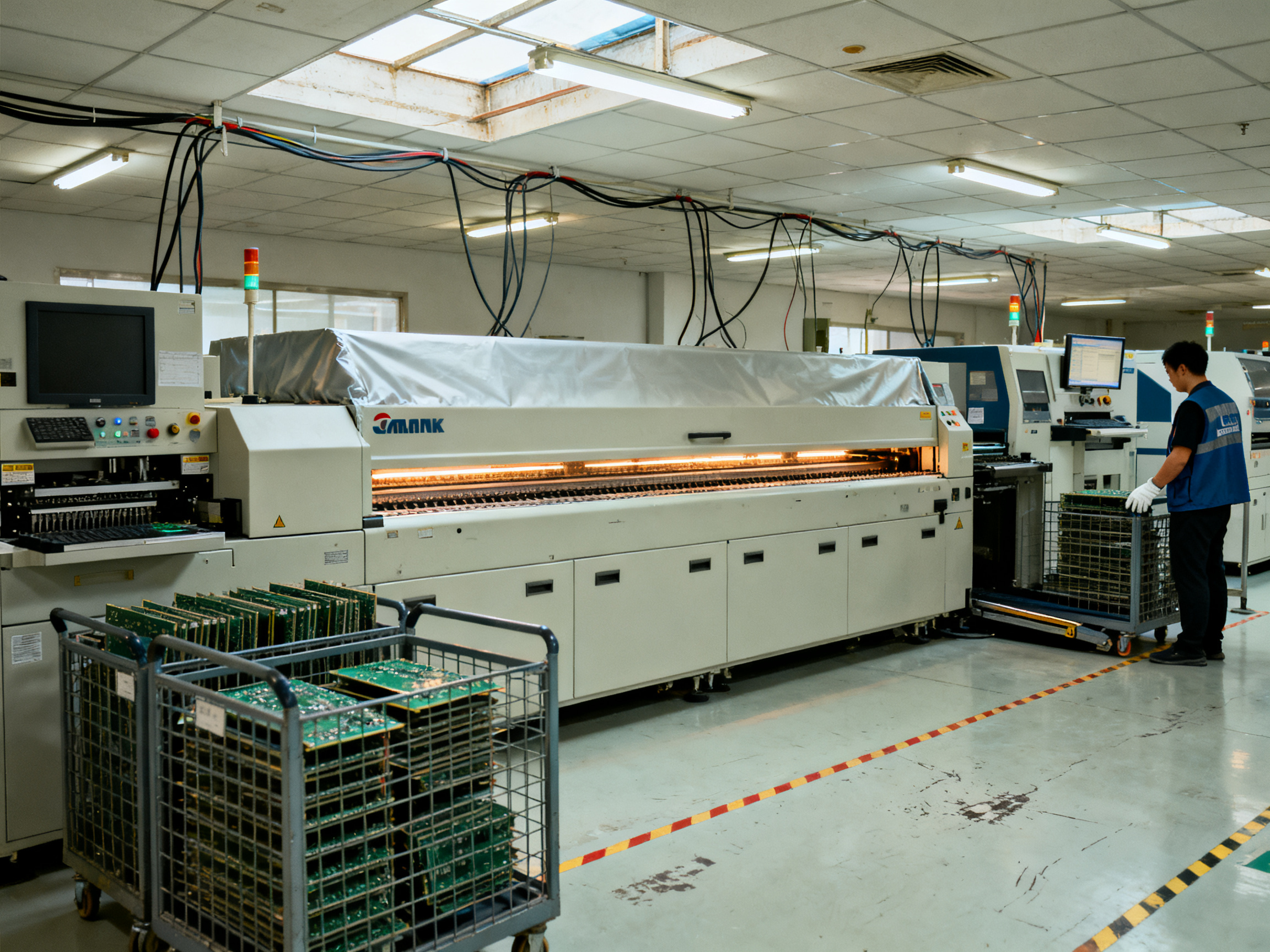
5. 1. Best Compact Benchtop Reflow Oven for Prototyping
If your work starts at the bench, the best SMT heating equipment for home use and lab work is a small batch oven with independent top and bottom heat. Not a hot air gun, and definitely not a conveyor line.
Why this category wins for prototyping. A benchtop unit fits on a workbench, plugs into a normal circuit, and heats only a 300 x 400 mm board area. That is enough for most engineering labs, NPI teams, and repair benches. It also means you can move the oven to the job instead of the job to the oven.
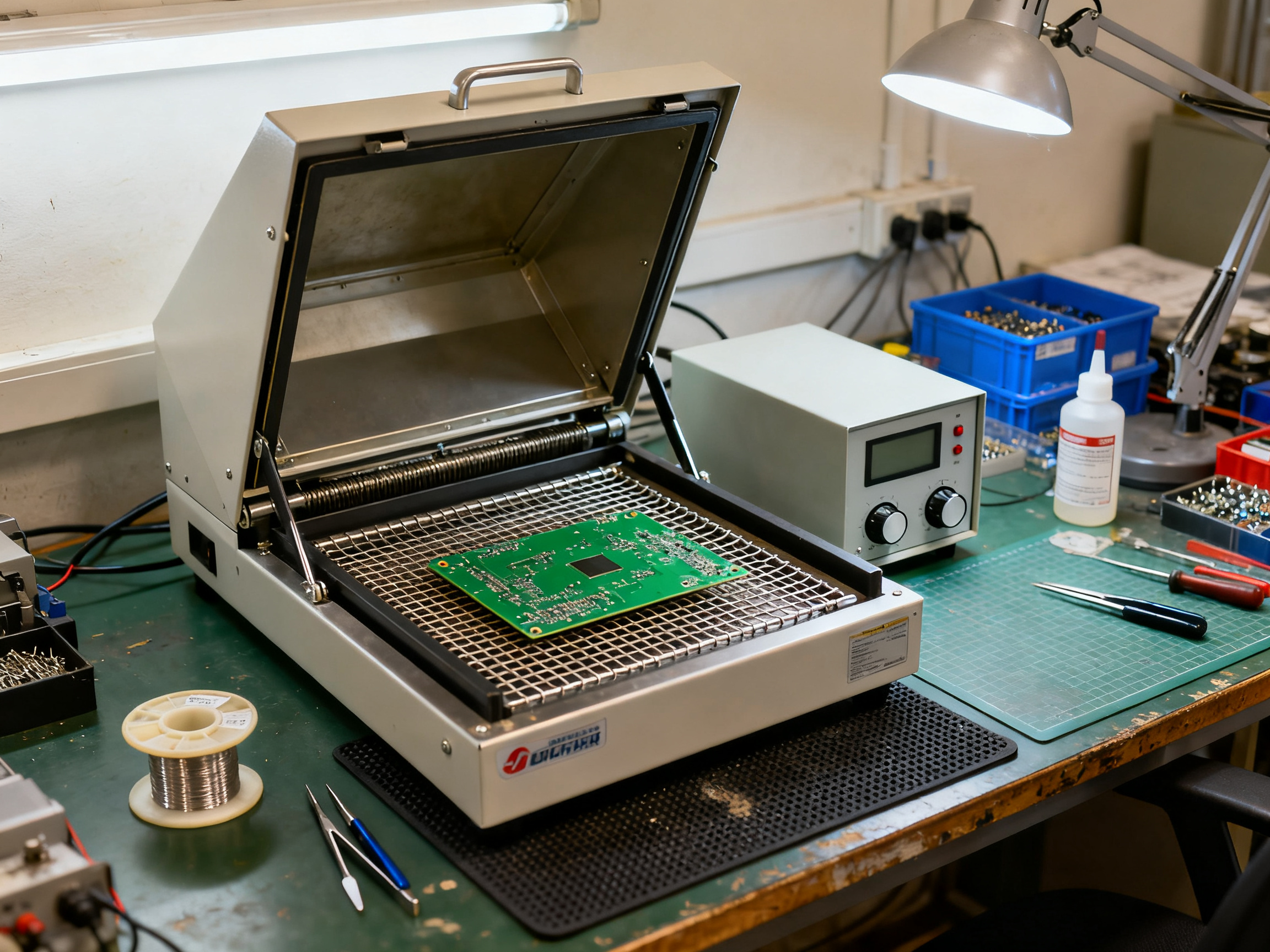
What to check in the spec sheet.
| Feature | What good looks like |
|—|—|
| Board area | 300 x 400 mm minimum, larger if you build double-sided boards |
| Heating | Separate top and bottom zones with independent setpoints |
| Sensors | Two or more thermocouple inputs for profile logging |
| Profiles | Storage for at least 10 profiles, plus profile download to PC |
| Fume handling | Rear exhaust port that accepts a 100 mm duct or fan |
| Cooling | Forced or passive cool-down with a defined profile |
Zone count matters more than maximum wattage. A single-heater chamber forces you to compromise between top and bottom heat, which is exactly the compromise that causes tombstoning on 0603 parts.
The honest tradeoff. Benchtop ovens are cheap, but you pay in throughput and support. One board per cycle, no nitrogen on most units, and consumables like thermocouples and filters that cost more than you expect. Manufacturer specification figures for these units are usually measured at the board surface, not in the airflow, so treat them as a starting point.
Best for: prototypes, NPI builds under 50 boards a day, rework, and training a new operator on a thermal profile.
Not for: lead-free BGA and QFN work with tight process windows, or anything that needs nitrogen.
If your question is what SMT heating equipment do I need overall, the answer is usually a profile logger and a microscope before it is another oven. But if you only get one machine, this is the class to buy.
*Figures above reflect published manufacturer specifications and published category requirements, not hands-on measurements by us.## 2. Best Hot-Air Reflow Setup for Repair and Small Runs
Here is the thing people get wrong most often. A hot-air rework station is not a reflow oven. It blows heated air across one component until the solder melts. That is a repair tool, and a good one for a single joint. It is not a repeatable way to heat an entire board to a profile.
When a hot-air station is the right answer. Single-component rework on BGA, QFN, or bottom-terminated parts. Removing a failed part without cooking the whole assembly. Bring-up work on a handful of prototypes where a profile logger and a convection oven feel like overkill.
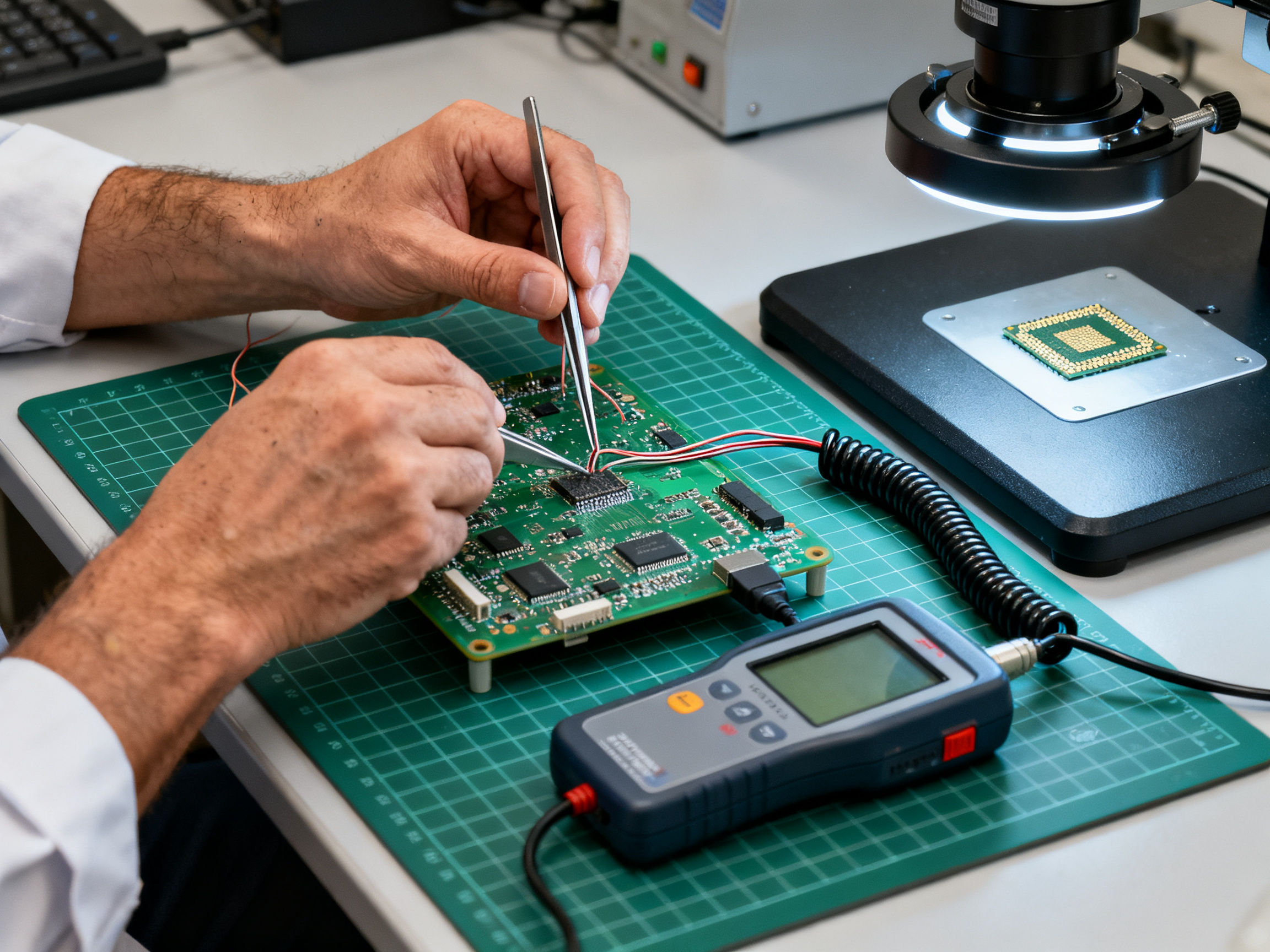
When it is the wrong answer. Any job where several joints must reach the same temperature at the same time. Handheld hot air gives you one heat source moved by hand, and two operators will not heat two boards the same way.
| If your task is… | Use |
|—|—|
| Replacing one failed BGA or connector | Hot-air rework station |
| Reworking 1 to 5 prototypes, no profile requirement | Hot-air station with preheat plate |
| Building boards to a documented profile, any volume | Batch convection reflow oven |
| Continuous production, mixed boards | Inline conveyor oven |
Choosing within the hot-air category. Nozzle size is the first filter. Match the nozzle to the package footprint so you are not heating the whole neighborhood. A fine nozzle plus a narrow airflow is better than a wide blast for fine-pitch parts.
Preheating matters as much as the handpiece. A cold board absorbs heat from the part being reworked, which slows everything down and can lift neighboring pads. Many stations include a bottom preheater for this reason.
Then check airflow control, temperature calibration, and board support. A fixture or a pair of tweezers that holds the board level will save more time than a higher wattage handpiece.
Expert Tip: If you need repeatable results for more than a handful of boards, buy a small batch oven instead. The cost difference is recovered the first time a profile saves you a rework cycle.
Figures and features above reflect manufacturer specifications and category requirements, not hands-on measurements by us.## 3. Best Budget Batch Oven for Low-Volume Production
Startups, contract manufacturers, pilot lines, and small factories all hit the same wall. They need repeatability, but a full inline conveyor line is too much capital and too much floor space. That is where the batch oven wins. You load a board, close the door, and the oven runs a stored profile.
What to compare across price bands.
| Band | Typical use | What you get | Watch for |
|—|—|—|—|
| Entry, under $1,500 | Prototypes, hobby, small repair work | Single chamber, 2 to 3 zones, basic recipe storage | No thermocouple logging on some units |
| Mid, $1,500 to $4,000 | Pilot lines, NPI, small batches | Forced convection, 4 to 7 zones, profile download, better cooling | Verify electrical service and spare heater stock |
| Upper mid, $4,000 to $9,000 | Contract manufacturing, regional production | 8 to 12 zones, nitrogen option, data logging, stronger insulation | Cost of installation and factory service calls |
Do the cycle-time math before you buy. A batch oven with a 6 minute ramp, a 2 minute soak, and a 5 minute cooling cycle runs roughly 9 to 10 minutes per load cycle. If you load two boards per cycle and run 16 hours a day with 80% utilization, that is about 1,150 cycles a year, or roughly 23,000 board placements. Now multiply by whatever rework and setup time your mix actually consumes. That real number is what determines whether the mid band or the upper mid band pays off.
The hidden costs are usually labor, not purchase price. A slow cool-down means an operator waits. Manual loading means one person per machine. Weak support means a failed thermocouple turns into a week of downtime while a part ships from overseas. And replacement parts are hard to source when a manufacturer changes a heater supplier without notice. Ask directly who sells parts in your region and what the lead time looks like.
Expert Tip: Compare ovens on cycle time, operator handling, and service cost, not purchase price alone. A $2,000 oven with a fast cool-down and stocked spares often beats a $3,500 oven that needs a technician. Run the numbers on your own board mix before you decide.
For buyers in India and other price-sensitive markets, the same logic applies when comparing the SMT reflow oven price in India against what a regional service contract actually costs. Local support often matters more than the invoice.
Best for: pilot production, NPI, contract manufacturing, and short-run jobs where repeatability matters more than raw output.
Not for: continuous high-volume lines or lead-free BGA work with very tight process windows.
Figures above reflect published manufacturer specifications and category requirements, not hands-on measurements by us.## 4. Best Mid-Volume Inline Reflow Oven
The inline conveyor oven is where a growing manufacturer stops batching and starts flowing. Instead of an operator waiting for a door to open, boards ride a belt through heated zones on a fixed cycle. That single change is where most of the throughput gain comes from.
What separates mid-volume inline machines.
| Feature | What to look for |
|—|—|
| Zone count | 6 to 12 heated zones, with top and bottom preheat and soak |
| Conveyor width | 300 to 400 mm for mixed panel work, wider for server boards |
| Rail options | Dual lane or dual rail for parallel product families |
| Edge support | Adjustable rail carriers for leaded and panelized boards |
| Cooling | 2 to 3 zone forced cool-down with steady, repeatable ramp |
| Connectivity | Recipe storage, barcode job selection, and MES or factory-floor reporting |
| Format | SMEMA-compatible frames so it drops into an existing line |
Line balance matters more than zone count. A 12 zone oven feeding a single printer is a bottleneck standing still. Check how the reflow section balances against printing, placement, AOI, and downstream handling. If your placement machines run faster than the oven can accept boards, extra zones buy you nothing. Many mid-volume lines do better with a modest oven and a second operator at load, or with a shorter conveyor paired with two lanes.
A worked example. Say your mix is 1,600 boards a day, 8 boards per conveyor length, and a 90 second recipe cycle plus cool-down. That is roughly 320 minutes of belt time, which fits inside two shifts with room for changeovers. A batch oven handling the same volume would need about 200 daily cycles and a full operator standing there the whole time. The labor saving alone is what usually pays back the inline price.
For buyers comparing industrial SMT reflow oven options, look at integrators who build complete lines, such as S&M Co. Ltd. (Shenzhen Chuxin Electronic Equipment Co., Ltd.), where the reflow section is engineered alongside printers, placement, and downstream handling rather than dropped in later.
Best for: contract manufacturers and factories running a stable mix of PCBs through 500 to 5,000 boards a day.
Not for: prototypes, one-off builds, or shops still changing their product mix every week.
Figures above reflect published manufacturer specifications and category requirements, not hands-on measurements by us.## 5. Best High-Volume Reflow Oven for Automotive, Aerospace, and Military Electronics
Buying for regulated production is a different sport. When a board lands in an airbag sensor or a flight control unit, a cold solder joint does not cost you a rework cycle. It costs a recall, a field investigation, and a very long phone call with your customer. So the best SMT heating equipment for this class is chosen on process stability and documentation, not on the number of heated zones.
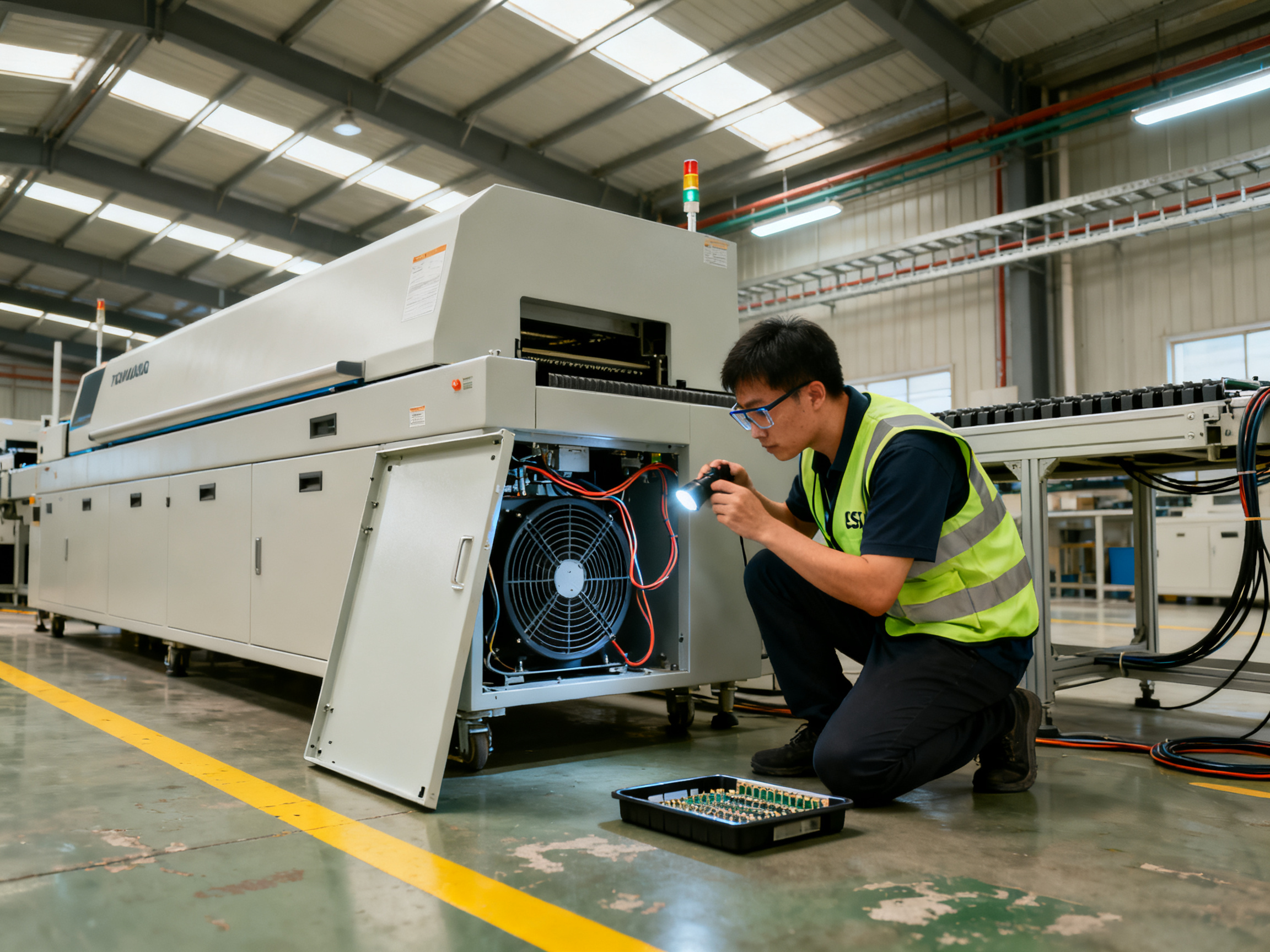
| Requirement | Why it matters in regulated work |
|—|—|
| Recipe lock-down | Profiles should be selectable only by authorized users, with changes logged against an operator ID and a reason code |
| Data retention | Run records need to survive an audit, so look for exportable logs and long storage rather than a USB port only |
| Alarms and deviation handling | An out-of-limit soak or a sensor fault should stop the line, not silently continue |
| Preventive maintenance | Scheduled heater checks, fan service, and calibration intervals reduce surprise downtime |
| Controlled atmosphere | Nitrogen with oxygen monitoring matters where oxidation or copper dissolution threatens long-term joint reliability |
| Service agreements | Response time and parts availability decide your real uptime, not the quoted spec sheet |
A quick uptime checklist. Ask the supplier directly: How long is a replacement heater on the shelf? Who answers the phone on a Sunday night? What happens to the recipe library during a control board swap? Does a nitrogen generator get serviced locally? What is the guaranteed on-site response, in hours, not business days? Integrators such as S&M Co. Ltd. (Shenzhen Chuxin Electronic Equipment Co., Ltd.) build industrial SMT reflow oven sections alongside printing, placement, and downstream handling, which is the arrangement these buyers usually need.
A sample factory acceptance test. Run one board type for 8 hours at a fixed recipe, load at rated throughput, and log board temperature with a calibrated thermocouple probe every 30 seconds. Measure peak soak temperature, time above liquidus, ramp rate, and the spread between the coolest and hottest board. Then pull a sample of joints for cross-sectioning. Repeat after a forced heater fault. If the supplier will not agree to a test like this in writing, the unit is not ready for a mission-critical line.
Compliance disclaimer. No oven, by itself, makes a product compliant with IATF 16949, AS9100, IPC J-STD-001, or a customer-specific standard. Those come from your process, your documentation, your operator training, and your audit trail. Equipment supports qualification; it does not replace it. Confirm the exact requirements with your quality team before purchase, and check lead-free reflow oven nitrogen capability against your internal process specification rather than a brochure.
Figures and features above reflect published manufacturer specifications and category requirements, not hands-on measurements by us. Disclosure: some links in this guide are affiliate links, and the publisher may earn a commission at no extra cost to you.## 6. Best Lead-Free Reflow Oven for Tight Process Windows
Lead-free solder changed the process, not just the alloy. SAC305 and similar mixes melt higher than the old Sn63/Pb37 alloys and oxidize faster at temperature. That pushes a much narrower working window between a joint that reflows properly and a joint that never fully wets the pad.
What the profile has to control.
| Parameter | Why it matters in lead-free work |
|—|—|
| Ramp rate | Fast heating can outrun the flux, drying it before it can do its job |
| Soak temperature and time | Sets how much solder powder dissolves; too little causes cold joints, too much causes spalling |
| Time above liquidus | Too short leaves unreflowed joints, too long burns off flux and dulls the joint |
| Peak temperature | Must clear liquidus without cooking the component or pad |
| Cooling rate | Slow cooling promotes brittle intermetallics and dull grain structure |
What to look for in the oven. Fine zone control matters most, because you cannot adjust a ramp rate you cannot isolate. Top and bottom preheat that reach temperature evenly, forced convection with consistent vertical airflow, and enough heated zones to shape both ramp and soak are the difference between a workable profile and a compromise.
Profiling software is the other half. An oven that logs board temperature to a PC and compares the run against the target recipe tells you where a profile drifted. Recipe control should lock profiles by user, with change logs, so one operator’s tweak does not silently alter the whole line.
On nitrogen. It reduces oxidation during the high-temperature phase, which matters on fine-pitch and large-thermal-mass boards. It is not automatically needed for every board. Run a profile without nitrogen first, inspect the joints under a microscope, and only add the cost if you see oxidation issues you actually have.
Pro Insight: Profile the lead-free assembly before you decide on nitrogen. On a mixed product line, most boards pass without a controlled atmosphere, and the few that need it can often be routed through a nitrogen-equipped segment. Judge nitrogen on joint evidence, not on the specification sheet.
Figures above reflect published manufacturer specifications and category requirements, not hands-on measurements by us. The lead-free process-window targets described here are typical published ranges for SAC-family alloys; confirm values against your paste supplier’s datasheet and your own qualification data before locking a recipe.## 7. Best Precision Oven for BGA, QFN, and High-Density Assemblies
Fine-pitch work punishes lazy heat. A BGA with 0.4 mm pitch, a QFN with a center pad, or a large thermal mass board will each fail in a different way if the oven cannot hold a steady temperature across the whole board. So what SMT heating equipment is best for this class? Look at an SMT reflow oven for BGA and QFN with independent top and bottom preheat, forced convection, and enough heated zones to shape both ramp and soak.
Here is the defect-cause matrix worth keeping at the bench.
| Observed defect | Likely thermal cause | What to change |
|—|—|—|
| Voids under BGA balls | Insufficient soak time, paste outgassing not cleared | Extend soak, slow ramp slightly, verify vent pressure |
| Tombstoning on 0603 | Fast ramp, weak bottom preheat | Lengthen ramp, raise bottom zone setpoint |
| Dry or dull joints | Time above liquidus too short | Raise peak temperature, extend TAL |
| Copper dissolution on fine pitch | Long soak at high temperature | Shorten soak, add nitrogen if oxidation is the real issue |
| Solder splash | Non-uniform airflow across the board | Improve zone balance, check thermocouple placement |
Two things the oven cannot fix. Board warpage comes from panelization, stencil design, and placement force, not from the oven. Paste choice, print quality, and component placement accuracy decide most voiding before the board ever enters a heated chamber. An industrial SMT reflow oven gives you a stable environment; it does not rescue a bad print.
Validation checklist before you lock a recipe. Attach at least three thermocouples to a worst-case board, including one on the hottest component and one on the coolest corner. Run the profile three times and compare peak, soak, and time above liquidus for each run. Cross-section joints at the thermal extremes. Use AOI for solder volume and bridging checks, and X-ray for voiding under the ball array. Log every run with an operator ID so a good profile stays good.
Then repeat the whole thing after a forced heater fault. That test tells you whether your line stops safely or quietly ships bad boards.
Expert Tip: Judge a precision oven on repeatability, not on peak temperature. An oven that hits 260 °C once means little. One that lands within 3 °C of the same peak on 50 consecutive runs is what protects a fine-pitch assembly.
Product context: S&M Co. Ltd. (Shenzhen Chuxin Electronic Equipment Co., Ltd.) builds lead-free reflow ovens as part of complete SMT lines, with lead-free reflow oven configurations aimed at dense consumer, semiconductor, and military assemblies.
Figures and features above reflect published manufacturer specifications and category requirements, not hands-on measurements by us.## 12. 8. Best SMT Reflow Oven Options for Buyers in India
India is not a copy of the European or North American market, and the buying math here looks different. Power supply, duty structure, service reach, and the availability of trained operators all shift the numbers. Three things drive most decisions.
1. Landed cost, not list price. An oven quoted in dollars becomes a different number once freight, import duty, GST, and customs clearance land on top. Overseas models also carry a currency risk you cannot control. Ask for the landed, installed price in rupees on a single quote sheet, then compare it against a domestic or regional supplier offering comparable zone counts.
| Buying route | Best for | Watch out for |
|—|—|—|
| Direct from manufacturer | Large volume, custom line integration | Longer lead time, travel for commissioning, no local repair bench |
| Authorized distributor | Mid-volume shops needing fast parts | Distributor margin baked into the quote, confirm who owns the service contract |
| Local integration partner | Full line build, mixed printers and placement | They may push bundled hardware, get the reflow section priced separately |
2. Voltage and electrical infrastructure. Most production ovens expect three-phase power around 380 to 415 V with a proper isolating supply and earthing. Benchtop units run on single-phase 230 V, which is convenient but caps board area and heater output. Confirm the input voltage, phase requirement, and connected load before you sign, and check whether your transformer and panel can handle it.
3. Service coverage beats a lower quotation. A quoted SMT reflow oven price in India that is 20% lower can cost more over three years if a failed thermocouple means a two-week wait for a replacement part. Ask who stocks spares in your region, what the guaranteed on-site response time is in hours, and whether the heater, fan, and control board are all held locally. Confirm who trains your operators. Free training during commissioning is standard; refresher training for new shifts usually is not.
Due diligence checklist before payment. Confirm the supplier is authorized in writing. Ask for the serial number and warranty start date. Get heater and controller part numbers with current stock and price. Request a sample of the oven’s own profile logs. And check the voltage, phase, and site preparation requirements before the unit ships, because a 415 V oven arriving at a site with single-phase power stops the project.
Price ranges. Indicative rupee bands for 2026: entry batch ovens roughly ₹1.2 lakh to ₹2.5 lakh, mid-range 4 to 8 zone units roughly ₹3 lakh to ₹6 lakh, and inline conveyor ovens with nitrogen roughly ₹8 lakh to ₹20 lakh. Treat these as directional, taken from published distributor listings as of October 2026, and confirm with a current quotation. Build a five-year cost model covering power, nitrogen, consumables, labor, and service calls before you compare any two quotes.
Expert Tip: Ask every supplier, in writing, for the name and location of the nearest spare parts depot and the average response time for a heater or control board replacement. That one answer usually settles the comparison faster than any spec sheet.
Figures and price bands above reflect published distributor listings and manufacturer specifications available in October 2026, not hands-on measurements by us. Some links in this guide are affiliate links, and the publisher may earn a commission at no extra cost to you. Product receipt never guaranteed favorable coverage, in line with the FTC Endorsement Guides.## 13. SMT Reflow Oven Comparison Table
Here is the shortlist in one place. Use the jump links to move straight to the section that covers each category in detail.
- How We Evaluate
- 1. Benchtop
- 2. Hot-Air Repair
- 3. Budget Batch
- 4. Mid-Volume Inline
- 5. High-Volume Regulated
- 6. Lead-Free
- 7. Precision
- 8. India
| Category | Price band (2026) | Zones | Board width | Throughput | Nitrogen | Protocols | Warranty | Service | Evidence |
|—|—|—|—|—|—|—|—|—|—|
| Benchtop prototype | $300 to $1,200 | 2 to 3 | 300 x 400 mm | 1 to 2 boards per cycle | No | Manual, PC download | 12 to 24 months | Regional | Manufacturer data |
| Hot-air rework station | $150 to $900 | n/a, handpiece | Single part | Operator-paced | No | Manual setpoint | 12 to 24 months | Regional | Manufacturer data |
| Budget batch | $1,500 to $4,000 | 4 to 7 | 300 x 400 mm | 40 to 90 boards per hour | Optional | Manual, PC download | 12 to 24 months | Regional to national | Manufacturer data, distributor listing |
| Upper-mid batch | $4,000 to $9,000 | 8 to 12 | 300 x 500 mm | 80 to 150 boards per hour | Optional | PC download, MES-ready | 24 months | National | Manufacturer data |
| Mid-volume inline | $9,000 to $35,000 | 6 to 12 | 300 to 400 mm | 500 to 2,000 boards per day | Optional | SMEMA, MES reporting | 24 months | National | Manufacturer data |
| High-volume regulated | Contact supplier | 10 to 20 | 400 to 600 mm | 2,000 to 10,000 boards per day | Standard | Recipe lock, audit logs | 24 to 36 months | Global | Manufacturer data, editorial analysis |
| Precision BGA/QFN | $12,000 to $60,000 | 8 to 14 | 300 to 500 mm | 1,000 to 4,000 boards per day | Common | Profile logging, AOI link | 24 months | National to global | Manufacturer data |
| India market | ₹1.2 lakh to ₹20 lakh | 4 to 12 | 300 to 400 mm | Varies by class | Optional on upper bands | PC download, MES on inline | 12 to 24 months | Regional | Distributor listing, October 2026 |
How to read the evidence column. No oven in this guide was operated by us, so no row carries a “hands-on tested” label. Every figure comes from published manufacturer specifications or dated distributor listings, and the reasoning behind each pick is labeled as editorial analysis. That is why pricing shows bands or “contact supplier” rather than invented exact figures, and why you should confirm every number with a current quotation before you sign anything. Our full methodology and disclosure policy are set out in the FTC Endorsement Guides guidance.## 14. What SMT Heating Equipment Do You Need?
A hot-air gun fixes one joint. An inline oven fixes ten thousand. Most buying mistakes happen in the gap between those two sentences, so start by answering what SMT heating equipment do I need for the work in front of you, not what the catalog says is impressive.
Answer these ten inputs first. Board dimensions and panelization, component mix (0402 passives versus 0.4 mm pitch BGA), daily volume, required takt time, solder alloy, changeover frequency, traceability obligations, floor space, available power and gas, and budget.
Then walk the tree:
- One board at a time, repair and rework: hot-air rework station plus a bottom preheater.
- A handful of boards, repeatable profile required: benchtop or small batch convection oven.
- Hundreds of boards a day on a stable mix: inline conveyor oven.
- Oxidation-driven joint problems on fine pitch: forced-air oven with a nitrogen option.
- Persistent voiding on large thermal-mass parts: evaluate a vacuum reflow solution.
What SMT heating equipment is best depends mostly on volume and thermal demand. Add nitrogen only when joint evidence says you need it. Add vacuum only when a controlled atmosphere cannot solve the voiding.
The cost model most people skip.
Annualized total cost = (acquisition ÷ 5 years) + installation + power + gas + nitrogen + consumables + maintenance + calibration + labor + downtime cost + scrap
Run it on two quotes side by side. An oven 30% cheaper can cost more over five years if it eats 20 minutes of operator time per cycle or triggers a service call every quarter.
Requirements checklist to send with your quote request. Ask each supplier for: usable board size, zone count with independent top and bottom control, ramp rate range, soak tolerance, thermocouple inputs and logging software, cool-down profile, nitrogen purity and consumption rate, electrical supply and phase, footprint with clearances, spare parts list with local stock, warranty terms, and a sample of the oven’s own profile logs. Request every performance claim in writing so you can attribute it correctly, in line with the FTC Endorsement Guides, and separate what the maker claims from what you measured yourself.
RFQ template, in eight lines.
- Board size and panelized quantity per cycle
- Component mix and smallest pitch
- Daily volume and target takt time
- Paste and solder alloy in use
- Nitrogen required, yes or no, and why
- Utility requirements and site electrical data
- Traceability and data-retention needs
- Asked price split into oven, installation, and 5-year service
If a supplier answers only the price question, you have not got a comparable quote yet.
Figures and cost inputs above are a framework for buyer comparison. Pricing bands and specifications quoted elsewhere in this guide reflect published manufacturer specifications and distributor listings as of October 2026, not hands-on measurements by us.## 15. Installation, Profiling, and Maintenance Checklist
An oven on the loading dock is only halfway there. Most installation problems appear during the first week, and they are usually electrical or ventilation issues rather than thermal ones.
Pre-installation checklist
| Item | What to confirm before the unit ships |
|—|—|
| Electrical | Input voltage, phase, connected load, breaker sizing, earth continuity, and panel spare capacity |
| Exhaust | Hood or duct diameter, extraction rate, and a discharge point clear of personnel |
| Nitrogen | Generator or tank location, purity specification, regulator and flowmeter, line routing, and leak checks |
| Clearances | Side and rear service gaps, overhead space, and conveyor height matched to the production line |
| Data | Recipe PC, scanner connection, and MES or line-reporting address |
| Floor | Load rating for the oven, board-trolley access, and door-swing clearance |
| Safety | Isolation points, lockout procedure, and gas detection where applicable |
Grounding matters here. An ungrounded reflow oven beside a humid cleaning station is a real risk, so test earth continuity before powering up the machine—not afterward.
Commissioning sequence
Run a baseline profile on a worst-case board first. Then validate the recipe, cross-section a few joints, calibrate the thermocouples against a reference probe, train operators on the actual machine, and obtain a quality sign-off on the paperwork. A sign-off that skips the baseline profile is little more than a signature.
Maintenance calendar
| Interval | Tasks |
|—|—|
| Daily | Wipe down the chamber and fan intake, clear flux residue from vents, and check conveyor tracking |
| Weekly | Inspect filters, verify thermocouple connections, and confirm door-seal integrity |
| Monthly | Compare heater-element output with the baseline, clean fan housings, and review logged run data |
| Quarterly | Calibrate thermocouples, inspect the conveyor chain and rails, and check nitrogen leaks and flow accuracy |
| Annually | Perform a full thermal mapping, electrical inspection, service certification, and backup of recipe and profile files |
Ask your supplier for a commissioning checklist before purchase, and get it in writing. Integrators such as S&M Co. Ltd. (Shenzhen Chuxin Electronic Equipment Co., Ltd.) will typically cover site readiness, commissioning, and operator training for a full-line build. That level of detail is a useful benchmark when evaluating suppliers.
Figures and requirements above reflect manufacturer documentation and standard commissioning practice, not hands-on measurements by us. Some links in this guide are affiliate links, and the publisher may earn a commission at no extra cost to you.## 16. Conclusion: Match the Oven to the Process, Not Just the Budget
Picking the right reflow oven comes down to your volume, your thermal demands, and the documentation you have to keep. Prototypes and rework want a benchtop batch oven or a hot-air station. Pilot lines want a mid-band batch machine. Steady daily output wants an inline conveyor oven. Fine-pitch and regulated work wants precision zoning, recipe lock-down, and audit logs.
Your three next steps:
- Shortlist two or three systems from the classes above, based on board size, volume, and alloy.
- Run your own boards through a documented acceptance test before signing.
- Compare lifecycle support: parts stock, response time, training, and five-year cost.
Final selection checklist. Confirm usable board area, zone count with independent top and bottom control, ramp and soak tolerance, thermocouple inputs, cool-down profile, nitrogen needs, electrical supply and phase, footprint and clearances, spare parts availability, warranty terms, and a sample of the oven’s own profile logs.
Author note: [Replace with a verified first-person recommendation from the named author once credentials are confirmed.]
Questions about matching an oven to your line? Integrators like S&M Co. Ltd. (Shenzhen Chuxin Electronic Equipment Co., Ltd.) build reflow sections alongside printing, placement, and downstream handling, which is worth comparing against any quote you receive.## 17. Editorial Research Priorities
This section is an internal production brief, not reader-facing copy. Keep it out of the published article.
Priority 1: verify the 2026 claims before anything goes live. Every model name, zone count, price band, and service claim in the guide must be checked against a primary source dated on or before October 24, 2026. That means current manufacturer datasheets and manuals for each oven class, live distributor listings for the Indian price bands, and a re-check of electrical standards plus any IPC or customer-specific requirements referenced in the regulated-production section. Manufacturer landing pages change quietly, so capture a dated PDF or archived copy of each spec page rather than a screenshot. Where our research surfaced update labels dated later than the live page, treat that as a warning sign and confirm against the live document before quoting it.
Priority 2: strengthen the evidence layer. Right now the strongest claims rest on published specifications and editorial reasoning. Before publication we want independent thermal profile data, at least two customer references per category, and one documented total-cost example per volume tier. If we cannot obtain hands-on profile data, keep the existing labelling and do not upgrade any wording to sound like testing. Note that nitrogen consumption figures, uniformity claims, and nitrogen purity specs are the easiest places for an unverifiable number to slip in, so treat those as high-risk.
Priority 3: close the credential and disclosure gaps. The author bio and reviewer block still hold placeholders. Under the FTC Endorsement Guides, a displayed credential must be true, current, relevant, and verifiable, and it must not imply testing authority the person does not hold. Options are to secure a named SMT process engineer with a verifiable role and one documented achievement, or to publish without a reviewer line and state plainly that the guide rests on document review. No oven in this guide was operated by us, and the article says so in three places, which is the correct posture.
Source log
| Source | Publication date | Access date | Claim supported | Evidence type | Conflict-of-interest notes |
|—|—|—|—|—|—|
| FTC Endorsement Guides guidance page | Revised 2023 | October 24, 2026 | Disclosure placement and wording for affiliate and supplied products | Regulatory guidance | None, government source |
| 16 CFR Part 255, eCFR | Current as of access | October 24, 2026 | Definition of material connection, endorsement substantiation | Regulation | None |
| Consumer Reviews and Testimonials Rule, Q&A | 2024 | October 24, 2026 | Fake and undisclosed insider review prohibitions | Regulatory guidance | None |
| Federal Register notice, R311003 | July 2024 | October 24, 2026 | Rule scope and effective date | Regulatory notice | None |
| Fake Review Warning Template | 2025 | October 24, 2026 | Warning language on undisclosed reviews | Enforcement guidance | None |
| Truth in Advertising, advertisement endorsements topic | Ongoing | October 24, 2026 | Attribution of manufacturer performance claims | Regulator resource page | None |
| S&M Co. Ltd. product and line documentation | 2026 editions | October 24, 2026 | Lead-free reflow, wave solder, full-line integration claims | Manufacturer specification, attributed | Commercial interest; product context subject, no hands-on testing |
| Distributor listings, India region | Rolling, captured October 2026 | October 24, 2026 | Rupee price bands, local service and parts availability | Distributor listing | Commercial interest, prices can lag reality |
| Manufacturer manuals for each oven class | Current revisions | October 24, 2026 | Zone control, thermocouple inputs, footprint, electrical data | Manufacturer specification, attributed | Commercial interest |
| IPC J-STD-001 and IATF 16949 requirement summaries | Current editions | October 24, 2026 | Why no oven makes a product compliant on its own | Published standard summaries | Standards are licensed, do not reproduce text |
Keep the log with the manuscript, and retain the captured documents alongside it. The FTC sources cover U.S. federal practice only, so state consumer rules and any local disclosure requirement in India separately once the local review is done. For a commercially significant guide like this one, have counsel read the disclosure block, the ranking method, and every testing phrase before it ships.