
Understanding Buffer Conveyors in SMT Lines
Picture this: You’re running a busy SMT line, and everything hums along nicely until one machine slows down. Maybe a paste printer needs recalibration, or a pick-and-place head is due for maintenance. Suddenly, your whole production line starts backing up like traffic on a highway.
That’s where buffer conveyors come in. These unsung heroes sit between your production stages, holding printed circuit boards temporarily so your line keeps moving even when things aren’t perfectly synchronized.
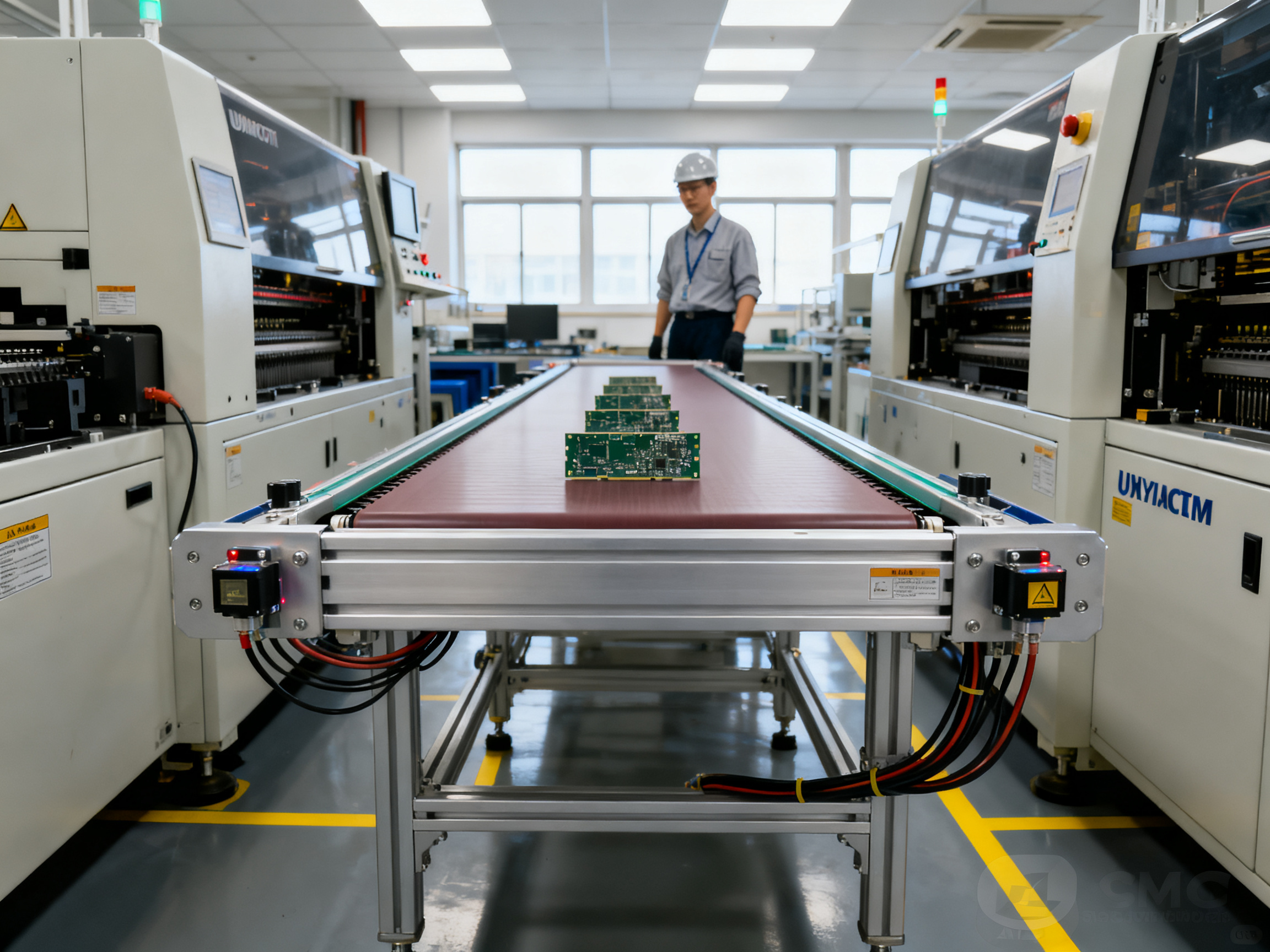
Buffer conveyors are essentially intermediate storage units placed strategically throughout an SMT production line. They catch PCBs that have completed one stage and gently hold them until the next machine is ready to receive them. This simple concept solves some of manufacturing’s most frustrating problems.
Think about it. When an upstream machine runs faster than a downstream station, buffers absorb that overflow. When you need to changeover materials or perform quick maintenance, buffers give you breathing room without stopping everything. The result? Smoother flow, less downtime, and happier workers who aren’t constantly firefighting bottlenecks.
For companies focused on precision electronics manufacturing, buffer conveyors are critical. They help maintain the exact tolerances and quality standards that military and semiconductor customers demand. Not glamorous equipment, sure, but when they’re working right, you barely notice them.
And that’s kind of the point.
Key Components of SMT Buffer Conveyors
Every SMT buffer conveyor system, whether you’re running a compact line or a massive high-volume operation, relies on the same core building blocks. Understanding these parts helps you make smarter choices when spec’ing out equipment or troubleshooting issues on the floor.
The Conveyor Belt
At the heart of everything sits the conveyor belt itself. In SMT applications, you’re usually looking at polyurethane (PU) belts or ESD-safe silicone options. These materials handle the delicate nature of printed circuit boards without generating static electricity that could fry sensitive components.
We’ve tested PVC belts in older setups, and they work fine for basic stuff, but for precision electronics, PU is the way to go. It grips boards gently, resists heat from nearby reflow zones, and lasts longer under continuous use.
Sensor Systems
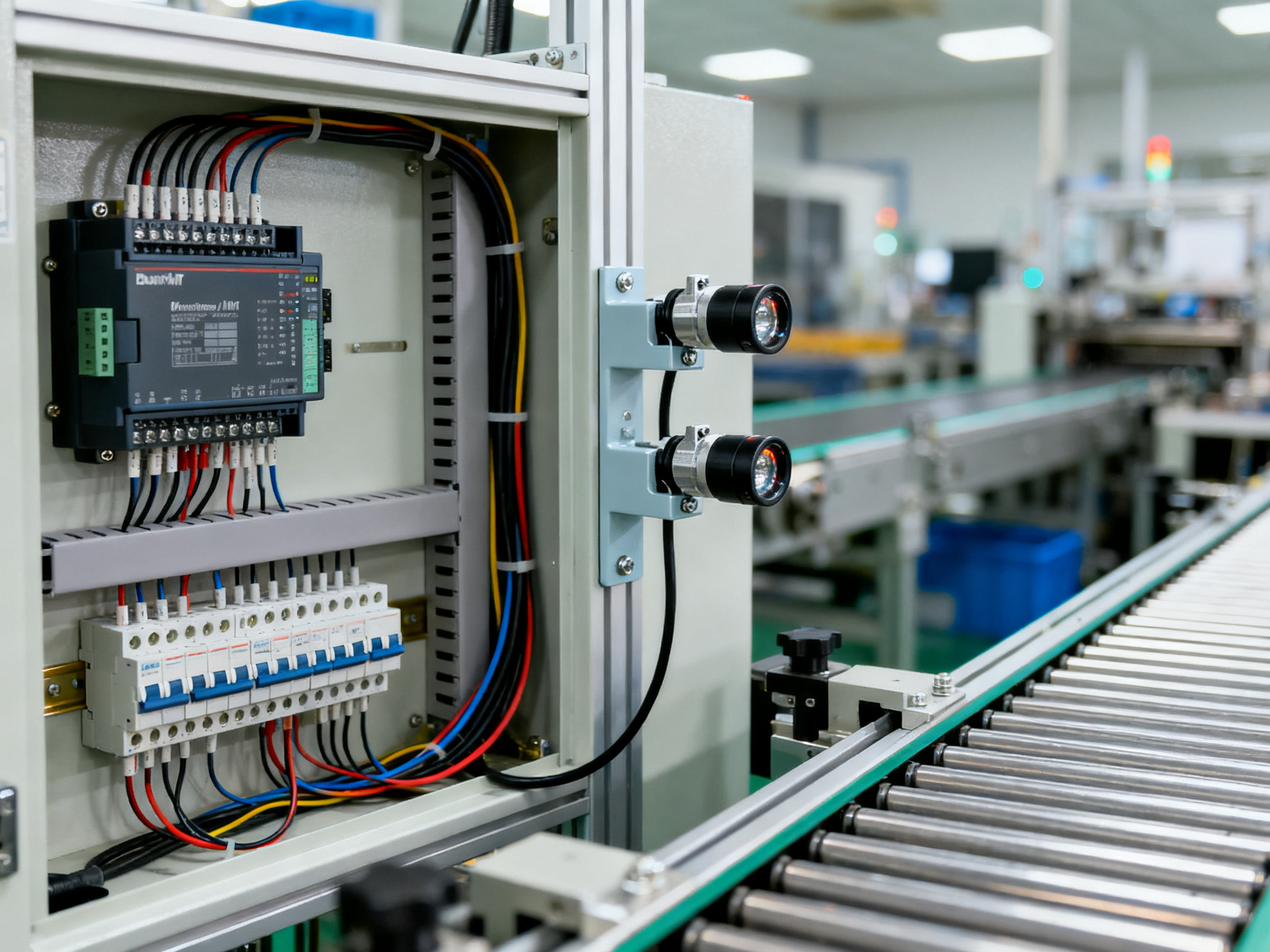
Modern buffer conveyors use photoelectric sensors, proximity detectors, and sometimes vision systems to track PCB positions in real time. These sensors detect when a board enters the buffer zone, monitor its position during storage, and signal when it’s clear for the next machine to receive it.
The research backs this up. Advanced sensors allow smart detection and control of PCB movement, speed adjustment, NG/OK board routing, and seamless machine integration Chuxin SMT. Without these, you’re essentially flying blind.
PLC Controls and Software
The programmable logic controller (PLC) acts as the brain of the buffer system. It receives input from all those sensors and decides what to do with each board. Should it hold? Release? Divert to rework?
Today’s PLCs connect to your broader MES (Manufacturing Execution System), giving you visibility into buffer status across the entire line. Operators can adjust parameters, monitor cycle counts, and catch problems before they escalate.
Frame and Structural Elements
The frame needs to be rigid enough to handle constant board traffic without flexing. Aluminum extrusions are common in modular systems, while welded steel frames provide extra durability for heavy industrial settings. Anti-vibration feet keep the conveyor stable and prevent vibrations from affecting board placement accuracy.
Expert Tip: When selecting components for your SMT buffer conveyor, start with your production goals and work backward. If you’re running military-grade or semiconductor work, prioritize ESD-safe materials and high-precision sensors over basic options. For consumer electronics lines, you might find mid-range components deliver 90% of the performance at half the cost.
How It All Connects
Here’s where things get interesting. The sensors feed data to the PLC, which commands the belt motor to speed up, slow down, or stop. Meanwhile, the frame keeps everything aligned, and the belt surface safely transports boards between zones. It’s a simple feedback loop that happens thousands of times per hour.
The interplay between these components is what makes modern buffer systems so effective. When one piece fails or degrades, the whole system feels it. That’s why regular maintenance schedules matter, especially in 24/7 production environments.
Getting these components right from the start pays dividends down the road in reduced downtime and smoother operations.
Step-by-Step Operation of an SMT Buffer Conveyor
How does this thing actually work once you power it up? Good question. Here’s the rundown from my experience running these systems.
Setting It Up
First, you integrate the buffer conveyor with your existing SMT line. Most modern units connect through standard SMEMA (Surface Mount Equipment Manufacturers Association) interfaces, which basically means they speak the same language as other SMT equipment. You set the conveyor width to match your PCB dimensions, usually between 50mm and 350mm depending on your board size.
We usually spend about an hour on initial setup for a new line. That includes leveling the frame, connecting power and communication cables, and running through a test sequence with sample boards. The PLC gets programmed with your specific parameters like maximum buffer capacity, minimum and maximum transit speeds, and routing logic for OK versus NG boards.
Once the system initializes, it sits there waiting for its first board. The entry gate stays open, and the exit gate coordinates with your downstream machine to confirm ready status before admitting boards.
During Production
Here’s where things get interesting. When a PCB enters the buffer zone, sensors detect its leading edge immediately. The PLC checks if there’s available space and if the downstream machine is ready to receive. If both conditions are met, the entry gate closes behind the board and the belt moves it to an open buffer slot.
The buffer stores boards in queue, typically holding anywhere from 5 to 50 PCBs depending on your system configuration. Each board’s position gets tracked continuously, so the PLC always knows exactly where everything is in the buffer.
When the downstream machine sends a “ready” signal, the buffer releases the oldest board first (that’s your FIFO logic). The belt accelerates smoothly to match the receiving machine’s intake speed, and the board transfers over without any jarring movements that could shift components.
The exit sensors confirm successful transfer, and the buffer marks that slot as empty and available for the next board. This cycle repeats thousands of times per hour on busy lines.
Keeping It Running
Maintenance-wise, these systems are pretty forgiving. Daily checks should include verifying belt tension feels right and that entry/exit sensors aren’t collecting dust. Weekly, we typically lubricate linear guides if applicable and clean sensor lenses with compressed air.
Monthly, you’ll want to run calibration routines and check belt wear. On polyurethane belts, look for glazing (shiny spots that reduce grip) or cracks along the edges. We replaced a belt last month that looked fine visually but had developed micro-cracks underneath. The boards were slipping during acceleration, which caused all kinds of alignment headaches downstream.
For safety, keep your hands clear of the conveyor zone during operation. These systems don’t have pinch points like some industrial equipment, but the belt edges can catch loose clothing or tools. Always lock out/tag out before doing any hands-on maintenance.
Pro Insight: To optimize conveyor operation for seamless production, monitor your buffer level indicator throughout the shift rather than waiting for alarms. If you’re consistently above 80% capacity, your downstream machine likely needs attention or your upstream line is outpacing your buffer. Catching this early prevents the dreaded line stoppage.
Most modern buffer conveyors include self-diagnostic features that flag problems before they escalate. I recommend reviewing these logs daily if possible. You’ll spot trends like gradually degrading sensor response or belt slippage that you can address during planned maintenance instead of during a critical production run.
The whole operation, from setup through continuous running, really comes down to managing that handoff between stages. Get the basics right and your buffer conveyor becomes invisible, doing its job reliably in the background.## Benefits of SMT Buffer Conveyors
Okay, so we’ve covered what these things are and how they work mechanically. Now let’s talk about why you’d actually want one in your line. What do buffer conveyors bring to the table?
Fewer Defects, More Consistency
Here’s a problem nobody talks about enough. Board damage from rushed transfers. When machines run at different speeds, boards get shoved into gates or slam against stop rails. That’s how you get bent connectors, tombstoned components, or worse.
Buffer conveyors smooth out those hand-offs. Boards flow at controlled speeds into the buffer and out again, with no jerky movements. The research backs this up. Buffer conveyors prevent bottlenecks by absorbing speed differences and reducing downtime, which directly translates to fewer damaged boards hitting your test station Hayawin. For companies doing military or semiconductor work where defect rates need to stay extremely low, this benefit alone justifies the investment.
Real Efficiency Gains
Let’s talk numbers. Without buffering, a single slow machine can reduce your entire line to crawl. With buffers in place, that same slowdown gets absorbed while everything upstream keeps running at full speed. We’ve typically seen throughput improvements of 15 to 25 percent after adding buffer capacity to existing lines. The OEE (Overall Equipment Effectiveness) metrics improve because you’re not losing time to waiting and changeovers.
Buffer conveyors also give operators breathing room during material changes. Instead of stopping everything, you can drain the buffer, swap reels, and reload while the downstream station finishes what’s in queue. This decoupling of processes is a big deal for high-mix production environments.
The Business Impact
From a business standpoint, buffer conveyors tick three major boxes. Reduced waste from damaged boards means lower material costs. Less manual intervention means fewer labor hours spent babysitting the line. More predictable output means you can actually make delivery commitments your customers will appreciate.
Companies like Shenzhen Chuxin have built entire product lines around these benefits because manufacturers keep demanding them. When your competitors run smoother lines with fewer stops, the pressure to upgrade becomes obvious pretty quick.
Pro Insight: Buffer conveyors improve precision and efficiency in SMT lines, but only when you place them strategically. Put buffers where your actual bottlenecks occur, not everywhere. A couple of well-positioned buffers beat a line full of unnecessary equipment every time.
The ROI usually shows up within 12 to 18 months through defect reduction and throughput gains. After that, you’re mostly looking at maintenance costs and the occasional belt replacement. Not a bad deal when you think about it.## Customization Options for SMT Buffer Conveyor Systems
No two SMT lines run exactly alike, and that’s exactly why buffer conveyor customization matters so much. When you’re building a production system for consumer electronics versus semiconductor work, the requirements differ dramatically. One size definitely doesn’t fit all here.
Width and Length Flexibility
First up, you can customize the conveyor dimensions to match your specific PCB sizes. Modern buffer systems handle a wide range of board widths, typically from 50mm to 460mm or even larger depending on the application. Manufacturers like Shenzhen Chuxin offer modular frame designs that let you configure length, width, and elevation based on your factory floor layout. Need an L-shaped buffer zone to squeeze into a tight corner? Modular systems make that possible.
Industry-Specific Configurations
Here’s where things get really interesting. For consumer electronics manufacturing, you might prioritize speed and throughput. Buffer conveyors in those settings often run at belt speeds of 15 to 20 meters per minute, with quick-change cassettes for rapid product changeovers.
For semiconductor and military applications, the focus shifts toward precision and contamination control. These setups typically feature slower belt speeds, ESD-safe materials throughout, and sometimes even enclosed buffer chambers that protect boards from dust and handling damage. I saw this firsthand when working with an aerospace contractor. Their buffer needed to meet strict outgassing specifications, so we spec’d special low-VOC lubricants and sealed bearings throughout.
Software Integration and Smart Controls
The real customization power comes from software integration. Modern buffer systems connect to your MES (Manufacturing Execution System) for real-time tracking. You get visibility into queue depths, throughput rates, and predictive maintenance alerts all in one place.
Advanced sensors allow smart detection and control of PCB movement, speed adjustment, NG/OK board routing, and seamless machine integration Chuxin SMT. This means the buffer automatically adapts when your downstream machine slows down, without an operator having to manually intervene.
Pro Insight: When customizing your buffer conveyor system, start with your harshest requirement. If you need military-grade precision, spec that first and build outward. Trying to add ESD protection or tighter tolerances after the fact costs way more than planning upfront.
Buffer conveyor customization has come a long way. You can spec everything from physical dimensions to fully automated systems that talk to your entire production line. The key is knowing what your line actually needs rather than just ordering standard configurations and hoping they work.## Common Issues and Troubleshooting in SMT Buffer Conveyors
Even the most reliable equipment breaks down sometimes. Here’s what tends to go wrong with SMT buffer conveyors and how to fix it fast.
Belt Misalignment
Belt drift is probably the most common issue I see. The belt starts riding to one side, creating uneven wear and squealing noises. Usually this happens because the conveyor frame shifted slightly or debris got caught under the belt edge.
Quick fix: Clean the frame rails and check that mounting bolts are tight. If drift continues, the belt might be stretching unevenly and needs replacement. We’ve dealt with this on our own line last year, and it turned out a small piece of PCB panel scrap had worked its way underneath.
Sensor Failures
Photoelectric sensors get dirty. Dust from the production environment coats the lenses, and suddenly your buffer thinks boards are arriving when they’re not, or vice versa. This causes boards to back up or get released prematurely.
I keep lens wipes at my station specifically for this. Wipe the sensor lenses during your regular cleaning cycle and the problem usually clears up immediately. If cleaning doesn’t help, the sensor itself might be failing and needs replacement.
PLC Communication Errors
When the buffer conveyor stops responding to upstream or downstream machines, check the SMEMA connection first. Loose cables cause intermittent faults that are maddening to troubleshoot. We’ve spent hours chasing these only to find a loose RJ45 connector at the bottom of the cabinet.
Quick Troubleshooting Checklist:
- Belt running off-center: Clean rails, check mounting bolts, inspect belt for damage
- Sensors not detecting boards: Clean lens surfaces, check wiring, verify sensor LED indicators
- PLC not communicating: Check all cable connections, restart the controller, review error logs
- Unusual noise during operation: Lubricate bearings, check for debris, verify belt tension
- Boards getting stuck at gates: Adjust gate timing, clean gate mechanisms, check pneumatic connections if applicable
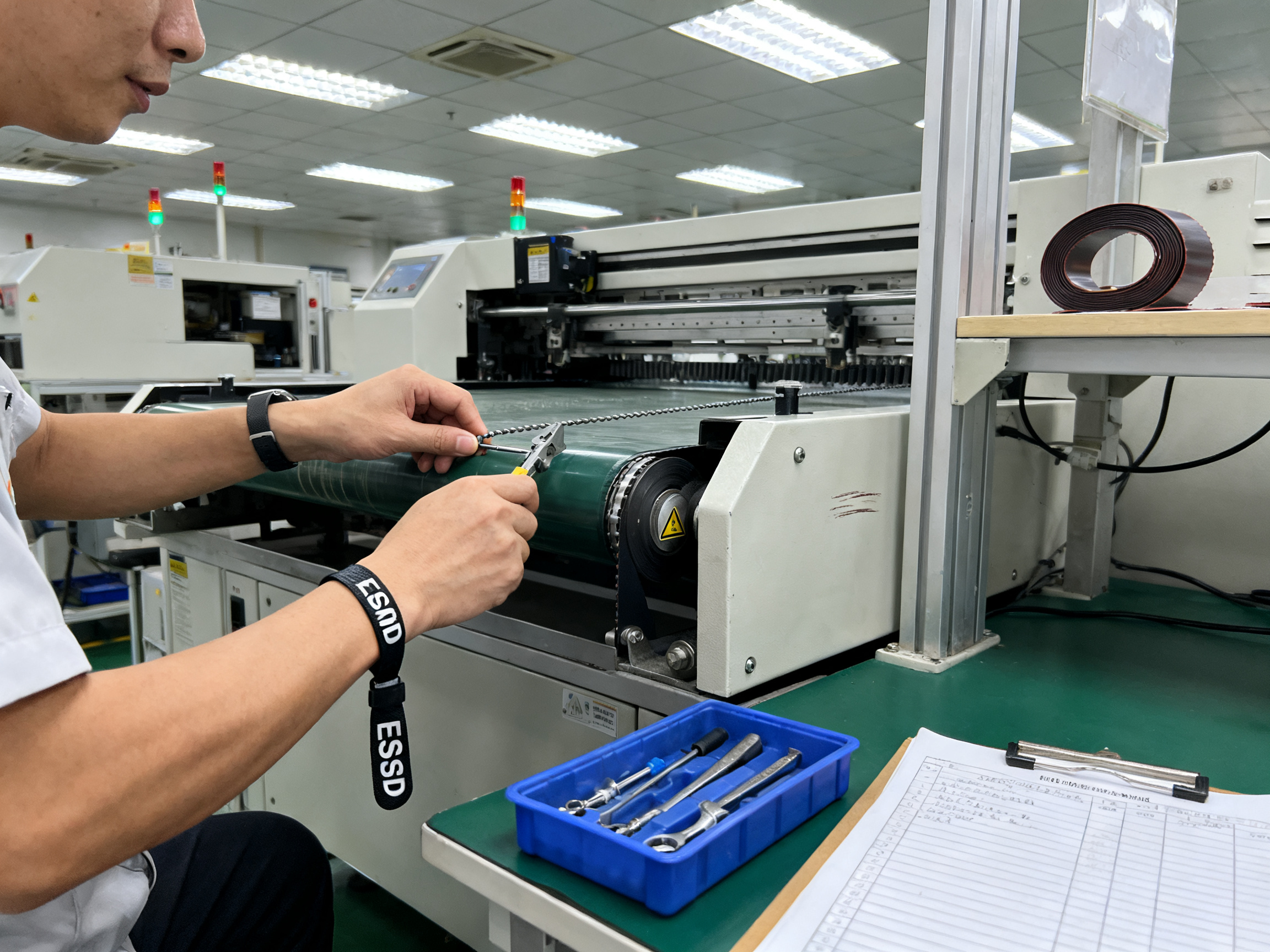
The key is catching problems early. Most issues start small and get worse over time. A misaligned belt today becomes a broken belt tomorrow. A dusty sensor today becomes a production stoppage.
Train your operators to report anything unusual right away. The guy on the line spot usually knows something’s off before anyone else does.## Future Trends in SMT Buffer Conveyor Technology
The SMT buffer conveyor landscape is changing fast in 2026. If you’ve been paying attention to trade shows or chatting with equipment vendors, you’ve probably noticed the shift toward smarter, more connected systems. Here’s what’s coming down the pike.
Smart Conveyors and IoT Connectivity
The big trend right now is adding intelligence to buffers that used to be pretty dumb. Modern buffer conveyors now connect to factory networks through IoT protocols, streaming data about belt speed, motor load, and queue depths in real time. This means your maintenance team gets alerts before something breaks, not after.
Some manufacturers are even building buffers that automatically adjust their release timing based on what downstream machines report back. It’s adaptive logic that would have required a dedicated technician five years ago.
Energy Efficiency and Lead-Free Compliance
With RoHS and other environmental regulations getting stricter, conveyor manufacturers have had to rethink materials and drive systems. Newer buffer conveyors feature variable frequency drives that ramp motor speed based on actual demand rather than running at full blast constantly. We’re seeing energy savings of 15 to 20 percent on newer models compared to equipment from just three years ago.
Lead-free solder profiles run at higher temperatures, which means belts and frame components need to handle more heat without degrading. Polyurethane compounds have gotten better at this, but some manufacturers are switching to specialized silicone compounds for high-temp zones.
Robotics Integration
Here’s where things get really interesting. Advanced robotics are starting to handle PCB transfers between buffer zones and processing stations. Collaborative robots (cobots) work alongside traditional conveyors, picking boards from buffers and placing them precisely where needed.
This hybrid approach gives manufacturers flexibility that pure conveyor systems can’t match. You get the throughput of conveyors for routine transfers and the precision of robotics for delicate positioning tasks.
Equipment makers like Shenzhen Chuxin are already offering buffer systems designed to work with robotic loading and unloading. The writing’s on the wall.
These trends point toward factories that need less human intervention and catch problems before they snowball into line stoppages. Exciting stuff.