
What Does a Reflow Oven Cost?
A reflow oven is one of the most important pieces of equipment for assembling modern PCBs. It heats a board and its components through a controlled temperature profile, allowing solder paste to melt, form reliable joints, and cool without damaging the assembly. The answer to “How much does a reflow oven cost?” depends on whether you are buying a compact hobby unit, a production-grade convection oven, or a custom-built system.
Typical Reflow Oven Price Ranges
| Reflow oven type | Typical price range | Best for |
|—|—:|—|
| DIY infrared or hot-plate build | $50–$300 | Experimenters, students, and occasional builders |
| Small imported hobby oven | $200–$600 | Makers and small prototypes |
| Midrange convection reflow oven | $700–$2,500 | Serious hobbyists, repair shops, and small production runs |
| Programmable production oven | $2,000–$8,000+ | Electronics manufacturers and contract assemblers |
| Custom or industrial system | $8,000–$50,000+ | High-volume, specialized, or fully automated production |
These ranges are broad because two products carrying similar names may have very different capabilities. Compare the total installed cost rather than looking only at the sale price. You may also need a controller, temperature probes, an extraction hood, shelves, a UPS, smoke filtration, and safety equipment.
What Determines the Final Price?
Heating method
Infrared systems can heat boards quickly and are useful for lead-free solder, but temperature control depends heavily on board color, component placement, and lamp distance. Convection ovens distribute heat more evenly and are generally easier to profile. Forced-air systems tend to cost more, while DIY hot-plate setups can be inexpensive but may create hot spots that damage large or multilayer boards.
Temperature control and automation
A basic oven may rely on a fixed or mechanically controlled thermostat. More capable models include a microcontroller, thermocouple, PID control, and preset temperature profiles. Software that logs profiles, displays process status, or communicates with an assembly line can add hundreds or thousands of dollars to the price.
Chamber size and uniformity
A small oven is adequate for individual boards and small assemblies. Larger production chambers need uniform airflow, weighted shelves, stable temperature recovery, and enough power to heat loaded trays quickly. Verify the usable chamber dimensions rather than relying on the advertised external dimensions.
Safety and compliance
For a commercial operation, consider electrical certification, ventilation, emergency shutoff, maximum operating temperature, and protection against solder fumes. A household oven may work for light experimentation, but it may not be appropriate for repeated production use or for work involving customer equipment.
Entry-Level Options
For learning, home prototyping, and occasional rework, DIY reflow controllers are usually the least expensive route. A typical build combines a solid-state relay, thermocouple, PID controller, and heating element or infrared lamp. Costs generally remain below $300, although building and calibrating the system requires technical skill.
Small imported convection ovens occupy a similar practical tier. They can be useful for lead-free processes when the temperature profile is validated, but product documentation may be incomplete. Before purchasing, ask the seller for the actual model designation, heating method, chamber dimensions, electrical requirements, warranty terms, and a sample temperature profile. Listings that simply call a product a “T962” should not be treated as complete model identification.
Midrange and Production Systems
Midrange convection ovens usually cost from approximately $700 to $2,500. At this level, buyers should expect better temperature stability, more useful controls, larger chambers, and improved documentation. These machines are suitable for repair businesses, engineering laboratories, and small assembly operations.
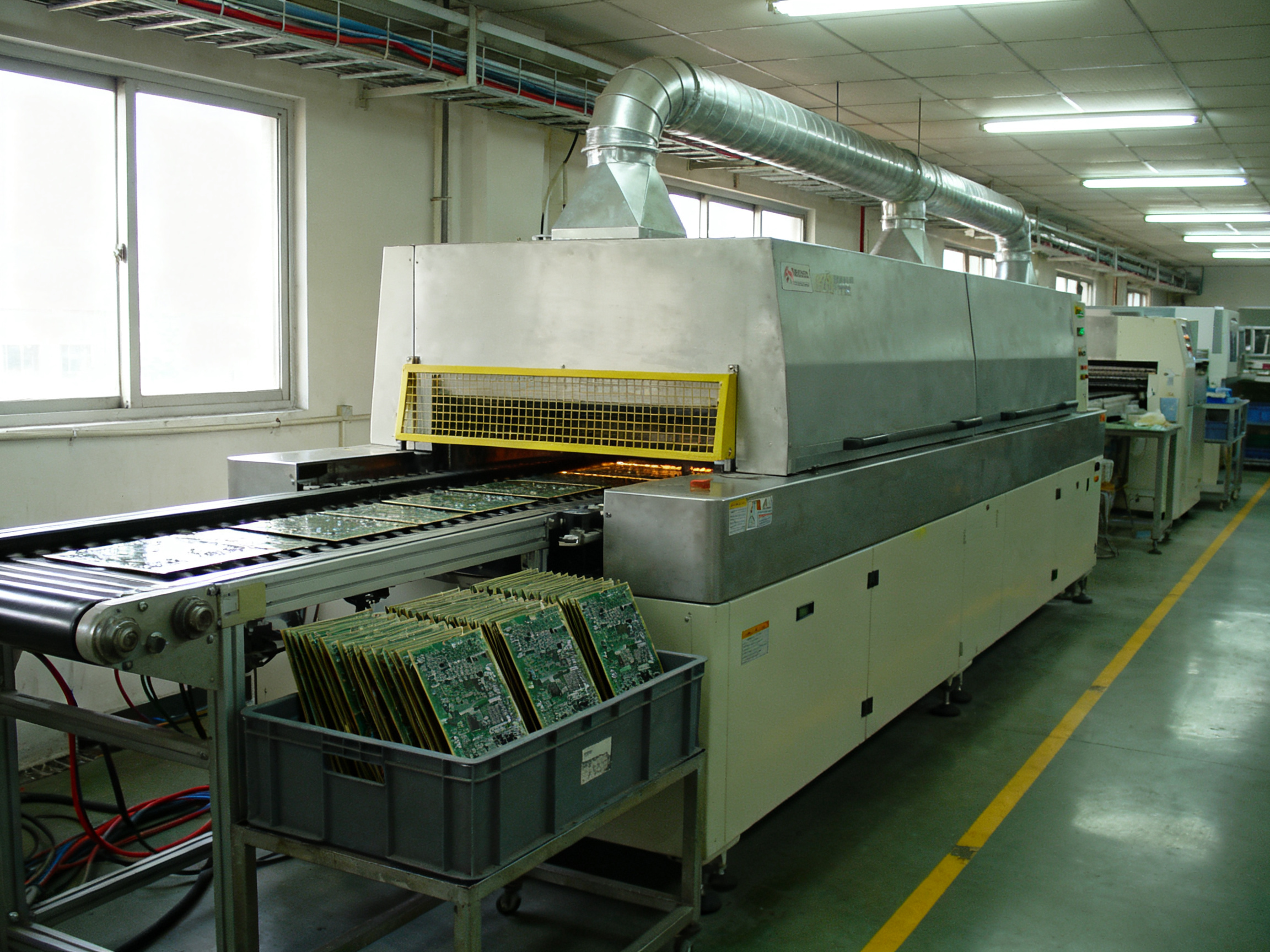
Production-grade ovens commonly cost between $2,000 and $8,000 or more. The premium buys features such as repeatable profiles, process monitoring, data logging, automated loading, better exhaust handling, and stronger support. The lowest purchase price is not necessarily the lowest operating cost: a machine that fails to repeat a qualified process can cause scrap, rework, and schedule delays.
How to Compare Reflow Oven Specifications
When comparing models, use the following checklist:
- Confirm the exact model and revision. Distinguish the base model from regional variants and optional accessories.
- Request a datasheet. Verify heating method, temperature range, stability, uniformity, chamber size, electrical input, and weight.
- Ask for a temperature profile. The seller should be able to identify the recommended profile for leaded and lead-free solder.
- Check the included accessories. A controller, thermocouple, tray, and extraction fan may or may not be included.
- Confirm support and warranty parts. Replacement controllers, heaters, fans, and thermocouples should be obtainable.
- Calculate the installed cost. Include freight, taxes, electrical work, ventilation, consumables, and operator training.
- Validate the machine. Run and record a profile using the board materials and components you actually intend to assemble.
A Practical Buying Strategy
For occasional hobby use, begin with a small convection oven or a well-documented DIY controller. For a repair business, choose a midrange machine with local support and straightforward replacement parts. For contract manufacturing, select a production oven based on process requirements, board volume, and automation needs—not merely on the largest advertised capacity.
Before committing funds, obtain a written quotation that identifies the exact model, included accessories, warranty, lead time, and return policy. If the seller cannot provide those details, treat the listing as a lead rather than a dependable quotation. Reflow oven prices can change quickly, so use the figures in this guide as planning ranges and verify current terms with the manufacturer or an authorized distributor.## Criterion 1: Match the Oven to the Product Mix and Board Geometry
The first question is not how large the oven is. It is what you actually build.
An SMT production line rarely handles only one product. A typical line might alternate among:
- Small sensor boards with dense fine-pitch components
- Multilayer industrial control boards
- Large LED or power modules
- Mixed panels containing several board types
- High-reliability assemblies that require documented thermal profiles
Each board changes the oven’s workload. Board dimensions determine the conveyor or tray configuration. Component mass affects heating and cooling rates. Component placement determines the thermal profile required to avoid tombstoning, bridging, and insufficient solder melt. Product changeover frequency determines whether the oven needs flexible programming, automated recipe selection, or dedicated fixtures.
A small batch oven can work well for prototypes, engineering samples, and low-volume products. It is also easier to isolate for maintenance and may offer a lower acquisition cost. Its limitation is throughput: boards are processed in batches, and operators must load, unload, and inspect each cycle.
An inline oven is a better fit when boards must move continuously from printing to placement to reflow without manual handling. Inline systems reduce work-in-process inventory and make production balancing easier, but they require more planning around conveyors, sensors, upstream equipment, downstream inspection, and line layout.
Start with a product and process matrix
Before comparing manufacturers, create a table for every board family you expect to produce:
| Variable | Questions to answer |
|—|—|
| Board size | What are the minimum, typical, and maximum dimensions? |
| Board weight | Does heavy copper content or shielding change heating and cooling requirements? |
| Panelization | Are boards processed individually, in panels, or in mixed panels? |
| Component mix | Which packages have the highest thermal demand or sensitivity? |
| Volume | What are the hourly demand, peak demand, and expected growth? |
| Changeover | How often does the line change products or recipes? |
| Geometry | Are there tall components, recessed features, or unusual clearances? |
| Traceability | Must each board or lot be linked to a recorded profile? |
This matrix prevents a common procurement error: selecting a machine based on the easiest board in the portfolio rather than the combination of boards that consume most of the available line time.
Do not confuse oven capacity with usable capacity
Manufacturers often quote capacity using theoretical board dimensions. Production teams should calculate usable throughput using real fixtures and realistic loading rules.
For a batch oven, include:
- Loading and unloading time
- Changeover time
- Preheat and cooldown time
- Operator inspection time
- The percentage of cycles used on low-volume products
- Space required for staged trays and work-in-process inventory
For an inline oven, include:
- Speed limits for each conveyor or lane
- Oven length and its effect on line balance
- Gap and pitch requirements for different boards
- Stoppage recovery time
- Buffer capacity before and after reflow
- Compatibility with conveyors supplied by other manufacturers
A machine may have excellent rated throughput but still become the constraint if loading, unloading, or product verification takes longer than the reflow cycle.
Match the available energy and infrastructure
Board construction is not the only geometry that matters. The oven must fit the facility’s electrical, environmental, and workflow requirements.
Check the nameplate power requirement, available supply voltage, phase configuration, breaker capacity, and demand charges. Continuous systems may also require exhaust, compressed air, cooling-water connections, or specific floor-loading and clearance arrangements. Batch ovens need suitable bench or floor space and may be more convenient where infrastructure changes are difficult.
For mixed production environments, consider where operators will load boards, transfer them after reflow, and inspect solder joints. A technically capable oven located poorly in the process flow can create more delay than it removes.
Fixtures and carriers are part of the decision
The best oven for a specific board may depend on whether the board travels on a tray, conveyor belt, pallet, or custom carrier. The carrier must hold the board without obstructing heating, avoid stressing components, and maintain repeatable positioning.
Ask suppliers to test representative boards in the proposed fixtures. Pay particular attention to:
- Flatness and support under high-mass components
- Clearance from oven rails and heating elements
- Compatibility with shadings or shields used in sensitive designs
- Thermal mass introduced by the carrier
- Ease of cleaning and changeover
- Protection against ESD and mechanical damage
Do not assume that a universal carrier will preserve the same profile as a production carrier. A heavy or poorly vented fixture can slow component heating and affect solder paste behavior.
The practical test
Before approval, run a representative set of boards through the proposed machine. Include the smallest and largest assemblies, the most thermally demanding package, and the product used most frequently. Measure the profile at component locations with thermocouples and verify repeatability across multiple cycles.
The result should be a documented relationship between product mix and machine capability—not merely a favorable sample from the supplier’s laboratory.
Decision rule: Choose a batch oven when volume is modest, product variety is high, and manual handling is acceptable. Choose an inline oven when sustained flow, reduced operator intervention, and line synchronization are priorities. For either format, verify capacity using real boards, real fixtures, and real changeover assumptions.
That gives the rest of the evaluation a realistic baseline. Once product fit is defined, the next decision is much clearer: whether the oven can control the thermal profile accurately enough for the components on those boards.### 3. About the Author
[Author name] is [verified role or credential] with experience in [verified SMT production, soldering processes, equipment procurement, or electronics manufacturing specialty]. [He/She/They] has contributed to [verified relevant project, result, certification, or publication].
That background shapes how this guide was put together. Rather than repeating catalog specifications, the recommendations here are built around the questions that actually come up when a line has to run real product: what fits the board, what the profile does on the hardest assembly, what the machine costs to own after it is installed, and what happens when something fails at 2am on a Friday.
The same author handles the technical review behind this reflow oven selection guide, including the thermal profiling and defect examples referenced in later sections.
Headshot: [add author headshot]. Full author profile, professional credentials, and relevant published work: [link].
Note for editors: Replace every bracketed field above with supplied and verified author details before publication. Do not publish this section with placeholders in place, and do not add credentials that have not been confirmed by the author or the reviewer.## 5. Compare the Real Cost, Not the Purchase Price
The sticker price is only one part of an SMT reflow oven’s cost. The lower-cost machine may require more boards per hour, more electricity, more nitrogen, more operator attention, and more maintenance than a higher-priced unit. Compare the cost of producing one good board rather than the cost of owning one oven.
Start with the purchase price and include installation, facility changes, utilities, consumables, training, software, maintenance, spare parts, and expected downtime. Then divide that total by the number of good boards the system can produce over its planned service life.
A simple calculation is:
Total cost per good board = total ownership cost ÷ number of good boards produced
Include expected scrap in the final calculation. An oven that appears 10% cheaper but produces more warpage, insufficient wetting, or defective joints will rarely be cheaper in practice.
Account for energy and atmosphere
Reflow ovens consume substantial electrical power during preheating, heating, cooling, and standby. Because many systems heat continuously, even unused production hours create energy costs. Obtain the machine’s connected-load and average power-consumption figures, then estimate annual consumption using your actual operating schedule.
Nitrogen-assisted or vacuum reflow also has operating costs. Include nitrogen consumption, gas infrastructure, and the cost of maintaining the atmosphere system. If your process does not require nitrogen, do not pay for it simply because a premium model includes it.
Estimate yield and rework
Ask vendors for representative process data rather than guarantees based on ideal laboratory conditions. A qualified profile should control the board, the components, and the solder joints without damaging packaging or encouraging solder bridging.
Request trial results using your hardest board and representative component mix. Review the following:
- Solder-joint appearance and cross-sections
- BGA and QFN voiding under the intended component placement
- Solder-ball wetting on bottom-terminated devices
- Board flatness after cooling
- Repeatability across consecutive runs
- Performance after maintenance, recipe changes, and thermal cycling
Pilot results are most meaningful when they use your actual boards, paste, stencil, placement process, and production loading. A generic sample assembly can conceal the thermal-mass differences that determine yield in your environment.
Evaluate support and lifecycle risk
Reflow equipment is a long-term production investment, and support quality affects the total cost more often than a feature checklist suggests. Before purchasing, identify the nearest authorized service provider and ask about response times, spare-parts availability, technician travel costs, and whether remote diagnostics are included.
Also determine whether recipes and profile logs can be exported in an open format. Vendor lock-in becomes a serious problem if a product must be transferred to another facility or an older controller fails. Confirm that the controller can store the number of profiles you need and that you can reproduce a recipe without relying on an internet-connected service.
Expert Tip: Treat support capability as part of the machine specification. A fast oven with no nearby technician and a 72-hour spare-parts lead time can be slower than a modestly priced system with dependable local service.
6. Run a Production-Like Pilot
A supplier demonstration is not the same as a production trial. The best evaluation puts the oven under conditions similar to your actual line, including frequent recipe changes, mixed board loads, interruptions, and extended operating periods.
Before the trial, define acceptance criteria in writing. At minimum, specify:
- Throughput at the intended conveyor speed or cycle time
- Temperature-profile repeatability across multiple runs
- Acceptable component and solder-joint quality
- Maximum changeover time
- Operator setup and intervention requirements
- Power, gas, exhaust, and space requirements
- Recovery after a pause or line stoppage
Run the oven using the product mix you expect to process, not a single easy board repeated continuously. Include small panels, dense mixed-technology assemblies, and your most demanding thermal design. Measure how long it takes to reach a stable process after startup and after a major recipe change.
Watch the loading and unloading process as carefully as the heating cycle. Boards that are mishandled, placed too close together, or loaded onto a conveyor at the wrong temperature can create defects that operators may incorrectly attribute to the oven.
Ask the supplier to document every recipe and profile used during the trial. Repeat the test without changing the process. If results vary substantially, investigate calibration, sensor placement, airflow, belt temperature, loading patterns, and maintenance status before accepting the equipment.
Test the failure scenarios
Production equipment is rarely evaluated only under ideal conditions. During the pilot, also test what happens when:
- A production order is cancelled mid-cycle
- The line stops for a few minutes
- A new recipe is introduced
- The oven operates at its maximum expected load
- A temperature sensor or warning appears
- The room temperature or supply conditions change
The objective is not to cause damage. It is to learn how the system behaves, how quickly an operator can recover, and whether an interruption threatens board quality.
7. Make the Final Decision
Select the oven that meets your must-have requirements, demonstrates acceptable results on your hardest products, and has the lowest credible lifecycle cost. Do not choose based on the broadest feature list, the fastest quoted belt speed, or the lowest purchase price alone.
Before signing the purchase agreement, confirm that the written order includes:
- The exact working-envelope and conveyor dimensions
- Heater, cooling, atmosphere, and handling options
- Installation and facility requirements
- Warranty coverage and response-time commitments
- Training, documentation, and profile-transfer support
- Spare-parts pricing and recommended maintenance schedules
- Acceptance testing on your production mix
- Software, data-export, and recipe-management requirements
Finally, validate the supplier’s claims with references from businesses that run a similar product mix. Ask how long the equipment has been in service, how often the oven is loaded, and what the owners would change if they bought another unit.
Expert Tip: Negotiate acceptance testing as part of the purchase contract. Tie final payment to documented throughput, profile repeatability, and product-quality results using your hardest board—not merely a successful power-on demonstration.
The right SMT production oven is not necessarily the largest or most technically elaborate machine. It is the one that repeatedly processes your hardest boards within a repeatable thermal window, meets your real throughput requirement, integrates cleanly with your line, and can be maintained at a predictable cost. Start with process requirements, test under production-like conditions, and calculate the cost per good board. That approach turns oven selection from a feature comparison into a defensible production decision.## 5. Choose the Right Reflow Oven Type and Scale
The format of the oven matters as much as the price tag. A benchtop unit and a continuous conveyor line serve completely different purposes, and buyers who skip this step often end up with a machine that cannot keep pace with the rest of their line.
Forced convection remains the default architecture for most SMT production. It is simple to service, it handles mixed boards well, and it covers the majority of real assemblies. The specialty formats earn their place only when a specific defect risk justifies them. Vacuum reflow reduces voiding in dense packages and large thermal pads, but it adds pumps, seals, and maintenance, so it makes sense only when X-ray void area is a measurable problem in your process. Nitrogen-assisted reflow cuts oxidation and dross, which matters on exposed-paste or liquid-junction applications, yet gas consumption and exhaust design add real operating cost. Vapor phase offers uniform heating through a controlled boiling liquid, but the equipment is uncommon in 2026 and the service ecosystem is thin. Published standards such as IPC and J-STD-020 require control of the actual component temperature profile, and none of them prescribe a specific atmosphere.
| Oven type | Ideal volume | Typical use | Strengths | Limitations | Footprint | Cost band |
|—|—|—|—|—|—|—|
| Benchtop / desktop convection | Low, prototypes | Labs, repair, evaluation | Low cost, small footprint, fast setup | Batch loading, limited logging, no MES link | Under 0.5 m² | $200 to $2,500 |
| Batch chamber oven | Low to medium | Small assembly shops, pilot lines | Better uniformity, larger work area | Manual handling limits throughput | 1 to 3 m² | $2,000 to $8,000 |
| Inline conveyor convection | Medium to high | Contract manufacturing | Continuous flow, recipe control, central profiling | Floor space, installation work | 8 to 20 m² | $8,000 to $50,000+ |
| Inline with nitrogen or vacuum | High, regulated | Automotive, medical, aerospace | Lower oxidation and voiding | Gas systems, extra maintenance | 10 to 25 m² | $20,000 to $80,000+ |
| Vapor phase | Specialty | High-value, thermal-sensitive | Very uniform heating | Rare, costly, fluid handling | 6 to 15 m² | High, quote only |
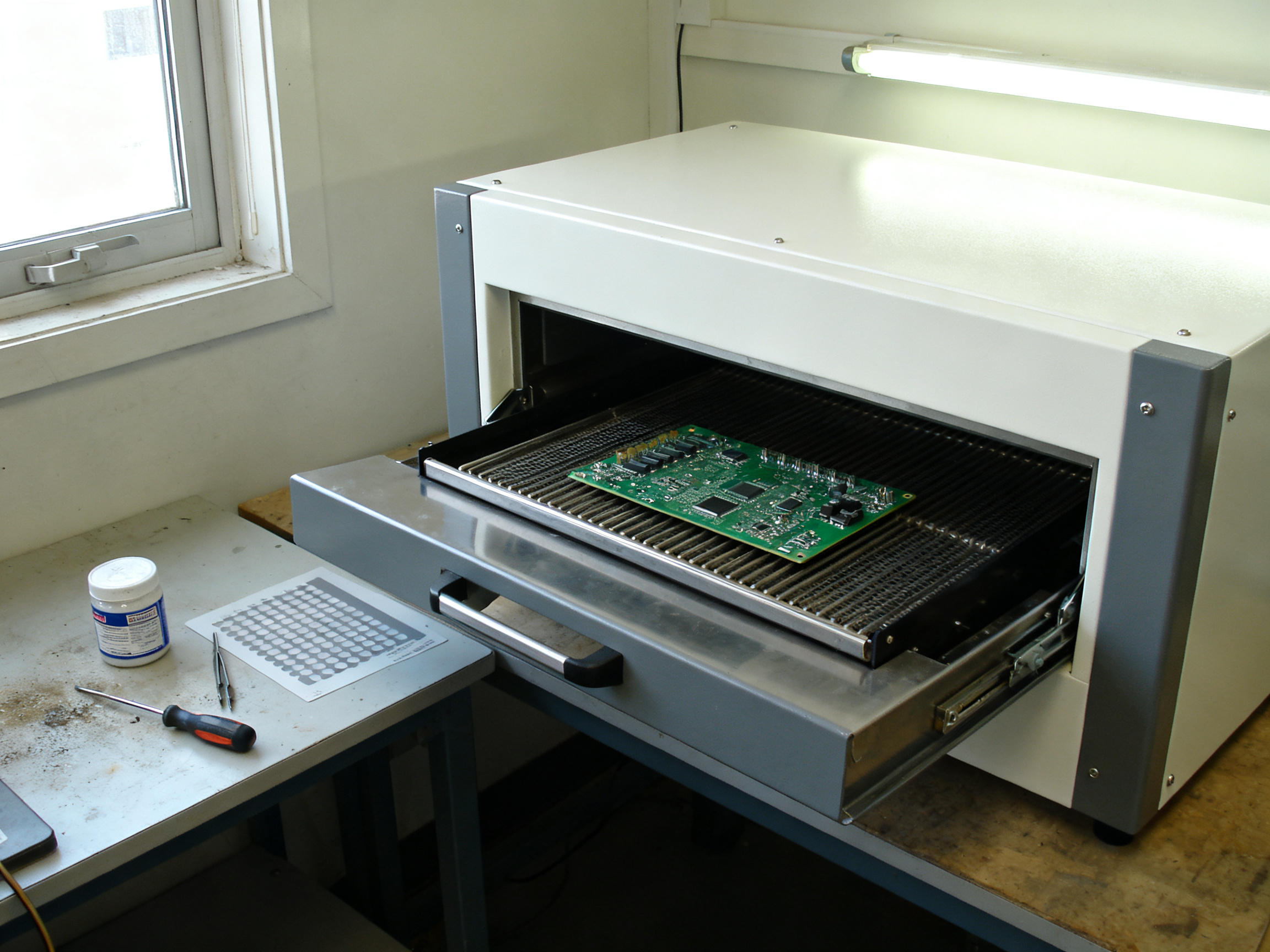
Representative inline systems make the scale gap obvious. The BTU Pyramid 300GS runs six heating zones plus two cooling zones across roughly a 24-inch conveyor, with belt speeds from about 6 to 40 inches per minute. The Heller 1800 Series and the higher-capacity Heller 2000 Series are configurable conveyor families with two to eight heating zones and installed power ranging from roughly 18 kW up to 90 kW. Kurtz Ersa c.place systems sit in a similar class with four heating zones and a 500 mm conveyor width. A continuous line can hold several hundred boards per hour and well past a thousand when pitch and unloading allow.
Sidebar: The hobbyist and cheap-oven search
Plenty of buyers arrive searching for the “best reflow oven for hobbyist” or the “best cheap reflow oven,” and the answers are useful for learning and prototyping, but they are not production answers. The T962 designation is copied across many manufacturers and revisions, so listing specs disagree; typical published figures are about 400 x 300 mm of effective board area, 50 to 260 °C, and a 1,500 W input. Treat the exact model, heater arrangement, and thermocouple placement as mandatory purchase-order data, not the model name alone. The NeoDen NDM-3 is a better documented desktop option, with a 20 x 14 inch maximum PCB size and roughly 1,100 W input, yet it still loads one board per cycle and offers no serialized traceability.
Where a factory needs lead-free reflow soldering equipment with line-level integration, an industrial supplier such as S&M Co. Ltd. (Shenzhen Chuxin Electronic Equipment Co., Ltd.) builds complete SMT production lines alongside inline ovens and wave soldering machines for consumer electronics, semiconductor, and military work.
The practical rule is simple. Use a desktop reflow oven when volume is low, geometry fits the work area, and no customer requires traceability. Move to an inline system when cycle time is the bottleneck, recipes must repeat across operators, or finished boards need serialized process records.## 3. Evaluate Thermal Performance, Zone Design, and Process Control
The oven heats, soaks, and cools. The way it does those three things decides whether your joints hold or fail. And a spec sheet only tells you so much. Here is what actually matters, in plain language.
The profile, not the peak temperature
Solder does not care about the hottest number on the display. It cares about the whole curve: how fast the board heats, how long it holds, how hot it gets, and how fast it cools.
Four terms cover most of it:
- Ramp rate is how quickly temperature climbs. Too fast and large components may not heat evenly, so the centre of a big thermal pad lags behind the paste. Too slow and the whole board sits in the oven longer, costing energy and line time.
- Soak time is the dwell near melting point, before the paste actually flows. This is where flux activates and volatiles burn off.
- Time above liquidus is how long the solder stays fully melted. Under this, joints look matte and cold. Over it, and you risk burning the board, especially on large ground planes that store heat.
- Cooling slope is the rate of temperature drop. Good cooling locks in a smooth joint shape. Too slow and you get graying and oxidation. Too fast and you get warpage, head-in-pillow defects, and cracked terminations.
Published standards such as IPC and J-STD-020 require you to control the actual component-level profile. None of them tell you to buy a particular machine. Your oven just has to be capable of hitting the profile your paste supplier recommends, for leaded and for lead-free work.
Zones and airflow decide whether you can hold that profile
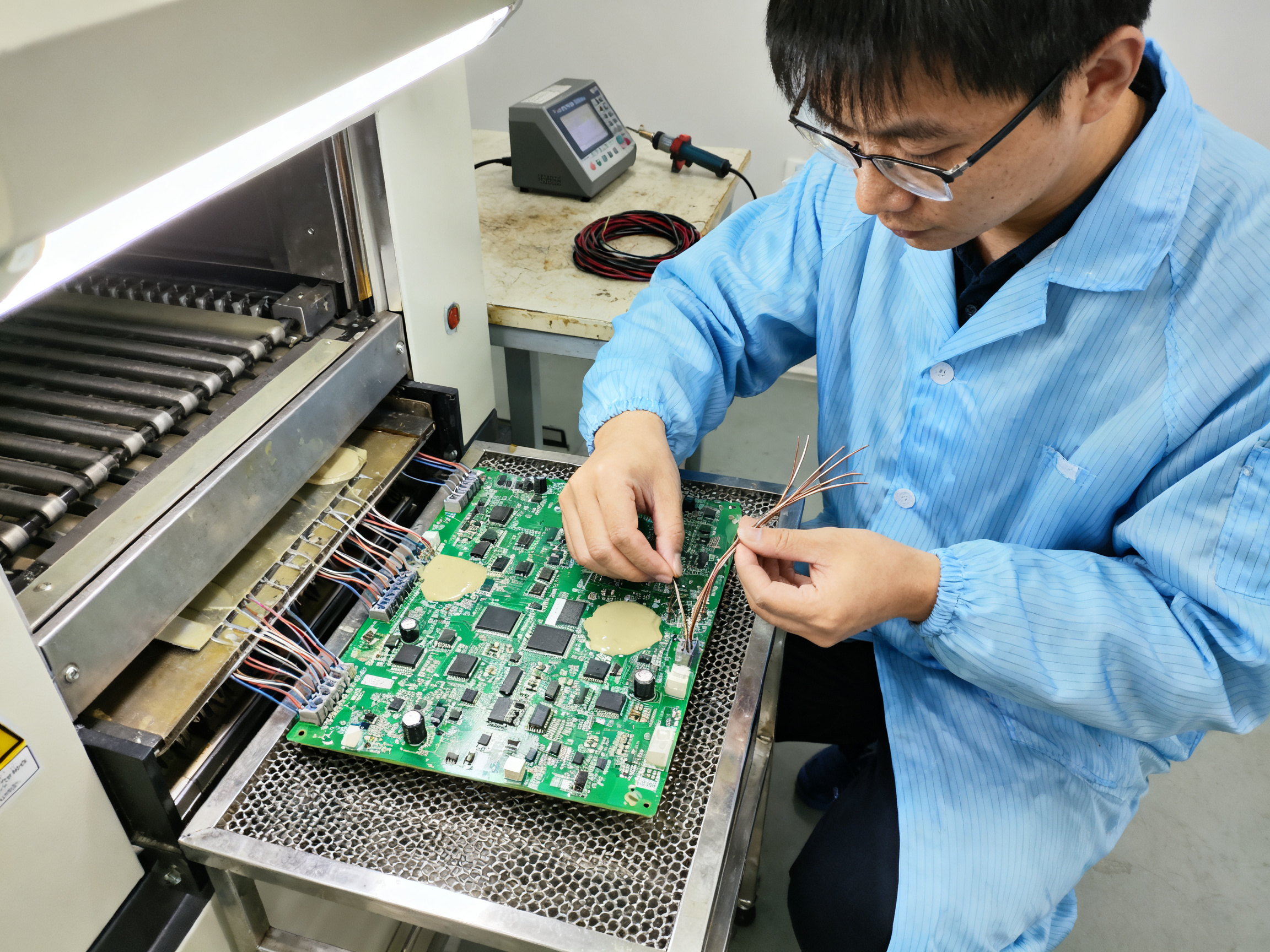
Heating zones let you shape the curve instead of relying on one ramp. More zones give you finer control over soak and peak, but zone count matters less than zone length and airflow quality. A short oven with strong convection often beats a long oven with weak airflow.
Compare heaters carefully. Convection systems move air across the board and treat board color and component mass more consistently. Infrared systems heat fast, but the lamp distance and board finish change the result, so you profile each board type. Forced-air systems like the BTU Pyramid 300GS use six heating zones and two cooling zones across an approximately 24-inch conveyor, with belt speeds from about 6 to 40 inches per minute.
Pro Insight: A datasheet temperature range is not proof of uniformity. Validate the profile across conveyor width and under actual production loading, because the edge of a wide belt can run cooler than the center.
Where the specs turn into defects
| Specification gap | What you see on the board |
|—|—|
| Inadequate soak or low peak temperature | Insufficient melting, poor wetting, cold joints |
| Overly aggressive cooling | Warpage, head-in-pillow, cracked terminations |
| Too much time above liquidus | Board discoloration, pad damage, thermal damage to packages |
| Uneven heating across the belt | Voiding under BGAs and QFNs, solder balls, tombstoning |
| Poor profile repeatability between runs | Lot-to-lot variation that inspectors cannot explain |
Controls and repeatability
A cheap controller holds a temperature, but it cannot hold a profile. What you want is closed-loop PID control driven by a thermocouple of known accuracy, a profile storage system that lets you name and recall recipes, and alarms for over-temperature, thermocouple failure, and fan problems.
Then look at what happens to the data. Can you export profiles and logs in an open format? Can the controller hold the number of recipes your product mix needs? Can a technician reproduce a recipe without a live internet connection? The Heller 1800 Series and Heller 2000 Series families cover roughly two to eight heating zones with conveyor speeds from about 10 to 120 inches per minute, which is the kind of tuning headroom that lets you shape a profile rather than accept one.
Data logging matters for a simple reason. When a defect appears at 2am, the profile log tells you whether the oven drifted or the paste was wrong. Without it, you are guessing.
The test that settles the argument
Profile a real board in the actual machine at the actual load. Place thermocouples on the hottest and coolest components, run it three times, and compare the curves. If they do not sit on top of each other, the oven cannot hold your process, no matter what the brochure says. That is also where reflow oven thermal profiling stops being a spec-sheet exercise and starts being a production decision.## 7. Confirm Throughput, Line Integration, Automation, and Traceability
A reflow oven that runs a perfect profile but starves the next station is not a good buy. It is just an expensive bottleneck with a warm door.
Match the conveyor, not the chamber
Conveyor geometry is where most integration arguments start. The BTU Pyramid 300GS runs roughly a 24 inch belt with six heating zones and two cooling zones, and the Kurtz Ersa c.place family sits near a 500 mm width. Those numbers have to line up with the loader and the post-reflow inspection machine already sitting on your floor.
Check these items in writing before you sign:
- Conveyor width and whether a second lane is possible for mixed panel sizes
- Edge support, mesh support, and center-board support for large or heavy assemblies
- Board clearance, transfer height, and rail adjustability
- Cooling capacity at the maximum belt speed you intend to run
- Whether the oven accepts the conveyor type already feeding it, or forces a new transfer section
Then check the other direction. A very fast oven in front of a manual inspection station simply builds a queue. Printing, placement, AOI, unloading, and repair capacity all have to keep pace, and the slowest station sets the real output.
The bottleneck math
Here is a simple way to catch a mismatch before it becomes a problem:
Effective line rate = the slowest station’s rate, not the oven’s rate
Suppose your placement machine runs 900 boards per hour and your oven is rated for 1,200 boards per hour. If AOI manages 700 boards per hour, the line produces 700 boards per hour no matter how fast the oven runs. The oven’s extra capacity shows up only as work-in-process waiting between machines. Buying a faster oven here adds cost and work-in-process, not output.
Software, traceability, and the plant floor
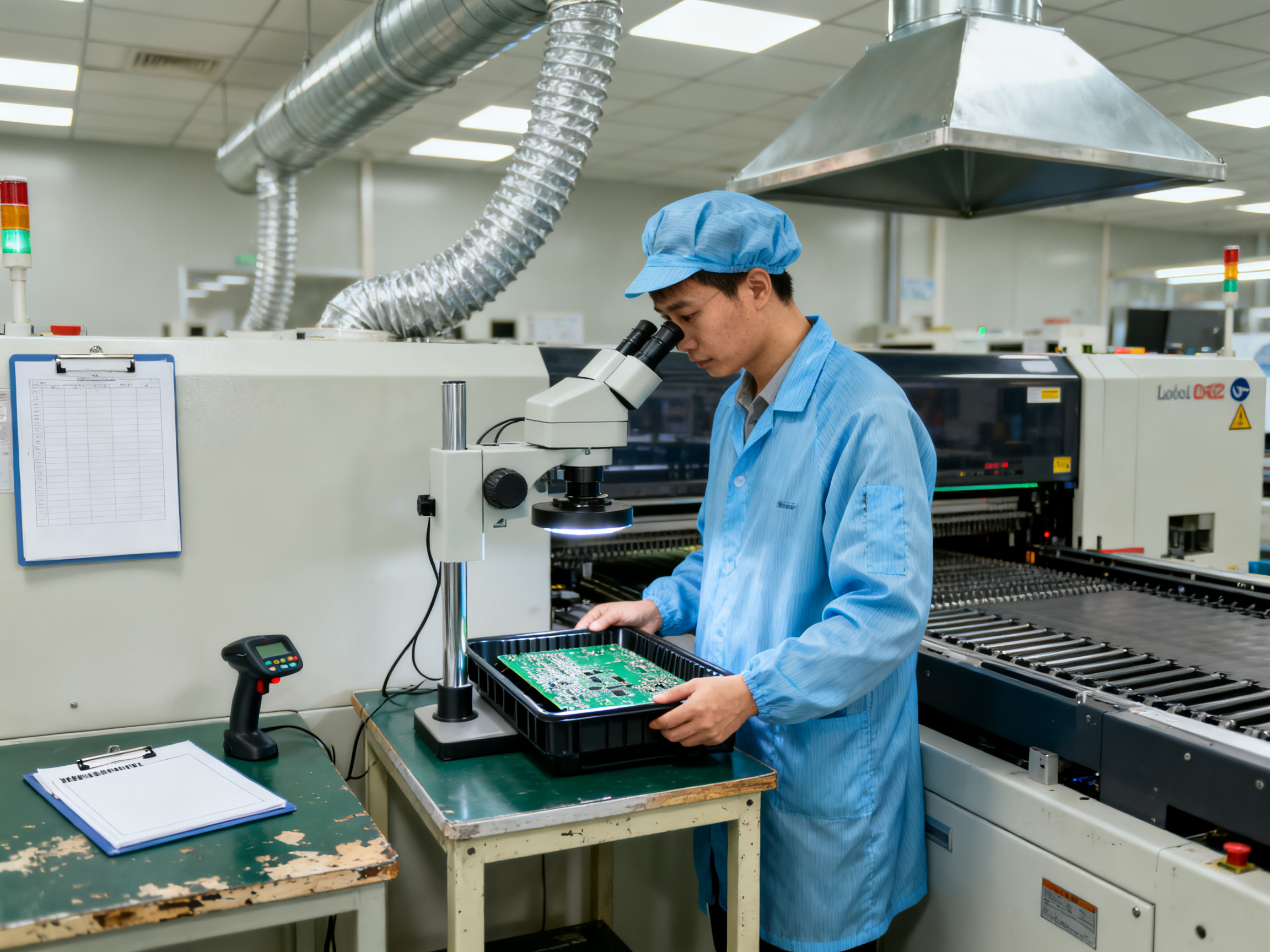
Modern SMT production line equipment is judged as much on its data as its heating. Ask every supplier these questions:
- Does it accept barcode input and bind each board to a specific recipe and profile log?
- Can profiles export in an open format, or are you locked into one vendor’s software?
- Does it talk to your MES, ERP, or factory monitoring system, and over which protocol?
- Can an engineer change a recipe centrally, or does that need a laptop plugged into the machine?
- Are there remote monitoring, preventive-maintenance alerts, and production analytics available?
- How many recipes can it store, and can an operator changeover without a service visit?
The Heller 1800 and 2000 Series are the kind of configurable platform where these questions get answered by configuration rather than by model name. Desktop units such as the NeoDen NDM-3 do not offer this layer at all, which is fine for prototypes but a problem when a customer asks for a serialized process record.
Pro Insight: Line integration is where the best reflow ovens quietly separate themselves. A machine that accepts a barcode, stores the profile, and exports it in an open format removes a whole category of paperwork failures. A machine that does not will leave your quality team rebuilding evidence by hand.
Who can actually build the line for you
Plenty of buyers treat the reflow oven as a stand-alone purchase and then discover the conveyors, buffer stations, and inspection modules do not fit together. Suppliers such as Indaco and Indotron build complete reflow and soldering configurations, and for high-volume lines that want lead-free reflow soldering equipment delivered as one tested system, S&M Co. Ltd. (Shenzhen Chuxin Electronic Equipment Co., Ltd.) builds full SMT production lines alongside inline reflow and wave soldering machines for consumer electronics, semiconductor, and military work.
One practical note: ask for the integration to be documented as a single interface checklist. Who owns the conveyor handoff, who controls the recipe change, and who is accountable when a board sits between two machines waiting for a barcode scan.
And write the downline requirement into the purchase order. A production line that runs through 2026 and beyond needs the oven to accept recipes from the printer and place-marker data, hold boards to a documented profile, and hand off cleanly to inspection without an operator holding a barcode scanner and a clipboard.
That is the difference between buying a best SMT reflow oven and buying a line that actually makes money.
8. Verify Quality, Safety, Environmental, and Industry Compliance
The last filter is paperwork, but it is the one that can sink a purchase after the money is spent. Buyers get a beautiful oven, it heats boards well, and then a customer audit asks for calibration certificates, acceptance test records, and a documented service process. If you cannot produce them, you are re-qualifying the machine under deadline.
Process and environmental capability
Check that the oven is rated for lead-free reflow soldering equipment, not just capable of reaching a temperature. Lead-free profiles run hotter, and hotter is not the same as hotter safely. You want verified soak and time-above-liquidus control across the working envelope.
Then work through the consumables and safety items:
- Fume extraction sized to the oven’s actual fume output, plus the facility’s solder-fume filtration
- Nitrogen management if the machine uses it, including flow monitoring, leak checks, and consumption tracking
- Energy efficiency and insulation, so idle hours do not burn money
- Over-temperature alarms, thermocouple fault detection, fan failure warnings, and an emergency stop that actually cuts power
- Maintenance access to heaters, thermocouples, fans, and filters without dismantling the whole chamber
A quick note on nitrogen. Suppliers like Indium describe real benefits for oxidation and appearance on liquid-junction work, but the hard part is gas infrastructure and exhaust design, not the valve. Only pay for it where you have a measured defect it fixes.
Compliance checklist
Jurisdiction caveat: Requirements differ by country, state, and customer. This is a starting list, not legal advice. Confirm what applies to your site and your customer contracts.
| Area | Ask the supplier for |
|—|—|
| Electrical safety | CE, UL, or regional certification for the exact model and voltage |
| Quality system | ISO 9001 certification for the manufacturer, not the distributor |
| Traceability | Profile logging with board or lot serial binding |
| Calibration | Thermocouple and controller calibration records with intervals |
| Traceability of records | Profile log export in an open format |
| Service | Documented preventive maintenance plan and parts list |
| Environment | Exhaust, gas, and electrical requirement drawings |
High-reliability work raises the bar
Automotive, military, aerospace, and semiconductor customers do not accept a general compliance claim. They want IPC and J-STD-020 style profile control with evidence, defined acceptance criteria, and records that a third party can read. Semiconductor and military work also tends to pull the discussion toward nitrogen, vacuum, and controlled-atmosphere options, so define those requirements before you compare quotes rather than after.
Factory and site acceptance tests
Ask for two separate documents. A factory acceptance test happens at the supplier, and a site acceptance test happens at your plant.
| FAT (at supplier) | SAT (at your plant) |
|—|—|
| Full zone temperature survey across belt width | Repeatability across three consecutive runs |
| Conveyor speed and length verification | Profile on your hardest board |
| Alarms, e-stop, and interlock function | Mixed-load and changeover timing |
| Exhaust and gas system function | Throughput at your intended rate |
| Profile log export demonstrated | Operator workflow and training sign-off |
| Documentation and spare-parts review | Full day of production with your mix |
Tie final payment to the SAT results, not a power-on demonstration. For higher-volume lines that want a complete system instead of a single oven, suppliers such as S&M Co. Ltd. (Shenzhen Chuxin Electronic Equipment Co., Ltd.) build lead-free reflow ovens and full SMT production lines together, which makes it easier to get one document covering the whole line rather than a stack of mismatched ones.
One last thought. Ask for the calibration certificate of the specific unit that ships, with its serial number on it. A certificate for a showroom unit tells you nothing about the machine in the crate.## 9. 6. Compare Reflow Oven Price With Total Cost of Ownership
A reflow oven price is a number on a quote. A reflow oven cost is everything that number drags along behind it.
Buyers often compare three quotes on a spreadsheet and pick the smallest figure, which is exactly how a plant ends up with an oven that eats power all weekend, needs a technician flown in from another state, and cannot hold a profile on the one board that matters. Total cost of ownership is the number that actually predicts what happens to your cost per good board.
Every cost that belongs in the model
| Cost bucket | What to include |
|—|—|
| Acquisition | Purchase price, freight, import duties and taxes, insurance while in transit |
| Installation | Electrical work, breaker or panel upgrades, floor loading, exhaust hood, gas lines, water cooling |
| Utilities | Electricity for heat-up, production, standby, and cooling, plus nitrogen consumption if applicable |
| Consumables | Solder paste, no-clean flux residue handling, filter changes, thermocouple replacement |
| Tools and training | Profiling thermocouples, a data logger, operator training, recipe development time |
| Maintenance | Fan and heater service, belt tensioning, calibration, preventive maintenance contracts |
| Spare parts | Controllers, heaters, thermocouples, motors, and their shipping cost |
| Software and support | Profile logging platforms, MES integration work, on-site service calls |
| Downtime | Hours lost to breakdowns, profile drift, and unplanned changeovers |
| Financing | Lease cost or interest on capital, whichever applies to your business |
That last row surprises people. A three-year lease on a $12,000 oven does not equal $4,000 a year.
The five-year formula
Five-year TCO = acquisition + installation + (annual operating cost × 5) + expected downtime losses
Then divide by good boards produced across those five years:
Cost per good board = five-year TCO ÷ good boards produced
Good boards are the key. Multiply your planned volume by your expected first-pass yield. If a machine runs at 97% yield on a mix where the cheaper oven runs at 92%, the gap is not a rounding error, and it grows every year.
A worked example
Assume a plant runs two shifts, five days a week, with the oven heated continuously and idle on weekends. Plug in your own rates, but the shape holds.
| | Option A, budget inline oven | Option B, mid-tier inline oven |
|—|—:|—:|
| Purchase price | $9,500 | $18,000 |
| Installation and facility work | $2,000 | $2,000 |
| Annual electricity and gas | $4,100 | $2,900 |
| Annual maintenance and spares | $900 | $650 |
| Annual software and support | $0 | $1,200 |
| Five-year total | $45,500 | $74,000 |
| Boards per year (planned) | 180,000 | 180,000 |
| Expected first-pass yield | 92% | 97.5% |
| Good boards per year | 165,600 | 175,500 |
| Cost per good board | $0.275 | $0.422 |
Option B costs more per good board in this scenario, so it loses. Now add the realistic variable: Option A needs a belt and fan service twice a year, and one failure in each of years two and four costs a day of production plus expedited freight. Move 6,000 boards from good to scrap in a year, and the ranking flips. That is why you model your own numbers rather than copying anyone else’s.
Where the cheapest oven usually hides the real cost
- Yield and rework. Low repeatability shows up as cold joints, insufficient wetting, and solder balls, which means inspection time and manual touch-up.
- Energy. A 90 kW installed load running partially idle costs real money every hour the line is down.
- Changeover. Slow recipe recall means operators babysit the machine, and that time lands on the loading station.
- Support. No local technician means a failed thermocouple becomes a week of downtime, not an hour.
- Capacity. A machine bought for today’s volume becomes the constraint when volume doubles, and a full line replacement costs far more than an upgrade.
- Atmosphere extras. Nitrogen or vacuum capability adds gas infrastructure, exhaust work, pumps, and maintenance even when you never use it. Vacuum reflow in particular justifies itself only against a measured baseline defect rate, such as X-ray void area on a defined thermal-pad coupon, as discussed in this note on vacuum reflow benefits.
From Our Experience: The lowest bid on an oven order is very often the highest five-year number. In one line review we ran, the budget machine carried an unfunded service plan, so every heater and fan failure became a premium freight order plus a day of scrap. The mid-tier machine with a local preventive maintenance contract cost less per good board in the first year, not the third. The lesson: put support and spare-parts pricing into the quotation before you compare, because an unpriced service plan is an unfunded liability.
Build the model before you negotiate
Do the five-year math with your own electricity rate, your own shift pattern, your own scrap history, and the warranty terms each supplier actually offers. Ask every bidder to fill in the same template with connected load, annual consumables, spare-parts list and lead time, service coverage, and profile-logging capability. That gives you a comparison instead of a sales pitch.
For higher-volume operations that want the whole line costed as one system, rather than a single oven plus a stack of mismatched quotations, suppliers such as S&M Co. Ltd. (Shenzhen Chuxin Electronic Equipment Co., Ltd.) build inline lead-free reflow ovens alongside wave soldering and complete SMT production lines, which makes it easier to compare acquisition, installation, and operating cost across the entire line at once.## 10. Assess SMT Reflow Oven Manufacturers and After-Sales Support
The oven is the last big purchase most plants treat as a commodity. Two machines with near-identical spec sheets can behave completely differently once one of them needs a heater at 2am.
Supplier quality shows up in four places: application engineering, manufacturing consistency, documentation, and after-sales reach. Score each bidder on the same scale so the comparison means something.
| Evaluation area | What good looks like | What to ask for |
|—|—|—|
| Application engineering | A supplier who asks about your board mix before quoting | A written process recommendation, not just a price |
| Reference installations | Named customers running similar products | Two references you can call, with contact details |
| Manufacturing quality | Documented production and test process | Calibration records, burn-in or soak test evidence |
| Documentation | Manuals, wiring diagrams, recipe guidance | Sample PDF pack before you order |
| Training | Operator and technician sessions | On-site commissioning plus recorded video |
| Warranty | 12 to 24 months on parts and labour | Written terms covering heaters, fans, and controllers |
| Spare parts | Stocked, priced, and shipped | Top 20 parts list with lead times and prices |
| Response time | A number you can hold them to | Response SLA and local service coverage map |
Regional service coverage deserves its own check. A technician within a few hours’ drive is worth a lot when a thermocouple fails during a production week, and an overseas depot that ships parts after a ten-day customs clearance is worth much less. Ask for the address of the nearest authorised technician and the after-hours number, not just a distribution partner’s name.
Questions to put in the RFQ
Send the same list to every bidder so the answers line up:
- Which exact model and suffix are you quoting, and what is the serial-number configuration?
- What are the heater, cooling, atmosphere, and handling options included in this price?
- Which certifications cover this model and voltage (CE, UL, or regional)?
- What is the connected load, heating load, electrical supply, and phase?
- What are the heated length, overall length, conveyor width, and speed range?
- What is the installed footprint, exhaust requirement, and utility connection set?
- Can profiles export in an open format, and how many recipes does the controller store?
- What is the spare-parts list, with prices and lead times?
- Who performs commissioning, and what does it include?
- What are the warranty terms and the service response commitment?
- Will you supply a factory acceptance test on our mix before shipment?
- What is the full five-year cost of ownership, including energy and consumables?
Red flags worth walking away from
- Specifications that only exist on the sales page, with no manufacturer datasheet behind them
- No acceptance test offered, or a power-on demonstration offered instead
- A distributor who cannot name the manufacturer or confirm factory availability
- Certifications you cannot verify for the exact model and voltage
- Recipe data locked inside proprietary software with no export path
- A quotation missing energy use, spares, or service pricing
One more warning sign is subtle. If a supplier will not confirm the exact suffix, voltage, and option package in writing, that same vagueness will follow you into installation and service calls.
Suppliers like Indaco and Indotron cover industrial reflow and soldering configurations, while Heller publishes current specification data for its configurable conveyor families. For plants that want the oven costed together with the rest of the line, suppliers such as S&M Co. Ltd. (Shenzhen Chuxin Electronic Equipment Co., Ltd.) build inline lead-free reflow ovens and complete SMT production lines under one scope of supply.
Expert Tip: Weight support and documentation as heavily as the machine itself. A supplier that answers all twelve RFQ questions in writing, with documents attached, has already shown you how they will behave when something breaks.
Ask for a supplier scorecard back from each bidder, then compare it to the pilot results from earlier sections. The oven that profiles well on your hardest board and comes with a reachable technician is the one that will still be running in year five.## 8. Use a Weighted Selection Scorecard Before You Buy
Two ovens can both pass a demonstration and still be very different buys. The scorecard is what stops the loudest salesperson from winning by default.
Give each criterion a weight based on your process, score every shortlisted machine from 1 to 5, and multiply. A 30% weight on thermal performance means thermal performance decides the outcome when the rest is close.
| Criterion | Weight example | What a 5 looks like |
|—|—:|—|
| Thermal performance and repeatability | 25% | Holds the profile across belt width on your hardest board, three runs in a row |
| Throughput and line fit | 15% | Meets takt time with real loading rules, not rated capacity |
| Integration and traceability | 15% | Barcode binding, open profile export, MES interface |
| Process quality | 15% | Verified joints on BGA, QFN, and heavy thermal pads |
| Service and support | 15% | Technician within a few hours, priced spare parts |
| Total cost of ownership | 10% | Lowest cost per good board over five years |
| Scalability | 5% | Room and power for the next volume step |
Weights change with the buyer. A repair shop puts 5% on scalability and 30% on price. An automotive plant moves that 30% into compliance and traceability.
The 10-step buying checklist
- Lock the product and process matrix
- Define measurable acceptance criteria
- Shortlist by format, batch or inline
- Pull current manufacturer datasheets, not distributor pages
- Verify zone count, conveyor width, speed, and connected load
- Run sample boards across multiple production profiles
- Build the five-year cost model
- Complete two customer reference checks
- Agree FAT and SAT scope in the purchase order
- Plan training, ramp-up, and the first 90 days of production
A realistic FAT and SAT timeline
| Week | Activity |
|—|—|
| 1 to 2 | Documentation review, reference calls, cost model sign-off |
| 3 | Factory acceptance test at the supplier |
| 4 | Shipping, electrical and exhaust work at your plant |
| 5 | Site acceptance test with your product mix |
| 6 | Operator training and recipe transfer |
| 7 to 10 | Ramp-up at reduced volume, then full takt |
Which oven, in one minute
- Under 20 boards a day, no traceability required? A desktop oven such as the NeoDen NDM-3 is enough.
- Mixed products, tight cycle time, serialized records needed? Inline convection, such as the BTU Pyramid 300GS class, with room to grow.
- Longer term, higher capacity, more automation? A configurable platform like the Heller 1800 and 2000 Series gives you width, zone count, and atmosphere options in one family.
Pro Insight: If a supplier refuses a written acceptance test tied to your hardest board, that refusal is itself the score. Weight it heavily.
Score it, sign it, and the purchase stops being a feeling. It becomes a record you can defend to finance, quality, and your next customer audit.> Published: 29 October 2026
Reading Time: 17 minutes
12. Conclusion: Select the Oven That Protects Yield and Scales With Production
The best reflow oven is not the one with the longest feature list. It is the one that holds a repeatable profile on your hardest board, keeps your line balanced, and still looks sensible on cost per good board over five years.
Four things decide that, and the order matters.
- Define the process first. Product mix, board geometry, volume, and changeover tell you whether a desktop unit or a full inline system is even in the running.
- Validate thermal performance under real loading. A datasheet range says nothing about uniformity across the belt, and only your boards can settle that argument.
- Confirm line fit. Conveyor width, connected load, exhaust, recipe storage, and MES links have to match what you already own.
- Compare lifecycle cost, not sticker price. A $9,500 oven with no reachable technician costs more than an $18,000 machine with a service contract.
What to do next, by role
- Production leaders: write a one-page requirements document before any supplier call. It shortens every meeting that follows.
- Process engineers: profile your hardest board on each shortlisted machine, three runs, thermocouples on the hottest and coolest parts. Demand the logs.
- Procurement teams: ask every bidder for the same template covering connected load, spares, service coverage, and five-year cost per good board.
- Technology officers: check profile export formats and MES protocols early, because changing them later means buying new hardware.
The final one-page checklist
- Product and process matrix locked
- Written acceptance criteria agreed
- Profile verified across belt width on the hardest board
- Repeatability confirmed across three consecutive runs
- Yield measured on your real product mix
- Line rate checked against the slowest station
- FAT and SAT written into the purchase order, final payment tied to SAT
- Five-year cost per good board calculated
- Local technician and spare-parts lead times confirmed
- Open profile export verified
- Calibration certificate requested for the shipping serial number
Then shortlist three to five qualified manufacturers, request matched trials using the same product mix, and score every result with the same weighted scorecard. That is how you turn reflow oven selection into a decision you can defend to finance, quality, and your next customer audit.
If you want a second set of eyes on your line, S&M Co. Ltd. (Shenzhen Chuxin Electronic Equipment Co., Ltd.) builds lead-free reflow ovens, wave soldering machines, and complete SMT production lines, and they are a reasonable place to request a technical consultation, a line assessment, or a matched production trial on your own product mix.