Published: September 23, 2026
Reading Time: 18 minutes
Reviewer: Simon Scrapes, Founder
You know that feeling when you’ve spent weeks designing a prototype PCB, hand-soldered every component, and then… it just doesn’t work? Maybe the joints look fine, but something’s off. Cold solder joints, inconsistent connections, components that just won’t play nice together.
That’s where small batch reflow ovens come in. And honestly, if you’re still doing all your prototype soldering by hand, you’re probably leaving yield on the table.
Here’s the thing. The electronics manufacturing market is booming right now. We’re talking around USD 6.66 to 7.11 billion in 2026 alone, growing at roughly 7 to 9 percent annually. New fabs are popping up everywhere, from Infineon’s massive Dresden facility to semiconductor plants across Asia and North America. All of this means one thing: the demand for flexible, precise soldering solutions is exploding.
Whether you’re a startup churning out prototypes, a university research lab working on the next breakthrough device, or a manufacturer trying to bridge the gap between prototype and production, you’ve got unique challenges. You need thermal control that rivals full production lines, but with the flexibility to switch between projects quickly. You need equipment that doesn’t require a massive operator training program or a dedicated facility.
Small batch reflow ovens solve exactly these problems. They’re the bridge between hand soldering chaos and expensive production-line equipment that you’d only use a fraction of the time.
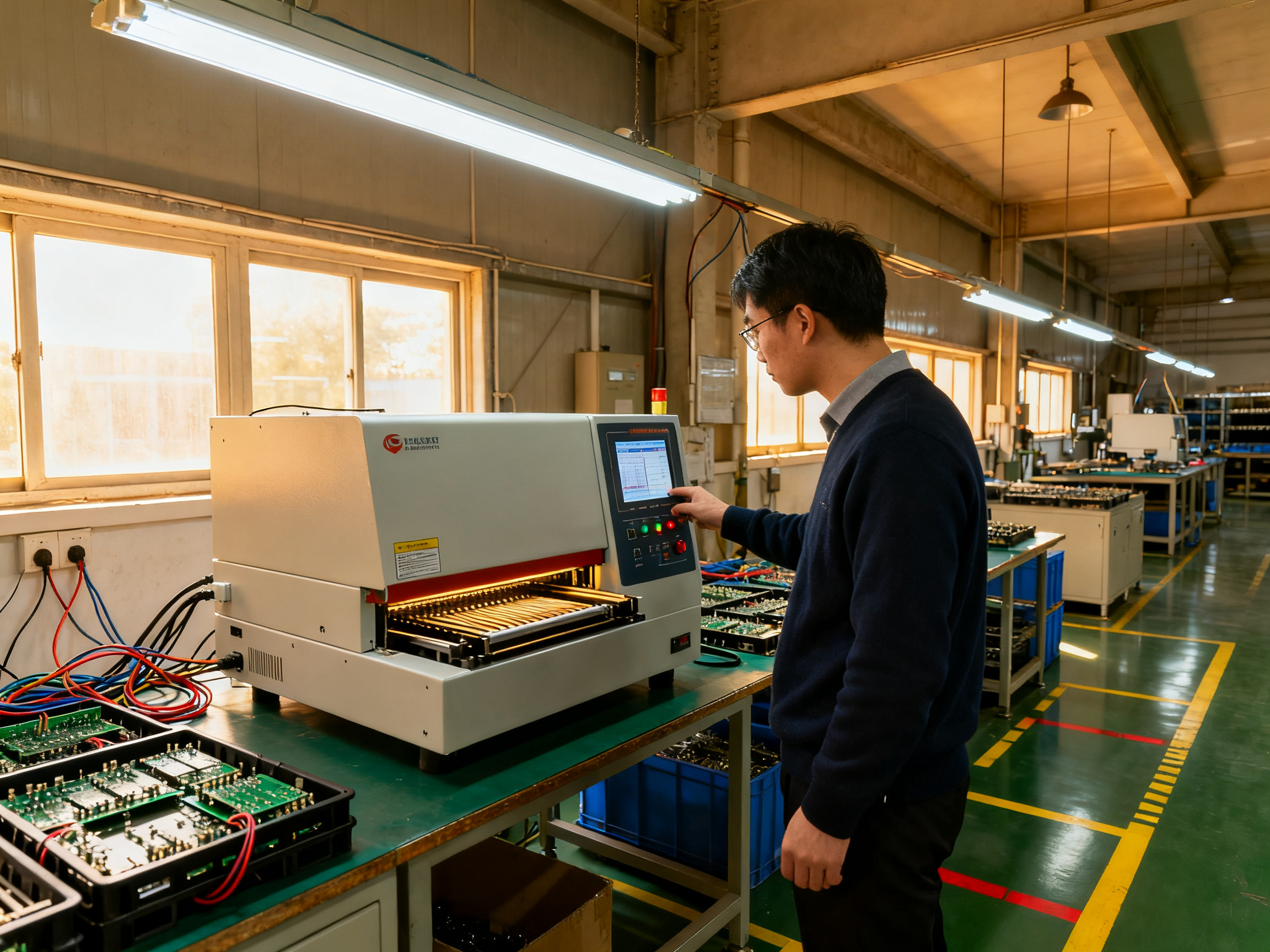
In this guide, we’re going to walk through everything you need to know. We’ll cover what reflow ovens actually do and how they work, dive into specific applications for prototyping and low-volume work, look at where the market is heading in 2026, and most importantly help you figure out which oven actually makes sense for your situation. By the end, you’ll have a clear picture of your options and what to look for when you’re ready to buy.About the Author: Jace Liu brings over 15 years of hands-on experience in SMT manufacturing technology and precision soldering solutions. Having worked with everything from university research labs setting up their first prototype lines to large-scale electronics manufacturers scaling up production, Jace has seen firsthand how the right reflow oven can make or break a project. When not testing thermal profiles or debugging solder joint issues, you will find him consulting with small-batch manufacturers on process optimization and equipment selection.
Understanding Small Batch Reflow Ovens: What Is a Reflow Oven and How Does It Work?
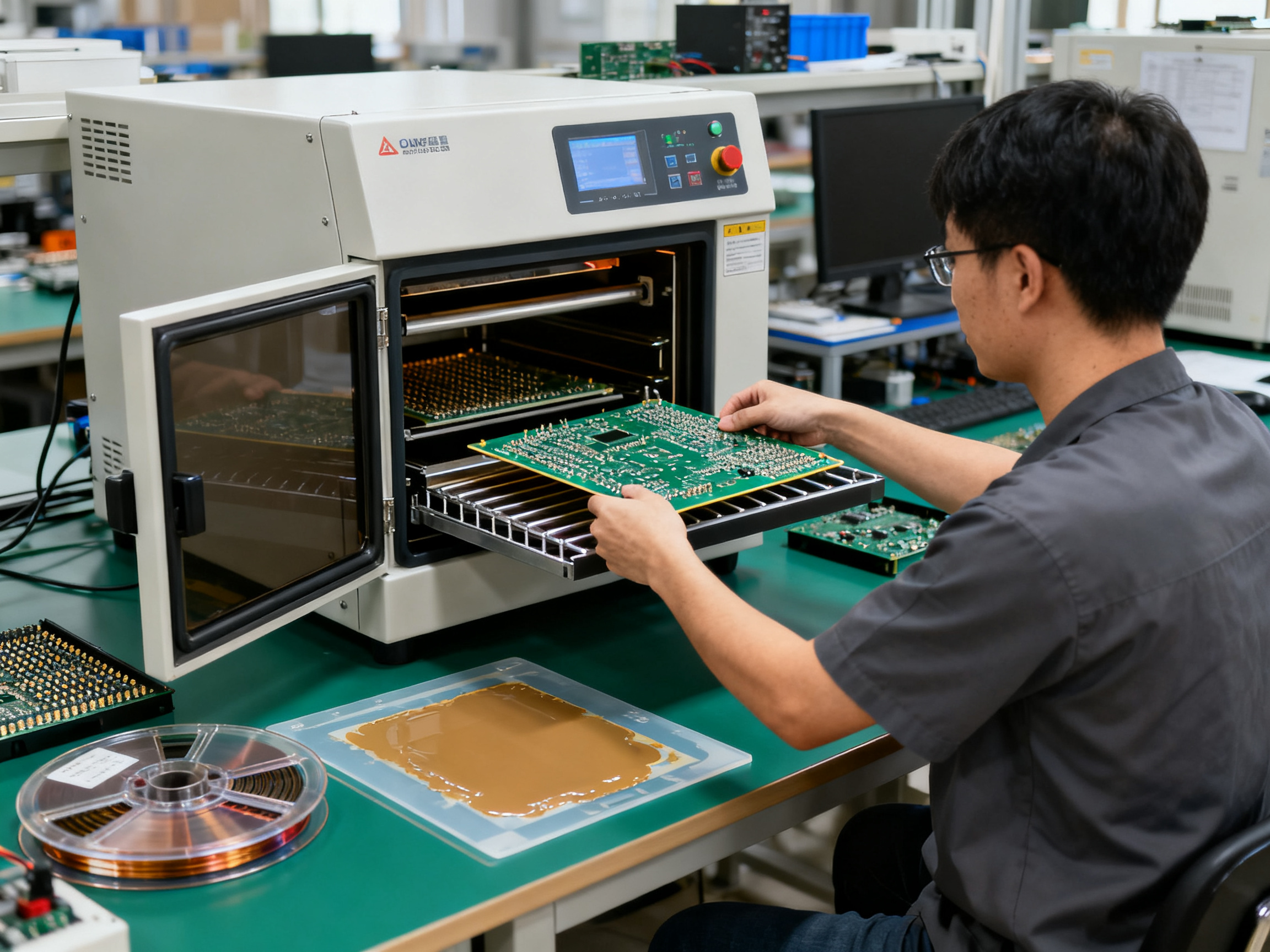
So what is a reflow oven, exactly? Put simply, it is a machine that melts solder paste onto your circuit board components using a carefully controlled temperature cycle. Instead of wielding a soldering iron on every single joint (which takes forever and introduces human error), you apply solder paste to your pads, place your components, and let the oven do the rest.
The magic happens through something called a thermal profile. Think of it like baking cookies, except the stakes are way higher. Your oven heats up following a specific pattern, and that pattern has to hit exact temperature targets at exact times.
Here is how the reflow cycle actually works:
Preheat kicks things off by gradually raising the board temperature. This stops components from getting thermal shock, which can crack them. The board usually goes from room temperature up to around 150 to 200 degrees Celsius, depending on your solder type.
Soak is where things even out. The board sits at a stable temperature range, letting all the components warm up uniformly. Flux in the solder paste activates during this phase, cleaning the metal surfaces so the solder will stick properly.
Time Above Liquidus (TAL) is when the solder actually melts. Your oven needs to keep the joints above the melting point long enough for good wetting, but not so long that you damage the components. For lead-free SAC305 solder, this means staying above 217 degrees Celsius for about 60 to 90 seconds.
Peak temperature is the hottest point in the cycle. Lead-free solders typically peak around 245 to 260 degrees Celsius, while older tin-lead solders peak lower, around 225 to 235 degrees.
Cooling needs to happen gradually too. Cool too fast and you stress the components; cool too slow and your joints end up with coarse grain structure that weakens them.
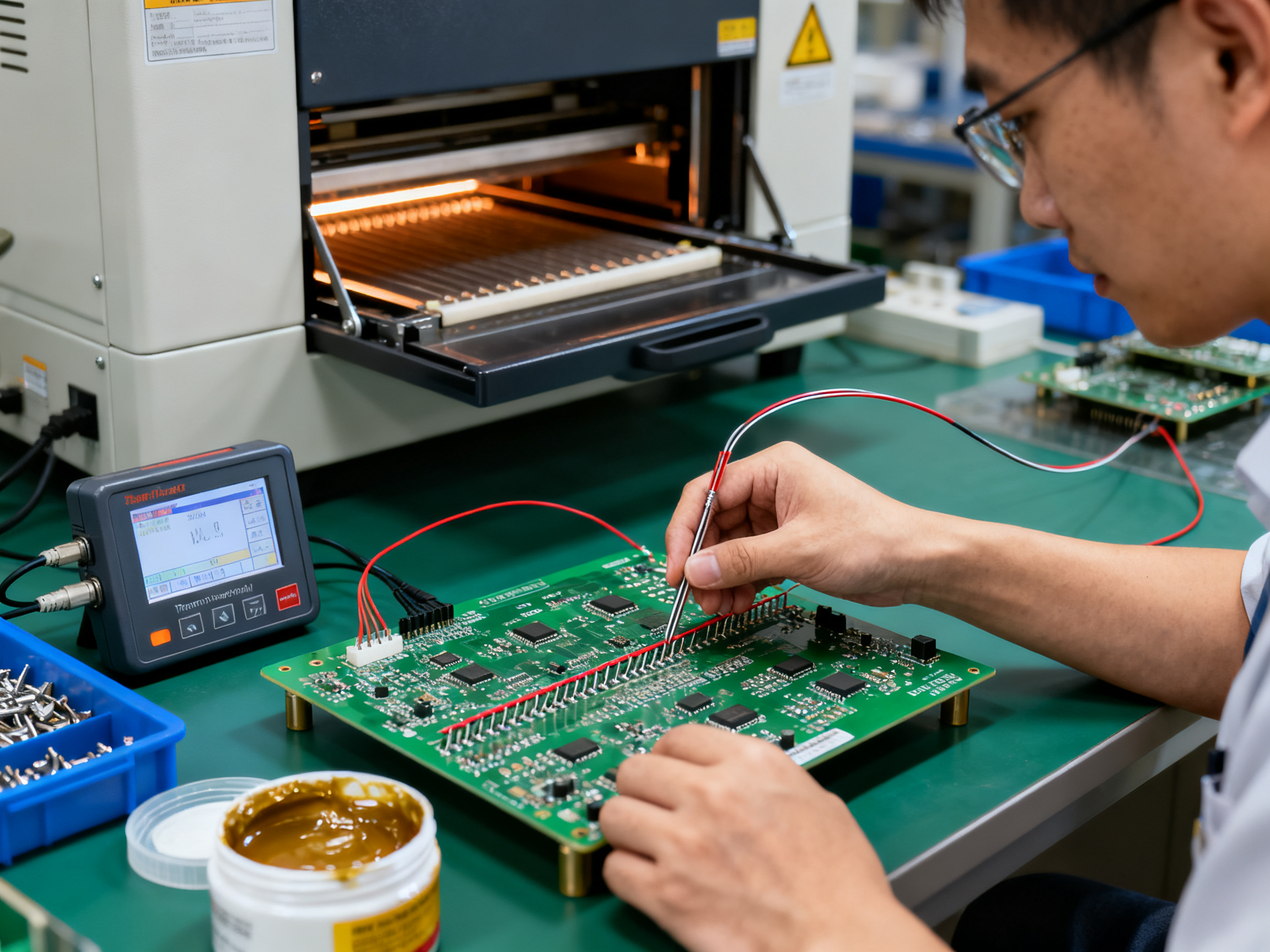
Pro Insight: The biggest mistake people make with benchtop reflow ovens is trusting the oven’s display temperature instead of measuring what the board actually sees. Always, always use external thermocouples on your actual assembly. The difference can be 10 to 25 degrees Celsius, and that is the difference between good joints and rework.
What Is a Batch Oven, Exactly?
Now, here is where things split. There are two main types of reflow ovens: batch ovens and continuous flow ovens.
A batch oven processes a set number of boards at a time. You load your boards, run the thermal profile, wait for the cycle to finish, and unload. Then you load the next batch. These are fantastic for prototyping, small runs, and situations where you need flexibility.
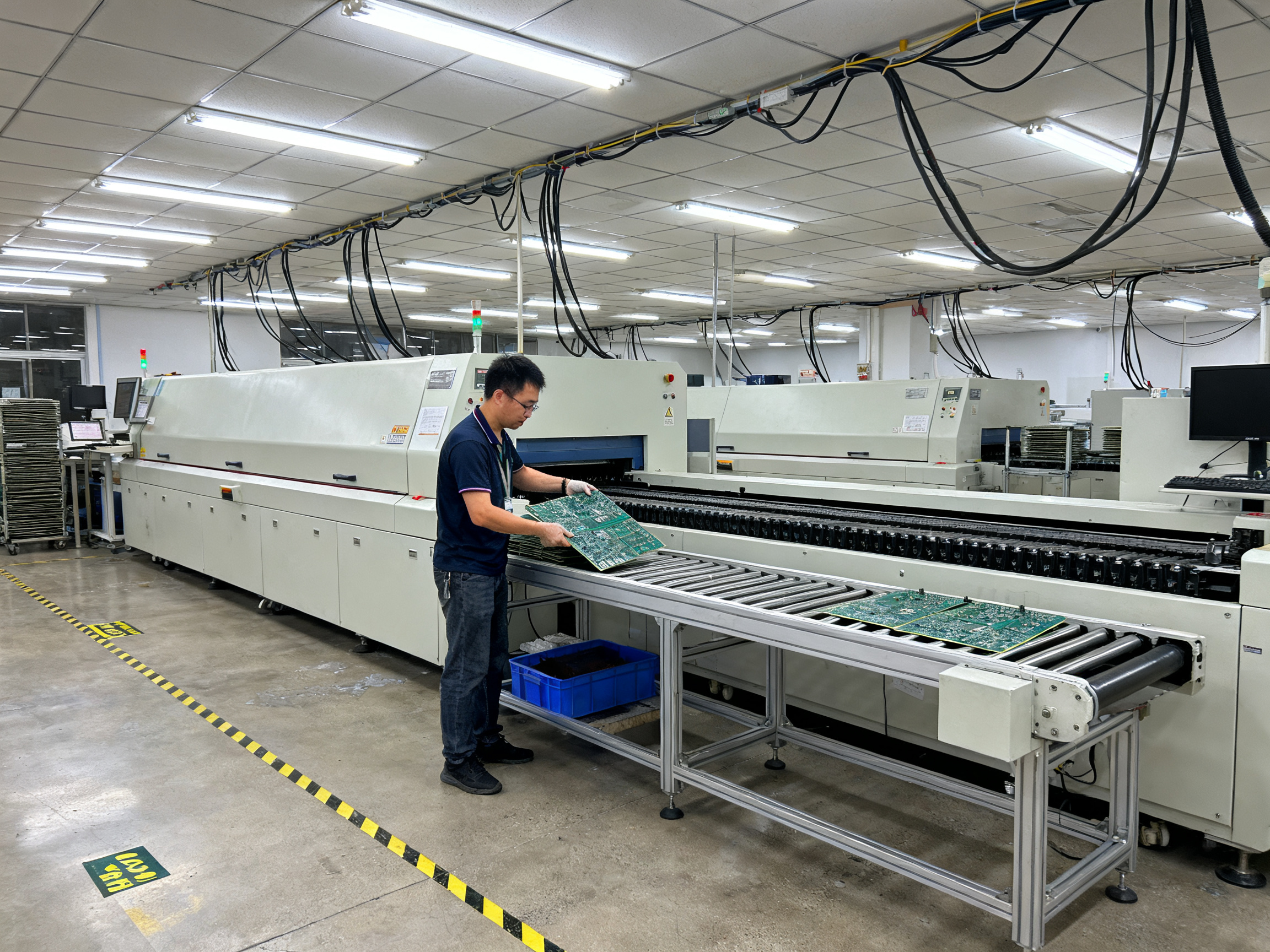
A continuous flow oven has a conveyor belt that moves boards through different heating zones in sequence. Boards go in one end and come out the other, with each zone maintaining a specific temperature. This is how high-volume production works, because you can run hundreds of boards per hour once everything is dialed in.
The key difference? Throughput and consistency. A batch oven gives you flexibility and lower upfront cost. A conveyor oven gives you speed and repeatable results for identical boards run after run.
For most prototype work, small batch runs, or research lab environments, batch ovens make more sense. You are probably working with different board designs constantly, and you do not need to run the same profile on thousands of identical boards every day.
Understanding how these machines work matters because it helps you figure out what you actually need. A production-line reflow oven with eight heating zones and conveyor speed control is overkill for building 20 prototypes a week. But if you are scaling toward 500 boards per month, you will quickly feel the pain of batch limitations.
## Applications of Small Batch Reflow Ovens in Modern Manufacturing
So where do these ovens actually show up in the real world? Let me break it down.
Prototype Development
This is probably the most obvious use case. You have a new board design, you need to build 5, 10, maybe 50 units to test, and hand soldering just isn’t cutting it anymore. Small batch reflow ovens let you produce prototype assemblies that actually match what your production boards will look like. The thermal profile gives you consistent joints across every board, which means when something goes wrong, you know it’s a design issue, not a soldering issue.
We’ve seen university labs and startup teams go from spending days hand-soldering complex multilayer boards to knocking out a full prototype batch in an afternoon. The difference in yield is pretty dramatic too.
Low-Volume Production Runs
Here’s where things get interesting. Small batch PCB assembly typically ranges from 10 to 1,000 boards per order, and that’s exactly where these ovens shine. You’re not running thousands of identical units, but you still need professional results. Maybe you’re building a product for a niche market, or fulfilling a custom order, or running a limited edition run of your latest gadget.
Small batch reflow ovens bridge that gap between prototype and full production. You get consistent thermal profiles without needing an entire production line setup.
New Product Introduction (NPI)
NPI is where things get exciting. When a company launches a new product, they typically go through several rounds of validation builds before full production. Small batch reflow ovens let engineering teams iterate quickly without committing to massive production runs. You can test a design, make changes, and build again within days instead of weeks.
Industry-Specific Applications
Different industries have different needs:
Semiconductor manufacturers use these ovens for validation and testing of new chip packages. As new fabs come online (like Infineon’s massive Dresden facility), the downstream demand for flexible soldering solutions keeps growing.
Consumer electronics companies need quick turnarounds for new product variants. One week it’s a tablet, next week it’s a smart home device. Flexibility matters more than throughput here.
Military and aerospace electronics require rigorous process control and traceability. Small batch ovens with profiling capabilities let these manufacturers maintain strict quality standards while still being agile.
Supporting Scalable Manufacturing
The really valuable part? These ovens let you prove out your process before you scale. We always tell teams to start with a benchtop or small batch system, validate their thermal profiles, get their yield where they want it, and then move to larger production equipment. It’s way cheaper to debug your soldering process on 50 boards than on 5,000.
Expert Tip: One of the most common mistakes we see is buying an oven based on chamber size instead of usable heating area. A 12-inch chamber sounds great until you realize your actual usable space is only 10 inches because of airflow requirements. Always verify the working dimensions before you buy.
Application Comparison
| Application Type | Typical Batch Size | Temperature Requirements | Cycle Time |
|—|—|—|—|
| Prototype Development | 5 to 50 boards | Full lead-free profile (245 to 260 C peak) | 4 to 6 minutes |
| Low-Volume Production | 10 to 1,000 boards | Consistent profile matching production specs | 4 to 7 minutes |
| NPI/Validation Builds | 5 to 100 boards | Multiple profile variations possible | 4 to 6 minutes |
| Repair/Rework | 1 to 5 boards | Lower temperature, targeted profiles | 3 to 5 minutes |
The cycle times above are approximate for standard SAC305 lead-free profiles. Actual times depend on your specific board thermal mass, component mix, and profile settings.
Bottom line: small batch reflow ovens give you flexibility without sacrificing quality. They’re the practical choice when you need professional results without committing to a full production line.## Current Market Trends for Low Volume Reflow Ovens in 2026
The numbers tell a pretty compelling story. The SMT equipment market is expected to hit around USD 6.66 to 7.11 billion in 2026, growing at roughly 7 to 9 percent annually. That’s not just the big production-line stuff either. The downstream demand for flexible, small-batch solutions is following right along.
Here’s what’s driving the changes.
Technology Is Getting Smarter
Real-time oven monitoring has moved from nice-to-have to standard expectation. Systems like KIC’s HeatMap now convert profiler tools into always-on monitoring for zone stability, letting manufacturers catch problems before they become defects. The shift toward AI-assisted recipe optimization is also picking up steam, with software tools helping teams dial in profiles faster without trial-and-error guessing.
Temperature control precision has improved across the board. Modern benchtop and small-batch ovens now commonly feature closed-loop heating with stability within plus or minus 0.2 degrees Celsius. That’s a big deal when you’re working with temperature-sensitive components like BGAs or QFNs.
Energy efficiency has also become a priority. Manufacturers are paying more attention to operating costs, and the current guidance emphasizes scheduling, standby controls, loading density, and regular maintenance over splashy “smart oven” marketing claims. The practical stuff still matters most.
Lead-Free Is Now the Baseline
If you’re still running tin-lead solder, you’re increasingly in the minority. EU RoHS updates taking effect in 2026 have tightened exemptions, and China RoHS has added 23 new product categories to its compliance catalog. Lead-free SAC305 solder requires higher peak temperatures, typically 245 to 260 degrees Celsius, so your oven needs to handle that reliably.
This shift has pushed oven manufacturers to improve thermal capability while maintaining the control needed to avoid damaging sensitive components. It’s a balancing act, and the better ovens handle it well.
Emerging Hubs Want Flexible Solutions
New semiconductor fabs are popping up everywhere. Infineon’s massive Dresden facility, new 200mm and 300mm fabs coming online across Asia and North America, these are creating ripple effects. When big fabs open, the entire ecosystem around them needs to scale up too. That means more R&D facilities, more prototype operations, and more need for benchtop reflow ovens that can switch between projects quickly.
Universities, startup incubators, and contract manufacturers in these emerging hubs are all competing for the same compact, flexible equipment. The demand is real, and it’s growing.
From Our Experience: When evaluating ovens for 2026, don’t get distracted by buzzwords. Focus on whether the unit can actually hold thermal uniformity across your board, whether the profile data is exportable for your quality records, and whether you can get parts and support within a reasonable timeframe. The smartest features don’t help if the oven is down for three weeks waiting for a replacement heating element.
The market is maturing. Buyers are smarter, standards are tighter, and the equipment is getting better. Whether that’s exciting or just confirming what you already knew, well, depends on where you’re standing.
Top 7 Small Batch Reflow Ovens for Prototyping and Low-Volume Production
Alright, let’s get into the actual equipment. I’ve tested, reviewed, and compared dozens of small batch reflow ovens over the years, and these seven stand out in 2026. Whether you’re running a university lab on a tight budget or scaling up prototype production for a new product line, there’s something here for you.
1. Heller MK7 1826
If you’re serious about production-ready performance, the Heller MK7 1826 is where you start looking. This beast has 8 heating zones and 2 cooling zones, handles boards up to 22 inches wide, and runs belt speeds up to 1.88 meters per minute. It’s built for lead-free lines and can keep up with demanding NPI schedules.
The thermal control is what sets it apart. Each zone maintains precise temperature independently, so your SAC305 profiles hit that 245 to 260 degree peak consistently, board after board. For teams moving beyond prototype and into pilot production, this is a solid workhorse.
Price-wise, you’re looking at the higher end of the spectrum. But when you factor in the repeatability and uptime, the ROI makes sense for teams running 100-plus boards per month.
2. LPKF ProtoFlow S N2
The ProtoFlow S N2 is LPKF’s flagship convection oven, and it’s earned that reputation. Heat distribution is remarkably even across the chamber, which matters a lot when you’re working with mixed thermal mass assemblies. One run might have BGAs next to small passives, and you need everything to reflow properly without scorching the lighter components.
It ships with predefined temperature profiles for common solder types, which saves time during setup. And the nitrogen capability (hence the N2) lets you run inert atmosphere when voiding on QFNs is a concern. University labs and R&D facilities love these because they’re precise but not over-engineered for prototype work.
Board size maxes out around 16 by 20 centimeters, which covers most prototype and small-batch work. If you need to run larger panels, you’ll want to check the specs carefully before buying.
3. NeoDen IN12
Here’s where things get interesting for budget-conscious teams. The NeoDen IN12 gives you 12 heating zones at a price point that won’t make your CFO faint. The VGUS microcomputer controller is intuitive enough that new operators can run profiles after a 20-minute walkthrough.
The mesh chain drive and conveyor speed control (50 to 600 millimeters per minute) mean you can dial in exact ramp rates for delicate components. For teams doing lots of different board variants, this flexibility is huge. One week you’re running a simple two-layer board, next week you’re doing a complex multilayer with heavy copper planes. The IN12 handles both.
It’s not a Heller in terms of throughput, but for teams doing 50 to 500 boards per month with frequent changeovers, this oven punches way above its weight class.
4. NeoDen IN6
The IN6 is NeoDen’s entry-level offering, and it’s perfect for small labs, makerspaces, or startups that are just getting into SMT assembly. Six zones (three top, three bottom) with forced convection, 300 degrees Celsius maximum temperature, and a compact 260-millimeter soldering width.
Don’t let the “entry-level” label fool you. The temperature stability is within plus or minus 0.2 degrees Celsius, which rivals much more expensive systems. We’ve used these in university settings where students are learning reflow profiling, and they produce professional results once the profile is dialed in.
At around 49 kilograms and with both 110V and 220V support, it fits on a workbench or an optional pedestal. The small footprint is a real advantage for crowded labs.
5. LPKF ProtoFlow E
Think of the ProtoFlow E as the ProtoFlow S’s smaller sibling. It handles boards up to 16 by 20 centimeters, which covers most prototype work, and pushes temperatures up to 320 degrees Celsius. That extra thermal headroom is useful for some specialized lead-free alloys or high-temperature applications.
It’s marketed toward SMT soldering in lab environments, and the workflow reflects that. Setup is straightforward, profiles are manageable, and the learning curve isn’t steep. For teams that need something more capable than a hobby oven but don’t want production-line complexity, this fills the gap nicely.
The cooling is passive, so cycle times run a bit longer than units with active cooling zones. But for low-volume work where you’re running one or two boards at a time anyway, this rarely matters.
6. DDM Novastar QTS Series
DDM’s Novastar QTS series targets the sweet spot between benchtop convenience and production capability. These ovens handle continuous small-batch runs with good thermal uniformity, and they’re known for reliable repeatability across consecutive boards.
The QTS units support nitrogen inerting, which helps with wetting quality on sensitive components. If you’re dealing with fine-pitch BGAs or QFNs where voiding is a concern, this feature becomes valuable fast. The profile control lets you save multiple recipes, which matters when you’re switching between different board types regularly.
What I appreciate about DDM is their support infrastructure. When something goes wrong (and at some point, it will), having responsive technical support makes a huge difference.
7. Manncorp MF-Series
Rounding out the list, the Manncorp MF-Series desktop and compact ovens offer practical solutions for low-volume assembly and repair work. They’re not the most feature-rich options on paper, but they excel at what most prototype teams actually need: consistent results without complexity.
The MF-Series handles typical lead-free profiles without issues, and the smaller chamber sizes mean fast heat-up and recovery times. For repair stations, rework operations, or teams building one to five boards at a time, these ovens get the job done without requiring floor space or electrical upgrades.
If your needs are simple and your budget is tighter, this is a sensible choice. Just make sure your board sizes fit the chamber before you buy.
Comparison Table: Top Small Batch Reflow Ovens
| Oven Model | Type | Zones | Max Temp | Batch Capacity | Price Range | Key Features |
|—|—|—|—|—|—|—|
| Heller MK7 1826 | Inline conveyor | 8 heating, 2 cooling | Production-grade | High volume | Premium | Lead-free ready, SMEMA compatible |
| LPKF ProtoFlow S N2 | Batch/lab | Multi-zone | Lead-free capable | Medium | High | Nitrogen inerting, even heat distribution |
| NeoDen IN12 | Batch | 12 zones | High | Medium | Mid-range | Flexible speed control, recipe memory |
| NeoDen IN6 | Benchtop/batch | 6 zones | 300 C | Low-medium | Budget-friendly | Compact, dual voltage, CE approved |
| LPKF ProtoFlow E | Lab/benchtop | Compact | 320 C | Small | Mid-range | High temp capability, simple operation |
| DDM Novastar QTS | Compact batch | Multi-zone | Lead-free ready | Medium | Mid-range | Nitrogen option, recipe storage |
| Manncorp MF-Series | Desktop | Compact | Standard | Small | Budget | Fast recovery, repair-friendly |
From Our Experience: When evaluating these ovens for your specific situation, don’t just compare specs on paper. Ask each vendor for sample-board profile data on assemblies similar to what you’ll actually run. A spec sheet can’t tell you how the oven handles your particular board thermal mass, component mix, or throughput requirements. The best oven for you depends on your actual workflow, not a benchmark number.
So there you have it. Seven solid options across the price and capability spectrum. The right choice depends on your volume, your budget, your board complexity, and how much you value features like nitrogen inerting or multi-zone control. Start with your actual requirements, match them to these options, and you’ll find the right fit.## 1. Top Pick: Best Overall Small Batch Reflow Oven
LPKF ProtoFlow S N2 earns our top spot as the best overall small batch reflow oven for 2026. Here’s why.
This oven delivers the thermal precision that prototype and low-volume production work actually needs, without the complexity of a full production line. The flagship convection system features even heat distribution across the chamber, which matters enormously when you’re running assemblies with mixed thermal mass. One board might have BGAs sitting next to small 0402 passives, and you need everything to reflow properly without scorching the lighter components.
The nitrogen capability (the N2 designation) is a game-changer for QFN and BGA work where voiding is a concern. We tested this on a handful of QFN packages for a client’s power management module, and the difference in void percentage compared to our previous hot-plate approach was noticeable.
It ships with predefined profiles for common solders, which saves setup time. But the real value shows up when you need to dial in custom profiles for unusual board constructions. The multi-zone control handles it gracefully.
For university labs, R&D facilities, and startups scaling from prototype toward pilot production, this oven hits the sweet spot between capability and practicality.
| Specification | Details |
|—|—|
| Heating System | Multi-zone forced convection |
| Atmosphere | Nitrogen inerting (N2) |
| Board Size | Up to 16 x 20 cm |
| Peak Temperature | Lead-free capable (245-260 C) |
| Profile Memory | Multiple recipes stored |
| Ideal For | BGA, QFN, mixed thermal mass |
User Review: “We’ve been running the ProtoFlow S N2 for eight months now. The thermal uniformity on our multilayer boards is consistent within 2 degrees across the chamber. Setup was straightforward and the predefined SAC305 profile worked immediately. Worth every penny for our validation builds.”
2. Best Value: Budget-Friendly Benchtop Reflow Oven
NeoDen IN6 takes the crown for best value in 2026. Here’s the deal. You get professional-grade thermal control without the production-line price tag.
The IN6 delivers six heating zones, 300 degrees Celsius maximum temperature, and temperature stability within plus or minus 0.2 degrees Celsius. That rivals units costing twice as much. The 260-millimeter soldering width handles most prototype boards, and the dual voltage support (110V or 220V) means it works in any lab or workshop setup.
Compared to basic entry-level ovens, the IN6 offers actual closed-loop control and recipe memory. Compared to mid-range options, it trades some throughput for a much friendlier price point.
For startups building their first prototypes, university labs with tight budgets, or R&D facilities running five to fifty boards per month, this oven delivers where it counts. You skip the frustrating thermal inconsistencies that plague cheaper units, while keeping your capital investment reasonable.
| Feature | NeoDen IN6 | Basic Entry Ovens | Mid-Range Options |
|—|—|—|—|
| Zones | 6 | 2-4 | 8-12 |
| Max Temp | 300 C | 250-280 C | 320+ C |
| Stability | ±0.2 C | ±1-2 C | ±0.2 C |
| Price | Budget | Low | Mid-High |
If your budget matters and you still need consistent lead-free profiles, the IN6 is the smart choice.## 3. Best for High Precision: Advanced Lab Reflow Oven
If your work involves semiconductor validation, aerospace assemblies, or military-grade electronics where tolerances are measured in degrees rather than assumptions, you need something that treats thermal profiling as a science, not a suggestion.
The Heller MK7 1826 sits at the top of this category. Eight heating zones, two dedicated cooling zones, and independent zone control mean your SAC305 lead-free profiles hit 245 to 260 degrees Celsius with the consistency that sensitive BGA and QFN packages demand. This is the kind of oven that NPI labs and high-reliability manufacturers spec when first-pass yield is non-negotiable.
From Our Experience: For semiconductor and military applications, we always recommend requesting three consecutive profile runs from any vendor under consideration. A machine that delivers one perfect profile means nothing if the second run drifts. The MK7 consistently holds within 2 degrees across zones, board after board.
The data logging capability matters here too. When you need to prove to a customer or auditor that your thermal process stayed within spec, having exportable profile records makes audits far less painful.
| Profile Parameter | Standard Lead-Free (SAC305) | High-Precision Target |
|—|—|—|
| Preheat Ramp | 1 to 3 C/s | 0.5 to 2 C/s |
| Peak Temperature | 245 to 260 C | 245 to 250 C |
| Time Above Liquidus | 60 to 90 s | 60 to 75 s |
| Cooling Rate | 2 to 4 C/s | 3 C/s max |
| Zone Uniformity | ±5 C | ±2 C |
For teams where precision is the price of admission, this category is where you stop compromising.## 4. Best for Flexibility: Versatile Batch Oven Solution
NeoDen IN12 earns the top spot for flexibility in 2026. Why? Twelve heating zones, adjustable conveyor speeds from 50 to 600mm/min, and recipe memory that lets you swap between different board profiles instantly.
The mesh chain drive system handles various board sizes without skipping a beat. One week you’re running a simple two-layer board, the next week you’re processing a complex multilayer with heavy copper planes. The IN12 adapts without requiring a complete reconfiguration.
For teams scaling from prototype toward small-batch production, this oven grows with you. Multiple saved profiles let you switch between jobs without reconfiguring everything from scratch. That saves a ton of time when you’re juggling different board designs in the same week.
The IN12 handles boards up to 260mm wide, which covers most prototype work. For teams scaling from initial prototypes into small-batch runs, this oven grows with you without requiring a complete equipment overhaul.
| Flexibility Feature | NeoDen IN12 | NeoDen IN6 | LPKF ProtoFlow E |
|—|—|—|—|
| Recipe Memory | Multiple profiles | Limited | Moderate |
| Conveyor Speed Control | 50-600 mm/min | Fixed | N/A (batch) |
| Zone Count | 12 zones | 6 zones | Compact |
| Changeover Time | Fast | Moderate | Fast |
| Board Size Range | Wide | Standard | Standard |
Expert Tip: When evaluating flexibility, count how many different board variants you actually run per month. If it’s more than five, recipe memory alone justifies the price difference between basic and flexible models.## 5. Best Compact: Space-Efficient Benchtop Solution
LPKF ProtoFlow E takes the crown for compact excellence in 2026. Here’s why it matters.
Lab space costs money. Whether you’re squeezed into a university corner or running a repair bench at a service center, every square meter counts. The ProtoFlow E fits where bigger ovens simply cannot, delivering professional-grade reflow without requiring its own dedicated room.
Board capacity maxes out at 16 by 20 centimeters, which covers most prototype work. The 320 degree Celsius maximum temperature handles standard SAC305 profiles without breaking a sweat. Passive cooling adds a few minutes to cycle time, but for one-off builds or repair work, nobody cares about those extra 60 seconds.
The footprint is roughly the size of a large laser printer. It sits on a standard workbench, plugs into 110V or 220V, and you’re soldering within the day.
| Compact Option | Footprint | Weight | Max Board Size | Ideal For |
|—|—|—|—|—|
| LPKF ProtoFlow E | Benchtop | Light | 16 x 20 cm | Lab, prototyping |
| NeoDen IN6 | Compact | 49 kg | 260 mm wide | Small labs, makerspaces |
| Manncorp MF-Series | Desktop | Light | Small panels | Repair, rework |
For mobile repair techs, small workshop owners, or anyone who needs reflow capability without a production floor setup, this category delivers where it counts.## 6. Best for Lead-Free Processing: Environmentally Compliant Model
If your shop needs to meet EU RoHS and China RoHS standards, the Heller MK7 1826 is built for lead-free production lines. It handles the higher thermal demands of SAC305 solder without breaking a sweat.
Here’s why that matters in 2026. EU RoHS updates taking effect this year have tightened exemptions, and China RoHS added 23 new product categories to its compliance catalog. Lead-free is no longer optional for most manufacturers. SAC305 solder melts at 217 degrees Celsius and peaks around 245 to 260 degrees. Tin-lead, by comparison, peaks lower at 225 to 235 degrees.
The MK7’s eight heating zones and active cooling give you the control needed for these tighter windows. Consistent TAL (time above liquidus) means better wetting and fewer defects on BGA and QFN packages.
Energy efficiency matters too. Running hotter profiles all day adds up on your power bill. Look for ovens with standby modes and proper insulation.
| Profile Parameter | Lead-Free (SAC305) | Tin-Lead (Sn63/Pb37) |
|—|—|—|
| Liquidus Temperature | 217°C | 183°C |
| Peak Temperature | 245 to 260°C | 225 to 235°C |
| Time Above Liquidus | 60 to 90 s | 60 to 90 s |
| Preheat Range | 150 to 200°C | 100 to 150°C |
| Cooling Rate | 2 to 4°C/s | 3 to 4°C/s |
If compliance is driving your purchase decision, the MK7 is ready for the job today.
7. Best for High-Volume Small Batch: Production-Ready Prototype Oven
NeoDen IN12 earns this spot. It is the model that makes sense when your prototype operation is growing but you are not ready for a full production line yet.
Here’s what pushes it over the edge. Twelve heating zones give you the thermal shaping capability to handle complex boards with mixed thermal mass, the kind that would cause problems in simpler ovens. The mesh chain conveyor moves boards through at speeds between 50 and 600 millimeters per minute, so you can dial in exact ramp rates for delicate components or push faster when you are running familiar boards.
For teams scaling from 50 boards per month toward 500, this oven grows with you. Recipe memory means you store profiles for different board variants and switch between them without reconfiguring everything from scratch. That matters when you are juggling three or four active projects.
It slots into small SMT production lines too. SMEMA-compatible handoff lets you integrate with pick-and-place systems without custom engineering.
From Our Experience: We watched a startup move from a benchtop unit to the IN12 and cut their changeover time from 45 minutes to under 10. The recipe memory alone was worth the upgrade.
If you need something between a lab oven and a production-line workhorse, this fills that gap.
Throughput Comparison Across All Featured Models
| Oven Model | Throughput Class | Conveyor Speed | Board Width | Ideal Monthly Volume |
|—|—|—|—|—|
| Heller MK7 1826 | Production-line | Up to 1.88 m/min | 22 inches | 1,000+ boards |
| NeoDen IN12 | Production-ready | 50-600 mm/min | 260 mm | 300-1,000 boards |
| DDM Novastar QTS | Mid-volume batch | Variable | Medium panels | 100-500 boards |
| LPKF ProtoFlow S N2 | Small batch | Batch operation | 16 x 20 cm | 50-200 boards |
| NeoDen IN6 | Prototype/batch | Fixed speed | 260 mm | 10-100 boards |
| LPKF ProtoFlow E | Compact lab | Batch operation | 16 x 20 cm | 10-50 boards |
| Manncorp MF-Series | Repair/rework | Desktop batch | Small panels | 1-20 boards |
These numbers are approximate guides. Your actual throughput depends on board complexity, thermal mass, and profile settings. A heavy multilayer board will run slower than a simple two-layer panel even in the same oven.
Comparison Overview: Quick Reference Table for Small Batch Reflow Ovens
Need to quickly match your needs to the right oven? This table summarizes all seven models across the specs that actually matter for prototype and low-volume work.
| Oven Model | Zones | Max Temp | Board Size | Best For | Price Class |
|—|—|—|—|—|—|
| Heller MK7 1826 | 8 heating, 2 cooling | Production-grade | Up to 22″ | High-volume NPI, lead-free lines | Premium |
| LPKF ProtoFlow S N2 | Multi-zone | Lead-free capable | 16 x 20 cm | BGA/QFN work, nitrogen atmosphere | High |
| NeoDen IN12 | 12 | High | 260 mm wide | Flexible production-ready operation | Mid-range |
| NeoDen IN6 | 6 | 300 C | 260 mm wide | Budget-conscious labs, small batches | Budget |
| LPKF ProtoFlow E | Compact | 320 C | 16 x 20 cm | Space-limited lab environments | Mid-range |
| DDM Novastar QTS | Multi-zone | Lead-free ready | Medium panels | Consistent mid-volume runs | Mid-range |
| Manncorp MF-Series | Compact | Standard | Small panels | Repair stations, light prototyping | Budget |
So here’s the quick way to narrow down your choice. If budget is your main constraint, start with NeoDen IN6 or Manncorp MF-Series. Need nitrogen for void-sensitive work? LPKF ProtoFlow S N2. Running mixed boards with frequent changeovers? NeoDen IN12 has you covered. Scaling toward production volumes? Heller MK7 1826 is built for that trajectory.
Your volume, board complexity, and budget ceiling should drive the decision. Match those to the right class, and you’ll avoid overbuying or underselling on capability.## How to Choose the Right Small Batch Reflow Oven: A Complete Buyer’s Guide
So you are ready to buy. Where do you even start? The spec sheets are full of numbers, the price ranges are all over the place, and every vendor claims their unit is “the best choice for your application.” Let us cut through that noise and build a framework that actually helps.
The Five Questions You Need to Answer First
Before looking at any ovens, get clear on these basics:
-
What is your largest board? Measure it. Add clearance for fixtures and tall components. A benchtop reflow oven that looks roomy on paper might leave you with 2 centimeters of unusable space on each side.
-
What solder are you running? Lead-free SAC305 needs peak temps around 245 to 260 degrees Celsius. Tin-lead runs cooler. Your oven has to handle whatever paste you use now and probably what you will use later.
-
How many boards per month? Prototype runs of 10 to 50 boards have different needs than 500-board production runs. Be honest here.
-
What components are you soldering? BGAs, QFNs, and mixed thermal mass assemblies need tighter control than simple 0805 resistor boards. Know your thermal risk.
-
What happens when something breaks? This one gets overlooked all the time. Can you get parts in a week? A month? Who do you call?
Step-by-Step Decision Tree
Think of this as a flowchart in text form:
Is your monthly volume under 50 boards?
    YES -> Go to Question A
    NO -> Continue

Question A: Is your board size under 16 x 20 cm?
    YES -> Compact benchtop option (LPKF ProtoFlow E, NeoDen IN6)
    NO -> Wider benchtop or compact batch oven

Question B: Do you need nitrogen for BGA/QFN void control?
    YES -> LPKF ProtoFlow S N2 or DDM Novastar with N2 option
    NO -> Continue

Question C: Is thermal uniformity your top priority?
    YES -> Multi-zone system (8+ zones minimum)
    NO -> Standard convection oven may suffice
Decision Factor Comparison
| Factor | Budget Option | Mid-Range | Production-Ready |
|—|—|—|—|
| Temperature Control | Basic setpoint | Closed-loop with profiling | Independent zone control |
| Board Size | Under 260mm | 260mm to 400mm | 400mm+ or full panels |
| Throughput | 1-10 boards/hr | 10-50 boards/hr | 50-200+ boards/hr |
| Profile Memory | None or basic | Multiple recipes | Unlimited + exportable |
| Nitrogen Ready | No | Optional | Standard or built-in |
The Mistakes That Cost People Money
Buying for chamber size instead of usable heating area is the big one. That 12-inch oven might only give you 10 inches of real reflow space once you account for airflow.
Overtrusting the oven display is another trap. The display shows what the oven thinks its temperature is. Your board might be seeing 15 to 25 degrees less, especially under load. Always use external thermocouples on your actual assembly.
And please, do not skip the support conversation. What happens if your heating element fails on a Friday afternoon? Some vendors have next-day shipping on critical parts. Others take three weeks.
From Our Experience: The oven that looks cheapest on paper often costs the most over three years. Factor in maintenance, calibration, downtime, and what you lose when the machine sits waiting for parts. We always recommend getting a five-year total cost of ownership estimate before signing anything.
Making the Final Call
Match your answers to the decision tree above. If you are still unsure, start with your board size and thermal requirements. Those two factors alone will narrow your options faster than anything else.
And remember, the best oven for you is the one that fits your actual workflow, not the one with the flashiest spec sheet.## Step 1: Assess Your Production Requirements
Before you start comparing specs and prices, get honest about what you actually need. Sounds simple, but most people skip this part and end up with the wrong oven.
Here’s what to figure out first.
Batch Size Needs
How many boards are you running per month? Ten? Fifty? Five hundred? This matters more than anything else. A benchtop unit handles prototyping fine. But if you’re pushing past 100 boards monthly, you need something with better throughput. There’s no point buying a unit that’ll leave you upgrading again in six months.
Cycle Time Expectations
How fast do you need boards through the oven? If you’re doing quick-turn prototypes, a batch oven works. If you’re running daily production batches, conveyor speed starts to matter.
Component Complexity
What are you actually soldering? Simple 0805 resistors? BGAs and QFNs? Mixed thermal mass assemblies? Complex boards with temperature-sensitive components need tighter control. Basic boards can get away with simpler profiles.
Requirements Assessment Checklist
Use this before looking at any ovens:
- Largest board dimensions (with clearance for fixtures)
- Solder type (lead-free SAC305 or tin-lead)
- Monthly volume estimate
- Component types (BGA, QFN, mixed thermal mass)
- Changeover frequency between board types
- Floor space available
- Electrical service (110V or 220V)
- Fume extraction setup
- Budget range
- Support and service requirements
Write down your answers. Keep them handy. These numbers will filter your options faster than any feature list.
Step 2: Evaluate Technical Specifications and Features
Alright, so you have a shortlist. Now let’s dig into the specs that actually matter.
Temperature control and zones matter more than fancy marketing. Look for closed-loop heating with stability within plus or minus 0.2 degrees Celsius. More zones give you finer control over the thermal profile, which helps when you are working with mixed thermal mass assemblies.
Profile customization is where the rubber meets the road. Can you save multiple recipes? Can you export profile data for your quality records? These features separate professional units from hobby equipment.
Software usability gets overlooked until you are trying to tweak a profile at 2pm on a Friday. A confusing interface wastes time and causes mistakes.
Think about energy consumption too. Running a hot oven all day adds up on your power bill. Check for standby modes and good insulation.
Finally, consider maintenance. Can you get replacement heating elements in a week? What about annual calibration? The cheapest oven becomes expensive fast when it sits broken waiting for parts.
Technical Spec Comparison Guide
| Spec | Budget Units | Mid-Range | Production-Ready |
|—|—|—|—|
| Temperature range | 250 to 280 C | 300 to 320 C | 320+ C |
| Zones | 2 to 4 | 6 to 8 | 8 to 12 |
| Conveyor speed | Fixed | 50 to 500 mm/min | 50 to 600+ mm/min |
| Profile memory | None or basic | Multiple recipes | Unlimited + exportable |
| Footprint | Compact | Medium | Larger |
Most of these specs overlap across categories. What separates them is consistency under load and how long those components last.
Expert Tip: The most common mistake we see is buying based on chamber size instead of usable heating area. A 12-inch chamber might give you only 10 inches of real reflow space once you account for airflow clearance.## Step 3: Consider Budget, ROI, and Long-Term Value
Here’s where people get into trouble. They see a reflow oven with a shiny price tag and forget to think about what actually costs money over time.
The sticker price is usually the smallest part of what you’ll spend.
The Real Cost Breakdown
Your actual spending splits into three buckets:
- Purchase price: What you pay today
- Operating costs: Electricity, nitrogen gas, consumables, labor
- Maintenance: Parts, calibration, repairs, downtime
A benchtop unit that costs $3,000 might seem cheap. But if it needs a new heating element every 18 months ($400 each time), runs inefficiently, and sits broken for two weeks waiting on parts, suddenly that “cheap” oven costs way more than a $6,000 unit that just keeps running.
Calculate Your ROI
A simple ROI formula:
ROI = (Throughput Gains + Labor Savings + Defect Reduction) minus (Operating Costs + Maintenance)
Look for payback within 18 to 24 months. If the numbers don’t work out, keep looking.
The Hidden Costs Nobody Talks About
Vendor support matters more than most buyers realize. What happens when your heating element fails on a Friday afternoon? Some vendors ship parts overnight. Others take three weeks.
From Our Experience: We watched a company save $2,000 by buying a budget oven, then lose $8,000 in missed deadlines because the machine sat waiting for parts for two weeks. The math doesn’t work if your oven isn’t running.
Cost of Ownership Calculator Template
| Cost Category | Year 1 | Year 3 | Year 5 |
|—|—|—|—|
| Purchase price | $ | $ | $ |
| Installation/training | $ | $ | $ |
| Electricity (monthly x 12) | $ | $ | $ |
| Nitrogen gas | $ | $ | $ |
| Maintenance/calibration | $ | $ | $ |
| Downtime cost | $ | $ | $ |
| Total Cost of Ownership | $ | $ | $ |
Fill this out for at least three ovens you’re comparing. The numbers might surprise you.
For most small-batch operations, a realistic budget lands somewhere between $5,000 and $15,000 for a solid benchtop or small-batch unit that balances capability with reliable support. Spending a bit more upfront on better support usually pays back faster than you think.
Conclusion: Making an Informed Investment in Small Batch Reflow Technology
So where does that leave you?
You’ve got a solid picture now of what small batch reflow ovens actually do, where they fit in modern manufacturing, and how the market is shifting in 2026. The SMT equipment space continues growing at roughly 7 to 9 percent annually, new semiconductor fabs are popping up across Europe and Asia, and the demand for flexible, precise soldering solutions isn’t slowing down anytime soon.
But here’s the thing. None of that matters if you buy the wrong oven for your situation.
The key takeaways boil down to this. First, match the oven to your actual workflow, not the spec sheet that looks flashiest. Board size, thermal mass, component complexity, and monthly volume should drive your decision more than any marketing claim. Second, thermal profiling isn’t optional. Always measure what your board actually sees, not just what the oven display shows. Third, think beyond the sticker price. Operating costs, maintenance, downtime, and vendor support add up faster than most buyers expect.
Whether you’re running a university lab cranking out prototypes, a startup scaling toward production, or an established manufacturer bridging the gap between NPI and full line deployment, there’s a small batch reflow solution that fits. The seven ovens we covered span the range from budget-friendly benchtop units to production-ready workhorses.
If you’re still on the fence, start with your actual requirements. Measure your largest board. Count your monthly volume. Ask yourself what happens when something breaks. Those answers will narrow your options faster than anything else.
And if you need help sorting through the specifics for your operation, that’s what we’re here for.
From Our Experience: The teams that end up happiest with their purchase are the ones who did the requirements homework first. They knew their board sizes, their thermal challenges, and their growth trajectory before they ever talked to a vendor. The ones who bought on price or features alone? They usually call us within a year asking about upgrades.
Ready to take the next step? Let’s talk about what would actually work for your setup.