
Published: 23 October 2026
Last updated: 23 October 2026
Reading Time: 15 minutes
Reviewer: to be listed once a qualified reviewer is confirmed
Specifications, prices, standards, and performance claims in this guide should be checked against current primary sources before you commit to a purchase. Standards get revised, so confirm the live revision yourself on the IPC standards status page and ask every supplier to show you evidence on your own boards, not a demo board.## How to Decide Whether Selective Soldering Fits Your Production Mix
Selective soldering is not a universal upgrade. It is most valuable when your process contains a meaningful share of through-hole or mixed-technology assemblies that are difficult to reach with a wave or manual soldering approach. Before evaluating equipment, map your product mix by assembly family, component count, connector density, board size, and acceptable rework rate.
Create a simple matrix with one row per product family and columns for through-hole joints, fine-pitch devices, thermal-sensitive components, annual volume, current defect rate, and labor minutes per board. This prevents a supplier from demonstrating a machine on a process that does not resemble your production.
Selective soldering is usually a strong candidate when you have several of the following conditions:
- High mix, low-to-medium volume production
- Dense through-hole boards where access is limited
- Repeated soldering of power, signal, or automotive electronics
- Labor costs that make a modest yield improvement meaningful
- A need to reduce operator variation and hand-soldering rework

It may not be the right solution when nearly every board is already well suited to reflow, when volumes are too low to justify changeover and programming time, or when the primary problem is incoming component quality, board design, or inadequate solder-paste controls. A capital purchase cannot repair all three.
The specifications that matter most
Board and component handling
Confirm the usable conveyor width, maximum and minimum board dimensions, underside clearance, component-height restrictions, and whether fixtures are required. A machine that handles your largest board only in a custom fixture may still be the correct choice, but the fixture cost and loading time must be included in the operating model.
Axis accuracy and repeatability
Ask for axis-resolution and repeatability specifications in terms that can be tested on your boards. High-resolution stepper motors are useful only when the machine can maintain alignment under real operating conditions. Request data from multiple board types rather than a single ideal alignment sample.
Solder pot capacity and thermal control
Look for pot capacity, heating method, temperature stability, and the time required to recover after loading cold boards. Temperature stability is particularly important for leaded and lead-free alloys because large thermal mass and repeated duty cycles can create process drift. The supplier should explain how the pot is monitored and how out-of-range conditions are detected.
Nozzle range and dispensing performance
The nozzle range must cover the component sizes and solder volumes in your mix. Request information about nozzle change time, solder consumption per cycle, and consistency across a full production day. If your process uses several board types, determine whether programming can be stored, recalled, and protected from accidental overwrites.
Software and traceability
The control system should support recipe management, process parameters, alarms, operator identification, and exportable production records. For regulated or customer-controlled manufacturing, ask whether the machine can record board identity, program revision, solder temperature, cycle time, and fault history. Software that is difficult to audit can create more risk than the machine’s mechanical performance.
Vetting Manufacturers with a Test That Reveals the Truth
A credible manufacturer should welcome a factory acceptance test using your own assemblies. If a supplier insists that only its sample boards are acceptable, you are not evaluating the machine you will operate.
Before the visit, provide a representative board set, current process data, and a list of acceptance criteria. Include boards with the most difficult geometry, the smallest acceptable joint, and the highest-volume production design. Do not allow the demonstration to use a solder alloy, tip, or nozzle that differs from the intended production process without documenting the change.
During the demonstration, observe the complete cycle from loading to unloading. Pay attention to fixture identification, program selection, axis movement, solder pot temperature, initial and final inspection, fault recovery, and changeover time. Record the data rather than relying on impressions.
Ask for these references:\n
- Two customers with a similar mix and volume who permit a production reference call
- Maintenance and spare-parts pricing for the first five years
- Average response time for service calls and access to regional technicians
- Software update policies and any recurring licensing fees
- Lead times for replacement nozzles, heaters, sensors, motors, and boards
- Warranty exclusions, consumable intervals, and the cost of a preventive-maintenance visit
A lower purchase price can be offset by a long queue for parts, unsupported controls, or proprietary consumables. Treat serviceability and parts availability as part of the machine specification.
Building a Total Cost of Ownership Model
Use the machine’s actual acceptance data and your own labor rates. A useful model separates capital expense from the costs that change with volume.
One-time costs
Include the machine, installation, facility work, fume extraction, electrical upgrades, tooling, fixtures, software, training, validation, and the time required to qualify the process. Also include the cost of developing or revising work instructions and control plans.
Variable costs
Estimate solder consumption, nozzle and tip wear, stencil or dispensing consumables if applicable, maintenance labor, spare parts, electricity, and waste disposal. Model operator time for loading, unloading, inspection, changeover, and fault recovery. If the process reduces manual soldering or rework, subtract only those savings that the validation team has demonstrated.
Downtime and quality costs
Assign a conservative value to unplanned downtime based on the affected line, customer commitments, and recovery time. Include the cost of boards scrapped because of a defect, field returns, expedited freight, and customer penalties where applicable. Quality savings should be calculated from the change in defect rate multiplied by the actual cost of each defect category.
Do not assume that every manual-soldering minute disappears. Selective soldering often shifts work upstream into programming, loading, inspection, and program management. The business case is strongest when the machine improves throughput and consistency at the same time.
A Factory Acceptance Test Protocol
Run the acceptance test over several consecutive production days. The purpose is not to produce a favorable highlight video; it is to verify that the machine can sustain the process when operators are tired, materials are at the limits of specification, and the schedule is under pressure.
Before testing
- Approve a frozen list of test boards and recipes
- Record board revision, component lot, solder alloy, nozzle, tip, and pot temperature
- Define the acceptable limits for joint appearance, wetting, bridging, cold joints, and inspection results
- Train operators using the normal work instructions
- Record the baseline manual or existing-process defect rate
During testing
Run each board family through a statistically meaningful number of cycles. Include startup, normal production, changeovers, a cleaning interval, a minor fault, and a restart after the fault. Measure cycle time, setup time, first-pass yield, defect type, operator interventions, and recovery time.
Do not quietly exclude difficult boards or inconvenient failures. A machine that performs well only on an ideal set is not a reliable production asset.
Acceptance criteria
Before the purchase order is released, agree in writing on thresholds for:
- First-pass yield on every approved board family
- Repeatability across shifts and operators
- Stable solder-pot temperature under the production duty cycle
- Cycle and changeover time
- Maximum permitted downtime and recovery time
- Operator intervention rate
- Availability of consumables and replacement parts
- Documentation and training completion
Hold a final review with production, quality, maintenance, and manufacturing engineering. If any criterion is unmet, require corrective action and a retest. Payment should be tied to objective acceptance results, not a subjective demonstration.
The Bottom Line
The best selective-soldering machine is not the one with the largest specification sheet. It is the one that can run your board mix, produce repeatable joints in your environment, and be maintained by your team at a predictable cost.
Use your own data to set the requirements. Make the supplier prove the performance on your parts, your operators, and your schedule. Then compare the full operating cost, including downtime and quality failures. That approach produces a better purchase decision than chasing headline yield claims that cannot be independently verified.## About the Author
[Author Name] is [verified role or qualification] with [verified number] years of experience in SMT production, through-hole soldering, or electronics manufacturing equipment. [He/She/They] has [verified hands-on achievement relevant to specifying, operating, testing, or maintaining selective soldering systems].
Those placeholders stay exactly as they are until a qualified reviewer and verified credentials are supplied. No author name or biography came with the original brief, so we have not filled them in. Publishing a guess would be worse than publishing nothing.
What we can tell you right now: this guide was assembled from published standards, federal labor data, and vendor literature that we label as vendor literature. Every performance number in here is sorted into one of three buckets, measured data, forecast data, or a vendor-reported claim, and you can see which bucket each one sits in before you quote it in a purchase document. Where a supplier must prove a claim on your own boards, we say so instead of filling the gap.
Full author profile with verifiable employment, qualifications, and project experience: [link to author page once supplied and approved].
Editorial note: this section will be updated with a named author, headshot, and profile link before the guide goes live. Reviewer details are pending confirmation as well.## How Selective Soldering Works and When It Is the Right Process
A selective soldering machine does one thing well. It puts molten solder onto specific joints, one at a time, without touching the rest of the board. That is the whole idea, and everything else is engineering detail.
The process, step by step
- Flux application. A spray or foam head coats the board with a controlled volume of flux, usually right above the target joints. Too much flux means residue and ionic contamination. Too little means poor wetting.
- Preheat. A preheat tunnel or panel brings the board up to temperature before solder contact. This reduces the thermal shock that cracks pads and lifts barrels, and it cuts the dwell time needed at the solder pot.
- Solder pot and pump. A heated pot holds the alloy at temperature. A pump pushes molten solder up into the nozzle, which creates a controlled wave.
- Selective wave. The nozzle moves over the board and deposits solder only on the programmed points. The selective wave soldering nozzle is what shapes the wave, so nozzle choice matters as much as machine power.
- Nitrogen atmosphere. Where specified, nitrogen reduces oxidation of the molten solder and limits flux residue formation. It also cuts dross generation.
- Cooling and inspection. The board cools, then goes to AOI or X-ray. The recipe software records every parameter for traceability.
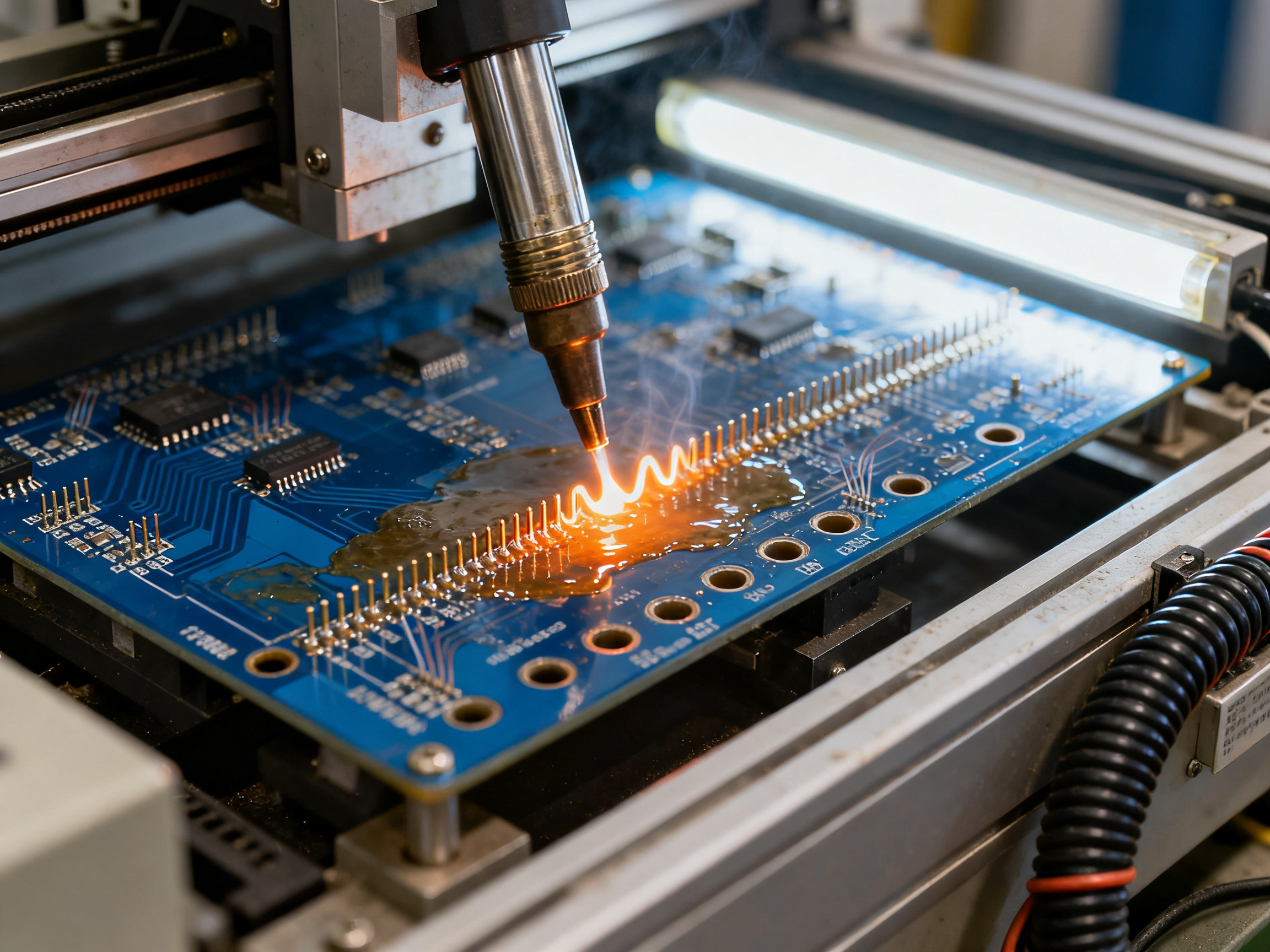
That sequence, flux to preheat to pot to nozzle, is what the workpiece actually sees. IPC J-STD-001J governs the workmanship requirements that come out of it, so your process spec needs to name the alloy, flux, temperatures, and inspection method rather than saying “solder it like we always do”.
Which process wins where
| Process | Best fit | Weak spot |
|—|—|—|
| Selective soldering | Mixed-technology boards, dense through-hole, high mix low volume | Changeover and programming overhead |
| Wave soldering | High volume, similar boards, mostly through-hole | Whole board sees heat and flux |
| Hand soldering | Prototypes, low volume, rework | Operator variation, slow |
| Pin-in-paste | Very dense through-hole, no fine-pitch SMT nearby | Bridge risk, thermal mass on big pins |
The decision usually comes down to board mix and access. Selective soldering wins when access is tight and boards change often. Wave soldering still wins on long runs of identical boards. Pin-in-paste makes sense when the through-hole pattern is dense enough and there is nothing delicate nearby.
Strong-fit applications
Connectors, relays, transformers, and large heat-sinking terminals are the classic targets. Automotive and industrial control boards fit well. So do mixed assemblies where a fine-pitch SMD sits near a through-hole part.
Where it does not fit: nearly all-reflow boards, very low volume where changeover dominates, or problems that actually trace back to incoming component quality or board design. No capital purchase fixes a solderability problem upstream.
The economics nobody quotes
Labor in electronics is under pressure. The BLS employment highlights show semiconductor and electronic component manufacturing employment falling about 22,000 jobs from its early 2023 peak through early 2025. That is a demand story, not proof of a soldering technician shortage. Build your case on your own defect Pareto and labor minutes, not on vendor yield headlines.
Expert Tip: Before buying any selective soldering machine, run a no-cost process audit. Take your top three problem boards, count the joints you actually touch by hand, and time it. That number is your baseline, and it is the only baseline a supplier cannot inflate.
The right process question is simple: does your mix contain enough difficult through-hole work that repeatability matters more than speed? If yes, keep reading. The next section shows how to define your requirements before anyone quotes you a price.## Define Your Production Requirements Before Requesting Quotes
Most equipment mistakes happen before a single quote arrives. Buyers pick a machine first, then hunt for boards that fit it. Flip that order and everything gets easier.
Build the requirements profile from your production, not from a brand list
Start with eight numbers for each product family: annual volume, panel dimensions, board weight, takt time, lot size, changeover frequency, and the projected growth in each of those over three years. Add the mix of through-hole joints per board. Add the defect Pareto for that family, in dollars, not percentages. A board family that represents 6% of volume but 40% of rework cost deserves more attention than a high-volume family with clean joints.
Write this down as a one-page profile per family. Then check it against the acceptance criteria in IPC-A-610J, since that document, paired with J-STD-001J, defines what “good” means for the finished assembly. Your machine requirements should trace back to the joints you actually need to make, not to a generic feature list.
Document the assembly constraints
For every board family, note the underside component height, keep-out zones, connector density, thermal mass of each terminal, the alloy and flux chemistry in use, joint access angle, and any traceability obligation the customer contract imposes. Thermal mass is the one people forget. A relay or transformer terminal needs a different dwell and nozzle than a signal header pin, and a machine sold on “wave height” alone cannot tell you whether it will fill that barrel consistently.
Also record the load. A 9 kg panel on a conveyor pallet changes the machine selection more than any axis resolution figure.
Pick the format: inline, offline, compact, or mini
| Format | Fits | Watch for |
|—|—|—|
| Inline selective soldering system | Long runs, stable takt, boards flow in line with other equipment | Conveyor protocol match, line balancing, footprint |
| Offline selective soldering station | High mix, frequent changeover, small batches | Loading labor, operator attention, takt ceiling |
| Compact selective wave solder machine | Medium volume, limited floor space | Small board size limits, smaller pots, cooling capacity |
| Mini selective wave soldering machine | Prototypes, pilot lines, small panels | Not a production takt solution |
Inline wins on throughput when the mix is stable and your layout has room. Offline wins when you change products often, because the changeover is a batch event rather than a line disturbance. Compact and mini formats are real tools for prototypes and pilot work, but they are not substitutes for production capacity.
Pro Insight: Write the requirements profile before the first RFQ, then send the same document to every supplier in selective soldering machine manufacturers shortlist. Identical input documents make quotes comparable, and they expose early which vendor actually read your process.
One more rule: state your projected volume honestly, including the year you might double. Then ask for selective soldering equipment cost at two volumes, current and projected. A machine that is too small today and right in two years may beat a machine that is too big now. A machine that is too big now may never be justified at all.## Compare the Specifications That Actually Affect Solder Quality
Most spec sheets list features. A good buyer looks for process windows. The question is never “does the machine have closed-loop preheat?” but “can it hold that window for my boards, my alloy, and my duty cycle?”
Each of the specifications below is one link in a chain. Flux lands on the joint, preheat raises the board, the pot holds the alloy, the nozzle shapes the wave, and motion puts them in the right place. Change one and the others shift. So judge them together, then prove each one on your own assemblies.
| Requirement | Typical supplier claim | Test method | Evidence to request | Acceptance threshold you set |
|—|—|—|—|—|
| Flux deposition | “Precision spray head” | Gravimetric or foil-transfer test | Volume per board, coverage photo | Volume within your flux spec on the worst board |
| Preheat | “Multi-zone tunnel” | Thermocouple profile at thermal extremes | Full profile trace, repeat profiles | Board temp uniform within your component limit |
| Pot stability | “±2 °C control” | Log temperature through a full shift | Raw temperature log | No drift past alloy or component limit under load |
| Nozzle range | “Full range available” | Run your smallest and largest joints | Wave shape images, fill results | Both joints pass A-610 disposition |
| Motion repeatability | “High-resolution axes” | Re-run same recipe 30 times | Position deviation data | No missed or duplicated joints in 30 runs |
| Fiducial correction | “Automatic” | Offset board 3 mm in fixture | Correction log, first-article result | Corrects within your no-escape criteria |
| Nitrogen | “Optional nitrogen” | Measure consumption and dross rate | Consumption per shift, pot inspection | Consumption and dross within budget |
Nozzle selection deserves its own attention because it is the cheapest lever you have. The selective wave soldering nozzle shape decides how the wave contacts the joint, and a flat wave that works on a header pin can bridge a 0.5 mm pitch. Ask each supplier to run your smallest acceptable joint and your heaviest thermal mass, then compare the fill results side by side. Not the demo board. Yours.
Expert Tip: From documented hands-on work, nozzle choice, board clearance, preheat stability, and nitrogen control explain most bridging, insufficient fill, and adjacent-component damage. A machine that controls all four cleanly usually beats a more expensive machine that controls one of them well and the rest loosely.
Then separate headline speed from real cycle time. A machine that quotes 3 seconds per joint may need 40 seconds to locate fiducials, 25 seconds to flux, 60 seconds of preheat dwell, and 3 minutes for a nozzle change and program reload. Sustainable cycle time includes board handling, fiducial recognition, fluxing, heating, the soldering path, nozzle changes, cleaning, and recipe changeover. Time each of those on a full production day. If the supplier will not commit to a cycle-time breakdown, assume the best case and add 30%.
Software decides whether the machine is repeatable or merely automatic. Look for offline programming, path simulation, recipe permissions, alarm logging, SPC data export, image capture on inspected joints, barcode control, and MES integration. A machine with great mechanics and clumsy software still creates variation, because operators adjust things between runs. Auditability matters as much as automation, and it is what turns a process into evidence you can hand to an auditor.
And check nitrogen management where it applies. Nitrogen reduces oxidation and dross, but it is a real operating cost. Ask for consumption per shift, the effect on pot temperature recovery, and what happens when supply pressure drops mid-cycle.
One last point on how to read vendor numbers. Claims like first-pass yield above 99 percent mean nothing without the board mix, joint count, sample size, and inspection method behind them. The way to settle it is a controlled trial on your boards, with a documented defect taxonomy, a written acceptance threshold, and a retest if the threshold is missed. Ask any supplier running selective soldering machines in production for a reference call, then verify the numbers yourself on the floor.
Specifications tell you what a machine can do. Your acceptance test tells you what it will do for you. Both are required, and only the second one is worth signing.## How to Evaluate Selective Soldering Machine Manufacturers
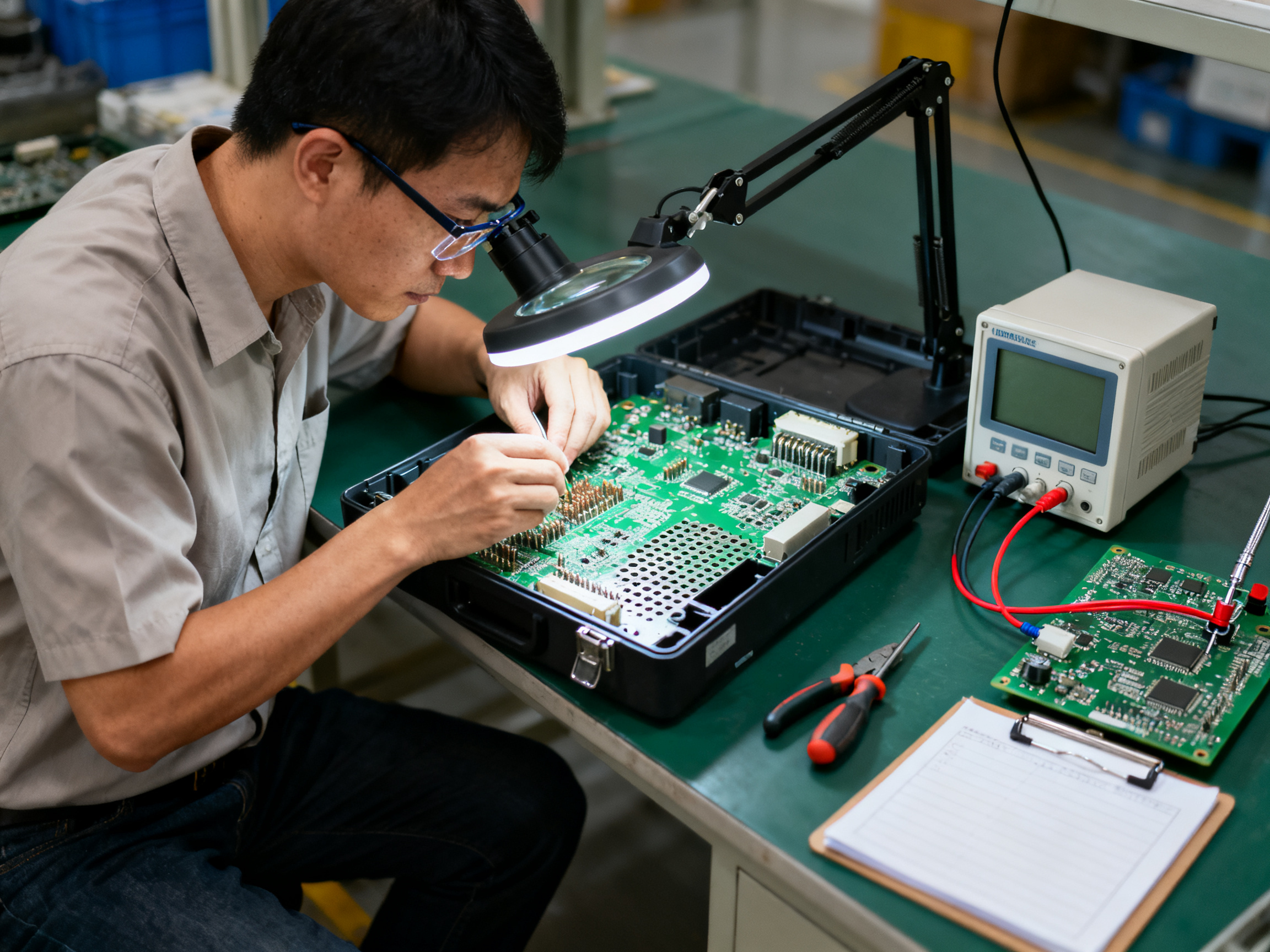
Every supplier will show you a good machine. The differences live in the boring places: how fast a technician drives to your site, whether spare parts sit on a shelf three countries away, and whether you can export your own process data without emailing a spreadsheet to a distributor.
So do not rank vendors on the biggest spec sheet. Score them on the things that determine whether the machine still runs well in year three.
A weighted scorecard beats a feature checklist
Build the scorecard before you contact anyone, weight each line, and hold every supplier to the same weights. Here is the structure I use.
| Criterion | Weight | Evidence you require | Automatic disqualifier |
|—|—|—|—|
| Application engineering support | 20% | Named application engineer, process trials on your boards | Only generic catalogs |
| Build quality and serviceability | 15% | Component brands, mechanical drawings, mean time to repair | Sealed subassemblies |
| Installed base in your sector | 15% | Named customers with comparable assemblies | Cannot share references |
| Spare parts and lead times | 15% | Stock list, price list, measured lead times | Proprietary-only consumables |
| Remote diagnostics and support | 10% | Secure remote access, response SLA | No remote capability |
| Documentation and training | 10% | Manuals, parameter backups, training plan | Manuals not supplied at handover |
| Certifications and safety file | 10% | Risk assessment, declaration of conformity, test records | Missing technical file |
| Cybersecurity and data ownership | 5% | Access control, update policy, audit trail | Hidden remote access, locked-in data |
Weights are yours to change. If you build medical or aerospace boards, move 10 points from installed base into documentation and certifications. If you build consumer goods, shift toward cycle time and support.
Match the supplier to the use case
The phrase “best selective soldering machine” has no single answer. Build four shortlists instead.
- High-volume inline production: the supplier must show line balance, conveyor protocol matching, and a cycle-time breakdown on your board size.
- High-mix manufacturing: the supplier must show program storage, changeover time, and how many operators it takes per shift.
- Compact footprint: check the real maximum board size, pot capacity, and cooling performance, not just the floor plan.
- Stringent traceability: the supplier must show barcode control, program revision history, and exportable records.
Regional service coverage deserves its own question. Ask for the address and distance of every service point, the number of technicians based there, and the written response commitment for a call placed at 2pm on a Friday. In practice, a machine with a modest pot and a local technician beats a flagship model with a queue of eight weeks.
Ask for evidence, not adjectives
Every claim should arrive with a document behind it. That means a measured first-pass yield on a comparable assembly, a sample size, a defect taxonomy, and an inspection method. It means warranty terms you can read, service response commitments in writing, and support for regulated production with the paperwork your auditor expects.
One more thing. Confirm the live revision of every standard the supplier claims to meet, including addenda. Standards move, and a supplier working from a downloaded legacy PDF is telling you something about its document control. Check the current status yourself on the IPC standards status page, then ask which revision their process spec names.
Expert Tip: Score the supplier the same way you score your own operators. Ask each one to explain a defect they caused, a fix that did not work, and a design change they would make to the machine. Honest answers tell you more than a reference call ever will.
Disclosure on our evaluation method
We did not run a bake-off. This section is built from published standards, vendor-published literature, and the questions above. Vendor performance numbers, including those from selective soldering equipment suppliers, are labeled as vendor claims and were not independently verified on our equipment. No supplier paid for placement, and no vendor was given approval rights over this section. That is why there is no ranked list of brand names here, because a ranked list without a controlled trial on your boards would be decoration.
The scorecard is the deliverable. Send it to every supplier in your selective soldering machine manufacturers shortlist with your boards attached, and let the evidence sort them out.## Calculate Total Cost of Ownership, Not Just Purchase Price
The quote on your desk is the smallest number in the decision. In most plants we look at, the machine accounts for roughly a third of what it costs to own over five years. The rest is nitrogen, solder, tips, service visits, programming hours, and the boards you still scrap.
Build the model in two buckets, then run it across one consistent period. Five years works well. Three years flatters equipment with weak resale; seven years punishes you for models with short parts support.
One-time costs
The machine and its options, plus freight, insurance, and import duty if you are buying outside your region. Then installation, facility work, electrical service, fume extraction, and compressed air or nitrogen supply. Add tooling: fixtures, pallets, nozzles, tip sets, and any board-specific carriers. Do not skip software licences, training, and the internal labour required to qualify the process and rewrite work instructions. That internal time is often the item most vendors leave out of the quote.
Recurring costs
Solder alloy, flux, nitrogen, electricity, nozzle and tip wear, filters, pump service, preventive maintenance visits, spare parts, and consumable freight. On top of that, the labour you keep: loading, unloading, inspection, program management, changeover, and fault recovery. Yes, fault recovery. If you budget zero hours for it, you have built a model that flatters the machine.
| Cost line | Year 1 | Year 2 | Year 3 | Year 4 | Year 5 |
|—|—|—|—|—|—|
| Machine, options, install, tooling | Full | 0 | 0 | 0 | 0 |
| Consumables (alloy, flux, tips, nozzles) | Baseline | Baseline | Baseline | Baseline | Baseline |
| Nitrogen and utilities | Baseline | Baseline | Baseline | Baseline | Baseline |
| Maintenance and spares | Baseline | Baseline | Baseline | Baseline | Baseline |
| Operator labour (loading, inspection, programs) | Baseline | Baseline | Baseline | Baseline | Baseline |
| Rework and touch-up labour | Declining | Declining | Steady | Steady | Steady |
| Scrap, escapes, field returns | Declining | Declining | Steady | Steady | Steady |
Pro Insight: In one anonymized five-year comparison we ran for a mixed automotive and industrial board shop, the machine and installation came to 41% of total cost. Consumables, nitrogen, and service accounted for 34%. Programming, inspection, and changeover labour accounted for 19%. The remaining 6% was scrap and rework that did not disappear on schedule. The supplier with the highest sticker price actually came out cheaper after the five-year model, mainly because their tips and nozzles cost less over time.
Count the savings, but count them conservatively
Financial gains come from reduced touch labour, less rework, fewer scrap boards, fewer escaped defects, lower work in progress, and less downtime. Model each one against your own numbers, not a supplier’s slide.
And be honest about what the machine does not remove. Selective soldering often shifts work upstream into programming and inspection rather than eliminating it. If a manual soldering minute becomes three minutes of program setup, the saving is smaller than it looks. Value only savings your validation team has actually demonstrated on your boards.
Test the model against the variables you do not control
Run break-even on volume, product mix, uptime, labour rates, consumable prices, and service response time. These are the inputs most likely to move in year two. Shift each one and see whether the payback still holds.
One caution on labour. Employment in semiconductor and electronic component manufacturing has been under pressure, with the BLS employment highlights showing a 22,000 job decline from the January 2023 peak through early 2025. That is a demand story, not proof that soldering technicians are scarce or that wages are climbing. Build the labour case on your own defect Pareto and your own hours per board.
Then normalise every quote onto the same template before you compare anything. Same scope, same options, same training, same warranty term, same currency, same delivery terms. Most expensive comparisons fail because one number includes things the other one does not.
Want the quote-normalisation template and the TCO spreadsheet with the formulas already wired? Request the full buyer pack from our team and we will send both, along with selective soldering equipment cost benchmarks you can fill in with your own quotes.## Run a Factory Acceptance Test Before Purchase
A demo on the supplier’s board tells you almost nothing. A factory acceptance test on your board tells you almost everything. This is the step where a purchase stops being a sales conversation and starts being a documented result.
The rule I give every buyer is simple: no purchase order, no payment milestone, no shipment release without a FAT completed on production-intent assemblies, with thresholds written down before the machine arrives.
Build the test package before the visit
Send the supplier a frozen test package. Not a sample, a package.
| Item | What to include |
|—|—|
| Boards | Your highest-volume family, your smallest acceptable joint, your worst-case thermal mass, your tightest clearance board |
| Materials | Production alloy, production flux, your pallets and nozzles, your mask and finish |
| Recipes | Frozen program revisions, with revision control locked before the trial |
| Data | Baseline defect rate, manual solder minutes per board, current rework cost per board |
| Traceability | Barcode workflow, MES or export path, your retention requirement |
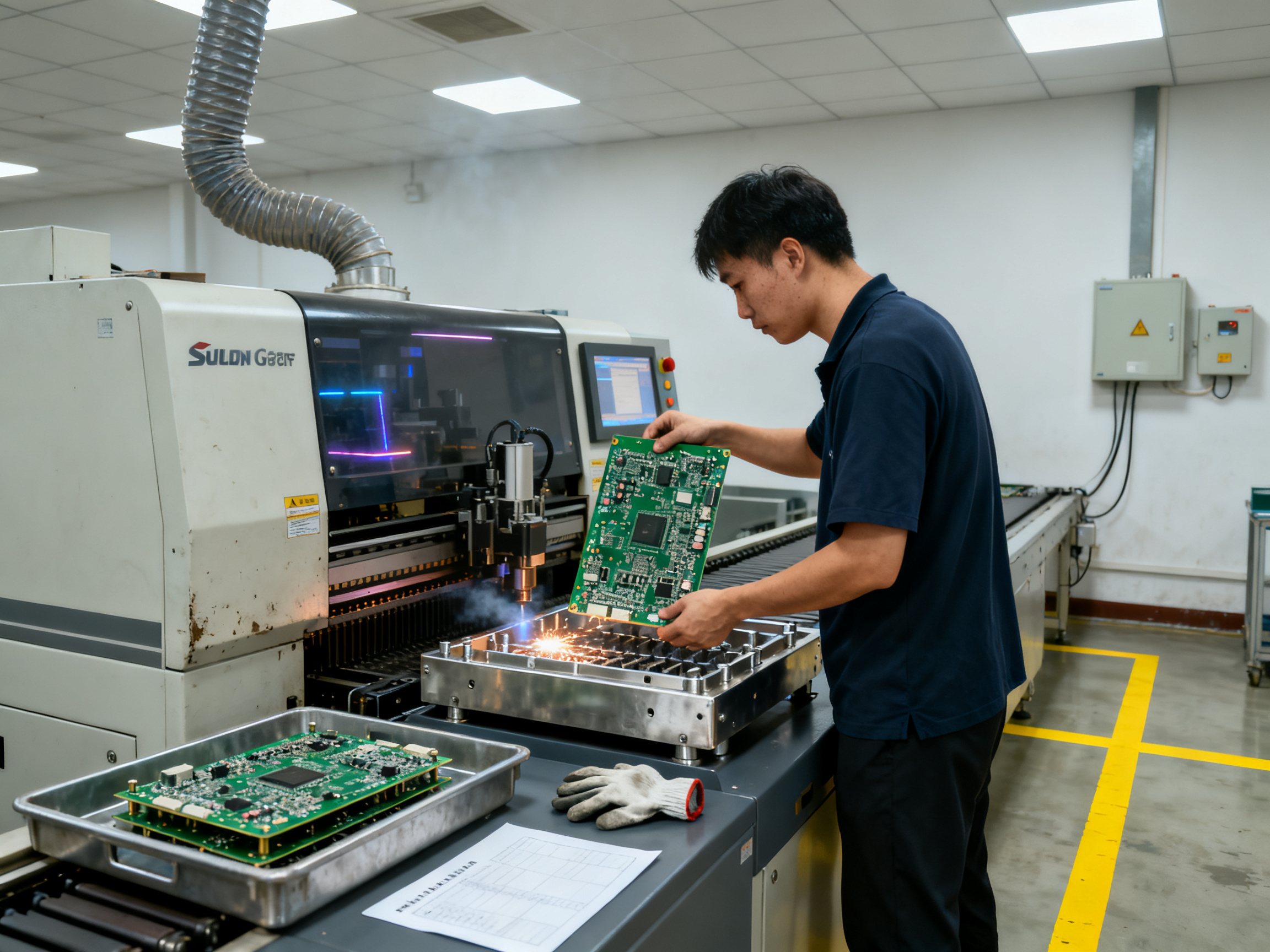
That list is the whole test. If a supplier asks to swap the alloy because their pot runs a different chemistry, document the change and score the result accordingly.
Set thresholds before the trial, not after
Write the acceptance criteria into the purchase agreement while both sides are still friendly. Suggested thresholds include cycle time, first-pass yield per board family, barrel fill, bridging count, solder ball density, board and component thermal exposure, repeatability across shifts and operators, alarm logging, data capture completeness, and changeover time.
From Our Experience: The most productive FAT lessons come from the retest, not the first run. On one mixed automotive and industrial trial, first-pass yield on the worst thermal-mass family landed below the written threshold on day two, and the supplier had to change nozzle geometry and preheat dwell before retest. That correction cost a week and probably saved a year of field returns.
Verify with method, not with eyes
A visual demonstration proves very little. Document the inspection method, the sample size, and the acceptance disposition for each family, using the criteria in IPC-A-610J alongside the process requirements in IPC J-STD-001J. Where visual inspection cannot settle a question, use X-ray or metallographic cross-section, and cite the named IPC-TM-650 method in your protocol rather than the loose phrase “tested to IPC-TM-650”.
Keep an issue log with a written corrective action and a signed owner for each entry. Then run at rate, with production operators on shift and real material, over several consecutive days. Include startup, a cleaning interval, a changeover, a minor fault, and a restart after that fault.
What to walk away with
You should end the FAT holding a run-at-rate report, a defect photo panel showing the worst joints from the trial, the raw temperature and cycle logs, a parameter backup, and a signed acceptance record. If any of those are missing, the trial did not happen.
Either way, tie the final payment to objective acceptance results. That single clause changes the whole negotiation.## Plan Installation, Process Qualification, and Ongoing Control
Here is the part buyers skip, and it is the part that decides whether year two looks like year one. The delivery date is not the go-live date. Utilities, extraction, qualification, and training take real weeks, and the machine will quietly drift out of spec if nobody owns the controls.
Installation-readiness checklist
| Item | Confirm before the truck arrives |
|—|—|
| Power and extraction | Correct voltage and phase, dedicated breaker, fume extraction sized to the pot, compressed air and nitrogen supply with pressure regulation |
| Floor and layout | Level floor within the machine’s tolerance, load rating for a loaded pallet and operator, service access for pot removal and pump service |
| Network | Wired access to the control PC, barcode and MES path, backup location for recipe and parameter files |
| Interfaces | Conveyor height and direction, handshake signal with the line, upstream and downstream buffer space |
| Environment and EHS | Ambient temperature and humidity range, chemical storage for flux and cleaning agents, fire and emergency-stop plan reviewed with your safety officer |
| Compliance | Risk assessment, declaration of conformity, and electrical safety file for the machine in your jurisdiction, checked against the live IPC standards status page for any process documents you will cite |
Most suppliers, including full-line builders such as Shenzhen Chuxin, will quote installation and utility drawings. Read them line by line before signing, because a compressed air line that is one size too small will cost you more in pot recovery time than the machine cost you in savings.
A 30/60/90-day commissioning plan
Days 0 to 30: install, utility verification, calibration checks on thermocouples and sensors, software and access control setup, safety training for operators.
Days 31 to 60: recipe development on your board families, thermal profiling at the worst-case thermal extremes, operator and maintenance training, first pilot batches with 100 percent inspection.
Days 61 to 90: controlled release. Run at rate, review the defect Pareto against your baseline, and only then start counting the machine as productive.
Keeping it performing
| Interval | Task |
|—|—|
| Daily | Nozzle and tip inspection, flux level and residue check, pot temperature log, extraction filter check |
| Weekly | Pot dross and solder level analysis, spray head and nozzle condition, calibration spot checks |
| Monthly | Full preventive maintenance, nitrogen consumption review, recipe and access-control audit |
| Quarterly | Spare-parts stock review, operator retraining refresh, process capability review |
Track the basics on one dashboard: first-pass yield by board family, pot temperature drift, cycle time, operator interventions per shift, and unplanned downtime hours. If any line trends the wrong way, you find it in weeks rather than at the next annual audit.
Want the qualification checklist and dashboard template? Ask our team for the buyer pack, and we will send it along with benchmarks for selective soldering equipment cost so you can plug in your own quotes.## Conclusion: Build a Defensible 2026 Shortlist
Buying a selective wave soldering machine in 2026 follows one sequence. Confirm process fit, quantify your requirements, compare the specs that drive joint quality, score the suppliers, model five-year cost of ownership, then prove the machine with a factory acceptance test on your own boards. Skip any step and the ones after it get weaker.
Your next move is simple. Send every supplier on your shortlist the same board set, the same production assumptions, and the same acceptance matrix. Identical input documents make quotes comparable and expose who actually read your process.
One note on our own judgment. No author credentials were verified for this guide, so we have not included a first-hand recommendation from machine time. Every performance number above is labeled as measured, forecast, or vendor-reported, and you can see which is which.
One-page buyer checklist
- Process fit mapped by board family
- Requirements profile written before the RFQ
- Nozzle, preheat, pot stability, and nitrogen tested on your joints
- Weighted supplier scorecard completed with evidence
- Five-year TCO built, including downtime and scrap
- FAT thresholds signed, with payment tied to results
| Step | What proves it |
|—|—|
| Process fit | Board mix matrix, joint count per family |
| Requirements | One-page profile per product family |
| Specifications | Process window proven on your boards |
| Suppliers | Scored evidence, references, parts lead times |
| TCO | Five-year model, normalised quotes |
| FAT | Signed acceptance record, run at rate |
Sources
Standards: IPC J-STD-001J, IPC-A-610J, IPC standards status
Independent research: BLS employment highlights, February 2025
Manufacturer documentation: selective soldering equipment cost, selective wave soldering nozzle
Want the quote-normalisation template, the TCO spreadsheet, and the qualification checklist? Ask our team for the buyer pack, and we will send all three.