
Published: 19 November 2026
Reading Time: 14 minutes
Introduction: Why Preheating Determines Selective Soldering Quality
Ask anyone running a selective soldering line what keeps them up at night, and you will rarely hear about the solder pot temperature or the nozzle. The quiet problem is usually upstream of all of that. It is the board temperature when the flux hits.
So, what selective soldering preheating systems actually do? They bring the PCB to a controlled, uniform temperature before flux activation and solder contact. That single step decides whether flux gets a chance to work, whether solder wets properly, and whether the joint fills cleanly.
This matters most in high-density assemblies: consumer electronics, automotive electronics, semiconductor packaging, military and aerospace hardware. These boards mix heavy components, large ground planes, and tight thermal budgets.
The rest of this guide walks through what selective soldering preheaters are, the preheat methods available, the process risks, and how to choose equipment that fits your line in 2026.
What Are Selective Soldering Preheating Systems?
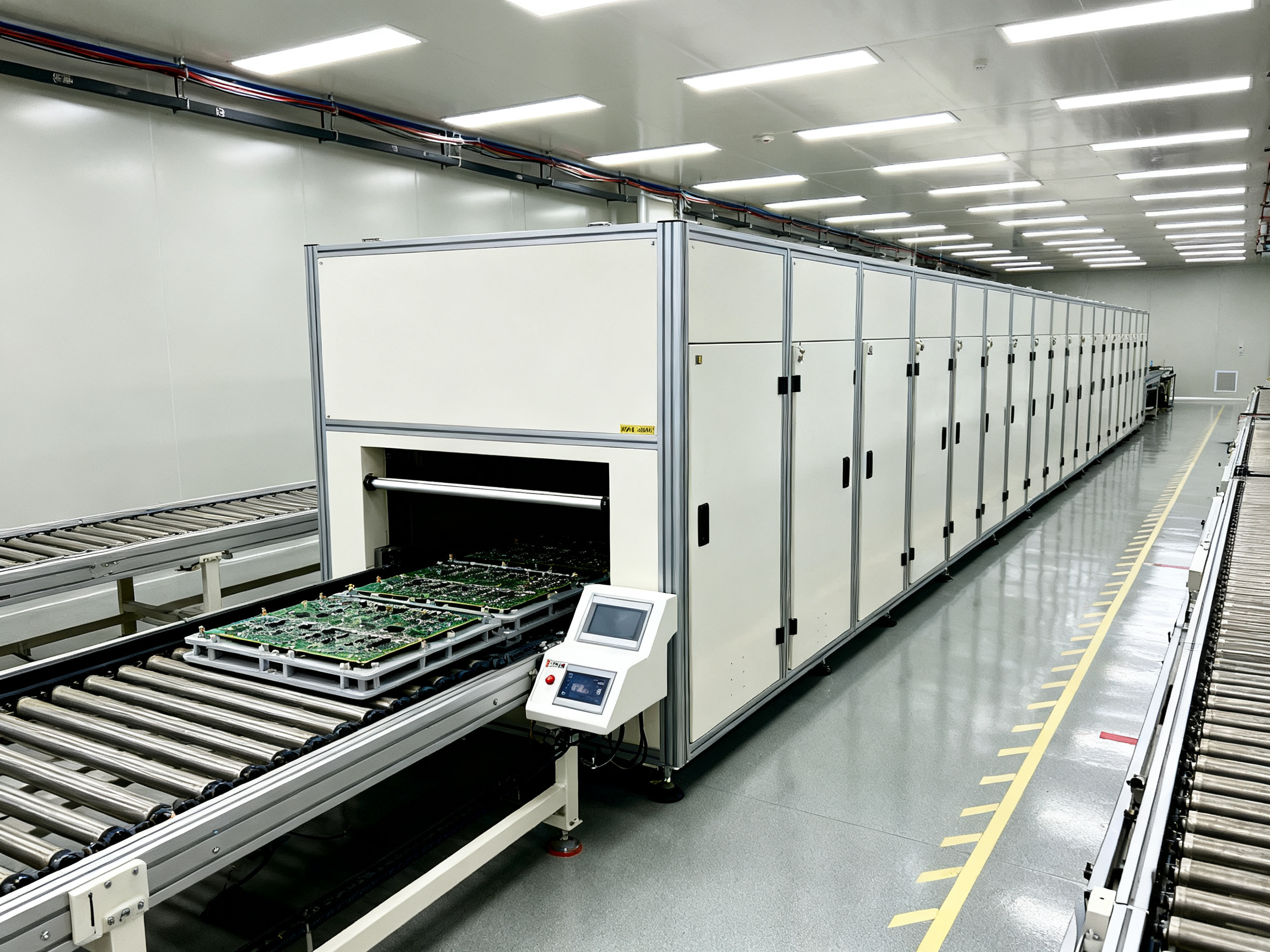
Selective soldering preheating systems are the part of a selective soldering line that brings the printed circuit board up to a controlled temperature before flux is applied and molten solder touches the joints. Think of it as the warm-up stage for the soldering process.
That is different from the stages people usually picture. The solder pot and nozzle do the actual wetting. The fluxer deposits flux. Cooling comes after the joint is formed. The preheater sits between board handling and flux application, and its only job is to hand the rest of the machine a predictable starting temperature.
Why does that matter? Because flux needs heat to activate. Its solvents have to evaporate at a controlled rate, and the board needs to be warm enough that the molten solder wets the joint instead of freezing on contact. Controlled heat, applied gradually and evenly, is what supports both.
So what are selective soldering preheaters used for in practice? They show up in a few places on the floor:
- Standalone cells, where a preheat module sits in front of a benchtop or manual selective soldering machine.
- Inline machines, where preheating is built into a conveyorized system and the board moves through heated zones automatically.
- Full assembly lines, where preheating is one station among many, feeding into wave soldering or reflow as part of a mixed process flow.
The type of selective soldering preheat methods you pick depends on where the preheater sits and what you are soldering, which is the next thing worth looking at.
Why Preheating Is Essential Before Selective Soldering
Now that we know what the preheater is, the next question is what happens if you skip it or set it wrong. The short answer: almost every weird defect on a selectively soldered board traces back to how that board was heated before the nozzle ever arrived.
Preheating does four things, and they all happen in sequence.
First, it moves the flux solvents toward evaporation at a controlled rate. Flux is not magic. The chemistry needs heat to activate, and if the solvents flash off too fast or too slow, the residue left behind changes. Too fast leaves burnt, stubborn residue. Too slow leaves the flux wet and sluggish when solder touches it.
Second, preheating gets the board and the joint warm enough for good wetting. Solder wets a surface by displacing and bonding to it. If the joint is at ambient temperature, the molten solder can freeze before it flows, and you get a cold joint with poor hole fill.
Third, it reduces thermal shock. A cold board meeting molten solder experiences a sharp local temperature gradient. That gradient is where microcracks, lifted pads, and damaged components come from.
Fourth, even heat means uniform heat. A board that is warm in the middle and cool at the edges produces different results on the same pass.
This is where board construction matters most. Thick multilayer boards, high-copper-weight ground planes, and assemblies with heavy components like transformers or heat sinks have real thermal mass. They soak up heat instead of reflecting it, so they need longer soak time and more careful zone control than a thin single-layer board. Bottom-side PCB preheating and top-side combinations come into play here, since the bottom of the board sees different exposure than the top.
Get it wrong in one direction and you see poor hole fill, solder bridging between closely spaced joints, solder spatter from violent flux activation, and flux residue that later causes corrosion or interferes with inspection.
Get it wrong in the other direction, meaning too hot or too long, and you push moisture out of laminate that should have been baked first, you can blister or delaminate the board, and heat-sensitive components get stressed beyond their ratings. That last one is why a good preheat profile is a compromise, not a set-it-and-forget-it dial.
None of this is exotic. It is the thermal equivalent of warming a pan before you cook in it.
What Selective Soldering Preheaters Are Available?
Now the fun part. There are really five families of selective soldering preheaters, and they differ mostly in how they move heat into the board. That one design choice drives almost everything else: warm-up speed, uniformity, how much you fight shadowing, and what maintenance looks like at 2 a.m.
Infrared preheating for selective soldering
Infrared lamps or panels radiate energy straight at the board surface. Warm-up speed is excellent, since the surface heats quickly without needing to move air. The catch is surface-only heating. Anything tall on the board—a heat sink, tall connector, or shielding can—casts a shadow, and the region behind it warms much more slowly. IR systems can also be sensitive to board color and finish because dark solder mask absorbs more energy than light laminate.
Quartz preheaters
Quartz lamps are a specific kind of infrared heater, and they get their own category because they dominate much of the industry. Quartz elements run hotter than standard IR panels, which means faster ramp rates and more energy density in a smaller footprint. The downside is the same shadowing problem plus more maintenance. Quartz elements are fragile, may sag over time, and need periodic replacement. That maintenance cost is real and belongs in your total-cost calculations.
Convection preheating systems
Convection, or hot-air, preheating moves heated air across or through the board. This is the shadow-proof option. Air fills cavities and reaches underneath components, so uniformity across a mixed assembly is far better than with radiant heat. The trade-offs are slower warm-up, greater energy consumption, and fan noise. You also need good airflow design, or hot spots form on your own.
Hot plate preheating
Contact or hot-plate preheating puts the board directly on a heated surface, often on a moving pallet. It is simple, relatively inexpensive, and very efficient at transferring heat into the board. The problem is geometry. A flat hot plate heats the bottom of the board, so top-side joints see a different thermal environment than bottom-side joints. It also tends to run hotter and less evenly across large panels, and it creates contact points where board warpage and flatness matter.
Hybrid systems
Hybrid preheaters combine radiant and convective elements, usually to achieve fast surface response with more even overall coverage. They are more expensive, but for high-mix lines running assorted boards, the flexibility can justify the added cost.
| Type | Warm-up speed | Uniformity | Shadowing | Maintenance |
|—|—|—|—|—|
| Infrared | Fast | Surface only | Significant | Low to moderate |
| Quartz | Very fast | Good | Significant | Moderate to high |
| Convection / hot air | Moderate | Excellent | Minimal | Filters and fan service |
| Hot plate / contact | Slow to moderate | Bottom-side | None | Surface maintenance |
| Hybrid | Fast | Very good | Reduced | Moderate |
Now comes the configuration question, which matters at least as much as heater type once you have selected one. Multi-zone bottom-side PCB preheating is the standard for complex boards because you can drive different heat into different regions as the board passes through. Optional top-side preheating becomes valuable for assemblies with heavy top-side thermal mass, where the top of the board needs its own warm-up profile.
For a consumer-electronics line running thin, dense boards, a single zone often covers the requirement. For automotive, military, or aerospace hardware with heavy copper, sealed components, and long cycle requirements, multi-zone bottom-side plus top-side is the configuration that can actually maintain a stable profile. Build-to-build variation of only a few degrees can separate a repeatable process from a lucky one.
Honestly, the heater type is the easy half of the decision. The profile data is the hard half, and that is where you should spend your due-diligence time in 2026.
To see how these configurations fit into a full production setup, S&M Co. Ltd. builds wave-soldering machines and complete SMT lines with preheating modules. This offers a practical way to examine how the preheat stage behaves inside a working cell rather than in isolation.
Benefits of a Properly Designed Preheating Process
Get the preheat stage right and the rest of the line gets easier. That is the plainest way to describe the payoff of a well-designed selective soldering preheating system. You are not adding a step; you are removing arguments.
Stronger wetting and better hole fill. A board that arrives at the nozzle at a predictable temperature lets molten solder flow before it cools. Joints fill cleanly, plated-through-holes fill from bottom to top, and you see far fewer cold joints on the line and under magnification.
Fewer soldering defects. Bridging, spatter, and dull or incomplete joints all trace back to a board that was too cold, too hot, or too uneven. Stable thermal preparation removes the biggest cause before the nozzle even moves.
Lower rework and scrap. Defects caught downstream mean hand rework, touch-up, and sometimes scrapping the whole board. That is expensive, and it is also the slowest part of the shift. A repeatable preheat profile cuts the volume of boards that ever reach that stage.
Less flux waste. Flux applied to a cold board either flashes off too fast or stays wet and sluggish. Neither outcome uses the flux well. A warm board burns off solvents at the right rate, so you use less per board and you get less stubborn residue that later interferes with inspection or causes corrosion.
Smoother cycle time and less manual inspection. When the profile holds build to build, operators stop pulling boards to check them. You also stop fighting rework spikes that wreck the rest of the hour’s schedule.
Better support for lead-free work and traceability. Lead-free selective soldering runs at higher temperatures, which leaves less margin for error than legacy alloys. Stable preheat data also gives you a record you can hand over during process control checks or audits.
For high-mix lines running consumer, automotive, and military assemblies side by side, this is where the value compounds. S&M Co. Ltd. builds wave soldering machines and full SMT lines with preheating modules, so you can judge how a preheat profile behaves inside a working cell rather than on a spec sheet.
How to Select a Selective Soldering Preheating System
Choosing a preheater is not a heater-purchasing decision. It is a process decision that happens to end with a purchase order. So let’s work backward from the board.
Start with the board and the mix
The first filter is what you actually solder. Board length and width set the minimum heating-zone footprint. Layer count and copper weight set thermal mass, which sets soak time. A 1.6 mm four-layer board with a full ground plane behaves nothing like a thin single-layer panel, and a line that runs both needs more than one recipe.
Then look at component sensitivity. Sealed parts, connectors with plastic bodies, and large heat sinks all have limits on how fast you can push temperature. If your mix mixes consumer electronics with military hardware, one profile will not serve both, so recipe storage and changeover speed stop being nice-to-haves.
Finally, check the other process inputs, because they constrain each other. Flux chemistry changes how much heat the flux needs before it activates. Solder alloy changes the pot temperature and the thermal budget. Takt time sets the shortest soak you can physically achieve. Pallet style matters too, since a pallet that blocks bottom-side air or contact changes what you can measure.
| Input | What it decides |
|—|—|
| PCB size and layer count | Zone length, number of zones, soak time |
| Copper mass and ground planes | Energy needed, top-side heating need |
| Component sensitivity | Maximum ramp rate, soak ceiling |
| Flux chemistry | Activation window before fluxing |
| Solder alloy | Thermal margin, lead-free considerations |
| Takt time | Minimum achievable soak |
| Product mix | Number of recipes, changeover speed |
Then evaluate what the machine can do
Once the process inputs are clear, look hard at equipment capability. Heating-zone length should exceed your longest board with margin for positioning. Top-and-bottom heating matters for heavy assemblies. Closed-loop control with real sensor feedback beats a simple thermostat every time, and recipe storage matters the moment you run more than one board type.
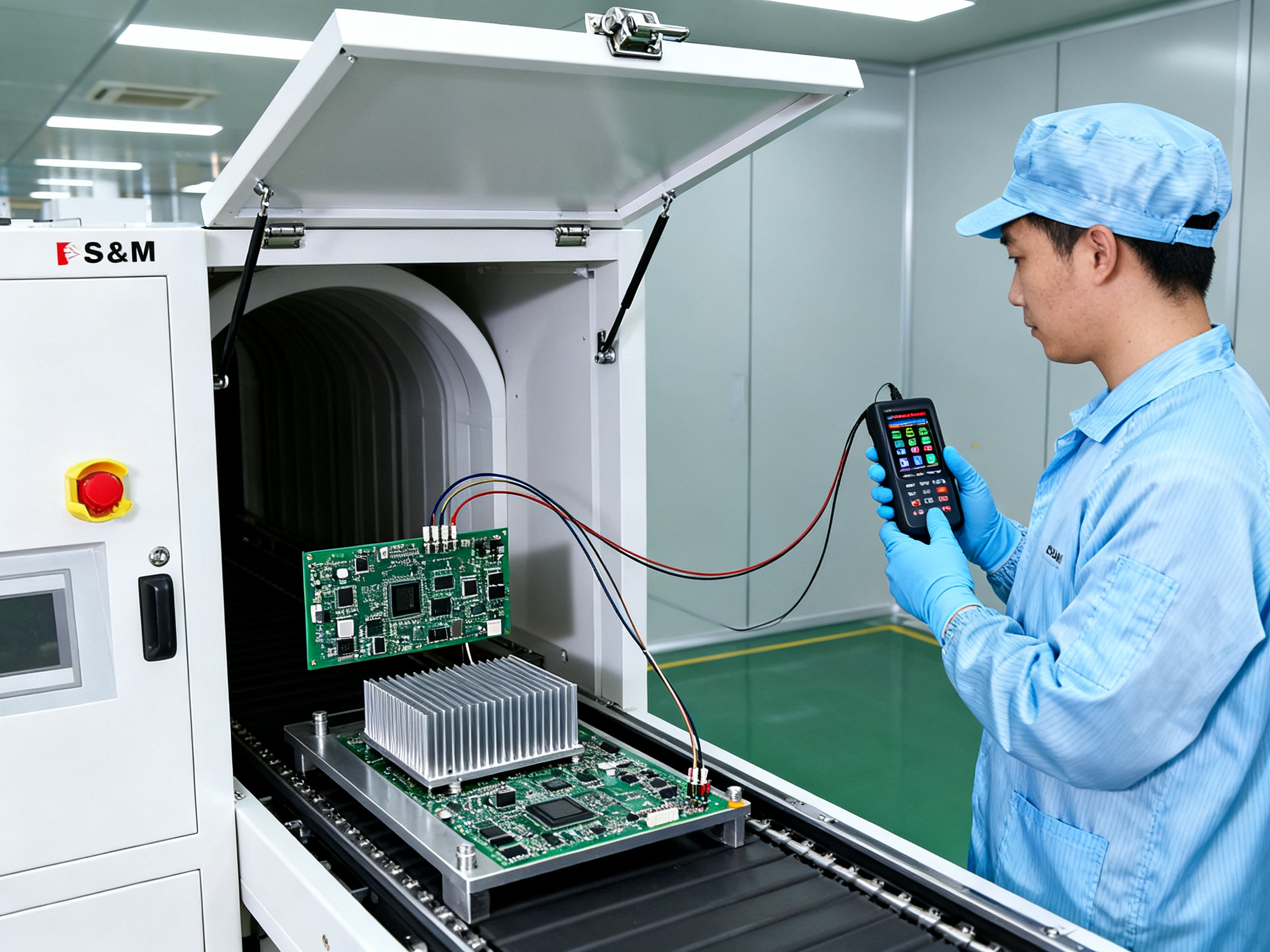
Also ask about the boring stuff, the stuff that gets skipped. Can you attach thermocouples and run PCB thermal profiling on the board as it moves? Are there alarms when a zone drifts out of range? Does the machine log temperature data over time so you can prove the profile held during an audit? A preheater that cannot produce a record is harder to qualify than one that can, and in regulated work that record may be the whole point.
Finally, check operational fit and cost
This is where most buyers under-invest. Look at conveyor standards and whether the preheater drops into your existing line without modification. Check utilities: power draw, compressed air, exhaust, and whether your facility can carry it. Look at footprint and whether operators can reach filters, elements, and sensors without dismantling the cell.
Then price maintenance. Quartz elements need replacement. Convection needs filter and fan service. Filters cost money and time in a way that never shows up on the spec sheet, so ask for the service interval and the parts list, and check spare-parts support and service coverage in your region.
Finally, model total cost of ownership rather than purchase price. Add energy, consumables, downtime, and the labour cost of a profile that drifts. A cheaper unit with fragile elements can cost more per year than a pricier one with a service contract behind it.
Expert Tip: Ask any supplier to demonstrate on your worst-case board, not a flat sample coupon. The board with the thickest copper and tallest component will tell you the truth about uniformity faster than any spec sheet.
When you want to see how the preheat stage behaves inside a working cell, S&M Co. Ltd. builds wave soldering machines and full SMT lines with preheating modules, so you can evaluate the whole flow instead of an isolated module.
If you want to go deeper on the thermal side, the next section covers how the preheat profile translates into measurable joint quality and process capability data.
Matching Preheater Design to Production Requirements
The same preheater design does not fit every production floor. A smartphone line and a military electronics line can share the same building and still need completely different preheat configurations.
Start with high-volume consumer electronics. Throughput rules here, and takt time is usually measured in seconds. That pushes you toward fast warm-up rates, single-zone or lightly zoned bottom-side PCB preheating, and automation with recipe storage so changeovers happen without an operator fiddling with knobs. Repeatability across thousands of boards matters more than anything else, and rapid recipe switching is what keeps a mixed product plan running without a queue at the preheat station.
Now look at semiconductor packaging, automotive, aerospace, and military work. These processes have narrower windows and much less tolerance for a marginal joint. Traceability becomes part of the requirement, so you want temperature logging, alarms on drift, and the ability to run PCB thermal profiling on a production board rather than a lab coupon. A profile that holds within a couple of degrees on a thick-copper board is worth more here than a faster ramp on a thin one.
That is where added spend starts to make sense. Modular zoning, hybrid heating, top-side assistance for heavy assemblies, and enhanced profiling controls all cost more up front. They earn it back when a single profile cannot cover the mix, or when an audit needs a record that a simpler machine simply cannot produce.
For a look at how these configurations sit inside a real cell, S&M Co. Ltd. builds wave soldering machines and complete SMT lines with preheating modules, which lets you judge the whole flow rather than an isolated module.
Integration, Profiling, and Process Validation
Bringing a preheater into a real line is where theory meets the floor. And you cannot tune a preheat stage in isolation, because the preheater is one variable in a chain. Flux deposition sits right after it. Then the board enters the soldering zone, where pot temperature, nozzle choice, and contact time all shape the joint. Then cooling. If one of those moves, your profile has to move with it.
So start with characterization. Record the board construction first (layer count, copper weight, component mass), then run PCB thermal profiling with thermocouples placed at the worst spots: the thickest ground plane, directly under the tallest component, and out at a board corner. That gives you the cold spots a spec sheet will never mention.
Next, build the initial profile. Set ramp rate, soak time, and target temperature, then run first-article inspection on the joints. Check hole fill, look for bridging, check residue, and adjust from there. Only once the first article is clean do you qualify the recipe for production.
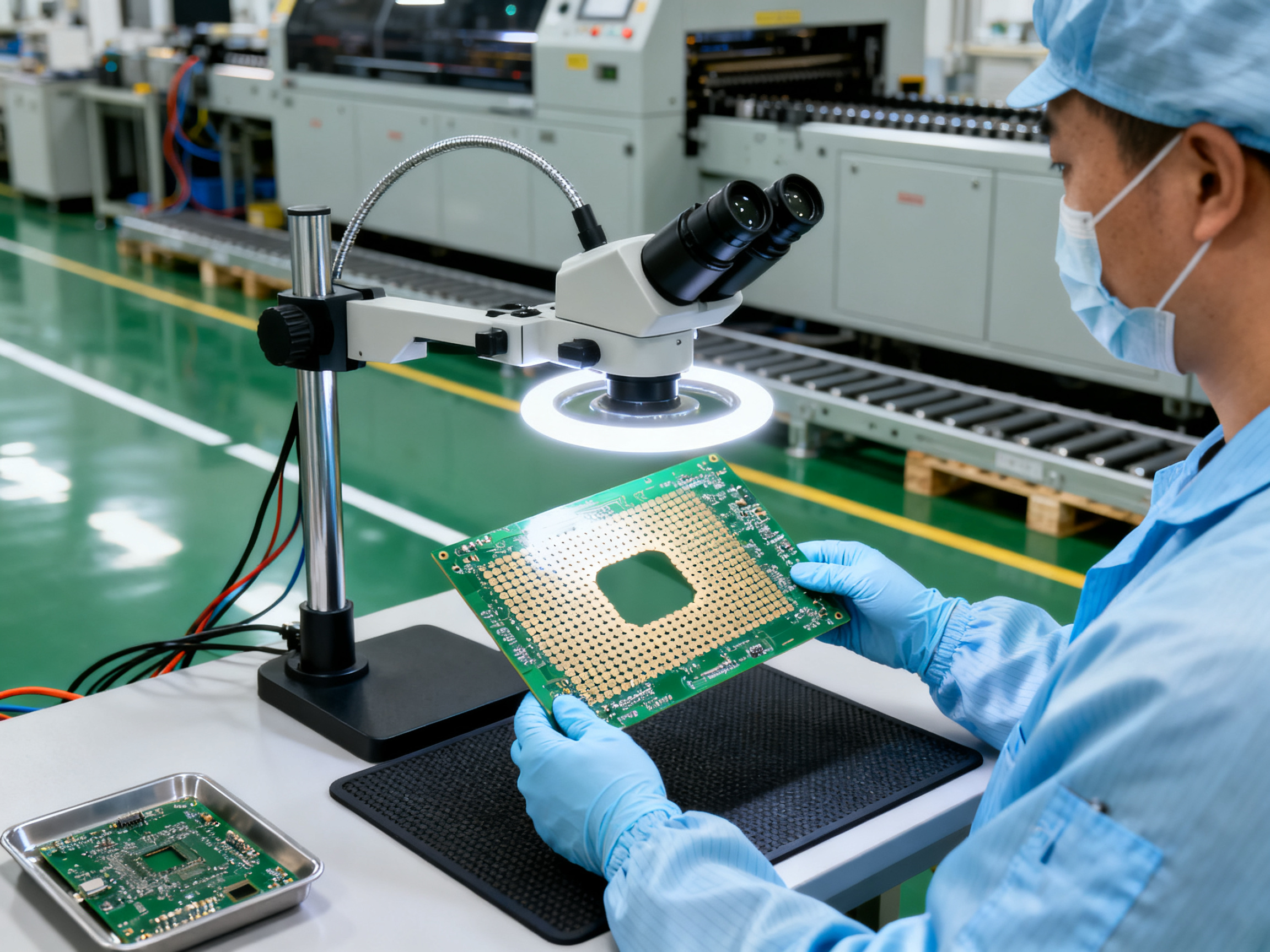
Once you are running, the job changes from tuning to holding. Store recipes against board part numbers and route changes through change management instead of letting operators adjust a dial on the fly. Calibrate sensors on a schedule, replace filters and elements when their service interval says, and read temperature logs as a trend rather than a snapshot. A slow drift shows up in first-pass yield well before it trips an alarm.
One last point worth underlining: how selective soldering preheating systems get qualified is a sequence, not a single test. Skip the profiling step and the recipe becomes a guess that happens to work on Tuesday. S&M Co. Ltd. builds wave soldering machines and full SMT lines with preheating modules, so the preheat stage can be evaluated inside a working cell where all the neighboring variables are visible.
Common Preheating Problems and How to Prevent Them
Uneven heating usually has a boring cause. Board shadowing from tall components blocks radiant heat. Warped pallets or a board sitting off-centre create hot and cold bands. Blocked airflow chokes convection systems. Dirty emitters drop output. Running the conveyor too fast cuts soak time before the board ever reaches temperature.
Warning signs on the joints are clues. Poor hole fill, dull or incomplete joints, and cold-looking solder point to underheating. Bridging and spatter usually mean too much heat or too violent an activation. Blistering, delamination, or stressed components show the board was pushed too far or too fast.
Now the part people get wrong. The fix is not a temperature number. Set the profile from your board, your flux, and your alloy. Instead, work through a sequence:
- Pull the profile data and find where the board was cold.
- Check heater condition and filters.
- Inspect board loading and pallet seating.
- Confirm the recipe matches the part number.
- Rule out flux application before changing heat.
One variable at a time, in that order. Change three things at once and you will never know which one worked.
Want to see how these configurations behave in practice? S&M Co. Ltd. builds wave soldering machines and complete SMT lines with preheating modules, so the preheat stage can be judged inside a working cell.
Conclusion: Choose for Thermal Control, Not Heater Power Alone
The best selective soldering preheating system is not the one with the highest wattage. It is the one that holds a repeatable thermal profile on your actual board, with your flux, your alloy, and your takt time in 2026.
So work in order. Characterize the assembly. Compare heating methods against shadowing, soak time, and maintenance. Validate profiles with PCB thermal profiling and first-article inspection. Then check integration, utilities, and lifecycle support.
Do one last thing before signing anything: run your worst-case board through a demo and review the profile data. Real numbers beat a spec sheet every time.